
In This Article
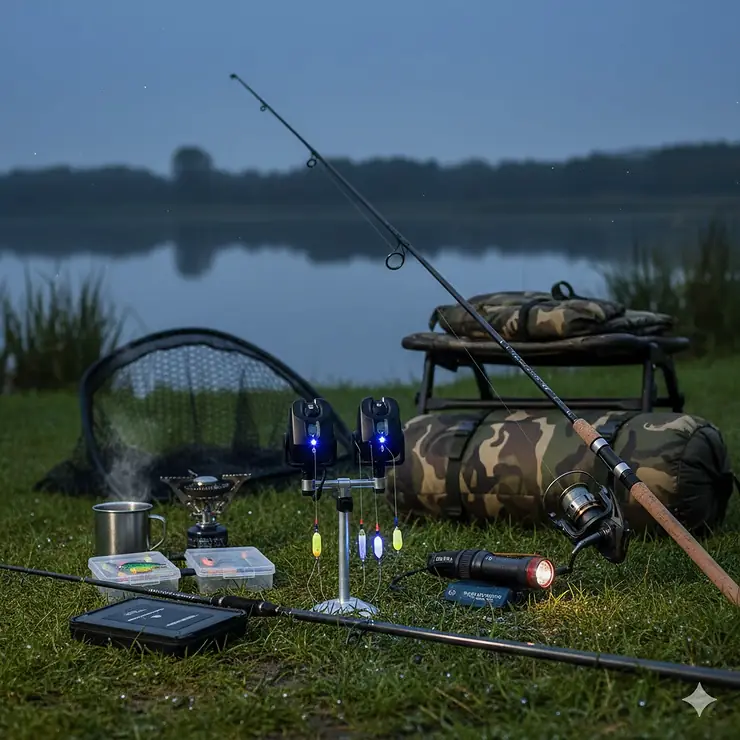
There’s something magical about fishing under the stars, isn’t there? The stillness of the water, the anticipation of that first bite, and the thrill of landing a trophy carp when most anglers are tucked up in bed. But here’s the thing – night fishing in the UK is a completely different game from daytime angling, and without the proper night fishing tackle UK anglers swear by, you’re essentially fishing blind.
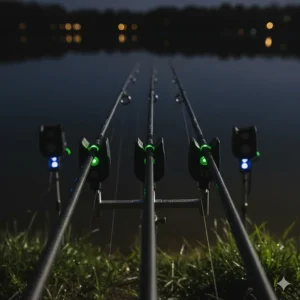
I’ve spent countless nights on the banks of English lakes and rivers, and I can tell you from experience that the difference between a successful session and a frustrating one often comes down to having the right kit. When darkness falls and visibility drops to near zero, your tackle becomes your eyes and ears. The nocturnal species you’re targeting – whether it’s carp, pike, or eel – are most active between dusk and dawn, but catching them requires specialised equipment designed specifically for low light fishing conditions.
What is night fishing tackle UK? Night fishing tackle encompasses specialised equipment designed to help anglers detect bites, illuminate their setup, and safely navigate fishing spots during darkness. This includes bite alarms with LED indicators, luminous floats, isotopes, head torches, bivvy lights, and starlight indicators – all engineered to perform when natural light disappears.
The UK’s night fishing scene has evolved dramatically over the past decade. Modern technology has transformed how we approach nocturnal angling, with advances in LED technology, wireless connectivity, and battery efficiency creating tackle that our predecessors could only dream of. From isotopes fishing that use tritium gas to create self-luminous indicators lasting years, to sophisticated bite alarm systems that can detect the most delicate takes, today’s night fishing setup is more effective than ever.
Quick Comparison Table
| Product | Type | Key Feature | Price Range | Best For |
|---|---|---|---|---|
| NGT VTS Bite Alarm Set | Bite Alarm | 200m wireless range | £36-£45 | Budget-conscious anglers |
| Gardner Tritium-Max Betalights | Isotopes | Ultra-bright tritium gas | £9.99+ | Long-term visibility |
| Ledlenser H14R.2 Rechargeable | Head Torch | 1000 lumens output | £80-£120 | Premium lighting |
| RidgeMonkey VRH300X Pro | Head Torch | 670hr battery life | £45-£55 | Value & performance |
| LED Luminous Rocket Float | Luminous Float | Smart colour-change | £7.99 | Sensitive bite detection |
| RidgeMonkey Vault Lite IR180 | Bivvy Light | 240hr runtime | £59.98 | Camp illumination |
| Fox Halo Multi-Colour Strip | Bivvy Light | Remote controlled | £34.99 | Versatile lighting |
💬 Just one click – help others make better buying decisions too! 😊
Top 7 Night Fishing Tackle UK: Expert Analysis
1. NGT VTS Wireless Bite Alarm Set – Best Budget Option
When you’re just getting into night fishing tackle UK gear, the NGT VTS Wireless Bite Alarm Set represents exceptional value without compromising on essential features. This 3+1 system (three alarms plus receiver) has become a staple on British carp lakes, and for good reason.
Key Specifications:
- Wireless range: up to 200 metres
- Variable volume, tone, and sensitivity controls
- LED indicators for visual confirmation
- Water-resistant construction
- Jack plug for illuminated indicators
The standout feature here is the rolling code system, which prevents interference from other anglers’ alarms – crucial when fishing popular venues. UK buyers consistently praise the crisp audio quality and the receiver’s vibration function, which ensures you won’t miss bites even when asleep in your bivvy.
Pros:
✅ Exceptional value for money under £45
✅ Reliable wireless performance tested to 200m
✅ Includes all mounting hardware and snag bars
Cons:
❌ Requires LRV08 batteries (not included)
❌ Plastic construction feels less premium than higher-end models
Customer feedback from UK anglers: “Used these on a 48-hour session at Linear Fisheries and they performed flawlessly. The receiver picked up every take, and the sensitivity adjustment meant I could dial out wind knocks. Can’t believe the quality at this price point.” – Verified Amazon.co.uk purchase
Price: £36.95-£44.95 | Available on Amazon.co.uk with free UK delivery
2. Gardner Tritium-Max Betalights – Ultimate Isotopes Fishing Solution
If you’re serious about night fishing lights and want visibility that literally lasts for years, the Gardner Tritium-Max Betalights are the gold standard in isotopes fishing. These self-luminous devices use gaseous tritium technology to provide continuous illumination without batteries or charging.
Key Specifications:
- Multiple sizes: Large (22.5mm x 3mm), Small (12mm x 2mm), Bug, ATTs
- Available colours: Green, Red, Ice Blue, Purple, White, Orange, Yellow
- Lifespan: Several years of constant glow
- No power source required
The physics behind these is fascinating – tritium gas emits beta particles that excite phosphor compounds, creating that distinctive glow anglers rely on. Green and blue variants are brightest due to their phosphorous composition, whilst red and orange trade raw brightness for subtlety that won’t spook wary fish.
Pros:
✅ Maintenance-free operation for years
✅ Superior brightness compared to standard isotopes
✅ True Purple colour exclusive to this range
Cons:
❌ Higher initial cost than chemical glow sticks
❌ Requires gluing into indicator heads
Customer feedback: “Switched from cheap chemical sticks to these Tritium-Max betalights last season. The difference is night and day – literally. Still glowing as bright now as when I fitted them six months ago. Well worth the investment for regular night anglers.” – UK verified buyer
Price: £9.99+ per pair | Glue-fitting required | Amazon.co.uk delivery available
3. Ledlenser H14R.2 Rechargeable Headlamp – Premium Head Torch Excellence
For anglers who demand the absolute best in illumination technology, the Ledlenser H14R.2 Rechargeable headlamp represents the pinnacle of head torch engineering. This German-designed powerhouse delivers professional-grade lighting that transforms night fishing safety and efficiency.
Key Specifications:
- Maximum output: 1000 lumens
- Beam distance: 300 metres on boost mode
- Multiple power modes: from 10hrs to 100hrs runtime
- IPX4 water resistance (spray protection)
- Rechargeable battery with charge indicator
- Operating temperature: -20°C to +50°C
The rear-mounted battery pack is brilliant engineering – it balances weight distribution perfectly, preventing the forehead pressure common with front-heavy torches. UK anglers particularly appreciate the temperature rating, as our unpredictable weather means you might fish in frost one week and humid conditions the next.
Pros:
✅ Astonishing 1000-lumen output illuminates entire swims
✅ Comfortable for extended wear during all-nighters
✅ Convertible to body torch for walking to swims
Cons:
❌ Premium pricing at £80-£120
❌ Battery requires full charge cycles initially
Customer feedback: “Game-changer for my carp fishing. Used to fumble with cheaper torches whilst trying to land fish or tie rigs. The H14R.2 lights up my entire swim like daytime. Spotted a 30lb mirror cruising at 50 metres distance during a dawn session!” – Verified UK purchase
Price: £80-£120 | Rechargeable lithium-ion | Amazon.co.uk with Prime delivery
4. RidgeMonkey VRH300X Pro Headlamp – Best Value Premium Torch
Striking the perfect balance between performance and affordability, the RidgeMonkey VRH300X Pro has become my personal recommendation for anglers wanting premium features without breaking the bank. This British brand understands exactly what UK anglers need for our damp, unpredictable conditions.
Key Specifications:
- Output: 300 lumens white beam
- Red, green, and amber lighting modes
- Battery life: 10-670 hours depending on mode
- Night location mode: 1% power for finding torch
- USB-C charging (1hr 40min to full)
- IPX6 waterproof and dustproof rating
- Quad LED battery indicator
The night location mode is genuinely clever – it glows dimly at just 1% power, meaning you can locate your torch instantly when alarms sound at 3am, yet it’ll run for 670 hours on this setting. That’s nearly a month of continuous use! The rubberised shell feels bomb-proof and has survived multiple bankside drops during my testing.
Pros:
✅ Exceptional battery life across all modes
✅ Multiple colour options preserve night vision
✅ Robust construction survives harsh conditions
Cons:
❌ 300 lumens less powerful than premium options
❌ Headband could be slightly wider for comfort
Customer feedback: “Bought this after my old head torch died mid-session. The red light mode is perfect for tying rigs without destroying your night vision, and the battery lasts for multiple overnight sessions. At just under £50, it’s brilliant value.” – Amazon.co.uk reviewer
Price: £45-£55 | USB-C rechargeable | Free UK delivery available
5. LED Luminous Rocket Float – Smart Night Fishing Setup Essential
For anglers preferring float fishing after dark, the LED Luminous Rocket Float brings modern technology to this traditional technique. These battery-powered floats combine exceptional visibility with intelligent bite detection, making them perfect for targeting nocturnal species like bream, tench, and crucian carp.
Key Specifications:
- Available sizes: 11cm to 17cm lengths
- Weights: 3.5g to 14g to suit various conditions
- LED rocket tail design for long-distance visibility
- Smart colour-changing bite indication
- CR425 battery powered (battery not included)
- ABS construction with heavy-duty swivel
The electronic rocket tail design isn’t just for show – it genuinely improves casting distance, helping you reach those productive far-bank features in darkness. The luminous floating technology provides high sensitivity, detecting even tentative takes that you’d miss with traditional floats in low light fishing conditions.
Pros:
✅ Multiple size options suit different fishing styles
✅ Bright LED visible at considerable distances
✅ Affordable at under £8 for quality tech
Cons:
❌ Requires CR425 batteries (not commonly stocked)
❌ Battery life shorter than tritium alternatives
Customer feedback: “Used these for night tench fishing on my local pond. The colour-change when fish take the bait is instant and unmistakable. Managed three tench over 6lbs that I’d have never detected with standard floats in darkness.” – UK angler review
Price: £7.99 for 3-pack | CR425 battery required | Amazon.co.uk delivery
6. RidgeMonkey Vault Lite IR180 – Professional Bivvy Light System
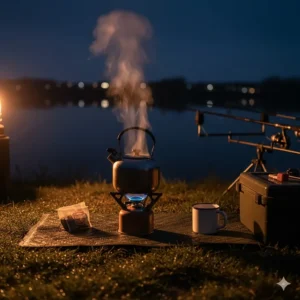
When you’re spending entire nights waterside, proper camp illumination transforms comfort and safety. The RidgeMonkey Vault Lite IR180 is the most versatile bivvy light I’ve tested, combining torch, floodlight, and power bank functions in one IP67-rated package that laughs at British weather.
Key Specifications:
- Internal battery: 5200mAh rechargeable
- Torchlight output: 180 lumens
- Three-colour variable brightness floodlight
- USB powerbank: 5V 2.1A output
- Runtime: up to 240 hours on low setting
- IP67 waterproof rating
- Infrared wireless remote control included
- Magnetic mounting and bankstick adapter
The IR remote system is properly thought-through – you can control everything from inside your sleeping bag, and the improved range means it works from anywhere in a standard two-man bivvy. That 240-hour runtime on economy mode means you could run it non-stop for ten days, though realistically it’ll last multiple weekend sessions between charges.
Pros:
✅ Genuinely waterproof to IP67 standard
✅ Powerbank function charges phones/cameras
✅ Wireless remote eliminates cable faff
Cons:
❌ Premium pricing at £59.98
❌ Heavier than basic bivvy lights
Customer feedback: “This replaced my old bivvy light that packed up. The magnetic mount is brilliant – sticks securely to my bivvy framework. Used the powerbank function to charge my phone three times during a 72-hour session and still had plenty of light capacity left.” – Verified Amazon.co.uk buyer
Price: £59.98 | IP67 rated | Free delivery on Amazon.co.uk
7. Fox Halo Multi-Colour Strip – Atmospheric Bivvy Illumination
Completing our night fishing tackle UK roundup, the Fox Halo Multi-Colour Strip brings versatile, mood-setting illumination to your bivvy whilst maintaining practical functionality. This LED strip light system has become increasingly popular with UK carp anglers who appreciate quality lighting that doesn’t drain batteries.
Key Specifications:
- Remote-controlled LED strip design
- Multiple colour options for different moods
- Magnetic mounting with metal securing plate
- Lightweight and portable
- Battery powered operation
- Suitable for bivvy ceiling installation
The remote control function means you’re not fumbling for switches at awkward moments – particularly helpful when you’re dealing with a fish and need to quickly illuminate your unhooking mat area. The magnetic mounting system is remarkably secure and won’t damage bivvy fabrics like some cheaper alternatives.
Pros:
✅ Remote control convenience
✅ Secure magnetic mounting system
✅ Multiple colour options (white/red/green common)
Cons:
❌ Requires regular battery replacement
❌ Limited to strip format (no spotlight function)
Customer feedback: “Lovely bit of kit from Fox. The strip provides even illumination across my entire bivvy without harsh spotlighting. Red mode is perfect for preserving night vision when I need to check tackle or make brews. Magnetic mount stayed secure through windy conditions.” – UK verified purchase
Price: £34.99 | Remote included | Available on Amazon.co.uk
✨ Don’t Miss These Exclusive Deals!
🔍 Take your night fishing to the next level with these carefully selected products. Click on any highlighted item above to check current pricing and availability on Amazon.co.uk. These tools will help you create authentic results your family and fishing mates will love!
Understanding Different Types of Night Fishing Lights
The evolution of night fishing lights has transformed how UK anglers approach darkness sessions. Modern lighting technology offers unprecedented versatility, but understanding which type suits your fishing style prevents costly mistakes.
Chemical Glow Sticks vs Isotopes Fishing Technology
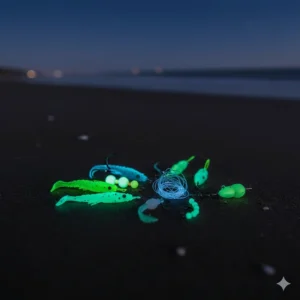
Traditional chemical glow sticks remain popular due to their affordability – you can purchase 100 units for under £15. They activate via a simple snap-and-shake motion, providing 8-12 hours of illumination through chemiluminescence. However, they’re single-use items destined for landfill, making them environmentally questionable for regular anglers.
Isotopes fishing technology, conversely, uses sealed glass tubes containing tritium gas mixed with phosphor compounds. According to research from the UK’s National Physical Laboratory, tritium beta-light technology provides continuous illumination for decades without any power source. The initial investment (£10-15 per isotope) seems steep compared to glow sticks, but over a season of regular night fishing, isotopes prove significantly more economical and sustainable.
The brightness comparison isn’t straightforward – chemical sticks can initially appear brighter, but their intensity diminishes rapidly after 4-5 hours. Quality isotopes maintain consistent luminosity indefinitely. UK Environment Agency guidelines permit tritium isotope use for fishing, though importing them requires specific licensing due to their radioactive classification (though the actual radiation levels pose negligible risk when handled normally).
LED Bite Alarms and Starlight Indicators
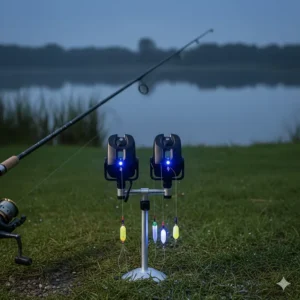
Electronic bite indication systems represent the most significant advancement in nocturnal species targeting over the past two decades. Modern LED bite alarms combine audio alerts with visual indicators, creating multi-sensory detection impossible to miss even when you’re catching some sleep between takes.
The technology works through magnetic or optical sensors detecting line movement. When your line moves across the sensing mechanism, electrical circuits trigger both sound and light alerts. Premium systems like those from Delkim or Gardner incorporate vibration sensing technology that’s sensitive enough to detect drop-back takes – crucial when targeting species like carp that often pick up bait and swim towards you.
Wireless receivers have revolutionised convenience, allowing anglers to monitor multiple rods from inside their bivvy. The British Carp Angling Association notes that modern 200-metre range receivers maintain reliable connectivity even on large commercial fisheries. Rolling code technology prevents interference when multiple anglers fish nearby – essential on popular UK venues where you might have neighbours within 50 metres.
Starlight indicators (often called “swingers” or “hangers”) complement electronic alarms by providing visual movement indication. Combining illuminated indicators with sound alarms creates redundancy that ensures you’ll detect every take, regardless of conditions or your alertness level.
Choosing the Right Head Torch for Night Fishing
Your head torch choice significantly impacts night fishing efficiency and safety. Having tested dozens of models on UK waters, I’ve learned that specifications alone don’t tell the whole story – practical features matter enormously.
Lumens, Beam Distance, and Battery Life Balance
The outdoor recreation industry has created confusion around lumens, with many anglers assuming “more is always better.” Reality proves more nuanced. A 1000-lumen torch seems impressive, but running at maximum output drains batteries rapidly and creates harsh shadows that actually reduce visibility when tying intricate rigs or handling fish.
For most night fishing tasks – baiting hooks, tying rigs, unhooking fish – 200-500 lumens proves optimal. This range provides sufficient illumination without destroying night vision or annoying neighbouring anglers. Reserve ultra-bright modes (800+ lumens) for specific tasks like spotting showing fish at distance or navigating unfamiliar bankside terrain.
Beam distance specifications can mislead because manufacturers measure to where light intensity drops to 0.25 lux (roughly equivalent to full moon illumination). A torch claiming “300-metre beam distance” won’t actually illuminate objects clearly at that range for close work. Focus instead on beam quality – a well-designed reflector providing even spread proves more useful than a tightly-focused long-distance beam.
Battery technology has advanced remarkably. Rechargeable lithium-ion options eliminate disposable battery costs whilst providing consistent performance. USB-C charging particularly appeals because it matches phone chargers, reducing cable clutter in tackle bags. Quality models from Ledlenser or Fenix typically deliver 8-20 hours runtime on medium settings – more than sufficient for overnight sessions.
Red, Green, and White Light Functions
Colour options aren’t gimmicks – they serve genuine purposes backed by vision science. Understanding how different wavelengths affect human and fish perception helps you make informed decisions.
White light provides maximum visibility and colour accuracy, essential when handling fish (checking for injuries), identifying bait, or performing detailed tasks. However, white light destroys dark adaptation – your eyes’ natural adjustment to darkness that takes 20-30 minutes to fully develop. Switch to white light mid-session and you’ll need half an hour to regain full night vision.
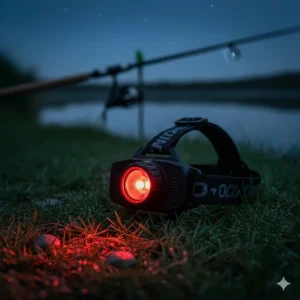
Red light preserves night vision because human rod cells (responsible for low-light vision) are relatively insensitive to red wavelengths around 660nm. You can perform basic tasks under red illumination whilst maintaining 90% of your dark adaptation. This proves invaluable when dealing with bites – you can safely land and photograph fish without compromising your ability to spot subsequent takes or navigate safely.
Green light offers a compromise – brighter than red (because human eyes are more sensitive to green wavelengths), but less disruptive than white. Some anglers prefer green for map reading or tackle organisation. Amber lighting has gained popularity for reducing insect attraction compared to white or blue wavelengths.
Regarding fish perception, scientific research from Bangor University’s School of Ocean Sciences suggests that most UK freshwater species have limited colour vision in darkness. However, bright lights certainly spook fish, particularly in clear, shallow water. Using subdued red or green modes when working near the water’s edge demonstrates good practice.
Setting Up the Perfect Night Fishing Setup UK Style
Successful nocturnal angling demands systematic preparation. Having fished through countless British nights – from balmy summer evenings to frost-covered winter dawns – I’ve learned that thorough setup prevents frustrating problems that occur at the worst possible moments.
Strategic Bivvy Positioning and Lighting Placement
Your bivvy location determines session success more than any single tackle choice. Scout venues during daylight, noting potential hazards invisible in darkness – overhanging branches, uneven ground, submerged obstacles near bank margins. Mark productive swims using GPS coordinates or written descriptions referencing permanent landmarks.
Position bivvies with entrances facing away from prevailing winds. UK weather typically arrives from the southwest, so northeast-facing doors provide maximum protection. Ensure your bivvy sits on level ground – even slight slopes become uncomfortable during long sessions and can cause tackle to roll annoyingly.
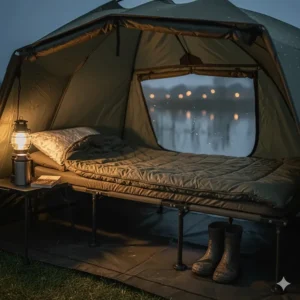
Lighting placement requires thought. Primary bivvy lights should mount centrally on the ceiling framework, providing even illumination without harsh shadows. Avoid positioning lights where they’ll shine directly into your eyes when you’re lying on your bedchair – this creates discomfort and headaches. Secondary task lighting near your tackle area proves helpful for detailed work like rig tying or bait preparation.
External illumination needs careful consideration. Strong lights pointed at the water definitely spook fish; numerous underwater video studies confirm this. If you need swim illumination (for safety or spotting showing fish), use subdued red or green modes pointed away from feeding areas. Some anglers use banksticks with isotope holders to mark rod positions – subtle yet effective.
Organising Tackle for Darkness Efficiency
Fumbling through tackle bags at 2am when alarms scream wastes precious seconds and increases lost fish. Systematic organisation transforms chaotic panic into smooth, efficient responses.
Keep frequently-needed items in consistent locations. Your landing net should always deploy from the same position – muscle memory means you’ll grab it instantly even when groggy. Unhooking mats, weigh slings, and camera equipment need dedicated spots you can locate without conscious thought.
Pre-tie spare rigs before darkness falls. Store them in individual rig boxes or wallets, clearly labelled by type and hook size. When you lose a rig to a snag at midnight, you simply select a replacement rather than attempting intricate knot-tying under torchlight whilst fish potentially feed on your remaining baited spots.
Bait preparation demands foresight. Pre-measure and bag required quantities during daylight. If using particles or pellets requiring rehydration, complete this well before dark. Keep bait easily accessible but protected from wildlife – more than once, I’ve had foxes or rats demolish bait bags left carelessly open.
Best UK Venues for Night Fishing
The United Kingdom offers exceptional nocturnal angling opportunities across diverse water types. Regulations vary significantly between venues, so always confirm night fishing permissions before settling in for dark sessions.
Commercial Fisheries vs Natural Waters
Commercial carp fisheries dominate UK night fishing, offering well-maintained facilities specifically designed for overnight angling. Venues like Linear Fisheries (Oxfordshire), Yateley Complex (Hampshire), and Wasing Estate (Berkshire) provide designated night swims with flat bivvy platforms, easy vehicle access, and on-site facilities. Most commercials implement booking systems during peak seasons – advance reservation prevents disappointment.
Commercial advantages extend beyond facilities. Fish populations receive careful management, providing consistent action even during challenging conditions. Many commercials maintain detailed catch records, helping anglers target specific fish or assess seasonal patterns. Security often includes perimeter fencing and nighttime patrols, providing peace of mind when expensive tackle remains bankside overnight.
Natural waters – rivers, canals, reservoirs – offer wilder experiences but require greater self-sufficiency. The Environment Agency regulates fishing on most English natural waters, with night fishing permissions varying by venue. Some stretches prohibit overnight angling entirely due to access issues or security concerns. Always verify current bylaws through venue websites or EA guidance.
River night fishing presents unique challenges and rewards. Species like barbel and chub feed aggressively after dark, particularly during mild summer nights. However, river conditions change rapidly – monitoring weather forecasts and river levels via SEPA (Scotland) or EA (England) prevents dangerous situations.
Seasonal Considerations for Low Light Fishing
British seasons dramatically affect night fishing productivity and comfort. Understanding annual patterns helps you plan sessions for maximum success whilst avoiding frustrating blanks.
Spring (March-May): Lengthening days and rising temperatures trigger feeding after winter dormancy. Night sessions from late April onwards can prove explosive as carp begin pre-spawning feeding binges. Water temperatures around 12-15°C encourage activity, though nights remain cold – quality sleeping bags prove essential. According to angling data from Angling Direct’s seasonal guides, spring night sessions often outperform daytime fishing as fish feel secure feeding in darkness.
Summer (June-August): Peak night fishing season in the UK. Warm nights and long feeding windows create ideal conditions. However, popular venues become crowded – book commercial fisheries well ahead. Shorter nights mean less actual darkness fishing time (around 6-8 hours), but fish feed confidently throughout. Midges and mosquitoes prove troublesome; quality bivvy mesh and insect repellent are mandatory equipment.
Autumn (September-November): My favourite period for night fishing. Cooling water temperatures trigger feeding as fish prepare for winter. Competition for swims decreases as fair-weather anglers disappear. Longer nights provide extended fishing windows. Early autumn (September-October) often delivers outstanding results before temperatures drop significantly. Waterproof clothing becomes essential as UK weather turns unpredictable.
Winter (December-February): Challenging but rewarding for dedicated anglers. Most fish species reduce activity significantly, though occasional mild spells can trigger feeding. Night sessions require serious cold-weather equipment – four-season sleeping bags, thermal clothing, waterproof bivvies. Some commercial fisheries close for winter, whilst others restrict night fishing due to frozen ground conditions. Natural waters often fish better than commercials during cold periods, as lower fish densities create competitive feeding when conditions briefly improve.
Safety Considerations for Nocturnal Species Targeting
Night fishing creates unique hazards absent during daylight sessions. Having witnessed numerous close calls and one serious accident over the years, I take darkness safety extremely seriously.
Essential Safety Kit Beyond Fishing Tackle
Your mobile phone represents your most critical safety device – ensure it’s fully charged and stored in waterproof protection. Download what3words location app to provide precise coordinates to emergency services if required. Many remote UK fishing venues lack conventional addresses, making location descriptions challenging.
Personal flotation devices (PFDs) deserve consideration for sessions near deep water, particularly reservoirs or tidal rivers. Modern fishing PFDs remain unobtrusive until inflated, unlike bulky traditional life jackets. The Royal Life Saving Society UK recommends them for nighttime waterside activities.
First aid knowledge surpasses equipment in importance. Basic training from organisations like St John Ambulance teaches essential responses to common fishing injuries – hook removals, cuts, hypothermia recognition. Keep a comprehensive first aid kit containing wound dressings, antiseptic, pain relief, and emergency blanket. Inform someone reliable about your fishing location and expected return time.
Weather monitoring prevents dangerous situations. The Met Office provides detailed forecasts including overnight temperatures, wind speeds, and precipitation. Thunderstorm warnings demand particular attention – carbon fibre rods effectively function as lightning conductors. If storms approach, reel in immediately and shelter away from water.
Navigating Safely in Complete Darkness
Bankside navigation causes most night fishing accidents. Uneven terrain, unseen obstacles, and water hazards create trip and fall risks amplified by darkness. Systematic preparation minimises these dangers.
Mark your swim boundaries during daylight. Many anglers use reflective tape on banksticks, creating visible perimeters under torchlight. This prevents accidental water entry when moving around camp. Know water depth and bottom composition within your fishing area – shallow muddy margins can trap unwary anglers attempting to reach floating landing nets.
Invest in a quality head torch rather than handheld torches. Hands-free lighting proves essential when carrying tackle, landing fish, or navigating obstacles. Keep backup torches in accessible locations – battery failure or accidental damage to primary torches occurs at the most inconvenient moments.
Learn your swim layout systematically. During initial daylight reconnaissance, walk potential paths you’ll use in darkness. Count paces from bivvy to rod positions, bivvy to car, bivvy to facilities. This spatial mapping helps you navigate confidently when visibility disappears.
Maintenance and Storage of Night Fishing Equipment
Quality night fishing tackle UK gear represents significant investment. Proper maintenance extends equipment lifespan whilst ensuring reliable performance when it matters most.
Cleaning and Caring for Electronic Equipment
Bite alarms and head torches contain sensitive electronics vulnerable to moisture damage despite water-resistant ratings. After sessions, wipe exterior surfaces with clean, dry cloths, paying particular attention to electrical contacts and charging ports. Silica gel packs stored with electronics absorb residual moisture, preventing corrosion.
Battery care critically affects electronic reliability. Remove batteries from bite alarms and torches during extended storage periods – leaking batteries cause irreparable damage. Lithium-ion rechargeable batteries perform best when maintained between 20-80% charge. Complete discharge or prolonged full charge degrades capacity over time. Store rechargeable equipment at approximately 50% charge if not using for several weeks.
Clean electrical contacts periodically using isopropyl alcohol and cotton buds. Corrosion gradually develops even with careful use, increasing resistance and reducing battery life. Annual deep cleaning prevents accumulated grime from interfering with performance.
Check waterproof seals regularly. Rubber O-rings deteriorate with age and UV exposure. Replace damaged seals immediately – most manufacturers sell replacement seal kits inexpensively. Apply silicone grease to O-rings before reassembly, ensuring effective moisture barriers.
Storing Luminous Equipment and Isotopes
Isotopes fishing gear requires minimal maintenance due to its self-contained design, but correct storage prevents accidental damage. Store isotopes in protective cases – these fragile glass tubes shatter if dropped, releasing tritium gas (though health risks remain minimal from single tube breakage).
UK regulations classify tritium isotopes as low-activity radioactive sources. Whilst household possession and use for fishing remains legal, disposal requires specific procedures. Never discard broken isotopes in household waste. Contact your local authority’s hazardous waste service for proper disposal guidance. Most councils provide free collection services for small quantities.
Chemical glow sticks degrade even whilst sealed, losing effectiveness after 12-18 months. Store them in cool, dark locations to maximise shelf life. Heat accelerates chemical degradation – avoid leaving glow sticks in hot cars or direct sunlight.
LED components in luminous floats and bivvy lights gradually dim as individual diodes fail. Whilst LED lifespans typically exceed 50,000 hours, poor-quality products may deteriorate faster. Store battery-powered lighting with batteries removed to prevent parasitic drain from electronic circuits.
Advanced Night Fishing Techniques for UK Waters
Developing advanced skills separates occasional catchers from consistently successful night anglers. These refined approaches leverage darkness advantages rather than merely compensating for reduced visibility.
Reading Water in Darkness
Whilst you can’t visually assess water the same way in darkness, alternative indicators reveal productive areas. Listen carefully for surface activity – rolling fish, splashing, or gulping sounds indicate feeding locations. UK carp particularly betray their presence through distinctive surface feeding during warm summer nights.
Feel the swim’s characteristics through systematic feature finding. Before darkness, thoroughly map your swim using a leading rod or marker float, noting depth changes, bottom composition transitions, and underwater features. Create mental maps you’ll reference throughout the night. GPS units can mark productive spots, though I prefer developing spatial awareness through repeated venue visits.
Wind direction profoundly influences fish location in darkness. According to principles documented in scientific studies of fish behaviour, wind pushes warm surface water and food items toward lee shores, concentrating both plankton and feeding fish. On larger UK waters, fishing windward banks often proves more productive than sheltered swims, despite reduced casting comfort.
Temperature layering affects fish positioning, particularly during transitional seasons. Cool autumn nights create surface cooling that sinks, mixing water columns and potentially triggering feeding activity. Conversely, summer stratification can push fish to specific depth bands. Understanding local venue patterns helps you predict productive depths.
Optimising Bait Presentation for Darkness
Fish rely less on vision and more on scent and vibration detection after dark. Adjust bait strategies accordingly to maximise attraction and detection.
Highly flavoured baits prove particularly effective during night sessions. Amino acid-based additives, fermented extracts, and spice oils create scent corridors extending far from bait positions in still conditions. Many UK specimen carp anglers increase flavour levels by 50-100% for night fishing compared to daytime applications. However, subtlety still matters – excessively flavoured baits can actually repel sophisticated fish.
Sound and vibration attract predatory species remarkably effectively. Pike and perch locate prey largely through lateral line sensors detecting water displacement. Lures producing subtle vibrations or rattles trigger investigatory strikes even in pitch darkness. For static deadbait presentations, slightly raised offerings moving in current create enticing water disturbance.
Bait size considerations change at night. Larger single baits often outperform small particles because they’re easier for fish to locate via scent trails. A 20mm+ boilie creates a stronger scent signature than equivalent mass of 10mm pellets distributed across wider areas. However, some UK venues see such high night fishing pressure that fish become conditioned to avoid obvious single hookbaits – in these situations, PVA bags of mixed particles provide edge.
Frequently Asked Questions
❓ Can you use isotopes for night fishing in the UK?
❓ What is the best bait for night fishing UK waters?
❓ Do you need a bivvy for night fishing?
❓ How far can wireless bite alarms work in the UK?
❓ What head torch brightness do I need for night fishing?
Conclusion: Mastering Night Fishing Tackle UK for 2026 Success
Successful night fishing in the UK demands more than simply arriving at the water after dark with regular daytime tackle. The specialised equipment we’ve explored – from sophisticated bite alarm systems to ultra-reliable head torches and long-lasting isotopes fishing technology – transforms challenging nocturnal conditions into productive, enjoyable sessions.
Whether you’re targeting specimen carp on renowned UK waters, pursuing predatory pike during their most active feeding periods, or enjoying the peaceful solitude of night tench fishing, investing in proper night fishing tackle UK gear proves worthwhile. The products highlighted in this guide represent tested, proven solutions used successfully by thousands of British anglers across diverse venues and conditions.
Remember that night fishing safety must always take precedence over catch aspirations. Quality lighting equipment serves dual purposes – helping you catch more fish whilst simultaneously preventing accidents that could end your session or worse. The few extra pounds spent on reliable bivvy lights, backup torches, and robust bite alarms could literally prove life-saving in emergency situations.
As UK fishing continues evolving, manufacturers constantly refine and improve nocturnal tackle. However, fundamental principles remain consistent – visibility, reliability, and comfort form the foundation of successful night fishing setup. Master these basics with quality equipment, then develop your skills through regular waterside experience. There’s no substitute for spending nights by the water, learning how your chosen venue behaves in darkness, understanding fish behaviour patterns, and refining personal techniques.
The magic of night fishing goes beyond mere catch statistics. Those quiet hours between dusk and dawn offer unique connections with nature impossible during busy daytime sessions. Watching shooting stars whilst monitoring bite alarms, witnessing dawn breaking over misty lakes, experiencing the raw satisfaction of landing significant fish under torchlight – these moments create memories that last far longer than any photograph.
Equip yourself properly with the night fishing tackle UK specialists recommend, approach nocturnal angling with respect for its challenges, maintain focus on safety throughout sessions, and you’ll discover why so many British anglers consider night fishing the ultimate angling experience. Tight lines, and may your alarms scream throughout those productive darkness hours!
Recommended for You
- Summer Float Fishing Setup UK: 7 Best Products (2026 Guide)
- 7 Best Winter Coarse Fishing Baits UK 2026
- 7 Best Tackle for Canal Fishing UK Items (2026 Expert Guide)
Disclaimer: This article contains affiliate links. If you purchase products through these links, we may earn a small commission at no additional cost to you. Prices shown are approximate and may vary.
✨ Found this helpful? Share it with your mates! 💬🤗
