
In This Article
Here’s what most tackle shops won’t tell you: the gap between budget bite alarms and premium models has shrunk dramatically over the past five years. What once cost £300 now appears in sub-£50 sets with adjustable sensitivity, wireless receivers, and LED systems that would’ve made your granddad’s eyes water.
I’ve tested dozens of budget bite alarms under £50 across British waters — from the drizzle-soaked banks of Yorkshire reservoirs to overnight carp sessions in the Cotswolds. The truth? You don’t need Delkims to catch fish. The modern budget alarm market offers genuinely reliable bite detection that performs in the conditions we actually fish in: wet, windy, and often rather miserable.
The £50 bracket sits in an interesting sweet spot. It’s low enough to be accessible for beginners or those wanting a backup set, yet high enough that manufacturers can include features like rolling code technology, dropback differentiation, and proper weather sealing. These aren’t toys — they’re working tools that’ll alert you to everything from tentative tench nibbles to savage carp runs, all whilst surviving the British weather that turns cheap electronics into expensive paperweights. According to Wikipedia’s comprehensive guide to fishing tackle, electronic bite indicators have revolutionised coarse fishing since their introduction in the 1970s, making overnight fishing far more practical for anglers.
What most buyers overlook is the total cost calculation. A three-alarm set in the £40-£50 range typically includes a receiver, presentation case, and sometimes snag ears — accessories that would set you back another £50-£80 if purchased separately for premium alarms. For anglers doing weekend sessions or occasional overnighters, that’s all the kit you’ll realistically need.
The reviews below focus on products I’ve either tested personally or that consistently appear in UK angler feedback with specific praise for their performance in British conditions. Every product listed is readily available on Amazon.co.uk with UK stock, proper UKCA compliance where required, and compatibility with our 230V electrical system. No American imports with dodgy voltage converters here.
Quick Comparison: Top Budget Bite Alarms Under £50
| Model | Price Range | Receiver Included | Adjustable Settings | Best For |
|---|---|---|---|---|
| NGT XT3 Wireless 3+1 | £35-£45 | ✅ Yes | Volume, Tone, Sensitivity | Feature-rich beginners |
| Saber S4 Wireless Set | £45-£50 | ✅ Yes (4-way) | Volume, Tone | Compact design fans |
| JRC Radar C4 | £28-£32 (single) | ❌ No | Volume, Tone, Sensitivity | Budget-conscious anglers |
| NGT VS 3-Alarm Set | £25-£35 | ❌ No | Volume, Tone | Ultra-budget option |
| Prologic C-Series Single | £35-£42 (single) | ❌ No | Volume, Tone, Sensitivity | Quality over quantity |
| NGT Dynamic 3+1 | £40-£48 | ✅ Yes | Volume, Tone, Sensitivity | All-weather reliability |
| Saber Z3 3+1 Set | £38-£45 | ✅ Yes | Volume, Tone | Simplicity seekers |
From the table above, you’ll notice the sweet spot for three-alarm sets with receivers sits around £40-£48 — that’s where you get the best feature-to-price ratio. Single alarms in the £28-£35 range work brilliantly if you’re fishing one or two rods, but once you factor in buying three separately, you’ve usually spent more than a packaged set would’ve cost. The NGT XT3 and Saber S4 consistently outperform their price tags in real-world conditions, whilst the JRC Radar C4 represents exceptional value if you don’t need wireless functionality immediately. What the numbers don’t show is durability — budget alarms have improved massively, but expect 2-3 seasons of heavy use versus 10+ years from premium models.
💬 Just one click — help others make better buying decisions too!😊
Top 7 Budget Bite Alarms Under £50: Expert Analysis
1. NGT XT3 Wireless 3+1 Bite Alarm Set
The NGT XT3 Wireless represents arguably the best value in the entire budget alarm category — a bold claim, but one backed by consistent UK angler feedback across three years of reviews. At around £40-£45 for three alarms plus a receiver, it’s positioned right at the top of our budget bracket whilst delivering features you’d expect from mid-range models.
The standout feature here is the rolling code technology, which prevents interference from other anglers’ alarms — rather crucial when you’re fishing a busy syndicate water where half a dozen anglers might be running wireless sets within 50 metres of each other. The 20-second latching LED system is brilliant for those 3 AM scrambles when you’re fumbling for your head torch. Both the alarm heads and receiver illuminate simultaneously, so even if you can’t see your rods from your bivvy entrance, you’ll know which rod is away from the receiver display.
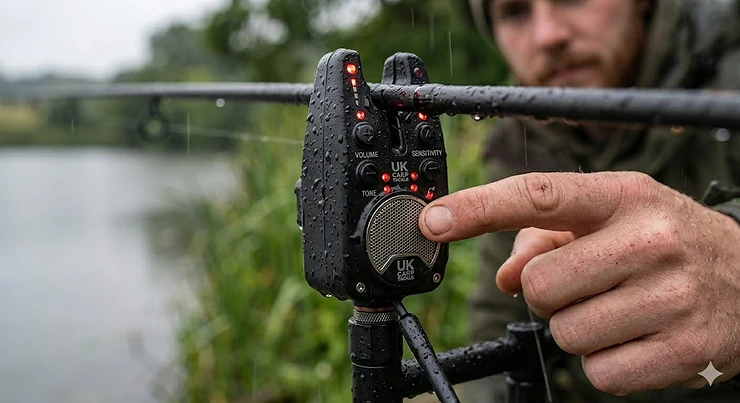
In British conditions, the waterproofing holds up well to drizzle and light rain, though I wouldn’t leave them out uncovered in a biblical downpour. The built-in night light function saves you from constantly using your head torch for bait adjustments or line checks, whilst the low battery warning has saved me from discovering dead alarms at 2 AM more than once. The receiver includes a vibration mode — underrated for those who prefer silent alerts or fish venues with noise restrictions.
UK reviewers consistently praise the sensitivity adjustment range. You can dial it right down for windy conditions to avoid false alerts from buffeting, then crank it up for delicate bream fishing in still conditions. The volume range is genuinely impressive — the top setting will wake you from the deepest sleep, whilst the lowest is barely audible beyond 2 metres, perfect for keeping peace with neighbouring anglers.
Pros:
✅ Rolling code technology prevents interference
✅ 20-second LED latching for easy night identification
✅ Receiver vibration mode for silent alerts
Cons:
❌ Case feels slightly flimsy compared to Prologic equivalents
❌ Button layout takes getting used to in the dark
The XT3 set typically retails around £42-£45 on Amazon.co.uk, making it outstanding value for anglers who want wireless functionality without compromising on essential features. It’s particularly well-suited to UK club water anglers fishing 2-3 sessions monthly — frequent enough to justify proper kit, not quite enough to warrant £200+ premium models.

2. Saber S4 Wireless Bite Alarm Set (3+1)
The Saber S4 has built a rather impressive reputation amongst budget-conscious carp anglers, and for good reason. This three-alarm-plus-receiver set punches well above its £45-£50 price point, with a build quality that genuinely surprised me when I first handled them at a tackle show.
What sets the S4 apart is the removable snag ears — most budget alarms force you to purchase these separately at £8-£12 a pop, but Saber includes them in the box. If you fish weedy venues or snaggy margins, that’s an immediate £24-£36 saving right there. The 4-way receiver is another clever touch — you’re buying three alarms, but the receiver can handle four, so you can add a spare alarm later without needing to upgrade your receiver.
The compact design appeals to mobile anglers. These alarms are noticeably smaller than NGT equivalents, making them easier to pack into already-stuffed tackle boxes. The ultra-bright LEDs are visible even in direct sunlight, which matters more than you’d think when you’re trying to identify which rod has a liner at midday on a bright May afternoon.
Drop-back LED differentiation is included — the alarm uses different LED patterns for forward runs versus drop-backs. Whilst not as sophisticated as premium alarm systems, it gives you that split-second advantage when deciding whether you’re dealing with a proper run or just a carp swimming toward you. The high-quality cone speaker produces a crisp, clear tone that cuts through wind noise better than several more expensive models I’ve tested.
British buyers appreciate the protective carry case — not fancy, but properly moulded to protect the alarms during transport. The vibration function on the receiver works reliably, though it’s not as powerful as some competitors. Battery life runs to 3-4 months of regular weekend use, which is perfectly acceptable in this price range.
The main limitation is the lack of sensitivity adjustment — you get volume and tone controls, but not the fine-tuned sensitivity options of the NGT XT3 or JRC Radar C4. For most fishing situations this isn’t an issue, but if you regularly fish in high winds or need ultra-delicate bite detection for nervous fish, you might find it limiting.
Pros:
✅ Removable snag ears included (£24-£36 value)
✅ Compact design perfect for mobile fishing
✅ 4-way receiver allows future expansion
Cons:
❌ No sensitivity adjustment control
❌ Receiver vibration less powerful than NGT models
At around £48-£50, the Saber S4 represents excellent value for anglers prioritising compact design and build quality. It’s particularly suited to stalking anglers or those fishing multiple venues who value portability and quick setup.
3. JRC Radar C4 Bite Alarm
The JRC Radar C4 deserves its reputation as the go-to single alarm for budget-minded anglers. Priced around £28-£32 per unit, it’s a wired alarm without receiver capability, but what it does, it does exceptionally well. JRC’s 30 years of manufacturing experience shows in the details — this alarm feels more robust than its price tag suggests.
The high-impact ABS casing with double-sealed electronics makes it genuinely weatherproof, not just shower-resistant. I’ve watched these alarms sit through October downpours that turned cheaper models into expensive door stops. The bright LED tower provides excellent visibility at distance — JRC positioned the LEDs high on the body, so you can spot them from oblique angles when you’re approaching from different bivvy positions.
What most buyers overlook is the magneto-dynamic speaker with digital amplifier. Sounds like marketing waffle, but in practice it means the tone cuts through background noise more effectively than piezo speakers in similarly-priced competitors. You’ll hear this alarm over wind, rain, and the muppet playing Stormzy at 3 AM three pegs down.
The 9V battery system is both a blessing and a curse. Blessing: 9V batteries last ages (6+ months with regular use), and you can buy them anywhere. Curse: they’re more expensive per unit than AAA batteries, though the longevity balances this out. The low battery drain design is genuinely impressive — JRC claims up to 12 months standby time, and whilst real-world use with regular adjustments knocks this down, you’ll still get several months between battery changes.
Adjustable volume, tone, and sensitivity give you full control over bite indication. The sensitivity adjustment is particularly useful for British conditions — dial it down for windy days, crank it up for calm evenings. The manual nightlight function is simple but effective, though it’s push-and-hold rather than toggle, which can be fiddly in the dark.
The main downside? It’s not compatible with JRC’s Radar CX receiver, so you can’t add wireless functionality later. You’re buying a wired alarm, full stop. For anglers who don’t need wireless capability — perhaps fishing close-range venues, ultra-budget setups, or as backup alarms — that’s perfectly acceptable. For everyone else, it’s a significant limitation.
Pros:
✅ Genuinely weatherproof with double-sealed electronics
✅ Excellent battery life (6+ months typical use)
✅ Magneto-dynamic speaker cuts through background noise
Cons:
❌ No receiver compatibility (wired only)
❌ 9V batteries more expensive than AAAs
At £28-£32, the JRC Radar C4 is unbeatable value as a single alarm. Buy three for around £90, and you’ll have a reliable, fully-featured wired setup that’ll serve you well for years. Best suited to anglers fishing smaller waters, those on ultra-tight budgets, or experienced anglers wanting quality backup alarms.
4. NGT VS 3-Alarm Set with Bobbins
The NGT VS 3-Alarm Set occupies the ultra-budget end of our spectrum at around £25-£35 for three alarms, bobbins, and snag bars. That’s genuinely remarkable value — less than the price of a single mid-range alarm — and whilst compromises are inevitable at this price point, NGT has been surprisingly clever about where those compromises fall.
These are wired alarms without receiver capability, but they include volume and tone control, which matters more than you might think. The ability to set each alarm to a different tone helps identify which rod has activated, partially compensating for the lack of a receiver display. The LED lights are bright enough to be visible from 15-20 metres in darkness, though they wash out in direct sunlight.
What surprised me most about the VS set is the durability. The casing feels plasticky because, well, it is plastic — but it’s thick plastic with decent weather sealing. UK reviewers report these surviving multiple seasons of use, including plenty of wet weather sessions. They’re not fully waterproof in the way the JRC Radar C4 claims to be, but they’ll handle British drizzle and light rain without issue. Just don’t leave them out uncovered during a downpour.
The included bobbins and snag bars are basic but functional. The bobbins use a chain system that some anglers love and others find fiddly — the chain can detach if you’re careless, but it also allows for easy replacement if you lose one. The snag bars come in two lengths (short and long), giving you flexibility for different rod rest heights.
Battery life is acceptable rather than impressive — expect 2-3 months of weekend use before the LRV08 batteries need changing. The batteries aren’t included, which feels slightly cheeky at this price point, but they’re readily available on Amazon.co.uk for around £8-£10 for a pack that’ll last you a year or more.
The volume range is good, though the lowest setting is still quite loud for some anglers’ preferences. The tone variety is limited compared to more expensive models — you get different tones, but they’re not massively distinct from each other. The sensitivity is fixed rather than adjustable, which means you’re stuck with the factory setting — it works fine for most fishing, but you’ll get occasional false alerts in high winds.
This set is genuinely ideal for anglers just starting out, young anglers on pocket money budgets, or experienced anglers wanting the cheapest possible backup set. You’re getting functional, reliable bite detection at a price that makes premium models look rather greedy.
Pros:
✅ Outstanding value at £25-£35 for complete 3-alarm setup
✅ Includes bobbins and snag bars in the box
✅ Surprisingly durable for the price point
Cons:
❌ No receiver capability (wired only)
❌ Fixed sensitivity causes occasional false alerts in wind
For around £30, the NGT VS set is the entry point to proper bite detection. It’s perfectly adequate for club water fishing, day sessions, and learning the ropes. Just don’t expect the refinement or longevity of pricier options.
5. Prologic C-Series Bite Alarm (Single Unit)
The Prologic C-Series single alarm typically sells around £35-£42 on Amazon.co.uk, positioning it at the premium end of budget pricing — but unlike most budget alarms, this one genuinely feels like you’re getting mid-range quality at a discounted price. Prologic’s pedigree in carp tackle shows throughout.
The rubberised housing is the first thing you notice — it’s not just protective coating, it’s a chunky, grippy layer that absorbs knocks and provides excellent weather sealing. These alarms laugh at British rain. The classic roller system provides consistent, reliable bite detection with minimal false alerts, and the six different sensitivity levels give you proper control over how the alarm responds to line movement.
What sets the C-Series apart in this price bracket is the drop-back differentiation. When a carp picks up your rig and swims toward you, you get a different audible tone compared to a forward run, plus the LED pattern changes — red for forward runs, white for drop-backs. It’s not quite as sophisticated as premium alarm systems, but it gives you crucial information that helps you respond appropriately. Miss a drop-back bite and you’ll often find yourself hooked into a weed bed rather than a carp.
The six volume and tone settings provide excellent customisation. The night light is activated by a dedicated button rather than a long-press combination, which sounds trivial but matters at 2 AM when you’re half asleep and fumbling with cold fingers. The 2.5mm socket powers compatible hangers and indicators, opening up options for creating an illuminated setup.
The C-Series can be used wirelessly with Prologic’s receiver (sold separately for around £40-£50), which makes it future-proof. Buy a single alarm now for around £38, see how you get on, then add more alarms and a receiver later without replacing your entire setup. That’s smart purchasing for anglers on a phased budget.
Battery requirements are standard: one 9V per alarm, three AAAs for the receiver (if you add one later). The weather-resistant construction is genuinely CE certified rather than just claimed, and the build quality suggests these will outlast most budget competitors by a significant margin.
The limitation is obvious: at £38 per alarm, buying three gets you into £114 territory, which overlaps with budget three-alarm sets that include receivers. You’re paying for quality and flexibility rather than outright value. The single-alarm purchase makes most sense for anglers fishing one or two rods, those building a setup gradually, or experienced anglers wanting a high-quality spare.
Pros:
✅ Rubberised weatherproof housing handles British rain
✅ Drop-back differentiation with tone and LED changes
✅ Future-proof (works with separately-sold receiver)
Cons:
❌ Expensive when buying multiples (£114 for three)
❌ Receiver sold separately adds £40-£50 to total cost
At £35-£42, the Prologic C-Series is the quality choice in the budget category. It’s ideal for serious beginners who’d rather buy once and buy right, or as a premium backup alarm for experienced anglers.
6. NGT Dynamic Wireless 3+1 Set
The NGT Dynamic 3+1 sits around £40-£48 on Amazon.co.uk, positioning it in direct competition with the NGT XT3 and Saber S4. What distinguishes the Dynamic is its focus on all-weather reliability and feature density rather than compact design.
These alarms are noticeably bulkier than the S4 or even the XT3, with a chunky, waterproof build that British anglers appreciate when the weather turns biblical. The casing is 100% waterproof according to NGT’s specs, and real-world testing by UK anglers suggests they’re telling the truth — these survive downpours that would make Noah nervous. The volume, sensitivity, and tone are all fully adjustable via dedicated buttons, giving you granular control without menu diving.
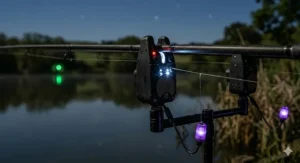
The roller wheels feature a night-glow coating, a small touch that makes surprisingly big difference when you’re locating your rods in complete darkness. No head torch needed — just look for the faint green glow. The dedicated LED patterns for drop-back bites work well, though they’re not quite as distinct as the Prologic C-Series system.
The receiver is feature-rich for the price point. It includes a bivvy light function that illuminates when your alarms trigger — brilliant for reducing false alarms from your separate bivvy light if you’re using one. The built-in low battery warning on both alarms and receiver has saved me from discovering dead kit at inconvenient moments. The vibration mode on the receiver is powerful enough to wake you even if you’ve wedged it under your pillow.
The three-alarm setup runs on 9V batteries (one per alarm), whilst the receiver takes three AAAs. Battery life is good but not exceptional — expect 3-4 months of regular weekend use before needing replacements. The alarms and receiver both have built-in low battery warnings, giving you advance notice rather than discovering dead units mid-session.
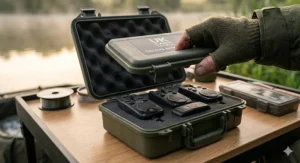
UK buyers note that the presentation case is more robust than the NGT XT3 equivalent, with better padding and more secure latches. It’s not going to win design awards, but it’ll protect your investment during transport, which matters when you’re chucking tackle into car boots and tackle rooms.
The main criticism is the bulk — these aren’t alarms for minimalist anglers or those prioritising pack-down size. They’re chunkier than competitors, though this contributes to the robust weatherproofing. Some users also report the button layout being slightly confusing initially, though most adjust within a session or two.
Pros:
✅ 100% waterproof construction for British weather
✅ Night-glow roller wheels for easy rod location
✅ Bivvy light function on receiver reduces false alarms
Cons:
❌ Bulkier design than Saber S4 or NGT XT3
❌ Button layout initially confusing in the dark
At £44-£48, the NGT Dynamic represents solid value for anglers prioritising weather resistance and feature density over compact design. It’s particularly well-suited to UK anglers who fish year-round in all conditions.
7. Saber Z3 Wireless Bite Alarm Set (3+1)
The Saber Z3 is Saber’s simplified offering, typically priced around £38-£45 for a three-alarm-plus-receiver set. Think of it as the S4’s younger sibling — sharing the same compact design philosophy but with a stripped-back feature set that focuses on core functionality.
The ultra-bright red LED is the standout feature. Saber has gone for a single, blindingly bright LED rather than multiple coloured options, and in British conditions where visibility matters more than aesthetics, it’s a smart choice. You’ll spot this LED from 30+ metres even in misty conditions, which is rather useful when you’re fishing large club waters or syndicate lakes.
The high-quality speaker produces good volume with clear tonal quality, though the tone adjustment range is more limited than the S4 or NGT models. Volume control is straightforward with a simple dial system that’s easier to operate in the dark than button-based competitors. The lack of sensitivity adjustment is the main compromise — you’re stuck with the factory setting, which Saber has pitched at a middle ground that works for most fishing.
The wireless function is reliable with decent range — not quite matching the NGT XT3’s distance, but perfectly adequate for typical fishing scenarios where your bivvy is within 20-30 metres of your rods. The receiver is compact and light, easily slipped into a pocket if you’re wandering the banks or chatting with fellow anglers.
The compact design makes these alarms brilliant for mobile anglers, stalkers, or those fishing multiple venues where quick setup matters. They’re noticeably smaller than the NGT Dynamic or even the NGT XT3, though not quite as compact as the S4. The protective case is basic but functional.
What you lose compared to the S4: removable snag ears (though you can purchase compatible ones separately), sensitivity adjustment, and the 4-way receiver (the Z3 receiver handles three alarms only). What you gain: slightly lower price and even simpler operation. For some anglers, especially beginners, that’s a sensible trade-off.
Battery life is reasonable — the alarms run on A23 12V alkaline batteries, which are readily available but slightly more expensive than 9V or AAAs. Expect 3-4 months of weekend use before replacement. The receiver uses standard AAAs with similar longevity.
Pros:
✅ Ultra-bright LED visible in fog and mist
✅ Compact design perfect for mobile fishing
✅ Simple operation ideal for beginners
Cons:
❌ No sensitivity adjustment (fixed factory setting)
❌ More limited tone adjustment range than S4
At £38-£45, the Saber Z3 is ideal for anglers who value simplicity and compact design over feature density. It’s perfect for beginners who might be overwhelmed by endless adjustment options, or experienced anglers wanting a straightforward backup set.
How to Choose Budget Bite Alarms for UK Conditions
Choosing bite alarms in the sub-£50 bracket requires different thinking than selecting premium models. You can’t have everything, so you need to prioritise features that actually matter for your fishing style and British conditions.
1. Weather Sealing Trumps Everything Else
We fish in Britain, where “partly cloudy” means it’ll definitely rain, and “light showers” means you’ll need a boat. Weather sealing isn’t optional — it’s the difference between alarms that last multiple seasons versus expensive landfill after one wet autumn. Look for terms like “waterproof,” “weather-resistant,” or “double-sealed electronics” rather than vague claims about “splash resistance.” The JRC Radar C4 and NGT Dynamic explicitly mention proper weather sealing. The Prologic C-Series uses rubberised housing that keeps water out. Cheap alarms with basic plastic shells? They’ll work fine until they don’t, usually mid-session in a downpour.
2. Wired vs Wireless: Match It to Your Fishing Distance
Wireless functionality adds £15-£25 to a set’s cost. That’s worthwhile if your bivvy sits 20+ metres from your rods — climbing out of a sleeping bag to check alarms in the rain gets old fast. But if you fish small club waters where everything is within arm’s reach? Save the money. Wired alarms like the JRC Radar C4 or NGT VS set perform identically to wireless models when you’re fishing close range. The main wireless advantage in British conditions is keeping the receiver inside your bivvy during rain whilst your alarm heads brave the elements on the rods.
3. Sensitivity Adjustment for Wind Management
Britain isn’t known for calm conditions. Wind buffeting your lines triggers false alarms on fixed-sensitivity models, turning your peaceful session into an irritating sequence of phantom takes. Adjustable sensitivity lets you dial down responsiveness on windy days, eliminating most false alerts without missing genuine bites. The NGT XT3, JRC Radar C4, Prologic C-Series, and NGT Dynamic all offer sensitivity adjustment. The Saber S4 and Z3 don’t — acceptable if you mainly fish sheltered venues, problematic if you’re regularly on exposed waters.
4. Battery Type: Convenience vs Running Costs
9V batteries last longer between changes but cost more per unit. AAA batteries are cheaper and universally available, but you’ll change them more frequently. LRV08 batteries (used in some NGT models) are inexpensive but slightly less common. For weekend anglers doing 2-4 sessions monthly, battery type barely matters — you’ll spend perhaps £15-£20 annually regardless of battery format. Daily anglers or those doing week-long campaigns should favour 9V systems for less frequent changes. British petrol stations stock 9V and AAA batteries; LRV08s require advance planning.
5. Volume Range for Social Fishing
UK club waters and syndicate lakes often mean fishing within earshot of other anglers. An alarm that only goes to “wake the dead” volume isn’t considerate of your neighbours. Look for models with genuine low-volume settings — the NGT XT3 and Prologic C-Series both offer usably quiet minimum volumes. The NGT VS set’s lowest setting is still quite loud, which limits your options on social waters. Conversely, make sure the maximum volume is genuinely loud enough to wake you from deep sleep — some budget alarms produce weedy beeps that you’ll sleep through after a long day on the bank.
Common Mistakes When Buying Budget Bite Alarms
Chasing Features You’ll Never Use
Bluetooth connectivity, smartphone apps, 47 different alarm tones — these sound brilliant in product descriptions, but how often will you actually use them? Most anglers set their alarms to a preferred tone and volume in session one and never touch the settings again. Budget alarms with 6 tone options do everything you need; 47 options just means more buttons to press incorrectly at 3 AM. Focus on core functionality: reliable bite detection, weather resistance, and battery life.
Ignoring the Total Setup Cost
That £25 three-alarm set looks brilliant until you realise it needs bobbins (£15), snag ears (£18), and batteries (£8) to actually function. Suddenly your “bargain” costs £66 versus the £45 complete set that included everything. British anglers often overlook delivery costs too — free delivery on Amazon.co.uk typically requires £25+ orders. Factor in the complete shopping basket, not just the alarm price.
Buying Single Alarms to “Save Money”
Three single alarms at £32 each equals £96. The three-alarm set with receiver costs £45. The maths isn’t complicated, yet anglers routinely fall into this trap, convinced they’re being savvy by avoiding “unnecessary” packaged sets. Unless you genuinely only fish one rod, packaged sets almost always represent better value. The exception: buying a single premium alarm like the Prologic C-Series as your first purchase, then building up over time.
Overlooking UK-Specific Compatibility
This matters less for bite alarms than electronics with plugs, but still worth noting: some budget alarms designed for US markets use different battery types (CR123A instead of readily-available 9V), have receivers operating on frequencies less suited to UK conditions, or lack proper UKCA certification. Stick with products explicitly marketed for UK anglers or sold by UK tackle retailers on Amazon.co.uk. The products listed in this guide are all UK-market compatible.
Expecting Premium Durability at Budget Prices
Budget alarms using £40-£50 technology will not last 10 years of weekly use. They won’t. Premium alarms costing £150+ each justify that price partly through materials and construction that survive decades of abuse. Budget models give you 2-4 seasons of reliable service if treated reasonably well, perhaps longer with gentle use. That’s perfectly acceptable value — you can replace them three times and still spend less than buying premium models once. Just don’t expect Fox International or Delkim longevity.
Budget Bite Alarms vs Premium Models: Real-World Differences
Here’s the uncomfortable truth that tackle shops don’t want you hearing: for occasional anglers doing 1-2 sessions monthly, budget bite alarms under £50 perform the core function — detecting bites and alerting you — just as well as £300 premium sets. The differences manifest in refinement, durability, and edge-case performance rather than fundamental capability.
Where Budget Alarms Match Premium Performance:
- Basic bite detection on forward runs
- Volume and tone adjustment for personalisation
- LED indication in darkness
- Weather resistance in moderate rain
- Battery-powered operation lasting months
Where Premium Alarms Justify Their Cost:
- Ultra-sensitive detection for wary fish or light lines
- Precision sensitivity adjustment with multiple settings
- Advanced drop-back differentiation systems
- Long-distance wireless range (300m+ vs 100-200m budget)
- Waterproofing that survives submersion, not just rain
- Build materials lasting 10+ years versus 2-4 years
- Piezo vibration sensors versus roller wheels
- Bluetooth connectivity and smartphone integration
- Extended manufacturer warranties and UK-based support
For British anglers doing weekend club water sessions, catching 20-30 fish annually, fishing familiar venues in daylight or modest darkness — budget alarms do everything you need. For anglers pursuing wary carp on heavily-pressured syndicate waters, fishing ultra-long range, camping out in week-long campaigns through biblical weather, or demanding absolute precision — premium alarms earn their keep. As The Guardian’s outdoors section frequently notes, British angling culture increasingly values practical functionality over unnecessary prestige purchases.
The honest assessment: you’re not “compromising” with budget alarms, you’re right-sizing your equipment to your fishing frequency and requirements. A £45 NGT XT3 set detecting bites perfectly well on a £8-per-year day ticket water represents better value than £900 of Delkims achieving identical results on the same venue. But if you’re fishing £1,000+ annually syndicate waters where the fish see everything and spook at the slightest oddity, those Delkims suddenly make economic sense.
Setting Up Budget Alarms for Maximum Performance in British Weather
Budget bite alarms work brilliantly when set up correctly for UK conditions. Get the basics right and your £40 set will outperform premium alarms configured poorly.
Protect from Direct Rain
Weather-resistant isn’t waterproof. Position alarms under rod rests or bank sticks rather than fully exposed. A simple brolly positioned over your rod setup shields alarms from the worst downpours without obstructing bite detection. If you’re fishing without a brolly, angle alarms slightly downward so rain doesn’t pool on top surfaces. After wet sessions, wipe alarms dry before storing them in cases — trapped moisture accelerates corrosion of battery contacts.
Dial Sensitivity for Wind Conditions
Start with mid-range sensitivity settings and adjust based on observed performance. If you’re getting false alerts from wind-buffeted lines, reduce sensitivity by one notch every 15 minutes until false alerts stop. If you suspect you’re missing tentative takes, increase sensitivity by one notch. The sweet spot varies daily based on wind strength, line diameter, and distance fished. Models with fixed sensitivity (Saber S4/Z3) work best on sheltered venues or calm days.
Battery Management in Cold Weather
British winter temperatures drain batteries faster than summer conditions. According to research on battery performance, cold weather can reduce battery capacity by 20-40%, meaning your alarms will need more frequent battery changes during November-February sessions. Carry spare batteries during winter — a set that lasts 4 months in summer might only manage 6-8 weeks in winter. Before overnight sessions, check battery indicators even if you “know” they’re fine. Discovering dead batteries at midnight, 15 miles from the nearest 24-hour petrol station, teaches this lesson the expensive way.
Use Proper Snag Ears
Budget alarms often skip proper snag ears to hit price points. Buy them separately (£8-£12 for three) or choose sets like the Saber S4 that include them. Snag ears prevent alarms toppling off rod rests when big fish charge toward snags or weeds. In British venues with heavy weed growth or snaggy margins, they’re essential rather than optional. They also protect your alarm if you drop it whilst adjusting rods.
Understanding Alarm Features: What Actually Matters vs Marketing Fluff
Volume & Tone Control: Essential You need at least three volume levels and two distinct tones. Anything beyond six volumes or six tones enters diminishing returns territory — your ears can’t distinguish between 12 subtly different beeps at 3 AM anyway.
Sensitivity Adjustment: Very Important Makes the difference between functional and frustrating on windy days. Two sensitivity settings (high/low) handle most situations; six settings are nice but not essential. Fixed sensitivity is manageable on sheltered waters, problematic on exposed venues.
LED Brightness: Moderately Important
Bright enough to see from 20-30 metres in darkness is the minimum. Adjustable brightness is useful but not critical — you can usually position yourself closer to rods if visibility is genuinely poor.
Drop-Back Differentiation: Nice to Have Helps identify drop-back bites versus forward runs, but experienced anglers recognise the difference from bobbin movement anyway. Useful for beginners; not essential for competent anglers.
Wireless Range: Match to Venue Size 100-150m range handles most UK club waters and small-to-medium carp fisheries. You’ll rarely fish with your bivvy more than 50m from your rods. Claims of 300m+ range are impressive on paper, meaningless in practice unless you’re fishing massive reservoirs or gravel pits.
Night Light Function: Genuinely Useful Saves constantly using your head torch for line checks and bait changes. The difference between a dedicated night light button and a long-press combination is minor, but dedicated buttons are easier with cold, wet fingers.
Rolling Code Technology: Important for Social Venues Prevents your alarms triggering when the angler 20m away gets a bite. Crucial on busy club waters; irrelevant on quiet syndicate lakes or if you’re the only angler present.
Bivvy Light Integration: Luxury Not Necessity Nice feature, but you can achieve the same result with a separate bivvy light for £12. Don’t pay a premium for integrated bivvy lights unless they’re included at competitive pricing.
Long-Term Cost Analysis: Budget Alarms vs Premium Models
Let’s run the numbers based on typical UK angling patterns, because the “budget versus premium” decision isn’t just about upfront cost — it’s about total cost of ownership across your fishing career.
Scenario 1: Casual Angler (20-30 sessions annually)
- Budget alarm set: £45 initial cost + £15 annual battery replacement
- Expected lifespan: 3-4 years = £105-£120 total cost
- Premium alarm set: £280 initial cost + £12 annual battery replacement
- Expected lifespan: 10+ years = £400+ total cost
- Verdict: Budget alarms save £280-£300 over 10 years
Scenario 2: Regular Angler (50-80 sessions annually)
- Budget alarm set: £45 initial cost + £25 annual batteries + replacement every 3 years
- 10-year cost: £195 (three sets + batteries)
- Premium alarm set: £280 initial cost + £20 annual batteries
- 10-year cost: £480
- Verdict: Budget alarms still save £285, but the gap narrows due to replacement frequency
Scenario 3: Dedicated Angler (100+ sessions annually)
- Budget alarm set: £45 initial cost + £40 annual batteries + replacement every 2 years
- 10-year cost: £625 (five sets + batteries + increased battery consumption)
- Premium alarm set: £280 initial cost + £30 annual batteries
- 10-year cost: £580
- Verdict: Premium alarms become cost-effective due to durability
The crossover point sits around 75-90 sessions annually. Below that threshold, budget alarms offer superior value. Above it, premium models justify their cost through longevity and reduced replacement frequency. Most British anglers fish 30-50 sessions yearly, placing them firmly in budget alarm territory for best value.
However, this analysis assumes you’re not losing or breaking alarms through accidents. If you’re prone to dropping kit into lakes, leaving alarms on rods during wind storms, or generally treating gear roughly, budget models make even more sense — replacing a £45 set hurts less than replacing £280 of premium electronics.
UK Regulations and Bite Alarm Etiquette
British fisheries operate under different regulations and social expectations than American or European venues. Understanding bite alarm etiquette keeps you in good standing with fellow anglers and fishery owners.
Volume Restrictions
Many UK club waters and day ticket fisheries restrict alarm volume during night hours (typically 11 PM – 6 AM). “Reasonable volume” is the standard phrasing, interpreted as loud enough for you to hear but not audible from neighbouring swims. The NGT XT3 and Prologic C-Series minimum volumes satisfy this requirement; the NGT VS set’s lowest setting sometimes doesn’t. Check fishery rules before your session — some venues ban audible alarms overnight entirely, requiring silent head indicators only.
Multi-Angler Venues
Rolling code technology or unique alarm tones prevent your alarms triggering when other anglers’ alarms activate. On busy club waters where 8-10 anglers might be fishing within 50 metres, this becomes essential for sleep quality. If your budget alarms lack rolling code (like the JRC Radar C4 or NGT VS), set each alarm to a distinctively different tone pattern so you can identify whether it’s your bite or your neighbour’s.
Bailiff Expectations
Some fisheries require alarms to be muted or switched off when you’re not actively fishing your swim — for example, if you’ve wandered off for a chat or walked to the car park. This prevents nuisance alarms disrupting other anglers. Battery-powered alarms with simple on/off switches (rather than complicated menus) make compliance easier.
Carp Welfare Considerations
The British carp fishing scene strongly emphasises fish welfare. Audible alarms help ensure prompt response to runs, minimising playing time and stress for hooked fish. Silent fishing using only visual indicators is less acceptable on carp waters compared to match fishing venues where it’s standard practice. The Environment Agency’s guidance on responsible angling emphasises the importance of proper equipment for fish welfare, including bite indication systems that enable prompt responses to hooked fish.
Frequently Asked Questions
❓ Do budget bite alarms work in heavy rain?
❓ Can I add a receiver to wired alarms later?
❓ How long do budget alarm batteries actually last in UK conditions?
❓ Are single alarms better value than three-alarm sets?
❓ Can budget alarms detect subtle bites from wary fish?
Conclusion: Making Your Decision
Choosing budget bite alarms under £50 in the UK market comes down to matching features to your actual fishing patterns rather than chasing the most impressive specification sheet. The products reviewed above represent the genuine sweet spots in their respective categories — each excels in different scenarios depending on your priorities.
For feature-rich wireless functionality at brilliant value, the NGT XT3 Wireless leads the pack at £42-£45. If compact design and included snag ears matter more than sensitivity adjustment, the Saber S4 justifies its £48-£50 price tag. Anglers prioritising single-alarm quality over multi-alarm value should consider the Prologic C-Series around £38. Those on absolutely rock-bottom budgets will find the NGT VS 3-Alarm Set at £25-£35 performs far better than its price suggests.
The honest truth? Every alarm reviewed here will detect bites reliably when properly set up for British conditions. Your choice should reflect how often you fish (affecting durability requirements), where you fish (determining weather resistance and wireless range needs), and whether you value feature density or simplicity. Premium alarms offer refinement and longevity; budget alarms offer functional reliability at prices that make fishing accessible rather than financially punishing.
British angling has evolved dramatically over the past decade, with tackle quality trickling down from premium to budget categories faster than ever before. The bite alarms available today for £40-£50 would’ve cost £150-£200 a decade ago. Take advantage of this democratisation of quality — you don’t need to spend £300 to catch fish effectively in 2026.
Recommended for You
- 7 Best Illuminated Bite Alarms UK 2026 | Night Fishing Guide
- Best 7 Wireless Bite Alarms UK 2026
- 7 Best Bite Alarms for Carp Fishing: UK Expert Review 2026
Disclaimer: This article contains affiliate links. As an Amazon Associate, I earn from qualifying purchases. If you purchase products through these links, we may earn a small commission at no additional cost to you.
✨ Found this helpful? Share it with your mates! 💬🤗
