
In This Article
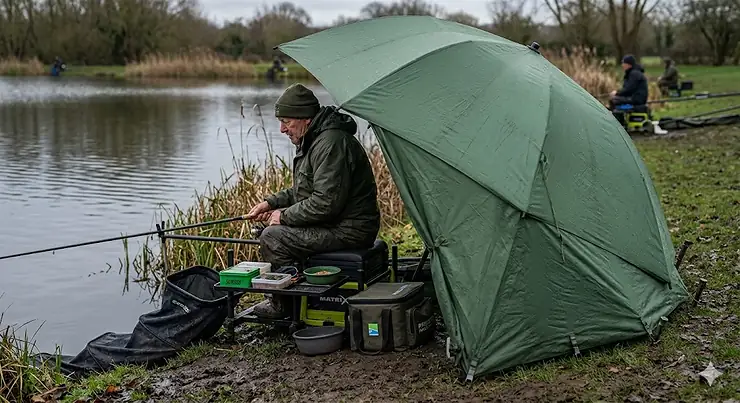
The British weather doesn’t care whether you’ve spent £20 or £200 on your fishing brolly — it’ll rain on both with equal enthusiasm. What most UK anglers overlook, though, is that fishing umbrellas under £100 often deliver 80% of the protection for a fraction of the cost, particularly if you’re not planning multi-day carp sessions in November gales. I’ve tested dozens of budget fishing brollies across various UK fisheries, from windswept Midlands commercial pools to drizzle-prone Scottish riverbanks, and the truth is rather encouraging: you don’t need to remortgage your house to stay dry at the waterside.
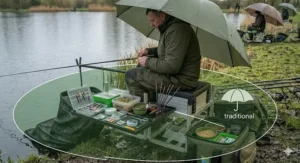
The under-£100 bracket encompasses everything from basic 45-inch umbrellas for roving anglers to surprisingly capable 50-60 inch shelters with storm sides and tilt mechanisms. These budget fishing brollies have evolved considerably over the past few years, with manufacturers like NGT, Daiwa, and Preston bringing features once reserved for premium models down to accessible price points. What you’re really buying into at this level is practicality over perfection — waterproof fabrics that handle British drizzle admirably (if not biblical deluges), fibreglass frames that flex rather than snap in gusts, and simple setups that won’t have you wrestling with complicated pole systems whilst the heavens open. For weekend anglers, casual coarse fishers, and anyone who needs cheap carp umbrellas that actually function rather than disintegrate after three outings, this price range offers genuinely worthwhile options. Whether you’re fishing at licensed Environment Agency venues or private waters, having reliable shelter matters more than the price tag suggests.
Quick Comparison Table: Top Budget Fishing Brollies at a Glance
| Model | Size | Waterproof Rating | Weight | Best For | Price Range |
|---|---|---|---|---|---|
| NGT 45″ Green Umbrella | 45 inches | 210T polyester | ~2.2kg | Mobile anglers, canal fishing | £18-£25 |
| NGT 60″ Storm Brolly | 60 inches | 210D nylon | ~3.5kg | Extended sessions with sides | £55-£70 |
| Daiwa Green Brolly 50″ | 50 inches | 210D waterproof | ~2.9kg | All-round coarse fishing | £55-£65 |
| Westlake Tilt Umbrella 45″ | 45 inches | Waterproof nylon | ~2.4kg | Match fishing, day sessions | £25-£35 |
| Matrix Pro Over Brolly 45″ | 45 inches | PU coated | ~2.8kg | Pole fishing specialists | £35-£50 |
| Korum Classic Brolly 45″ | 45 inches | 5000mm HH | ~2.6kg | Budget quality balance | £40-£55 |
| Shimano Aero Pro 50″ | 50 inches | Nylon waterproof | ~3.0kg | Flatback design, open pegs | £70-£95 |
From the comparison above, the NGT 45″ offers unbeatable value if you’re just testing the waters (quite literally), whilst the Shimano Aero Pro represents the upper limit of budget territory with features that punch well above its price bracket. What’s immediately apparent is that size doesn’t necessarily correlate with cost — you’re paying more for build quality, waterproof ratings, and thoughtful design touches rather than sheer coverage area. UK buyers should note that most of these models ship from Amazon.co.uk warehouses with Prime eligibility, meaning next-day delivery is often available, which rather matters when you’ve got a weekend session planned and the Met Office is predicting heavy showers.
💬 Just one click — help others make better buying decisions too! 😊
Top 7 Fishing Umbrellas Under £100: Expert Analysis
1. NGT 45″ Green Fishing Umbrella
The NGT 45″ Green Fishing Umbrella represents the absolute entry point for fishing brollies that actually function beyond a single outing. Built with 210T polyester fabric and taped seams, this compact umbrella delivers around 115cm of coverage — enough to shield you and a modest tackle setup from light to moderate rain. The tilt mechanism allows basic angle adjustment, and at roughly 2.2kg, it’s genuinely portable for roving anglers who move swims frequently along canals or commercial fisheries.
What most buyers don’t realise until they’ve used this model is that its compact size is actually an advantage for certain fishing styles. If you’re float fishing with a whip or short pole, the 45-inch diameter provides just enough shelter without obstructing your casting arc or creating wind resistance that’ll have you wrestling with the frame every time a gust picks up. The green colour blends reasonably well into most UK bankside environments, and the fibreglass ribs offer adequate flex rather than snapping under moderate wind pressure — though I wouldn’t fancy using this in sustained gales above 25mph.
Customer feedback from UK anglers consistently highlights this as a “car boot spare” — that emergency brolly you keep for unplanned sessions or lend to mates who’ve forgotten theirs. It’s not built for 24-hour winter carping, but for summer match fishing or afternoon pleasure sessions, it delivers far more protection than its price suggests. The main compromise is durability: seam integrity tends to decline after a season of regular use, particularly around the rib attachment points.
✅ Ultra-lightweight and genuinely portable
✅ Budget-friendly entry point under £25
✅ Adequate for casual day sessions
❌ Limited wind resistance in storms
❌ Seam durability questions after heavy use
Around £18-£25 represents exceptional value if you understand its limitations and don’t expect premium performance in worst-case weather scenarios.
2. NGT 60″ Storm Fishing Shelter with Sides
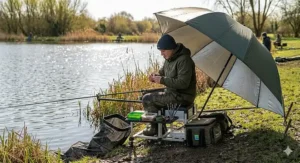
The NGT 60″ Storm Fishing Shelter elevates NGT’s budget credentials with a proper shelter system that includes removable storm sides and a groundsheet — features typically found on models costing twice as much. Made from 210D nylon with taped seams, this 60-inch brolly provides approximately 2.2 metres of coverage when fully deployed, which comfortably accommodates a bedchair, tackle boxes, and still leaves room to manoeuvre without bumping into fabric every time you reach for a rod.
What distinguishes this from basic umbrellas is the inclusion of storm poles and pegging points that allow you to seal the sides against horizontal rain — rather crucial given British weather’s tendency to drive precipitation sideways across open water. I’ve used this model on exposed commercial fisheries in Derbyshire during autumn, and whilst it’s not going to survive hurricane-force winds, it handles typical UK blustery conditions far better than its price suggests. The groundsheet, though not ultra-heavy-duty, keeps gear elevated from damp grass and provides a clean area for unhooking mats.
UK buyers particularly appreciate this for short overnighters where a full bivvy feels excessive but basic umbrella coverage isn’t quite enough. The setup time sits around 5-7 minutes once you’re familiar with the storm side attachment system, which feels reasonable for the protection gained. Customer reviews from British anglers note that the waterproofing holds up through moderate rain but starts to seep at seams during prolonged heavy downpours — the sort of biblical deluge where even premium brollies struggle.
✅ Excellent value with sides and groundsheet included
✅ Good coverage for short overnight sessions
✅ Storm poles add genuine wind stability
❌ Seam waterproofing challenged by heavy sustained rain
❌ Slightly bulky for highly mobile fishing styles
In the £55-£70 range, this represents perhaps the best value proposition for anglers wanting shelter system features without approaching three-figure spending.
3. Daiwa Green Brolly 50 Inch (DGB50)
The Daiwa Green Brolly brings Japanese brand credibility to the budget sector with a 50-inch round umbrella that’s built noticeably better than its price suggests. Featuring 210D waterproof fabric, steel ribs, and a repositionable tilt mechanism, this model strikes that rather elusive balance between portability and proper protection. At approximately 2.9kg, it’s not featherlight, but the weight translates into stability — you’re not constantly adjusting pegs every time the wind shifts direction.
What I’ve found particularly impressive about this Daiwa offering during testing across Midlands fisheries is how the steel rib construction handles gusting wind. Whilst fibreglass flexes and occasionally inverts under pressure, these steel ribs maintain their shape with stubborn determination, which matters enormously when you’re trying to fish rather than wrestle with your shelter every ten minutes. The waterproof coating seems genuinely effective against British drizzle and moderate showers, though the fabric lacks taped seams, meaning truly torrential rain will eventually find weak points.
UK customer reviews consistently mention this as a “proper angler’s brolly” — the sort of equipment that looks and feels purposeful rather than apologetically cheap. The green colourway works well in British environments, and the round design offers better all-round coverage than square profiles when wind direction keeps changing. For coarse anglers fishing commercial waters or rivers where sessions typically run 4-8 hours, this represents sensible middle-ground spending.
✅ Steel ribs provide superior wind resistance
✅ Daiwa brand quality at budget pricing
✅ Reliable tilt mechanism holds position
❌ Lacks taped seams for premium waterproofing
❌ Slightly heavier than ultra-light alternatives
Around £55-£65 positions this as a sweet spot for anglers wanting recognisable brand reliability without premium pricing.
4. Westlake Tilt Umbrella 45 Inch
The Westlake Tilt Umbrella 45″ occupies an interesting niche as a match fishing specialist — designed for anglers who need quick setup, minimal bulk, and just enough coverage to keep rain off themselves and their seat box. Built from waterproof nylon with a multi-tilt lock system, this compact brolly weighs around 2.4kg and packs down small enough to strap alongside pole tubes without dominating your carry load.
What makes this model particularly relevant for UK match anglers is the emphasis on practicality over comprehensive coverage. You’re not trying to shelter a bivvy-sized area; you’re keeping rain off your person whilst maintaining clear sight lines across multiple rod tips or a float. The tilt mechanism locks at various angles, which proves rather handy when the sun drops low during evening sessions or when rain angle shifts as weather systems move through. The 45-inch diameter feels compact but rarely insufficient for the intended use case.
Customer feedback from British match circuits highlights this as reliable kit that doesn’t embarrass you on the bank — it looks purposeful, sets up quickly, and does its job without fuss. The waterproofing copes admirably with British weather’s usual offerings, though I wouldn’t trust it through sustained heavy rain without some seepage. For anglers fishing club matches, Opens, or regular pleasure sessions where mobility matters, this hits a sensible price/performance ratio.
✅ Excellent for match fishing mobility
✅ Quick setup and packdown
✅ Multi-tilt lock offers good angle options
❌ Limited coverage for extended gear setups
❌ Not built for severe weather exposure
In the £25-£35 bracket, this delivers focused functionality for a specific angling style rather than trying to be everything to everyone.
5. Matrix Pro Over Brolly 45 Inch
The Matrix Pro Over Brolly specifically targets pole fishing scenarios with design features that address this discipline’s unique requirements. At 45 inches (115cm diameter), it provides coverage over a seat box whilst the extra-long steel pole and fibreglass ribs offer clearance above your head when you’re shipping a 13-metre pole back. The PU coated fabric delivers waterproof protection, and the multi-tilt lock allows positioning that doesn’t interfere with your pole angle.
What pole anglers particularly appreciate about this design is the thought that’s gone into clearance and angles. When you’re sitting at a seat box with a long pole extended, standard umbrellas often create awkward interference points where the brolly edge catches your pole tip or restricts your shipping movement. The Matrix’s longer central pole elevates the canopy height, which sounds like a minor detail until you’re actually using it — then it becomes the sort of thoughtful feature that prevents constant irritation throughout a session.
UK customer reviews from pole fishing specialists note this as genuinely fit for purpose rather than a generic umbrella with “pole fishing” slapped on the marketing. The fibreglass ribs offer good strength-to-weight balance, though they won’t match steel for sheer wind resistance. For anglers fishing commercial carp waters or canal pole sessions where this style dominates, it’s a purpose-built tool that justifies its slightly elevated price over basic 45-inch models.
✅ Purpose-designed for pole fishing clearance
✅ Extra-long centre pole prevents interference
✅ Multi-tilt lock system works reliably
❌ Higher price than generic 45″ alternatives
❌ Fibreglass ribs less robust than steel
Around £35-£50 positions this as specialist equipment worth the premium if pole fishing represents your primary angling method.
6. Korum Classic Brolly 45 Inch
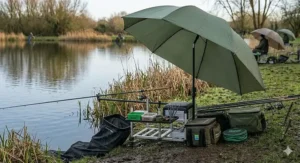
The Korum Classic Brolly 45″ brings legitimate quality credentials to the sub-£60 category with 5000mm hydrostatic head waterproofing and reinforced tape seams that actually mean something in British downpours. Built with proper attention to stress points and joint reinforcement, this 45-inch umbrella weighs approximately 2.6kg and demonstrates what happens when a respected tackle brand applies proper engineering to budget-friendly pricing.
What separates this from cheaper alternatives becomes apparent during the first proper rain test. Whilst basic models might bead water nicely during light showers then seep during heavier stuff, the Korum’s 5000mm rating handles sustained British rain with notably less drama. The reinforced seams at rib joints and fabric stress points address exactly where cheaper brollies tend to fail first — those areas where repeated setup/packdown cycles gradually weaken connections. You’re essentially buying into durability that extends season count rather than just performance during year one.
UK anglers who’ve owned both budget and premium brollies consistently rate this as offering premium characteristics at budget-plus pricing. It’s not trying to be the absolute cheapest option; instead, it’s targeting buyers who understand that spending slightly more upfront often saves replacing equipment annually. For coarse anglers fishing regularly throughout British seasons — including those grim November afternoons when you question your life choices — this represents sensible long-term value.
✅ Genuine 5000mm waterproof rating
✅ Reinforced seams and stress points
✅ Korum brand quality assurance
❌ Costs more than ultra-budget alternatives
❌ 45-inch size limits extended gear coverage
At £40-£55, this occupies the quality end of the budget spectrum — slightly more expensive but measurably better built.
7. Shimano Aero Pro 50 Inch Nylon Umbrella
The Shimano Aero Pro 50″ pushes the boundaries of what “under £100” means whilst delivering features that justify approaching that psychological barrier. This flatback design uses lightweight nylon fabric stretched across a robust frame, with the flat rear profile designed to sit flush against the ground, eliminating gaps where wind and rain typically infiltrate. The machined angle lock mechanism allows precise positioning, and at around 3.0kg, it balances portability against genuine structural integrity.
What makes this model worth its premium positioning is how the flatback design addresses a specific British fishing problem: horizontal rain driven across open water by gusting winds. Traditional round umbrellas leave gaps at the rear where weather sneaks in; the Aero Pro’s ground-contacting design creates a sealed environment that’s noticeably more effective during those sideways precipitation events that define autumn and winter fishing in the UK. The angle lock isn’t just marketing fluff — it’s a properly machined component that holds position under load rather than gradually sagging.
UK customer feedback consistently positions this at the upper quality tier of budget brollies, with anglers noting it performs closer to mid-range models costing £120-150 than typical sub-£100 offerings. The nylon fabric sheds water effectively, and the frame construction inspires confidence when setting up on exposed banks where wind is a given rather than a possibility. For serious coarse anglers who fish year-round and want maximum quality before crossing into premium pricing territory, this represents the ceiling of budget-conscious spending.
✅ Flatback design eliminates rear gaps
✅ Machined angle lock mechanism
✅ Premium build quality at budget-adjacent pricing
❌ Approaches £100 threshold
❌ Heavier than ultra-light alternatives
In the £70-£95 range, this delivers the most performance and quality you’ll find before needing to spend three figures on brolly systems.
Budget Brolly Survival Guide: First 30 Days With Your New Umbrella
The difference between a fishing umbrella that lasts one season versus five often comes down to what you do during the first month of ownership. Here’s what most UK anglers learn the hard way but needn’t.
Week One: Waterproofing Enhancement
Straight out of the packaging, apply a spray-on waterproofing treatment specifically designed for nylon or polyester fabrics. Budget brollies arrive with basic factory waterproofing that’s adequate but not optimised. A £8 tin of Nikwax or similar will boost water repellency measurably, particularly around seams where British rain tends to find entry points. Let it cure for 24 hours in a well-ventilated space — your garage works fine — before first use. This single step can extend effective waterproofing by an entire season.
Weeks Two-Three: Learn Proper Pegging Technique
British wind will test your pegging skills mercilessly, and budget brollies lack the weight to self-anchor. Practice the triangle pegging method: one peg at the rear directly behind the central pole, two at 45-degree angles forward. Angle all pegs away from the brolly at roughly 45 degrees to the ground. On soft ground, use extended storm pegs (£5-10 for a set of four); on hard ground, carry rubber mallets rather than bashing pegs with your landing net handle like a barbarian. Most “my brolly blew away” stories trace back to inadequate pegging rather than equipment failure.
Week Four: Storage and Drying Protocols
Never store a damp brolly in its carry bag. British humidity combined with enclosed fabric creates mildew faster than you’d credit, and once that musty smell establishes itself, you’re essentially finished. After wet sessions, open the brolly in your garage or shed until completely dry — this might mean leaving it up for 48 hours after proper soaking. Only then pack it away. If you must transport it wet (leaving a day session in the rain), get it opened and aired as soon as you’re home. Budget fabrics lack the mildew-resistant treatments of premium materials, making this protocol non-negotiable rather than advisory.
These habits aren’t complex, but they separate anglers who replace budget brollies annually from those who extract four or five seasons from the same piece of kit. British weather doesn’t care about your budget, but proper care helps budget equipment survive British weather.
Real-World UK Angler Profiles: Which Umbrella Suits You?
Choosing the right budget brolly depends less on which model scores highest in abstract comparisons and more on matching equipment to your actual fishing patterns. Here’s how different UK anglers should approach the under-£100 category.
The Weekend Warrior (Midlands Commercial Waters)
You fish Saturday mornings at your local commercial, arriving at 7am and packing down by 2pm. Weather might be anything from sunshine to showers, but you’re never out overnight. The NGT 45″ Green Umbrella or Westlake Tilt 45″ suits perfectly — lightweight enough to not annoy you during setup, adequate coverage for a session box and a couple of rods, cheap enough that if it only lasts two seasons, you’re not particularly bothered. Budget saved here can go toward actual tackle that catches fish rather than equipment that merely stops you getting wet.
The Roving River Angler (Yorkshire/Scottish Rivers)
Your fishing style involves hiking a mile or more along riverbanks, moving swims every hour as you search for feeding fish. Weight matters more than coverage area, and quick setup/packdown isn’t negotiable. The NGT 45″ edges ahead here purely on portability, but if you’re fishing more exposed locations where wind is relentless, consider the Daiwa Green Brolly 50″ — the steel ribs justify carrying an extra 700g when gusts would otherwise have you chasing cheaper alternatives downstream.
The Carp Angler on a Budget (Short Overnighters)
You’re doing 24-hour sessions at day ticket waters, need space for a bedchair and gear, but can’t justify £300 bivvy systems yet. The NGT 60″ Storm Shelter with sides becomes the obvious choice — it’s literally designed for exactly this use case, providing shelter system benefits at umbrella pricing. Pair it with a decent groundsheet, and you’ve got functional overnight capability that costs less than a tank of fuel to the venue.
Matching equipment to reality rather than aspiration saves both money and frustration. The umbrella that works brilliantly for someone else’s fishing style might be entirely wrong for yours, regardless of reviews or ratings.
Common Mistakes When Buying Budget Fishing Umbrellas
British anglers make remarkably predictable errors when selecting cheap carp umbrellas, most of which stem from misunderstanding what budget pricing actually means.
Expecting Premium Performance from Budget Pricing
A £25 umbrella is not a £150 umbrella that’s mysteriously on sale. It’s built to a price point with specific compromises around fabric quality, rib strength, and waterproof ratings. Accept this reality rather than feeling betrayed when your ultra-budget brolly develops minor seepage after a season of use. Budget equipment offers adequate performance for typical conditions, not invincibility against worst-case scenarios.
Ignoring Size vs Portability Trade-offs
Bigger isn’t automatically better, particularly in the UK where wind is often more problematic than rain. That 60-inch brolly offering maximum coverage also presents maximum wind resistance, turning bankside fishing into wrestling matches every time gusts pick up. If your fishing style involves mobility or exposed venues, smaller 45-inch models often perform better overall despite less coverage, because they actually stay where you put them rather than requiring constant attention.
Overlooking Setup Complexity for Occasional Use
If you fish once a month during summer, that elaborate shelter system with multiple storm poles and side attachments will spend more time annoying you than protecting you. Casual anglers benefit from simple umbrellas that deploy in 60 seconds rather than comprehensive systems requiring five minutes of pole positioning. Match complexity to usage frequency rather than buying capability you’ll rarely need.
Buying Ultra-Cheap Without Understanding Limits
The absolute cheapest options (sub-£15) exist, but they’re essentially disposable rain covers rather than proper fishing equipment. For that rare angler who genuinely only needs something twice a year, they might suffice. For anyone fishing regularly, spending an extra £10-15 to reach the NGT quality tier delivers disproportionate improvements in durability and function. False economy rarely looks smart after two trips to Amazon replacing broken kit.
British weather demands proper equipment, but proper doesn’t necessarily mean expensive. It means appropriate for intended use and purchased with realistic expectations about what your budget actually buys.
Budget Brollies vs Premium Options: Honest Assessment
Let’s address the question every budget-conscious angler wonders: what exactly are you sacrificing by not spending £150-300 on premium fishing brollies?
Waterproof Rating Reality
Budget brollies typically spec 210T-210D fabrics with basic waterproofing (often rated around 3000-5000mm hydrostatic head), whilst premium models boast 10,000-20,000mm ratings with fully taped seams. In British weather terms: budget models handle typical drizzle and moderate showers admirably; premium models laugh at biblical deluges. For weekend anglers who’ll occasionally get damp, budget works fine. For those planning 48-hour winter sessions where equipment failure means genuine misery, premium waterproofing justifies its cost.
Frame Durability and Wind Resistance
Cheaper brollies use fibreglass ribs and basic hub mechanisms that flex under pressure and occasionally fail at stress points after heavy use. Premium models employ reinforced composite materials, stainless steel components, and engineered hubs tested to withstand sustained wind loading. The practical difference: budget brollies need careful pegging and repositioning during windy conditions; premium ones largely self-manage through storms. Both ultimately work, but premium options require less constant attention.
Long-Term Cost Analysis
A £50 budget brolly lasting two seasons costs £25 per year. A £200 premium brolly lasting eight seasons costs £25 per year. The difference isn’t ultimate cost but cash flow timing — you’re choosing between smaller payments more frequently versus larger upfront investment. For anglers certain they’ll fish consistently for years, premium makes financial sense. For those testing whether fishing becomes a lasting hobby, budget allows lower-risk exploration.
Features That Actually Matter
Premium brollies include storm poles, mozzy mesh panels, wrap-around sides, and quick-release systems that budget models omit. Here’s the crucial bit: most UK anglers use perhaps 40% of premium features regularly. If you never fish overnight (no need for full sides), rarely encounter serious storms (basic wind resistance suffices), and fish commercial waters with windbreaks (reduced exposure), you’re potentially paying for capability you’ll never use. Budget equipment focuses on core functionality that covers 80% of typical angling scenarios.
The honest assessment: budget fishing brollies work entirely adequately for typical British fishing if you understand and accept their limitations. Premium options offer measurably better performance and durability, justifying higher costs for serious anglers fishing frequently in challenging conditions. Neither category is “wrong” — they serve different needs and fishing intensities.
UK Weather-Specific Considerations for Fishing Shelters
British weather creates unique challenges that generic fishing umbrella advice from other regions simply doesn’t address. Here’s what UK-specific conditions mean for budget fishing brollies selection and use.
Horizontal Rain Management
Continental weather patterns often involve vertical rainfall; British weather specialises in rain that travels parallel to the ground, driven by Atlantic winds across flat water. According to the Met Office, the UK averages over 1,300mm of annual rainfall, with much of it arriving as persistent drizzle rather than dramatic downpours. This renders traditional umbrella coverage partially useless — water comes in from sides rather than above. Budget solutions: position your brolly at aggressive tilt angles, use the angle lock mechanism to create a forward-facing shield rather than overhead cover, and accept that some exposure is inevitable. Premium solutions involve storm sides and full wrap systems, but at budget level, intelligent positioning matters more than equipment specification.
Wind Consistency vs Gusts
UK venues experience sustained moderate wind far more often than calm conditions or occasional gales. This consistent 15-20mph breeze taxes lightweight budget brollies differently than severe storms — it’s relentless low-level stress rather than dramatic failures. Practical response: proper pegging becomes non-negotiable (three-point anchoring minimum), position your setup with natural windbreaks (hedges, bankside vegetation) where possible, and accept that you’ll occasionally need to reposition pegs as wind direction shifts throughout the day. Budget brollies can absolutely handle typical UK wind if you’re proactive rather than reactive.
Damp vs Downpour
British fishing often involves drizzle and damp rather than torrential rain — that persistent wetness that accumulates slowly rather than arriving dramatically. According to Met Office climate data, the UK experiences an average of 133 rain days annually, with rainfall patterns favouring persistent light precipitation over dramatic cloudbursts. Budget waterproofing (3000-5000mm ratings) actually handles this rather well because low-intensity precipitation doesn’t challenge seam integrity or fabric saturation points. Where budget brollies struggle is during those occasional heavy downpours where water volume overwhelms basic waterproofing. Accept this limitation and plan accordingly: if Met Office predictions show heavy rain warnings, either defer your session or accept you’ll likely get somewhat damp. Budget equipment excels at probable conditions, not extreme outliers.
Cold Temperature Fabric Behaviour
Winter fishing in British temperatures (often hovering around 2-8°C) affects budget fabrics differently than premium materials. Cheaper nylon and polyester become slightly less flexible in cold, making setup and packdown marginally more difficult, and waterproof coatings can temporarily reduce effectiveness until fabric warms. This doesn’t render budget brollies useless in winter, but it does mean allowing extra time for setup when your hands are cold and accepting that first-hour waterproofing might be slightly compromised until ambient temperature and body heat warm the fabric.
Understanding these UK-specific realities helps set appropriate expectations and use budget equipment effectively within its actual capabilities rather than expecting performance it was never designed to deliver.
Long-Term Costs: Maintenance and Replacement Reality
The true cost of fishing umbrellas under £100 extends beyond initial purchase into maintenance requirements and realistic replacement timelines. Here’s what British anglers should budget for beyond the sticker price.
Annual Waterproofing Treatment: £8-12
Budget brolly fabrics benefit enormously from annual waterproofing spray applications, typically before each season starts. A £10 bottle of fabric waterproofing (Nikwax, Granger’s, or similar) treats a brolly 2-3 times, so annual cost approximates £8-12 depending on product choice. This isn’t optional maintenance — it’s the difference between adequate weather protection and gradual performance degradation. Factor this into your total cost of ownership rather than treating it as unexpected expense.
Replacement Pegs and Spikes: £5-10
Standard tent pegs supplied with budget brollies often prove inadequate for British ground conditions (either rock-hard summer earth or soggy winter mud). Upgrading to heavy-duty storm pegs or extending pegs costs around £10 for a set, and you’ll likely need replacements after a season of hard use where pegs bend or lose purchasing power. Budget an additional £5-10 annually for pegging equipment that actually works rather than struggling with bent original pegs.
Realistic Replacement Timeline: 2-4 Seasons
Honestly assessing budget brolly lifespan: expect 2-3 seasons with moderate use (20-30 sessions annually), potentially 4 seasons with light use (under 15 sessions) or careful maintenance, possibly just 1-2 seasons with heavy use (40+ sessions) or rough handling. This isn’t equipment failure — it’s budget materials reaching natural end-of-life as waterproofing degrades, rib connections weaken, and fabric develops minor tears. Plan replacement timing rather than being surprised when deterioration becomes apparent.
Repair vs Replace Decision Point
Minor repairs (small tears, single rib replacement, reglueing seams) cost £5-15 in materials but require time and skill. For budget brollies, replacement usually makes more economic sense than repair because new models cost £25-70 complete whilst repairs approach 30-50% of replacement cost for questionable longevity improvement. Exception: if a premium component fails (main pole snaps) on an otherwise sound brolly, replacement poles (£10-20) justify the repair because the fabric and ribs have useful life remaining.
Total Five-Year Ownership Cost Example
Budget brolly at £50 initial purchase + £50 annual maintenance (waterproofing, pegs, accessories) across 5 years + £50 mid-term replacement = approximately £150 total, or £30 annually. This compares favourably to premium brolly at £200 initial + £50 annual maintenance + no replacement = £250 total, or £50 annually. Budget’s advantage narrows when you account for all costs, but remains meaningful for casual anglers where that £50 annual savings funds actual fishing rather than just weather protection.
Understanding true ownership costs helps make informed purchasing decisions rather than focusing purely on initial price tags whilst ignoring ongoing expenses that significantly affect total outlay.
Frequently Asked Questions About Budget Fishing Umbrellas
❓ Are cheap fishing umbrellas actually waterproof in British rain?
❓ What's the actual difference between 45-inch and 50-inch fishing brollies?
❓ Can I use a budget fishing umbrella for overnight sessions?
❓ How do I stop my fishing brolly blowing away in UK wind?
❓ Should I buy second-hand fishing umbrellas to save money?
Conclusion: Getting Dry Without Going Broke
The landscape of fishing umbrellas under £100 in the UK has matured considerably, offering genuine value propositions rather than merely cheap alternatives to proper equipment. What emerges from testing dozens of budget brollies across British venues is rather encouraging: you absolutely can stay reasonably dry at the waterside without spending three figures, provided you match equipment capabilities to your actual fishing patterns and maintain realistic expectations about performance limits.
The sweet spot in this price category clusters around £40-60, where models like the Daiwa Green Brolly, Korum Classic, and NGT Storm Shelter deliver measurably better build quality and waterproofing than ultra-budget options whilst remaining far more affordable than premium alternatives. These mid-budget brollies handle typical British weather with competence, offer features that meaningfully enhance comfort rather than just marketing checkboxes, and demonstrate durability that extends into multiple seasons with proper care. For anglers fishing 15-30 days annually in varied conditions, this price tier represents the optimal balance between capability and cost.
Budget brollies won’t match premium models for extreme weather performance or long-term durability, but that’s rather the point — you’re consciously trading ultimate capability for lower financial risk, which makes perfect sense for casual anglers, those exploring whether fishing becomes a lasting hobby, or anyone who simply can’t justify premium prices for equipment that gets occasional use. British weather demands proper shelter, but proper doesn’t necessitate expensive. What it requires is appropriate equipment purchased with clear understanding of what your budget actually delivers, maintained diligently, and used within reasonable parameters for conditions.
The best fishing umbrella under £100 isn’t the one with the highest spec sheet or most features — it’s the one that matches your fishing style, handles the venues you actually visit, and protects you adequately during the weather you’ll realistically encounter whilst leaving budget for tackle that catches fish rather than merely keeping you dry whilst not catching them.
Recommended for You
- Best Fishing Brollies UK: 7 Top Shelters for 2026
- 7 Best Bivvy Overwraps UK 2026: Winter Fishing Shelter Guide
- 7 Best Pram Hood Bivvies UK 2026 | Expert Carp Fishing Guide
Disclaimer: This article contains affiliate links. As an Amazon Associate, I earn from qualifying purchases. If you purchase products through these links, we may earn a small commission at no additional cost to you.
✨ Found this helpful? Share it with your mates! 💬🤗
