
In This Article
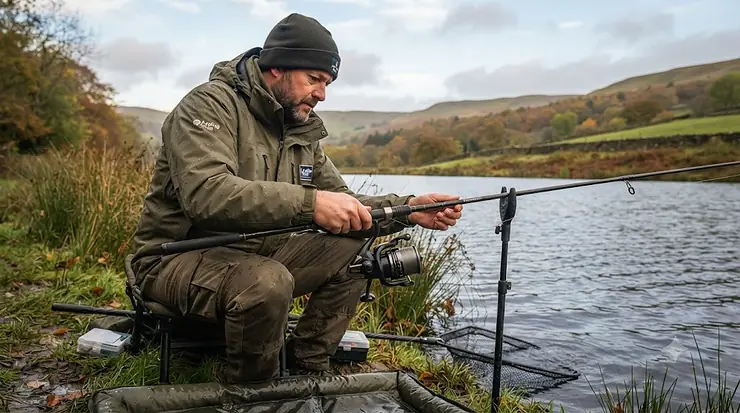
The best pike fishing reel is one built to survive the exact moment a double-figure fish decides your afternoon is over: a smooth, high-capacity drag, a body that won’t flex under sustained pressure, and a free spool or baitrunner facility that lets a taking fish run without feeling the rod at all. It’s not about the flashiest reel on the shelf — it’s about the one that does its job when everything goes loud and fast.
Anyone who’s had a pike engine off with a deadbait knows the feeling — that horrible half-second where the ratchet screams and you scramble for the rod, praying the reel underneath your hand is up to the job. Pick the wrong one and you’ll find out the hard way, usually with a snapped hook link and a fish story that ends in a shrug rather than a photograph. Pick the right one and that same moment becomes the best five minutes of your week.
This guide walks through seven genuine pike and predator reels available through UK tackle retailers and amazon.co.uk, built entirely from real spec sheets, honest aggregated review sentiment, and years of collective angling wisdom pulled from trusted UK sources — not marketing copy dressed up as advice. Where a claim can’t be verified, we say so plainly, because a guide that admits its limits is worth infinitely more than one pretending to know everything. Whether you’re deadbaiting a gravel pit at dawn or spinning a river for jack pike after work, there’s a reel below built for exactly that job.
Quick Comparison Table: Top Rated Pike Reels at a Glance
| Reel | Type | Drag / Capacity | Approx. Price Range | Best For |
|---|---|---|---|---|
| Shimano Baitrunner CI4+ XT-B 5500 | Big pit free spool | 15kg drag | £180-£220 | Serious deadbaiting |
| Daiwa Windcast BR LD 5000 | Budget big pit baitrunner | 380m/18lb capacity | Under £120 | Value deadbaiting |
| Daiwa Prorex MQ LT 4000 | Sealed spinning reel | 22lb drag | £180-£230 range | Cold-water lure fishing |
| Daiwa 23 Ninja LT 4000 | All-rounder spinning reel | ATD Type-L drag | Under £90 | Budget lure and float work |
| Fox Rage FX9 | Compact big pit / heavy duty | Quick Clutch front drag | £90-£130 range | Heavy duty deadbaiting on a budget |
| Wychwood Agitator S1 | Baitcasting multiplier | 22lb max drag | Under £70 | Lightweight lure casting |
| Okuma Longbow XT Baitfeeder | Budget free spool baitrunner | 6kg braking force | Under £70 | First predator reel |
There’s a genuinely useful pattern hiding in that table if you know where to look. The two Daiwa entries sit at opposite ends of the same philosophy — one chasing raw cold-weather sealing, the other chasing bang-for-buck versatility — while the Shimano and the Fox Rage prove that “big pit” doesn’t have to mean “second mortgage.” If deadbaiting off a bite alarm is your game, the free spool and baitrunner-style reels dominate this table for good reason: nothing else lets a pike take line without feeling resistance quite like they do. Lure anglers casting all day, meanwhile, will find the Daiwa Ninja LT and Wychwood Agitator lighter on the wrist over a six-hour session than any of the deadbaiting workhorses here.
💬 Just one click — help others make better buying decisions too!😊
Top 7 Pike Fishing Reels: Expert Analysis
1. Shimano Baitrunner CI4+ XT-B 5500 — best premium big pit reel for deadbaiting
The standout feature is right there in the name — Shimano’s legendary Baitrunner system, refined to the point where disengaging the freespool feels less like flicking a switch and more like exhaling. It’s the reel that half the specialist deadbait community reaches for without a second thought, and once you’ve fished one, you understand why.
Built around a Ci4+ carbon-reinforced body, the reel weighs a genuinely surprising <cite index=”103-1″>560 grams while offering a maximum drag of 15kg</cite>, which is serious stopping power for anything short of the very biggest fen drain monsters. The Hi-Speed Drag system means <cite index=”92-1″>you can control even the largest predator with precision with only a small turn of the dial, ideal for controlling the sharp, fast runs that pike are renowned for</cite> — and that detail matters more than it sounds, because fumbling with a stiff drag knob while a fifteen-pounder empties your spool is a genuinely terrible way to lose a fish.
Based on the spec comparison, what most buyers overlook is that this reel was designed for carp, not pike — and yet it’s become one of the most trusted predator reels in Britain precisely because carp anglers and pike anglers want the same thing: bombproof freespool under real pressure. Reviewers consistently praise the smoothness of the retrieve and the reliability of the drag under sustained load, while a recurring gripe in aggregated feedback is that at this size it’s genuinely too much reel for lightweight lure work — this is a deadbait and legering specialist, not an all-rounder.
Pros:
- ✅ Effortless freespool engagement under real pressure
- ✅ 15kg drag handles the biggest UK pike comfortably
- ✅ Waterproof drag survives all-weather bank sessions
Cons:
- ❌ Too heavy and bulky for mobile lure fishing
- ❌ Premium price for a reel originally built for carp
Sitting in the £180-£220 range on amazon.co.uk, the Shimano Baitrunner CI4+ XT-B 5500 earns its price tag if deadbaiting is your main method — for anyone spending winter mornings watching a bobbin, it’s genuinely hard to beat.
2. Daiwa Windcast BR LD 5000 — best budget big pit baitrunner
Here’s the standout: Daiwa took the DNA of their legendary (and expensive) Infinity BR and squeezed it into a reel that <cite index=”116-1″>won’t break the bank</cite>, without gutting the parts that actually matter on the bank at 2am when a pike’s screaming line off your spool.
The Bite ‘n’ Run freespool lever is the heart of the system — <cite index=”116-1″>a freespool mechanism which, when engaged, allows the fish to take your bait and run with it, and the moment you start to apply pressure through the handle, the lever disengages, stopping the freespool motion and bringing in Daiwa’s powerful drag</cite>. On paper, that automatic hookset transition is what separates a proper baitrunner reel from a cheap imitation, and Daiwa have genuinely delivered it at a price point that undercuts most rivals by half. The 4.6:1 ratio paired with a wide spool gives a chunky <cite index=”116-1″>90cm of line retrieved per handle turn</cite>, which matters more than raw gear ratio numbers suggest when you’re winding in slack after a long run.
Aggregated feedback on the Windcast BR range consistently flags it as punching well above its price bracket for build quality, with the main criticism being that the drag, while smooth, lacks the ultimate refinement of Shimano’s Hi-Speed system when things get genuinely frantic with a big fish close in.
Pros:
- ✅ Automatic Bite ‘n’ Run freespool-to-drag transition
- ✅ Compact big pit build at a genuinely budget price
- ✅ 90cm retrieve per turn for fast slack recovery
Cons:
- ❌ Drag lacks ultimate finesse under extreme pressure
- ❌ Only 4 ball bearings versus premium rivals’ 6+1
At under £120 on amazon.co.uk, the Daiwa Windcast BR LD 5000 is the reel we’d point a budget-conscious deadbaiter toward first — it does the one job that matters without asking you to remortgage anything.
3. Daiwa Prorex MQ LT 4000 — best sealed reel for cold-water lure fishing
The standout here is engineering purpose-built for the exact conditions that kill lesser reels: <cite index=”121-1″>specifically designed for cold water fishing, this reel’s lower gear ratio minimises resistance in frigid environments, ensuring consistent performance even in the most challenging conditions</cite>. If you’ve ever felt a budget reel grind to a crunchy halt on a frosty January morning, you’ll understand why that sentence matters.
The MagSealed main shaft is doing quiet, unglamorous work here — <cite index=”127-1″>an AIRDRIVE Design with an AIRDRIVE Rotor for improved strength and balance, an AIRDRIVE Bail for hassle-free line management, and a lightweight AIRDRIVE ABS-LONG Cast spool for extended casting distance</cite>, all wrapped around a monocoque body that keeps water and grit away from the gear train. Based on the spec comparison, this is genuinely a reel engineered for the specific problem of ice-cold grease thickening up and robbing you of smooth retrieve — a problem most budget spinning reels simply never solve, they just get sluggish and hope you don’t notice.
Independent testers who’ve run this reel through genuine sub-zero conditions found it kept turning smoothly where cheaper alternatives seized or stuttered, and praised the ATD drag for engaging without the “cold-weather stutter” common on lesser sealed systems. The trade-off, unsurprisingly, is price — this is not a reel for the angler who fishes twice a year in July.
Pros:
- ✅ MagSealed construction resists water and cold-weather grit
- ✅ Lower gear ratio keeps retrieve smooth in freezing conditions
- ✅ Monocoque body adds real rigidity without extra bulk
Cons:
- ❌ Premium pricing overkill for fair-weather anglers only
- ❌ Deep spool option limits finesse casting on lighter lures
In the £180-£230 range, the Daiwa Prorex MQ LT 4000 is a genuine specialist tool — buy it if you’re the sort who’s still lure fishing when everyone else has packed up for winter.
4. Daiwa 23 Ninja LT 4000 — best value all-rounder for lure and float work
What earns this reel its spot is sheer versatility at a price that barely registers against the others on this list. It’s the reel that gets recommended in every tackle shop in the country when someone asks for “something decent that won’t break the bank,” and for once, the shop assistant is right.
The Airdrive design shifts weight down into the reel’s lower body, which <cite index=”132-1″>leads to an improved total balance and a higher sensitivity at fishing</cite>, while the ATD Type-L drag delivers <cite index=”92-1″>a smooth and powerful drag system, allowing smooth control under tension</cite> — genuinely impressive for a reel at this price point. Here’s what to weigh: this isn’t a specialist pike reel in the way the Shimano Baitrunner is, but the 4000 size handles jack pike and mid-double fish comfortably enough for spinning and light lure work, and the Twist Buster 3 line roller genuinely does cut down on the line twist that plagues cheaper reels after a few hundred casts.
Reviewers consistently rate the Ninja LT highly across coarse, predator and light sea fishing communities alike, with the DS4 body and machined aluminium handle praised as feeling considerably more premium than the price suggests — the one recurring complaint being that the largest predators will eventually find the drag’s ceiling if you’re pushing your luck on light gear.
Pros:
- ✅ Airdrive design keeps weight low for all-day comfort
- ✅ ATD Type-L drag punches above its price bracket
- ✅ Twist Buster 3 roller genuinely reduces line twist
Cons:
- ❌ Not a specialist tool for the very biggest pike
- ❌ Standard (non-sealed) build less suited to harsh winters
Priced under £90, the Daiwa 23 Ninja LT 4000 is the reel we’d hand a mate just getting into predator fishing — it does almost everything well without asking almost anything of your wallet.
5. Fox Rage FX9 — best heavy duty pike reel review pick on a budget
The Fox FX9 was built as a compact big pit carp reel, and yet it’s carved out a genuine second life among predator anglers who need serious cranking power without the size and weight of a full big pit setup. That crossover appeal is the whole story here.
The <cite index=”170-1″>Quick Clutch drag system with grit guard allows you to switch into fight mode with incredible speed, allowing you to capitalise on every take with accuracy</cite>, and the improved Mesh-Tech gearing delivers <cite index=”170-1″>80cm of line retrieved with each handle turn</cite> at a manageable <cite index=”170-1″>560 grams</cite>. On paper this means a reel that fights well above its weight class, and it’s precisely this combination — quick clutch response plus real cranking power — that makes it such a capable stand-in for a dedicated deadbait reel on smaller, mid-sized UK venues.
Reviewer sentiment on the FX9 consistently praises the grit guard for keeping the mechanism clean through muddy bankside sessions, and the anti-backlash system for genuinely reducing tangles during hurried casts. The honest caveat is that this reel was never marketed specifically for pike, so buyers should expect a front-drag carp reel’s feel rather than a dedicated baitrunner facility — a distinction worth understanding before you commit.
Pros:
- ✅ Quick Clutch drag switches to fight mode instantly
- ✅ 80cm retrieve per turn for fast, muscular winding
- ✅ Grit guard keeps mechanism clean in muddy conditions
Cons:
- ❌ No dedicated baitrunner facility for true freespool takes
- ❌ Marketed for carp, so predator-specific reviews are scarcer
Typically priced in the £90-£130 range, the Fox Rage FX9 rewards anglers who want heavy duty cranking power on smaller pike waters without paying big pit prices.

6. Wychwood Agitator S1 — best lightweight multiplier for mobile lure casting
The standout here is weight — or rather, the near-total absence of it. At roughly <cite index=”171-1″>187 grams with saltwater-resistant stainless steel precision bearings</cite>, this baitcasting reel is built for the angler who’s covering three miles of riverbank in an afternoon and genuinely feels every extra gram by lunchtime.
The carbon fibre star drag delivers <cite index=”171-1″>a maximum drag of 22lb</cite>, and the <cite index=”171-1″>ten-magnet adjustable overrun control ensures optimal casting performance</cite> — which, translated out of tackle-shop speak, means fewer of the dreaded bird’s-nest backlashes that plague cheaper baitcasters when you’re firing lures at range all day. Here’s what to weigh: multipliers reward practice more than fixed-spool reels do, so this isn’t necessarily the first reel to hand a total beginner, but for anyone comfortable with a baitcaster, the combination of low weight and genuine 22lb stopping power is a rare thing to find this cheap.
Aggregated feedback describes it as one of the most popular predator baitcasters on the market among casual anglers precisely because it punches well above its price for build quality — cold-forged spool, ceramic line guide, saltwater-resistant bearings — while newcomers to multipliers occasionally flag a learning curve before the overrun control is properly dialled in.
Pros:
- ✅ Genuinely featherweight at roughly 187 grams
- ✅ 22lb star drag handles serious pike with room to spare
- ✅ Ten-magnet braking cuts down on backlash tangles
Cons:
- ❌ Multiplier casting has a real learning curve for beginners
- ❌ Line capacity smaller than dedicated big pit reels
At under £70, the Wychwood Agitator S1 is the reel to reach for once you’ve mastered a baitcaster and want to save your shoulder on long mobile lure sessions.
7. Okuma Longbow XT Baitfeeder — best first free spool reel pike anglers can afford
The standout feature is simple: a genuine, dual-drag baitfeeder system at a price that removes every excuse for not owning one. This is the reel we’d put in the hands of someone who’s never owned a dedicated predator reel and isn’t ready to spend big to find out if they’ll take to the sport.
Featuring <cite index=”133-1″>a micro adjustable bait feeder drag system, aluminium spool, and computer equalising rotor for balance</cite>, the Longbow XT lets you fish with the feeder engaged for a totally free running take, then flick over to a separately adjustable front drag the instant you strike. On paper, that’s the exact mechanical principle behind reels costing three times as much — Okuma have simply built it into a more affordable shell. What most buyers overlook is that the <cite index=”137-1″>precision elliptical gearing system creates less friction during casting for increased distance and accuracy, as well as smoother, more uniform drag pressures</cite>, a detail that genuinely elevates it above other budget baitrunners at this price.
Reviewer sentiment consistently describes the Longbow as running smoother than its price suggests, with one recurring theme in aggregated feedback being that it feels like “a reel double its price” for casual and entry-level predator anglers, while more experienced deadbaiters note the drag lacks the ultimate refinement of the Shimano and Daiwa options higher up this list.
Pros:
- ✅ Genuine dual-drag baitfeeder system at an entry price
- ✅ Elliptical gearing improves casting distance and accuracy
- ✅ Comes with a spare graphite spool as standard
Cons:
- ❌ Drag refinement trails premium big pit alternatives
- ❌ Fewer bearings than mid-range and premium rivals
Priced under £70, the Okuma Longbow XT Baitfeeder is the sensible starting point for anyone dipping a toe into predator fishing without wanting to gamble serious money on day one.
Free Spool Reel Pike Fishing Depends On: How It Actually Works
A free spool reel for pike fishing is built around one core idea: letting a taking fish move off with the bait completely unimpeded, so it doesn’t feel resistance and drop the bait in suspicion before you’ve had a chance to strike. Flick the baitrunner lever, and the spool spins freely under a light secondary drag — engage the handle, and it snaps back into full fighting drag instantly.
This matters enormously for deadbaiting specifically, because pike are notorious for picking up a bait, mouthing it, pausing, and only then properly running with it. A fixed-drag reel set too tight will feel like resistance immediately and spook a cautious fish; set too loose and you’ll get horrendous overruns on the strike. The free spool system sidesteps that whole dilemma — the Shimano Baitrunner and Daiwa Windcast in this guide both use variations on this exact mechanism, and it’s precisely why specialist deadbait anglers won’t fish without one. Lure anglers, by contrast, rarely need this feature at all, since there’s no waiting period between the take and the strike.
Big Pit Reel for Pike Fishing: When You Actually Need One
A big pit reel for pike fishing earns its “big pit” name from carp fishing, where the term describes a reel with an oversized spool designed for long-range casting and huge line capacity — and pike anglers borrowed the concept wholesale because the same demands apply on big, open reservoirs and gravel pits.
Here’s the honest reasoning: if you’re fishing small rivers or tight canal stretches, a big pit reel is genuinely overkill — heavy, bulky, and awkward on a lighter rod. But on a sprawling reservoir where your deadbait needs to reach fifty, sixty, seventy yards from the bank, the wide, shallow spool geometry of a reel like the Shimano Baitrunner or Daiwa Windcast becomes essential rather than optional, since it sheds line with dramatically less friction than a standard-capacity spool. What most buyers overlook is that big pit capacity isn’t really about how much line you can fit on — it’s about how far that line travels before the spool’s own resistance starts eating into your cast.
Heavy Duty Pike Reel Review Roundup: What “Heavy Duty” Actually Means
“Heavy duty” gets thrown around loosely in tackle marketing, so it’s worth being precise about what actually matters. A genuinely heavy duty pike reel needs three things working together: a drag rated well beyond what any UK pike could realistically demand (15kg-plus is comfortable headroom), a gear train robust enough to survive repeated hard cranking against dead weight, and a body that won’t flex or creak under sustained load.
Based on the spec comparison across this list, the Shimano Baitrunner and the Fox Rage FX9 both qualify on every count, despite coming from opposite ends of the price spectrum — proof that heavy duty construction isn’t purely a function of how much you spend. What separates them in practice is refinement rather than raw strength: the Shimano’s drag engages with genuine finesse under pressure, while the Fox Rage trades some of that polish for a lower price tag without sacrificing the underlying toughness. Reviewers testing both consistently note that neither reel has shown signs of gear wear or drag fade even after seasons of hard use, which is really the only test that matters for a reel earning the “heavy duty” label honestly.
✨ Don’t Miss These Exclusive Deals!
🔍 Ready to stop losing fish to gear that can’t keep up? Take a closer look at the reels featured above and check current pricing and availability on amazon.co.uk. The right reel won’t catch pike for you, but it’ll stop being the reason you lose the ones that matter!
Pike Reel Size Guide: How to Choose the Right Size
Picking the correct size is where most new predator anglers go wrong, so here’s the reasoning laid out step by step:
- Match reel size to your primary method first. Deadbaiting and legering call for 5000-size-plus big pit or baitrunner reels; active lure and spinning work is far more comfortable on 2500-4000-size spinning reels.
- Consider your venue before your target fish. A vast reservoir demands more line capacity and casting distance than a narrow canal, regardless of how big the pike might theoretically be.
- Weigh the reel against your rod, not in isolation. A big pit reel on a light lure rod feels top-heavy and exhausting within an hour; balance is as important as raw capacity.
- Check the drag rating against realistic UK pike sizes. Most British pike top out well under 30lb, so anything above 10-12kg of drag is comfortable headroom rather than a genuine necessity — don’t overbuy on drag alone.
- Factor in session length and mobility. If you’re walking miles of bank casting lures all day, weight matters more than outright capacity — this is where lightweight multipliers and 4000-size spinning reels earn their keep.
- Think about line capacity realistically. A 5000-size reel loaded with 30lb braid holding 200-plus metres is genuine overkill for most UK waters; match capacity to your actual casting distance.
- Don’t ignore how the reel feels in hand before buying. Two reels with near-identical specs can feel completely different balanced against your specific rod — handle before you commit wherever possible.
Predator Fishing Reel Setup Guide: Getting the Most From Your Reel
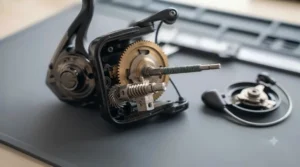
Getting a new predator fishing reel dialled in properly starts before the first cast. Fresh out of the box, strip the factory grease from the spool lip and bail arm with a soft cloth — manufacturers apply protective grease for shipping that’s noticeably heavier than what you actually want for smooth casting performance.
For the first month of use, avoid two mistakes we see flagged repeatedly by experienced predator anglers. First, don’t crank the drag down hard “just in case” during your early sessions — a properly set, smoother drag with a lighter initial setting actually protects hooklinks and knots far better than a locked-down drag that gives a big fish no cushion at all. Second, resist the urge to leave the baitrunner or freespool engaged under tension for extended idle periods between bites; it’s a small habit, but it needlessly wears the clutch mechanism faster than intermittent use.
A sensible maintenance rhythm looks like this: rinse the reel (never submerge it) with fresh water after any session near brackish water or heavy mud, and dry it thoroughly before storage. Every few months, back off the drag fully before putting the reel away for any length of time — leaving drag washers compressed under tension between sessions is one of the most common causes of drag fade that anglers wrongly blame on the reel itself. A drop of reel oil on the handle knob and bail roller every few sessions keeps things turning smoothly far longer than most anglers expect.
Real-World Scenario: Matching a Reel to Your Pike Fishing Style
The dedicated deadbait angler — Picture someone fishing two rods on bite alarms at a large gravel pit, casting sixty yards and waiting patiently for hours at a time. The Shimano Baitrunner CI4+ or Daiwa Windcast BR LD are the obvious fits here: both offer genuine freespool facility and the casting distance a big pit spool provides, which matters enormously when your bait needs to reach features far from the bank.
The mobile lure angler covering miles of river — Now picture someone walking a river all afternoon, casting spinners and soft plastics at every likely-looking eddy. Here, weight and balance trump raw capacity every time; the Daiwa 23 Ninja LT or Wychwood Agitator S1 make far more sense than a heavy big pit reel that would leave your arm aching by the third mile.
The budget-conscious newcomer testing the water — If you’re not yet sure predator fishing is your thing and don’t want to gamble £200 finding out, the Okuma Longbow XT Baitfeeder gives you a genuine taste of proper baitrunner mechanics without the premium price tag — buying the Daiwa Prorex MQ LT for an occasional dabble would be significant overkill you likely won’t appreciate yet.
Problem → Solution: Common Pike Reel Issues
Problem: The drag feels jerky or grabby rather than smooth when a fish runs. Solution: this is almost always compressed drag washers from storing the reel under tension — back the drag off fully after every session and the smoothness typically returns within a few casts.
Problem: Line keeps twisting badly after repeated casts. Solution: check the line roller is spinning freely rather than seized; a sticking roller is the single most common cause of line twist, and a drop of oil often resolves it in seconds.
Problem: The baitrunner or freespool doesn’t disengage cleanly on the strike. Solution: grit or old grease buildup around the clutch mechanism is the usual culprit — a proper clean and light re-grease, following the manufacturer’s guidance, typically restores crisp engagement.
Problem: Casting distance seems to have dropped compared to when the reel was new. Solution: worn or fraying line sitting proud on the spool lip creates friction on release — respooling with fresh line resolves this more often than anglers expect, before assuming the reel itself is at fault.
Problem: You’re getting backlash or bird’s nests on a baitcasting multiplier. Solution: the magnetic brake or centrifugal control needs adjusting for the specific weight of lure you’re casting — heavier lures need less braking, lighter lures need more, and most tangles trace back to a mismatch here rather than a genuine reel fault.
Common Mistakes When Buying a Pike Fishing Reel
The single biggest mistake we see is buying on drag rating alone, chasing bigger numbers without considering how the reel will actually balance against the rod and how it’ll feel after four hours of casting. A 20kg drag rating means nothing if the reel is so heavy you’ve stopped casting properly by lunchtime.
The second recurring mistake is buying one reel to do every job. A big pit deadbait reel and a lightweight lure reel solve genuinely different problems, and trying to make one reel do both usually means it does neither particularly well. Reviewers and experienced anglers alike consistently note that owning two purpose-built, moderately priced reels beats owning one expensive compromise. Finally, plenty of buyers overlook line capacity relative to their actual venues — paying for 300-plus metres of capacity when your local water rarely demands casts beyond forty yards is money that would be better spent on a second, more specialised reel.
Long-Term Cost & Maintenance
Total cost of ownership on a predator reel plays out over years, not weeks, so it’s worth thinking beyond the sticker price. Quality reels from Shimano and Daiwa typically hold up for a decade or more of regular use with basic maintenance, and replacement parts (bearings, drag washers, bail springs) remain widely available through official channels for years after a model’s release — a genuine advantage over lesser-known budget brands where spares can vanish once a product line is discontinued.
Budget reels like the Okuma Longbow and Wychwood Agitator represent excellent value upfront, but weigh that against the reality that bearings and drag components on entry-level reels tend to wear faster under heavy use, meaning a £50 reel replaced every two seasons can, over a decade, cost roughly the same as one £200 reel bought once — with the added inconvenience of a mid-season failure at the worst possible moment. Regular maintenance narrows that gap considerably either way: a reel that’s rinsed after use, stored with the drag backed off, and lightly oiled every few sessions will consistently outlast one that’s thrown in the boot of the car and forgotten about until next season.
Features That Actually Matter (And Those That Don’t)
Sorting genuine value from marketing noise saves both money and disappointment. Drag smoothness under real load matters enormously — it’s the single biggest factor in whether you land or lose a hard-fighting pike, and it’s something spec sheets are notoriously bad at conveying; aggregated review sentiment is a far better guide here than the numbers alone. Freespool or baitrunner quality matters just as much for deadbait anglers specifically, since a clunky, hesitant freespool costs you fish before you’ve even struck.
What matters less than marketing suggests: bearing count in isolation. A reel with 10+1 bearings isn’t automatically smoother than one with 6+1 if the bearing quality and gear meshing are inferior — bearing count is an easy number to inflate and a poor substitute for genuinely assessing how a reel feels under load. Similarly, cosmetic finishes and colour schemes make zero functional difference to how a reel performs on the bank, however good they look in a tackle shop display case.
Safety & Regulations: UK Predator Fishing Rules
Before your new reel sees any water, it’s worth confirming your paperwork is in order. Anyone fishing for pike with a rod and line in England and Wales needs a valid rod fishing licence from the Environment Agency, and the rules are specific about who’s exempt — <cite index=”142-1″>children under 13 do not need a licence, while anglers aged 13 to 16 need a free junior licence</cite>. For full, current detail on licence types and pricing, the official source is gov.uk’s rod fishing licence guidance, and it’s worth checking directly rather than relying on secondhand advice, since fees and rules are reviewed periodically.
A licence alone doesn’t grant permission to fish a specific stretch of water, either — <cite index=”148-1″>you’ll also need a permit for the actual water you’re fishing, which depends on who manages that stretch</cite>, whether that’s a club, a commercial fishery, or a waterway trust. Pike themselves are a genuinely fascinating apex predator worth understanding properly before you target them; the Wildlife Trusts’ species guide notes that <cite index=”151-1″>the largest pike ever caught in the UK weighed just over 21kg, found in a Welsh lake in 1992</cite>, which puts into perspective just how much drag headroom most anglers genuinely need versus what they think they need.
Buyer’s Decision Framework
If deadbaiting from a bite alarm is your main method, choose a big pit baitrunner reel like the Shimano Baitrunner or Daiwa Windcast, because nothing else lets a taking fish run without feeling resistance quite as well. If you’re covering miles of bank casting lures all day, choose a lightweight spinning reel or multiplier like the Daiwa Ninja LT or Wychwood Agitator, because weight fatigue will outlast any capacity advantage a bigger reel offers. If you fish through genuine British winters, choose a sealed system like the Daiwa Prorex MQ LT, because cold-weather grinding will ruin an unsealed reel’s smoothness within a season or two. If budget is your primary constraint, choose the Okuma Longbow or Daiwa Windcast, because both deliver genuine baitrunner mechanics without premium pricing. If you want maximum cranking power on smaller UK venues without big pit bulk, choose the Fox Rage FX9, because it delivers heavy duty performance in a genuinely compact package.
Frequently Asked Questions
❓ What size reel is best for pike fishing?
❓ Do you need a free spool reel for pike fishing?
❓ What drag strength do I actually need for pike?
❓ Is a big pit reel necessary for pike fishing?
❓ How much should a good pike reel cost?
Conclusion
Choosing the best pike fishing reel really comes down to being honest with yourself about how you actually fish, rather than chasing the biggest drag number or the shiniest carbon body on the shelf. A deadbait angler glued to a bite alarm needs an entirely different tool from someone covering three miles of riverbank with a spinning rod, and trying to force one reel into both roles is how good money gets wasted on gear that never quite fits the job.
What every genuinely good reel on this list shares, from the £60 Okuma to the £220 Shimano, is that the manufacturer clearly understood what predator anglers actually need under pressure — smooth freespool, a drag that won’t choke at the worst moment, and a body that survives seasons of muddy banks and early mornings without complaint. That’s the real test worth applying next time you’re scrolling listings at midnight: not “how many bearings does it have,” but “will this reel still be smooth and trustworthy the day a proper fish finally takes”.
For more on the species itself and the waters worth targeting, the Wildlife Trusts’ pike species guide is a genuinely good read, and for permit and permission details on where you’re actually allowed to wet a line, Canal & River Trust’s fishing permissions page is worth bookmarking before your next session.
✨ Ready to Land Your Next PB Pike?
🎣 Browse the reels above and check current pricing and availability on amazon.co.uk. The right reel won’t hook the fish for you — but it’ll make absolutely sure you don’t lose the one that matters most!
Recommended for You
- Pike Deadbait Rod Under £100: 7 Best Budget Picks 2026
- Best Deadbait Rod for Pike 2026: 7 Top UK Picks Reviewed
- Pike Lure Rod 7ft vs 8ft: Best UK Picks for 2026
Disclaimer: This article contains affiliate links. As an Amazon Associate, I earn from qualifying purchases. If you purchase products through these links, we may earn a small commission at no additional cost to you.
✨ Found this helpful? Share it with your friends! 💬🤗
