
In This Article
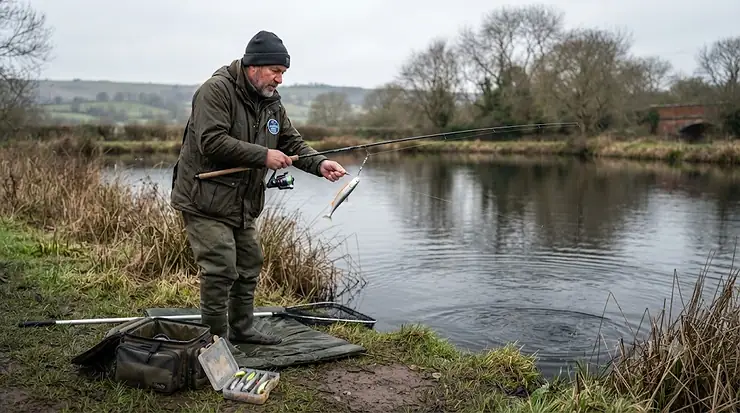
There’s a particular kind of silence on a British lake in January — no birdsong, no rising fish, just mist sitting on flat, cold water — that makes a lot of anglers assume the pike have simply switched off. They haven’t. What is genuinely true is that pike become cold-blooded in the most literal sense: as water temperature drops, their metabolism slows dramatically, and they stop wasting energy chasing anything that isn’t an easy, believable meal.
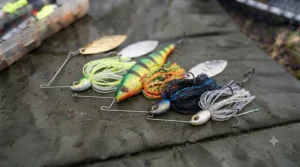
That single fact is the reason this guide exists, and it’s the answer to the question most searches on this topic are really asking: what are the best pike lures for winter? In short, they’re lures that can be worked painfully slowly while still producing a lifelike, wounded-baitfish action — soft, segmented swimbaits, neutral-buoyancy jerkbaits, and heavy wobbling spoons that can be counted down to the bottom and crawled back rather than cranked. Fast, erratic summer patterns generally get ignored in cold water; slow, believable ones get eaten.
Before you head out, it’s worth remembering that anyone fishing for pike with a rod and line in England or Wales needs a valid rod fishing licence, including on most stillwaters that stay open through the coarse close season. With that formality covered, this guide walks through seven genuine winter pike lures currently available in the UK, alongside the honest cold-water tactics — retrieve speed, colour choice, sink rate, and location — that actually decide whether they get eaten.
Quick Comparison Table
Short on time? Here’s the snapshot of our seven winter picks. Full detail and honest analysis follow below.
| Category | Lure | Type | Best For |
|---|---|---|---|
| Best Cold-Water Jerkbait | Rapala Shadow Rap | Neutral buoyancy jerkbait | Working a static zone painfully slowly |
| Best Classic Spoon | Eppinger Dardevle | Brass wobbling spoon | Deep, cold water where fish sit near bottom |
| Best Segmented Soft Swimbait | Savage Gear 4Play V2 Swim & Jerk | Multi-jointed soft swimbait | Big, lethargic winter pike |
| Best Budget Soft Shad | Westin ShadTeez | Paddle-tail soft shad | New winter lure anglers on a budget |
| Best Finesse Soft Shad | Fox Rage Slick Shad | Soft shad, light jig heads | Pressured venues and clear water |
| Best Natural Profile Shad | Savage Gear Craft Shad | Realistic soft shad | Matching small silverfish prey |
| Best Premium Hybrid | Rapala X-Rap Otus | Hard body, soft curl tail | Big water, big winter pike |
The pattern worth noticing across this table is how few of these are fast-moving lures. Every single entry can be fished on a genuinely slow, methodical retrieve, and most of them are specifically designed to still produce a tempting action at that reduced pace — which is exactly the requirement that separates a winter pike lure from a summer one.
💬 Just one click — help others make better buying decisions too!😊
Top 7 Best Pike Lures for Winter: Expert Analysis
1. Rapala Shadow Rap — best for working a static cold-water zone
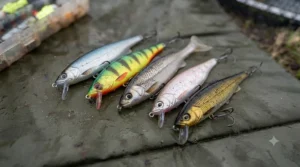
The Rapala Shadow Rap earns its place at the top of this list because of one specific engineering trait: neutral buoyancy. Wind it down to the depth you want, stop reeling, and rather than floating up or sinking away, it simply hangs there in the water column, exactly where cold-water pike are most likely to be holding.
Based on the spec comparison with more conventional diving plugs, that’s a genuinely different tool for genuinely different conditions. What most buyers overlook about jerkbait fishing in winter is that the pause, not the movement, is doing most of the work — a lethargic pike often needs several seconds to commit, and a lure that drifts away during that pause simply won’t get eaten. The Shadow Rap is worked with small, sharp jerks of the rod tip that cause it to dart and roll erratically before settling completely still, and reviewers consistently note that bites tend to come right as the pause ends and movement resumes, rather than during the jerk itself.
Aggregated UK angler sentiment on this model is particularly strong for cold, clear rivers and gravel pits where fish are holding tight to a specific area rather than roaming. The honest trade-off is that it demands genuine patience — this isn’t a lure for covering water quickly, and anglers used to a faster retrieve sometimes find the technique takes a session or two to click.
Pros:
- ✅ Neutral buoyancy holds station at depth during the pause
- ✅ Erratic dart-and-roll action triggers hesitant, cold-water pike
- ✅ Works brilliantly for methodically searching a small, precise area
Cons:
- ❌ Technique-dependent; a fast retrieve wastes its main advantage
- ❌ Less effective for covering large areas of open water quickly
Typically priced around £14-£20 depending on size and colour — check current price, as certain patterns sell out quickly through winter.
2. Eppinger Dardevle Spoon (¾ oz) — best classic slow-wobble spoon
The Dardevle earns its spot the old-fashioned way: it’s been fooling pike for close to a century, and the basic physics that make it work haven’t changed. Its curved brass body creates a wide, erratic wobble on the retrieve, and crucially, it keeps producing that wobble even when worked at a genuinely slow, deliberate pace — something a lot of newer, plastic-bodied lures struggle to replicate.
Here’s what to weigh with a spoon like this in winter: its weight means it can be counted down quickly to reach pike holding deep and static, and its solid brass construction gives it a durability that stamped-steel alternatives can’t match after repeated contact with rocks or timber. What most buyers overlook is that colour choice with a metal spoon matters as much for flash and contrast as for realism — the classic red-and-white or yellow-diamond patterns aren’t trying to look like a specific fish, they’re designed to create visual contrast pike can track even in low winter light.
Reviewers consistently praise the Dardevle’s simplicity: cast, count down, retrieve slowly with occasional pauses, and let the natural wobble do the work. The honest limitation is that, being a solid metal lure, it doesn’t offer the same lifelike pause-and-flutter as a soft or jointed bait, which can matter on heavily-fished, pressured waters.
Pros:
- ✅ Maintains a wide wobble even at very slow retrieve speeds
- ✅ Sinks quickly, ideal for reaching deep, static winter pike
- ✅ Durable brass construction handles years of contact with structure
Cons:
- ❌ Less lifelike pause action than soft or jointed alternatives
- ❌ Can be prone to snagging on very weedy or heavily structured swims
Generally priced around £8-£14, the Eppinger Dardevle Spoon remains one of the most cost-effective additions to a winter pike box — check current price, as sizes and colour packs vary between sellers.
3. Savage Gear 4Play V2 Swim & Jerk — best segmented soft swimbait for big pike
The Savage Gear 4Play V2 Swim & Jerk is built specifically to solve the “big lure, slow speed” problem that trips up a lot of winter lures. Its four flexible body segments produce a genuinely natural swimming motion, with wide S-bends that continue to look alive even when cranked back at a crawl.
Based on the spec comparison with single-piece soft plastics, the segmented body is the key difference: a solid soft bait tends to lose most of its tail action once retrieve speed drops low enough for winter fish, while the jointed construction here keeps producing movement from the body itself, not just the tail. What most buyers overlook is that this makes it a genuinely different presentation to fish that may already be wary of straight paddle-tail shads, which matters on pressured venues where pike have seen plenty of standard lures over a season.
Reviewers consistently note its effectiveness on large, territorial pike specifically, describing the low-frequency vibration and large silhouette as key attracting factors in open water and along reservoir contours. The honest trade-off is price and size — this is a big, premium bait built for targeting genuinely large fish, not an all-purpose lure for a mixed session.
Pros:
- ✅ Segmented body keeps a natural S-bend action even retrieved very slowly
- ✅ Large silhouette and low-frequency vibration target big, cautious pike
- ✅ Works well over deep contours and open water, not just structure
Cons:
- ❌ Premium pricing reflects its size and construction
- ❌ Overkill for smaller waters or a mixed-species session
Expect to pay in the region of £15-£22 for this model — check current price, as larger sizes command a premium over the smaller options.
4. Westin ShadTeez — best affordable soft shad for winter beginners
The Westin ShadTeez is the sensible starting point for anyone building a winter pike lure box without spending heavily to find out what works on their local water. Its high body and wide paddle tail create a rolling action with a flash of light belly on the retrieve — a profile that’s proven itself repeatedly against pike over multiple seasons.
What most buyers overlook about a shad like this is how much its low cost actually helps in winter specifically: because it’s affordable enough to buy in several sizes and colours, you can genuinely experiment with what a particular venue’s pike want on a given day, rather than committing to one expensive pattern and hoping. Reviewers consistently describe it as lightweight and versatile, and it retains a usable rolling action across a wide range of retrieve speeds, including the slow crawl winter conditions usually demand.
The honest caveat: at this price point, the hook and jig head combinations supplied aren’t always premium-grade, and serious winter anglers often prefer to re-rig it onto a heavier jig head to control depth and improve the slow-fall action pike respond to in cold water.
Pros:
- ✅ Genuinely affordable, so you can experiment across sizes and colours
- ✅ Rolling action with flash belly works across a wide range of speeds
- ✅ Lightweight and easy to cast for less experienced lure anglers
Cons:
- ❌ Stock hooks and jig heads are basic compared with premium alternatives
- ❌ Benefits from re-rigging onto a heavier head for proper winter depth control
Typically priced from around £4-£8 per lure, the Westin ShadTeez offers some of the best value in this entire guide — check current price, as multi-packs often work out cheaper per lure.
5. Fox Rage Slick Shad — best finesse soft shad for pressured venues
The Fox Rage Slick Shad exists for the winter days when pike have seen every standard lure on a well-fished stillwater and are treating anything obvious with suspicion. It’s a finesse-focused soft shad, designed to be worked on lighter jig heads for a subtler, slower fall than bulkier alternatives allow.
Here’s what to weigh: in cold, clear water on a pressured fishery, a smaller, more natural-looking presentation genuinely does trigger more follows and takes than another large, flashy bait the fish have already learned to avoid. Based on the spec comparison with the bulkier options in this guide, the trade-off is casting distance and depth range for finesse and realism — this isn’t the lure for blasting across a big reservoir, but for methodically working a specific weed edge or drop-off close in.
Reviewers consistently rate Fox Rage’s soft bait range for its UK-specific design focus, built and tested on the canals, gravel pits, and rivers most British lure anglers actually fish, rather than adapted from a bass-fishing product designed elsewhere.
Pros:
- ✅ Finesse profile works well on cautious, pressured winter pike
- ✅ Light jig head pairing allows a genuinely slow, natural fall
- ✅ Designed and tested specifically around UK venues and conditions
Cons:
- ❌ Shorter effective casting range than bulkier winter lures
- ❌ Less suited to searching large areas of open water quickly
Pricing generally sits around £6-£11 per pack — check current price, as Fox Rage regularly updates colour ranges through the season.
6. Savage Gear Craft Shad — best natural-profile alternative
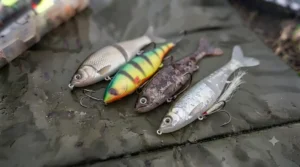
The Savage Gear Craft Shad takes a different approach to the shad category by leaning hard into realism. Modelled on a bleak-style silverfish, it features intricate detailing and soft, realistic eyes, with a long, slender tail bridge that produces a tight kick-and-roll action on both the retrieve and the drop.
What most buyers overlook about the “drop” action specifically is how much winter feeding actually happens on the fall rather than the retrieve — a genuinely sluggish pike often can’t be bothered to chase, but will still intercept something that looks like an easy meal sinking helplessly past it. Based on the spec comparison with more generic paddle-tail shads, the Craft Shad’s slender profile and detailed finish are built to hold up that illusion during a slow winter fall, not just during active retrieval.
Reviewers consistently highlight its versatility across species, noting it accounts for perch, zander, and catfish as well as pike — useful if your winter sessions mix targets rather than being pike-only outings. The trade-off for that realism is a slightly higher price than more basic shad designs in this guide.
Pros:
- ✅ Realistic silverfish profile and detailed finish suit clear, cold water
- ✅ Kick-and-roll action works on both the retrieve and the drop
- ✅ Versatile enough to also pick up perch and zander in mixed sessions
Cons:
- ❌ Priced higher than more basic paddle-tail shad alternatives
- ❌ Detailed finish can be more delicate against repeated pike teeth contact
Expect to pay roughly £9-£15 depending on pack size — check current price for current stock and colour availability.
7. Rapala X-Rap Otus — best premium hybrid for big winter pike
The Rapala X-Rap Otus closes this list because it solves a genuine design compromise: hard-bodied jerkbaits cast beautifully but can feel rigid, while soft plastics move seductively but sacrifice distance and durability. The X-Rap Otus combines a hard ABS body with a soft curl tail to get the casting distance of a hard bait alongside the tempting, seductive action of soft plastic.
At 25cm, this lure is sized specifically to match the large trout and coarse fish that big winter pike are genuinely targeting on reservoirs and large lakes, and reviewers consistently single out its 6-point tail-locking system as a meaningful upgrade over cheaper hybrid designs — the tail stays firmly attached even after repeated pike strikes, a detail that matters given how many hybrid lures lose their tail within the first few fish. A spare tail is included as standard, which is a thoughtful inclusion given the price point.
Based on the spec comparison with the other lures here, this is a big, heavy bait suited to heavier tackle and larger venues rather than small stillwaters. Reviewers consistently note it’s most effective from a boat or on big reservoirs where genuinely large pike are the target, rather than an average-sized canal or river session.
Pros:
- ✅ Combines hard-bait casting distance with soft-plastic seductive action
- ✅ 6-point tail-lock system resists damage from repeated pike strikes
- ✅ Large 25cm size matches the prey profile big winter pike target
Cons:
- ❌ Premium pricing puts it at the top end of this comparison
- ❌ Needs heavier tackle and larger venues to be used effectively
Typically priced around £20-£28, the Rapala X-Rap Otus is a considered investment rather than an impulse buy — check current price, as this model varies more by colourway than most others here.
Top 7 Winter Pike Lures: Full Comparison
| Lure | Type | Approx. Size | Retrieve Style | Best For |
|---|---|---|---|---|
| Rapala Shadow Rap | Neutral buoyancy jerkbait | 11-13cm | Jerk, pause, hold | Static cold-water zones |
| Eppinger Dardevle Spoon | Brass spoon | ¾ oz | Steady slow retrieve | Deep, static winter pike |
| Savage Gear 4Play V2 Swim & Jerk | Segmented soft swimbait | 15-20cm | Slow crawl | Large, territorial pike |
| Westin ShadTeez | Soft paddle-tail shad | 10-15cm | Slow to moderate | Beginners, experimentation |
| Fox Rage Slick Shad | Finesse soft shad | 10-14cm | Very slow jig | Pressured, clear venues |
| Savage Gear Craft Shad | Realistic soft shad | 10-13cm | Slow, with fall pauses | Mixed silverfish-imitation |
| Rapala X-Rap Otus | Hybrid hard/soft jerk-glide | 25cm | Slow glide, pause | Big pike, big water |
Looking across this table, the split between hard-bodied and soft-bodied lures is deliberate rather than incidental. The Rapala Shadow Rap and Rapala X-Rap Otus rely on precise, engineered buoyancy and hard-body casting distance, while the soft shads and the Savage Gear 4Play V2 Swim & Jerk rely on body flex to create movement at painfully slow speeds. Neither approach is objectively better in winter — the right choice depends heavily on whether you’re searching open water or working a tight, known area, which the venue-matching section further down covers in more detail.
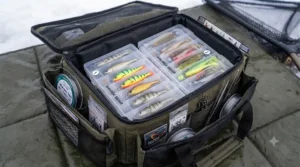
Lures vs Deadbait in Cold Water: An Honest Comparison
| Factor | Lures | Deadbait |
|---|---|---|
| Coverage of water | Excellent, actively search multiple swims | Limited to where you cast and wait |
| Angler activity | High, helps keep warm on cold days | Low, mostly stationary and waiting |
| Effectiveness in extreme cold | Reduced but still viable with the right retrieve | Often more effective when pike are near-dormant |
| Effort per fish | Higher, requires technique and patience | Lower, largely a waiting game |
| Best for | Covering water, staying active, searching venues | Genuinely freezing conditions, known pike holding areas |
The trade-off here is honest and well-documented among experienced winter anglers: when it gets bitterly cold, many switch at least partly to deadbaiting because pike become less willing to chase anything, but lures remain a genuinely effective and considerably more active way to search a venue and stay warm while doing it. Neither approach makes the other redundant — many anglers carry both, starting with lures to cover water and switching to deadbait if conditions turn genuinely severe.
Cold Water Pike Lures: What Changes When the Water Drops Below 8°C
Once water temperature drops into single figures, pike behaviour shifts in a way that directly dictates lure choice. Because pike are cold-blooded, their metabolic rate falls with the water temperature, and they become measurably less willing to expend energy chasing fast-moving prey. What most buyers overlook is that this doesn’t mean pike stop feeding — it means they become opportunists rather than hunters, more likely to intercept an easy, struggling target than pursue a fleeing one.
Practically, this pushes lure selection toward larger profiles fished more slowly rather than smaller, faster patterns. Reviewers consistently note that big, paddle-tailed and curly-tailed soft baits remain effective even when retrieved at a crawl, precisely because their action doesn’t rely on speed to look alive. Cold water pike lures also tend to sit lower in the water column than their warm-water equivalents, since pike themselves typically drop to deeper, slower-moving areas to conserve energy through winter.
Slow Retrieve Lures for Pike in Winter: Getting the Pace Right
If there’s a single rule that dominates winter pike fishing with lures, it’s this: slow down further than feels natural. With fish relatively inactive, a slow and steady retrieve consistently outproduces anything faster, and the biggest technical mistake most anglers make is lifting the lure out of the water too quickly at the end of a retrieve, when a following pike is still deciding whether to commit.
Based on the spec comparison of the lures in this guide, slow retrieve lures for pike in winter share one trait regardless of type: they’re built to keep producing a visible, tempting action even when worked well below the speed most anglers default to in warmer months. Working a lure right into the margins, and even dragging it gently left and right at your feet before lifting out, regularly converts a following fish into a take that would otherwise have been missed.
Pike Lure Colour in Winter: What Actually Works
What colour lure works best for pike in winter? In clear, cold water, natural silverfish patterns like roach and perch imitations tend to draw more confident takes, while in coloured or murky water, brighter or higher-contrast patterns help pike track the lure against a duller background.
Colour choice genuinely divides opinion among experienced winter anglers, and the honest answer is that experimentation beats dogma. Some successful winter anglers favour bright, unnatural colours specifically because their vibrancy grabs attention and forces a reaction, even where the pattern doesn’t closely resemble local prey. Others find that at depth, or in coloured water, most colours lose distinct hue entirely and effectively appear as shades of grey, meaning contrast against the background matters more than realism. If you’re getting follows without takes on a particular pattern, reviewers consistently recommend switching colour before switching technique, since a cautious pike is often responding to something specific about what it’s seeing rather than how it’s being presented.
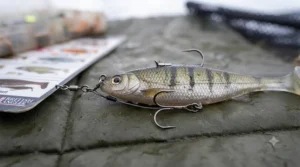
Slow Sink Lures for Pike: Choosing the Right Sink Rate
Why do slow sink lures matter for winter pike? A slow, controlled sink keeps the lure in a lethargic pike’s strike zone for longer, giving it more time to notice, approach, and commit, rather than dropping quickly past a fish that isn’t willing to chase downward.
Matching sink rate to depth is a genuinely underrated part of winter lure selection. On shallower waters and weed beds, a slow-sinking soft plastic, worked with a light jig head, can be crawled just above the structure without constantly snagging. In deeper water, a genuinely slow sink can mean patience measured in tens of seconds per cast before a lure even reaches the strike zone, which is precisely why heavier spoons and jointed swimbaits with built-in weighting exist as an alternative — they reach depth faster while still offering a slow, fluttering fall once they’re worked.
Winter Predator Fishing Tips: A Practical Season Guide
Getting genuinely useful winter sessions on the bank starts with dressing and preparing properly, since a session cut short by cold hands or wet feet rarely produces results regardless of lure choice. Layer up, keep spare gloves dry in a separate bag, and consider a session length you can sustain rather than one you’ll abandon after an hour.
On the water, work systematically rather than randomly. Search a swim in a fan pattern, casting from one side across to the other, rather than repeatedly casting to the same spot. A common mistake anglers make in their first few winter sessions is flogging one swim for far too long when a pike simply isn’t present — if there’s a fish willing to take, you’ll typically know within the first handful of properly-presented casts.
Heavy braided line is worth the investment for winter predator fishing specifically, not for fear of losing fish, but because it gives you a genuine chance of pulling a snagged lure free without breaking off — a real consideration when working lures slowly and deep near structure. Bright float stops added a few feet above the lure also help signal when it’s nearing the margins in coloured water, preventing the common mistake of lifting out too early.
Cold Weather Pike Tactics: Location, Timing and Approach
Location matters more in winter than at any other time of year, because pike themselves relocate to conserve energy. Deeper, slower-moving water, drop-offs, and areas out of the main current become significantly more productive than the shallow margins that produce well in autumn and spring. On rivers specifically, slower, deeper pools tend to hold winter fish more consistently than faster, shallower runs.
Timing within the day also shifts. Many experienced winter anglers report the middle of the day, once any overnight frost has lifted slightly and water temperature has had a chance to creep up even marginally, as more productive than a bitterly cold dawn start. This is a genuine trade-off against the conventional wisdom that early mornings produce best, and it’s specific to genuinely cold conditions rather than a year-round rule.
Real-world scenario: an angler working a gravel pit in freezing conditions might start with a Rapala Shadow Rap to methodically search known deep holding areas near a submerged feature, switching to a Savage Gear Craft Shad worked slowly along a drop-off if the jerkbait produces follows without commitment — using the follow itself as information about what retrieve or profile the fish actually want that day.
How to Choose the Best Pike Lures for Winter: 6 Steps That Matter
What should you look for in a winter pike lure? Prioritise lures that hold their action at a genuinely slow retrieve speed, choose profiles and colours matched to your water’s clarity, and carry a spread of sink rates so you can search different depths as conditions change through the day.
- Test the action at a crawl, not a cast. Before buying, check whether a lure’s action review or description specifically mentions performance at slow speed — many summer lures simply go dead in the water once retrieved that slowly.
- Match sink rate to your typical venue depth. Shallow, weedy stillwaters favour slow-sinking soft plastics; deep reservoirs and gravel pits favour heavier spoons and jointed swimbaits that reach depth faster.
- Carry both natural and high-contrast colours. Clear water rewards natural patterns; coloured or murky water rewards brighter, higher-contrast options — don’t commit to just one.
- Size up, within reason. Pike are opportunistic in winter and regularly take large lures, so don’t assume smaller automatically means more bites in cold water.
- Check hook and construction quality on soft lures. A soft shad that tears after two pike strikes isn’t genuinely cost-effective, however cheap the initial price.
- Build a small, varied box rather than one “miracle” lure. The venue, water clarity, and mood of the fish change daily; a spread of jerkbaits, spoons, and soft shads covers far more situations than any single pattern.
Common Mistakes When Buying Winter Pike Lures
The most common mistake is buying based purely on how a lure performs at a fast retrieve speed in a shop video or online demo, when the entire point of a winter lure is how it behaves at a crawl. A closely related error is assuming bigger and flashier always wins — on pressured, clear venues, a smaller, more natural finesse shad regularly outfishes a larger, brighter alternative. Many anglers also under-invest in sink rate variety, ending up with a box full of similar mid-depth lures and nothing genuinely capable of reaching deep, static winter fish quickly. Finally, a frequent oversight is neglecting a proper wire trace and forceps for hook removal — a mistake that risks both angler safety and the welfare of a fish that’s already stressed by cold water.
Pike Care, Handling and Regulations in Winter
According to the Canal & River Trust, pike are a genuinely fragile fish despite their fearsome appearance, and the utmost care is needed when handling and returning them — a point that matters even more in winter, when cold water already places additional stress on a fish’s system. A wire trace between lure and main line is essential given a pike’s teeth, and a proper set of forceps for safe hook removal should be considered non-negotiable kit, not an optional extra.
On the regulatory side, most stillwaters, lakes, and non-canalised canals stay open through the coarse fishing close season, but the national rod fishing rules still apply to rivers, and local byelaws can vary by area, so it’s worth checking before heading to a new venue. As covered in the Angling Times feature on winter lure tactics, experienced anglers also recommend a heavier braided main line in winter specifically to give you a genuine chance of pulling a snagged lure free without leaving gear, and potentially a hooked fish, in the water.
Frequently Asked Questions
❓ What is the best retrieve speed for pike lures in winter?
❓ Do pike still feed in cold water?
❓ What size lure is best for winter pike?
❓ Do I need a fishing licence to lure fish for pike in winter?
❓ What's the best colour pike lure for cold, clear water?
Conclusion
Winter pike fishing with lures rewards patience over power. Every one of the seven lures covered here earns its place not because it’s flashy or fast, but because it keeps producing a genuinely tempting action at the crawling pace cold water demands — whether that’s the Rapala Shadow Rap‘s ability to hang motionless mid-pause, or the simple, century-proven wobble of the Eppinger Dardevle Spoon.
Build a small, varied box rather than betting everything on one pattern, match your sink rate and colour to the venue and the day, and slow your retrieve down further than instinct suggests. Do that consistently, and the pike that supposedly “switch off” in winter start looking a lot more catchable.
✨ Don’t Miss These Exclusive Deals!
🔍 Take your winter pike box to the next level with these carefully researched picks. Click on any highlighted lure to check current pricing and availability on Amazon UK. These are the patterns that keep producing when the water’s at its coldest!
Recommended for You
- Best Pike Lures 2026: 7 Proven UK Picks That Actually Work
- Best Baitcasting Reel for Pike 2026: 7 Reels That Actually Handle Them
- Best Pike Reel Under £60: 7 Cracking Options for 2026
Disclaimer: This article contains affiliate links. As an Amazon Associate, I earn from qualifying purchases. If you purchase products through these links, we may earn a small commission at no additional cost to you.
✨ Found this helpful? Share it with your friends! 💬🤗
