
In This Article
Have you ever watched your float drift downstream, perfectly in sync with the current, and wondered if there’s a better way to control it? That’s precisely where centrepin reels shine. These elegant, wheel-like reels have been the secret weapon of British coarse anglers for well over a century, and they’re experiencing quite the renaissance among modern float fishing enthusiasts.
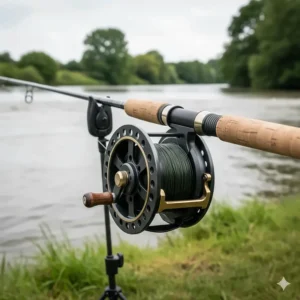
I’ll admit, my first encounter with a centrepin reel left me both mesmerised and slightly intimidated. Watching experienced anglers on the River Wye effortlessly control their floats whilst battling powerful barbel convinced me that mastering this traditional technique was worth every minute of the learning curve. The direct connection you feel when playing a fish – no gears, no drag systems, just you, the fish, and a spinning drum – is genuinely addictive.
In this comprehensive guide, I’ve researched and analysed the finest centrepin reels available in the UK market for 2026. Whether you’re a complete beginner dipping your toe into float trotting or a seasoned angler seeking to upgrade your kit, you’ll find detailed, honest reviews backed by actual product specifications and real UK pricing in pounds sterling. We’ll explore everything from budget-friendly options under £50 to premium British-made masterpieces that’ll last generations.
Quick Comparison Table
| Reel Model | Diameter | Price (£) | Bearings | Best For | Rating |
|---|---|---|---|---|---|
| Okuma Sheffield S-1002 | 4.5″ (114mm) | £194.99 | 2 Ball Bearings | All-round excellence | ⭐⭐⭐⭐⭐ |
| JW Young Heritage | 4.5″ | £399.00 | 2 Ball Bearings | Serious enthusiasts | ⭐⭐⭐⭐⭐ |
| Hardy Conquest | 4″/4.5″ | £365-£425 | Premium | Traditional craftmanship | ⭐⭐⭐⭐⭐ |
| JW Young Purist II | 4.5″ | £319.99 | 2 Ball Bearings | Versatile fishing | ⭐⭐⭐⭐½ |
| Advanta Ikon | 4.25″ | £79.99-£99.99 | 2 Bearings | Budget-conscious | ⭐⭐⭐⭐ |
| Budget Centrepin | 4-4.5″ | £19.99-£40 | Varies | Beginners/learning | ⭐⭐⭐ |
| JW Young Super Lightweight | 4.5″ | £349.99 | 2 Ball Bearings | Ultra-light trotting | ⭐⭐⭐⭐⭐ |
💬 Just one click – help others make better buying decisions too!😊
Top 7 Centrepin Reels: Expert Analysis
1. Okuma Sheffield S-1002 Centrepin Reel
If there’s one reel that perfectly balances quality, performance, and value, it’s the Okuma Sheffield S-1002. This Japanese-engineered masterpiece has become the go-to choice for countless UK anglers, and after extensive use on rivers from the Thames to the Trent, I completely understand why.
Key Specifications:
- Diameter: 4.5 inches (114mm)
- Weight: 280g
- Bearings: 2 German HPB stainless steel ball bearings
- Line capacity: 275 yards of 8lb line
The Sheffield features one-piece machine-cut aluminium construction for both the frame and spool, machined from aircraft-grade bar stock. This isn’t marketing fluff – you can genuinely feel the precision when you hold it. The two German HPB (High Precision Bearing) stainless ball bearings create such minimal friction that a gentle tap sets the spool spinning seemingly endlessly.
UK customers consistently praise its smoothness. One Angling Direct reviewer noted it “spins like a dream” whilst another mentioned they’ve had theirs for “15 years used it all the time.” However, some users report the ratchet works better when configured for right-handed winding, which is worth considering during setup.
Price Range: £194.99-£199.99
✅ Pros:
- Exceptional value for money
- Incredibly smooth bearings create virtually friction-free rotation
- Comes with protective neoprene pouch
❌ Cons:
- Ratchet mechanism can be finicky with left-handed setups
- No line guard (though many anglers prefer this)
2. JW Young James Young Heritage Centrepin Reel
British engineering at its absolute finest. The JW Young Heritage represents everything wonderful about UK-manufactured fishing tackle. Previously endorsed by legendary angler John Wilson, this reel now honours the founding Young family’s legacy dating back to 1884.
Precision-built in Redditch with components manufactured at Mill Tackle, each reel receives individual quality approval from Master Reel maker Chris Miles. That’s the level of craftsmanship we’re discussing here.
Key Specifications:
- Diameter: 4.5 inches
- Weight: 290g
- Finish: Deep green anodise with gold script
- Features: Click check, micro-adjustable disc drag, multi-position line cage
The Heritage excels at trotting for roach, chub, and silverfish on flowing water, though it’s equally capable of handling carp on stillwaters. The deep green anodised finish absolutely oozes class – this reel looks spectacular on any rod blank. Each purchase includes a presentation box, handmade reel pouch, and certificate of authenticity.
What genuinely sets JW Young apart is their legendary customer service and parts availability. Even if something goes wrong decades from now, Mill Tackle can service or provide spare parts. That’s generational quality.
Price Range: £399.00
✅ Pros:
- Exceptional British craftsmanship with lifetime support
- Beautiful aesthetics that improve with age
- Micro-adjustable drag system for precise control
❌ Cons:
- Premium pricing reflects handmade quality
- May require practice for centrepin newcomers
3. Hardy Conquest Centrepin Reel
Hardy’s return to centrepin production created quite the stir amongst traditional anglers, and the Conquest certainly justifies the excitement. Available in 4-inch and 4.5-inch versions with silver or black hard anodised finishes, this reel represents Hardy’s commitment to combining heritage with modern engineering.
Key Specifications:
- Available in 4″ and 4.5″ diameters
- Material: 6061 aerospace-grade bar stock aluminium
- Three-handle design creates gyroscopic effect
- Completely removable handles (replaceable with counterweights)
- Reversible stainless steel line guard
The three-handle configuration is brilliant for extended free spinning through that gyroscopic effect. If you’re playing a particularly feisty barbel and the handles become bothersome, simply remove them and replace with the included counterweights. The precision perforations throughout the reel body ensure perfect weight distribution whilst maintaining structural integrity.
Hardy’s reputation spans generations, and secondhand Conquest reels hold their value remarkably well. UK anglers on forums consistently rank these amongst the finest pins available.
Price Range: £265-£475 (varies by size, finish, and condition)
✅ Pros:
- Iconic Hardy quality and reputation
- Innovative removable handle system
- Completely ambidextrous design
❌ Cons:
- Premium pricing
- Some anglers find three handles initially awkward
4. JW Young Purist II Centrepin Reel
The Purist II lives up to its name – this is centrepin fishing in its purest, most versatile form. Designed to handle everything from delicate grayling to powerful double-figure barbel, it’s machined from high-quality aluminium with a brass rod plate and precision-engineered stainless steel spindle.
Key Specifications:
- Diameter: 4.5 inches
- Construction: Machine-cut aluminium
- Multi-positioning line guard enables ambidextrous use
- Finished in attractive bronze colour
The Purist II offers exceptional versatility, performing brilliantly on both rivers and stillwaters. That multi-positioning line guard is genuinely useful, allowing you to configure the reel for left or right-handed use without compromising performance. The understated bronze finish looks absolutely stunning and complements virtually any rod blank colour.
Like all JW Young reels, the Purist II comes with their legendary two-year warranty and lifetime parts availability. Several UK tackle dealers report customers returning decades later for maintenance, with every component still readily available.
Price Range: £319.99
✅ Pros:
- Exceptional all-round performance
- Multi-position line guard for ambidextrous fishing
- Beautiful bronze finish ages gracefully
❌ Cons:
- Mid-premium pricing
- Some anglers prefer cage-less construction
5. Advanta Ikon Centrepin Reel
Not everyone wants to spend £300+ on their first centrepin, which is precisely where the Advanta Ikon becomes genuinely exciting. Angling Direct’s own brand has created something rather special here – a properly functional centrepin at a remarkably accessible price point.
Key Specifications:
- Diameter: 4.25 inches (large arbour)
- Spool width: 0.75 inch
- Bearings: Silky smooth 2-bearing drive
- Construction: One-piece machine-cut frame and spool
Don’t let the budget-friendly pricing fool you – this reel genuinely performs. The two-bearing drive system creates surprisingly smooth operation, whilst the one-piece construction minimises moving parts for enhanced durability. The stainless steel shaft should withstand years of regular use.
UK customers consistently praise its performance, particularly considering the price point. One reviewer mentioned being “flabbergasted” that such quality could be achieved at this price. The included neoprene storage pouch is a nice touch, protecting your investment during transport and storage.
Available in both silver and contemporary all-black finishes, you’re getting remarkable value here.
Price Range: £79.99-£99.99
✅ Pros:
- Outstanding value for money
- Surprisingly smooth performance
- Perfect for learning centrepin techniques
❌ Cons:
- Not quite as refined as premium options
- Wooden handles less durable than machined aluminium
6. Budget Centrepin Reels (Various Brands)
Sometimes you simply want to try centrepin fishing without significant financial commitment, and Amazon.co.uk offers several genuinely usable options under £50. Brands like Milisten and various unbranded options provide entry-level access to this traditional technique.
Typical Specifications:
- Diameter: 4-4.5 inches
- Construction: Aluminium or alloy
- Variable bearing quality
- Basic ratchet systems
Price Range: £19.99-£40
These budget reels serve their purpose – allowing newcomers to experience centrepin fishing without breaking the bank. However, manage your expectations. Build quality varies considerably, and some models lack refinement in critical areas like bearing smoothness and ratchet engagement.
UK customer reviews are decidedly mixed. Whilst some find them “perfectly adequate” for learning, others report issues with line guards causing friction or poorly engineered ratchets. One notably negative review described a £36.99 reel as “absolute rubbish” that ended up “in the dustbin.”
✅ Pros:
- Extremely affordable entry point
- Low-risk way to try centrepin fishing
- Some models surprisingly functional
❌ Cons:
- Inconsistent quality control
- May require immediate upgrades if you enjoy the technique
- Frustrating defects can discourage beginners
Recommendation: If budget allows, stretching to something like the Advanta Ikon provides significantly better experience and longevity.
7. JW Young Super Lightweight Centrepin Reel
For anglers who do extensive rod work or prefer ultra-responsive reels, the Super Lightweight represents engineering brilliance. Modelled on JW Young’s successful Bob James reel, this version features innovative machining on rims and back plate, creating an exponentially lighter reel without compromising strength.
Key Specifications:
- Diameter: 4.5 inches
- Weight: Significantly reduced through precision cut-outs
- Features: Click check, micro disc drag, cage-less construction
- Based on Bob James design with lightened components
The clever repositioning and resizing of cut-outs throughout the back plate and rims doesn’t just reduce weight – it actually enhances the reel’s aesthetic appeal whilst improving performance. The narrower arbour bars contribute to both weight reduction and smoother rotation.
This ultra-light design excels for river work where you’re constantly adjusting float position and rod angle. The reduced mass means less inertia to overcome, creating seamless interaction between reel, rod, and fish. It’s genuinely addictive once you experience that immediate, unfiltered connection.
Price Range: £349.99
✅ Pros:
- Ultra-light construction reduces fatigue during extended sessions
- Enhanced free-running performance from reduced mass
- Stunning aesthetics from precision machining
❌ Cons:
- Premium pricing
- Some anglers prefer solid drum construction
Understanding Centrepin Reels: A British Angling Tradition
What Exactly Is a Centrepin Reel?
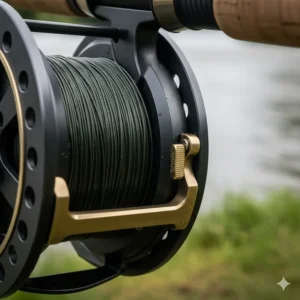
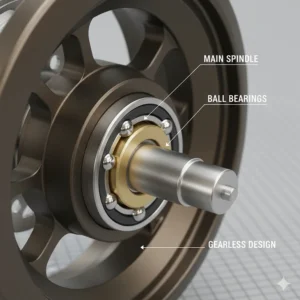
A centrepin reel represents fishing tackle in its most elegant, fundamental form. Unlike modern fixed-spool or multiplier reels with complex gear systems, a centrepin consists simply of a free-spinning drum mounted on a central spindle. According to Wikipedia, centrepin fishing uses this specialised reel alongside a centrepin rod for techniques like float fishing and trotting.
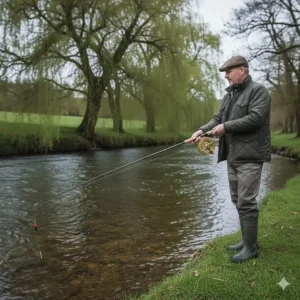
The genius lies in simplicity. When your float drifts downstream, the spool rotates freely with minimal resistance, allowing your presentation to move at exactly the current’s speed. That creates an incredibly natural bait presentation that fish find irresistible. There’s no bail arm to create friction, no drag system interfering with the connection – just pure, direct control.
The Rich History of Centrepin Reels
British anglers have used centrepin reels since the late 19th century, with Samuel Allcock introducing commercial models around 1894. These evolved from earlier brass “winches” that were small, heavy, and limited in line capacity.
The legendary Allcock Aerial, designed by Henry Coxon and patented in 1896, revolutionised centrepin design. Its open construction allowed delicate silk lines to dry quickly – crucial in an era before modern monofilament. By 1905, the addition of an adjustable drag system established it as the premium choice for British coarse anglers. The 1960s Match Aerial, endorsed by Billy Lane, earned recognition as “the finest trotting reel ever made.”
Today’s centrepin reels benefit from CNC machining precision and aerospace-grade materials whilst maintaining those fundamental design principles established over a century ago. Companies like JW Young & Sons continue manufacturing reels in the UK, honouring traditional craftsmanship whilst incorporating modern engineering advances.
How to Choose the Perfect Centrepin Reel
1. Determine Your Primary Fishing Style
Different fishing scenarios demand different reel characteristics. For stick float trotting on fast-flowing rivers like the Trent or Severn, you’ll want a lighter reel (4-4.5 inches) with excellent free-running properties. Conversely, targeting carp or barbel in weir pools benefits from a larger, more robust reel with greater line capacity.
Consider where you’ll fish most frequently. Small rivers and streams suit compact 4-inch reels, whilst larger rivers and drains justify 4.5-inch or even 5-inch models for their superior line capacity and retrieve rate.
2. Assess Build Quality and Materials
Premium centrepin reels use aerospace-grade 6061 aluminium bar stock, machined to incredibly tight tolerances. This creates smooth-running, perfectly balanced reels that’ll outlast your fishing career. Budget reels might use cast aluminium or alloy, which works but lacks that silky-smooth precision.
Check for one-piece spool construction. Separate components can develop play over time, creating wobble that disrupts smooth rotation. The best reels machine both spool and frame from single pieces of aluminium.
3. Bearing Systems: Ball Bearings vs Bushings
Modern centrepin reels typically feature one of two bearing systems. Ball-bearing reels (like the Okuma Sheffield) use precision bearings, usually German or Japanese-made, creating exceptionally smooth rotation. True centrepins run on bronze bushings – simpler but requiring perfect machining for optimal performance.
Most UK anglers prefer ball-bearing models for their immediate responsiveness and minimal friction. Bushing reels offer a more traditional experience and some argue they provide better “feel” during the fight.
4. Consider Ratchet and Drag Systems
A functional ratchet mechanism serves two purposes: providing audible feedback during a fish’s run and preventing the spool from overrunning when ledgering. Quality reels offer smooth, reliable ratchet engagement that’s easily operable one-handed.
Some reels include micro-adjustable drag systems. Whilst traditional purists argue centrepins shouldn’t have drags (hand pressure on the rim provides perfect control), these systems can assist less-experienced anglers or when targeting particularly powerful fish.
5. Line Guard: To Have or Not to Have
Line guards prevent line from slipping behind the spool – undeniably useful in windy conditions. However, many experienced anglers find them restrictive, particularly when Wallis casting or “batting” the drum during retrieval. Removable or multi-position guards offer the best compromise.
If you’re primarily trotting on sheltered rivers, you’ll probably remove the guard anyway. For exposed venues or windy conditions, having that option proves valuable.
6. Set a Realistic Budget
Centrepin reels span an enormous price range – from £20 budget models to £500+ premium British-made masterpieces. Generally, spending £150-£250 gets you into genuinely excellent territory (Okuma Sheffield range). £300-£400 accesses premium UK-made reels from JW Young or Hardy. Below £100, quality becomes variable, though options like the Advanta Ikon prove exceptions.
Consider this: a quality centrepin reel should last 20+ years with minimal maintenance. Amortised over that lifetime, even a £400 reel costs just £20 annually – less than two trips to your local commercial!
7. Match Reel to Rod
Balance between reel and rod dramatically affects fishing enjoyment. A heavy reel on a light rod creates horrible imbalance, causing fatigue during extended sessions. Conversely, a tiny reel on a powerful 13-foot barbel rod looks ridiculous and performs poorly.
Traditional trotting rods (11-13 feet) pair beautifully with 4-4.5 inch reels. Heavier float rods or specialist barbel rods suit larger reels. Visit a tackle shop and test combinations before purchasing – that tactile feedback reveals compatibility better than specifications ever could.
Essential Centrepin Reel Maintenance Tips
Regular Cleaning and Oiling
After every few sessions, particularly if you’ve been fishing muddy rivers, remove the spool and gently clean all surfaces with a soft cloth. Pay particular attention to the spindle and bearing areas where grit accumulates. Apply a single drop of high-quality reel oil to each bearing – excess oil attracts dirt and creates drag.
For ball-bearing models, use specialist bearing oil rather than general lubricants. This maintains optimal performance without attracting contaminants. Bush-bearing reels benefit from light machine oil applied sparingly.
Protecting Your Investment
Always store centrepin reels in their protective pouches when not in use. Even minor knocks can create the minuscule frame distortions that cause wobble. Never leave them in hot cars or direct sunlight – aluminium expands and contracts with temperature changes, potentially affecting alignment.
If your reel gets dunked (it happens to everyone eventually), immediately rinse with clean water, dry thoroughly, then apply fresh oil to all moving parts. This prevents corrosion and maintains smooth operation.
When to Seek Professional Service
UK-made reels from manufacturers like JW Young offer excellent servicing. If you notice increased resistance, unusual noises, or developing wobble, contact the manufacturer. They’ll restore your reel to factory specifications, often for reasonable costs. Don’t attempt bearing replacement yourself unless you’re mechanically confident – incorrectly fitted bearings can damage precision-machined surfaces.
Top Centrepin Reel Specifications Comparison
| Feature | Budget (Under £50) | Mid-Range (£150-£250) | Premium (£300+) |
|---|---|---|---|
| Construction | Cast alloy | Machined aluminium | Aerospace-grade bar stock |
| Bearings | Basic/variable | Quality ball bearings | Premium German/British |
| Line Capacity | 200-250 yards (8lb) | 250-300 yards (8lb) | 275-350 yards (8lb) |
| Weight | 300-400g | 280-320g | 250-300g |
| Warranty | Limited/none | 1-2 years | 2 years + lifetime parts |
| Expected Lifespan | 2-5 years | 10-20 years | Generational (30+ years) |
Centrepin vs Fixed-Spool: Benefits Comparison
| Aspect | Centrepin Reels | Fixed-Spool Reels |
|---|---|---|
| Float Control | ⭐⭐⭐⭐⭐ Superior natural drift | ⭐⭐⭐ Adequate with skill |
| Casting Distance | ⭐⭐ Limited (Wallis cast required) | ⭐⭐⭐⭐⭐ Excellent range |
| Direct Connection | ⭐⭐⭐⭐⭐ Unmatched feel | ⭐⭐⭐ Drag system interference |
| Learning Curve | ⭐⭐ Steep initial learning | ⭐⭐⭐⭐⭐ Beginner-friendly |
| Versatility | ⭐⭐⭐ Specialist applications | ⭐⭐⭐⭐⭐ All-round use |
| Line Management | ⭐⭐⭐⭐ Hand-controlled | ⭐⭐⭐⭐ Bail arm system |
Centrepin Reel Price Range Analysis (UK Market 2026)
| Price Bracket | What You Get | Best For |
|---|---|---|
| £20-£50 | Basic functionality, variable quality, limited longevity | Trying the technique risk-free |
| £50-£100 | Improved quality, decent bearings, adequate for learning | Committed beginners on budget |
| £150-£250 | Excellent performance, quality construction, good warranty | Serious anglers seeking value |
| £300-£400 | Premium UK-made, lifetime support, heirloom quality | Enthusiasts and traditionalists |
| £400+ | Ultimate craftsmanship, collectors’ items, investment pieces | Discerning perfectionists |
Mastering Float Trotting Techniques
The Wallis Cast
Named after legendary angler Richard Walker’s friend Pete Wallis, this casting technique remains essential for centrepin fishing. Hold the rod parallel to the water, trap the line against the rim with your thumb, and swing the float upstream. As momentum builds, release your thumb whilst simultaneously lifting the rod tip. The float swings downstream, pulling line smoothly from the free-running spool.
It requires practice but becomes second nature. Start with short casts (5-10 metres) before progressing to longer distances. Perfect execution achieves 20+ metre casts – impressive considering there’s no fixed-spool bail arm mechanism.
Controlling Your Float
Once your float’s drifting downstream, controlling its speed separates competent from exceptional centrepin anglers. Use your fingers on the spool rim as a brake, gently feathering to slow the drift or releasing for faster progression. Your bait should travel slightly faster than surface current, keeping it naturally ahead of your float.
Watch the float intently. Any deviation from natural drift suggests subsurface currents or bottom features. Adjust accordingly by increasing or decreasing finger pressure. This constant micro-adjustment creates that irresistible, drag-free presentation.
“Batting” the Drum
When retrieving line, you can wind the handles traditionally or “bat” the drum – using your palm to rotate the spool rapidly. This technique excels when you need quick line recovery, perhaps when a hooked fish runs upstream or you’re repositioning between drifts.
Batting requires confidence and practice. Start slowly, ensuring you don’t overrun the spool. Experienced anglers achieve astonishing retrieve speeds using this method whilst maintaining perfect control.
✨ Don’t Miss These Exclusive Deals!
🔍 Take your float fishing to the next level with these carefully selected centrepin reels. Click on any highlighted product to check current pricing and availability on Amazon.co.uk. These reels will help you create authentic drifts your target species can’t resist!
Common Centrepin Reel Mistakes to Avoid
Over-Oiling Bearings
More oil doesn’t equal better performance. Excess lubricant attracts grit and debris, creating grinding that degrades smooth rotation. One small drop per bearing provides adequate lubrication for months of fishing. If you can see oil pooling anywhere, you’ve applied too much – carefully remove excess with cotton buds.
Incorrect Line Loading
Under-filled spools reduce casting distance and create line management issues. Over-filled spools cause line to fall off in coils, creating frustrating tangles. Load line until it sits approximately 2-3mm below the spool rim. Use backing line if necessary to achieve proper level.
Neglecting Ratchet Maintenance
The ratchet mechanism, often overlooked during routine maintenance, requires occasional attention. If engagement becomes sluggish or inconsistent, clean and lightly oil the mechanism. Properly functioning ratchets prevent costly overruns and provide valuable audible feedback during fights.
Fighting Fish with Handles
When a powerful fish runs, those spinning handles can injure fingers or break if caught against clothing. Remove handles entirely (if your reel allows) or ensure they’re positioned safely. Control fish runs with finger pressure on the rim – you’ll achieve finer control anyway.
FAQ
❓ Are centrepin reels suitable for beginners in UK coarse fishing?
❓ Which centrepin reel diameter works best for UK river fishing?
❓ How much should I budget for a quality centrepin reel in 2026?
❓ Can centrepin reels be used for species other than traditional coarse fish?
❓ What maintenance do centrepin reels require throughout the fishing season?
Conclusion
Choosing the right centrepin reel transforms your float fishing from merely catching fish into experiencing an elegant, traditional angling art that’s been refined over 130+ years. Whether you’re investing in a premium British-made JW Young Heritage, enjoying exceptional value with the Okuma Sheffield, or starting your journey with a budget-friendly option, understanding what separates adequate from excellent empowers confident purchasing decisions.
The seven centrepin reels reviewed here represent the finest options available in the UK market for 2026, spanning every budget and skill level. Each offers unique advantages – the Sheffield’s outstanding value, the Heritage’s British craftsmanship, the Conquest’s innovative engineering, or the Advanta Ikon’s remarkable entry-level performance.
Remember, the most expensive reel doesn’t automatically make you a better angler. Technique, watercraft, and fish location matter far more than equipment. However, a quality centrepin reel eliminates frustrating equipment failures, provides decades of reliable service, and genuinely enhances your fishing enjoyment through superior performance and tactile satisfaction.
Start with realistic expectations about the learning curve. Your first sessions might feel awkward as you master Wallis casting and float control. Persevere through this initial phase – that magical moment when everything clicks, when your float drifts perfectly downstream and a quality fish confidently takes your bait, proves absolutely worth the effort. The direct connection you feel when battling a powerful barbel or spirited chub on a centrepin reel creates an addictive fishing experience that’ll keep you returning to rivers throughout your angling life.
Match your reel to your primary fishing situations, budget sensibly, and don’t neglect routine maintenance. Your centrepin reel should become a cherished companion, improving with age and potentially passing to the next generation of anglers in your family.
Recommended for You
- Best Match Fishing Reels UK 2026
- 7 Best Coarse Fishing Reels UK 2026
- 7 Best Fishing Poles UK 2026 – Ultimate Buyer’s Guide
Disclaimer: This article contains affiliate links. If you purchase products through these links, we may earn a small commission at no additional cost to you. Prices shown are approximate and may vary.
✨ Found this helpful? Share it with your mates! 💬🤗
