
In This Article
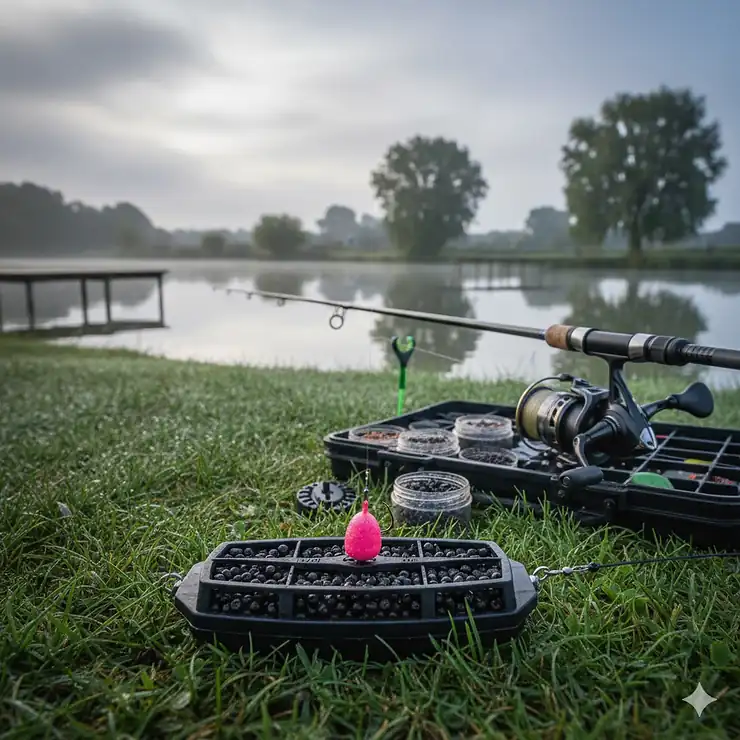
Picture this: you’re sat on the bank of your local commercial fishery, watching your quiver tip like a hawk. Suddenly—bang! A three-foot twitch, rod bent double, and another carp is on. That’s the magic of method feeders, and it’s exactly why they’ve become the go-to tactic for anglers across the UK.
Method feeders revolutionised coarse fishing in the 1990s when match anglers discovered they could consistently outfish traditional techniques. The concept is brilliantly simple—mould a compact ball of groundbait around a weighted feeder with your hookbait positioned perfectly on top. Fish home in on this irresistible pile of feed and, before they know it, they’ve taken your hookbait along with it. The short hooklink and bolt-rig effect mean they hook themselves at the slightest movement.
This concentrated presentation attracts fish to a very small area, meaning any fish feeding on the method feeder will inevitably encounter your hookbait. Whether you’re targeting F1s on a commercials method fishing session or hunting specimen tench and bream, understanding method feeders is essential for modern UK angling.
In this comprehensive guide, I’ll walk you through the 7 best method feeders available on Amazon.co.uk in 2026, explain how to set up your inline method feeder setup correctly, and share the secrets that’ll have you bagging up session after session. From budget-friendly starter kits to premium flat method feeders designed for distance casting, I’ve tested them all so you don’t have to.
Quick Comparison Table
| Product | Type | Weight Range | Price (£) | Best For | Rating |
|---|---|---|---|---|---|
| Drennan In-Line Flat Method Feeder | Flat inline | 15g-45g | £2.85-£3.50 | Distance accuracy | 4.7/5 |
| Preston ICS Dura Flat Method Feeder | Interchangeable | 20g-60g | £2.99-£3.50 | Versatility | 4.6/5 |
| Guru X-Safe Method Feeder | Elasticated/Inline | 24g-45g | £2.99-£5.99 | Safety design | 4.5/5 |
| Korda Bait-Up Method Feeder | Inline | 35g-50g | £3.99-£5.50 | Premium quality | 4.6/5 |
| Kobra Elasticated Method Feeders (5pk) | Flat back | 20g-30g | £4.42-£4.95 | Budget value | 4.5/5 |
| Complete Method Feeder Kit | Starter kit | 4 feeders + mould | £12.99-£15.99 | Beginners | 4.3/5 |
| 10-Piece Inline Method Feeder Set | Multi-weight | 15g-60g | £18.99-£24.99 | Comprehensive | 4.1/5 |
💬 Just one click – help others make better buying decisions too! 😊
Top 7 Method Feeders: Expert Analysis
1. Drennan In-Line Flat Method Feeder – Best for Distance & Accuracy
The Drennan In-Line Flat Method Feeder sits at the top of my list for bloody good reason—it’s the feeder I reach for when accuracy matters most. Drennan’s Oxfordshire-based team have engineered an aerodynamic marvel that flies like a dart, even in crosswinds.
Key Specifications:
- Weight range: 15g (short casts), 30g (mid-range), 45g (distance)
- Flat-weighted base ensures perfect presentation every cast
- Unique METHOD connector (32lb breaking strain) for quick changes
- Compatible with Drennan method feeder moulds (sold separately)
UK Customer Feedback: Anglers consistently praise the feeder’s casting stability and the ingenious connector system. One reviewer mentioned mastering the technique within an hour of their first match, noting how the small studs on the weight ensure the feeder stays in place on shelves and slopes.
Price: £2.85-£3.50 per feeder on Amazon.co.uk
✅ Pros:
- Exceptional casting accuracy in wind
- Weight-forward design maximises distance
- Quick-change connector saves time
- Flat base prevents rolling on slopes
❌ Cons:
- Mould sold separately
- Groundbait mix needs proper consistency
Verdict: Perfect for commercials method fishing where hitting the same spot repeatedly wins matches.
2. Preston Innovations ICS In-Line Dura Flat Method Feeders – Best Interchangeable System
Preston’s ICS (Interchange System) Dura Flat Method Feeders offer something genuinely clever—the ability to swap feeder weights and sizes in seconds without re-rigging. Based in Telford, Preston Innovations have created a system that’s become the professional’s choice.
Key Specifications:
- Available in Small (20g-45g), Large (20g-45g), XLarge (30g-60g)
- Splayed rib configuration leaves perfect hookbait placement area
- Tough camo coating blends with lake beds
- Weight-forward loading improves casting and accuracy
UK Customer Feedback: Match anglers love the interchangeable nature, allowing them to adapt quickly to changing conditions without cutting and re-tying.
Price: £2.99-£3.50 per feeder on Amazon.co.uk
✅ Pros:
- ICS compatibility allows instant weight changes
- Durable camo-coated frame
- Perfect for both groundbait and pellets
- Includes spare stem and quick-change bead
❌ Cons:
- Slightly pricier than basic feeders
- Requires Preston ICS mould for best results
Verdict: Ideal for anglers who fish multiple venues and need adaptability.
3. Guru X-Safe Method Feeder – Best Safety Design for Carp Welfare
Developed by commercial fishing legends Steve Ringer and Alex Bones, the Guru X-Safe Method Feeder represents a genuine innovation in fish safety. The unique X-Safe elastic system prevents tethering whilst still providing bolt-rig benefits.
Key Specifications:
- X-shaped vented arms minimise tangles and maximise grip
- Hook bait platform positions on opposite side to main weight
- Elastic system acts as shock absorber during fight
- Available in 24g, 28g, 36g, and 45g weights
UK Customer Feedback: Anglers describe it as a “game changer,” with one reviewer noting the unique X-Safe elastic system acts as a buffer during the fight which helps reduce hook pulls at the net. The fish-friendly design means if you lose a fish, the elastic simply pulls free.
Price: £2.99-£5.99 per feeder on Amazon.co.uk
✅ Pros:
- 100% safe for fish if break-offs occur
- Reduces hook pulls during fight
- Hookbait always lands on top
- Cuts through crosswinds like a dart
❌ Cons:
- Replacement elastics needed occasionally
- Learning curve for first-time users
Verdict: Perfect for ethical anglers who prioritise fish welfare without compromising catch rates.
4. Korda Bait-Up Method Feeder – Best Premium Option
Korda’s reputation for quality shines through in their Bait-Up Method Feeder. This redesigned classic features a tri-lobe design where one weighted fin ensures it always lands hookbait-up—no exceptions.
Key Specifications:
- Available in 35g and 50g weights
- Weighted fin guarantees correct landing position
- Bait disc protects groundbait during flight
- One-piece construction for exceptional durability
- Fits any size 8 Korda swivel including Quick Change
UK Customer Feedback: Specimen hunters targeting tench, barbel, and bream alongside carp rate this feeder highly for its casting stability and hookbait presentation.
Price: £3.99-£5.50 per feeder on Amazon.co.uk
✅ Pros:
- Premium build quality
- Tri-lobe design ensures perfect presentation
- Minimal line twist on retrieve
- Suitable for specimen fishing
❌ Cons:
- Higher price point
- Limited weight options
Verdict: Worth the investment for serious anglers wanting reliability and performance.
5. Kobra Elasticated Method Feeders (Pack of 5) – Best Budget Value
Made in the UK, these Kobra flat back method feeders offer incredible value without sacrificing quality. The five-pack with black hydro elastic means you’re sorted for an entire season.
Key Specifications:
- Pack of 5 feeders (excellent value)
- Available in 20g, 25g, 30g sizes
- Flat back design for stable positioning
- Elasticated with durable black hydro elastic
- Best fished with fishmeal groundbait or soaked 2mm pellets
UK Customer Feedback: UK buyers praise these as excellent value, noting they use them all the time with very good quality. The only downside mentioned is losing them whilst fishing—though reviewers clarify it’s user error, not product fault!
Price: £4.42-£4.95 for pack of 5 on Amazon.co.uk
✅ Pros:
- Exceptional value (5 feeders)
- Made in UK
- Durable construction
- Works with groundbait and pellets
❌ Cons:
- Basic design (no quick-change features)
- Limited weight range
Verdict: Perfect starter option or backup feeders for match bags.
6. Complete Method Feeder Kit – Best All-in-One Starter Package
This Complete Method Feeder Kit is exactly what beginners need—everything to start method feeder fishing in one box. No guesswork, no missing components.
Key Specifications:
- 4 method feeders in different weights
- 900g Krill method mix groundbait included
- Method feeder mould for consistent presentation
- 10 pre-tied hook links (short hooklinks method ready)
- Pack of pre-drilled pellets for hookbait
UK Customer Feedback: Perfect for newcomers to the technique, though experienced anglers note it’s a solid backup kit too.
Price: £12.99-£15.99 complete kit on Amazon.co.uk
✅ Pros:
- Everything included to start fishing
- Krill method mix groundbait works brilliantly
- Great value package
- Pre-tied hooklengths save time
❌ Cons:
- Basic feeder quality
- May want to upgrade feeders later
Verdict: Ideal first purchase for anyone wanting to try method feeder fishing without breaking the bank.
7. 10-Piece Inline Method Feeder Set with Mould – Best Comprehensive Collection
This 10-piece fishing inline method feeder set covers every possible scenario from margin fishing to long-range work. Eight different weights plus two quick-release moulds mean you’re prepared for anything.
Key Specifications:
- 8 feeders: 15g, 20g, 25g, 30g, 35g, 40g, 50g, 60g
- 2 quick-release moulds with push-button release
- Hollowed-curved design prevents bait falling off
- Flatbed design ensures correct landing position
- High-quality iron frame with plastic coating
UK Customer Feedback: Users appreciate the weight variety, though some note the heavier feeders (40g+) work best with 10ft feeder rods for proper quiver tip sensitivity.
Price: £18.99-£24.99 complete set on Amazon.co.uk
✅ Pros:
- Comprehensive weight range
- Two moulds included
- Quick-release mechanism
- Covers all fishing distances
❌ Cons:
- Build quality varies
- Occasional reports of feeders separating
Verdict: Good value for anglers who fish various venues and distances.
✨ Don’t Miss These Exclusive Deals!
🔍 Take your method feeder fishing to the next level with these carefully selected products. Click on any highlighted item to check current pricing and availability on Amazon.co.uk. These tools will help you create authentic commercial fishery catches your mates will envy!
What Are Method Feeders? Understanding the Technique
Method feeders are specialised fishing feeders designed to deliver a compact ball of groundbait or pellets directly around your hookbait. Unlike traditional cage feeders that release bait gradually, method feeders hold compact, moistened groundbait adjacent to the hookbait on the fishing line, preventing rapid depletion whilst keeping fish focused on your hook location.
The technique earned its name in the 1990s when it began consistently winning matches against established methods. Anglers simply referred to it as “The Method” – the technique to use. Originally developed by match angler Dave Hough for bagging up at Mallory Park in Leicestershire, the design was refined by former England International Roy Marlow into the feeders we recognise today. According to Wikipedia’s article on groundbait, method feeders are cage or wire containers mounted adjacent to the hookbait that gradually release compact, moistened groundbait and particle baits.
The Flatbed Revolution
The modern flat method feeders we know today evolved from the 1980s Emstat feeder. Preston Innovation’s Andy Findlay then created the first proper flatbed design, spawning what many consider the original flat-bed method feeder by Korum. This flatbed design ensures your bait ball lands face-up every single cast, guaranteeing perfect presentation.
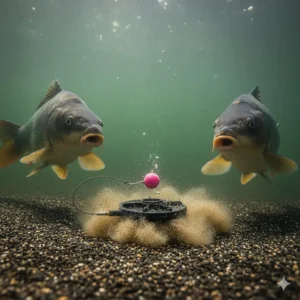
The genius lies in simplicity: fish are attracted to a palm-sized concentrated area of bait. As they vacuum up the free offerings from the feeder, they inevitably suck in your hookbait too. The deliberately short hooklink (10-15cm) means the feeder’s weight sets the hook via the bolt-rig effect at the slightest movement. The history and development of fishing tackle, including feeders, is well-documented in Wikipedia’s fishing tackle article, showing how modern equipment has evolved from ancient fishing methods.
Types of Method Feeders Explained
Flat Method Feeders
Flat method feeders feature a weighted flat base that ensures they land bait-side-up every cast. The ribbed top grips groundbait or method mix groundbait securely, whilst the flat bottom prevents rolling on slopes. These excel on commercial fisheries where accuracy and consistent presentation matter most.
Inline Method Feeders
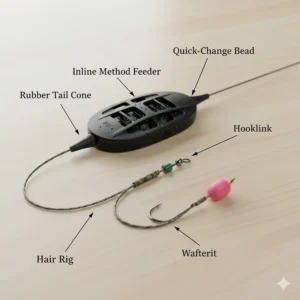
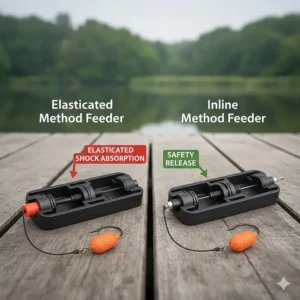
Inline method feeders allow your mainline to run through the centre, offering improved bite detection and a safer setup for fish welfare. Many modern inline versions include quick-change beads, letting you swap feeders in seconds without re-tying. Perfect for match anglers who need to adapt quickly.
Elasticated Method Feeders
Elasticated feeders feature a rubber or elastic stem that acts as a shock absorber during the fight, reducing hook pulls particularly from head-shaking F1s under the rod tip. The Guru X-Safe system takes this further with a fish-safe elastic that releases if a fish breaks off.
Distance Method Feeders
Distance method feeders feature aerodynamic profiles, shallow side walls, and protective shields that maintain bait integrity during long casts. Preston’s ICS Distance Method range exemplifies this category, designed specifically for hitting spots 50-70 metres out.
How to Set Up Method Feeders: Step-by-Step Guide
Basic Inline Method Feeder Setup
Setting up your method feeder rig couldn’t be simpler. Here’s the foolproof method:
Step 1: Thread your mainline through the inline method feeder, ensuring it runs freely.
Step 2: Add a quick-change bead or small swivel to your mainline. This stops the feeder sliding down.
Step 3: Tie on a short hooklength (10-15cm) using a simple loop-to-loop connection or direct to the swivel. Many anglers prefer pre-tied Guru QM1 hooklengths in 7-10lb for reliability.
Step 4: Attach your hook (size 12-16 barbless) and hair-rig your chosen hookbait—banded pellets, mini boilies, or corn work brilliantly.
Step 5: Mould your method mix or groundbait around the feeder using a method feeder mould. Place your hookbait on top of the bait ball or buried slightly within.
Step 6: Cast accurately to your chosen spot and wait for that characteristic three-foot twitch!
Short Hooklinks Method: Why Length Matters
The short hooklink is absolutely critical to method feeder success. Most experienced anglers use 10-15cm (4-6 inches) maximum. This short length means fish cannot eject the hookbait without feeling the feeder’s weight, triggering the bolt-rig effect that drives the hook home.
Using longer hooklengths defeats the purpose—fish can move away with your bait, feel resistance, and eject it before you even see a bite. On commercials method fishing sessions where bites come fast, that 4-inch hooklink is the difference between bagging up and blanking.
Best Method Mix Groundbait & Bait Options
Commercial Method Mix Recipes
The consistency of your method mix groundbait separates average sessions from red-letter days. You need a mix that:
- Binds firmly to the feeder during the cast
- Breaks down quickly once on the bottom
- Releases attractive scent and particles
Winning Recipe:
- 50% fine crushed pellets or method-specific groundbait
- 50% soaked micro pellets (2mm-4mm)
- Add water gradually until you can squeeze a ball that holds together but crumbles under pressure
Avoid making your mix too wet—if your groundbait or pellets are too wet, they won’t stick to the feeder’s ribs, leaving feed behind in the mould. The perfect consistency should mould easily but not turn to sludge.
Hookbait Selection for Method Feeders
Your hookbait choice can make or break your session. Here are proven winners:
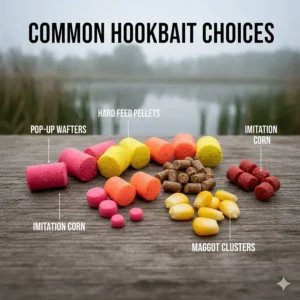
Banded Pellets: 6mm-8mm halibut or robin red pellets work brilliantly. Band them to your hook for a natural presentation that fish hoover up confidently.
Wafter Boilies: 8mm-10mm wafters sit perfectly on top of your bait pile, creating an easy target. Soak in liquid attractants for extra pulling power.
Imitation Baits: Brightly coloured fake corn or maggots stand out against natural groundbait, triggering aggressive takes from curious fish.
Natural Options: Single grains of real corn, mini boilies, or even cubes of luncheon meat work when fish want something different.
The key is experimentation—what worked last week might not work today. Carry variety and don’t be afraid to change hookbaits every 20 minutes until you find what they want.
Choosing the Right Method Feeder Weight
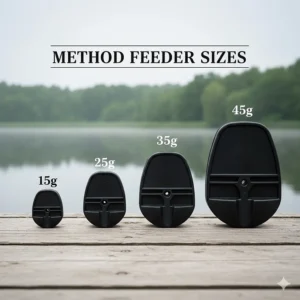
Selecting the correct feeder weight is crucial for presentation and bite detection. Here’s how to choose:
Short-Range Fishing (Up to 30 Metres)
Use: 15g-25g feeders Why: Light enough for accurate flicking, heavy enough for good contact. Your quiver tip will show every knock and rattle.
Mid-Range Fishing (30-50 Metres)
Use: 25g-35g feeders
Why: Balanced weight for comfortable casting without overpowering your feeder rod. The sweet spot for most commercial fishery work.
Distance Fishing (50+ Metres)
Use: 40g-60g feeders Why: Heavier weights achieve distance and cut through wind. Pair with stiffer quiver tips (2oz-3oz) for proper bite indication.
Remember: it’s better to fish slightly too heavy than too light. A heavier feeder anchors better, preventing drift in undertow or on slopes. It also improves bite detection—fish feel immediate resistance and hook themselves more reliably.
Method Feeder Rods & Tackle Recommendations
The Perfect Feeder Rod
Your method feeder rod needs to balance casting power with sensitive bite detection. Look for:
Length: 10-11ft for most UK commercial fisheries. 12-13ft for big pits requiring distance.
Action: Progressive, semi-through action that can load during the cast but forgive lunging fish.
Test Curve: 1.25-1.75lb for standard method work, up to 2.25lb for heavy feeders and specimen fish.
Quiver Tips: Interchangeable tips from 1oz-3oz allow you to match conditions. The Drennan Series 7 Puddle Chucker Method Feeder Rod exemplifies this perfectly with included 2oz and 3oz glass feeder tips.
Reel & Line Setup
Reel: 3000-4000 sized fixed spool with reliable drag. Baitrunner facility helps when targeting bigger fish.
Mainline: 6-10lb monofilament. Maxima Chameleon is popular, though many anglers prefer the abrasion resistance of 8lb for peace of mind.
Hooklengths: 7-10lb fluorocarbon or coated braid in 10-15cm lengths. Pre-tied options like Guru QM1 save time and use premium N-Gauge line.
Fishing Method Feeders on Commercial Fisheries
Commercial fisheries are where method feeders truly shine. These heavily stocked venues demand efficiency, accuracy, and rapid catch rates—exactly what the method delivers.
Location is Everything
Before you even tackle up, observe your swim carefully:
- Look for features: islands, margins, plateaus, bars
- Watch for fish movement: rolling carp, fizzing bubbles
- Note wind direction: fish often patrol windward banks
Choose 2-3 spots at different distances. Feed each area with a few casts of your method feeder to build attraction, then rotate between them as bites slow.
The Three-Foot Twitch
On commercial fisheries, method feeder bites are unmistakable. The classic “three-foot twitch” happens when a carp inhales your hookbait, feels the feeder’s weight, and bolts. Your rod tip doesn’t gently curve—it rips round violently.
This aggressive bite indication is why proper rod retention is crucial. Use solid banksticks and rests that won’t allow fish to pull your rod in. Every year, anglers lose expensive gear to Canada Lake-style carp doing what they do best—absolutely legging it!
Match Fishing Strategy
In matches, efficiency determines your weight. Here’s the winning approach:
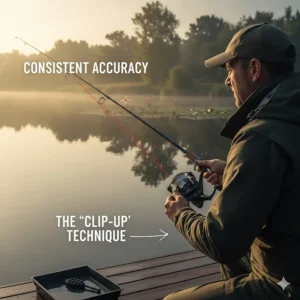
- Clip Up: Use your reel’s line clip to mark your chosen distance. Every cast hits the same spot, building a concentrated food area.
- Rapid Turnaround: Have spare hooklengths ready. When you land a fish, quickly swap a fresh rig whilst that one dries and can be re-baited.
- Feed Little and Often: Don’t pile in bait. 2-3 casts to introduce feed, then fish. Add more only when bites slow.
- Watch Your Neighbours: If they’re catching and you’re not, don’t be too proud to switch tactics or move.
Common Method Feeder Mistakes to Avoid
Mixing Your Groundbait Wrong
Too wet and it won’t stick. Too dry and it won’t mould. Don’t make your groundbait mix or pellets too wet as they won’t stick to the feeder’s ribs—some feed will be left behind in the mould. The consistency should be like damp breadcrumbs that compress into a firm ball.
Using Hooklinks That Are Too Long
I see this constantly—anglers using 30cm hooklinks wondering why they’re not getting bites. The entire point of method feeding relies on that short 10-15cm hooklength. Any longer and fish can eject the bait before the bolt-rig effect kicks in.
Forgetting to Feed Your Spot
Don’t just start fishing blind. Those initial 3-4 casts purely to introduce feed are crucial. Build an attractive area that holds fish, then capitalise on it. Skipping this step means you’re hoping fish randomly find your single offering.
Incorrect Mould Technique
Press too hard and your bait ball becomes a rock that won’t break down. Too gentle and it flies off mid-cast. The goldilocks zone is firm compression that releases from the mould cleanly but starts breaking down within minutes of hitting the bottom.
Not Checking Your Rig
After every fish, check your hooklink for damage and ensure your hookbait is still there. Carp have pharyngeal teeth that can fray even the toughest fluorocarbon. A fresh hooklength every few fish prevents heartbreak from monster fish.
Advanced Method Feeder Tactics
The Hybrid Approach
Some progressive anglers combine method feeders with PVA bags for ultimate attraction. Tie a small PVA mesh bag of pellets to your hooklength, then mould your method mix around the feeder as normal. This double-whammy of scent and feed can trigger bites when nothing else works.
Fishing Margins with Method Feeders
Don’t overlook margin fishing with compact method feeders. Use a 15g-20g feeder with a 10ft rod for delicate presentation right under your rod tip. Carp patrol margins confidently, and a quietly introduced method often produces bites other anglers miss.
Colour-Coded Hookbaits
When multiple anglers fish the same area, standing out matters. Bright pink or yellow wafter boilies, or even imitation plastic corn, catch the eye amongst natural groundbait. Fish investigating the feed pile spot your hookbait first.
The Adjustment Game
Successful method anglers constantly tweak their approach:
- Bites slow? Change hookbait colour or type
- Getting liners but no takes? Shorten your hooklength
- Fish spooking? Lighten your feeder weight
- Catching small fish? Upsize your hookbait and hook
Never stay static. The best method feeder anglers adapt every 15-20 minutes based on what’s happening.
Method Feeders vs Traditional Cage Feeders
Traditional cage feeders gradually release maggots or groundbait, creating a feeding area over time. Method feeders deliver an instant, concentrated pile of attraction with your hookbait positioned perfectly within it.
When Method Feeders Win:
- Commercial fisheries with high fish density
- Targeting carp and F1s that feed aggressively
- Match situations requiring rapid catches
- Venues where pinpoint accuracy matters
When Cage Feeders Excel:
- Natural rivers where fish prefer dispersed bait
- Targeting bream shoals that need drawing in
- Deeper water where a bait cloud works better
- Venues banning method feeders (check fishery rules)
Both have their place. The complete angler carries multiple feeder types and chooses based on venue, conditions, and target species.
Seasonal Method Feeder Strategies
Spring Method Fishing (March-May)
As water temperatures rise, carp become more active. Use lighter method mixes with higher pellet content—fish want easily digestible food as their metabolism increases. Target shallow areas that warm first, particularly margins with reed beds.
Summer Peak Time (June-August)
Peak season for method feeders! Fish feed confidently in warmer water. This is when bright hookbaits like pink boilies or yellow corn really score. Early mornings and evenings often produce best, though commercials can fish well all day.
Autumn Feeding Frenzy (September-November)
Fish sense winter approaching and feed heavily. Increase your feed quantities—they’ll accept more bait. Bloodworm-based method mixes work brilliantly as fish stock up on protein. Target deeper water as temperatures drop.
Winter Challenges (December-February)
Method feeders still work in winter, but adjustments help. Use smaller feeders (15g-20g) with less bait—fish metabolism slows. Brighten your hookbaits to stand out in cold, clear water. Luncheon meat often outperforms pellets when it’s proper Baltic.
UK Fishery Rules & Method Feeder Regulations
Always check your chosen venue’s rules before fishing. Some UK fisheries have specific regulations:
Common Restrictions:
- Barbless hooks only (most commercial fisheries)
- Maximum hooklength lengths (some venues limit to 4 inches)
- Banned bait types (check if nuts, particles, or certain pellets are prohibited)
- Lead-free zones (some waters require non-toxic weights)
Many day-ticket waters embrace method feeders as they encourage catch-and-release fishing with good hooking and minimal damage. However, a few traditional clubs still prefer natural presentation methods. The Angling Trust, the national governing body for angling in England, provides comprehensive guidance on fishing regulations and best practices. A quick check of fishery rules saves disappointment and potential rule violations.
The rise of carp-focused commercial fisheries has made inline method feeders the dominant technique across the UK. From Scotland to Cornwall, you’ll find anglers using variations of this deadly tactic.
FAQ
❓ How do you set up a method feeder for beginners?
❓ What's the best method feeder weight for commercial fisheries?
❓ Can you use method feeders in running water?
❓ What hookbait works best on method feeders?
❓ Why am I getting bites but not hooking fish on method feeders?
Conclusion: Mastering Method Feeders in 2026
Method feeders have evolved from a match fishing secret into the UK’s most popular coarse fishing technique—and for bloody good reason. The combination of pinpoint bait delivery, bolt-rig hooking mechanics, and sheer effectiveness on commercial fisheries makes them utterly deadly.
Whether you’re starting with the budget-friendly Kobra Elasticated Method Feeders five-pack or investing in premium Preston ICS Dura Flat Method Feeders for ultimate versatility, you’re equipped with a technique that consistently puts fish on the bank. The Guru X-Safe Method Feeder offers peace of mind for anglers prioritising fish welfare, whilst the Drennan In-Line Flat Method Feeder delivers unmatched accuracy for serious match work.
Remember the fundamentals: short hooklinks (10-15cm), correctly mixed groundbait that binds but breaks down, and varied hookbaits until you find what fish want that day. Master these basics with any of the 7 method feeders reviewed here, and you’ll be bagging up whilst others wonder what your secret is.
The method feeder isn’t just another fishing technique—it’s a revolution that’s here to stay. Get yourself properly equipped, practice your moulding technique, and prepare for those beautiful three-foot twitches that signal another carp steaming off with your hookbait. Tight lines!
Recommended for You
- 7 Best Coarse Fishing Hooks UK 2026
- 7 Best Braided Line for Coarse Fishing UK 2026
- 7 Best Hooklength Line 2026 | UK Carp & Coarse Fishing Guide
Disclaimer: This article contains affiliate links. If you purchase products through these links, we may earn a small commission at no additional cost to you. Prices shown are approximate and may vary. All products featured are available on Amazon.co.uk and prices are listed in GBP (£).
✨ Found this helpful? Share it with your mates! 💬🤗
