
In This Article
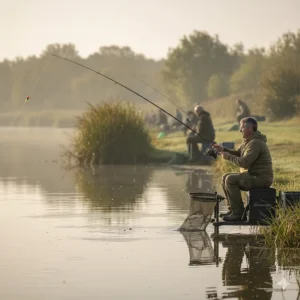
Picture this: you’re sat beside a tranquil canal on a crisp morning, watching your waggler float drift serenely across the surface. Suddenly, it dips below the water—strike! That’s the magic of waggler floats, and it’s a technique every UK angler should master.
Waggler floats have been the backbone of British coarse fishing for decades, yet many anglers overlook these versatile tools in favour of more modern methods. According to research from Wikipedia’s comprehensive float fishing article, fishing floats have been used since at least 1496, when Juliana Berners first documented their use. Today’s waggler floats represent centuries of evolution in design and functionality.
Whether you’re targeting roach on a canal, bream on a stillwater, or carp on a commercial fishery, waggler floats offer unparalleled sensitivity and casting distance. The beauty lies in their simplicity—attached bottom-end only, these floats articulate freely and provide instant bite indication. From crystal wagglers for clear water to insert wagglers for finesse fishing, there’s a waggler for every situation.
This comprehensive guide examines seven outstanding waggler floats available on Amazon.co.uk in 2026, complete with specifications, pricing, and expert recommendations. We’ll also explore shotting patterns, float selection, and techniques that’ll transform your catch rate.
Quick Comparison Table
| Product | Type | Quantity | Price Range | Best For |
|---|---|---|---|---|
| NGT Loaded Crystal Wagglers | Insert/Loaded | 20 pack | £6.00-£7.00 | Value & variety |
| FLADEN Assorted Wagglers | Crystal | 30 pack | £9.00 | Beginners |
| Drennan Visi Waggler | Loaded Insert | Individual | £2.91-£6.99 | Premium quality |
| Preston Precision Pellet Waggler | Pellet Waggler | Individual | £3.49+ | Carp fishing |
| ZWIM Loaded Wagglers | Loaded | 6 pack | £6.99-£7.29 | Mid-range |
| NGT Wide Tipped Loaded | Loaded | Pack | £3.79 | Windy conditions |
| NGT Unloaded Assorted | Unloaded | 200 pack | Bulk pricing | Clubs/societies |
💬 Just one click – help others make better buying decisions too! 😊
Top 7 Waggler Floats: Expert Analysis
1. NGT Set of 20 Loaded Crystal Waggler Floats
The NGT Set of 20 Loaded Crystal Waggler Floats represents exceptional value for money, making it our top choice for anglers building their float collection. These NGT floats arrive in a practical storage box containing various sizes from 2BB to 7BB, covering most stillwater and slow-moving river scenarios.
Key Specifications:
- Clear acrylic construction with hi-viz red tips
- Pre-loaded with internal weights
- Range: 13cm to 23cm lengths
- Bottom-eye attachment system
UK buyers consistently praise these floats for their visibility and casting performance. One reviewer noted they’re “well packaged and a good price with fast delivery,” whilst another highlighted that “the recommended weight on the side is spot on.” The clear body makes them ideal for shy fish in clear water conditions.
✅ Pros: Outstanding value, variety of sizes, accurate weight markings
✅ Durable construction, excellent visibility
✅ Suitable for multiple fishing situations
❌ Cons: Basic storage box could be sturdier
❌ Some users report occasional sealing issues
Price: £6.00-£7.00 | Rating: 4.4/5 stars
2. FLADEN Fishing – 30 Assorted Waggler Floats
For beginners seeking comprehensive coverage, the FLADEN Fishing 30 Assorted Waggler Floats set offers unbeatable variety. This FLADEN collection includes crystal wagglers ranging from 13cm to 23cm with bright red tips for maximum visibility.
Key Specifications:
- 30 floats in assorted sizes
- Classic crystal design
- Hi-viz red tip sections
- Suitable for most coarse fishing
Customer feedback from UK anglers emphasises the set’s versatility. The floats cast well and provide excellent bite indication across various venues. At £9.00 for 30 floats, you’re paying approximately 30p per float—ideal for those inevitable losses to snags and pike!
✅ Pros: Excellent quantity for the price
✅ Wide range of sizes included
✅ Good casting performance
❌ Cons: Quality varies slightly between floats
❌ Basic packaging
Price: £9.00 | Rating: 4.2/5 stars
3. Drennan Visi Waggler Floats
When it comes to premium quality, Drennan Visi Waggler Floats stand head and shoulders above the competition. Drennan International, founded by Peter Drennan, has been at the forefront of British float design for decades, and these floats showcase that expertise.
Key Specifications:
- Available in multiple capacities (2AAA, 3AAA, 4AAA)
- Peacock quill or balsa construction
- Ultra-bright tips for visibility
- Precision-weighted loading
These Drennan floats are the choice of match anglers across the UK. They cast like arrows, sit instantly upon landing, and provide incredibly sensitive bite indication. UK customers rate them highly, with one noting they’re “perfect for fishing in poor light conditions.” Whilst pricier than budget options, their durability and performance justify the investment.
✅ Pros: Tournament-grade quality, exceptional sensitivity
✅ Superior casting accuracy
✅ Available in various loadings
❌ Cons: Higher price point
❌ Individual purchase (not sets)
Price: £2.91-£6.99 | Rating: 4.1-4.4/5 stars
4. Preston Innovations Precision Pellet Waggler
The Preston Innovations Precision Pellet Waggler revolutionised shallow carp fishing on UK commercials. These Preston floats feature 10mm diameter balsa bodies that sit immediately upon landing—crucial when mugging wary carp.
Key Specifications:
- 10mm balsa body construction
- Available from 2g to 12g
- Optimised loading position
- Extremely bright, visible tips
Preston has engineered these pellet wagglers to “fly like an arrow exactly where you cast them,” as advertised. The loading sits perfectly against the float base, preventing wobble during casting. UK carp anglers particularly appreciate how these floats don’t dive under when hitting the water—a common problem with cheaper alternatives. Ideal for fishing pellets or maggots at depth ranging from 30cm to 2 metres.
✅ Pros: Perfect for shallow carp fishing
✅ Exceptional casting accuracy
✅ Instant settling on impact
❌ Cons: Specialised use (not all-round)
❌ Higher individual price
Price: From £3.49 | Rating: 5.0/5 stars
5. ZWIM 6 Pack Loaded Waggler Floats
The ZWIM 6 Pack of LOADED Waggler Floats offers a middle-ground option between budget and premium ranges. This ZWIM set provides six crystal wagglers with hi-viz red tips, suitable for most types of coarse fishing.
Key Specifications:
- Six floats in graduated sizes
- 13cm to 23cm range
- Clear crystal bodies
- Pre-loaded design
UK buyers report these floats perform reliably across venues from canals to small lakes. The pre-loaded design means less fiddling with shot on the bankside, getting you fishing faster. At roughly £1.15 per float, they represent solid value whilst maintaining decent quality standards.
✅ Pros: Good quality-to-price ratio
✅ Convenient six-pack size
✅ Versatile across venues
❌ Cons: Limited size range compared to larger sets
❌ Some reports of inconsistent loading
Price: £6.99-£7.29 | Rating: 4.1/5 stars
6. NGT Waggler Floats Wide Tipped Clear Loaded
When the wind picks up, the NGT Waggler Floats Wide Tipped Clear Loaded come into their own. These NGT floats feature wider tips that remain visible in choppy conditions whilst maintaining sensitivity.
Key Specifications:
- Wide hi-viz tips for windy days
- Pre-loaded internal weights
- Clear body construction
- Easy-use design
UK anglers fishing exposed venues appreciate the increased visibility these floats provide. Customer reviews highlight that “the floats are easy to use and the recommended weight on the side is spot on.” The wider tip creates additional buoyancy, helping the float ride surface disturbance whilst still registering bites clearly.
✅ Pros: Excellent for windy conditions, good value
✅ Easy to see at distance
✅ Accurate weight markings
❌ Cons: Less sensitive than slim-tipped alternatives
❌ Not ideal for ultra-shy fish
Price: £3.79 | Rating: 4.0/5 stars
7. NGT Unloaded Assorted Waggler Floats (Box of 200)
For angling clubs or prolific float fishers, the NGT Unloaded Assorted Waggler Floats Box of 200 represents phenomenal value. This NGT bulk box contains 200 unloaded clear wagglers across 10 different sizes.
Key Specifications:
- 200 floats in total
- 10 different sizes (3BB to 7BB, both fine and wide tip)
- Unloaded design for custom shotting
- Lengths from 11cm to 22cm
This bulk option suits those who prefer shotting their own floats or clubs purchasing tackle collectively. Whilst individual quality control isn’t as stringent as premium brands, the sheer quantity makes it perfect for situations where float losses are high—snaggy rivers or pike-infested waters.
✅ Pros: Unbeatable bulk value
✅ Huge variety of sizes
✅ Perfect for clubs or prolific anglers
❌ Cons: Variable quality control
❌ Requires shotting knowledge ❌
Large initial investment
Price: Bulk pricing varies | Rating: 4.0/5 stars
Understanding Waggler Float Types
What Are Waggler Floats?
As explained in the comprehensive Wikipedia article on fishing floats, a waggler is any float attached at the bottom end only that articulates freely on the line. This simple design has remained largely unchanged for over a century because it works brilliantly.
Insert Wagglers
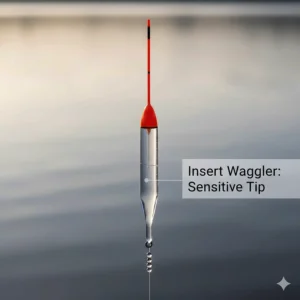
Insert wagglers feature a slimmer cane or fibreglass tip inserted into a thicker peacock quill body. This design provides exceptional sensitivity—perfect for targeting shy-biting roach, bream, and skimmer fish. The slim tip registers the gentlest of bites, often showing as a lift or slight dip rather than a dramatic plunge.
Best for: Silverfish on canals and drains, finesse fishing in cold conditions, depths up to 3 metres
Crystal Wagglers
Crystal wagglers are constructed from clear acrylic tube, making them virtually invisible underwater. This transparency reduces spooking in clear water conditions. They’re available in both loaded (with internal weights) and unloaded varieties.
Best for: Clear water venues, shy fish, stillwaters and slow rivers
Loaded Floats
Loaded floats contain built-in weights—typically a metal band near the base. This loading provides three key advantages: easier casting (the weight flies the float like a dart), less locking shot required, and faster setup on the bankside.
Best for: Beginners, situations requiring frequent depth changes, longer casting distances
Pellet Wagglers
Pellet wagglers are specialist floats designed for fishing pellets or maggots in the upper water layers, particularly for carp and F1s on commercial fisheries. They feature wide balsa bodies that sit instantly upon landing without diving.
Best for: Shallow carp fishing (30cm-2m deep), commercial fisheries, summer fishing
Mastering Float Shotting Patterns
According to guidance from leading UK fishing publications, proper shotting is crucial for effective waggler fishing. Here are the essential patterns every angler should know.
Standard Waggler Shotting
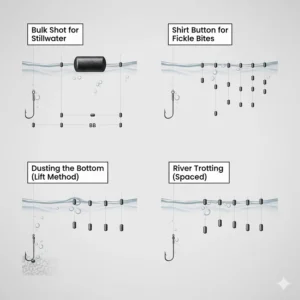
The fundamental rule: approximately 80% of the float’s total loading should lock it in place, with the remaining 20% distributed down the line. For example, a 4AAA waggler might use 3×AAA shot plus one BB shot to lock the float, then six No.8 shots spread down the line.
Bulk Shotting
When targeting bottom-feeding species or avoiding small nuisance fish, bulk your shot together in the lower third of the rig. This sinks your bait quickly through the upper layers, getting it into the feeding zone faster. Particularly effective on rivers where you need to beat the current.
Shirt Button Shotting
For fish feeding on the drop—common with roach, rudd, and ide—spread your shot evenly from float to hook like buttons on a shirt. This creates a slow, natural descent that mimics loose feed falling through the water column.
Depth Finding Technique
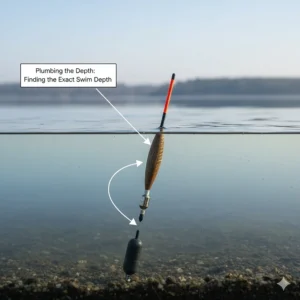
Plumbing depth with a waggler requires a clever trick: temporarily convert it to a “stick float” by creating a half-hitch above the float, looping it over the tip, and tightening. This allows accurate depth finding, then simply release the loop to fish normally.
Float Selection for Different Venues
Stillwaters and Lakes
For enclosed stillwaters, choose insert wagglers in calm conditions or straight crystal wagglers when the wind strengthens. Loadings between 2AAA and 4AAA cover most situations. Focus on visibility and sensitivity—you want to spot bites at 20-30 metres.
Canals
Canal fishing demands finesse. Select slim insert wagglers taking 2BB to 3BB maximum. The confined nature of canals means shorter casting distances, so prioritise sensitivity over casting weight. Clear crystal bodies work well in gin-clear canal water.
Rivers
River fishing requires adaptable float selection. In steady flows, use straight peacock wagglers with enough buoyancy to ride the current whilst maintaining bite detection. Faster rivers need stouter floats—consider 4AAA to 6AAA capacities with bulk shotting patterns.
Commercial Fisheries
Modern commercial carp fisheries are pellet waggler territory. Select 2g-8g pellet wagglers depending on casting distance and depth. The wider balsa bodies cope with carp crashing through the surface whilst the bright tips remain visible amid the chaos.
Tackle Setup and Techniques
Rod and Reel Selection
Match your tackle to your quarry. For general waggler work targeting roach, skimmers, and small carp, a 13-foot float rod with a soft tip action works perfectly. If pursuing larger carp with pellet wagglers, step up to an 11-foot power waggler rod.
Reels should be match-style with smooth drags and good line lay. Fill the spool to the lip—this reduces friction during casting and maximises distance.
Line Choice
According to UK Environment Agency regulations (detailed at GOV.UK fishing byelaws), anglers must fish responsibly and consider line strength carefully. For general waggler fishing, mainlines between 3lb and 6lb suit most situations.
Crucially, your line must sink. Floating line creates surface drag that pulls your float unnaturally across the water—the kiss of death for presentation. Use specific float or copolymer lines designed to sink readily.
Casting Technique
Overhead casting works best with wagglers. The concentrated bottom-end weight allows the float to fly like a dart. Aim to land beyond your target area, then wind back whilst sinking the line—this prevents surface drift from affecting your float’s position.
Feeding Strategies for Waggler Fishing
Effective feeding separates productive sessions from blanks. For waggler fishing, little and often beats infrequent heavy barrages. Use a catapult to deliver 8-12 maggots or casters every couple of minutes, creating a steady stream that holds fish in your swim.
Groundbait serves as a carrier and attractor. Mix it slightly drier than for feeder fishing—balls should break up within 5-10 seconds of hitting bottom, releasing your feed particles whilst creating an attractive cloud. Four golf-ball-sized offerings at the start establishes your swim.
When targeting silverfish in winter, reduce feed quantity but maintain frequency. Cold water fish feed cautiously—overwhelming them with bait simply stuffs them up. Instead, tempt them with single maggots or casters, feeding just 4-6 particles per cast.
UK Fishing Regulations and Best Practices
Rod Licences
All anglers aged 13 and over must hold a valid Environment Agency rod licence when fishing in England. As detailed on the Environment Agency’s official guidance, a 12-month trout and coarse fishing licence costs £36.80 (2026 prices), with concessions available for seniors and disabled anglers.
Close Season
The coarse fishing close season runs from 15th March to 15th June on rivers, streams, and some canals. This protects spawning fish populations. However, most enclosed stillwaters and many canals remain open year-round. As detailed in the Environment Agency’s coarse fishing close season guidance, this three-month closure allows fish to spawn, recover, and for bankside vegetation to flourish—ensuring healthy fish stocks for future seasons.
Catch and Release
Virtually all coarse fish must be returned to the water unharmed after capture. Handle fish carefully with wet hands, support their weight properly, and return them quickly. This conservation approach ensures healthy fish stocks for future generations.
Maintenance and Storage
Quality waggler floats deserve proper care. Store them in dedicated float tubes or boxes with compartments—this prevents tangling and damage. After each session, rinse floats in fresh water to remove debris and check for damage.
Inspect float tips regularly. Cracked or split tips allow water ingress, affecting buoyancy and performance. Many manufacturers sell replacement tips, though sometimes it’s more economical to replace budget floats entirely.
Check attachment eyes for roughness that might damage your mainline. A quick run-over with fine sandpaper smooths any burrs. For peacock quill floats, a light coating of yacht varnish prolongs life and maintains waterproofing.
Seasonal Waggler Float Tactics
Spring Fishing (March-May)
Spring marks the return of river fishing after the close season ends on 16th June. Water temperatures rise, triggering increased fish activity. Select lighter insert wagglers (2BB-3BB) as fish venture into shallower areas. Roach, dace, and chub respond well to maggots presented on the drop using shirt-button shotting.
On stillwaters, the pre-spawn period sees fish feeding heavily. Target margins and near-bank features with 3AAA crystal wagglers. Groundbait becomes increasingly effective as temperatures climb above 10°C.
Summer Fishing (June-August)
Summer brings peak fishing conditions. Carp and F1s dominate shallow water on commercials—perfect pellet waggler territory. Fish at depths between 60cm and 1.5 metres using 4g-8g pellet wagglers. Feed 6mm pellets regularly via catapult, creating competition amongst fish.
For silverfish, early morning and evening sessions prove most productive. The heat of midday often pushes fish deeper, requiring heavier floats and longer casting distances. Clear crystal wagglers perform well in bright conditions.
Autumn Fishing (September-November)
Autumn represents prime waggler fishing season. Cooling temperatures trigger feeding sprees as fish prepare for winter. Roach shoals form in predictable swims—canals and drains fish exceptionally well. Insert wagglers taking 2AA-3AA suit these conditions perfectly.
Bream move inshore on lakes and reservoirs, often feeding in depths of 2-4 metres. Step up to straight peacock wagglers with 4AAA-5AAA capacity. Bulk shot your rigs to get baits down quickly past small fish.
Winter Fishing (December-February)
Winter waggler fishing demands patience and finesse. Fish metabolism slows dramatically, reducing feeding periods to brief windows. Select ultra-sensitive insert wagglers that detect the gentlest nibbles.
Reduce feeding to minimal levels—4-6 maggots per cast often suffices. Fish respond better to natural baits like bloodworm and small redworms. Target the warmest part of the day (11am-3pm) when fish are most active.
Advanced Waggler Float Modifications
Improving Visibility
Painting float tips enhances visibility in poor light. Quality model paint in fluorescent yellow, orange, or chartreuse works brilliantly. Apply two thin coats rather than one thick layer, allowing each to dry thoroughly. Finish with clear varnish for durability.
For night fishing (where permitted), attach small beta lights to float tops. These self-illuminating capsules clip onto most waggler designs, providing constant visibility without batteries or maintenance.
Upgrading Attachment Systems
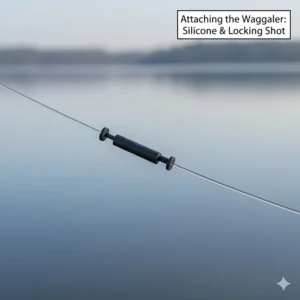
Standard rubber float attachments deteriorate over time. Upgrade to silicone tubing—it grips firmly without damaging line and lasts significantly longer. Cut 3-4mm sections and slide onto your float’s bottom eye.
For quick-change systems, invest in quality float adaptors. Preston and Drennan manufacture excellent adaptors that allow instant float swaps without retying. Particularly valuable when conditions change mid-session.
Custom Shotting Solutions
Create your own loaded floats by wrapping lead wire around unloaded waggler stems. This allows precise loading customisation. Start with half the float’s total capacity, test cast, and adjust until optimal casting and cocking occur.
Store pre-shotted floats in labelled compartments noting their total loading. This bankside preparation saves valuable fishing time.
Troubleshooting Common Issues
Float Won’t Sit Properly
If your float leans or won’t cock correctly, check your shotting. You may need additional locking shot or the float might be damaged. Water ingress through cracks causes similar symptoms—hold the float to a bright light to check for internal moisture.
Missed Bites
Persistently missed bites often indicate poor shotting. You’re likely under-shotting the float, leaving too much resistance when fish take the bait. Adjust by adding small shot until only the bright tip shows above water—this “dotting down” maximises sensitivity.
Tangles on Casting
Tangling suggests incorrect shotting or casting technique. Ensure adequate locking shot secures the float (minimum 60-70% of total loading), and practice a smooth overhead cast rather than a jerky, forceful throw.
Float Drift in Wind
Surface drift plagues waggler fishing in windy conditions. Combat this by sinking your mainline immediately after casting. Submerge your rod tip 15-20cm below the surface and wind slowly, allowing line to sink beneath surface turbulence.
Choose heavier floats with wider tips when wind strengthens. The additional buoyancy rides surface chop more effectively whilst maintaining bite registration.
✨ Don’t Miss These Exclusive Deals!
🔍 Take your coarse fishing to the next level with these carefully selected products. Click on any highlighted item to check current pricing and availability on Amazon.co.uk. These tools will help you create authentic results your fishing mates will love!
Environmental Considerations and Sustainability
Lead Alternatives
UK regulations restrict lead weights under 0.06g (size 8) and between 0.06g-28.35g. This protects wildlife, particularly waterfowl. For waggler fishing, tungsten and non-toxic alternatives provide similar performance without environmental harm.
Many manufacturers now produce eco-friendly split shot. Whilst slightly more expensive, these alternatives perform identically whilst safeguarding our waterways.
Catch and Release Best Practices
According to research supported by the Angling Trust, the national governing body for angling in England, proper fish handling significantly improves survival rates. Wet your hands before touching fish, avoid squeezing, and minimise air exposure. Barbless hooks extract more easily, reducing handling time and injury.
Use an adequately-sized landing net—minimum 20-inch diameter for general coarse fishing. Knotless mesh prevents scale damage and fin injuries. Rest exhausted fish in the margins until they swim away strongly.
Litter and Tackle Disposal
Discarded fishing line poses severe threats to wildlife. Always collect your line waste, no matter how small. Carry a dedicated waste bag and dispose of it responsibly. Many tackle shops now operate line recycling schemes—check your local retailer.
Biodegradable alternatives exist for some tackle items. Whilst not suitable for all applications, consider eco-friendly options where performance isn’t compromised.
Building Your Waggler Float Collection
Essential Starter Kit
New waggler anglers should acquire:
- 6-10 loaded crystal wagglers (2BB-4AAA range)
- 3-4 insert wagglers (2BB-3BB)
- 2-3 pellet wagglers (3g-6g)
- Float tube or box for storage
- Selection of split shot (No.8, No.6, AAA, BB)
- Float adaptors (pack of 10)
This foundation covers 90% of UK waggler fishing scenarios without excessive expenditure.
Intermediate Expansion
Experienced anglers benefit from:
- Specialist inserts for finesse fishing
- Heavy wagglers for windy conditions (5AAA-6AAA)
- Variety of pellet wagglers (2g-12g range)
- Peacock quill wagglers for rivers
- Spare tips and repair materials
Premium Collection
Match anglers and serious enthusiasts eventually acquire:
- Full Drennan or Preston waggler range
- Custom-made artisan floats
- Specialist designs for specific venues
- Competition-grade floats with ultra-sensitive tips
- Comprehensive shotting selection including non-toxic alternatives
Competitions and Match Fishing
Match Waggler Techniques
Match fishing demands efficiency and adaptability. Pre-prepare multiple rods with different float setups—one shallow, one deep, varying loadings. This allows rapid switching if fish behaviour changes or venues rotate.
Top match anglers often use slightly heavier floats than necessary, sacrificing marginal sensitivity for increased casting accuracy and speed. Consistent presentation trumps ultra-finesse in time-limited competitions.
Club Matches and Points
Many UK angling clubs run waggler-only matches, preserving traditional methods. These events level the playing field, as expensive modern gear matters less than skill and watercraft. Participate in your local club’s events—they’re excellent learning opportunities.
Points-based championships often feature waggler categories. Study previous results to identify productive venues and seasonal patterns. Local knowledge proves invaluable—speak with regular anglers and match organisers.
Recording Your Results
Maintain a fishing diary noting floats used, conditions, catches, and venues. Over time, patterns emerge revealing what works where and when. Modern anglers supplement written records with photographs and smartphone apps designed for fishing logging.
This data becomes increasingly valuable as you develop proficiency. Quick reference to previous sessions accelerates decision-making on the bankside.
Float Stability and Casting Distance
Physics of Waggler Casting
Understanding waggler casting mechanics improves both distance and accuracy. The bottom-end attachment creates a streamlined profile during flight—the float body folds back behind the locking shot, reducing air resistance. This aerodynamic advantage allows wagglers to outcast top-and-bottom floats by considerable margins.
Weight distribution proves crucial. Loaded floats with their internal weights positioned optimally cast most efficiently. The concentrated mass accelerates faster during the casting stroke, translating to increased terminal velocity and distance.
Maximising Casting Distance
Several factors influence casting distance:
Rod Loading: Match your float’s weight to your rod’s casting capacity. Under-weighted rigs fail to flex the rod properly, losing elastic rebound energy. Over-weighted rigs overload the blank, causing collapse and reduced distance.
Line Diameter: Thinner mainlines slice through the air with less resistance and peel off the spool more freely. A 3lb line dramatically outperforms 6lb when casting lighter floats, though fish size considerations may necessitate heavier lines.
Spool Fill: Fill your reel spool to within 2-3mm of the lip. Under-filled spools create excessive friction as line bends sharply around the spool edge during casting. This friction murders distance—a properly filled spool can add 20-30% to your range.
Casting Technique: Smooth acceleration beats forceful jerking. Begin slowly, progressively accelerating through the casting arc, and release at the optimal moment (approximately 45 degrees above horizontal). Follow through completely rather than stopping abruptly.
Float Stability in Different Conditions
Waggler stability varies with design and conditions. Slim insert wagglers excel in calm weather but struggle in wind—their minimal buoyancy gets overwhelmed by surface chop. Conversely, wide-bodied peacock wagglers ride rough water confidently whilst remaining sensitive enough for bite detection.
Body position affects stability too. Floats with low centres of gravity (bottom-weighted loaded designs) sit more securely than top-heavy patterns. This stability particularly matters when fishing shallow or in flowing water where surface turbulence challenges lighter floats.
Understanding Float Buoyancy and Materials
Material Properties
Different materials offer distinct characteristics:
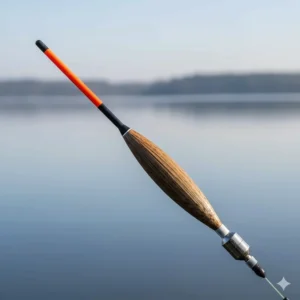
Peacock Quill: Traditional favourite amongst purists. Naturally buoyant, lightweight, and exceptionally visible. Peacock quill responds sensitively to bites but requires careful sealing to prevent water ingress. Premium Drennan and Preston floats utilise selected peacock quill sections chosen for consistent buoyancy.
Balsa Wood: Extremely buoyant relative to weight, making balsa ideal for pellet wagglers needing immediate surface sitting. Its natural texture accepts paint well, allowing vibrant tip colours. Balsa requires protective coatings as it’s relatively soft and prone to water absorption if damaged.
Acrylic/Plastic: Modern crystal wagglers use clear acrylic for its transparency and durability. Less buoyant than peacock or balsa but virtually indestructible. Acrylic floats suit anglers fishing snaggy venues where float losses run high—they’re cheap enough to replace without heartache.
Polystyrene Foam: Budget floats often employ foam for its low cost and reasonable buoyancy. Whilst functional, foam lacks the sensitivity and casting properties of premium materials. Acceptable for learners but serious anglers quickly graduate to better materials.
Buoyancy Requirements
Matching float buoyancy to conditions ensures optimal performance. Insufficient buoyancy causes floats to drag under in wind or current—fish feel resistance and reject baits. Excessive buoyancy creates a heavy, insensitive float that misses delicate bites.
General guidelines suggest:
- Light airs, shallow fishing: 2BB-3BB inserts
- Moderate conditions, mid-depth: 2AAA-3AAA straight wagglers
- Windy or deep fishing: 4AAA-6AAA loaded wagglers
- Specialist shallow carp: 3g-8g pellet wagglers
✨ Catch More Fish with Quality Gear!
🎣 Ready to upgrade your float fishing success? These carefully selected waggler floats represent the best choices for UK anglers in 2026. Click any highlighted product name to view current deals on Amazon.co.uk—your next personal best might be just a float away! 💪
Bait Selection for Waggler Fishing
Traditional Baits
Maggots remain the foundation of UK coarse fishing. Their wriggling attracts fish whilst emitting amino acids that trigger feeding responses. For waggler fishing, present 1-3 maggots on hooks sized 16-20. Feed 8-12 loose maggots per cast via catapult.
Casters (chrysalised maggots) prove deadly for quality roach and bream. Their distinctive orange colour and crunchy texture appeal to selective fish. Mix casters with maggots in feed—roughly 70% maggots to 30% casters works well.
Worms excel during cold conditions when fish metabolism slows. Small redworms or dendrobaenas on size 14-16 hooks produce bites when other baits fail. Chop worms for feed, creating an attractive scent trail.
Modern Alternatives
Pellets revolutionised commercial carp fishing. Hard pellets (4mm-6mm) suit catapult feeding, whilst softer hook pellets or banded versions work on the hook. Soak pellets briefly before feeding to initiate their breakdown and scent release.
Artificial baits—fake maggots, casters, and corn—sometimes outfish naturals on pressured venues where fish become bait-shy. These imitations emit no scent, making them less attractive initially but avoiding the learned wariness associated with heavily-fished natural baits.
Sweetcorn provides an economical, effective option. Its bright yellow colour offers high visibility, whilst its sweetness appeals to numerous species. Thread 1-3 grains on size 12-16 hooks. Feed sparingly—corn fills fish quickly.
Bait Presentation Tips
Hair-rigging suits larger baits like pellets and multiple sweetcorn. This method separates bait from hook, improving hooking efficiency. However, traditional direct hooking remains preferable for maggots and casters when targeting smaller species.
Fresh bait outperforms stale alternatives dramatically. Purchase maggots weekly during active seasons, storing them in a cool environment (8-10°C) to slow their development. Dead maggots discourage fish—sort them out before sessions.
Weather and Water Conditions
Reading Water Clarity
Water clarity dictates float selection and approach. Gin-clear water demands stealthy presentation—crystal wagglers with lighter lines and smaller baits. Fish spot anglers easily in clear conditions, so minimise bankside movement and shadows falling on water.
Coloured or murky water provides confidence for fish to feed boldly. Heavier tackle becomes acceptable, and brighter float tips prove essential for visibility. Increase feeding frequency slightly as fish rely more on vibration and scent than vision.
Wind Direction and Strength
Wind transforms waggler fishing from pleasant to challenging. Crosswinds push floats across swims unnaturally, dragging baits away from feeding areas. Combat this by over-casting then winding back into position whilst sinking line.
Offshore winds (blowing away from your bank) create massive advantages—they drift your float naturally away whilst keeping line slack. Capitalize on these conditions with lighter floats than normal, allowing wind assistance.
Onshore winds (blowing towards you) cause nightmares. Line blows towards you faster than float drifts, creating slack that masks bites and delays strike responses. Fish square-to-wind swims when possible, or switch methods entirely if conditions become unmanageable.
Temperature Influences
Water temperature governs fish behaviour profoundly. According to research from UK fisheries scientists, coarse fish feeding activity increases dramatically between 12-18°C. Below 8°C, metabolism slows considerably—expect reduced catch rates and shorter feeding spells.
Sudden temperature drops halt feeding rapidly. Stable conditions, even if cold, prove more productive than fluctuating temperatures. Monitor weather forecasts and fish during settled spells for consistent results.
Surface temperature varies from deeper water significantly during summer. Shallow-feeding carp exploiting warm surface layers explain pellet waggler success—you’re fishing where fish want to be.
Health and Safety Considerations
Bankside Safety
Fishing involves inherent risks. Always inform someone of your location and expected return time. Carry a charged mobile phone in a waterproof case. Wear appropriate footwear with good grip—slippery banks cause numerous accidents annually.
When wading or accessing difficult swims, consider a buoyancy aid. These lightweight vests provide crucial safety margins near deep or fast-flowing water. Pride isn’t worth drowning over.
First Aid Essentials
Maintain a basic first aid kit including:
- Adhesive plasters for minor cuts
- Antiseptic wipes
- Tweezers for hook removal
- Pain relief medication
- Emergency contact information
Hook injuries occur regularly. If a hook embeds beyond the barb, don’t attempt forceful removal. Carefully cut the line, leaving hook in place, and seek medical attention. Tetanus vaccinations should remain current.
Sun Protection
British sun sneaks up on anglers, particularly during long summer sessions. Waterside reflection intensifies UV exposure. Apply broad-spectrum sunscreen (minimum SPF 30) to exposed skin, reapplying every two hours. Wear wide-brimmed hats and UV-blocking sunglasses—protecting your eyes proves crucial for long-term health.
Hypothermia Prevention
Winter waggler fishing risks hypothermia, especially during static sessions. Layer clothing using base layers, insulating mid-layers, and waterproof outer shells. Extremities lose heat fastest—quality gloves and warm footwear prove essential.
Carry hot drinks in insulated flasks. Warm fluids maintain core temperature whilst providing comfort during cold conditions. Recognize hypothermia symptoms: uncontrollable shivering, confusion, slurred speech—seek warmth immediately if these develop.
FAQ: Your Waggler Float Questions Answered
❓ What's the difference between loaded and unloaded wagglers?
❓ Can I use wagglers on rivers?
❓ How far can I cast a waggler float?
❓ Which waggler float is best for beginners?
❓ Do I need different wagglers for canals versus lakes?
Conclusion: Choose Your Perfect Waggler
Waggler fishing remains one of the most enjoyable and effective methods in the UK angler’s armoury. From peaceful canal sessions targeting roach to exciting shallow carp fishing on commercials, the right float makes all the difference.
For beginners, the FLADEN 30 Assorted Waggler Floats or NGT 20 Loaded Crystal Wagglers provide excellent starting points without breaking the bank. Experienced anglers pursuing perfection should invest in Drennan Visi Wagglers or Preston Precision Pellet Wagglers—the quality justifies the premium.
Remember that float selection represents just one part of the equation. Proper shotting, correct line choice, effective feeding, and refined technique all contribute to success. Spend time practising, experiment with different approaches, and don’t fear adjusting your setup based on conditions.
Most importantly, enjoy the experience. There’s something magical about watching a waggler float riding the surface, waiting for that telltale dip that signals a fish has taken your offering. Tight lines!
- 7 Best Cage Feeders UK 2026: Ultimate River Fishing Guide
- 7 Best Method Feeders UK 2026: Expert Reviews & Buying Guide
- 7 Best Coarse Fishing Hooks UK 2026
Disclaimer: This article contains affiliate links. If you purchase products through these links, we may earn a small commission at no additional cost to you. Prices shown are approximate and may vary.
✨ Found this helpful? Share it with your mates! 💬🤗
