
In This Article
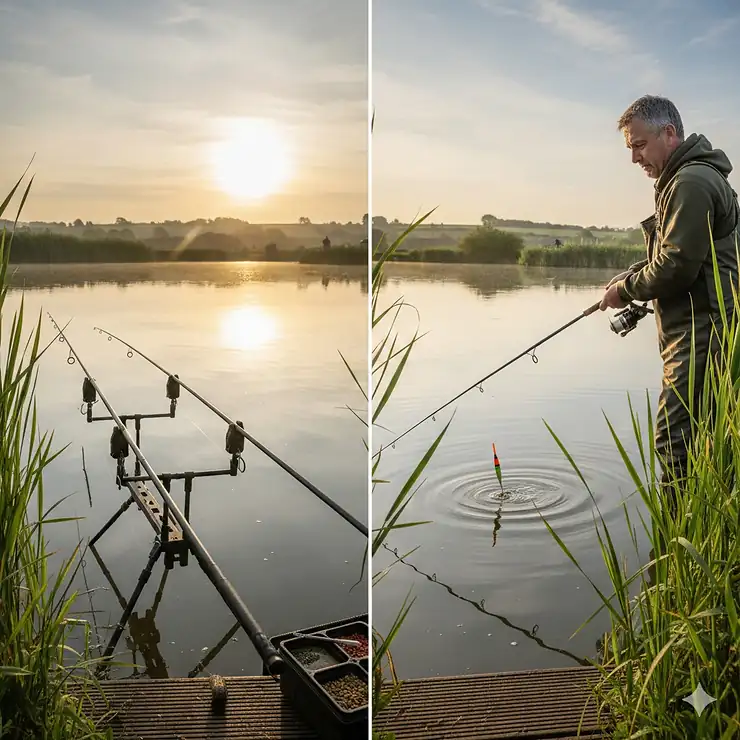
Picture this: you’re standing at your local commercial fishery on a breezy Saturday morning, tackle box open, staring at two very different setups. On one side, your trusty float rod with its colourful waggler. On the other, your feeder rod with its sensitive quiver tip twitching in the breeze. Which one will fill your net today?
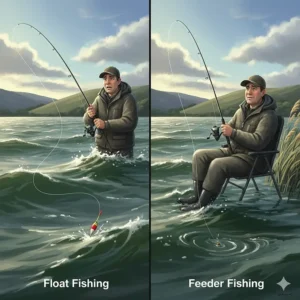
The decision between feeder fishing vs float fishing isn’t just about personal preference—it’s about reading your venue, understanding fish behaviour, and matching your method to the conditions. I’ve spent countless sessions experimenting with both techniques across British waters, from the windswept gravel pits of the Midlands to the intimate canal stretches of Yorkshire. What I’ve learned is that mastering when to use each method transforms you from someone who occasionally catches to someone who consistently banks fish.
According to the Angling Trust, float fishing and ledgering (which includes feeder fishing) represent the two fundamental coarse fishing approaches practised across UK waters. Both techniques target the same species—carp, bream, tench, roach—but they achieve this through remarkably different presentations and strategies.
This comprehensive guide examines the critical distinctions between feeder fishing vs float fishing, covering everything from tackle requirements and venue suitability to seasonal effectiveness and cost considerations. Whether you’re a complete beginner trying to understand which method suits you best, or an experienced angler looking to refine your approach, you’ll find actionable insights backed by real-world testing on British fisheries.
Quick Comparison: Feeder Fishing vs Float Fishing
| Aspect | Feeder Fishing | Float Fishing |
|---|---|---|
| Best Venues | Commercial fisheries, rivers, large lakes, reservoirs | Canals, shallow lakes, margins, slow rivers |
| Wind Conditions | Excellent in strong winds | Struggles in winds over 15mph |
| Casting Distance | 20-80+ metres | 10-40 metres (waggler), 5-15m (pole float) |
| Bite Detection | Quiver tip movement | Visual float dip/lift |
| Species Targeted | Carp, bream, tench, barbel | Roach, rudd, F1s, carp, ide |
| Learning Curve | Moderate (tip reading skills) | Easy (visual bites) |
| Average Setup Cost | £80-£250 | £60-£200 |
| Best Seasons | Year-round, excels autumn/winter | Spring, summer, early autumn |
💬 Just one click – help others make better buying decisions too!😊
Top 7 Fishing Tackle: Expert Analysis for Feeder and Float Methods
Choosing the right tackle dramatically influences your success with either technique. I’ve tested dozens of rods, reels, and accessories across various UK fisheries, and these seven products represent exceptional value and performance for British anglers in 2026.
1. Sougayilang Telescopic Carp Rod – Versatile Budget Champion
The Sougayilang Telescopic Carp Rod offers remarkable flexibility for anglers wanting to experiment with both feeder and float methods without breaking the bank. Available in 3.6m (11.8ft), 3.9m (12.8ft), and 4.2m (13.8ft) lengths, this high-density carbon fibre rod collapses to just 120cm for convenient transport.
Key Specifications:
- Test curve: 3.0lb
- Aluminium alloy reel seat
- Ceramic guides for smooth casting
- Includes protective guide cover
UK buyers particularly appreciate its dual functionality. One Amazon reviewer mentioned using the 4.2m version successfully with both method feeder setups and float rigs, simply by adapting their approach to suit conditions. The orange fluorescent tip provides excellent bite indication whether watching a quiver tip or supporting float work.
✅ Pros:
- Exceptional portability with telescopic design
- Budget-friendly at £39.99-£54.99
- Works effectively for both methods
- Strong enough for double-figure carp
❌ Cons:
- Not as sensitive as dedicated specialist rods
- Ceramic guides adequate but not premium SiC
Price Range: £39.99-£54.99
2. Drennan Acolyte Commercial 10ft Feeder – The Professional’s Choice
When serious commercial fishery anglers discuss feeder rods, the Drennan Acolyte Commercial 10ft enters the conversation within minutes. Developed with input from five-time world champion Alan Scotthorne, this rod represents decades of accumulated expertise refined into a single, beautifully balanced tool.
Key Specifications:
- Ultra-slim carbon blank
- Three carbon feeder tips (2oz, 3oz, 4oz)
- Casting weight: up to 60g
- Length: 10ft (3.05m)
The slim profile doesn’t sacrifice power—this rod launches loaded method feeders beyond 50 metres whilst maintaining pinpoint accuracy. UK commercial specialists report landing countless double-figure carp without hook pulls, thanks to the progressive action that cushions powerful lunges whilst maintaining enough backbone for positive hook sets.
✅ Pros:
- Developed by world champion specifications
- Perfect balance for all-day sessions
- Catches F1s through to large carp
- Three quality tips for different conditions
❌ Cons:
- Premium price point at £229.95
- Requires skill to maximise potential
Price Range: £229.95
3. Oakwood 10ft Float/Match Rod – Outstanding Value
The Oakwood 10ft Float/Match Rod consistently surprises anglers with its performance-to-price ratio. This three-piece fibreglass rod has become increasingly popular amongst pleasure anglers across British canals and commercial venues, offering characteristics typically found in rods costing substantially more.
Key Specifications:
- 10ft (3.0m) three-piece construction
- Cork/Duplon handle combination
- 6lb line rating
- Versatile mid-range action
Verified UK Amazon buyers report catching everything from roach and skimmers through to carp exceeding 12lb without issues. One Yorkshire angler mentioned pairing this rod with a 3000-sized reel and 3lb line for perfect balance during silverfish sessions, then switching to 6lb mono for targeting larger species.
✅ Pros:
- Exceptional value at £30.99-£34.99
- Light enough for comfortable all-day use
- Surprisingly powerful for bigger fish
- Perfect beginner or backup rod
❌ Cons:
- Fibreglass construction heavier than carbon
- Limited casting distance compared to premium models
Price Range: £30.99-£34.99
4. ZWIM 8ft Feeder Rod – Compact Powerhouse
The ZWIM 8ft / 2.4m Feeder Rod excels on smaller commercial venues where long-range casting isn’t required. This two-piece rod includes both 3oz and 5oz quiver tips, allowing anglers to adapt their presentation to venue conditions and target species preferences.
Key Specifications:
- Length: 8ft (2.4m) two-piece
- 80g casting weight
- Two interchangeable quiver tips
- Ideal for bottom-feeding species
Shorter feeder rods often get overlooked, yet they provide distinct advantages on compact fisheries. The 8ft length offers superior control when fishing swims under 30 metres, reduces fatigue during intensive match sessions, and makes landing fish considerably easier from crowded platforms. British match anglers report this rod performing admirably when targeting bream, F1s, and smaller carp with cage feeders.
✅ Pros:
- Perfect length for commercial platforms
- 80g capacity handles substantial feeders
- Two tips provide versatility
- Budget-friendly at approximately £35-£45
❌ Cons:
- Limited to closer-range presentations
- Not suitable for large reservoirs
Price Range: £35-£45 (estimated UK pricing)
5. Shimano Aero BB 4000 Reel – All-Round Excellence
The Shimano Aero BB 4000 represents the sweet spot for UK anglers wanting a single reel capable of handling both float and feeder fishing effectively. This 4000-sized reel provides sufficient line capacity and winding power for feeder work, whilst remaining light enough for float fishing without unbalancing your rod.
Key Specifications:
- Size: 4000
- Three stainless ball bearings
- Anti-reverse system
- Spare spool often included
According to recent reviews on Angling Times, the Aero BB excels at playing fish, with smooth drag performance that prevents hook pulls during powerful carp runs. Load one spool with 3lb mono for waggler fishing, and keep a second with 6lb for feeder tactics—suddenly you’ve got remarkable versatility from a single reel.
✅ Pros:
- Versatile 4000 size suits both methods
- Shimano reliability and smooth performance
- Usually includes spare spool
- Excellent value at £45-£65
❌ Cons:
- Not as lightweight as dedicated float reels
- Basic bearing count compared to premium models
Price Range: £45-£65
6. Preston Innovations Method Feeder Set – Complete Convenience
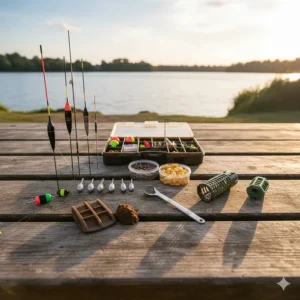
The Preston Innovations Method Feeder Set removes guesswork for anglers establishing their feeder fishing arsenal. This comprehensive set includes inline method feeders in 20g, 30g, 40g, 50g, and 60g weights, plus quick-release mechanisms and moulds for perfect groundbait presentation.
Key Specifications:
- Five weight options (20g-60g)
- Quick-release inline design
- Includes groundbait mould
- Durable construction
Preston Innovations commands respect amongst British match anglers, and their method feeder range demonstrates why. The inline design reduces tangles during casting, whilst the quick-release system allows rapid feeder changes when adjusting to evolving conditions. UK commercial fishery specialists appreciate having multiple weights available, selecting appropriate options based on casting distance requirements and fish feeding aggression.
✅ Pros:
- Complete weight range in one package
- Preston quality and innovation
- Quick-release saves time
- Suitable for commercial carp tactics
❌ Cons:
- Premium pricing at £18-£25 per set
- Requires groundbait mixing skills
Price Range: £18-£25
7. Daiwa Revros LT 3000 Reel – Featherweight Performance
The Daiwa Revros LT 3000 redefines what’s possible at the budget end of float fishing reels. This incredibly lightweight reel utilises Daiwa’s cutting-edge LT (Light & Tough) technology, delivering strength and durability in a package that balances perfectly with modern carbon float rods.
Key Specifications:
- Size: 3000
- LT construction (lightweight, tough)
- Smooth drag system
- Five ball bearings plus roller bearing
UK anglers fishing pellet wagglers on commercial venues particularly value this reel. The lightweight construction reduces arm fatigue during intensive sessions, whilst the smooth retrieve handles everything from cautious F1s through to powerful double-figure carp. One commercial match angler reported using this reel throughout an entire season without mechanical issues, landing countless fish including specimens approaching 15lb.
✅ Pros:
- Exceptionally lightweight for all-day comfort
- Daiwa engineering and reliability
- Smooth enough for light float work
- Powerful enough for bigger species
❌ Cons:
- 3000 size limits heavy feeder applications
- Spare spools cost extra
Price Range: £69-£79
✨ Don’t Miss These Exclusive Deals!
🔍 Take your fishing success to the next level with these carefully selected products. Click on any highlighted item to check current pricing and availability on Amazon.co.uk. These tools will help you create authentic results that’ll have your fishing mates wondering what your secret is!
Understanding Feeder Fishing: The Bottom-Dwelling Specialist
Feeder fishing revolutionised British coarse angling when it arrived from continental Europe decades ago. This method combines weight for casting distance with an integral bait delivery system, creating a concentrated feeding area that attracts fish to your hookbait.
How Feeder Fishing Works
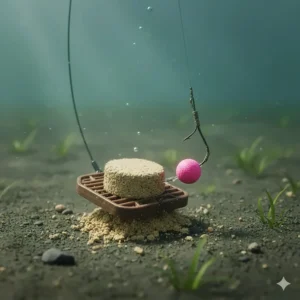
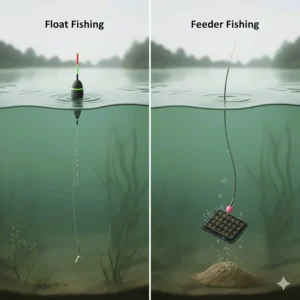
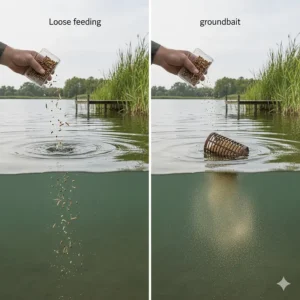
The fundamental principle involves attaching a feeder (a weighted cage or mould containing groundbait, pellets, or maggots) to your main line, with a short hooklength extending from a swivel positioned above the feeder. When cast out, the feeder deposits your loosefeed on or near the bottom, whilst your hookbait sits enticingly amongst this attracted food.
Bite detection occurs through a sensitive quiver tip—a flexible, brightly coloured extension fitted to your rod tip. When fish pick up your bait, the quiver tip curves, straightens, or rattles, telegraphing this activity clearly even at considerable distances.
Feeder Fishing Tackle Requirements
Rod Specifications:
- Length: 9-12ft (commercial venues), 12-13ft (rivers, larger waters)
- Action: Progressive through-action or fast-tip
- Quiver tips: Multiple options (2oz-5oz typically)
- Test curve: 1.25-2lb average
Reel Requirements:
- Size: 4000-5000 for versatility
- Line capacity: Minimum 150m of 6-8lb mono
- Retrieve ratio: 5.2:1 or higher preferred
- Drag: Smooth, responsive front drag essential
Terminal Tackle:
- Feeders: Cage feeders (rivers), method feeders (commercials), bomb feeders
- Hooklengths: 0.10-0.18mm fluorocarbon or mono
- Hooks: Size 10-18 depending on species and bait
- Swivels: Quality barrel or ring swivels
When to Use Feeder Fishing
Feeder fishing excels in numerous scenarios that challenge other methods:
Wind Conditions: Strong winds that render float fishing impossible barely affect feeder presentations. The weight anchors your bait firmly whilst the quiver tip remains visible and responsive.
Deep Water: Venues exceeding 2 metres depth favour feeder approaches, where float fishing becomes increasingly difficult and less effective.
Distance Fishing: Commercial fisheries often require presentations beyond 40 metres to reach productive areas. Feeder tackle achieves this effortlessly.
Bottom-Feeding Species: Bream, tench, and larger carp often feed confidently on the bottom. Feeder fishing presents your bait exactly where these fish expect to find food.
Cold Weather: According to Environment Agency fisheries data, winter conditions slow fish metabolism, making them more likely to feed on static bottom presentations rather than chasing moving baits.
Seasonal Feeder Fishing Approaches
Spring (March-May): Lighter feeders (20-30g) work well as fish become increasingly active. Target margins and shallower areas where water warms fastest. Smaller cage feeders loaded with chopped worms and casters prove deadly for quality roach, skimmers, and F1s.
Summer (June-August): Method feeders dominate commercial carp fishing during warmer months. Heavier feeders (40-60g) loaded with pellet-based groundbaits attract aggressive fish. Dawn and dusk sessions often produce best results as carp feed confidently.
Autumn (September-November): This represents peak feeder fishing season across UK venues. Fish feed heavily preparing for winter, responding enthusiastically to substantial helpings of groundbait. Experiment with different feeder sizes and bait combinations to maintain catches as temperatures drop.
Winter (December-February): Scale down presentations significantly. Small 15-20g feeders with minimal groundbait avoid overfeeding lethargic fish. Target deeper areas where fish gather, and expect bites to develop slowly—patience becomes paramount.
Understanding Float Fishing: The Visual Approach
Float fishing represents the most instinctive, engaging form of coarse angling. Watching a float dip beneath the surface triggers an immediate, visceral response that never loses its appeal regardless of experience level.
How Float Fishing Works
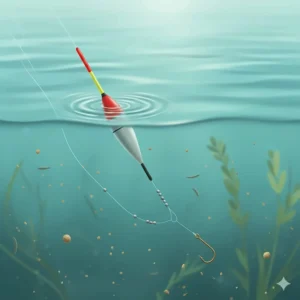
A float (or waggler) attaches to your line and suspends your bait at a predetermined depth. You adjust shot (small weights) along your line to balance the float, with the float’s tip barely visible above the surface. When fish take your bait, the float either dips under, slides away, or lifts—each movement screaming “strike!”
The float fishing guide involves three primary styles:
Waggler Fishing: The float attaches bottom-end-only, allowing long-range presentation with excellent sensitivity. Suited to stillwaters from 15-40 metres distance.
Stick Float Fishing: Attached top-and-bottom, stick floats excel on flowing water, controlling your bait’s presentation as it trots downstream naturally.
Pole Floats: Ultra-light floats designed for pole fishing at close range (5-15 metres), offering unmatched presentation delicacy.
Float Fishing Techniques
Shotting Patterns: Correct shotting transforms float fishing effectiveness. Bulk your main shot approximately 30cm from the hook, with a smaller dropper shot halfway between bulk and hook. This configuration provides stable presentation whilst allowing bait to sink naturally, triggering bites at various depths.
Plumbing Depth: Never assume depth—always plumb accurately using a plummet. Fish often hold in specific depth bands, and presenting 30cm too shallow or deep dramatically reduces catches.
Feeding Strategies: Float fishing demands active feeding to maintain fish interest. “Little and often” works brilliantly—introduce small amounts of loosefeed regularly rather than one large initial helping. This keeps fish actively searching without filling them up.
When to Use Float Fishing
Float fishing proves superior in specific conditions and scenarios:
Calm Conditions: Light winds or stillness allow precise float control and easy bite detection. These represent ideal float fishing conditions.
Shallow Venues: Canals, shallow lakes, and margins (under 2 metres) suit float presentations perfectly. You can target different depths effortlessly by adjusting your float position.
Active Fish: When fish feed confidently in mid-water or upper layers, float fishing intercepts them naturally. Summer carp often cruise just below the surface, making float tactics deadly.
Short-Range Presentations: Fishing tight to features like lily pads, island margins, or platforms works beautifully with float tackle, offering superior control compared to feeder gear.
Visual Engagement: Simply put, float fishing is more involving and entertaining. If you fish primarily for enjoyment rather than weight, watching a float remains unbeatable.
Float Fishing Tackle Requirements
Rod Specifications:
- Length: 11-13ft for waggler work, 13-15ft for river trotting
- Action: Through-action for cushioning light hooklinks
- Line rating: 2-8lb typically
- Weight: Lightweight carbon for reduced fatigue
Reel Requirements:
- Size: 3000 optimal for most float applications
- Line capacity: 150m of 3-6lb mono sufficient
- Retrieve ratio: Moderate 5.0:1-5.5:1
- Weight: Lightweight models balance better
Terminal Tackle:
- Floats: Straight wagglers (2+2 to 5+5 shot), bodied wagglers, stick floats
- Shot: AA through to No.10 selection
- Hooklengths: 0.08-0.14mm for silverfish, 0.12-0.18mm for carp
- Hooks: Size 14-20 typically
Venue Condition Choice: Reading Your Water
Selecting between feeder fishing vs float fishing often hinges on accurately assessing venue characteristics. Experienced anglers read water conditions instinctively, but beginners benefit from systematic evaluation.
Wind Assessment
Wind represents the single most influential factor in method selection factors:
Light Winds (0-10mph): Both methods work effectively. Choose based on other factors like depth and distance requirements.
Moderate Winds (10-20mph): Float fishing becomes challenging. Wagglers dragged off-line produce false bites and tangles. Feeder fishing maintains effectiveness.
Strong Winds (20mph+): Float fishing essentially becomes impossible. Feeder fishing with heavier weights (40g+) remains productive and controllable.
A simple rule: if you’re constantly recasting your float because wind drags it, switch to feeder tackle immediately.
Depth Considerations
Shallow Water (Under 1.5m): Float fishing excels, offering delicate presentations that don’t spook fish. Feeder tackle lands heavily, potentially scaring cautious fish in clear, shallow conditions.
Medium Depth (1.5-3m): Both methods work effectively. Your choice depends on other factors like wind, distance, and target species.
Deep Water (3m+): Feeder fishing proves more practical and effective. Presenting float tackle accurately at depth becomes increasingly difficult, whilst feeder gear handles deep water effortlessly.
Distance Requirements
Close Range (Under 15m): Float fishing provides superior control and presentation, particularly around features like margins, islands, and platforms.
Medium Range (15-40m): Both methods remain viable. Waggler fishing reaches 40 metres comfortably in calm conditions, whilst feeder gear handles this distance easily regardless of wind.
Long Range (40m+): Feeder fishing dominates. Casting loaded method feeders beyond 70 metres becomes routine with appropriate tackle, whilst float fishing at such distances proves impractical.
Venue Type Analysis
Commercial Fisheries: These heavily stocked venues respond to both methods brilliantly. Method feeder fishing typically produces higher weights when targeting carp aggressively. Float fishing works superbly for mixed catches including F1s, carp, and silverfish. Many successful match anglers alternate between methods throughout sessions, responding to evolving conditions.
Natural Lakes: Larger, natural waters often favour feeder approaches due to increased depths and distances. However, margins and shallows provide excellent float fishing opportunities, particularly during summer evenings when fish move into warmer water.
Canals: Traditional float fishing territory. Narrow, shallow, feature-rich canals suit waggler and pole float techniques perfectly. Feeder fishing certainly works, particularly for bream, but lacks the precision and engagement that makes canal fishing special.
Rivers: Fast-flowing rivers demand feeder tackle for presenting baits confidently on the bottom against current. Stick float trotting remains the classic approach for targeting chub, barbel, and roach in moderate flows, offering unmatched presentation control.
Species-Specific Method Selection
Different species respond distinctly to various presentation styles, influencing your choice between feeder fishing vs float fishing.
Carp (Common, Mirror, F1)
Feeder Fishing: Method feeders loaded with pellet-based groundbaits prove devastatingly effective for commercial carp. The concentrated food parcel triggers competitive feeding, whilst your hookbait sits prominently amongst the attraction.
Float Fishing: Pellet waggler fishing intercepts cruising carp beautifully during warmer months. Suspending floating pellets beneath a waggler catches fish that feeder tactics miss entirely. Surface layers often hold more active, catchable fish during summer.
Recommendation: Use feeder fishing when targeting weight and consistent catches. Choose float methods for variety, engagement, and intercepting mid-water feeders.
Bream and Skimmers
Feeder Fishing: Bream shoals respond magnificently to feeder tactics. Cage feeders loaded with chopped worms, casters, and groundbait create feeding frenzies amongst bream, with multiple-fish catches common once you’ve established a rhythm.
Float Fishing: Lighter float presentations catch better-quality specimens, particularly in clear water where heavy feeders spook cautious fish. Shallower venues suit float approaches.
Recommendation: Feeder fishing dominates for bream, especially on larger waters where shoals roam. Use float gear on canals and shallow venues.
Roach, Rudd, and Silverfish
Feeder Fishing: Small cage feeders work adequately for silverfish, particularly on rivers. However, the method lacks finesse compared to float fishing.
Float Fishing: Designed for silverfish. Light presentations, delicate bites detected instantly, and the visual engagement makes targeting quality roach and rudd genuinely thrilling.
Recommendation: Float fishing comprehensively outperforms feeder methods for silverfish in most scenarios.
Tench
Feeder Fishing: Dawn and dusk tench feeding spells respond brilliantly to feeder tactics. Method feeders or small cage feeders loaded with sweetcorn and pellets prove effective.
Float Fishing: Lift method (where the float lifts flat as tench pick up bottom baits) remains a classic tench technique. Margins and lily pad areas fish perfectly with float gear.
Recommendation: Both methods work superbly. Choose based on venue depth, distance requirements, and personal preference.
Barbel
Feeder Fishing: River barbel fishing essentially demands feeder tackle. Holding baits confidently on the bottom against powerful currents requires substantial weight, whilst quiver tips telegraph barbel’s distinctive thumping bites clearly.
Float Fishing: Trotting for barbel works in moderate flows but lacks the presentation control feeder gear provides.
Recommendation: Feeder fishing dominates barbel angling, particularly on larger rivers.
Cost Analysis: Budget Considerations
Understanding the financial commitment for each method helps anglers make informed decisions, particularly when starting out or expanding their angling arsenal.
Feeder Fishing Startup Costs
Entry-Level Setup (£80-£120):
- Budget feeder rod: £35-£50
- Basic 4000 reel: £25-£40
- Feeders and terminal tackle: £15-£20
- Line, hooks, hooklengths: £5-£10
Mid-Range Setup (£150-£250):
- Quality feeder rod: £80-£150
- Reliable 4000-5000 reel: £45-£75
- Comprehensive feeder selection: £25-£35
- Premium terminal tackle: £10-£15
Premium Setup (£300+):
- Top-specification feeder rod: £200-£350
- High-end reel: £80-£150
- Competition-grade feeders and accessories: £40-£60
Float Fishing Startup Costs
Entry-Level Setup (£60-£100):
- Budget float rod: £30-£45
- Basic 3000 reel: £20-£35
- Float selection and shot: £8-£12
- Terminal tackle: £5-£8
Mid-Range Setup (£120-£200):
- Quality float rod: £60-£120
- Reliable 3000 reel: £35-£60
- Comprehensive float collection: £15-£25
- Premium terminal tackle: £10-£15
Premium Setup (£250+):
- Top-specification float rod: £180-£300
- High-end lightweight reel: £70-£120
- Competition float selection: £25-£40
Long-Term Cost Considerations
Feeder Fishing Ongoing Costs:
- Feeders wear and occasionally require replacement (£2-£5 each)
- Quiver tips break periodically (£8-£15 per replacement)
- Groundbait consumption (£3-£8 per session)
- Higher line usage due to casting abrasion
Float Fishing Ongoing Costs:
- Floats occasionally break or get lost (£1-£4 each)
- Shot lasts indefinitely unless lost
- Lower bait costs typically
- Reduced line wear
Generally, float fishing proves slightly more economical long-term, though differences remain marginal for most anglers.
Learning Curve and Skill Development
Both methods demand specific skills that develop through practice and experience. Understanding these learning requirements helps beginners set realistic expectations.
Feeder Fishing Skills
Essential Skills:
- Tip Reading: Interpreting quiver tip movements accurately distinguishes genuine bites from false indications caused by wind, undertow, or line bites. This typically requires 5-10 sessions before becoming instinctive.
- Groundbait Mixing: Achieving correct consistency—damp enough to hold together during casting, yet loose enough to break down releasing attractants—requires experimentation.
- Feeder Selection: Matching feeder type, size, and weight to venue conditions involves understanding how feeders behave underwater.
- Casting Accuracy: Repeatedly hitting the same spot concentrates loosefeed effectively, building a feeding area that attracts and holds fish.
Learning Timeline:
- Basic competence: 3-5 sessions
- Consistent catches: 8-12 sessions
- Advanced techniques: 20+ sessions
Float Fishing Skills
Essential Skills:
- Shotting: Balancing floats correctly so they sit perfectly—tip barely visible—takes practice but becomes second nature relatively quickly.
- Depth Setting: Accurately plumbing depth and adjusting floats to present baits at optimal heights requires systematic approach.
- Bite Recognition: Distinguishing between genuine bites (positive movements) and false indications (wind drift, underwater obstructions) develops rapidly with experience.
- Feeding Strategies: Understanding how much and how often to feed comes through trial, error, and observing fish behaviour.
Learning Timeline:
- Basic competence: 2-3 sessions
- Consistent catches: 5-8 sessions
- Advanced techniques: 15+ sessions
Verdict: Float fishing generally proves more intuitive for beginners. Visual bite indication and simpler tackle setups accelerate early success, building confidence faster than feeder fishing’s more technical requirements.
Environmental and Ethical Considerations
Responsible angling practices matter regardless of chosen method. Both feeder fishing vs float fishing present specific environmental considerations that conscientious anglers should understand.
Lost Tackle and Waterway Health
Feeder Fishing Concerns: Heavy feeders occasionally break free during casts, sinking to the bottom where they remain indefinitely. Using appropriate knot strength and checking tackle regularly minimises losses. Biodegradable feeders represent an emerging solution, though currently expensive.
Float Fishing Concerns: Lost floats typically contain minimal materials and degrade relatively quickly. However, discarded nylon line poses severe risks to waterbirds and wildlife. Always collect and dispose of line properly—even small amounts can cause devastating injuries.
Fish Welfare
Unhooking Practices: Both methods occasionally result in deeply hooked fish. Barbless hooks reduce injury likelihood significantly. Always carry appropriate unhooking tools—disgorgers, forceps, and scissors—and handle fish with wet hands minimising protective slime removal.
Playing Time: Feeder tackle’s additional power means fish can be landed more quickly, reducing exhaustion and stress. However, float tackle’s lighter approach often results in better hooked fish (in the mouth rather than deep), simplifying unhooking and improving survival rates.
Bait Selection
Avoid introducing non-native species or unauthorised baits into UK waters. Stick to approved options: maggots, casters, sweetcorn, pellets, bread, worms, and paste. According to Angling Trust guidelines, responsible bait use protects fisheries and maintains water quality for future generations.
Advanced Tactics: Taking Your Skills Further
Once you’ve mastered basic techniques in both feeder fishing vs float fishing, these advanced approaches unlock new levels of effectiveness and enjoyment.
Advanced Feeder Tactics
Method Feeder Variations: Experiment with different groundbait textures. Firmer mixes hold together longer, creating concentrated feeding areas. Softer mixes break down rapidly, quickly pulling fish into your swim. Match your approach to venue characteristics and fish behaviour patterns.
Helicopter Rigs: When fish feed cautiously, helicopter rigs present your hookbait away from the feeder, reducing spooking from the feeder’s presence. Particularly effective for wary bream and tench.
Feeder Hopping: Rather than static presentations, occasionally twitch your feeder back 30cm. This movement triggers predatory instincts in species like perch and stimulates feeding responses from cautious fish.
Advanced Float Tactics
Slider Float Fishing: For depths exceeding your rod length, slider floats allow you to fish deep water whilst maintaining casting control. Essential for targeting deep-water bream shoals and reservoir trout.
On-the-Drop Presentations: Adjust shotting so bait falls slowly through mid-water, intercepting fish feeding at various depths. Deadly during summer when fish suspend rather than feeding exclusively on bottom.
Bait Variations: Alternate hookbaits regularly—even switching between red and white maggots can trigger renewed interest from cautious fish. Flavoured maggots, dyed casters, and fake corn all produce when fish become bait-shy.
FAQ: Feeder Fishing vs Float Fishing
❓ Which is better for beginners: feeder fishing or float fishing?
❓ Can I use the same rod for both feeder and float fishing?
❓ What weather conditions favour feeder fishing over float fishing?
❓ How much does a complete setup cost for each method in the UK?
❓ Which method catches bigger fish on UK commercial fisheries?
Conclusion: Mastering Both Methods for Complete Versatility
The question isn’t really “feeder fishing vs float fishing” in absolute terms—it’s understanding when each method delivers optimal results for specific conditions, venues, and target species. Elite UK match anglers master both approaches, seamlessly switching between methods as situations demand rather than rigidly adhering to single-technique preferences.
If I could offer just one piece of advice to developing anglers, it’s this: invest time genuinely learning both methods rather than specialising prematurely. Your float fishing skills will improve your feeder fishing through enhanced bite recognition and bait presentation understanding. Conversely, feeder fishing develops patience, systematic thinking, and venue reading that transforms your float fishing effectiveness.
Start with float fishing if you’re completely new to angling—the visual engagement and simpler tackle accelerate learning whilst maintaining enjoyment. Introduce feeder fishing once you’ve banked 50+ fish and understand basic fish behaviour. Eventually, you’ll instinctively recognise which method suits each session, adapting dynamically as conditions evolve.
The British coarse fishing calendar provides perfect progression: focus on float methods during spring and summer when fish feed actively in appealing conditions. As autumn arrives and winds strengthen, transition towards feeder tactics that maintain effectiveness through challenging conditions. Winter solidifies feeder fishing skills when harsh conditions demand technical proficiency.
Remember that both methods represent means to achieve the same goal: connecting with fish, spending time waterside, and experiencing the profound satisfaction that coarse angling provides. Whether your float dips decisively under or your quiver tip wraps round dramatically, that moment of connection remains equally thrilling regardless of method.
Recommended for You
- Match Fishing Tackle List: 7 Must-Have Items for Success in 2026
- Preston vs Drennan Match Tackle: 7 Best Products Compared 2026
- Shimano vs Daiwa Coarse Reels: 7 Best UK Options 2026
Disclaimer: This article contains affiliate links. If you purchase products through these links, we may earn a small commission at no additional cost to you. Prices shown are approximate and may vary based on retailer and current promotions.
✨ Found this helpful? Share it with your mates! 💬🤗
