In This Article
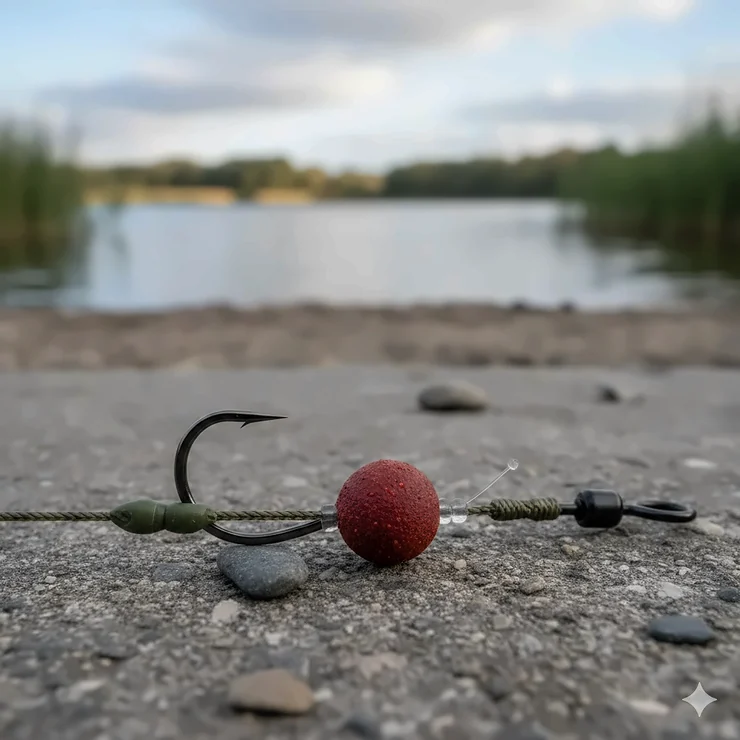
I’ll never forget that moment when I switched from traditional hook-mounted baits to my first properly tied hair rig setup for coarse fishing. Within an hour, I’d landed three solid carp from a venue where I’d blanked for months. That’s the power of getting your rig mechanics right.
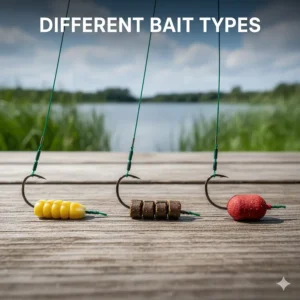
The hair rig setup for coarse fishing revolutionised angling when Len Middleton and Kevin Maddocks invented it in the late 1970s. Their breakthrough came from observing how carp fed in tanks, noticing fish would reject baits pierced by hooks but confidently take those presented naturally. Nearly 45 years later, this simple yet brilliant presentation method remains the foundation of modern coarse fishing success.
Whether you’re targeting carp, tench, barbel, or bream, understanding hair rig tying, optimal hair rig length, and bottom bait presentation separates successful anglers from those watching others celebrate. This comprehensive guide covers everything from basic hair rig construction to advanced pellet hair rig variations and anti-eject rigs with critical hooking mechanics that actually work on pressured waters.
Let’s dive into the rigs that consistently outperform traditional presentations and help you spend more time playing fish than retying tangles.
Quick Comparison Table: Top Hair Rig Setups at a Glance
| Product | Hook Sizes | Line Material | Hair Length | Price (£) | Best For | Rating |
|---|---|---|---|---|---|---|
| Korda Basix Wide Gape | 4, 6, 8 | Coated braid (25lb) | Optimised per size | £4.99-£6.99 | Beginners, all-round | 4.6/5 ⭐ |
| Korda DF Ready Tied | 6, 8, 10 | N-Trap Soft (15lb) | Danny Fairbrass spec | £7.49-£9.99 | Versatile presentation | 4.7/5 ⭐ |
| Shaddock 18pcs Set | 2, 4, 6 | Braided line | Standard | £9.99 | Budget multi-pack | 4.4/5 ⭐ |
| Fox Carp Ready Rigs 3pk | 4, 6, 8 | Naturals Coretex (20-25lb) | 20cm hooklink | £10.99-£12.99 | Reliable all-rounder | 4.5/5 ⭐ |
| ESP Camo Hair Rigs | 4, 6, 8 | Camo Sink Link braid | Matched to hook | £8.99-£11.49 | Pressured waters | 4.6/5 ⭐ |
| Nash Big Carp Rig | 2, 4, 6, 8 | Armourlink (20-25lb) | Adjustable | £12.99-£14.99 | Big fish/snaggy swims | 4.7/5 ⭐ |
| Baiting Tool Kit (7-in-1) | Tool set | N/A | N/A | £10.95-£15.99 | DIY rig tying | 4.3/5 ⭐ |
💬 Just one click – help others make better buying decisions too! 😊
Top 7 Hair Rig Products for Coarse Fishing: Expert Analysis
1. Korda Basix Wide Gape Hair Rigs – Best Budget-Friendly Option
The Korda Basix Wide Gape Hair Rigs represent exceptional value for money without compromising on essential performance. These ready-to-fish rigs feature camo green coated hooklink material with a strategically stripped section near the Korda Basix Wide Gape hook, allowing crucial movement and increased hooking potential.
Key Specifications:
- Available in sizes 4 (18mm baits), 6 (15mm), and 8 (12mm)
- 25lb breaking strain coated braid
- Supple hair with silicone positioning sleeve
- Includes Hair Stops and Extenda Stops
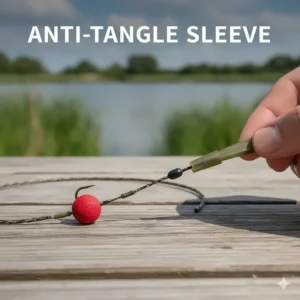
UK anglers particularly appreciate the inclusive Extenda Stops, which effectively extend hair length without retying—perfect for experimenting with different bait sizes during sessions. The anti-tangle sleeve prevents frustrating casting tangles that plague cheaper alternatives.
Customer Feedback: Commercial fishery regulars report consistent hookups on both bottom baits and wafters. One Midlands-based angler noted landing 15 carp in a single session using size 6 rigs with 15mm boilies.
✅ Pros:
- Ready to use straight from packet
- Optimised hair length for each hook size
- Excellent value at £4.99-£6.99 per 2-pack
- Perfect for anglers new to hair rig setup for coarse fishing
❌ Cons:
- Limited to 2 rigs per pack
- Basic presentation (no advanced anti-eject features)
Price Range: £4.99-£6.99 | Availability: Excellent across UK tackle shops
2. Korda DF Ready Tied Carp Fishing Hair Rig – Pro-Level Precision
When you want to fish like legendary carp angler Danny Fairbrass, the Korda DF Ready Tied rigs deliver his exact specifications. These premium rigs combine the formidable Korda Wide Gape hook with N-Trap Soft coated braid, Safe Zone shrink tube, and genuine Korda rig rings.
Key Specifications:
- Sizes 6, 8, and 10 (barbed and barbless versions)
- 15lb N-Trap Soft hooklink material
- Hair length, loop size, and coating strip-back precisely as Danny specifies
- Protective packaging maintains hook sharpness
The DF rig excels with critically balanced presentations, standard bottom baits, or pop-ups (add split shot or Dark Matter putty for pop-ups). This versatility makes it ideal for anglers fishing multiple bait types throughout sessions.
Customer Feedback: Match anglers praise the consistent hooking potential, with several reporting personal bests on pressured day-ticket waters. The barbed versions particularly shine when targeting double-figure specimens in weedy conditions.
✅ Pros:
- Tied to Danny Fairbrass’s exacting standards
- Exceptional component quality
- Versatile across bait presentations
- Protective packaging preserves hook points
❌ Cons:
- Higher price point (£7.49-£9.99)
- Only available in limited hook sizes
Price Range: £7.49-£9.99 | Availability: Widely stocked by specialist retailers
3. Shaddock 18pcs Carp Fishing Hair Rigs – Best Value Multi-Pack
For anglers wanting quantity without sacrificing reliability, the Shaddock 18pcs set delivers exceptional value. This comprehensive kit includes barbed curved hooks, braided thread line, anti-tangle sleeves, and boilie stops—everything needed for immediate fishing.
Key Specifications:
- 18 pre-tied rigs (6 each of sizes 2, 4, and 6)
- High carbon steel curved hooks
- Braided thread line with swivels
- Complete with boilie stops and storage wallet
The curved shank design promotes secure lip hooking, whilst the sharp points typically grip safely during fights. At under £10 for 18 rigs, this represents outstanding value for specimen hunters who lose rigs to snags or want spares readily available.
Customer Feedback: UK buyers report the rigs handle 20lb+ fish confidently, with minimal hook pulls. Several anglers appreciate having multiple sizes for adapting to varying bait presentations during extended sessions.
✅ Pros:
- Exceptional value (£9.99 for 18 rigs)
- Multiple hook sizes included
- Ready to fish immediately
- Includes storage wallet
❌ Cons:
- Basic presentation compared to premium brands
- Hair length not optimised for specific hook sizes
- Limited colour options (single camo pattern)
Price Range: £9.99 | Availability: Amazon UK with Prime delivery
4. Fox Carp Ready Rigs 3pk – Trusted Reliability
Fox Carp Ready Rigs represent decades of angling innovation compressed into simple, effective presentations. Featuring the super-reliable Wide Gape Beaked Point Carp hook paired with 20cm Naturals Coretex hooklink, these rigs deliver consistent performance across venues.
Key Specifications:
- Sizes 4 (25lb), 6 (20lb), and 8 (20lb)
- 20cm Naturals Coretex coated braid
- Loop attachment to swivel
- Anti-tangle sleeve included
- Recyclable cardboard wallet packaging
The beaked point design significantly reduces hook pulls—a common frustration when targeting cautious carp. The 20cm hooklink length suits both bottom bait and pop-up presentations, whilst the Coretex material resists abrasion from gravel bars and snags.
Customer Feedback: Syndicate water regulars praise the Fox rigs’ durability, with hooks maintaining sharpness through multiple fish. The natural camo finish reportedly produces more confident takes on clear-water venues.
✅ Pros:
- Proven Wide Gape Beaked Point pattern
- Abrasion-resistant Coretex material
- Environmentally considerate packaging
- Consistent hooking mechanics
❌ Cons:
- Limited to 3 rigs per pack
- Higher cost per rig than budget alternatives
Price Range: £10.99-£12.99 | Availability: Excellent through Fox stockists
5. ESP Camo Hair Rigs Barbless – Stealth on Pressured Waters
When fishing ultra-pressured commercial fisheries or syndicate lakes, the ESP Camo Hair Rigs provide the concealment advantage that triggers confident takes. These expertly tied rigs utilise ESP Camo Sink Link braid and ultra-sharp Cryogen Gripper hooks for exceptional performance.
Key Specifications:
- Barbless Cryogen Gripper hooks (sizes 4, 6, 8)
- ESP Camo Sink Link braid hooklink
- Integrated Streamliner Rig Sleeve (size 9 swivel)
- Optimised hair length with Hair Stops and Extender Stops
The camo finish blends seamlessly with lake beds, whilst the Streamliner sleeve dramatically reduces tangles during casting—crucial for achieving accurate baiting at distance. The Cryogen hook sharpness ensures penetration even with light bite indication.
Customer Feedback: Day-ticket anglers fishing pressured waters report significantly more takes compared to standard coloured rigs. The barbless hooks facilitate quick, safe releases whilst maintaining excellent hook holds.
✅ Pros:
- Excellent camouflage for wary fish
- Ultra-sharp Cryogen hooks
- Anti-tangle rig sleeve
- Barbless for fish welfare
- Includes versatile Extender Stops
❌ Cons:
- Premium pricing (£8.99-£11.49)
- Barbless only (not suitable where barbed required)
Price Range: £8.99-£11.49 | Availability: ESP stockists and online retailers
6. Nash Big Carp Rig Barbed/Barbless – Heavy-Duty Specimen Hunting
For anglers targeting big carp in demanding swims, the Nash Big Carp Rig combines immense strength with refined hooking mechanics. The Pinpoint Twister hook paired with extreme abrasion-resistant Armourlink creates tackle that simply won’t fail when it matters most.
Key Specifications:
- Pinpoint Twister hooks (sizes 2, 4, 6, 8)
- 25lb Armourlink (sizes 2 & 4), 20lb (sizes 6 & 8)
- Diffusion Camo Kicker and anti-tangle sleeve
- Available in barbed and barbless versions
The Armourlink material withstands brutal encounters with snags, rocks, and mussel beds that destroy lesser hooklinks. The Diffusion Camo finish provides concealment whilst the kicker ensures aggressive hook turns for positive hookups.
Customer Feedback: Syndicate anglers fishing weedy gravel pits report landing multiple 30lb+ carp without hook pulls or line abrasion issues. The barbed versions excel when targeting specimen fish in snaggy margins.
✅ Pros:
- Exceptional breaking strain and abrasion resistance
- Proven Pinpoint Twister hook pattern
- Designed for demanding swims
- Available in barbed and barbless
❌ Cons:
- Higher price point (£12.99-£14.99)
- Potentially overkill for smaller fish or open waters
- Thicker diameter may spook ultra-cautious fish
Price Range: £12.99-£14.99 | Availability: Nash dealers and specialist tackle shops
7. Baiting Tool Kit (6-in-1/7-in-1) – Essential DIY Rig Components
For anglers preferring to tie custom hair rig setups for coarse fishing, comprehensive Baiting Tool Kits provide everything needed. These aluminium alloy sets typically include hook needles, drill needles, knot pullers, threading devices, and braid scissors.
Key Specifications:
- 6-7 essential rig-tying tools
- Removable aluminium alloy handles
- High-carbon steel needle construction
- Includes fishing braid line scissors
- Storage case for organisation
The drill needle proves invaluable for creating holes in hard pellets and boilies, whilst the hook needle simplifies threading baits onto hair rigs. The knot puller assists with securing challenging knots, and the scissors cleanly cut modern braided hooklink materials.
Customer Feedback: UK anglers appreciate the compact storage cases that protect tools during transport. Several buyers note the scissors particularly excel at cutting coated braids that blunt standard tackle shop scissors.
✅ Pros:
- Complete toolset for rig construction
- Durable aluminium and steel construction
- Portable storage case
- Excellent value (£10.95-£15.99)
- Perfect for learning hair rig tying
❌ Cons:
- Requires rig-tying knowledge and practice
- Some budget versions feel slightly flimsy
- Learning curve for beginners
Price Range: £10.95-£15.99 | Availability: Amazon UK and tackle retailers
Understanding Hair Rig Setup for Coarse Fishing: The Science Behind Success
What Exactly Is a Hair Rig?
A hair rig setup for coarse fishing separates the hookbait from the hook itself, mounting bait on a short length of line (the “hair”) extending from the hook bend. This revolutionary design keeps the hook point completely exposed whilst presenting bait naturally—crucial for fooling educated fish.
Traditional methods pierced baits directly onto hooks, creating unnatural presentations that wary fish quickly learned to avoid. When carp “mouth” baits (their natural feeding behaviour), they detect hook rigidity and immediately eject it. The hair rig eliminates this warning, allowing fish to confidently consume bait whilst the free-moving hook finds purchase in the lip.
According to research documented by the American Carp Society, carp first mouth potential food items to assess safety before passing them to pharyngeal teeth. During this critical investigation phase, fish reject hook-mounted baits but accept hair-rigged presentations, dramatically increasing conversion rates.
Critical Components of Effective Hair Rigs
The Hook: Wide gape patterns dominate modern hair rig setups for their exceptional hooking potential. The increased gape allows hooks to turn aggressively when fish eject bait, driving the point into the bottom lip. Curved shank designs further enhance this turning action.
The Hooklink: Quality determines everything here. Coated braids offer camouflage and suppleness, stripping back sections near hooks to allow critical movement. Fluorocarbon excels in clear water for its near-invisibility. Breaking strains typically range from 15lb for commercial fisheries to 25lb+ for big fish venues.
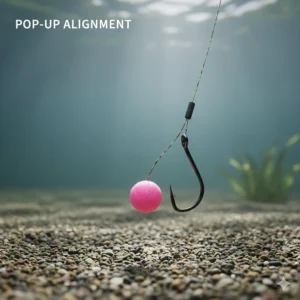
The Hair: This seemingly simple component requires precise calibration. Too short and baits sit against the hook, recreating traditional presentation problems. Too long and hookups become inconsistent. Optimal basic hair rig length places baits 2-10mm from the hook bend, varying by bait size and fishing situation.
Hair Stops: These tiny components prevent baits sliding off the hair. Dumbbell shapes prove most reliable, with some anglers preferring extendable stops that adjust hair rig length without retying.
Anti-Tangle Sleeves: Critical for preventing hooklinks tangling around mainline during casting. Positioning along the swivel creates separation that maintains rig mechanics throughout flight.
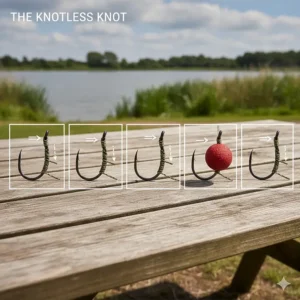
The Knotless Knot: Foundation of Hair Rig Tying
The knotless knot revolutionised hair rig tying by simultaneously attaching the hook and creating the hair in one elegant process. Here’s the step-by-step method:
- Create the Hair Loop: Form a small loop (3-5mm diameter) at one end of your hooklink material using an overhand knot.
- Thread Through Hook Eye: Pass the tag end through the back of the hook eye, leaving 25-40mm (your desired hair length) extending beyond.
- Begin Wrapping: Hold the hair loop against the hook shank. Wrap the hooklink around both the shank and the hair loop, working towards the hook bend.
- Complete 7-9 Wraps: Each wrap should sit neatly beside the previous, covering the shank evenly without gaps or overlaps.
- Return Through Eye: After completing wraps, thread the tag end back through the hook eye from the same direction as initially.
- Tighten and Trim: Pull everything snug, ensuring wraps sit uniformly. Trim excess tag end close to the eye.
- Position the Hair: Slide a small section of silicone tubing onto the shank to hold the hair at your desired exit point (typically level with the hook point).
This produces a strong, reliable attachment with the hair emerging naturally from the hook shank. Practise on larger hooks initially—size 4 or 6—before progressing to smaller patterns.
Hair Rig Length: The Critical Variable
Hair rig length profoundly influences presentation and hooking efficiency. The fundamental principle balances natural bait movement against consistent hook penetration during the “eject” phase of fish feeding.
Short Hair Rigs (2-5mm): Ideal for cautious fish on pressured waters. Baits sit close to hooks, increasing hookup conversion when fish mouth briefly. Best suited to small baits (10-12mm boilies, single grains of corn) and situations requiring instant hooking.
Medium Hair Rigs (5-10mm): The versatile all-rounder. This range accommodates 15-18mm boilies, multiple grains of corn, or pellet combinations. The slight separation allows natural bait movement whilst maintaining reliable hooking mechanics. Most commercial pre-tied rigs adopt this specification.
Long Hair Rigs (10-20mm): Specialist presentations for multiple bait presentations (stacked boilies, snowman rigs) or exceptionally wary fish that require maximum natural movement. Requires precise execution—too long and hookups become inconsistent.
Adjusting for Bait Types: Pellet hair rigs typically run shorter (2-5mm) due to pellet hardness and size. Bottom bait presentations using soft baits may benefit from medium lengths. Pop-ups often utilise slightly longer hairs to allow the critically balanced bait to move independently.
Research your target venue. Pressured day-ticket fisheries often respond better to shorter hairs (fish have learned caution), whilst lightly-fished syndicate waters may accept longer, more natural presentations.
Bottom Bait Presentation vs Pop-Ups: Tactical Choices
Bottom Bait Presentations: The traditional approach that works consistently across venues. Bottom baits sit naturally on the lake bed, blending with free offerings. Hair rig setups for this method prioritise:
- Hooklink materials that sink quickly (coated braids, fluorocarbon)
- Hook patterns that lie flat on the substrate
- Hair lengths matched precisely to bait diameter
- Additional weight (tungsten putty, shot) if fishing soft silt
Bottom baits excel in situations where fish feed confidently on the deck, particularly when match-the-hatch strategies using method feeders or PVA bags. They work brilliantly over gravel, clay, or firm substrates.
Pop-Up Presentations: When lake beds present challenges (thick weed, deep silt, debris), pop-ups lift bait into the fish’s feeding zone. Critical adjustments include:
- Longer hooklinks (20-30cm+) for movement freedom
- Curved shank hooks to enhance turning
- Counterbalance weight (split shot, putty, heavy hooks) to pin hooklink
- Slightly longer hairs allowing independent bait movement
The “critically balanced” approach—matching buoyant pop-ups with precise counterweight—creates neutrally buoyant presentations that react naturally to investigation. When fish mouth the bait and eject, the freed hook turns aggressively into the lip.
UK fishing regulations, detailed on GOV.UK, require appropriate rod licences for coarse fishing. Ensure compliance before using any rig setup.
Advanced Hair Rig Variations: Taking Your Setup Further
The Pellet Hair Rig: Specialist Hard-Bait Presentation
Pellet hair rigs demand modifications from standard boilie presentations due to pellets’ harder composition and different sizes. Commercial fishery anglers particularly value these adaptations when targeting carp and F1s.
Key Modifications:
- Shorter Hair Length: 2-4mm typically, positioning pellet immediately behind hook
- Bait Bands: Elastic bands grip pellets securely without drilling
- Quick-Change Systems: Speed Stops or extendable stops allow rapid pellet replacement
- Micro Silicone: Positions hair precisely on hook shank
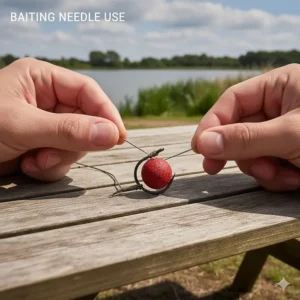
To drill pellets for traditional hair mounting, use dedicated pellet drills (included in quality baiting tool kits). Insert the drill carefully through the pellet centre, then thread onto hair using a baiting needle. Secure with a micro hair stop.
Bait bands offer advantages—no drilling required, rapid bait changes, and secure grip even when pellets soften. Loop the band onto your hair, then use Pellet Pliers to stretch the band over your chosen pellet. This method particularly suits hard pellets (6mm, 8mm) that fish encounter in method feeder fishing.
Anti-Eject Rigs: Understanding Critical Hooking Mechanics
Anti-eject rigs represent the pinnacle of hair rig evolution, designed specifically to prevent fish ejecting hooks during the “blow-out” response. These advanced presentations incorporate critical hooking mechanics that trap hooks within the mouth.
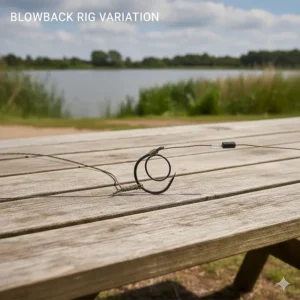
The Blow-Back Rig: Features a rig ring sliding on the hook shank. When fish eject bait, the ring slides down the shank, allowing the hook to rotate aggressively and find purchase. The independent movement prevents fish using the bait as leverage to eject the hook.
Components required:
- Rig ring (size matched to hook)
- Hook with long enough shank (curved shank preferred)
- Shrink tube or silicone to position ring
- Slightly longer hair (8-12mm)
The Withy Pool Rig: Invented by UK legend Steve Reynard, this pop-up specialist rig creates an almost un-ejectable presentation. The combination of semi-stiff hooklink, curved shank hook, shrink tube kicker, and precise counterbalancing produces aggressive hook turns that lock into the bottom lip.
The Multi-Rig: Utilises a loop attachment rather than a fixed knot, allowing 360-degree hook rotation. This freedom means hooks can turn from any angle, dramatically increasing hookup percentages. Popular among specimen hunters targeting cautious big fish.
These advanced rigs require precise component selection and tying technique. Begin with standard hair rigs, master the fundamentals, then progress to anti-eject variations as your understanding develops.
The D-Rig: Maximum Hook Movement
D-rigs create a “D” shape using stiff hooklink material, allowing hooks massive rotational freedom. This movement ensures hooks find purchase regardless of how fish approach and mouth the bait.
Construction involves forming a small loop in stiff material (fluorocarbon typically), attaching this to the hook eye via a ring or loop, and mounting bait on a hair attached to this ring. The stiff section stands the rig off the lake bed whilst the hook swivels freely within the “D.”
Particularly effective on pressured waters where fish have learned to avoid traditional presentations. The unfamiliar mechanics catch fish off-guard, producing takes when standard rigs get ignored.
Choosing the Right Hair Rig Setup for Your Fishing Situation
Water Type Considerations
Commercial Fisheries: These well-stocked venues demand quick-hooking, reliable presentations. Opt for:
- Pre-tied rigs like Korda Basix or Fox Carp Ready Rigs
- Shorter hooklinks (10-20cm)
- Medium hair lengths (5-8mm)
- Versatile hook sizes (6-10)
- Barbless hooks where required by fishery rules
Commercial carp feed confidently but in competition with other fish. Your rig must hook quickly and hold securely during spirited fights in often-snaggy environments.
Syndicate Waters: Lightly-fished, pressured venues containing educated specimens require refined tactics:
- Premium rigs like ESP Camo or Nash Big Carp
- Camouflaged components blending with lake bed
- Longer hooklinks (25-40cm+) for natural presentation
- Critical attention to hair length and bait balance
- Anti-eject rig mechanics
Fish in these venues have seen countless rigs. Subtle presentation differences determine success versus blanking.
Rivers and Flowing Water: Current creates unique challenges demanding robust, tangle-resistant setups:
- Heavier hooklink materials maintaining position
- Shorter hairs reducing bait movement in flow
- Streamlined anti-tangle sleeves
- Hooks holding firmly in moving fish
- Consider barbed hooks for security (where legal)
Current also helps—bait scent disperses downstream, attracting fish from greater distances. Position rigs where flow naturally concentrates fish (slack water behind features, eddy pools).
Target Species Adaptations
Carp: The primary target for most hair rig setups. Medium to large hooks (4-10), robust hooklinks (15-25lb), and versatile hair lengths covering boilie presentations.
Tench: Require more delicate presentations. Smaller hooks (8-14), lighter hooklinks (8-12lb), shorter hairs (3-6mm), and consideration for their cautious feeding behaviour.
Barbel: Power and current demand strength. Stronger hooklinks (15-20lb), secure hook patterns (wide gapes, curved shanks), medium hairs (5-8mm), and ability to withstand rough treatment.
Bream: Often feed in shoals on bottom baits. Medium hooks (10-14), sensitive presentations, and quick-hooking hair lengths suit their feeding style.
Match your hair rig setup for coarse fishing to your target species’ mouth size, feeding behaviour, and fighting characteristics.
Seasonal Adjustments
Spring (March-May): Fish emerge from winter sluggishness. Smaller baits, shorter hairs, and highly visible presentations (bright pop-ups) stimulate feeding responses.
Summer (June-August): Peak activity demands versatile setups. All presentations work—match conditions and fish behaviour observed on the day.
Autumn (September-November): Fish feed heavily pre-winter. Larger baits, medium-long hairs, and nutritious boilie presentations capitalise on their feeding aggression.
Winter (December-February): Challenging conditions require refined tactics. Smaller baits, shorter hairs, slow-sinking presentations, and patience. Fish feed less frequently but still respond to correct presentations.
Note the coarse fishing close season on rivers (15th March-15th June annually in England and Wales, per Environment Agency regulations) affects timing. Stillwater fishing continues year-round at most venues.
Essential Accessories for Hair Rig Setup
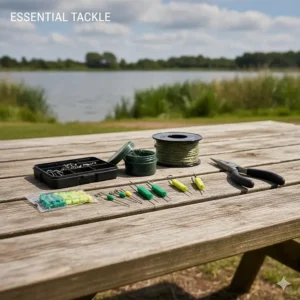
Must-Have Tools
Baiting Needles: Essential for threading boilies, pellets, and other baits onto hair rigs. Choose needles with comfortable handles and sharp, durable points. Latching needles (gate-style) work brilliantly with soft baits, whilst straight needles suit firm boilies.
Bait Drills: For creating holes in hard pellets or custom boilies. Aluminium alloy construction prevents bending, whilst sharp cutting edges minimise bait damage.
Hook Sharpeners: Even quality hooks benefit from occasional touching-up. Diamond files or ceramic sharpeners restore needle-sharp points after contact with underwater obstacles.
Rig Scissors: Coated braids and modern hooklink materials demand quality scissors. Serrated edges grip slippery materials, whilst sharp blades prevent fraying.
Knot Pullers: Simplify tightening challenging knots, particularly when working with stiff materials or cold fingers at the waterside.
Storage Solutions
Proper rig storage prevents hook point damage and hooklink tangles—both destroy performance. Purpose-designed rig boxes feature:
- Individual Compartments: Separate rigs preventing entanglement
- Foam Pinning Boards: Hold rigs under tension maintaining straightness
- Hook Point Protection: Slots or clips keeping points sharp
- Clear Labelling: Identify hook sizes, hair lengths, and hooklink types quickly
The Carp Fishing Tackle Box 6 Layer system holds up to 72 rigs in compact format (25×9×4.4cm), perfect for anglers carrying multiple presentations. Twin clip closure prevents accidental opening during transport.
Store rigs straight and under slight tension. Coiled hooklinks retain “memory,” creating presentation problems and tangles. Quality storage pays dividends in consistent rig performance.
Hook Maintenance
Sharp hooks hook fish—blunt hooks pull. Check points before every cast by dragging gently across your thumbnail. Sharp points catch and grip; blunt points slide. Replace or sharpen immediately upon detecting dullness.
Rinse hooks after sessions, particularly in venues containing zebra mussels or other abrasive substrates. These organisms rapidly dull points. Store in dry environments preventing rust.
Quality hooks justify their cost through durability and sharpness retention. Brands like Korda, Fox, ESP, and Nash invest heavily in point technology. Budget hooks often require more frequent replacement.
Common Hair Rig Setup Mistakes (And How to Avoid Them)
Incorrect Hair Length
The Problem: Hair too short creates hook-mounted presentation problems; too long reduces hooking efficiency.
The Solution: Start with the 1/4-inch rule recommended by the American Carp Society—bait’s closest edge should sit approximately 6mm (1/4″) below hook bend when dangling vertically. Adjust based on results. Record successful hair lengths in a fishing diary for future reference.
Poor Knot Quality
The Problem: Rushed or incorrectly tied knotless knots slip, fail under pressure, or create lumpy presentations.
The Solution: Practice at home before waterside sessions. Ensure each wrap sits neatly against the previous without gaps or overlaps. Pull knots tight progressively—sudden yanking creates weak points. Trim tag ends closely for streamlined presentation.
Using Damaged Hooklinks
The Problem: Abraded, kinked, or weakened hooklink material fails during fights with prize fish.
The Solution: Inspect hooklinks thoroughly after every fish. Replace immediately upon detecting damage. Carry spare pre-tied rigs or tying materials. Never risk losing your personal best to worn tackle.
Neglecting Hook Sharpness
The Problem: Blunt hooks penetrate poorly, increasing hook pulls and lost fish.
The Solution: Check points religiously. Modern anti-reverse hooks retain sharpness well but still require monitoring. Carry a hook sharpener and use liberally. Replace hooks showing significant damage.
Incorrect Component Matching
The Problem: Pairing heavy hooks with light hooklinks, or large baits with short hairs creates imbalanced, ineffective presentations.
The Solution: Match components logically. Heavy hooks require robust hooklinks. Large baits demand longer hairs. Small hooks suit delicate presentations. Consider the complete system, not individual parts.
Hair Rig Setup Troubleshooting Guide
Problem: Frequent Tangles During Casting
Causes:
- Hooklink too supple without anti-tangle sleeve
- Excessive hooklink length
- Inadequate separation between hooklink and mainline
- Hook catching on PVA bag materials
Solutions:
- Add or upgrade anti-tangle sleeve
- Reduce hooklink length to 20-30cm for distance casting
- Use anti-tangle systems (helicopter setups, inline leads)
- Ensure PVA dissolves before hook moves
Problem: Hook Pulls and Lost Fish
Causes:
- Blunt hook points
- Hair too long reducing hooking angle
- Inappropriate hook pattern for fishing situation
- Insufficient line strength relative to fish size
Solutions:
- Sharpen or replace hooks immediately
- Shorten hair to 5-8mm optimum
- Choose wide gape or curved shank patterns
- Upgrade hooklink breaking strain
Problem: Few Takes Despite Fish Presence
Causes:
- Visible hooklink spooking fish
- Unnatural bait presentation
- Incorrect bait size or type
- Rig mechanics preventing natural bait movement
Solutions:
- Switch to camouflaged hooklink materials
- Adjust hair length allowing natural movement
- Match bait to free offerings (size and type)
- Review entire rig setup against target species behaviour
Problem: Baits Sliding Off Hair
Causes:
- Hair stop too small or damaged
- Bait drilled hole too large
- Soft baits deteriorating in water
- Aggressive casting dislodging stops
Solutions:
- Use larger, fresh hair stops
- Drill baits carefully with appropriate-sized drill
- Select firmer baits or reduce soak time
- Consider bait bands for secure attachment
Frequently Asked Questions About Hair Rig Setup for Coarse Fishing
❓ How long should a hair be on a coarse fishing rig?
❓ Can you use hair rigs for all coarse fish species?
❓ What's better for beginners—tying your own rigs or buying pre-tied?
❓ Do hair rigs work in flowing water like rivers?
❓ How often should you replace pre-tied hair rigs?
Conclusion: Mastering Hair Rig Setup for Coarse Fishing Success
Transforming your coarse fishing results starts with mastering hair rig setup fundamentals. Whether you’re targeting commercial fishery carp with Korda Basix Wide Gape rigs or stalking syndicate specimens using ESP Camo Hair Rigs, the principles remain constant—present bait naturally whilst maintaining optimal hooking mechanics.
The hair rig setup for coarse fishing revolutionised our sport precisely because it works with fish behaviour rather than against it. By separating bait from hook, we create presentations that cautious fish accept confidently. Understanding hair rig tying, optimising hair rig length, and implementing proper bottom bait presentation or pop-up tactics separates consistent success from occasional fortune.
Start with quality pre-tied rigs whilst learning component selection and rig construction. Invest in proper tools—the £10-15 for a comprehensive baiting kit pays dividends through versatility and cost savings. Practice tying at home before attempting waterside construction in challenging conditions.
Remember that your Environment Agency rod licence remains mandatory for legal coarse fishing in England and Wales. Current pricing (£36.80 annually for two rods) represents exceptional value whilst supporting fishery improvements across the UK.
Most importantly, record your results meticulously. Note which hair rig lengths, hooklink materials, and presentations produce takes at specific venues. This fishing intelligence becomes invaluable, guiding future sessions and accelerating your learning curve.
The journey from basic hair rig novice to accomplished rig craftsman rewards patience and practice. But those first confident takes, solid hookups, and safely landed specimens make every moment of learning worthwhile. Now you possess the knowledge—apply it waterside and enjoy the transformation in your results.
Tight lines, and may your next session produce that special fish you’ve been targeting! 🎣
Recommended for You
- 7 Best Micro Pellet Feeder Fishing Setups UK 2026
- 7 Best Night Fishing Tackle UK Options 2026
- Summer Float Fishing Setup UK: 7 Best Products (2026 Guide)
Disclaimer: This article contains affiliate links. If you purchase products through these links, we may earn a small commission at no additional cost to you. Prices shown are approximate and may vary.
✨ Found this helpful? Share it with your mates! 💬🤗
