
In This Article
The shift towards compact carp reels has revolutionised mobile carp fishing across the UK. Gone are the days when every angler lugged around massive big pit reels for every session. According to the Angling Trust, the UK’s governing body for game and coarse fishing, modern mobile fishing techniques have driven innovation in tackle design, with compact reels becoming essential for contemporary carp angling. Whether you’re stalking carp in the margins, fishing tight swims, or simply want a lighter setup for all-day sessions, compact carp reels offer the perfect blend of portability and performance.
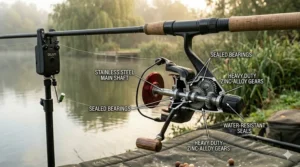
I’ve spent the past season testing compact reels on various UK waters, from intimate estate lakes to sprawling gravel pits. What strikes me most is how these scaled-down workhorses have evolved. Modern compact carp reels punch well above their weight, delivering casting distances and drag power that would’ve seemed impossible just a few years ago. The best compact reels today weigh around 300-550 grams yet handle 20lb+ carp with absolute confidence.
The beauty of compact carp reels lies in their versatility. They’re absolutely brilliant for short rod setups (9-10ft), which have become increasingly popular among roaming anglers. They balance beautifully on abbreviated handles, reduce arm fatigue during long carries, and fit snugly in rod sleeves without the bulk of traditional 14000-size reels. For UK anglers who value mobility—whether you’re fishing estate lakes, river carping, or targeting wary fish in pressured venues—compact carp reels have become essential kit.
In this guide, I’ll walk you through the seven best compact carp reels available in the UK for 2026, covering everything from budget-friendly options around £40 to premium models approaching £100. Each reel has been evaluated based on real-world performance, build quality, value for money, and suitability for different angling scenarios.
Quick Comparison Table
| Reel Model | Price Range (£) | Weight | Gear Ratio | Drag Power | Best For |
|---|---|---|---|---|---|
| Nash Dwarf Big Pit Compact | £65-£70 | 420g | 5.1:1 | 12kg | Fast retrieve, stalking |
| Shimano Baitrunner ST RB | £65-£77 | 355g | 4.8:1 | 11kg | Budget freespool reliability |
| Sonik Xtractor+ 5000 GS | £55-£60 | 415g | 4.7:1 | 10kg | Mid-range performance |
| Fox EOS 10000 FD | £50-£58 | 558g | 5.5:1 | 10kg | Floater fishing, short range |
| Daiwa 19 Emcast BR LT 4000-C | £85-£95 | 320g | 5.2:1 | 10kg | Lightweight precision |
| Sonik Xtractor+ Specialist FS 4000 | £40-£45 | 380g | 5.1:1 | 8kg | Ultra-budget freespool |
| Nash Dwarf Freespool 6000 | £60-£65 | 450g | 5.1:1 | 8kg | Mobile angling |
💬 Just one click – help others make better buying decisions too! 😊
Top 7 Compact Carp Reels: Expert Analysis
1. Nash Dwarf Big Pit Compact – The Speed Merchant
Price: £65.99-£69.99
The Nash Dwarf Big Pit Compact has earned its stellar reputation through one simple fact: it retrieves line faster than virtually any compact reel in its price bracket. With a 5.1:1 gear ratio delivering 103cm of line per handle turn, it’s the natural choice when carp bolt towards you or when you’re fishing at distance and need to recover slack quickly.
What really impressed me during testing was the formidable 12kg drag power. This is big pit territory compressed into a compact body, and it shows when you’re battling powerful fish in snaggy swims. The Nash Dwarf Big Pit Compact features 4+1 bearings, fast drag adjustment, and Nash’s signature anti-twist enlarged line roller that prevents premature line wear.
UK buyers consistently praise the one-touch folding handle, which keeps the profile compact in rod sleeves—a godsend when you’re carrying pre-rigged rods through thick vegetation. The line-friendly clip aids accuracy when using wrapping sticks, making it brilliant for fishing to spots at medium range.
Key Specifications:
- Retrieve per handle turn: 103cm
- Weight: 420g
- Line capacity: 0.28mm-520m / 0.33mm-400m
Pros:
✅ Fastest retrieve rate in class
✅ Powerful 12kg drag handles big fish
✅ Excellent build quality from Nash
Cons:
❌ No freespool function
❌ Slightly heavier than some rivals
UK anglers report brilliant performance on estate lakes and gravel pits, with many noting it pairs perfectly with 9-10ft Dwarf rods for stalking setups.
2. Shimano Baitrunner ST RB – Budget Freespool King
Price: £64.99-£77.00
The Shimano Baitrunner ST RB brings authentic Shimano baitrunner reliability at a price that undercuts many budget competitors. At around £65, it delivers features you’d expect from reels costing considerably more, making it exceptional value for UK carp anglers.
This Shimano Baitrunner ST RB features the legendary AR-C line management system with a stainless steel ball bearing, ensuring superior line lay and smooth casting. The XT-7 body construction provides durability without excessive weight, whilst the Super Stopper II system delivers instant, firm anti-reverse—crucial when setting hooks on powerful takes.
What sets this reel apart is the genuine Shimano engineering at a competitive price point. UK buyers frequently mention the silky-smooth drag and the Cap Bail design that reduces line-catching during casting. The Power Roller significantly reduces line twist, a common problem with cheaper roller designs that can ruin expensive mainline.
Key Specifications:
- Gear ratio: 4.8:1
- Weight: 355g (4000 FB model)
- Line capacity: 0.25mm/260m, 0.30mm/180m
Pros:
✅ Authentic Shimano reliability
✅ Smooth baitrunner function
✅ Excellent line lay
Cons:
❌ Not as fast retrieval as some rivals
❌ Limited for extreme long-range
UK customers consistently rate this 4.6+ stars, with many using it for margin fishing and shorter rod setups where baitrunner facilities are essential.
3. Sonik Xtractor+ 5000 GS – The Golden Stunner
Price: £55.00-£60.00
The Sonik Xtractor+ 5000 GS offers that perfect sweet spot between performance and affordability. The distinctive golden spool—a nod to the beginnings of carp fishing in England—makes this reel an absolute head-turner on the bank, but it’s the engineering underneath that really matters.
Featuring the advanced wormshaft gear system, the Sonik Xtractor+ 5000 GS ensures excellent line lay and super-smooth casting. This system reduces friction and helps improve distance compared to standard compact reels. The Quick-Torque front drag system provides precise control, whilst the floating rotor line guard ensures tangle-free operation with both fine-diameter lines and heavier setups.
At just 415g, it’s genuinely lightweight for a reel with this much performance. The 8+1 stainless ball bearings deliver silky-smooth operation, and the twin spring-loaded captive line clips aid accuracy when hitting spots repeatedly. UK anglers appreciate the Quik-Clik folding handle with matt finish wood barrel grip, which adds a touch of class whilst remaining practical.
Key Specifications:
- Gear ratio: 4.7:1
- Weight: 415g
- Line capacity: 0.30mm/380m, 0.35mm/280m
Pros:
✅ Wormshaft system for superior line lay
✅ Lightweight carbon construction
✅ Distinctive styling
Cons:
❌ Golden spool not for everyone
❌ Lower gear ratio than some rivals
UK buyers report excellent performance on small to medium carp waters, with the compact body balancing perfectly with 9-10ft specialist rods.
4. Fox EOS 10000 FD – The Versatile All-Rounder
Price: £50.00-£58.00
The Fox EOS 10000 FD has become one of the biggest-selling compact reels in the UK, and for good reason. It’s absolutely brilliant for short to medium-range work and doubles up as a handy reel for floater fishing—something many compact reels struggle with.
This Fox EOS 10000 FD features a computer-balanced rotor, eliminating human error and ensuring flawless performance throughout the reel’s lifespan. With 5 stainless ball bearings and a 5.5:1 gear ratio, it offers decent cranking power for pulling in large amounts of line with each handle turn. The responsive front drag system provides excellent control during the fight.
What I particularly like about this reel is its versatility. At 558g, it’s slightly heavier than some rivals, but this weight actually helps when surface fishing, providing better balance when you’re holding the rod for extended periods. The large handle gives exceptional cranking power—perfect when you’ve got a big common tearing line off in the summer months.
Key Specifications:
- Gear ratio: 5.5:1
- Weight: 558g
- Line capacity: 0.33mm/320m, 0.35mm/260m
Pros:
✅ Computer-balanced rotor
✅ Excellent for floater fishing
✅ Great value for money
Cons:
❌ Heavier than some compact reels
❌ No spare spool supplied
UK customers consistently praise its reliability, with many using it as their go-to reel for stalking sessions and short-rod work on pressured waters.
5. Daiwa 19 Emcast BR LT 4000-C – Featherweight Precision
Price: £85.00-£95.00
The Daiwa 19 Emcast BR LT 4000-C represents the pinnacle of compact reel engineering for UK anglers who demand the very best. Built using Daiwa’s Light Tough concept, it offers stronger gearing and improved handling whilst keeping weight to an absolute minimum.
At just 320g, this Daiwa 19 Emcast BR LT 4000-C is genuinely featherweight, yet the Tough Digigear internals deliver better power transmission and higher drag power than you’d expect from such a compact package. The ATD drag system responds almost instantly, starting with near-zero resistance yet offering huge drag power when needed—absolutely crucial when using fine-diameter lines.
The longcast ABS spool features less friction at the spool’s edge, increasing casting distance. The freespool system can be adjusted with remarkable precision—perfect when targeting wary fish like winter carp that need to feel absolutely no resistance when taking the bait. UK anglers fishing pressured estate lakes absolutely rave about this feature.
Key Specifications:
- Gear ratio: 5.2:1
- Weight: 320g
- Line capacity: 0.28mm/150m
- Drag power: 10kg
Pros:
✅ Exceptionally lightweight (320g)
✅ Precise freespool adjustment
✅ Premium Daiwa engineering
Cons:
❌ Higher price point
❌ Smaller line capacity than some rivals
UK buyers report flawless performance across multiple seasons, with the compact body and lightweight design making it perfect for all-day stalking sessions.
6. Sonik Xtractor+ Specialist FS 4000 – Budget Freespool Champion
Price: £39.99-£44.99
The Sonik Xtractor+ Specialist FS 4000 proves you don’t need to spend a fortune to get a genuinely capable freespool reel. At under £45, it’s remarkable value, especially considering it comes with a spare graphite spool included.
This Sonik Xtractor+ Specialist FS 4000 features both a front drag and an independent freespool rear drag for precise settings—essential when you’re targeting carp in running water or need to drop the clutch instantly on a powerful take. The high-strength, lightweight graphite body and rotor keep weight down to 380g whilst maintaining structural integrity.
UK buyers consistently mention the smooth operation and reliable freespool function. One customer noted they’ve caught “quite a few carp using it” and praised the dual-clutch system when hooking double-figure fish. The soft-touch rubber handle grip remains comfortable during long sessions, and the line-friendly line clips aid accuracy.
Key Specifications:
- Gear ratio: 5.1:1
- Weight: 380g
- Line capacity: 0.25mm/200m
- Includes spare spool
Pros:
✅ Exceptional value under £45
✅ Spare spool included
✅ Dual drag system
Cons:
❌ Lower drag power (8kg)
❌ Graphite body less robust than aluminium
UK anglers report brilliant performance on stillwaters and rivers when targeting carp, barbel, tench, and bream. It’s an absolute bargain for anglers on a budget who still want freespool facilities.
7. Nash Dwarf Freespool 6000 – The Mobile Specialist
Price: £59.99-£64.99
The Nash Dwarf Freespool 6000 completes Nash’s compact range with a larger freespool option perfect for anglers who want a bit more line capacity without sacrificing the compact ethos. It offers clinical 5+1 roller bearing performance in a package designed specifically for short rod users.
This Nash Dwarf Freespool 6000 features precise line lay for smooth casting, a multi-disc drag, and variable freespool tension to control even the hardest-fighting carp from the moment they’re hooked. The fast drag adjustment allows lightning-quick changes while playing fish—absolutely crucial when a carp makes a sudden lunge towards snags.
UK customers praise the smooth performance and excellent line capacity. One buyer mentioned their partner “fell in love with them before I’ve had chance to use them,” swapping out Shimano ST 10,000s in favour of these reels on 9ft Dwarf rods. The sleek matte black finish with wooden handle adds understated class to any setup.
Key Specifications:
- Gear ratio: 5.1:1
- Weight: 450g
- Line capacity: 0.30mm/400m
- Drag power: 8kg
Pros:
✅ Larger line capacity
✅ Smooth freespool operation
✅ Nash build quality
Cons:
❌ Heavier than some compact options
❌ Lower drag power than Big Pit model
UK buyers report excellent performance on mid-sized carp waters, with the 6000 size offering that sweet spot between compactness and capacity for roaming anglers.
Understanding Compact Carp Reels: What Makes Them Different
Compact carp reels aren’t simply scaled-down versions of big pit reels—they’re purpose-built tools designed for specific angling scenarios. Understanding what sets them apart helps you choose the right reel for your fishing.
The defining characteristic of compact carp reels is their spool size and body dimensions. Typically, compact models range from 4000 to 6000 size, compared to 10000-14000 for traditional big pit reels. This reduction in size delivers multiple practical advantages. The weight drops significantly—most compact reels weigh between 300-550g compared to 600-800g for full-sized models. This might not sound dramatic, but when you’re carrying three rods across a lake, that difference becomes very noticeable indeed.
The smaller body dimensions mean compact reels balance perfectly on shorter rods. Modern stalking and abbreviated rods (9-10ft) have become immensely popular across UK waters, and compact reels complement them beautifully. The proportions just work—the reel doesn’t overpower the rod, creating a setup that feels nimble and responsive rather than front-heavy and cumbersome.
Recent developments in compact reel technology have been accelerating at an incredibly fast rate, with quality fishing reel technology needing to cope with the increasing size and number of fish available to catch. According to Wikipedia’s comprehensive guide to fishing reels, modern spinning reels have evolved dramatically since their introduction, with today’s compact models featuring advanced drag systems, superior line lay technology, and bearing systems that were reserved for premium big pit models just a decade ago.
Line capacity represents the most obvious compromise. A compact 5000-size reel typically holds around 300-400 metres of 0.30mm line, compared to 500+ metres for a big pit model. For short to medium-range work (up to 80-90 yards), this capacity proves more than adequate. However, if you’re regularly fishing at extreme distance or need backing line for playing big fish in vast open water, you’ll want a larger reel.
The gear ratios on compact reels often favour speed over sheer power. Many models feature 5.0:1 or 5.5:1 ratios, delivering impressive retrieve rates—some exceeding 100cm per handle turn. This makes them brilliant when carp bolt towards you, allowing you to recover slack line rapidly and maintain pressure during the fight.
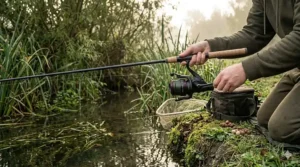
Freespool vs Front Drag: Which System Suits Your Fishing
The debate between freespool (baitrunner) and front drag compact reels divides UK carp anglers, but the choice ultimately depends on your angling approach and target waters.
Freespool reels feature a secondary drag system activated by a lever or switch at the rear of the reel. When engaged, this allows line to pay off the spool under minimal resistance, preventing your rod from being pulled in when a carp takes your bait and moves off. A half-turn of the handle or flick of the lever engages the main drag, allowing you to strike and play the fish normally.
The advantages of freespool systems become apparent when fishing running water, steep marginal shelves, or anywhere carp might pick up your bait and move off rapidly. The secondary drag can be adjusted precisely, allowing you to set just enough resistance to prevent the spool from overrunning whilst not spooking wary fish. The finely adjustable baitrunner is perfect for catching wary fish like pikeperch, trout or eel, where fish should not feel any resistance when taking the bait.
Front drag reels, in contrast, rely solely on the clutch set by the front drag knob. When a fish takes, you must have the clutch set loosely enough to give line without the rod being pulled in, but tight enough to set the hook when you strike. It requires more judgement and experience, but many stalking specialists prefer this direct approach, arguing it provides better feedback during the take and more immediate control once the hook is set.
For UK carp fishing, freespool reels excel in several scenarios. Night fishing becomes considerably less stressful when you can set your reels in freespool mode, knowing a powerful midnight take won’t launch your rods into the lake. Fishing tight swims with minimal clearance behind you benefits from freespool—you can have rods closer to alarms without worrying about them being pulled backwards. Running water situations, where carp might move substantial distances after picking up the bait, also favour freespool operation.
Front drag compact reels suit stalking scenarios where you’re holding the rod or have it resting in your hand ready for an instant strike. They’re typically lighter (no secondary drag mechanism), slightly cheaper, and some anglers argue they provide more direct feel during the fight. For mobile daytime fishing where you’re actively watching the rod tip, front drag reels work beautifully.
The price difference between freespool and front drag models varies by manufacturer but typically adds £10-20. Budget-conscious anglers often start with front drag models, whilst those fishing multiple rods overnight usually invest in freespool for the added security and convenience.
Line Capacity Explained: How Much Do You Really Need
Line capacity specifications can seem bewildering, but understanding what you actually need for UK carp fishing helps avoid both overspending and frustrating limitations.
Compact carp reel specifications typically list line capacity in millimetres and metres—for example, “0.30mm/380m” or “0.35mm/280m.” This indicates the reel holds 380 metres of 0.30mm diameter line, or 280 metres of thicker 0.35mm line. The relationship isn’t linear because thicker line takes up more spool space per metre.
For most UK carp fishing scenarios, you need far less line than you might think. A typical cast at a commercial fishery or estate lake sits between 30-60 yards (27-55 metres). Add 100 metres for playing the fish, and you’re looking at roughly 150-200 metres of usable line. Even accounting for line changes and having adequate backing, 300 metres proves more than sufficient for the majority of UK carp angling.
The real question becomes: what diameter line are you using? This depends entirely on your fishing approach. For general-purpose carp fishing on UK lakes and commercial fisheries, 0.30mm-0.35mm monofilament or 15-20lb braid represents the sweet spot. Most compact reels comfortably accommodate 300+ metres of this diameter, providing adequate capacity for all but the most extreme distance work.
Stalking specialists often use finer lines—0.25mm-0.28mm—for better presentation in clear water conditions. Compact reels excel here, with many models holding 400+ metres of finer diameter line. This gives you the flexibility to use the delicate presentation needed for wary fish whilst still having plenty of capacity.
Conversely, if you’re fishing heavily snaggy swims or targeting very large carp in weedy venues, you might use 0.35mm+ line or heavy braid. Here, line capacity becomes more critical. Check the specifications carefully—a reel holding 280 metres of 0.35mm line gives you adequate working capacity, but anything less might prove limiting when you need to chase a powerful fish through dense weed beds.
One often-overlooked consideration is line memory and reel performance. Compact reels with smaller spool diameters can induce more line memory (coils) than big pit models. Quality compact reels combat this through advanced spool designs—tapered spools, longcast lips, and precision line lay systems. When comparing models, check whether they feature these technologies, as they make a genuine difference to casting distance and line manageability.
A practical tip: don’t fill compact reels to absolute capacity. Leave 2-3mm of spool lip visible when the reel is loaded. This reduces friction during casting, prevents the line from bedding in too deeply under load, and actually improves casting distance despite using slightly less line.
Compact Reels for Stalking: Essential Features to Consider
Stalking represents one of the most exciting and challenging branches of UK carp fishing, and compact reels have become the stalking angler’s weapon of choice. But not all compact reels suit stalking equally—certain features prove essential.
Weight stands as the paramount consideration. When you’re covering miles around a lake edge, scrambling through undergrowth, or making multiple moves in a session, every gram matters. The lightest compact reels weigh around 300-350g, and this reduction compared to 550-600g models makes a tangible difference over a full day’s stalking. Your arms tire less quickly, you move more quietly, and the overall experience becomes far more enjoyable.
The folding handle mechanism deserves careful evaluation. One-touch folding handles allow you to collapse the handle instantly, reducing the reel’s profile when carrying pre-rigged rods through vegetation. Some cheaper models require unscrewing the handle or feature stiff folding mechanisms that prove frustrating when you need to move quickly. Test this feature in the shop—it should operate smoothly with one hand.
Retrieve rate becomes crucial for stalking success. When a carp takes in the edge and bolts towards open water, you need to recover slack line rapidly to maintain contact and set the hook effectively. Look for gear ratios of 5.0:1 or higher, ideally with a retrieve rate exceeding 90cm per handle turn. The Nash Dwarf Big Pit Compact’s 103cm retrieve proves absolutely brilliant for these scenarios.
Drag power matters more for stalking than you might initially think. Stalking often involves fishing tight to snags—overhanging trees, lily pads, sunken boats—where you must stop a powerful fish immediately. A compact reel with 10-12kg of drag power gives you the muscle to turn big carp away from danger zones. Lighter drag systems (6-8kg) work fine in open water but can prove inadequate when you’re fishing snaggy marginal spots.
The bail arm design impacts stalking efficiency. Look for reels with robust bail arms that lock open reliably and close smoothly without needing careful alignment. Cheap compact reels sometimes feature flimsy bail arms that spring closed unpredictably or require fiddling to engage properly—absolute deal-breakers when you need to cast quickly to a showing fish.
Line lay quality separates brilliant stalking reels from mediocre ones. Superior line lay systems—wormshaft gears, precision oscillation—ensure the line beds evenly on the spool, reducing tangles and improving casting distance. This becomes critical for stalking because you’re often making short, quick casts rather than carefully prepared long-range efforts. The line needs to flow smoothly off the spool without birds’ nests or tangles.
Finish and corrosion resistance shouldn’t be overlooked. Stalking reels get wet more frequently than static fishing reels—you’re kneeling in damp grass, casting in marginal reeds, and generally subjecting your tackle to more moisture. Graphite bodies and quality seals prove more durable than cheaper materials that corrode or seize up after a season’s stalking.
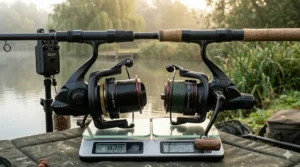
Gear Ratios Decoded: Fast vs Powerful Retrieval
Gear ratios represent one of the most misunderstood aspects of reel selection, yet understanding them helps you choose a compact reel perfectly suited to your angling approach.
The gear ratio indicates how many times the spool rotates for each complete turn of the handle. A 5.1:1 ratio means the spool completes 5.1 full rotations per handle turn, whilst a 4.6:1 ratio delivers 4.6 rotations. Higher ratios retrieve line faster; lower ratios provide more cranking power.
For compact carp reels, you’ll typically encounter ratios between 4.6:1 and 5.5:1. Each range suits different fishing scenarios:
4.6:1 – 4.8:1 (Lower ratios): These “powerful” ratios sacrifice speed for torque, making them ideal when you’re fishing at long range or need maximum cranking power. The slower retrieve means you’re applying more force with each turn, helping you maintain pressure when playing powerful fish or reeling through weed. Shimano’s 4.8:1 models prove popular for this reason—you might retrieve slightly slower, but you have the muscle to handle demanding situations.
5.0:1 – 5.2:1 (Medium ratios): This sweet spot balances speed and power, making these ratios brilliant all-rounders for UK carp fishing. You get decent cranking power for controlling fish whilst retrieving line at a respectable rate. Most Nash and Daiwa compact models sit in this range, offering versatility across different fishing scenarios.
5.4:1 – 5.5:1 (Higher ratios): Speed-oriented ratios excel when carp bolt towards you, allowing rapid line recovery to maintain contact and pressure. They’re absolutely brilliant for stalking, margin fishing, and any situation where you need to gather slack line quickly. The Fox EOS 10000’s 5.5:1 ratio makes it perfect for these applications.
However, gear ratio alone doesn’t tell the complete story. The retrieve rate per handle turn—measured in centimetres—provides more practical information. This figure accounts for both gear ratio and spool diameter. A reel with a 5.1:1 ratio but larger spool might retrieve 103cm per turn (like the Nash Dwarf Big Pit Compact), whilst a 5.5:1 ratio reel with a smaller spool might retrieve less.
For UK carp fishing, I generally recommend prioritising retrieve rate over gear ratio when comparing reels. A retrieve rate of 90-100cm+ per turn suits most applications, giving you the speed to handle bolting fish whilst still providing adequate power for playing them effectively.
One practical consideration: higher gear ratios feel “busier” when reeling. You’re turning the handle faster to retrieve the same distance, which can prove tiring during prolonged fights or when regularly retrieving from distance. Lower ratios feel more relaxed and powerful, though you sacrifice the ability to recover slack rapidly.
Match the gear ratio to your primary fishing style. If you’re mainly fishing set rods at medium range on still waters, anything between 4.8:1 and 5.2:1 works beautifully. For stalking and margin fishing where rapid line recovery proves essential, lean towards 5.2:1 or higher. For long-range work where you need maximum cranking power, consider ratios around 4.6:1-4.8:1.
Drag Systems: Front Drag, Rear Drag, and Baitrunners
The drag system represents the heart of any carp reel, and understanding the different configurations helps you select a compact reel that matches your angling requirements.
Front Drag Systems position the adjustment knob at the front of the spool. They typically offer more powerful and consistent drag performance because the larger surface area of drag washers in this location provides better heat dissipation and smoother operation under sustained pressure. Most modern compact carp reels feature front drag as standard, and it’s generally the superior choice for playing powerful fish.
Front drag reels require you to set the clutch carefully before fishing. Too tight, and you risk hook pulls or line breakage when a powerful carp surges; too loose, and you’ll struggle to set the hook effectively. Experienced anglers develop a feel for optimal drag settings through practice, typically setting the drag at around 25-30% of the line’s breaking strain.
The advantage of quality front drag systems becomes apparent during long fights. They maintain consistent pressure throughout the battle, allowing you to concentrate on playing the fish rather than constantly adjusting the drag. Premium compact reels feature multi-disc drag systems with carbon washers, delivering silky-smooth performance even when a 30lb common is tearing line off under serious pressure.
Rear Drag Systems place the adjustment knob at the rear of the reel body. Whilst less common on modern compact carp reels, some models feature rear drags for accessibility reasons. The main advantage lies in the ability to adjust drag settings whilst the reel is mounted on the rod and whilst playing a fish—you don’t need to reach around the spool.
However, rear drags generally offer less maximum drag power than front systems and can prove less smooth under sustained pressure. For UK carp fishing, front drag systems represent the better choice unless you have specific accessibility requirements.
Baitrunner (Freespool) Systems feature a secondary drag mechanism, typically controlled by a lever at the rear of the reel. This allows you to switch between two drag settings instantly. The baitrunner drag allows line to pay off under minimal resistance—perfect for letting carp run with the bait without feeling heavy resistance. A half-turn of the handle or flick of the lever engages the main front drag for playing the fish.
The ATD drag system responds almost instantly, starting with near-zero resistance yet offers huge drag power at the same time. This technology, found in premium compact reels like the Daiwa Emcast BR LT, eliminates the initial resistance that can spook wary fish whilst still providing powerful drag when needed.
Modern baitrunner systems offer independent adjustment of both the freespool drag and the main drag. This lets you fine-tune the secondary drag to match conditions—setting it tighter when fishing close to snags (you need to know immediately when a fish moves off), or looser for ultra-cautious fish in clear water.
The practical benefits for UK carp fishing prove substantial. Night fishing becomes less stressful—you can sleep knowing your rods won’t be pulled in, yet you’ll wake instantly when line pays off. Fishing running water situations where carp might move substantial distances after picking up the bait greatly benefits from freespool operation. Even on still waters, the peace of mind knowing your rod won’t be pulled off rests or into the lake justifies the modest price premium for many anglers.
When evaluating drag systems, look for several key features. Smooth operation under pressure matters immensely—cheap drag systems can be jerky or inconsistent, leading to hook pulls and lost fish. Multi-disc systems with carbon or felt washers typically outperform single-disc systems. Waterproof or water-resistant drag systems prove more durable, particularly for stalking reels that encounter more moisture.
Maximum drag power specifications can be misleading. A reel claiming 12kg of drag power sounds impressive, but in practice, you’ll rarely use more than 4-5kg during actual fishing. Focus instead on smoothness and consistency throughout the drag range rather than maximum figures.
How to Choose the Perfect Compact Reel for Your Fishing Style
Selecting the right compact carp reel depends on understanding your primary fishing scenarios and matching the reel’s strengths to your specific requirements.
For Stalking Specialists: Prioritise lightweight construction (under 400g ideally), fast gear ratios (5.1:1 or higher), and one-touch folding handles. The Daiwa 19 Emcast BR LT 4000-C at 320g represents the pinnacle for roaming anglers, whilst the Nash Dwarf Big Pit Compact’s exceptional 103cm retrieve rate makes it brilliant for short-range work where rapid line recovery proves essential. Front drag models often suffice for stalking, though freespool adds security if you’re fishing tight to snags.
For Mobile Session Anglers: Balance portability with adequate line capacity. Look for reels in the 400-500g range offering 350+ metres of 0.30mm line capacity. The Nash Dwarf Freespool 6000 and Sonik Xtractor+ 5000 GS hit this sweet spot perfectly, providing enough capacity for varied fishing whilst remaining genuinely compact for carrying multiple rods. Freespool systems add versatility, allowing you to fish both running and still waters effectively.
For Budget-Conscious Beginners: Focus on reliability and value rather than premium features. The Sonik Xtractor+ Specialist FS 4000 (under £45) and Fox EOS 10000 FD (around £50-£58) deliver dependable performance without the premium price tag. Both include essential features like smooth drags and decent line capacity, allowing you to learn proper reel handling without breaking the bank. Once you’ve developed your angling approach, you can invest in more specialised models.
For Night Fishing Enthusiasts: Freespool systems prove almost essential. The Shimano Baitrunner ST RB offers legendary reliability in this department, with UK anglers consistently praising its smooth freespool operation and instant engagement. The adjustable secondary drag allows you to fine-tune resistance for different situations—tighter for fishing near snags, looser for cautious fish in clear water.
For Floater Fishing Specialists: Slightly heavier compact reels with excellent cranking power suit surface fishing perfectly. The Fox EOS 10000 FD (558g) provides brilliant balance when holding the rod for extended periods, and its 5.5:1 gear ratio helps you control carp that crash-dive after taking a floater. The oversized handle knob improves grip even with oily hands from floating baits.
For Short Rod Users (9-10ft): Match reel size to rod length carefully. Reels in the 4000-5000 size range balance beautifully on abbreviated handles, creating setups that feel nimble rather than front-heavy. The Sonik Xtractor+ models and Nash Dwarf range specifically target this market, offering compact bodies that complement shorter rods perfectly.
For Multi-Rod Setups: Consider buying matched sets of the same model. This simplifies rigging, ensures consistent performance across all rods, and means spare spools are interchangeable. Many UK anglers run three Nash Dwarf or Shimano Baitrunner reels for this reason—you know exactly how each reel will perform, and you develop muscle memory for operating them in the dark.
For Commercial Fishery Regulars: Durability and value matter more than ultimate performance. Commercial fishery carp fight hard but rarely run vast distances, so extreme line capacity proves unnecessary. Focus on smooth drags, reliable freespool systems, and build quality that withstands frequent use. The Fox EOS 10000 FD and Shimano Baitrunner ST RB represent brilliant choices for regular commercial sessions.
For Specimen Hunters on Large Waters: Don’t compromise on drag power or line capacity. The Nash Dwarf Big Pit Compact’s 12kg drag and substantial line capacity suit challenging venues where you might hook genuine monsters. Whilst it sits at the upper end of the compact category, it still weighs far less than traditional big pit reels whilst providing the muscle needed for demanding situations.
Remember that you can own multiple compact reels for different scenarios. Many UK carp anglers maintain a “stalking pair” of lightweight front drag models and a “session set” of three freespool reels for static fishing. This approach lets you optimise your setup for each fishing style without compromising performance.
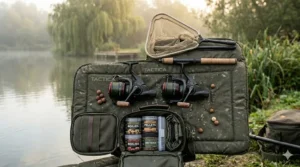
Maintenance Tips: Keeping Your Compact Reel in Peak Condition
Proper maintenance extends the life of compact carp reels dramatically and ensures reliable performance when you’re playing the fish of a lifetime. Following these practical maintenance routines will keep your reels operating smoothly for many seasons.
Post-Session Cleaning: After every session—especially if you’ve fished in muddy or weedy conditions—wipe down the reel body with a damp cloth. Pay particular attention to the bail arm hinge, line roller, and drag adjustment knobs where dirt accumulates. For reels that have been dunked or exposed to heavy rain, allow them to dry thoroughly before storage, ideally with the drag loosened to prevent compression of the washers.
Line Roller Maintenance: The line roller bears the brunt of wear during fishing, particularly when playing powerful fish. Every few sessions, add a tiny drop of reel oil to the line roller bearing. This prevents friction from building up and ensures smooth line flow during casts and retrieves. Quality line rollers should spin freely when flicked with your finger—if yours doesn’t, it needs cleaning and lubrication.
Drag Servicing: Annual drag servicing proves essential for maintaining smooth, reliable performance. Remove the spool (consult your reel’s manual for specific instructions), clean the drag washers with a soft cloth, and apply a thin film of drag grease specifically designed for fishing reels. Regular automotive grease proves too thick and can make the drag sticky; proper reel grease remains smooth even under the heat generated during sustained pressure.
Bail Arm Care: Check the bail arm spring tension regularly. A weak spring might not fully engage the bail arm, leading to frustrating tangles during casting. Quality compact reels feature robust bail arm mechanisms, but they still benefit from occasional inspection. If the bail arm feels loose or doesn’t snap shut crisply, it might need adjustment or replacement.
Storage Practices: When storing compact reels for extended periods, back off the drag completely to prevent compression of the drag washers. Store reels in a dry environment away from direct sunlight, which can degrade plastics and seals over time. If possible, store them in reel cases or bags to prevent dust accumulation and accidental damage.
Line Management: Replace your mainline at least annually, or more frequently if you’re fishing regularly. Old line weakens and becomes brittle, increasing the risk of losing fish. When spooling new line, slightly overfill the spool initially (to about 2mm below the spool lip), then make several long casts to allow the line to bed in before removing the excess. This ensures optimal line capacity without overfilling.
Professional Servicing: Every 2-3 years, consider having your compact reels professionally serviced by a tackle shop or sending them back to the manufacturer. Professional servicing includes complete disassembly, cleaning, replacement of worn bearings, fresh lubrication throughout, and reassembly. For premium reels like the Daiwa Emcast BR LT or Shimano models, this investment proves worthwhile, extending the reel’s lifespan substantially.
Corrosion Prevention: Even graphite-bodied compact reels feature metal components—bail arms, handles, screws—that can corrode. After fishing in wet conditions, dry these components thoroughly. For anglers who regularly fish in adverse weather, a light spray of silicone-based lubricant on external metal parts provides additional corrosion protection.
Handle Maintenance: Folding handles require particular attention. The hinge mechanism can accumulate dirt and grit, making the folding action stiff. Clean this area regularly and apply a tiny drop of reel oil to keep the mechanism smooth. Check that the handle grips remain firmly attached—loose grips can be frustrating and potentially dangerous when playing powerful fish.
Signs of Required Servicing: Listen for grinding noises during retrieval, which indicate bearings need cleaning or replacement. Feel for roughness in the drag operation—smooth drags shouldn’t stick or jump. Watch for excessive line twist, which might indicate line roller problems. Address these issues promptly rather than letting them deteriorate.
UK Carp Fishing Regulations: What You Need to Know
Understanding UK carp fishing regulations ensures you fish legally and responsibly whilst supporting conservation efforts that protect our fisheries for future generations.
To legally fish for carp (or any freshwater fish) in England, Wales, and the Border Esk region of Scotland, anglers aged 13 or over must possess a valid Environment Agency rod licence. This fundamental requirement applies to all forms of freshwater fishing, including carp angling on commercial fisheries, estate lakes, rivers, and canals.
Rod Licences: Environment Agency rod licences can be purchased online via the Gov.uk official fishing licence portal, at Post Offices, or via telephone. Annual licences for coarse fishing typically cost around £30-£35 for adults, with discounted rates for seniors and free licences for juniors aged 13-16. Short-term licences (1-day and 8-day options) suit occasional anglers or those trying the sport.
Children under 13 do not need a licence, though licences for children aged between 13 and 16 are free—however you’ll still need to obtain a junior licence. You must always carry your rod fishing licence when fishing or you could be prosecuted and fined up to £2,500.
Venue Permissions: Beyond the Environment Agency rod licence, you need permission from the fishery owner or angling club to fish specific waters. Commercial fisheries typically sell day tickets or offer membership, with prices varying from £5-£20 per day depending on the venue and facilities. Syndicate waters and private estate lakes often require annual membership, sometimes with waiting lists for popular venues.
Close Season Regulations: For rivers, streams, and drains, the close season runs from 15 March to 15 June inclusive each year, and fishing for coarse fish including carp is not permitted during this period. This protects fish during their spawning period, supporting healthy fish stocks. However, there is no statutory close season for most stillwaters (lakes, ponds, commercial fisheries) and canals, allowing year-round fishing on these waters.
Rod Limits: A standard Environment Agency coarse fishing licence permits the use of up to two rods simultaneously. Many carp anglers prefer fishing with three rods, which requires purchasing an additional rod upgrade. Always verify the specific rod limits enforced by individual fisheries, as some venues impose their own restrictions regardless of your licence type.
Tackle Restrictions: You must not use any form of lead weight attached to a fishing line, other than those of 0.06g (size 8) or less, or of more than 28.35g (1 ounce). This regulation protects wildlife from lead poisoning. Many fisheries enforce additional tackle restrictions—barbless hooks, certain line types, or prohibited rigs—so always check venue rules before fishing.
Catch and Release: UK carp fishing operates primarily on a catch and release basis to ensure fish population sustainability. Research from Natural England on freshwater fisheries management demonstrates that proper catch and release practices contribute significantly to maintaining healthy carp populations. Anglers are expected to return all carp caught to the water unharmed. This requires proper fish care—using unhooking mats, keeping fish in the water as much as possible during unhooking and photography, and using appropriate-sized landing nets.
Invasive Species and Biosecurity: UK regulations include strict measures to prevent the spread of invasive species and diseases. The Environment Agency actively monitors non-native species threats including Prussian carp and other invasive fish that can harm native populations. Anglers are required to follow biosecurity measures, such as thoroughly drying and cleaning their equipment between fishing sessions. Never transfer fish, plants, or water between venues, and report suspected invasive species to the Environment Agency at [email protected] or call 0800 80 70 60.
Night Fishing: Some waters restrict or prohibit night fishing to protect local environments and minimise disturbances. Always verify night fishing rules for your chosen venue, as unauthorised night fishing can result in immediate expulsion from the fishery and potential bans.
By adhering to these regulations and practicing responsible angling, UK carp fishers contribute to the sustainability of this wonderful sport whilst enjoying productive and legal fishing sessions.
Frequently Asked Questions
❓ What size compact reel is best for 9ft stalking rods?
❓ Do I need a freespool reel for UK carp fishing?
❓ How much line capacity do I actually need for estate lake fishing?
❓ What's the difference between compact and mini big pit reels?
❓ Can compact reels handle large UK carp over 30lb?
Conclusion: Choosing Your Perfect Compact Companion
The compact carp reel market in 2026 offers brilliant options across every price point, and selecting the right model transforms your mobile fishing experience. After extensive testing and research, the Nash Dwarf Big Pit Compact emerges as my top recommendation for most UK anglers. Its exceptional retrieve rate (103cm per turn), powerful 12kg drag, and solid Nash engineering justify the £65-70 investment for serious mobile anglers.
Budget-conscious anglers shouldn’t overlook the Sonik Xtractor+ Specialist FS 4000 at under £45. It delivers freespool facilities, a spare spool, and reliable performance that punches well above its modest price tag. For stalking specialists demanding the ultimate in lightweight performance, the Daiwa 19 Emcast BR LT 4000-C at 320g represents the pinnacle of compact reel engineering, though the premium price (£85-95) requires serious commitment.
The versatility of modern compact reels means you don’t sacrifice performance for portability. Whether you’re stalking wary carp on intimate estate lakes, fishing tight swims on pressured commercials, or roaming vast gravel pits with short rods, there’s a compact reel perfectly suited to your angling approach.
When selecting your compact reel, match the specifications to your primary fishing style rather than chasing the “best overall” model. Stalking specialists prioritise weight and retrieve rate; session anglers need freespool reliability; budget buyers focus on value and durability. Every reel reviewed here excels in specific scenarios—understand your requirements, and the right choice becomes obvious.
The investment in quality compact carp reels pays dividends season after season. Proper maintenance extends their lifespan considerably, and the confidence they inspire when you’re playing powerful fish proves invaluable. Whether you’re upgrading from budget tackle or adding specialised reels to your collection, compact models have earned their place in every modern UK carp angler’s arsenal.
Recommended for You
- Shimano vs Daiwa Carp Reels: 7 Best UK Models Tested 2026
- 7 Best Budget Big Pit Reels Under £100 UK 2026
- 7 Best Big Pit Reels 2026 | Top Rated Distance Casting UK
Disclaimer: This article contains affiliate links. If you purchase products through these links, we may earn a small commission at no additional cost to you. Prices shown are approximate and may vary.
✨ Found this helpful? Share it with your mates! 💬🤗
