
In This Article
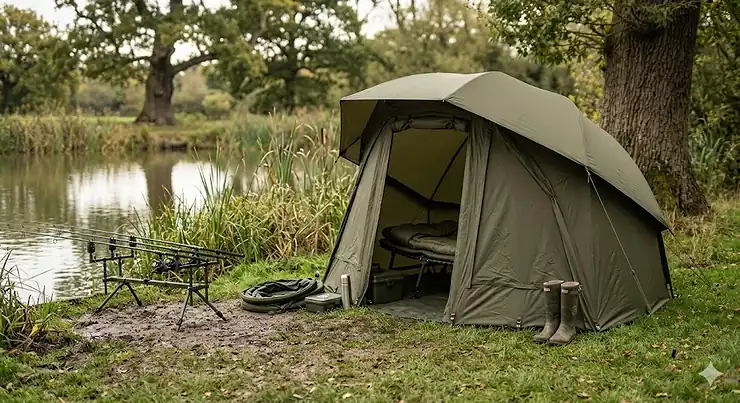
Anyone who’s spent a damp October afternoon on the banks of a Midlands reservoir knows the peculiar torture of British fishing weather. One minute you’re bathed in watery sunshine, the next you’re being pelted by horizontal rain that somehow finds every gap in your waterproofs. It’s precisely this unpredictability that’s driven the rise of brolly systems — the Swiss Army knife of fishing shelters.
Unlike traditional bivvies that take ages to pitch and even longer to pack away when you’re racing against an incoming storm, the best brolly systems deploy in under two minutes and adapt to whatever the British climate throws at you. I’ve watched seasoned carp anglers abandon their beloved two-man bivvies in favour of modular brolly systems that offer something far more valuable than extra space: flexibility. When the Met Office reports that the UK experienced its eighth wettest winter on record in 2025/26, with southern England recording 58% above average rainfall, having shelter that sets up quickly whilst your bait’s still in prime position becomes rather important.
What makes brolly systems particularly clever is their convertible nature. Start with just the canopy for a short morning session, add storm poles when the wind picks up after lunch, zip on side panels when the drizzle sets in by teatime, and you’ve essentially got three different shelters without moving from your swim. This modular approach means you’re carrying less weight between swims — something your back will thank you for after a day stalking the margins — whilst still having the protection of a full bivvy when conditions demand it. The market’s responded with increasingly sophisticated designs, and in 2026, the choice has never been better for UK anglers seeking that sweet spot between mobility and protection.
Quick Comparison: Top Brolly Systems at a Glance
| Model | Size | Setup Time | Best Feature | Price Range | Best For |
|---|---|---|---|---|---|
| NGT XPR 60″ Shelter System | 152cm | 2-3 mins | Budget-friendly complete package | £60-£80 | Beginners, occasional anglers |
| Fox EOS 60″ Brolly System | 152cm | Under 2 mins | Premium build quality | £180-£220 | Serious anglers, frequent sessions |
| Trakker Tempest Brolly V2 | Various | 2 mins | External rib design for maximum space | £150-£200 | Mobile anglers, stalking |
| Trakker MC-60 Brolly | 152cm | 90 seconds | Ultra-compact pack size | £130-£170 | Roving anglers, minimal kit |
| Tronixpro Beach Brolly 50″ | 127cm | 2 mins | Nubrolli setup option | £50-£70 | Sea anglers, beach fishing |
| JRC Contact Zip Brolly | 152cm | 3 mins | Clear window panel | £70-£100 | Value seekers, day sessions |
| Wychwood HD-MHR Brolly | 127cm | 2 mins | Space-saving boss design | £80-£110 | Compact swim anglers |
From the table above, it’s clear that the mid-range options around £130-£200 offer the best balance of features and durability for most UK anglers. The NGT and Tronixpro models represent excellent entry points if you’re testing the waters — literally — whilst the Fox EOS justifies its premium price through materials that’ll withstand years of British weather without the seam tape peeling off or zips jamming with silt. Budget buyers should note that stepping up from the sub-£80 bracket to something like the Trakker MC-60 buys you significantly better fabric hydrostatic head ratings (10,000mm versus 5,000mm), which translates to staying properly dry during those extended autumn drizzles rather than discovering damp patches creeping through by midnight.
💬 Just one click — help others make better buying decisions too! 😊
Top 7 Best Brolly Systems: Expert Analysis for UK Conditions
1. NGT XPR 60″ Shelter System — The Budget Champion
The NGT XPR 60″ has become something of a cult favourite amongst club anglers who fish weekend overnighters without wanting to remortgage for the privilege. What sets this apart from other budget offerings is that it actually arrives as a complete system — storm poles, groundsheet, and side panels all included in the box, which immediately saves you £30-£40 on accessories.
Built with 210D fabric and a basic 5,000mm hydrostatic head, this won’t match premium models in biblical downpours, but for typical British drizzle and overnight dew, it performs admirably. The 152cm (60-inch) canopy provides enough coverage for a standard bedchair and a small amount of tackle storage, though taller anglers over 6ft might find themselves strategically positioning their pillow to avoid condensation drips. The frame uses shock-corded fibreglass ribs that withstand gusty conditions better than you’d expect at this price point, though I’d recommend the supplied storm poles in anything above a stiff breeze.
UK buyers consistently praise the quick setup — one chap in Lincolnshire noted he’d pitched it fully in under four minutes whilst simultaneously watching his bite alarms, which speaks to the intuitive umbrella-style deployment. The olive green colourway blends nicely into most UK swims without screaming “budget kit” from across the lake.
Pros:
✅ Complete package including groundsheet and storm poles
✅ Genuine two-minute setup once you’ve done it twice
✅ Adequate protection for typical UK weather conditions
Cons:
❌ Lower hydrostatic head means occasional damp patches in prolonged rain
❌ Fibreglass poles heavier than premium alloy alternatives
Around £60-£80 on Amazon.co.uk makes this exceptional value for anglers starting out or those who fish occasionally. Not built for year-round hammering, but absolutely fit for purpose for weekend warriors.
2. Fox EOS 60″ Brolly System — Premium Performance
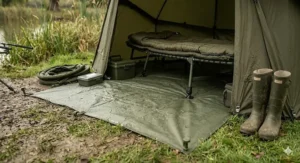
The Fox EOS 60″ represents what happens when a proper tackle company with decades of bivvy engineering decides to build the brolly system they’d actually want to use themselves. This is the one you’ll see dotted around commercial fisheries and estate lakes across the UK, instantly recognisable by its distinctive olive/khaki colourway and the fact that it’s still standing proud whilst cheaper alternatives have collapsed into sad puddles.
Fox spec’d this with a 10,000mm hydrostatic head on 210D ripstop fabric with fully taped seams throughout — the kind of construction that handles everything from Lakeland downpours to coastal winds without the fabric starting to delaminate after a season. The rib system uses aircraft-grade aluminium poles that cut the packed weight whilst maintaining rigidity, and there’s a clever tensioning system that lets you dial in the perfect pitch without faffing about with multiple guy lines. The 152cm coverage is generous, easily accommodating a wide bedchair plus tackle, and the optional infill panels (sold separately) transform it into a fully enclosed bivvy when the weather turns properly nasty.
What most UK anglers overlook about this model is the attention to detail in the design. The supplied groundsheet is properly heavy-duty PVC rather than the tissue-paper nylon you get with budget options, storm poles come as standard, and the zip quality means they’ll still work smoothly in three years’ time when you’re fumbling with cold fingers at 5am. Yes, it’s a significant investment at £180-£220, but work it out per session over five years of reliable service and the numbers make sense.
Pros:
✅ Premium materials engineered for long-term UK weather exposure
✅ Exceptional build quality that justifies the price over time
✅ Comprehensive accessory range for full customisation
Cons:
❌ Infill panels sold separately add £40-£60 to total cost
❌ Premium pricing puts it beyond casual anglers’ budgets
The Fox EOS sits in that £180-£220 bracket and represents genuine value rather than just expensive kit for the sake of it. For anglers who fish 20+ times a year in British conditions, this pays for itself through durability alone.
3. Trakker Tempest Brolly V2 — The Space Maximiser
Trakker’s Tempest Brolly V2 solves a problem that’ll be instantly familiar to anyone who’s sat in a traditional brolly and noticed how the internal ribs eat into your headroom and elbow space. By mounting the support system externally, Trakker’s freed up a startling amount of usable space within the same footprint — particularly noticeable when you’re trying to change into dry clothes without performing interpretive dance moves.
The frame construction uses an upgraded 10,000mm hydrostatic head material with a rejuvenated block design pattern that sheds water brilliantly whilst maintaining breathability — critical for overnight sessions where condensation becomes your unexpected companion by 3am. Anti-twist poles mean the whole structure stays put even when Welsh winds are having a proper go at moving it, and the modular design lets you run it as a basic brolly, add a solid infill panel, or install the insect mesh option depending on the season and location.
UK reviewers consistently highlight how quickly this deploys despite the more complex external rib system. A carp angler from Cheshire mentioned pitching it in a sudden squall on a gravel pit, and having it up and guy-lined before his rods were properly soaked — that’s the kind of speed that matters when British weather changes mood faster than your teenager. The pack-down size is impressively compact given the internal space, slipping into a typical rod quiver without drama.
For mobile anglers who stalk around lakes or switch swims frequently, the combination of space and portability makes this rather special. The £150-£200 price point positions it perfectly between budget and premium options.
Pros:
✅ External rib design genuinely increases usable internal volume
✅ Quick deployment with anti-twist pole stability
✅ Excellent modular accessory range including mozzi panels
Cons:
❌ Optional accessories add up quickly if you want full customisation
❌ Slightly heavier than ultra-compact alternatives
The Trakker Tempest V2 typically runs £150-£200 depending on whether you’re catching sales. Worth every penny for anglers who value interior space and weatherproof reliability.
4. Trakker MC-60 Brolly — The Ultra-Compact Champion
When Trakker designed the MC-60, they clearly had roving anglers in mind — the sort who’d rather carry one less rod than lug around unnecessary bulk between swims. This brolly packs down so compactly that it genuinely fits in a single rod quiver holdall, which sounds trivial until you’re walking the margin of a 50-acre reservoir in search of showing fish whilst carrying everything you need for a quick session.
Despite the diminutive pack size, the deployed 152cm (60-inch) oval canopy provides proper coverage for a bedchair and essential tackle. The secret lies in Trakker’s modular approach: the basic setup is lightweight and lightning-quick to pitch, then you add optional elements — three-quarter groundsheet, infill panel, insect mesh, centre pole — based on conditions and session length. The upgraded 10,000mm hydrostatic head material means you’re not sacrificing weather protection for portability, which is rather the point.
Setup genuinely takes under two minutes once you’ve internalised the rhythm, and the lightweight aluminium frame includes a clever adjustment system that maintains tension without requiring a degree in engineering. UK anglers particularly appreciate how the compact pack means you can stash it in your car boot alongside other kit rather than it dominating the entire boot space like traditional bivvies tend to.
The optional accessories deserve mention — whilst sold separately, they’re intelligently designed to integrate seamlessly. The centre pole adds significant stability in exposed swims, something you’ll appreciate on windswept gravel pits. At £130-£170, this represents excellent value for the mobile angling brigade.
Pros:
✅ Genuinely compact pack size enables proper mobile fishing
✅ Upgraded 10,000mm fabric provides serious weather protection
✅ Modular system lets you build up as conditions require
Cons:
❌ Accessories sold separately (though this enables customisation)
❌ Smaller profile than full 60″ models in competitors’ ranges
The Trakker MC-60 typically sits around £130-£170, representing that sweet spot where quality meets value for anglers who prioritise mobility.
5. Tronixpro Beach Brolly 50″ — The Coastal Specialist
The Tronixpro Beach Brolly addresses a specific challenge that sea anglers know all too well: traditional carp brollies excel on flat, soft ground but struggle on pebble beaches and shingle where you need different anchoring solutions. This 127cm (50-inch) shelter uses a distinctive Nubrolli setup style that positions the main pole at the rear rather than centre, creating more usable space whilst providing better stability in coastal winds.
Built from 210D fabric with taped seams and a steel frame, the construction prioritises wind resistance over minimalist weight — sensible when you’re fishing exposed beaches where gusts can hit 40mph without warning. The pocketed flaps around the perimeter are particularly clever: fill them with pebbles, sand, or rocks, and you’ve created anchoring points that work where traditional pegs simply won’t bite. The 80cm ground spike features a metal point designed specifically for penetrating compacted sand and shingle.
UK sea anglers praise the thoughtful design touches: side panels that actually keep horizontal rain out rather than flapping uselessly, a footprint that’s stable without requiring a small mortgage’s worth of banksticks and storm poles, and a pack-down that fits sensibly alongside other beach tackle. Whilst the black colourway with red Tronixpro branding might stand out at a traditional carp lake, it’s perfectly appropriate for coastal work and adds a nice visual marker when you’re fishing a long stretch of beach.
At £50-£70, this represents exceptional value for beach and shingle fishing, though coarse anglers fishing sheltered venues might prefer the additional features of a traditional carp brolly.
Pros:
✅ Nubrolli rear-pole design maximises usable space
✅ Weighted pockets work brilliantly on beaches and shingle
✅ Budget-friendly pricing for coastal-specific features
Cons:
❌ Heavier steel frame less suited to mobile freshwater fishing
❌ 50-inch coverage smaller than standard carp brollies
Around £50-£70 makes the Tronixpro a smart investment for dedicated sea anglers or those who split time between fresh and saltwater venues.
6. JRC Contact Zip Brolly — The Clear Window Innovator
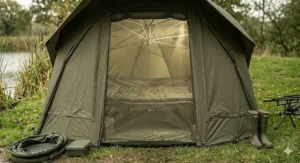
JRC’s Contact Zip Brolly brings something genuinely useful to the table with its clear window infill panel — a feature that sounds gimmicky until you’ve spent a long night session repeatedly unzipping panels to check indicators, disturbing your carefully-maintained shelter temperature each time. The clear PVC window lets you monitor rods without compromising weather protection, whilst the zip-out design means you can remove it entirely for warmer sessions.
The 152cm canopy uses decent quality 210D material, and whilst the hydrostatic head rating isn’t published (always slightly suspicious), UK customer reviews suggest it handles typical British rain competently without breakthrough. The shelter comes with a proper groundsheet and four storm pole attachment points, providing adequate stability in breezy conditions. Setup follows the standard brolly approach and takes around three minutes including groundsheet placement.
Where this particularly appeals to UK anglers is the value proposition. At £70-£100, you’re getting features typically reserved for models costing half as much again. The clear window panel alone would retail for £20-£30 as an aftermarket addition, so having it integrated makes financial sense. Build quality sits firmly in the “adequate” category rather than “exceptional” — this won’t outlast a Fox EOS through five years of weekly hammering, but for anglers fishing monthly rather than weekly, it represents sensible spending.
Day session anglers particularly appreciate the quick-access window feature, as do overnight anglers fishing commercial venues where you’re not battling extreme weather but still want proper shelter.
Pros:
✅ Clear window panel provides rod monitoring without heat loss
✅ Complete package including groundsheet and storm poles
✅ Strong value in the mid-budget bracket
Cons:
❌ Build quality a step below premium brands
❌ Limited information on fabric specifications
The JRC Contact typically retails around £70-£100, offering practical innovation at a price point that won’t require justification to understanding partners.
7. Wychwood HD-MHR Brolly — The Swim-Optimised Solution
Wychwood’s HD-MHR tackles an often-overlooked challenge: fishing swims with limited space behind your setup. The space-saving boss design means the brolly sits closer to your rods without requiring excessive rear clearance, making this ideal for swims with trees, bushes, or steep banks directly behind you — situations common on mature British estate lakes and canal stretches.
The 127cm (50-inch) profile provides adequate coverage for solo anglers with standard bedchairs, and the inclusion of storm poles (total weight 3.75kg) means you’ve got proper stabilisation sorted from the box. The construction uses reliable materials without venturing into premium territory, positioning this as a practical workhorse rather than a flagship statement piece.
UK anglers fishing compact swims consistently highlight how the boss design eliminates the frustrating dance of trying to pitch traditional brollies where there’s insufficient rear space. Setup remains straightforward, and the compact 50-inch profile means it’s easier to manoeuvre into awkward swims than full-size alternatives. The weight isn’t quite in the ultralight category, but 3.75kg including storm poles represents reasonable portability.
At £80-£110, this occupies sensible middle ground for anglers whose fishing venues dictate space-efficient shelter solutions.
Pros:
✅ Boss design enables pitching in constrained swims
✅ Storm poles included in base package
✅ Compact 50-inch profile manoeuvres easily
Cons:
❌ Smaller coverage than standard 60-inch models
❌ Weight slightly higher than minimalist alternatives
The Wychwood HD-MHR runs around £80-£110, representing targeted value for anglers facing specific swim constraints on their regular venues.
Real-World Scenarios: Matching Brolly Systems to UK Fishing Styles
The Weekend Warrior (Occasional Sessions, Budget-Conscious)
If you’re fishing 6-12 times annually — mostly spring through autumn on local club waters — the NGT XPR 60″ or Tronixpro Beach Brolly makes perfect sense. You don’t need bulletproof construction that’ll withstand five years of weekly punishment; you need adequate protection that sets up quickly when you’ve only got 24 hours on the bank. Budget around £60-£80, and you’ll have a complete system that handles typical British weather without requiring you to explain significant expenditure to the household finance committee.
The Mobile Stalker (Roving Between Swims, Minimal Kit)
Anglers who walk miles searching for showing fish need the Trakker MC-60 or Trakker Tempest V2 — models that pack genuinely small whilst still providing proper shelter when you settle into a productive swim. The ability to carry everything in a single rod quiver changes how you approach fishing, letting you respond to opportunities rather than being anchored to one spot because moving your kit would take an hour. Expect to invest £130-£200, but consider it buying freedom of movement.
The Serious Session Angler (Regular Overnighters, Quality Matters)
When you’re banking 30-50+ nights annually on syndicates and day-ticket waters across the UK, the Fox EOS 60″ becomes a sensible long-term investment rather than an expensive indulgence. Calculate the cost per session over three years of reliable service — approximately £2-£3 per overnight — and suddenly that £180-£220 price tag looks like value engineering rather than premium pricing. You want materials that’ll handle British weather year after year without the seams tape peeling, zips jamming, or fabric starting to leak at precisely 2am in November.
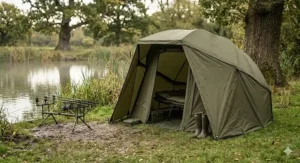
How to Choose the Best Brolly System for UK Conditions
Selecting the right brolly system starts with honest assessment of your fishing pattern rather than aspirational thinking about how often you’d like to fish. Here’s the decision framework that actually works:
1. Calculate Your Annual Sessions
Fishing fewer than 15 times yearly? Focus on the £60-£100 bracket (NGT, JRC, Wychwood). Between 15-40 sessions? The £130-£170 mid-range (Trakker MC-60, Tempest) offers the best value-to-durability ratio. Beyond 40+ sessions? Premium options (Fox EOS at £180-£220) cost less per session over three years than replacing budget kit annually.
2. Assess Your Typical Weather Exposure
Check the Met Office data: southern England saw 58% above-average rainfall in winter 2025/26, whilst Scotland recorded 117% of average in some months. If you fish year-round in exposed locations, prioritise 10,000mm+ hydrostatic head ratings — anything less becomes damp patches by midnight during extended rainfall. Fair-weather anglers can manage with 5,000mm ratings and save £50-£80 on purchase price.
3. Match Size to Your Swim Style
Standard 60-inch (152cm) models accommodate most bedchairs comfortably. Taller anglers or those carrying extensive tackle need to physically check headroom and width — many UK retailers allow pre-purchase inspection. If you regularly fish compact swims with limited rear space (common on mature estate lakes and canal stretches), the 50-inch models with boss designs (Wychwood HD-MHR, Tronixpro) prevent frustrating pitch problems.
4. Consider Your Transport and Mobility Needs
Walking between swims or using public footpaths? Packed weight and dimensions matter enormously. The Trakker MC-60’s ability to fit in a single rod quiver genuinely enables mobile fishing. Car-based anglers can manage bulkier options without penalty, potentially saving £40-£60 on compact-specific engineering.
5. Factor in British-Specific Requirements
UK venues often prohibit excessive bankside furniture or require swift departure for matches. Quick-pitch brollies (under 3-minute setup) align better with club rules and British fishing culture than elaborate bivvy systems requiring 20 minutes of guy-line adjustment. Additionally, the Environment Agency’s guidelines for minimal environmental impact on certain fisheries favour lightweight, quick-remove shelters over heavy bivvies that compress vegetation.
Common Mistakes When Buying Brolly Systems
Assuming Bigger Always Equals Better
The largest brolly on offer isn’t automatically the wisest choice. Oversized shelters create wind resistance challenges on exposed UK reservoirs and gravel pits, requiring excessive storm pole arrangements that defeat the point of having a quick-pitch system. Match canopy size to your actual shelter needs — bedchair length plus 30cm clearance either end — rather than theoretical maximum capacity.
Ignoring Hydrostatic Head Ratings
That £45 “bargain” brolly with unspecified fabric waterproofing becomes expensive when you’re sitting in damp clothing at 11pm whilst proper rain tests its inadequacies. UK weather demands minimum 5,000mm ratings for fair-weather use, 10,000mm+ for year-round reliability. The £30-£40 premium for better materials pays for itself the first time you stay genuinely dry through a three-hour downpour.
Buying for Aspirational Fishing Frequency
You tell yourself you’ll fish 40 times this year, so premium kit makes sense. Reality delivers 12 sessions, making that £200 brolly an expensive dust-gatherer. Be brutally honest about past-year frequency, then spec accordingly. Better to spend £70 on kit you’ll actually use than £180 on gear that makes you feel guilty about infrequent deployment.
Overlooking UK-Specific Compatibility
Some brollies sold through Amazon.co.uk are actually designed for continental European or US markets, with sizing and features that don’t quite align with British fishing culture. Verify that accessory ranges (groundsheets, infill panels, mozzi mesh) are actually available for UK purchase rather than requiring expensive imports with potential post-Brexit duty additions.
Neglecting Setup Practice
The two-minute pitch claim assumes you’ve practiced the deployment sequence beforehand. Attempting your first setup in fading light whilst rain hammers down guarantees frustration and potentially bent poles. Spend 20 minutes in the garden mastering the mechanism before your first proper session — your blood pressure will thank you.

Benefits vs Traditional Bivvies: Why Brollies Win for Mobile Fishing
The evolution from fixed bivvy setups to modular brolly systems reflects changing patterns in UK angling, particularly the rise of mobile, observation-based fishing pioneered by carp specialists but now spreading across disciplines. Understanding what brollies genuinely offer versus traditional bivvies helps make the right choice for your fishing approach.
| Feature | Brolly Systems | Traditional Bivvies | Winner for UK Conditions |
|---|---|---|---|
| Setup Time | 2-5 minutes | 10-20 minutes | Brolly (critical when weather changes rapidly) |
| Pack-Down Speed | 3-5 minutes | 15-25 minutes | Brolly (enables swim changes without losing prime time) |
| Weather Adaptability | Modular (add/remove panels) | Fixed configuration | Brolly (British weather changes hourly) |
| Packed Weight/Bulk | 3-6kg, compact | 8-15kg, bulky | Brolly (matters for mobile anglers) |
| Maximum Weather Protection | Good to Very Good | Excellent | Bivvy (winter extreme conditions) |
| Cost (Entry Level) | £60-£100 | £150-£250 | Brolly (lower barrier to entry) |
From this comparison, brollies excel for spring-through-autumn fishing where conditions vary throughout sessions, and for anglers who move between swims to find fish rather than waiting in one spot. The rapid deployment advantage becomes critical when you spot fish showing 200 metres away — you can relocate entirely in under 10 minutes rather than watching the opportunity pass whilst you’re still dismantling a traditional bivvy. Traditional bivvies retain advantages for dedicated winter fishing or multi-day sessions where maximum insulation and weather-sealing justify the setup investment.
The British climate particularly favours brolly versatility. Met Office data shows UK weather patterns can shift from clear spells to heavy rain within 30 minutes, especially in transitional seasons. A modular brolly lets you adapt instantly — zip on side panels when the drizzle starts, add storm poles when the wind picks up — without packing everything away and starting fresh. That responsiveness aligns perfectly with how British anglers actually fish: opportunistically, adapting to conditions, prioritising time with lines in the water over extended bankside construction projects.
Long-Term Cost Analysis: Investment vs Running Costs in UK Fishing
When you’re considering brolly systems, the sticker price tells only part of the story. British anglers benefit from looking at total cost of ownership over realistic timeframes, particularly given how our weather accelerates wear on cheaper materials.
Budget Tier (£60-£100): The Replacement Cycle Reality
Models like the NGT XPR or JRC Contact offer excellent initial value, but UK weather exposure typically delivers 2-3 seasons of reliable service before fabric degradation or zip failures require replacement. For anglers fishing 15 times annually, that’s approximately £1.30-£2.20 per session over three years including one mid-life replacement. Perfectly acceptable economics if you’re fishing occasionally or testing whether you’ll actually stick with regular angling.
Mid-Range (£130-£170): The Sweet Spot for Most
The Trakker options hit optimal value for UK conditions. Quality materials withstand 4-5 years of regular use (20-30 sessions annually) without significant performance degradation. Work that out: £170 ÷ 150 sessions = £1.13 per session with no replacement needed. Factor in retained resale value (£60-£80 after five years) and you’re under £1 per session. This tier makes financial sense for committed anglers.
Premium (£180-£220): Session-Cost Champions
The Fox EOS seems expensive until you calculate £200 ÷ 300 sessions (five years at 60 nights annually) = 67p per session. Add resale value of £80-£100 and you’re around 50p per session for genuinely premium shelter. For serious anglers, this represents the lowest long-term cost despite highest initial outlay.
Hidden Costs UK Buyers Overlook
Accessories accumulate: groundsheets (£15-£30), infill panels (£30-£50), mozzi mesh (£20-£35), skull caps (£40-£60), overwraps (£50-£80). Budget models requiring more accessories to match mid-range functionality can end up costing similar amounts. Factor in replacement pegs and storm poles (British wind destroys cheap versions within seasons) and transport bags (originals wear out surprisingly quickly). Additionally, post-Brexit, some accessories from EU manufacturers carry import duties if sourced from European retailers, adding 10-15% to costs.
UK Regulations and Fishing Shelter Compliance
Whilst Environment Agency rod licensing requirements are straightforward (£30-£45 annually for coarse/trout fishing, available at www.gov.uk/fishing-licences), British anglers must navigate additional shelter-related regulations that vary by venue type and region.
Fishery-Specific Rules
Many UK day-ticket venues and syndicates impose maximum bivvy footprint restrictions (typically 2.5m × 2.5m including guy lines) to prevent overcrowding and protect bankside vegetation. Brolly systems naturally comply better than full bivvies, though checking specific venue rules before investing prevents discovering your new kit violates local regulations. Some prestigious venues prohibit bright colours or non-camouflage patterns to maintain aesthetic standards — relevant when choosing between standard olive and more distinctive colourways.
Planning and Access Considerations
Wild camping regulations affect overnight fishing on certain waters, particularly in Scotland where different access laws apply compared to England and Wales. Understanding whether your intended venues allow overnight stays influences whether to invest in full shelter systems versus simple day brollies. Canal & River Trust waters often prohibit overnight fishing or require specific permits, information available through their permit system.
Environmental Impact Requirements
The Environment Agency and various fishery trusts increasingly emphasise minimal environmental impact on sensitive venues. Quick-pitch, lightweight brollies that avoid extensive ground disturbance align with these requirements better than heavy bivvies requiring substantial pegging arrays. Some Sites of Special Scientific Interest (SSSI) with fishing rights impose additional restrictions on shelter equipment to protect flora and fauna.
Local Authority Variations
Regional councils occasionally impose specific rules on certain waters under their jurisdiction. Scottish fishing follows different regulatory frameworks than English venues, whilst Welsh waters may carry additional language requirement signage. Northern Ireland maintains separate licensing systems entirely. Researching specific venue requirements prevents discovering incompatibility after purchase.
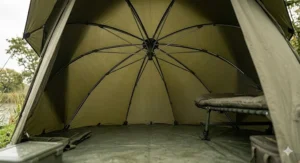
FAQ: Your Brolly System Questions Answered
❓ What size brolly system do I need for UK fishing?
❓ Are brolly systems better than bivvies for British weather?
❓ How long does a quality brolly system last in UK conditions?
❓ Do I need special accessories for UK weather conditions?
❓ Can I use brolly systems on UK beaches and saltwater venues?
Conclusion: Finding Your Perfect Brolly System Match
The best brolly system for your fishing isn’t the most expensive option or the one endorsed by sponsored anglers in magazine advertisements — it’s the model that genuinely aligns with how you actually fish British waters, not how you imagine you’ll fish. After reviewing the current UK market and considering real-world performance in our peculiar climate, several clear conclusions emerge.
For occasional anglers and those testing whether regular fishing suits their lifestyle, the NGT XPR 60″ at around £60-£80 delivers everything needed without financial risk. You’re getting adequate weather protection, quick setup, and included accessories that more expensive kits charge separately. When you’ve confirmed that fishing has properly hooked you, upgrade to mid-range options knowing precisely what features matter to your approach.
Mobile anglers and those fishing varied venues throughout the UK should seriously consider the Trakker MC-60 or Tempest V2 in the £130-£200 bracket. The combination of pack-size efficiency, genuine weather protection (10,000mm hydrostatic head), and modular adaptability addresses British fishing realities brilliantly. You’re paying for engineering that enables opportunistic fishing rather than being anchored to one spot because your shelter requires elaborate setup procedures.
Serious session anglers banking 30+ nights annually on quality venues justify the Fox EOS investment at £180-£220 through simple longevity economics. When worked out per session over five years of reliable service, premium materials cost less than budget replacements whilst delivering significantly better British weather performance. The frustration of damp seams at 2am during November downpours costs far more than the initial price premium.
Whatever you choose, match the investment to demonstrated fishing frequency rather than aspirational plans, prioritise genuinely useful features over marketing specifications, and remember that the best shelter is the one that’s actually deployed on the bank rather than gathering dust in the garage because it’s too much bother to set up properly.
Recommended for You: Essential UK Fishing Guides
- 7 Best Fishing Umbrellas Under £100 UK 2026 | Budget Brollies
- Best Fishing Brollies UK: 7 Top Shelters for 2026
- 7 Best Bivvy Overwraps UK 2026: Winter Fishing Shelter Guide
Disclaimer: This article contains affiliate links. As an Amazon Associate, I earn from qualifying purchases. If you purchase products through these links, we may earn a small commission at no additional cost to you.
✨ Found this helpful? Share it with your mates! 💬🤗
