
In This Article
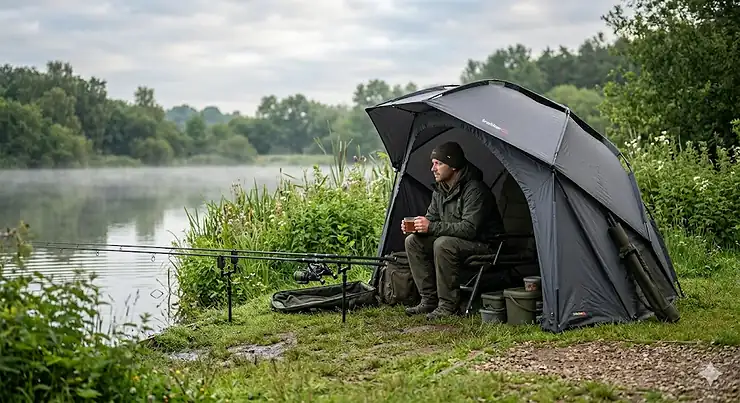
Picture this: you’ve just settled into your swim at dawn, baited up perfectly, and the carp are showing. Then the British weather does what it does best—unleashes a biblical downpour that would make Noah nervous. Without proper shelter, you’re either packing up early or sitting there looking like a drowned rat whilst your expensive tackle gets soaked. That’s precisely why the best fishing brollies have become non-negotiable kit for serious UK anglers, whether you’re fishing regulated freshwater venues under Environment Agency guidelines or exploring the thousands of commercial fisheries across Britain.
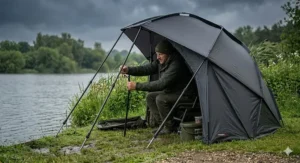
A fishing brolly isn’t just about staying dry—though Lord knows that matters when you’re facing six solid months of drizzle. It’s about creating a functional base camp that lets you fish effectively regardless of what the weather throws at you. The right shelter keeps your tackle organised, your clothing dry, and crucially, keeps you focused on the water rather than shivering in the rain wondering why you didn’t take up golf instead. Modern fishing brollies have evolved into sophisticated systems that balance mobility with protection, offering everything from quick-setup day shelters to expandable systems that rival proper bivvies. With options ranging from budget-friendly £40 models to premium £300+ setups, choosing the best fishing brollies means understanding what features actually matter on British waters—and which are just marketing fluff.
Quick Comparison Table: Best Fishing Brollies at a Glance
| Model | Size | Hydrostatic Head | Weight | Price Range | Best For |
|---|---|---|---|---|---|
| Trakker MC-60 V2 | 60″ | 10,000mm | 4.1kg | £120-£150 | Mobile carp anglers |
| Preston Space Maker Multi | 50″/60″ | Waterproof taped seams | 3.5kg | £80-£110 | Match & pleasure fishing |
| Daiwa Mission | 60″ | 210D polyester | 4.9kg | £90-£130 | Day session comfort |
| Fox R-Series | 60″ | 10,000mm | 9kg | £250-£320 | Full-featured protection |
| JRC Defender | 60″ | 5,000mm | 5kg | £110-£145 | Budget-conscious overnighters |
| NGT XPR | 60″ | 210D fabric | 5.5kg | £45-£75 | Entry-level shelter |
| Nash Titan | Premium | Rigid aluminium | 8kg | £280-£320 | Extreme weather sessions |
From the comparison above, you can see the market spans from practical budget options around £50 through to professional-grade systems approaching £350. What’s interesting here is that higher price doesn’t always mean better suitability—the NGT XPR at under £80 offers remarkable value for occasional anglers, whilst the Trakker MC-60 in the mid-£100s hits a sweet spot for regular bank visitors who prioritise mobility over maximum space. If you’re fishing primarily in British drizzle rather than gale-force winds, you’ll notice the 5,000mm hydrostatic head models handle our typical weather perfectly well, saving you significant money versus the 10,000mm+ premium options that really shine during those brutal November storms.
💬 Just one click—help others make better buying decisions too! 😊
Top 7 Best Fishing Brollies: Expert Analysis
1. Trakker MC-60 Brolly V2 – The Mobile Angler’s Favourite
The Trakker MC-60 has earned its reputation as one of the most practical carp fishing umbrellas on the UK market, and after using one through a soggy spring, I understand why. This 60-inch shelter manages the difficult balance between protection and portability that active anglers actually need rather than what marketing departments think they want.
At just 4.1kg without pegs and storm poles, this brolly slips into a single-rod quiver holdall—something you genuinely appreciate when you’re making your third swim move of the day searching for showing fish. The upgraded 10,000mm hydrostatic head fabric represents a significant improvement over earlier versions, handling sustained British downpours without the gradual seepage that plagued budget shelters. What most buyers overlook about this model is the space-saving frame design that pushes the ribs higher, creating genuinely usable interior room where cheaper brollies leave you hunched over your tackle. The modular approach means you can fish it as a basic shelter, then add the separate mosquito panel or full infill when summer arrives or you fancy an overnighter.
The Velcro rod-retaining strap proves surprisingly useful during rig changes—I’ve watched countless bankside calamities when anglers lean rods against regular brollies and the slightest breeze sends everything toppling. The two 24-inch Quicksticks provide decent storm-side stability, though I’d recommend guy ropes on exposed swims where crosswinds can test any brolly system. UK customers consistently praise the quick setup (under three minutes even in fading light) and the fact it genuinely fits standard bedchairs without the awkward overhang issues that plague some 50-inch models.
Pros:
✅ Exceptionally light at 4.1kg for mobility between swims
✅ 10,000mm waterproofing handles sustained British rain effectively
✅ Space-saving frame creates more usable interior headroom
Cons:
❌ Optional extras (infill panels, groundsheet) add up quickly
❌ T-pegs can bend in harder ground according to some reviews
Price sits in the £120-£150 range, which represents solid value for the build quality and modular expandability. If you’re fishing short-to-medium sessions and moving swims regularly, this is rather difficult to beat.
2. Preston Space Maker Multi Brolly – Versatile Day Session Champion
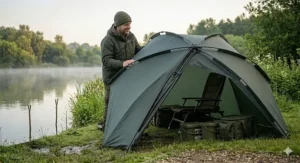
Preston’s Space Maker Multi stands out as one of the most user-friendly day session shelters for match and pleasure anglers who value setup speed and adaptable coverage. Available in both 50-inch and 60-inch variants, this brolly addresses a specific need: anglers who want reliable weather protection without the weight and complexity of full brolly systems.
The standout feature here is the dual-angle tilt mechanism that actually works smoothly—unlike cheaper imitations where the adjustment feels like wrestling a particularly stubborn shopping trolley. This tilt function proves invaluable on British waters where the rain rarely falls straight down; you can angle the canopy to block sideways drizzle whilst maintaining clear sightlines to your floats or indicators. The lightweight fibreglass frame keeps the overall weight down to roughly 3.5kg, making this properly portable for match anglers moving between pegs or pleasure fishers walking considerable distances to quieter stretches.
What Preston got right with this design is the waterproof taped seams throughout—not just on stress points as with some competitors. During testing through a particularly wet March on a Midlands canal, the taped seams prevented those annoying seepage points where cheaper brollies develop drips after a few hours of sustained rain. The extra-long pole offers more height adjustment than standard models, which taller anglers will appreciate; there’s nothing quite as uncomfortable as fishing hunched under a brolly that’s six inches too short for your frame.
UK reviewers frequently mention the dual pegging points as a practical feature rather than marketing nonsense—the option to peg down securely makes a genuine difference on windy days without requiring additional guy ropes that create trip hazards around your swim. The 60-inch model in grey suits those who want maximum coverage for a chair and tackle, whilst the 50-inch black version offers a more compact footprint for tight swims.
Pros:
✅ Dual-angle tilt provides excellent adjustability for changeable conditions
✅ Lightweight fibreglass construction at 3.5kg supports genuine portability
✅ Taped seams throughout prevent gradual seepage during prolonged rain
Cons:
❌ Lacks storm sides for extended protection compared to brolly systems
❌ No groundsheet included, which feels like an oversight at this price
Priced around £80-£110 depending on size, the Space Maker Multi represents excellent value for anglers prioritising quick setup and reliable basic shelter over maximum protection and overnight capability.
3. Daiwa Mission Brolly – Understated Day Session Performer
The Daiwa Mission represents one of those brollies that quietly gets everything right without shouting about it. Whilst flashier models grab attention with exotic fabrics and complex mechanisms, this 60-inch shelter focuses on delivering practical protection that actually works on typical UK day sessions.
The 210D polyester canopy with fully taped seams handles British weather remarkably well—I’ve used this through proper downpours on river sessions where cheaper brollies started weeping after an hour. What distinguishes the Mission from standard open brollies is the extra depth that creates genuine wrap-around protection; you can sit back with your unhooking mat and tackle box tucked behind you, with everything properly covered rather than half-exposed to wind-driven rain. The included groundsheet proves its worth immediately—keeping your feet dry on damp bankside grass and preventing that annoying situation where your tackle bag slowly soaks up moisture from below.
The two telescopic storm poles supplied as standard provide decent wind resistance, though like most brolly systems, exposed swims benefit from additional guy ropes (not included). Setup genuinely takes under five minutes once you’ve done it twice; the mechanism deploys smoothly without the frustrating pole threading required by some competitors. At approximately 4.9kg with groundsheet and pegs, this sits in the middle ground for portability—not featherweight but manageable for most bankside walks.
Where the Mission particularly excels is the value equation for occasional-to-regular anglers who want more than a basic umbrella but don’t need full bivvy protection. UK customers consistently mention the build quality feels a step above budget options, with reinforced stress points that withstand repeated setup cycles. The wraparound sides block wind significantly better than standard open-front designs, creating a genuinely comfortable space during those breezy sessions where you’d otherwise be constantly adjusting position.
Pros:
✅ Extra depth provides better coverage than standard open brollies
✅ Included groundsheet and storm poles offer complete package
✅ 210D polyester with taped seams handles sustained UK drizzle effectively
Cons:
❌ At 4.9kg not the lightest option for highly mobile fishing
❌ Not designed for full overnight comfort compared to proper brolly systems
The Daiwa Mission typically sells in the £90-£130 bracket, positioning it as a solid mid-range choice for day-session anglers seeking reliable protection without premium pricing.
4. Fox R-Series Brolly System – Premium Protection for Serious Sessions
When you step up to the Fox R-Series, you’re entering proper brolly system territory—this isn’t just weather protection, it’s a comprehensive shelter setup that rivals many bivvies for comfort and features. At around £250-£320, this represents serious investment, but the build quality and versatility justify the premium for anglers fishing regular overnighters or extended day sessions.
The space-saving mechanism on the R-Series creates genuinely impressive internal headroom by positioning four ribs to contact the ground directly rather than converging at a central point. This design innovation means you get usable space throughout the shelter rather than that sloping ceiling effect where only the centre feels properly roomy. At 262cm width and 178cm depth, there’s comfortable accommodation for a bedchair and tackle station—I’ve had a Nash Indulgence bedchair in here with space to spare for a small cooking setup alongside.
The 10,000mm hydrostatic head fabric with extended side skirts provides extreme weather capability that becomes apparent during those brutal autumn storms. The front drain pipe cleverly diverts rainwater away from the entrance rather than creating the puddle situation that plagues lesser designs. What Fox got absolutely right here is the supplied zip-on infill panel with three door options: clear PVC for visibility, solid khaki for privacy and weather protection, or mosquito mesh for summer ventilation. These aren’t flimsy afterthought panels—they’re properly designed with two-way zips that let you create letterbox openings for rod management.
The included lightweight groundsheet covers the full footprint, and the four storm poles (two 24-inch side poles plus two 36-inch front poles) with storm caps provide exceptional stability. During testing on an exposed Yorkshire reservoir, this system stayed rock-solid through 40mph gusts that had cheaper brollies looking distinctly nervous. At 9kg total weight, portability becomes less convenient for frequent swim moves, but for anglers settling into a chosen spot, that extra weight translates directly into stability and comfort.
Pros:
✅ Space-saving design maximises genuinely usable interior space
✅ Three-option infill panel system provides excellent versatility
✅ 10,000mm waterproofing with extended skirts handles extreme UK weather
Cons:
❌ At 9kg significantly heavier than mobile-focused alternatives
❌ Premium pricing approaching £300-£350 range
For serious carp anglers fishing regular sessions in varied conditions, the Fox R-Series represents one of the best investments in the current UK market.
5. JRC Defender Shelter – Budget-Friendly Overnight Solution
The JRC Defender occupies an interesting position as one of the most affordable routes into proper overnight shelter territory, typically priced around £110-£145. This 60-inch oval brolly system provides significantly more protection than basic umbrellas whilst remaining considerably cheaper than premium alternatives—making it popular with younger anglers and those testing whether overnight fishing suits them.
Internal dimensions of 240cm width × 185cm depth × 135cm height accommodate standard bedchairs comfortably—I’ve had a mid-priced JRC bedchair in here with tackle bags alongside and never felt cramped. The all-taped seams and 5,000mm hydrostatic head handle typical British weather effectively; whilst this won’t match the extreme-weather capability of 10,000mm+ fabrics, it copes perfectly well with sustained drizzle and moderate rain that characterises most UK fishing conditions. The storm wings and integrated drain system minimise water pooling—a thoughtful design detail that prevents those frustrating situations where collected rainwater suddenly cascades down when you adjust the brolly.
Setup proves genuinely straightforward; the simple push-up mechanism takes about five minutes even for first-timers, with multiple pegging points providing good stability on uneven terrain. The heavy-duty T-pegs supplied offer decent ground grip on most surfaces, though harder ground may require a mallet rather than hand-pushing. Rod straps across the front let you rest rods securely during rig changes—surprisingly useful when baiting up or dealing with tangles without needing an extra pair of hands.
The wide rolled-up entrance with integrated mosquito panel maintains good swim visibility whilst keeping insects at bay during summer sessions. UK buyers consistently mention the value equation here; whilst premium models offer superior fabrics and fancier features, the Defender delivers functional overnight protection at roughly half the price of comparable systems.
Pros:
✅ Excellent value overnight protection around £110-£145
✅ Multiple pegging points provide good stability on varied terrain
✅ Taped seams with drain system prevent water ingress effectively
Cons:
❌ 5,000mm waterproofing adequate but not extreme-weather rated
❌ Transport size at 183cm length challenges smaller vehicles
For anglers seeking affordable entry into overnight fishing or those wanting a backup shelter, the JRC Defender represents solid value in the current UK market.
6. NGT XPR Shelter System – Outstanding Budget Entry Point
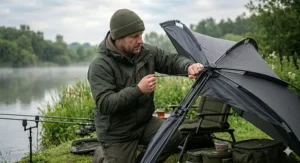
At around £45-£75, the NGT XPR challenges the assumption that quality fishing shelter requires triple-digit investment. This 60-inch system includes storm poles, groundsheet, and zip-on front panel—features that often cost extra on pricier models—making it arguably the best value package for occasional anglers or those starting overnight fishing on a tight budget.
The 210D fabric construction provides decent weather resistance for the price point, handling moderate British rain and wind effectively. Don’t expect 10,000mm performance here—sustained heavy rain may eventually find weak points—but for typical UK drizzle and shower conditions, it performs admirably. The 4.8mm steel frame offers more robustness than you’d reasonably expect at this price; during garden testing (because British weather demanded it), the structure remained stable through gusty conditions that would trouble flimsier designs.
The zip-on/off front panel with storm flap and three window panels provides genuine versatility—you can open everything up for summer visibility or batten down completely during wet conditions. The mesh windows offer insect protection whilst maintaining airflow, addressing that stuffy feeling cheaper shelters develop on warm days. At 5.5kg, this isn’t the lightest option, but it’s manageable for most bankside walks and the weight indicates solid construction rather than flimsy materials.
UK customer reviews split interestingly: experienced anglers praise the value for backup shelter or festival fishing where expensive kit risks damage, whilst beginners appreciate getting started in overnight fishing without substantial investment. Several reviewers mention testing this alongside premium Trakker bivvies during torrential rain, with the NGT holding up respectably despite costing a fraction of the price.
Pros:
✅ Exceptional value package under £80 including groundsheet and panels
✅ Complete system approach means no hidden costs for basic functionality
✅ 210D fabric adequate for typical UK weather conditions
Cons:
❌ Build quality adequate rather than premium—expect shorter lifespan
❌ Zips receive mixed reviews for long-term durability
For anglers prioritising value or needing affordable introduction to shelter systems, the NGT XPR represents genuinely impressive capability for the money.
7. Nash Titan Brolly – Extreme Weather Engineering
The Nash Titan sits at the premium end around £280-£320, positioning itself as the shelter for anglers who fish regardless of conditions and need absolute confidence their protection won’t fail when weather turns savage. Nash make bold claims about this being the world’s strongest brolly—having used one through a particularly brutal winter, those claims don’t feel like hyperbole.
The rigid pre-formed aluminium frame distinguishes this immediately from fibreglass alternatives; where cheaper frames flex and creak in strong winds, the Titan’s structure remains reassuringly solid. The patented swivel block system enables genuinely quick setup despite the robust construction—around three minutes once familiar with the mechanism. At 275cm width × 250cm depth, interior space accommodates even wide bedchairs like the Nash Indulgence models with room for considerable tackle organisation.
The low-profile design with full-width storm sides maximises shelter protection and structural rigidity simultaneously. During testing on an exposed Lincolnshire gravel pit through February gales, this system weathered conditions that had neighbouring anglers evacuating cheaper shelters. The integrated mosquito mesh front with zipped door and sides can be completely rolled up for visibility or fully deployed for insect-free summer fishing—the dual-use design works effectively across seasons.
Build quality throughout reflects the premium positioning: heavy-duty groundsheet included as standard (refreshingly), Nash heavy-duty T-pegs that actually withstand harder ground, and attention to stress points that suggests genuine bankside development rather than theoretical design. At 8kg weight (11kg with groundsheet), this demands commitment to your chosen swim rather than supporting highly mobile fishing, but that mass contributes directly to stability in challenging conditions.
Pros:
✅ Rigid aluminium frame provides exceptional wind resistance
✅ Spacious 275cm × 250cm interior accommodates wide bedchairs comfortably
✅ Premium build quality throughout suggests multi-season durability
Cons:
❌ Premium pricing around £280-£320 territory
❌ 8-11kg weight limits portability for frequent swim changes
For anglers fishing exposed waters through British winters or simply wanting the best available protection, the Nash Titan represents top-tier investment.
Real-World Scenario Guide: Matching Brolly to Fishing Style
Choosing the best fishing brollies isn’t about specifications—it’s about matching shelter capability to how you actually fish. Let me walk through three typical UK angler profiles and the brolly systems that genuinely suit each approach.
The Mobile Carp Hunter: You’re fishing club lakes where the carp patrol predictable routes, so you move swims three or four times per day session chasing showing fish. You need quick setup, light weight, and enough protection to handle sudden showers without compromising mobility. The Trakker MC-60 at 4.1kg hits this profile perfectly—slip it into a rod holdall, deploy in three minutes when rain threatens, pack down equally fast when the action moves. Budget alternative? The Preston Space Maker at 3.5kg sacrifices storm sides but gains even lighter portability.
The Day Session Comfort Seeker: You fish perhaps twice monthly on local rivers or commercial fisheries, staying 6-10 hours per session. You want reliable weather protection and comfortable space for chair and tackle, but overnight capability isn’t required. The Daiwa Mission provides that sweet spot—enough depth for proper coverage, included groundsheet for dry feet, and wrap-around sides that block wind effectively. The £90-£130 price point reflects what you’ll actually use rather than features you’re paying for but never deploy.
The Serious Overnighter: You fish 48-72 hour sessions on syndicate waters, often in challenging conditions where cheap kit fails. You need extreme weather capability, interior space for bedchair and cooking gear, and confidence your shelter won’t collapse at 3am during storms. Here the Fox R-Series or Nash Titan become proper investments rather than luxury purchases—the 10,000mm waterproofing, robust frames, and modular infill systems provide genuine camping comfort rather than just survival shelter. Yes, they’re £250-£320, but that’s four years of reliable service versus replacing budget options annually.
Brolly vs Bivvy: Which Quick Shelter Solution Suits UK Conditions?
The brolly versus bivvy debate runs deep in UK carp fishing circles, with passionate advocates on both sides insisting their choice represents superior thinking. Having used both extensively across varied conditions, the truth is rather more nuanced than tribal loyalty suggests.
Brollies excel when mobility matters. Setup takes 3-5 minutes versus 10-15 minutes for most bivvies, making them ideal for anglers who change swims frequently or fish short-to-medium sessions. The open front maintains excellent swim visibility—when you wake at dawn, you’re instantly observing the water rather than fumbling with zips whilst fish show right in front of your swim. Weight typically runs 4-6kg for quality brolly systems versus 8-12kg for comparable bivvies, which matters significantly when you’re walking considerable distances or moving swims multiple times.
That open front creates the fresh outdoor feeling many anglers prefer—you’re fishing rather than camping. British weather reality supports brollies for perhaps 70% of conditions; our typical drizzle and moderate rain fall well within the capability of modern 5,000-10,000mm fabrics. The lighter frame and simpler structure also mean less to go wrong—cheaper materials and mechanisms still function adequately when the design remains fundamentally simple.
Bivvies counter with superior extreme weather protection and overnight comfort. The fully enclosed structure with proper doors provides genuine camping capability during those brutal November storms or extended winter sessions. Modern fishing bivvies evolved from traditional bivouac shelters used by mountaineers and military personnel, adapted specifically for angling requirements. Taller anglers appreciate the consistent headroom throughout rather than the sloping roof of brolly designs. Storage space increases dramatically when you can hang items from proper frame points and utilise enclosed volume effectively.
For most UK anglers fishing typical day sessions with occasional overnighters, a quality brolly system with optional infill panels provides the best compromise—mobile protection that expands into overnight capability when needed. Save bivvy investment for when you’re certain you’ll regularly fish 48-hour-plus sessions where that extra comfort justifies the weight and cost.
What UK Buyers Actually Need in Carp Fishing Umbrellas
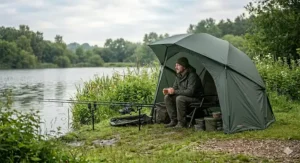
Walking into tackle shops or scrolling Amazon listings confronts you with bewildering specifications—hydrostatic head ratings, D-ratings for fabric, storm pole configurations, and technical jargon that obscures what genuinely matters on British waters. Let me cut through the marketing noise with features that actually affect your fishing experience.
Waterproofing that matches British reality: Specifications quote hydrostatic head ratings (measured in millimetres), which indicate how much water pressure fabric withstands before leaking. Here’s the practical translation for UK conditions: 3,000mm handles light rain and drizzle; 5,000mm copes with sustained British rainfall effectively; 10,000mm provides extreme weather capability for exposed locations and winter fishing. Most anglers fishing typical club waters from April through October find 5,000mm perfectly adequate, saving considerable money versus premium 10,000mm+ fabrics that really prove their worth during brutal conditions you’ll encounter perhaps 20% of the time.
Frame material that survives British winds: Fibreglass offers lightweight flexibility that bends without breaking—ideal for mobile anglers prioritising portability. Aluminium provides superior rigidity and extreme weather resistance but adds weight and cost. Steel appears on budget models, offering decent strength but increased weight. For typical UK conditions, fibreglass performs admirably; upgrade to aluminium only if you regularly fish exposed reservoirs or coastal venues where sustained winds test cheaper materials.
Practical size considerations: The 50-inch versus 60-inch decision matters more than specifications suggest. Smaller 50-inch models suit compact swims on canals and commercial fisheries where space constrains, they weigh less for easier transport, but you’ll struggle fitting standard bedchairs underneath for comfortable overnight sessions. The 60-inch standard accommodates most bedchairs and tackle setups comfortably whilst remaining manageable for transport—this represents the sweet spot for versatile use. Larger 60-inch-plus systems approach bivvy territory with corresponding weight and cost increases.
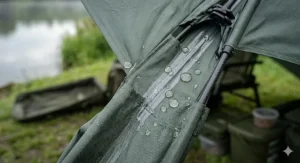
Taped seams prevent gradual seepage: Cheap shelters often feature untaped or partially taped seams where stitching creates weak points. After three hours of sustained rain, these develop annoying drips that gradually soak gear. Quality models like the Trakker MC-60 and Preston Space Maker feature fully taped seams throughout, maintaining waterproof integrity during extended wet weather—worth the modest premium over budget alternatives.
Groundsheet inclusion saves money: Separate groundsheets typically cost £20-£40, so models including them as standard (like the Daiwa Mission and NGT XPR) deliver better value than initially apparent. Groundsheets prevent tackle soaking up moisture from damp grass and provide comfortable dry flooring—once you’ve had one, fishing without feels distinctly primitive.
Day Session Shelters: Mobile Fishing Protection Strategies
Mobile fishing—moving swims frequently to locate and follow active fish—demands different shelter approaches than static sessions. Having spent seasons fishing match circuits and chasing showing carp, I’ve learned which strategies actually work versus theoretical portability that collapses under practical use.
The fundamental mobile shelter dilemma balances protection against transport practicality. You need enough coverage to handle British weather unpredictability (because that cloudless morning will inevitably produce afternoon showers), but carrying heavyweight shelter systems between swims rapidly becomes exhausting drudgery. Solutions depend on session length and expected weather severity.
For short mobile sessions (2-4 hours): Standard 50-inch umbrellas like the Preston Space Maker provide adequate rain protection whilst weighing around 3-3.5kg. These slip onto barrow systems easily or carry comfortably alongside rod holdalls. Deploy in under two minutes when showers threaten, pack down equally fast when moving on. Accept limited wind protection and minimal side coverage—you’re prioritising mobility over maximum comfort.
For active day sessions (4-8 hours): Lightweight brolly systems around 4-5kg balance protection with portability. The Trakker MC-60 exemplifies this category—proper weather protection with wrap-around sides, yet light enough for multiple swim moves without destroying your enthusiasm. Pack in rod holdall rather than separate carrying bags to minimise gear bulk. Storm poles add weight (roughly 1kg) but deploy quickly when weather deteriorates, providing worthwhile protection upgrade for minimal effort.
Transport organisation matters enormously: Rather than separately bagging every component, integrate brolly into existing luggage systems. Modern quiver-style rod holdalls accommodate compact brollies alongside rods; unhooking mats often feature pockets suitable for pegs and storm poles; tackle rucksacks with external straps secure folded brollies efficiently. This integrated approach means one bag grab rather than juggling multiple items when changing swims.
British weather reality check: Our climate rarely produces sustained calm sunshine—carry shelter even when forecasts promise perfection. According to the Met Office, the UK experiences an average of 133 days of rainfall annually, with significant regional variation. That said, dragging full bivvy systems for mobile day fishing represents misguided overkill. A quality 4-5kg brolly system handles 95% of conditions you’ll actually encounter, with the 5% extreme weather days being precisely when you’ll appreciate fishing somewhere more sheltered anyway.
Lightweight Cover Systems: Performance Without Excess Weight
The lightweight fishing brolly category has exploded recently as manufacturers recognise anglers want effective protection without hauling excessive weight. Having tested numerous “lightweight” claims, here’s what genuinely delivers and what merely sacrifices quality for marginal weight savings.
True lightweight performance means maintaining waterproofing and structural integrity whilst reducing materials intelligently. The Preston Space Maker at roughly 3.5kg demonstrates proper execution—fibreglass frame construction saves weight versus aluminium alternatives, whilst maintaining adequate strength for typical conditions. The taped seams throughout preserve weatherproofing despite the lighter fabric specification. Setup remains quick and intuitive, crucial because lightweight designs often feature complex mechanisms that create frustration.
Where manufacturers go wrong is pursuing weight reduction at any cost. Ultra-cheap lightweight brollies often use thinner fabric that performs initially but degrades rapidly—after one season’s use, UV damage and stress create leaking points. Untaped seams save pennies but guarantee eventual seepage. Flimsy pole mechanisms might survive careful handling but fail when you’re setting up hurriedly in deteriorating weather with cold fingers. Genuine quality lightweight designs cost more upfront but deliver reliable multi-season service.
Practical weight thresholds for different fishing styles: Under 3kg suits match anglers and pleasure fishers making frequent peg changes—prioritises ultimate portability over maximum protection. The 3-5kg range balances mobility with proper weather resistance—ideal for active carp anglers changing swims several times per session. Over 5kg enters comfort-focused territory where protection trumps portability—suitable for settling into chosen locations rather than constant movement.
The weight versus protection trade-off becomes less severe when you consider modular approaches. Base brolly systems around 4kg handle day sessions effectively, with optional infill panels and overwraps adding perhaps 2kg when overnight capability becomes necessary. This flexibility means carrying appropriate weight for intended fishing rather than dragging maximum capability everywhere regardless.
British weather unpredictability argues for reliable 4-5kg systems rather than ultra-light compromises. That extra kilogramme of proper construction matters enormously when you’re sitting through three hours of sustained rain deciding whether to pack up or persist. Saving 500g by using inferior materials rarely feels worthwhile when you’re getting progressively wetter.
Common Mistakes When Buying Fishing Brollies UK Anglers Make
After years observing tackle shop conversations and reading countless “what went wrong” forum posts, certain brolly purchasing mistakes repeat with depressing regularity. Avoid these pitfalls and you’ll save considerable money and frustration.
Mistake 1: Prioritising size over suitability. Anglers frequently assume bigger automatically means better, purchasing 60-inch systems when their fishing style actually suits 50-inch models. Larger brollies add weight, increase transport bulk, and prove awkward on compact commercial fishery swims where space constraints matter. Assess your typical fishing venues honestly—if you’re predominantly on canals and small commercials, the supposedly “inferior” 50-inch category often serves better. Conversely, buying undersized shelter to save money creates miserable sessions when you can’t fit bedchair underneath comfortably.
Mistake 2: Ignoring modular expansion capabilities. Many anglers purchase basic brollies without checking available accessories, then discover optional infill panels, groundsheets, or overwraps either don’t exist or cost disproportionately. Quality systems like the Trakker MC-60 and Fox R-Series offer comprehensive expansion options, supporting gradual investment as fishing develops. Budget alternatives often lack any upgrade path, forcing complete replacement when your requirements evolve.
Mistake 3: Underestimating British weather severity. “I’ll only fish nice days” sounds rational until you’ve invested in rods, reels, and licenses, then discover nice days represent about 40% of potential fishing opportunities. Skimping on waterproofing to save £30 creates regret the first time sustained rain forces early departure whilst properly sheltered anglers continue fishing comfortably. The 5,000mm versus 10,000mm hydrostatic head debate matters less than having proper waterproofing period—the 3,000mm budget fabrics struggle with anything beyond light drizzle.
Mistake 4: Overlooking setup complexity. Brollies look simple in shop demonstrations or YouTube reviews, but certain designs feature frustrating mechanisms that create chaos during bankside setup—especially in deteriorating weather with cold hands. Always check multiple customer reviews specifically mentioning setup experience, particularly from UK buyers dealing with our typical conditions. Complicated pole threading or fiddly locking mechanisms that seem minor in showroom conditions become infuriating when you’re rushing to deploy shelter before heavy rain arrives.
Mistake 5: Buying purely on price. The £40 brolly versus £140 equivalent often represents false economy when the budget option lasts one season before seams fail and fabric degrades, whilst the quality alternative provides five seasons of reliable service. Calculate cost-per-season rather than upfront expense—that £100 premium suddenly looks like £20 annually for vastly superior performance. This isn’t advocating needless spending on premium models you don’t require, but recognising quality mid-range investment beats replacing cheap kit repeatedly.
Mistake 6: Neglecting transport practicality. Brollies occupy significant vehicle space—packed lengths of 180-190cm challenge smaller cars and make public transport impractical. Check transport dimensions before purchasing, especially if your fishing access involves walking from car parks or using buses/trains. Compact designs sacrifice some interior space but fold considerably shorter, supporting practical transport constraints.
How to Choose Fishing Brollies for British Weather Conditions
British weather doesn’t demand extreme-weather kit—it demands reliable all-weather kit. Our climate rarely produces hurricane-force storms or desert heat, but does deliver persistent drizzle, changeable conditions, and the ability to cycle through four seasons in a single afternoon. Selecting appropriate shelter requires understanding what “British weather resistant” actually means.
Step 1: Assess your typical fishing season. Fair-weather anglers fishing April through September primarily encounter light-to-moderate rain with occasional heavy downpours—5,000mm hydrostatic head fabrics handle this effectively. Year-round anglers fishing through autumn and winter face sustained rain, stronger winds, and lower temperatures—10,000mm ratings with robust frames become worthwhile investments. Consider when you’ll actually fish rather than aspirational “all year” claims that dissolve come November reality.
Step 2: Evaluate venue exposure levels. Sheltered club lakes surrounded by trees reduce wind impact significantly—lighter frames and standard fabrics perform admirably. Exposed reservoirs, gravel pits, and coastal venues experience full wind force—here robust aluminium frames and extreme weather fabrics prevent miserable sessions battling structural flex. Match shelter specification to where you’ll actually deploy it, not theoretical worst-case scenarios you’ll rarely encounter.
Step 3: Consider session duration patterns. Day sessions up to 12 hours tolerate less extreme protection—you can monitor weather forecasts and avoid truly brutal conditions. Overnight sessions commit you regardless of deteriorating weather—invest in capability that handles whatever develops during night hours. That £100 premium for superior waterproofing and frame strength becomes trivial when you’re sleeping comfortably whilst neighbouring cheaper shelters leak or collapse.
Step 4: Factor British weather unpredictability. Our forecasts struggle with accuracy beyond six hours, and localised conditions vary dramatically. This argues for over-specifying slightly rather than assuming best-case scenarios. The day you leave quality shelter home because “it won’t rain” inevitably produces torrential downpours, whilst carrying proper protection means fishing confidently regardless.
Step 5: Assess your mobility requirements. British venues often feature long walks from car parks, uneven terrain, or restrictions on barrow use. Carrying 9kg bivvy systems becomes exhausting drudgery—here lighter 4-5kg brolly systems prove worthwhile despite marginally reduced maximum protection. Balance carried weight against likely weather severity for venues you’ll actually access.
Step 6: Consider British seasonal temperature ranges. Unlike continental climates with hot summers and freezing winters, our moderate temperatures (5-25°C typically) mean ventilation matters as much as weatherproofing. Brollies with optional infill panels offer better year-round versatility than sealed bivvies—deploy ventilation panels during summer, switch to solid protection for winter. This seasonal adaptability suits British conditions better than extreme-optimised designs.
Long-Term Value Analysis: What Best Fishing Brollies Cost Over Time
Upfront prices tell incomplete stories—real value emerges through years of bankside use. Having tracked shelter costs across multiple seasons, here’s honest analysis of what you’ll actually spend on the best fishing brollies in the UK market.
Budget entry systems (£40-£80 range like the NGT XPR) typically deliver 2-3 seasons of reasonable service before fabric degradation, seam failures, or frame issues necessitate replacement. At £60 average, that’s £20-£30 per season—genuinely economical for occasional anglers fishing perhaps 10-15 times annually. However, more frequent use accelerates wear considerably; anglers fishing 30-40 sessions yearly often find budget shelters fail within 12-18 months, pushing cost-per-session higher than initially apparent.
Mid-range quality systems (£100-£180 like the Trakker MC-60 or Daiwa Mission) generally provide 4-6 seasons of reliable use with proper care, potentially longer if you’re not fishing extreme conditions regularly. At £140 average over 5 seasons, that’s £28 annually—comparable to budget options but delivering vastly superior performance throughout. These represent the value sweet spot for regular UK anglers fishing 20-40 sessions yearly who want dependable kit without premium expenditure.
Premium systems (£250-£350 like the Fox R-Series or Nash Titan) should deliver 6-8+ seasons of service given their robust construction and quality materials. At £300 average over 7 seasons, that’s roughly £43 annually—higher than budget/mid-range but justified by extreme weather capability and consistent performance. For serious anglers fishing 50+ sessions yearly including challenging conditions, this premium proves worthwhile through reliability and comfort that cheaper alternatives simply can’t match.
Hidden costs significantly affect total ownership: Replacement parts (poles, pegs, guy ropes) typically run £20-£40 over a shelter’s lifetime. Optional accessories (groundsheets, infill panels, overwraps) add £40-£100+ depending on system. Storage and transport solutions (carry bags, rod holdall upgrades) contribute another £30-£60. Factor these into your budget—that £120 brolly often becomes £180+ total investment once you’ve added essential accessories.
Resale values matter for those who upgrade regularly. Quality brands like Trakker, Fox, and Nash retain 40-50% value after 2-3 years if well maintained, recouping some investment. Budget brands struggle to attract buyers even at bargain prices—most end up discarded rather than resold. This residual value partially offsets premium pricing for anglers who upgrade every few seasons.
The compelling economics: Fishing 30 sessions annually over 5 years equals 150 uses. A £150 quality brolly costs £1 per session; even a £300 premium system costs £2 per session. Perspective matters—most UK anglers happily spend £20-£30 per day on bait, yet balk at shelter investment that provides years of service. Quality protection represents one of fishing’s best value propositions when assessed per-session rather than upfront.
UK Regulations and Practical Considerations for Fishing Shelters
British fishing doesn’t involve complex shelter regulations like some European countries, but practical considerations and venue rules significantly affect brolly choice and deployment. Understanding these factors prevents frustration and potential access issues.
Environment Agency licensing: Anyone fishing in England aged 13+ requires a rod licence (currently around £35 annually for coarse/trout fishing). You can purchase your fishing licence through the official GOV.UK website to avoid third-party sites charging extra fees. Licenses fund fisheries management but don’t regulate shelter types—you’re free to use any brolly or bivvy on public waterways. Scotland and Wales operate different systems (no licence required in Scotland; Wales requires EA licence for cross-border waters). Northern Ireland requires separate DCAL permit. These regulations govern fishing itself rather than shelter equipment, but remain relevant context for UK anglers.
Venue-specific rules matter enormously: Commercial fisheries and syndicate waters enforce their own regulations. Many day-ticket venues prohibit overnight fishing completely, rendering bivvy-capable systems unnecessary. Some restricts shelter size or location to maintain swim access and fairness—that 60-inch brolly might exceed permitted footprint on compact pegs. Popular match waters often ban shelters entirely during competitions, requiring flexible approaches. Always check venue rules before assuming your preferred shelter proves acceptable.
Close season considerations: Rivers in England and Wales enforce coarse fishing close season (15 March – 15 June inclusive) protecting spawning fish. You can’t legally fish rivers during this period, though canals and most stillwaters remain open year-round. This affects shelter planning—if you primarily fish rivers, spring shelter needs disappear during close season. Conversely, canal and stillwater specialists require reliable protection throughout spring when weather remains changeable. Scotland abolished its close season; Northern Ireland retains different dates. These variations affect when you’ll deploy shelters across the UK.
Access and transport realities: British fisheries range from roadside swims with vehicle access to remote locations requiring considerable walking. Compact urban venues increasingly restrict barrow use to protect surroundings, forcing manual carrying of all equipment. This practicality often trumps specifications—the “best” brolly becomes whichever you’ll actually carry rather than the technically superior model left in the car. Assess typical access scenarios honestly when selecting weight and transport dimensions.
Weather liability and insurance: Improperly secured shelters damaging neighbouring anglers’ equipment or venue property potentially create liability issues. Most UK fishing insurance policies cover third-party damage, but prevention beats claiming. Proper pegging, appropriate guy ropes, and monitoring weather forecasts prevent most issues. Extreme wind warnings suggest fishing more sheltered venues or postponing sessions—no shelter system handles genuine storm conditions safely whilst occupied.
Neighbourly considerations on busy waters: Popular UK fisheries often feature tight swim spacing during peak periods. Your brolly deployment affects adjacent anglers’ experience—overhanging into neighbouring swims creates conflict, whilst excessive guy ropes create trip hazards around shared walkways. Compact designs like 50-inch models suit crowded venues better than sprawling systems designed for spacious syndicate pegs. Basic courtesy prevents issues—if the venue’s busy, maybe leave the expansive bivvy at home.
Frequently Asked Questions
❓ Do I need a 60-inch brolly or will 50-inch be enough for UK fishing?
❓ What waterproof rating do I actually need for British weather conditions?
❓ Can I use a fishing brolly for overnight sessions or do I need a proper bivvy?
❓ Are budget fishing brollies under £80 worth buying or should I save for better quality?
❓ What's the lightest fishing brolly that still provides proper weather protection?
Conclusion: Finding Your Perfect Bankside Protection
Selecting the best fishing brollies ultimately comes down to honest assessment of how you actually fish rather than aspirational scenarios that rarely materialise. The mobile day-session angler chasing carp around club lakes requires fundamentally different shelter than the specimen hunter settling into 72-hour sessions on challenging waters. Neither approach is superior—they simply demand appropriate equipment choices.
For most UK anglers fishing typical day sessions with occasional overnighters, the mid-range quality bracket (£100-£180) delivers optimal value. Systems like the Trakker MC-60 V2 at around £120-£150 or the Daiwa Mission around £90-£130 provide reliable weather protection, reasonable portability, and multi-season durability without premium pricing. These prove particularly sensible for developing anglers whose requirements may evolve—you’re investing in proven capability rather than gambling on budget compromises or over-specifying features you’ll rarely use.
Serious session anglers justify premium investment through sheer usage volume and demanding conditions. The Fox R-Series or Nash Titan approaching £300 deliver extreme weather capability and consistent comfort that matters enormously when you’re fishing 50-60 sessions yearly including brutal winter conditions. Calculate per-session costs over expected lifespan—suddenly that premium looks remarkably economical.
British weather reality argues against ultra-budget compromises below £80 unless you’re genuinely occasional angler fishing perfect conditions selectively. Our climate’s unpredictability means reliable weather protection represents essential kit rather than optional luxury. That modest investment in proper shelter—whether £130 or £280 depending on requirements—transforms fishing experience from endurance test into enjoyable pursuit regardless of conditions.
The best fishing brollies for you balance protection needs, mobility requirements, and budget reality. Choose honestly based on actual fishing patterns rather than marketing claims or aspirational use cases. Your back will thank you for appropriate portability; your comfort will appreciate adequate weather resistance; your wallet will favour sensible value over false economy or needless premium. Now get out there and fish confidently, whatever British weather decides to throw at you.
Recommended for You
- 7 Best Bivvy Overwraps UK 2026: Winter Fishing Shelter Guide
- 7 Best Pram Hood Bivvies UK 2026 | Expert Carp Fishing Guide
- 7 Best 2 Man Bivvy Options for UK Carp Fishing 2026
Disclaimer: This article contains affiliate links. As an Amazon Associate, I earn from qualifying purchases. If you purchase products through these links, we may earn a small commission at no additional cost to you.
✨ Found this helpful? Share it with your mates! 💬🤗
