
In This Article
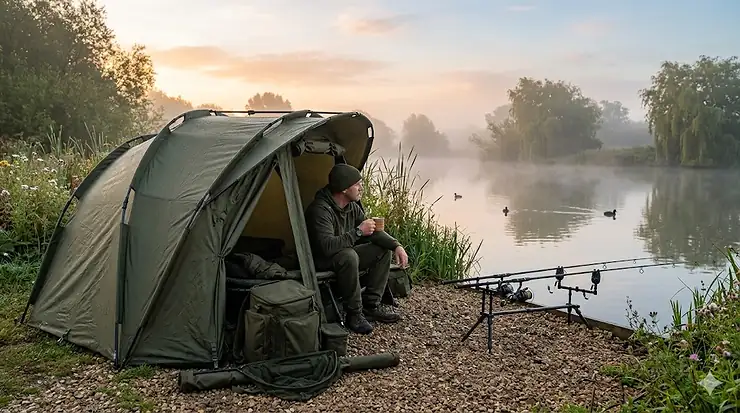
Right, let’s get one thing straight from the off — a 1 man bivvy isn’t just a posh tent for anglers. It’s your weatherproof sanctuary during those marathon carp sessions, and if you’ve ever been caught in a proper British downpour at 3 AM waiting for that elusive bite, you’ll know exactly what I mean. The difference between a miserable night and a comfortable one often comes down to the shelter above your head.
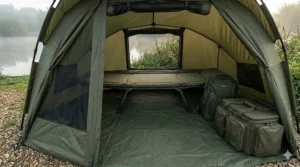
What most UK buyers overlook about bivvy selection is how the damp British climate affects performance over time. That sealed seam that looks brilliant in August? Come October, when you’ve had six months of relentless drizzle and the occasional biblical downpour, it’s the hydrostatic head rating and material quality that determine whether you’re staying dry or ringing out your sleeping bag at dawn. According to Met Office data, the UK experiences an average of 133 days of rainfall annually, making waterproof capability absolutely essential rather than optional. I’ve tested enough shelters across waterlogged British swims to know that specs on paper and real-world performance in persistent wet weather are two entirely different things.
The carp fishing bivvy market has exploded in recent years, with options ranging from budget £60 offerings to premium £800+ setups. For solo anglers, a 1 man bivvy strikes the ideal balance between portability, weather protection, and swim compatibility — particularly important given how compact many UK fishing venues are compared to sprawling European waters. As detailed in the Countryside Code, responsible outdoor equipment use forms part of broader environmental stewardship expectations.
Quick Comparison: Top 1 Man Bivvy Shelters at a Glance
| Model | Waterproof Rating | Weight | Setup Time | Price Range | Best For |
|---|---|---|---|---|---|
| Fox EOS 1 Man | 8,000mm HH | 7kg | 5-7 mins | £160-£200 | Budget-conscious beginners |
| Trakker Tempest RS 100 | 25,000mm HH | 9.4kg | 3-4 mins | £700-£850 | Premium quick-erect performance |
| Westlake Particle 1 Man | 5,000mm HH | 6.5kg | 6-8 mins | £110-£140 | Value-conscious regulars |
| KINGCARP 1 Man Bivvy | 5,000mm HH | 5.8kg | 5-6 mins | £95-£120 | Lightweight mobility |
| Trakker Tempest 100 Aquatexx | 25,000mm HH | 9.6kg | 4-5 mins | £550-£650 | Serious all-season anglers |
| Nash Dwarf Approved | 10,000mm HH | 8.2kg | 6-7 mins | £380-£450 | Versatile year-round use |
| NGT 1 Man Day Shelter | 3,000mm HH | 4.9kg | 4-5 mins | £55-£75 | Day sessions only |
From the comparison above, the Trakker models dominate on waterproofing, but if you’re tackling weekend sessions rather than winter campaigns, the Fox EOS offers brilliant value under £200. Budget buyers should note that the NGT sacrifices long-term weather resistance for its lower price — a trade-off that stings during those relentless autumn nights when British rain seems determined to test every seam.
💬 Just one click — help others make better buying decisions too! 😊
Top 7 1 Man Bivvy Options: Expert Analysis
1. Fox EOS 1 Man Bivvy — The Reliable Starter Choice
The Fox EOS 1 Man Bivvy has quietly become the go-to recommendation for anglers entering the overnight scene, and there’s solid reasoning behind its popularity. With an 8,000mm hydrostatic head and dimensions of 205cm deep × 270cm wide × 140cm high, this khaki pram-hood design provides genuinely weatherproof protection at a price that won’t have you remortgaging.
What the spec sheet won’t tell you is how the two-rib design with full frame support handles proper British gales. The 7kg pack weight means you’re not lugging excessive bulk to distant swims, whilst the 140cm internal height allows you to sit upright on your bedchair — rather important when you’re monitoring rods during a prolonged dawn session. The two-way letterbox door with mesh insert means ventilation without surrendering to midges, and you can roll the front back completely to create an open shelter during those rare heatwaves Britain occasionally experiences.
UK buyers particularly appreciate the included lightweight groundsheet and heavy-duty pegs, which arrive in a proper zipped carry bag rather than the flimsy affairs some competitors provide. The PVC and solid panel door options let you customise visibility whilst maintaining weather protection — handy when local bailiffs want visual confirmation you’re actually fishing rather than just kipping.
Pros:
✅ Unbeatable value in the £160-£200 range
✅ Full frame support handles wind exceptionally well
✅ Converts to open shelter for warmer conditions
Cons:
❌ 8,000mm HH adequate but not exceptional for winter campaigns
❌ Lacks the rapid-setup mechanisms of premium models
Price & Value: Around £170-£190 represents brilliant value. For anglers doing 2-3 overnight sessions monthly rather than weekly winter campaigns, this delivers 90% of the performance at 25% of the premium price.
2. Trakker Tempest RS 100 Bivvy — When Budget Isn’t the Limiting Factor
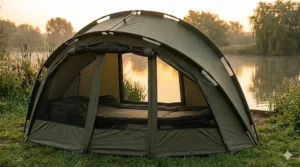
The Trakker Tempest RS 100 represents the pinnacle of quick-erect shelter engineering, and whilst the £700-£850 price range makes your eyes water initially, serious anglers understand precisely what they’re paying for. That patented Rapid Knuckle System isn’t marketing fluff — it genuinely allows all five main poles to lock simultaneously in one fluid motion, transforming setup from a faff into a genuinely satisfying click-fan-lock experience.
The 25,000mm Aquatexx material offers waterproofing that frankly surpasses anything British weather can reasonably throw at you. We’re talking about hydrostatic head ratings that exceed professional mountaineering tents, combined with black-out pigmentation that reduces sun damage and keeps internal temperatures bearable during those scorching July sessions. The Adaptive Ventilation system across six vents (four rear, two front) maintains airflow even during downpours — rather crucial for reducing condensation during damp British autumns.
At 9.4kg (14.6kg total with pegs and bag), this isn’t the lightest option, but the 145cm height × 265cm width × 220cm depth dimensions provide genuinely spacious accommodation. Four internal storage pockets with hanging points mean tackle organisation that actually works, whilst magnetic rod straps represent the attention to detail separating premium from adequate. The flatter back design optimises storage whilst improving aerodynamics against crosswinds.
Pros:
✅ Industry-leading 25,000mm waterproofing handles anything Britain offers
✅ Genuine 3-4 minute setup via Rapid Knuckle System
✅ Adaptive Ventilation dramatically reduces condensation
Cons:
❌ Premium pricing around £750-£800
❌ 14.6kg total weight requires commitment to location
Price & Value: In the mid-£700s, this targets anglers doing 40+ nights annually where setup speed and absolute weather protection justify the investment. Think of it as £15-20 per session over five years rather than one terrifying lump sum.
3. Westlake Particle 1 Man Fishing Bivvy — The Sensible Middle Ground
For UK anglers seeking that elusive sweet spot between budget constraints and actual quality, the Westlake Particle 1 Man deserves serious consideration around £110-£140. The three-pole system and internal groundsheet provide proper structure, whilst the 5,000mm HH rating handles typical British conditions adequately — though you’ll want to check seam integrity before winter campaigns.
What I genuinely appreciate about this model is the all-year-round design philosophy. Too many budget bivvies sacrifice winter capability completely, but Westlake has engineered something that won’t leave you shivering come November. The easy-pitch system genuinely lives up to its name, with most anglers managing solo setup in 6-8 minutes once familiar with the sequence. The carry bag actually fits everything back in without the usual 20-minute wrestling match.
The dimensions accommodate standard UK bedchairs comfortably, and the ventilation prevents that clammy feeling during mild overnight sessions. Yes, the materials feel less substantial than premium options, and the zips require slightly more care, but at this price point you’re getting functionality that genuinely works.
Pros:
✅ Excellent value around £120-£130
✅ Internal groundsheet included as standard
✅ Genuine all-year capability despite budget positioning
Cons:
❌ 5,000mm HH adequate rather than exceptional
❌ Materials show wear faster than premium alternatives
Price & Value: Around £115-£135 delivers remarkable performance for occasional overnight anglers. If you’re fishing 10-15 nights annually, this provides everything needed without premium pricing.
4. KINGCARP 1 Man Bivvy Fishing Tent — Lightweight Mobility Wins
The KINGCARP 1 Man Bivvy has carved out a niche amongst mobile anglers who prioritise portability at around £95-£120. Weighing just 5.8kg complete, this 210D waterproof shelter demonstrates that budget doesn’t automatically mean compromise on core functionality. The quick setup design, insect mesh front door, and PVC viewing panels deliver essentials without unnecessary frills.
What British buyers particularly value is the lightweight approach to session fishing. When you’re hiking 800 metres round a reservoir to reach that productive margin spot, every kilogramme matters enormously. The heavy-duty groundsheet, poles, pegs, and carry bag arrive as a complete package rather than requiring additional purchases — rather refreshing at this price point.
The 210D material with taped seams provides decent weather resistance for spring through autumn fishing, though winter campaigns demand more robust protection. The bug mesh door proves invaluable during summer sessions, whilst PVC panels maintain visibility without surrendering warmth. Setup takes 5-6 minutes solo, making swim changes practical during roving approaches.
Pros:
✅ Lightweight 5.8kg suits mobile fishing styles
✅ Complete package around £100-£115
✅ Quick setup enables swim changes mid-session
Cons:
❌ 210D material less durable than premium options
❌ Limited headroom compared to pram-hood designs
Price & Value: In the mid-£100s, this suits anglers prioritising mobility over maximum weather protection. For day-into-night sessions April through September, it delivers genuinely capable performance.
5. Trakker Tempest 100 Bivvy Aquatexx EV 1.0 — Premium Without the Pain
The Trakker Tempest 100 Aquatexx EV represents Trakker’s attempt to deliver flagship performance at slightly more accessible pricing around £550-£650. The 25,000mm Aquatexx EV fabric matches their RS range for waterproofing, whilst the patented quick-erect block and Adaptive Ventilation system provide genuine premium features. At 9.6kg (13.6kg total), weight remains reasonable for the performance delivered.
Dimensions of 135cm height × 250cm width × 235cm depth create genuinely spacious single-angler accommodation. The breathable, hydrophobic fabric excels during damp British conditions, actively shedding moisture rather than absorbing it. The anti-twist pole system and dual rod straps demonstrate thoughtful design, whilst the removable infill panel adapts the shelter between brolly and full bivvy configurations.
UK anglers appreciate the NXG zipped carry bag quality and included tension strap, quicksticks, and heavy-duty groundsheet. The freestanding design means versatile swim placement without extensive pegging, though proper anchoring remains essential during gales. Compatibility with Trakker’s ecosystem of accessories (clear windows, skull caps) provides upgrade pathways without replacing the entire shelter.
Pros:
✅ Premium 25,000mm waterproofing at mid-range pricing
✅ Genuine Adaptive Ventilation reduces condensation
✅ Removable infill panel increases versatility
Cons:
❌ £550-£650 still represents significant investment
❌ Slightly smaller footprint than some prefer
Price & Value: Around £580-£620 positions this as the accessible premium option. For anglers doing 25-35 nights annually wanting flagship features without flagship pricing, this hits a genuine sweet spot.
6. Nash Dwarf Approved Bivvy — The Versatile Performer
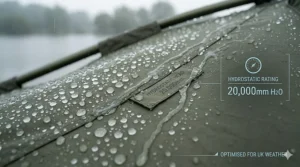
The Nash Dwarf Approved has maintained loyal following amongst UK anglers for good reason, with pricing around £380-£450 delivering genuinely versatile year-round capability. The 10,000mm HH rating provides robust weather protection without venturing into extreme territory, whilst the 8.2kg weight balances portability against stability. The pram-hood design with peak extension handles British crosswinds particularly well.
What separates the Nash approach is the focus on practical usability rather than headline specifications. The integrated mozzy mesh, clear window options, and proper internal space for tackle organisation demonstrate understanding of actual bankside requirements. The six-leg frame system provides exceptional stability during storms, whilst the extended peak minimises water ingress around the entrance — particularly valuable when rain seems to arrive horizontally across British waters.
The included groundsheet feels substantial rather than tokenistic, and the compression bag actually compresses rather than requiring brute force. Setup takes 6-7 minutes solo with practice, and the structure inspires confidence during those proper gales that British autumn specialises in delivering. The khaki colouring blends acceptably at most venues without attracting excessive attention.
Pros:
✅ Excellent wind stability via six-leg design
✅ 10,000mm HH handles British conditions confidently
✅ Practical features prioritised over gimmicks
Cons:
❌ Mid-range £400+ pricing without premium waterproofing
❌ Setup slightly slower than quick-erect alternatives
Price & Value: Around £410-£440 delivers reliable performance for regular anglers. If you’re fishing 20-30 nights annually across all seasons, this provides dependable shelter without excessive investment.
7. NGT 1 Man Day Shelter — When Budget Absolutely Dictates
The NGT 1 Man Day Shelter occupies the essential budget segment around £55-£75, providing basic weather protection for anglers with severely constrained budgets or occasional day-session requirements. The 3,000mm HH rating handles light showers adequately but surrenders completely to sustained British downpours. At 4.9kg, portability remains excellent for roving approaches.
Honestly, this represents shelter for fair-weather fishing rather than serious overnight capability. The 4-5 minute setup proves straightforward, and the included groundsheet and pegs deliver complete functionality. For summer day sessions or shelter during brief rain interruptions, it performs adequately. The materials feel lightweight because they genuinely are — this won’t survive aggressive treatment or extended exposure to British winter conditions.
Where NGT succeeds is acknowledging that some anglers simply need affordable weather protection without pretending to deliver premium performance. If you’re doing occasional afternoon sessions during pleasant weather, why invest £500+ in capabilities you’ll never utilise? The compact pack size suits car boot storage, whilst the price means replacement doesn’t constitute financial disaster.
Pros:
✅ Genuinely accessible £60-£70 pricing
✅ Lightweight 4.9kg suits casual mobility
✅ Complete package for minimal investment
Cons:
❌ 3,000mm HH inadequate for overnight sessions
❌ Materials deteriorate rapidly under sustained use
Price & Value: Around £60-£65 serves as emergency shelter or fair-weather protection. Don’t expect longevity or serious weather resistance, but for the intended purpose it delivers functional adequacy.
How UK Weather Conditions Should Influence Your Bivvy Choice
British weather presents unique challenges that continental anglers rarely face — it’s not the temperature extremes but the relentless damp that tests shelter performance. A bivvy rated 5,000mm HH might handle occasional downpours adequately, but six consecutive days of persistent drizzle reveals material limitations rapidly. What most buyers overlook is how British humidity affects condensation management — even waterproof materials trap moisture unless proper ventilation exists.
The average UK carp angler experiences roughly 180 days annually with measurable precipitation. That’s not six months of torrential downpours, but rather the persistent light-to-moderate rain that gradually saturates inadequate shelters. Hydrostatic head ratings of 8,000mm+ become essential rather than excessive, whilst sealed seams transform from nice-to-have into absolute requirements. The difference between arriving home with damp gear versus soaked kit often traces directly to these specifications.
British winds present another consideration rarely addressed in product specifications. A bivvy performing brilliantly in still conditions can transform into a wrestling match during proper gales. Full frame support systems, anti-twist poles, and proper pegging points separate genuinely capable shelters from fair-weather options. During November through February, when westerlies batter exposed swims relentlessly, these features justify their existence repeatedly.
Temperature stability matters more than anglers initially recognise. British nights rarely plunge to continental extremes, but the combination of moderate cold and high humidity creates penetrating chill that inadequate shelters can’t combat. Proper groundsheets, peak extensions, and sealed entrances maintain internal warmth without requiring excessive insulation. The goal isn’t surviving arctic conditions but maintaining comfortable temperatures during damp 4-8°C nights.
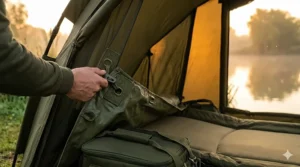
Setting Up Your 1 Man Bivvy: Avoiding Common UK Mistakes
Right, let’s address the setup errors that plague British anglers repeatedly. The most common mistake involves inadequate pegging in what appears to be calm conditions. British weather changes rapidly — that pleasant evening transforms into howling gale by midnight with alarming regularity. Every peg point deserves proper anchoring, using extended storm pegs for soft ground common around British waters. Don’t rely on standard pegs in waterlogged swims; they’ll surrender immediately when winds arrive.
Groundsheet placement requires more attention than most anglers provide. British swims accumulate moisture constantly, transforming seemingly dry pitches into damp nightmares. Inspect your chosen location for subtle depressions where water accumulates, and consider additional underlays during wet periods. The bivvy’s groundsheet provides weather protection, but supplementary insulation prevents ground moisture transferring upwards through sleeping systems.
Tension strap adjustment proves crucial for British wind resistance. Many anglers establish adequate tension initially but fail to retighten after the first hour as materials settle and stretch. Return to your bivvy 30-60 minutes post-setup and reassess every tension point — this prevents the progressive loosening that allows wind to catch fabric and stress seams. Proper tension distributes forces evenly rather than concentrating stress on individual points.
Ventilation management separates comfortable nights from condensation disasters. Opening rear vents maintains airflow even during rain, dramatically reducing internal moisture accumulation. British humidity means condensation develops rapidly inside sealed shelters, particularly during mild nights when temperature differentials aren’t extreme. Strategic vent positioning creates gentle airflow without admitting rain directly.
1 Man Bivvy Versus Brolly Systems: Which Suits British Conditions?
The bivvy versus brolly debate dominates UK fishing forums endlessly, and the answer genuinely depends on your fishing approach rather than absolute superiority. Full bivvies provide maximum weather protection and security, transforming overnight sessions into genuinely comfortable experiences. For anglers doing regular 24-48 hour sessions across all seasons, bivvies deliver weather resistance and tackle security that brollies simply cannot match. The enclosed design maintains internal temperature, protects gear from damp, and provides genuine sleeping accommodation.
Brolly systems excel during mobile day sessions where setup speed and portability matter enormously. Deploying a brolly takes 2-3 minutes versus 5-8 minutes for most bivvies, making swim changes practical during roving approaches. The open design provides weather shelter without the commitment of full enclosure, suiting anglers who prefer maintaining visual contact with rods continuously. Weight advantages become significant when hiking extended distances to productive swims.
British weather conditions generally favour bivvies for overnight capability. The relentless damp that characterises British nights means enclosed protection becomes essential rather than optional. Brollies handle brief rain interruptions adequately but surrender to sustained precipitation, particularly when accompanied by wind. The combination of horizontal rain and crosswinds renders even quality brollies inadequate for comfortable overnight accommodation.
Cost considerations influence decisions significantly. Quality brollies typically cost £200-£400 less than equivalent bivvies, freeing budget for rods, reels, or bait. For anglers building complete setups from scratch, brollies provide adequate weather protection whilst preserving resources for other essentials. However, subsequently upgrading to bivvies means purchasing twice — the initial brolly investment becomes redundant rather than supplementary.
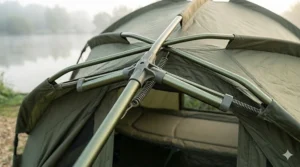
Common Mistakes When Buying Your First 1 Man Bivvy
The single biggest error British first-timers commit involves prioritising initial cost over total ownership expense. A £60 budget bivvy seems financially sensible until it requires replacement after one season, whilst a £180 mid-range option delivers 4-5 years of reliable service. Calculating cost-per-session reveals that premium options frequently cost less long-term than repeatedly replacing budget alternatives. British weather accelerates material degradation — buying adequate quality initially prevents expensive lessons.
Underestimating waterproofing requirements plagues newcomers repeatedly. A 3,000mm hydrostatic head rating handles light showers but surrenders to sustained British rain within hours. Budget anglers assume occasional leaks constitute acceptable trade-offs, until experiencing genuinely soaked gear at 3 AM during November downpours. Minimum 5,000mm HH provides adequate protection for regular use, whilst 8,000mm+ transforms into essential for serious overnight fishing across all seasons.
Ignoring packed dimensions causes transport headaches that ruin otherwise capable bivvies. A shelter performing brilliantly bankside but refusing to fit your car becomes useless rapidly. Measure your available transport space before purchasing, remembering you’ll also carry bedchair, rods, tackle, bait, and everything else required for sessions. The difference between 125cm and 135cm pack length determines whether everything fits or requires roof racks.
Neglecting ventilation capabilities creates condensation nightmares during British humidity. Bivvies without proper vent systems trap moisture relentlessly, soaking sleeping bags and gear through condensation rather than rain ingress. This proves particularly problematic during mild, damp nights common across British spring and autumn — precisely when you’d expect comfortable conditions. Adaptive ventilation systems or strategic vent placement become essential rather than luxury features.
Maintaining Your Bivvy for British Weather Longevity
Proper maintenance extends bivvy lifespan dramatically, particularly important given British damp accelerates material degradation. After every session, thoroughly dry your bivvy before storage — don’t pack damp fabric into bags where mould develops rapidly. British weather means returning home with wet gear regularly; allocate garage or shed space where bivvies can air-dry completely. Mould doesn’t just smell unpleasant; it actively degrades waterproof coatings and weakens fabric integrity.
Seam inspection should occur every 4-6 sessions, examining taped areas for deterioration signs. British conditions stress seams repeatedly through wind loading and water pressure. Small separations detected early repair easily using seam sealant; ignored until catastrophic failure, they necessitate expensive professional repairs or replacement. Focus particularly on peak seams and door surrounds where stress concentrates during typical use.
Groundsheet care prevents premature wear that compromises waterproofing from below. Inspect for punctures, abrasions, or seam separation after each session, repairing minor damage immediately. British swims contain surprisingly sharp objects — flint, gravel, broken tackle — that gradually degrade even heavy-duty groundsheets. Consider supplementary groundsheets underneath during extended sessions, protecting your bivvy’s integral sheet from unnecessary wear.
Pole maintenance receives inadequate attention from most anglers. British damp corrodes aluminium gradually whilst degrading elastic shock cords. Wipe poles clean after sessions, particularly removing mud and grit from joint areas. Inspect shock cord tension every few months, replacing when slack develops. Properly maintained poles last decades; neglected poles fail catastrophically during storms when replacement proves impossible.
Best 1 Man Bivvy Accessories for UK Conditions
Skull caps transform bivvy weather protection dramatically, extending peak coverage to shield entrance areas from British horizontal rain. The additional layer improves insulation whilst creating shaded areas during rare British sunshine. For bivvies supporting skull cap integration, investing £60-£120 delivers genuinely worthwhile performance enhancement. The cooling effect during summer proves surprisingly valuable, reducing internal temperatures by several degrees through dual-layer shading.
Overwraps provide winter insulation and additional weatherproofing essential for serious British cold-weather campaigns. The double-skin construction creates insulating air gaps whilst adding waterproof redundancy during extended storms. Yes, overwraps add £80-£150 to total investment, but transforming marginal winter capability into genuine comfort justifies expenditure for anglers fishing November through February regularly. The difference between enduring winter sessions versus enjoying them often traces directly to proper insulation.
Quality bivvy lights become essential during British winter’s extended darkness. Between November and February, anglers experience roughly 16 hours of darkness daily — adequate lighting transforms tackle organisation from fumbling nightmare into straightforward process. Rechargeable LED systems with red-light options preserve night vision whilst providing sufficient illumination. Budget £25-£40 for decent lighting; attempting to manage with phone torches becomes frustrating rapidly.
Proper pegs matter more than most anglers acknowledge. Standard pegs supplied with budget bivvies prove inadequate for British conditions regularly. Investing £15-£25 in extended storm pegs and screw-type anchors provides security standard pegs cannot match, particularly in waterlogged ground common around British venues. The psychological comfort of knowing your bivvy remains secure during 3 AM gales justifies minimal investment repeatedly.
Frequently Asked Questions
❓ What hydrostatic head rating do I need for UK overnight fishing?
❓ Can I use a 1 man bivvy for wild camping in England?
❓ How long should a quality 1 man bivvy last in British conditions?
❓ What's the actual difference between pram-hood and dome bivvy designs?
❓ Should I buy second-hand to save money on my first bivvy?
Conclusion: Selecting Your Ideal 1 Man Bivvy for British Waters
Right, after examining seven distinct options across budget ranges from £60 to £850, several truths emerge clearly. For British conditions specifically, waterproof ratings of 8,000mm HH+ transform from luxury into essential specification. Our relentless damp climate doesn’t just test shelters occasionally — it challenges them repeatedly throughout most sessions. The difference between adequate 5,000mm ratings and robust 8,000mm+ becomes painfully apparent during your first proper autumn campaign.
Budget considerations genuinely matter, but calculating cost-per-session reveals surprising truths. That £170 Fox EOS delivering 5 years of reliable service costs roughly £3 per session for anglers doing 10-12 nights annually. The £750 Trakker Tempest RS 100, whilst initially eye-watering, drops to around £4 per session over eight years at 25 nights annually. Premium pricing often delivers superior long-term value compared to repeatedly replacing budget alternatives that surrender to British weather within two seasons.
For most UK anglers doing regular overnight fishing, the sweet spot exists around £150-£350. This bracket delivers genuine weather protection, adequate durability, and features that enhance rather than merely facilitate fishing. The Fox EOS and Westlake Particle represent exceptional value around £120-£180, whilst the Nash Dwarf and mid-range Trakker options justify their £380-£650 pricing through superior performance and longevity.
Ultimately, your bivvy choice should reflect fishing frequency, budget reality, and venue requirements rather than aspirational thinking. An occasional angler doing 6-8 nights annually wastes money purchasing £700 premium shelters, whilst serious campaigners doing 40+ nights justify premium investment through accumulated comfort and reliability. Match shelter capability to actual requirements, prioritise British-relevant specifications, and buy the best quality your budget permits. Your future self, sheltering comfortably during those inevitable 3 AM downpours, will thank you repeatedly.
Recommended for You
- 7 Best Carp Fishing Bivvies UK 2026
- Best Bobbins for Carp Fishing: 7 Top UK Picks 2026
- 7 Best Carp Fishing Swingers UK 2026
Disclaimer: This article contains affiliate links. As an Amazon Associate, I earn from qualifying purchases. If you purchase products through these links, we may earn a small commission at no additional cost to you.
✨ Found this helpful? Share it with your mates! 💬🤗
