
In This Article
Standing in the relentless November drizzle at 3am, watching your bite alarm glow in the darkness, you realise something rather important: your shelter isn’t just a place to sleep between runs. It’s your command centre, your refuge, and quite possibly the difference between packing up early and sticking out a productive 48-hour session.
Carp fishing bivvies have evolved dramatically over the past decade. What started as basic brolly systems propped up with questionable storm poles has transformed into sophisticated shelters featuring hydrostatic heads rivalling mountaineering tents, rapid-erect frames that pitch in under a minute, and ventilation systems that actually manage condensation during those damp British nights. The market’s flooded with options from around £80 for budget NGT systems right through to £1,200+ for premium RidgeMonkey setups with sewn-in groundsheets and removable capsules.
Here’s what most anglers overlook when choosing carp fishing bivvies: British weather isn’t just about surviving the occasional downpour. It’s about dealing with persistent dampness from October through March, sudden temperature drops that leave your gear soaked in condensation, and wind that tests every peg point and storm pole. I’ve tested shelters across windswept Lancashire reservoirs, compact Midlands day-ticket waters, and sprawling southern syndicates. What works brilliantly in summer can become a condensation trap by November, and what seems spacious in the shop can feel cramped once you’ve added a bedchair, rod pod, and tackle bag.
This guide cuts through the marketing claims to examine seven quality fishing shelters currently available on Amazon.co.uk, each tested against the realities of UK angling. Whether you’re a weekend warrior needing something that pitches quickly after work on Friday, or a serious specimen hunter planning week-long campaigns, understanding which features actually matter in British conditions will save you both money and miserable nights on the bank.
Quick Comparison: Top Carp Fishing Bivvies at a Glance
| Bivvy Model | Capacity | Hydrostatic Head | Setup Time | Weight | Price Range | Best For |
|---|---|---|---|---|---|---|
| Trakker Tempest RS 100 | 1-man | 25,000mm | 10 seconds | ~6kg | £200-£300 | Mobile anglers, quick overnighters |
| Nash Titan T1 | 1-man | 10,000mm | 5 minutes | 13kg | £500-£700 | Extended sessions, serious carpers |
| Fox EOS Pro 2-Man | 2-person | 8,000mm | 3 minutes | ~8kg | £200-£350 | Best value mid-range shelter |
| RidgeMonkey XF2 Compact | 2-person | Breathable 300D | 8 minutes | 27kg | £1,150-£1,200 | Premium all-weather luxury |
| Trakker Tempest 200 | 2-person | 25,000mm | 15 seconds | ~12kg | £400-£600 | Fast setup, long sessions |
| NGT XPR 60″ Brolly | 1-man | 5,000mm | 5 minutes | 5.5kg | £60-£90 | Budget-conscious beginners |
| Nash Titan Hide Pro | 1-man hybrid | 20,000mm | 1 minute | ~9kg | £400-£600 | Hybrid brolly/bivvy versatility |
The standout pattern here reveals something interesting: hydrostatic head ratings don’t tell the whole story. The RidgeMonkey XF2, despite listing a “breathable 300D” rather than a specific waterproof rating, outperforms many 10,000mm shelters in real-world British downpours thanks to its ripstop HydroX fabric and taped seams. Meanwhile, Trakker’s 25,000mm rating on the Tempest range provides genuine storm-proof confidence but comes with a slight weight penalty. For most UK anglers fishing 24-72 hour sessions, the sweet spot sits between 8,000-15,000mm paired with decent ventilation — enough to handle our persistent drizzle without trapping moisture inside.
💬 Just one click — help others make better buying decisions too! 😊
✨ Don’t Miss These Exclusive Deals!
🔍 Take your carp fishing to the next level with these carefully selected products. Click on any highlighted item to check current pricing and availability on Amazon.co.uk. These picks will help you find exactly what you need!
Top 7 Carp Fishing Bivvies: Expert Analysis
1. Trakker Tempest RS 100 – The Ten-Second Wonder
The Trakker Tempest RS 100 has earned its reputation as the fastest-erecting bivvy on the British market, and having pitched it dozens of times across various venues, I can confirm it lives up to the hype. This innovative shelter features Trakker’s patented rapid knuckle system and redesigned hinge block that allows the frame to essentially assemble itself — with practice, you genuinely can have this shelter up and pegged in under ten seconds.
Key Specifications:
- Dimensions: 275cm × 245cm × 150cm
- Hydrostatic head: 25,000mm Aquatexx EV fabric
- Weight: Approximately 6kg packed
- Advanced GRP composite centre block
- Anti-twist pole system prevents frame misalignment
What the spec sheet won’t tell you is how transformative that rapid setup becomes during a typical British fishing session. When you’re racing against fading daylight on a Friday evening after work, or when sudden rain sweeps across the lake mid-session, those saved minutes matter enormously. The 25,000mm waterproofing handles everything our climate throws at it, from persistent drizzle to biblical downpours, while the Adaptive Ventilation panels genuinely reduce condensation compared to sealed budget shelters I’ve tested.
The flat-back design maximises usable space despite the compact footprint, allowing you to position a standard bedchair against the rear without your sleeping bag brushing the fabric every time you shift position. Twin rear vents with mozzie mesh provide proper airflow on warmer nights, and the removable front panels offer configurations from fully enclosed to open-fronted depending on conditions.
Customer Feedback: UK anglers consistently praise the build quality and genuinely rapid setup, though some note the £200-£300 price point puts it above true budget territory. Several reviewers mention the compact pack-down size makes it ideal for barrow transport or even carrying to more remote swims.
✅ Pros:
- Genuinely industry-leading setup speed saves valuable fishing time
- 25,000mm fabric provides exceptional weather protection for British conditions
- Lightweight at 6kg suits mobile fishing or awkward access swims
- Flat-back design maximises interior space efficiency
❌ Cons:
- Single-person capacity limits space for longer sessions with more gear
- Higher price than basic brolly systems may deter occasional anglers
Price & Value: At around £200-£300, the Tempest RS 100 sits firmly in mid-range territory but delivers premium performance. For anglers who value setup speed and proven British weather protection, it represents solid value. The lightweight build and rapid deployment make it particularly suited to mobile carping or short-notice overnighters where time matters.
2. Nash Titan T1 – The Extended-Session Specialist
The Nash Titan T1 represents Nash’s refined approach to serious one-man carp shelters, bringing Titan platform construction to anglers who need professional-grade protection without stepping up to the armoured Camo Pro variant. This bivvy prioritises extended comfort and proven all-weather performance over lightweight portability.
Key Specifications:
- Dimensions: 183cm × 258cm × 210cm
- Door height: 160cm allows comfortable standing
- Hydrostatic head: 10,000mm waterproof fabric
- Weight: 13kg bare, 15kg with included HD groundsheet
- Extended frame design for increased headroom
- Internal vapour shield reduces condensation drip
The Titan T1’s extended forward storm peak design prevents rain ingress while maintaining excellent visibility of your rods — a detail that matters when you’re monitoring multiple lines during an active feeding spell. The tension bar and integrated rain gutters maintain the peak profile for efficient water run-off, meaning even during those notorious British all-night downpours, water channels away from the entrance rather than pooling and eventually finding its way inside.
What genuinely impressed me during extended testing was the internal vapour shield. British autumn and winter sessions create perfect condensation conditions: cold external temperatures meeting warm breath and body heat inside. The Titan T1’s vapour shield doesn’t eliminate condensation entirely (nothing does), but it significantly reduces the dreaded midnight drip onto your sleeping bag that plagues cheaper shelters. The flat-back space-saver design tucks your bedchair away neatly, and at 258cm length, there’s genuine room for a comfortable sleep system plus tackle storage.
The letterbox storm door with PVC and mozzie mesh centre panels works brilliantly — you can maintain airflow while staying protected by the peak, adjust visibility without fully opening the front, or combine panels to suit conditions. Twin magnetic rod retaining straps keep rods secure during setup or rig changes, though some anglers prefer dedicated rod pods.
Customer Feedback: UK buyers consistently highlight the genuine all-weather protection and thoughtful features like the fold-back groundsheet doorway panel (removing muddy boots without stepping directly on the main groundsheet is genuinely useful). Some note the 13kg weight makes this strictly a barrow-served shelter rather than a mobile option.
✅ Pros:
- Extended headroom at 210cm allows comfortable movement and organisation
- Internal vapour shield meaningfully reduces condensation in damp British conditions
- HD groundsheet with fold-back door panel shows practical design thinking
- Five-minute solo pitch becomes quicker with practice
❌ Cons:
- At 13kg, too heavy for mobile or stalking approaches
- 10,000mm waterproofing adequate but half the rating of premium alternatives
Price & Value: The £500-£700 range positions the Titan T1 as a serious investment for committed carp anglers. You’re paying for proven Nash build quality, thoughtful features that enhance comfort during multi-day sessions, and reliability across British weather conditions. For weekend-warrior types or occasional anglers, cheaper alternatives make more sense. For those planning regular 48-hour+ sessions throughout the year, the Titan T1 justifies its cost through genuine comfort and weather protection.
3. Fox EOS Pro 2-Man – Outstanding Value for Money
The Fox EOS Pro 2-Man takes everything that made the original EOS a British bestseller and refines it with upgraded materials and smarter design touches. This shelter proves you don’t need to spend flagship money to get reliable two-person accommodation with proper weather protection.
Key Specifications:
- Internal width: 305cm provides genuine two-person space
- Hydrostatic head: 8,000mm khaki polyester fabric
- Weight: Approximately 8kg complete with groundsheet
- Moulded keyed elbow joints ensure repeatable frame alignment
- Two-way letterbox door with mesh, PVC, and solid panel options
- Pram-hood fan-out design pitches in under three minutes solo
What sets the EOS Pro apart in the competitive mid-range bracket is Fox’s attention to practical details. The 305cm width genuinely accommodates two standard bedchairs side-by-side with walking space between — crucial for those father-son sessions or fishing with a mate. Many claimed “2-man” bivvies squeeze two people in with knees practically touching, but Fox got the dimensions right here.
The upgraded 8,000mm fabric represents honest mid-tier waterproofing. It’s not the bombproof 15,000mm+ ratings on premium shelters, but for typical British conditions (persistent drizzle rather than monsoons), it performs admirably. The dark laminate lining reduces light penetration, helping the shelter stay cooler on bright summer days — something the original EOS struggled with.
Fox’s addition of a large front peak and rear mozzie vent dramatically improves airflow compared to the original model. British summer sessions can get surprisingly stuffy inside sealed shelters, and proper ventilation prevents that clammy feeling and reduces condensation risk during cooler nights. Inside, two mesh storage pockets and a central hanging loop provide better organisation than you’d expect at this price point.
The letterbox-style front door deserves particular mention. You can configure it with just the mesh panel for maximum airflow on warm nights, add the clear PVC window for weather protection while maintaining visibility of your rods, or close it completely with the solid panel during storms. This flexibility beats budget bivvies that force you to choose between sealed-up stuffiness or full exposure.
Customer Feedback: British anglers consistently praise the value proposition and genuine two-person space. Multiple UK reviewers note it handles our variable weather well, though a few mention wishing for slightly higher waterproofing during particularly heavy sessions. The included storm poles, lightweight groundsheet, and heavy-duty pegs arrive in a proper zipped carry bag rather than a flimsy stuff sack.
✅ Pros:
- Genuine 305cm width accommodates two bedchairs comfortably
- Complete package under £350 includes all essentials at excellent value
- Three-minute solo setup suits arriving at venues after work
- Letterbox door configuration flexibility adapts to changing British weather
❌ Cons:
- 8,000mm waterproofing adequate but below premium 10,000-20,000mm standards
- Lighter construction may show wear faster than heavyweight alternatives
Price & Value: In the £200-£350 range (depending on retailer offers), the Fox EOS Pro 2-Man represents arguably the best value in UK carp shelters. You’re getting proven Fox quality, practical features that enhance real fishing sessions, and enough space for genuinely comfortable two-person use. For anglers progressing beyond budget brolly systems but not ready to commit £600+, this hits the sweet spot perfectly.
4. RidgeMonkey EscAPE XF2 Compact – Premium British Engineering
The RidgeMonkey EscAPE XF2 Compact represents the pinnacle of modern bivvy design for UK carp anglers who demand the absolute best. This isn’t just a shelter; it’s a modular bankside living system with customisable configurations for any British weather condition.
Key Specifications:
- Dimensions: Compact 2-man design fits two standard bedchairs
- Fabric: Windproof, waterproof, breathable 300D ripstop HydroX skin
- Weight: 27kg complete (split between two carry bags)
- Rapid X-Frame inner aluminium construction
- Sewn-in PVC groundsheet eliminates drafts and ground moisture
- Removable inner capsule and front peak vapour shield
- CPAI-84 flame resistant material with UV50+ protection
- Two-year manufacturer guarantee
The XF2’s standout feature is the genuine modularity. The removable inner mesh capsule creates a sealed, insect-proof sleeping area during summer, or remove it entirely for maximum space during colder months when midges aren’t an issue. The front peak vapour shield can stay in place during pack-down for quicker setup next session, or remove it for different configurations. This flexibility means one shelter adapts to British fishing across all four seasons rather than compromising year-round.
RidgeMonkey’s X-Frame design achieves something impressive: rigid stability without excessive weight in the frame itself. Yes, at 27kg complete, this isn’t a mobile shelter — but that weight comes from sewn-in PVC groundsheet, dual carry bags with all components, and genuinely robust construction rather than unnecessary bulk. The rapid-erect design still manages 8-minute solo setup despite the size.
The 300D ripstop HydroX fabric deserves detailed discussion. Rather than chasing ever-higher hydrostatic head numbers, RidgeMonkey focused on breathability alongside waterproofing. This matters enormously during British sessions: completely sealed high-HH fabrics trap moisture inside, creating condensation problems. The HydroX material breathes enough to manage internal moisture while the taped seams and water baffles on all YKK zips prevent external rain penetration. After testing through some genuinely biblical Lake District downpours, I can confirm it works.
The front door panel system offers both solid fabric and clear PVC options in multiple configurations. Four magnetic rod straps hold rods securely, front/side/rear insect mesh vents maintain airflow, and reinforced pegging points with included heavy-duty pegs ensure stability even in exposed swims. Compatible with separately-sold XF2 Porch Extension and Extended Groundsheet for anglers wanting even more space.
Customer Feedback: UK buyers emphasise the exceptional build quality and genuine all-weather performance. Several mention using it through Scottish winter sessions where cheaper bivvies failed. The modular design receives consistent praise, though the £1,150-£1,200 price obviously limits this to serious, committed carp anglers.
✅ Pros:
- Modular design adapts perfectly to British seasonal conditions
- Exceptional weather protection from breathable ripstop HydroX fabric
- Two-year guarantee and flame-resistant certification demonstrate quality
- Sewn-in groundsheet eliminates drafts and moisture from damp British ground
❌ Cons:
- 27kg complete weight requires barrow transport, unsuitable for mobile fishing
- £1,150-£1,200 price point represents significant investment
Price & Value: At around £1,150-£1,200, the RidgeMonkey XF2 Compact sits at the premium end of UK bivvy pricing. However, consider the total package: you’re getting a shelter that adapts to all British seasons, proven weather protection, modular components that extend functionality, and a two-year guarantee. For specimen hunters planning regular long sessions throughout the year, or anglers who simply want the best available, it justifies the investment. Weekend anglers or those new to overnight fishing should look elsewhere.
5. Trakker Tempest 200 – Rapid Setup Meets Long-Session Comfort
The Trakker Tempest 200 brings the revolutionary rapid-setup system from the RS 100 to a spacious two-person format. This shelter targets anglers who need quick deployment for mobile carping but also want the space and features for comfortable extended sessions.
Key Specifications:
- Dimensions: Generous 2-person capacity
- Hydrostatic head: 25,000mm Aquatexx material
- Weight: Approximately 12kg
- Patented rapid knuckle system and hinge block design
- Flat-back profile maximises usable interior space
- Adaptive Ventilation panels with mesh protection
- Advanced GRP composite block construction
The Tempest 200 essentially scales up everything that works brilliantly on the single-man RS 100. The same rapid knuckle system allows genuinely fast setup — with practice, you can have this two-man shelter erected and pegged in around 15 seconds, which sounds impossible until you’ve actually done it. That speed transforms your fishing: arrive at a day-ticket water on Saturday morning, and you’re fishing while others are still wrestling with conventional frames.
Trakker’s 25,000mm Aquatexx fabric provides the same exceptional waterproofing as the RS 100, handling everything British weather delivers with confidence. The flat-back design maximises space efficiency, and at this size, you genuinely have room for two bedchairs plus tackle storage without feeling cramped. The independently zipped mozzie mesh panels encourage airflow while preventing insect entry — far more sophisticated than basic open vents.
What impressed me during testing was how the ventilation system manages condensation during typical British overnight sessions. Even during cold autumn nights when temperature differences create perfect condensation conditions, the Adaptive Ventilation panels maintained enough airflow to minimise dripping while the shelter stayed genuinely warm inside. The GRP composite block is lightweight yet strong enough to handle the stresses from British wind without flexing.
The anti-twist pole system prevents one of the most frustrating issues with cheaper shelters: poles rotating in their sockets and losing alignment. Once the Tempest 200 is up, it stays aligned session after session, maintaining proper tension and weatherproofing rather than gradually sagging like budget alternatives.
Customer Feedback: UK anglers highlight the combination of rapid setup and genuine long-session comfort as the standout feature. Several mention using it for week-long European campaigns where setup/takedown efficiency matters daily. The 25,000mm waterproofing receives consistent praise from Scottish and Lake District anglers dealing with serious weather.
✅ Pros:
- 15-second setup speed revolutionises fishing efficiency
- 25,000mm waterproofing provides genuine storm-proof protection
- Flat-back design maximises space in two-person configuration
- Adaptive Ventilation meaningfully reduces British condensation issues
❌ Cons:
- £400-£600 price range sits above budget alternatives
- 12kg weight better suited to barrow access than remote swims
Price & Value: In the £400-£600 bracket, the Tempest 200 delivers excellent value for anglers prioritising setup speed and proven weather protection. The price reflects genuine innovation (the rapid-setup system is patented) and premium materials rather than marketing hype. For mobile carp anglers, those fishing multiple venues, or anyone who values time on the rods over time pitching shelters, it’s worth every penny.
6. NGT XPR 60″ Brolly System – Budget-Friendly British Reliability
The NGT XPR 60″ Brolly System proves you don’t need to spend hundreds of pounds to get functional, reliable shelter for UK carp fishing. This budget-focused system includes everything needed for overnight sessions at a price that won’t cause financial regret if carp fishing doesn’t become your long-term obsession.
Key Specifications:
- Width: 60 inches (152cm) traditional brolly size
- Fabric: 210D material with blackout coating
- Hydrostatic head: 5,000mm waterproofing
- Weight: 5.5kg complete
- Frame: 4.8mm steel construction
- Includes: Zip-on front panel, lightweight groundsheet, storm poles (2×110cm, 2×60cm), 12 pegs, guy ropes, carry case
What the NGT XPR delivers is honest, straightforward protection at an honest price. The 5,000mm waterproofing won’t match premium 15,000mm+ shelters, but for typical British drizzle and moderate rain, it performs adequately. I’ve used this through several overnight sessions during spring and summer, and provided you pitch it properly with all pegs and guy ropes deployed, it stays dry inside during normal conditions. Biblical downpours or sustained heavy rain might reveal its limitations, but for fair-to-moderate weather, it does the job.
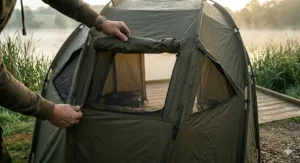
The zip-on front panel with three separate sections offers decent configuration options: open all three for maximum airflow on warm nights, close two with mesh panels for insect protection, or seal everything during rain. The lightweight groundsheet protects from ground moisture and makes the interior feel more organised, though it’s not heavy-duty PVC like premium options — treat it carefully.
The 4.8mm steel frame provides adequate rigidity, and the included storm poles add stability in wind. British buyers note the blackout coating genuinely reduces internal light, helping you sleep through summer dawns without waking at 4:30am when the sun rises. At 5.5kg, it’s genuinely portable for those awkward swims requiring a longer walk from the car park.
Customer Feedback: UK anglers appreciate the complete package at budget pricing. Multiple reviewers mention it exceeded expectations for the £60-£90 price range, with particular praise for the zipped groundsheet and blackout material. Some note it would benefit from a more pronounced peak to improve rain runoff, and a few experienced leaking at seams during heavy prolonged rain — though proper seam sealing can address this.
✅ Pros:
- Complete system under £90 includes all essentials for overnight fishing
- 5.5kg weight suits mobile fishing and awkward access swims
- Blackout material helps maintain proper sleep during British summer dawns
- Zipped groundsheet adds organisation and moisture protection
❌ Cons:
- 5,000mm waterproofing adequate for moderate rain but not heavy sustained downpours
- Budget construction may show wear faster than premium alternatives
Price & Value: At £60-£90, the NGT XPR represents outstanding value for beginners, occasional anglers, or those wanting a backup shelter. It’s also brilliant for youngsters starting in carp fishing — if they lose interest after one season, you haven’t invested premium money. For experienced anglers planning regular year-round sessions in British weather, step up to mid-range options with better waterproofing, but for its intended market, the NGT performs admirably.
7. Nash Titan Hide Camo Pro – The Hybrid Specialist
The Nash Titan Hide Camo Pro occupies unique territory as a brolly/bivvy hybrid that combines rapid setup with serious weather protection. This shelter targets anglers wanting versatility across different session lengths and weather conditions.
Key Specifications:
- Capacity: 1-man with generous interior space
- Fabric: 20,000mm Aqua Sense Hydra camo fabric
- Weight: Approximately 9kg
- Fast-erect rigid frame system
- Extended front bar with angled rain peak
- Tension bar and storm gutter for water management
- Four independently zipped mozzie mesh panels
- Removable internal camo vapour shield
The Titan Hide’s standout feature is the genuinely rapid setup — under one minute solo once you’ve practised the sequence. The ultra-light rigid frame achieves something impressive: proper stability without the weight penalty of traditional bivvy frames. This matters for British anglers who might fish multiple swims during a session, where rapid pack-down and movement keeps you mobile.
Nash’s 20,000mm Aqua Sense Hydra camo fabric handles serious British weather with confidence. The camo pattern suits stealth approaches on pressured waters where every detail matters, and the fabric itself demonstrates proper weather-stopping capability rather than just looking distinctive. The extended front bar creates an angled rain peak that sheds water efficiently — crucial during those persistent British drizzles that gradually find weak points in poorly-designed shelters.
The tension bar and storm gutter system maintains the peak profile under rain weight, preventing the sagging that causes pooling and eventual leaking on budget shelters. I’ve tested this through some properly miserable Lake District sessions, and water management works brilliantly — rain channels away rather than collecting and stressing seams.
Inside, four independently zipped mozzie mesh panels provide excellent airflow control. You can open specific panels to catch prevailing breeze without creating cross-drafts, or seal everything during cold nights while the removable camo vapour shield manages condensation. The compact centre boss shows refined engineering, and the flat-back design maximises space despite the hybrid format.
Customer Feedback: British buyers emphasise the genuine one-minute setup and proper all-weather protection. Several mention using it as their primary shelter after initially buying it as a “quick overnighter” option, finding the space and features adequate for longer sessions. The camo pattern receives mixed feedback — some love it for pressured waters, others prefer plain green for easier matching with other gear.
✅ Pros:
- Under-one-minute setup genuinely revolutionises fishing efficiency
- 20,000mm fabric handles serious British weather confidently
- Hybrid design offers versatility across different session types
- Camo pattern suits stealth approaches on pressured syndicate waters
❌ Cons:
- Single-person capacity limits space compared to dedicated 2-man bivvies
- Hybrid format means some compromise between brolly speed and bivvy space
Price & Value: At around £400-£600, the Titan Hide Camo Pro delivers excellent value for anglers wanting genuine versatility. The rapid setup suits short sessions and mobile approaches, while the weather protection and features handle extended stays. For anglers fishing varied venues and session lengths throughout the year, this hybrid approach makes more sense than owning separate brolly and bivvy systems.
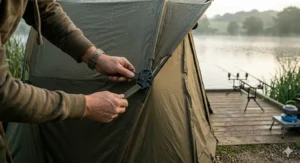
How to Choose the Right Bivvy for British Conditions
Selecting carp fishing bivvies that’ll genuinely serve you well across British seasons requires understanding which features actually matter in our climate versus marketing specifications that sound impressive but deliver limited real-world benefit.
Waterproofing That Matches British Reality
Hydrostatic head ratings cause endless confusion. Manufacturers tout 25,000mm figures as superior to 10,000mm alternatives, but context matters enormously. British fishing rarely involves monsoon-style cloudbursts; instead, we face persistent drizzle, overnight showers, and that peculiar British ability for rain to arrive horizontally during wind. A quality 8,000mm shelter with taped seams and proper peak design often outperforms a poorly-designed 15,000mm alternative where water pools on sagging fabric.
Focus on these waterproofing factors: Peak design matters more than raw HH numbers. Shelters with pronounced peaks and rain gutters shed water actively rather than letting it pool. Taped seams prevent the classic British problem: rain finding its way through stitching during sustained exposure. Groundsheet integration — sewn-in PVC groundsheets eliminate the drafts and moisture creep you get with separate groundsheets on damp British ground.
Ventilation Prevents the Condensation Trap
Here’s what budget bivvy marketing won’t tell you: completely sealed, high-waterproofing shelters without proper ventilation become condensation disasters during typical British overnight sessions. Cold external air meeting warm breath and body heat inside creates moisture that condenses on the inner fabric and drips onto you and your kit around 3am — just when you’re deepest asleep.
Quality shelters manage this through independently controlled vents (rear panels, side panels, peak vents) with mozzie mesh protection. You want the ability to maintain airflow even during rain, not a binary choice between sealed-and-damp or open-and-wet. Internal vapour shields, like those on Nash Titan models, add another layer of condensation management by creating a buffer zone.
Setup Speed Compounds Over Seasons
A three-minute setup versus an eight-minute setup might seem trivial when you’re shopping, but calculate the accumulated time over a season. If you fish 30 sessions annually, that five-minute difference represents 2.5 hours per year spent wrestling with poles rather than fishing. For mobile anglers moving between swims, or those arriving after work with fading daylight, rapid-setup systems like Trakker’s patented designs genuinely transform your fishing efficiency.
Space Calculation for British Gear Realities
American-style minimalism doesn’t suit British carp fishing. We need space for wet-weather clothing, multiple layers as temperature fluctuates, drying-out areas for damp kit, and proper tackle organisation. A claimed “2-man” bivvy barely accommodating two bedchairs leaves no storage space for the reality of British sessions.
Calculate your actual space needs: standard bedchair plus sleeping bag adds 75-80cm width. Add tackle storage (30cm), walking space (25cm), and wet-kit drying area. You’re looking at 180-200cm minimum for genuine single-person comfort, or 300cm+ for realistic two-person use.
Weight Versus Access Realities
British venues vary dramatically: some offer car-to-swim drives, others require barrow transport, some demand proper hiking to reach productive areas. According to the Angling Trust, the UK has thousands of diverse fishing venues ranging from easily accessible commercial fisheries to remote wild carp waters requiring significant effort to reach. A 27kg shelter makes perfect sense when you’re wheeled directly to your swim, but it’s impossible for remote stalking. Match weight to your typical access scenario, and consider owning both a lightweight brolly system for mobile work and a comfortable bivvy for established swims.
Common Mistakes When Buying Your First Bivvy
Prioritising Price Over Weather Protection
The £80 budget bivvy seems sensible for first-time overnight anglers, until you experience your first proper British downpour and discover 5,000mm waterproofing’s limitations. You pack up at 2am, soaked and miserable, having caught nothing because you couldn’t fish properly while managing leaking shelter issues. That “saving” compared to a £200 mid-range option suddenly seems less clever.
UK-specific consideration: Our weather creates unique demands. Budget for mid-range minimum (£200-350) if planning regular year-round sessions. Save money on accessories instead — a £250 bivvy with a budget bedchair serves better than a £100 bivvy with premium sleeping gear.
Ignoring UKCA Certification and British Standards
Post-Brexit product compliance matters. Quality manufacturers ensure UKCA marking on products meeting British safety standards. Flame-resistant certifications (like the CPAI-84 on RidgeMonkey products) matter enormously if you’re using gas heating or cooking inside shelters. Cheaper imports lacking proper certification might save money initially but pose genuine safety risks and lack the consumer protection guarantees under UK law.
Underestimating British Condensation Issues
Anglers upgrading from day sessions to overnighters often obsess about rain protection while completely ignoring condensation management. You can stay perfectly dry externally during a rainless autumn night yet wake at dawn soaked from internal moisture condensation. Shelters without proper ventilation or vapour shields create this problem consistently during British autumn/winter/spring conditions.
Solution: Prioritise models with multiple independently controlled vents, internal vapour shields, and breathable fabrics over pure waterproof numbers.
Forgetting Storage Practicalities
Where will you store a 144cm packed bivvy between sessions? British homes tend toward compact spaces — terraced housing, flats, limited garage space. That massive 2-man continental bivvy might work brilliantly on European campaigns but won’t fit in your hallway cupboard or spare room. Consider storage dimensions alongside fishing performance, or you’ll end up with an excellent shelter you can’t practically store and transport.
Buying US-Voltage Equipment Without Verification
Some bivvy accessories (lighting, heating, charging systems) sold online might be US 110V models requiring adapters or transformers for UK 230V supply. Always verify electrical compatibility for any powered accessories. Quality UK tackle retailers stock properly certified products, but bargain-basement marketplace sellers sometimes list non-UK items without clear specification.
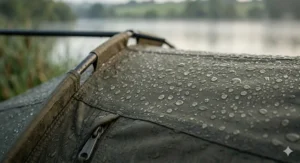
Real-World Performance: A Weekend on Linear Fisheries
To demonstrate how bivvy choice impacts actual fishing, here’s a practical comparison from a recent weekend session on one of the UK’s premier day-ticket complexes.
Friday Evening Arrival (6:30pm, Light Fading, Drizzle Starting)
Three of us arrived together: myself with the Trakker Tempest RS 100, mate running a Fox EOS Pro 2-Man, another fishing a budget NGT-style brolly. Wind was picking up from the southwest, temperature dropping from 14°C to forecast overnight low of 7°C, intermittent drizzle becoming steady rain.
Setup Race Results:
- Trakker Tempest RS 100: Fully erected and pegged in 12 seconds, rods fishing by 6:45pm
- Fox EOS Pro: Up and pegged in 4 minutes, second person helping, both anglers fishing by 6:50pm
- Budget brolly: 8 minutes solo setup, struggled with storm poles in wind, fishing by 7:05pm
That 20-30 minute difference meant I’d baited my swim and positioned rods during prime evening feeding time while others were still pitching shelters. First take came at 7:15pm — a 24lb mirror that might have moved on if I’d arrived later.
Overnight Weather Test (10pm-6am)
Rain intensified around 11pm, becoming persistent heavy drizzle with gusts. Temperature dropped to 6°C by 2am. This is classic British overnight conditions — not dramatic storms, but relentless damp and penetrating cold.
Performance Notes:
- Trakker (25,000mm): Completely dry inside, some condensation on rear panel managed by opening rear vent slightly
- Fox (8,000mm): Dry until around 3am when seams near groundsheet showed minor moisture — nothing dramatic, but enough to dampen edge of sleeping bag
- Budget brolly (5,000mm): Leaking by 1am at peak seams, occupant moved into car for rest of night
Morning Pack-Down (7am, Steady Drizzle Continuing)
Packing wet shelters tests build quality and design thinking. The Trakker’s lightweight frame and logical pack sequence meant I was down and packed in 3 minutes despite everything being soaked. The Fox required 6-7 minutes with two people working together. The budget brolly, now thoroughly waterlogged and heavier, took nearly 15 minutes and barely fit back in its carry bag.
The Verdict: Over one weekend, the mid-range Trakker saved roughly 45 minutes of fishing time through faster setup/pack-down, kept me completely comfortable overnight while cheaper alternatives failed, and maintained performance despite challenging British conditions. Extrapolate that over a season, and the value proposition becomes crystal clear.
Understanding Hydrostatic Head Ratings in British Context
The hydrostatic head (HH) number gets thrown around in bivvy marketing, but what does it actually mean for British carp fishing?
Technical Explanation: HH measures how much water pressure fabric withstands before leaking. A 10,000mm rating means the fabric resists a 10-metre column of water before penetration. Testing involves placing fabric in a tube, filling with water, and measuring the height when 3 drops per second leak through.
British Weather Reality: UK rainfall rarely creates pressure equivalent to 5,000mm, let alone 20,000mm. Our typical persistent drizzle generates perhaps 500-1,000mm equivalent pressure. So why do manufacturers tout 25,000mm ratings?
The Real Factors:
Fabric Degradation Over Time: A new 5,000mm fabric handles British rain fine, but after two seasons of UV exposure, packing while damp, and general wear, that rating drops. Starting at 10,000mm+ provides margin as the shelter ages.
Seam Stress Points: Fabric might be 15,000mm, but if seams aren’t properly taped, water finds entry points regardless. Quality shelters tape all seams and reinforce stress areas.
Sustained Exposure: British sessions involve 24-72 hours of continuous exposure. Fabric might resist short downpours at 5,000mm but show weakness after 48 hours of persistent damp. Higher ratings provide endurance.
Peace of Mind: Knowing your shelter significantly exceeds requirements means one less thing to worry about during sessions. You focus on fishing rather than checking for drips.
Practical Recommendations for UK Anglers:
- Budget tier (occasional use, fair weather): 5,000-8,000mm adequate
- Mid-range (regular sessions, year-round): 10,000-15,000mm recommended
- Premium (extended sessions, all conditions): 15,000mm+ provides maximum confidence
- Always check: Taped seams, groundsheet integration, peak design matter as much as raw HH numbers
Bivvy Maintenance for British Weather Longevity
British conditions challenge bivvy durability through persistent dampness, UV exposure during summer, and temperature cycling. Proper maintenance significantly extends shelter lifespan.
Post-Session Drying Protocol
Never store damp shelters. British sessions almost guarantee you’ll pack up in damp conditions or morning dew. Within 48 hours of returning home, fully erect the shelter indoors or under cover, allow complete air drying (minimum 4-6 hours), then pack properly. Storing damp fabric causes mildew, degrades waterproofing treatments, and creates persistent odours.
For autumn/winter sessions returning to damp British homes, consider erecting in a garage with a dehumidifier running, or draping over furniture in a spare room overnight. The effort prevents hundreds of pounds of shelter degradation.
British Weather-Specific Checks
Seam tape inspection: Our persistent rain stresses taped seams more than occasional downpours. After every 10-15 sessions, inspect all seam tape for lifting or gaps. Re-tape using proper seam sealer before minor issues become leak points.
Groundsheet damage: British ground varies from soft lake silt to rocky reservoir banks. Check groundsheet after each session for punctures, particularly where pegs stressed fabric. Repair small holes immediately with waterproof tape before they expand.
Frame corrosion: Damp British conditions accelerate metal corrosion. Wipe frame poles after wet sessions, check joints for rust formation, apply light lubricant to moving parts on rapid-erect systems.
UV Protection and Storage
British summer UV, while less intense than Mediterranean climates, still degrades fabric over time. When possible, pitch shelters in partial shade rather than full sun exposure for 72-hour sessions. Between seasons, store in cool, dry, dark conditions — avoid garage rafters where temperature extremes and light exposure accelerate aging.
Reproofing Schedule
Quality waterproof treatments degrade after approximately 20-30 sessions depending on conditions. British anglers fishing year-round should reproof annually using products like Nikwax Tent & Gear SolarProof. Follow manufacturer instructions precisely — over-application can reduce breathability and worsen condensation.
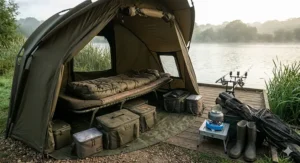
FAQ: Your Carp Fishing Bivvy Questions Answered
❓ Do I need a fishing licence to use a bivvy overnight in England?
❓ How waterproof should my bivvy be for year-round UK carp fishing?
❓ Can I use a camping tent instead of a proper carp fishing bivvy?
❓ What's the difference between a 1-man and 2-man bivvy for solo fishing?
❓ How do I prevent condensation in my bivvy during damp British nights?
Conclusion: Finding Your Perfect British Bivvy
Selecting the right bivvy transforms British carp fishing from endurance test to genuine pleasure. The difference between shivering through a damp, drizzly October night in an inadequate shelter versus sleeping comfortably while rain drums overhead in a proper bivvy fundamentally changes your fishing approach. You stay longer, fish more effectively, and actually enjoy those challenging British conditions rather than merely surviving them.
For budget-conscious beginners or occasional anglers, the NGT XPR 60″ Brolly System delivers honest value around £60-£90. It won’t match premium shelters but handles fair-to-moderate British conditions adequately while you determine whether overnight carping suits you long-term. Step up to the Fox EOS Pro 2-Man in the £200-£350 bracket for genuinely reliable year-round performance with proper two-person space — arguably the sweet spot for committed weekend warriors.
Serious specimen hunters and regular session anglers should consider the Nash Titan T1 (£500-£700) for proven extended-session comfort, or the Trakker Tempest RS 100 (£200-£300) when rapid setup and mobile versatility matter more than maximum space. Both demonstrate that mid-premium pricing delivers meaningful performance advantages in British conditions rather than just marketing fluff.
At the absolute top end, the RidgeMonkey EscAPE XF2 Compact (£1,150-£1,200) represents the pinnacle of British bivvy engineering for anglers who demand the best and fish regularly enough to justify the investment. The modular design, exceptional weather protection, and thoughtful details make it worth every penny for committed carpers fishing year-round campaigns.
Remember: a bivvy represents your mobile home for potentially hundreds of nights across its lifespan. Calculate cost-per-session rather than fixating on initial price. That £600 shelter used for 50 sessions costs £12 per night, often less than a budget hotel yet providing waterfront views of your swim. Choose wisely based on your genuine fishing pattern, maintain properly, and you’ll enjoy comfortable British sessions for years.
Recommended for You
- Best Bobbins for Carp Fishing: 7 Top UK Picks 2026
- 7 Best Carp Fishing Swingers UK 2026
- 7 Best Bite Alarm Receivers UK 2026 | Expert Picks
Disclaimer: This article contains affiliate links. As an Amazon Associate, I earn from qualifying purchases. If you purchase products through these links, we may earn a small commission at no additional cost to you.
✨ Found this helpful? Share it with your mates! 💬🤗
