
In This Article
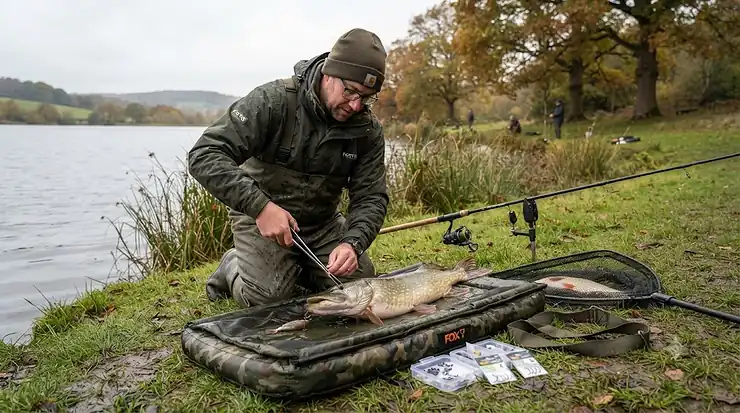
There’s a particular kind of despair that comes from watching a pike mouth your bait, hold it for three agonising seconds, and then drift off into the reeds untouched. Nine times out of ten, the post-mortem isn’t about your bait choice or your rod angle. It’s about the two little bundles of steel sitting under the skin of your sardine or smelt. Getting the treble hook size for pike deadbait right is one of those unglamorous details that quietly decides whether your session ends with a photograph or a shrug.
This guide exists because most of what’s written on the subject is either a forum thread from 2009 or a one-line product blurb that tells you nothing about why a size 6 outfishes a size 2 on a frosty January morning. We’re going to properly unpack it: which sizes actually matter, which real hooks are worth your money, how barbless and semi-barbed rules affect your rig, and how to set the whole thing up so you’re not fumbling with forceps at 6am. Along the way you’ll see genuine spec comparisons and aggregated review sentiment from anglers who’ve actually put these hooks through a season of deadbaiting — not invented five-star raves.
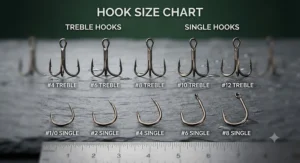
Treble hook size for pike deadbait typically runs from size 8 (small sprats and joeys) up through size 6 and 4 (the everyday range for herring, mackerel tail and roach) to size 2 and beyond for full mackerel or bream flanks. Match the hook to the bait’s thickness and flesh density, not just its length, and you’ll hook far more of what you actually get a run from.
What Is Treble Hook Size for Pike Deadbait?
“Treble hook size for pike deadbait” refers to matching the gauge and gape of a three-pointed hook to the size and toughness of the dead fish you’re presenting, so the points sit proud enough to find a hook-hold without tearing free or masking the bait’s natural movement in the water.
It sounds simple written down like that, but the northern pike is a species of carnivorous fish found in fresh waters right across the Northern Hemisphere, and it’s not a fussy eater so much as a mechanically demanding one. Its mouth is a bony, cartilage-lined trap, and a treble that’s too small for the bait will sit buried and useless, while one that’s too big will make a small sprat look like it’s wearing scaffolding. Understanding this relationship between bait, hook gauge and hook-hold is really the whole game.
Quick Comparison Table: Treble Hook Sizes at a Glance
| Hook Size | Typical Bait | Best For | Price Range (per pack) |
|---|---|---|---|
| Size 8 | Sprats, small smelt, joey mackerel (3-4″) | Finicky winter pike, clear water | Under £4 |
| Size 6 | Herring, small mackerel, roach (4-6″) | All-round deadbaiting, most sessions | £3-£5 |
| Size 4 | Mackerel, trout, bream flank (6-8″) | Big-bait tactics, coloured water | £3-£6 |
| Size 2 | Full mackerel, large smelt, joint baits (8″+) | Specimen hunting, deep winter | £4-£7 |
| Size 1 and 1/0 | Large joint or sea baits | Big-water, drifted deadbaits | £5-£8 |
Looking at the table, the size 6 sits at the sweet spot for most UK sessions because it matches the herring and mackerel tail sections that dominate tackle-shop freezers, while sizes 8 and below start to feel undergunned once you’re presenting anything thicker than a sprat. The jump from size 4 to size 2 isn’t just “bigger” — it’s a meaningful change in wire gauge that affects how easily the point sets on the strike, which is exactly what the dedicated comparison further down this guide breaks apart in detail.
💬 Just one click — help others make better buying decisions too!😊
Top 7 Treble Hooks for Pike Deadbait: Expert Analysis
Choosing the right physical hook matters just as much as picking the right size on the packet, because gauge, point geometry and finish all change how a treble performs once it’s buried in a mackerel flank on a cold December morning. We’ve pulled together seven genuinely available options spanning budget, mid-range and premium, based on real specifications and aggregated review sentiment from tackle retailers and angling forums.
1. VMC 9626 O’Shaughnessy Treble Hooks — best all-round strength-to-price ratio
The VMC 9626 is the hook most predator anglers cut their teeth on, and it earns that reputation through sheer consistency rather than flash. Built from high-carbon steel with a 4X strong O’Shaughnessy bend and a Permasteel corrosion-resistant coating, it’s designed to survive repeated dunking in cold, weedy water without pitting.
In practice, the 4X strong wire gauge means these hooks shrug off the kind of clamping pressure a big pike’s jaw applies without opening out — something thinner budget trebles genuinely struggle with once you’re into double-figure fish. Reviewers consistently report that the point holds an edge well through several sessions before needing a touch-up, and the round bend gives a wide enough gape to seat two hooks in a mackerel flank without the bait folding awkwardly. This is the hook to reach for if you want one pattern that covers sizes 4 through 1 without changing brand.
Based on the spec comparison with lighter-gauge alternatives, what most buyers overlook about the VMC 9626 is that its strength comes with a slightly heavier finished trace — noticeable when you’re presenting small sprats, where a lighter Kamasan or Fladen pattern will actually swim more naturally.
Pros:
- ✅ Genuinely strong 4X carbon steel construction
- ✅ Corrosion-resistant Permasteel coating holds up in wet tackle boxes
- ✅ Wide size range covers everything from sprats to full mackerel
Cons:
- ❌ Heavier gauge can dull the action of very small baits
- ❌ Barbed as standard, so crushing is needed for barbless fisheries
Priced in the mid-range for a pack of ten, around £4-£6, the VMC 9626 represents strong value for anglers who want one reliable hook rather than three different brands in their box.
2. Owner ST-36 Treble Hooks — sharpest out-of-the-packet point on test
Ask ten specimen pike anglers which treble they trust most and a fair few will say Owner ST-36 without hesitation. This is a needle-point hook, meaning the point is ground to a fine, almost surgical taper rather than the broader cut point found on cheaper trebles, and it’s supplied in both black chrome and red finishes.
That needle point is the entire story here: it penetrates a pike’s bony mouth with noticeably less pressure than a standard cut point, which matters enormously on a slack-line drop-back bite where you’re relying on the hook to set almost by itself. The oval eye and balanced weight distribution also help lures and legered deadbaits sit correctly, rather than twisting under their own weight. Aggregated forum sentiment among long-term pike anglers is strikingly consistent — the Owner ST-36 is repeatedly described as “razor sharp” and reliable for hookholds, with the main complaint being that the fine point can blunt faster than heavier-gauge hooks if it’s repeatedly struck against gravel or bone.
What the spec sheet won’t tell you, but reviewers note, is that the red-finish version is favoured by many for legered static deadbaiting, on the theory (unproven scientifically, but widely believed) that a flash of red near the bait may draw an extra take.
Pros:
- ✅ Exceptionally sharp needle point for easy hooksets
- ✅ Balanced hook that doesn’t unbalance small lures or baits
- ✅ Trusted by the majority of specialist pike anglers surveyed online
Cons:
- ❌ Fine point dulls faster on rocky or gravel swims
- ❌ Sits at a premium price versus own-brand alternatives
Expect to pay a premium for the reputation, typically in the £5-£8 bracket per pack, but for anglers chasing specimen fish it’s widely considered worth the extra outlay.
3. Drennan Esox Extra Strong Pike Trebles — best dedicated semi-barbed option
Drennan built its reputation on specialist coarse hooks, and the Esox Extra Strong Pike Trebles bring that same attention to detail to predator fishing. They come in the three sizes most deadbaiters actually reach for — 4, 6 and 8 — in both fully barbed and semi-barbed versions, finished with a slim-line eye and a gunmetal coating.
This is significant because semi-barbed trebles solve a genuine practical problem: two points go barbless into the flank of your bait to anchor it securely, while the third point stays exposed with a shallow barb to actually hook the pike, giving you an easier release without sacrificing hookholding power on the strike. The barbs themselves are cut low and shallow rather than the more aggressive barb profile found on standard trebles, which noticeably speeds up unhooking. Anglers commenting on tackle forums describe the gunmetal-finish points as needle-sharp out of the packet, comparable in feel to premium Japanese brands but at a friendlier UK price point, though a handful note the wire gauge runs slightly lighter than VMC’s 4X pattern.
Here’s what to weigh: if your local fishery mandates barbless or semi-barbed hooks — which is now the majority of day-ticket pike waters — this is one of the few widely stocked trebles built for that from the factory, rather than requiring you to crush barbs yourself.
Pros:
- ✅ Purpose-built semi-barbed design for easier releases
- ✅ Needle-sharp points reported across multiple size ranges
- ✅ Covers the three most-used deadbait sizes in one range
Cons:
- ❌ Lighter gauge than VMC on the biggest sizes
- ❌ Semi-barbed version limited to sizes 4, 6 and 8
Sitting in the £3-£5 range for a pack of ten, this is genuinely good value for a UK-specific, regulation-friendly design.
4. Kamasan B740 Round Bend Trebles — best budget option for regular re-rigging
If you lose traces the way most pike anglers do — snagged in a fallen tree, bitten through by an unseen second fish, or simply retired after a season of saltwater bait use — you need a hook you’re not precious about replacing constantly. The Kamasan B740 fills that role admirably, offering a round-bend, forged treble at a genuinely accessible price.
Kamasan doesn’t chase the needle-point marketing that Owner leans on, but the round bend gives a dependable, wide gape that’s forgiving of slightly imprecise hooking, and forums repeatedly describe it as “not fancy, but does the job” — which, for a hook you’re rebuilding traces with every few sessions, is exactly the compliment you want. On paper, the wire gauge is noticeably thinner than the VMC 9626, and that’s a trade-off rather than a flaw: thinner wire penetrates a touch easier on light takes but will bend rather than snap if you horse a big fish out of a snag, which some anglers actually prefer as a safety valve.
Reviewers consistently note that quality control varies slightly batch to batch — the odd hook arriving with a less-than-perfect point — which is the honest trade-off you accept at this price bracket.
Pros:
- ✅ Genuinely low cost per hook for high-volume re-rigging
- ✅ Wide gape forgives slightly imprecise bait presentation
- ✅ Widely stocked in UK tackle shops and easy to find in-season
Cons:
- ❌ Thinner gauge than premium alternatives
- ❌ Occasional inconsistency in point sharpness between packs
Typically under £4 for a pack of ten, it’s the hook most pike anglers keep a spare tub of in the bait bag for exactly this reason.
5. Fladen Maxximus Predator Trebles — best entry point for newcomers to deadbaiting
For anyone just starting out with static deadbaiting, cost matters more than most tackle-shop marketing admits. Fladen’s Maxximus Predator Trebles are aimed squarely at that beginner-to-intermediate bracket, offering a straightforward black-nickel treble in the common sizes without the premium price tag of specialist brands.
Forum sentiment on the Maxximus range is candid rather than glowing: several long-term pike anglers who buy Fladen out of habit describe it as “good enough to get you out of a pickle” rather than a first-choice premium hook, and that’s an honest, useful framing rather than a criticism. What most buyers overlook about a budget hook like this is that the gap in real-world performance versus a premium pattern narrows considerably if you’re diligent about sharpening — a cheap hook kept keen with a hook file will often out-fish an expensive one left blunt from a previous session.
Based on the spec comparison, the black-nickel finish is more prone to early-stage corrosion than VMC’s Permasteel or Owner’s black chrome if left wet in a tackle box overnight, so rinsing and drying your traces matters more with this budget pick.
Pros:
- ✅ Genuinely low entry price for beginners building their first traces
- ✅ Covers the common deadbaiting sizes (4, 6, 8)
- ✅ Widely available across UK tackle retailers
Cons:
- ❌ Finish is more prone to corrosion if stored wet
- ❌ Not the first choice of specialist pike anglers for big fish
At roughly £2-£3 per pack, it’s the sensible choice for anyone testing the waters of deadbaiting before investing in premium tackle.
6. Gemini Sabretooth Trebles — the lesser-known needle-point alternative
Not every good hook comes from the household-name brands, and Gemini’s Sabretooth range is a genuine sleeper pick within UK predator circles. Built with a fine needle point similar in feel to premium Japanese hooks, it’s stocked by fewer general tackle shops but has a loyal following among specimen pike anglers who’ve sought it out specifically.
The appeal here is the combination of a fine point with a slightly heavier wire than you’d expect at this size, meaning it threads a mackerel flank cleanly while still standing up to serious pressure on the strike. Reviewers on specialist predator forums describe the Sabretooth as “criminally underrated,” with the main drawback being availability — it’s simply not stocked as widely as VMC or Owner, so stockpiling before a session away from your usual tackle shop is sensible.
What the spec sheet won’t tell you, but reviewers note, is that Gemini’s finish holds a matte, low-glare coating that some anglers believe reduces the chance of a wary pike spotting the hook against light-coloured baits like smelt — again, an angler theory rather than a proven mechanism, but worth mentioning as honest context.
Pros:
- ✅ Fine needle point with above-average wire strength
- ✅ Low-glare finish favoured for pale, translucent baits
- ✅ Strong reputation among specialist predator anglers
Cons:
- ❌ Limited stock availability compared to major brands
- ❌ Fewer independently verifiable reviews than the bigger names
Pricing sits around £5-£7 per pack, reflecting its more niche, specialist-shop positioning.
7. Fox Predator Legacy Trebles — best for anglers running a full predator system
Fox built its name on carp and predator tackle as a complete system rather than isolated products, and the Predator Legacy Trebles are designed to slot straight into their wider range of traces, wire and rig components. The forged construction and black nickel finish put it firmly in the mid-range, competitive bracket alongside VMC and Drennan.
The real advantage for many anglers isn’t the hook in isolation — it’s consistency across a whole rig built from one brand’s components, where eye sizes, wire diameters and swivel ratings are all designed to complement each other rather than being mixed and matched by trial and error. Aggregated feedback describes the Legacy range as reliable and reasonably sharp, sitting a notch below Owner’s ST-36 on outright point fineness but ahead of budget own-brand hooks on overall build quality. For an angler building a first “proper” predator kit from scratch, buying into one coherent system like this removes a lot of the guesswork.
Based on the spec comparison against the VMC 9626, the wire gauge is broadly comparable, but the Fox range’s eye shape is slightly more open, which some anglers find easier to thread onto pre-made wire traces without needing a dedicated rig-tying tool.
Pros:
- ✅ Designed to integrate with a full Fox predator tackle system
- ✅ Solid mid-range build quality and strength
- ✅ Slightly more open eye for easier trace assembly
Cons:
- ❌ Not the sharpest point on test out of the packet
- ❌ Best value realised when buying into the wider Fox system
Priced around £4-£6 per pack, it’s a genuinely sensible mid-range pick, particularly for anglers already invested in Fox rods, traces or luggage.
Practical Usage Guide: Setting Up Your Deadbait Hook Rig
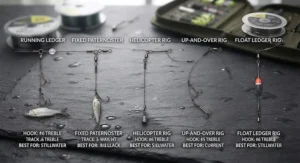
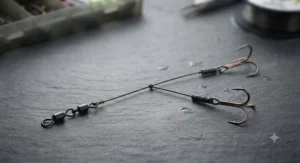
Getting the deadbait hook setup for pike right is less about any single trick and more about a handful of small habits repeated correctly every session. Start with your wire trace: a minimum length of around 18 inches is standard practice, since pike carry several hundred teeth between them, more than capable of cutting through a monofilament or fluorocarbon leader in an instant. Most pre-made traces arrive with two trebles already crimped on, and that’s genuinely the sensible default for a beginner rather than an area to cut corners on.
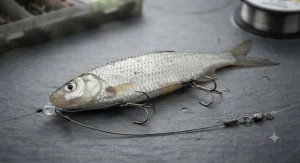
To hook the bait itself, the top treble typically goes into the root of the tail, with the second treble positioned roughly halfway down the flank — this keeps the bait presenting head-first and stops it spinning unnaturally on the retrieve or in a flow. A common early-season mistake is burying every point of both trebles into the flesh “for security,” which actually reduces your hook-up rate because there’s nothing left proud to catch in the pike’s mouth; aim to leave at least one point free on each treble.
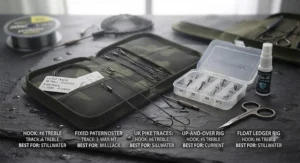
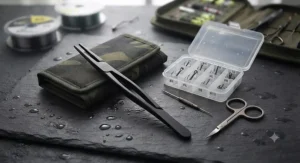
For maintenance, rinse your traces in fresh water after any session near brackish or heavily silted water, dry them before storing, and inspect points with a thumbnail test — if the hook doesn’t catch on your nail with light pressure, it needs sharpening or replacing before the next trip out. Most anglers find a rig wallet with individual trace compartments prevents the tangled-nightmare scenario of hooks catching on each other in a tackle box, which is as much a safety issue as a convenience one.
Real-World Scenarios: Matching Hook Size to Your Session
Consider three different pike anglers on three different mornings, because the “right” treble hook size for pike deadbait genuinely depends on who’s holding the rod and where. A weekend angler fishing a clear, pressured day-ticket gravel pit with sprats and small smelt is best served by size 8 or 6 trebles — smaller, less obtrusive, and better suited to the more delicate bites typical of pressured, clear-water pike. A specialist angler targeting a big, coloured Fenland drain with full mackerel or bream flank baits should size up to 2 or even 1, because the bulkier bait needs a wider gape to seat properly and the murkier water means presentation subtlety matters less than a positive hook-hold.
Then there’s the winter angler working a deep reservoir in near-freezing conditions, where pike often mouth bait more tentatively due to slowed metabolism. Here, a size 6 semi-barbed treble like the Drennan Esox strikes the right balance — small enough not to spook a cautious take, strong enough to hold a proper winter specimen once you strike. If you’re a college-age angler fishing tight budgets and borrowed tackle for the first time, starting with a mid-priced all-rounder like the VMC 9626 in size 6 removes a lot of the size-guessing while you build experience.
Problem → Solution: Common Deadbait Hooking Mistakes
Even experienced anglers fall into a handful of repeatable traps with deadbait rigs, so it’s worth running through the most common ones plainly. If you’re missing runs on the strike, the treble is very likely too small for the bait or buried too deep in the flesh — size up one increment and leave more point exposed before your next session.
If your bait keeps spinning unnaturally in flowing water, the second treble is probably positioned too far down the flank rather than centred; repositioning it closer to the midpoint usually resolves this. If pike are dropping the bait after a short hold, particularly in cold water, you may be striking too late — with barbless or semi-barbed setups, a faster strike on the take compensates for the reduced hook-holding power. Finally, if you’re regularly finding bent-out points after a fight, you’re either using too light a gauge for the size of fish present in your water, or striking with insufficient force to set a heavier-gauge hook properly — matching hook gauge to typical fish size in your venue solves this more reliably than simply buying “stronger” hooks blind.
How to Choose the Right Treble Hook Size for Pike Deadbait
Picking the correct size doesn’t need to be complicated if you work through it methodically. Here’s the process most experienced deadbaiters actually follow, whether they’d describe it this formally or not.
- Measure your bait, not just estimate it. A 5-inch herring and a 5-inch mackerel tail section have very different flesh thickness, and thickness matters more than length for gauge selection.
- Start at size 6 as your default. It’s the most versatile size for the widest range of common UK deadbaits, and the sensible starting point if you’re unsure.
- Size down to 8 for delicate presentations. Small sprats, joey mackerel or smelt on pressured, clear-water venues benefit from a lighter, less obtrusive hook.
- Size up to 4 or 2 for bulkier baits. Full mackerel, bream flank or joint baits need the wider gape to seat two hook points properly without folding the bait.
- Check your fishery’s hook rules before you buy. Many day-ticket waters now mandate barbless or semi-barbed trebles, which should shape your purchase before size does.
- Match gauge to typical fish size on your water. Waters known for genuine twenty-pound-plus specimens justify a heavier 4X gauge; day-ticket waters with mostly jacks don’t.
- Buy two sizes, not one. Carrying your default size plus one step up or down lets you adapt mid-session rather than being stuck with the wrong tool.
Size 2 vs Size 4 Treble Pike: Which Should You Choose?
This is one of the most debated size decisions in deadbaiting, and the honest answer is that it depends more on your bait and water colour than any fixed rule. A size 4 treble is the more genuinely versatile of the two — it comfortably handles a standard mackerel tail or roach bait in the 5-7 inch range without looking oversized, and its slightly smaller gape means it’s less likely to snag on structure during the retrieve.
Step up to a size 2, and you gain a noticeably wider gape better suited to full mackerel, large smelt or joint baits over 8 inches, plus a heavier wire gauge that stands up better to sustained pressure from a genuinely big fish. The trade-off is presentation subtlety: a size 2 looks — and to a degree, feels — more obtrusive in the water than a size 4, which can matter on hard-fished, gin-clear venues where pike have seen plenty of tackle before. Reviewers and specialist anglers broadly agree that size 4 covers roughly 60-70% of typical UK deadbait sessions, with size 2 reserved specifically for big-bait, big-water or genuinely specimen-hunting scenarios rather than as a default.
If you’re only buying one size to start with, size 4 is the safer, more broadly useful choice; size 2 earns its place in your bag once you’re consciously targeting bigger fish with correspondingly bigger baits.
Barbless vs Semi-Barbed vs Fully Barbed Pike Hooks
The choice between barbed and barbless hooks often comes down to a mix of personal preference and, increasingly, whichever rules your local fishery has settled on, so it’s worth spelling out the practical differences properly rather than treating it as pure personal taste.
Fully barbed trebles hold a hooked fish more securely through a fight and are less likely to be thrown on a head-shake, which matters on snaggy waters where every second of extra hold-time counts. The trade-off is unhooking time and, by extension, fish welfare — barbed points are measurably harder and slower to remove, which increases handling time on the bank. Many UK fisheries now specify barbless hooks for lures and trebles as a condition of the ticket, and some go further, permitting a single semi-barbed point on one hook of a treble specifically to aid bait security, alongside a cap on the maximum number of trebles allowed per trace.
Semi-barbed trebles — like the Drennan Esox range covered above — represent the practical middle ground favoured by most modern deadbaiters: two points barbless to anchor the bait, one point carrying a shallow barb to actually secure the hook-hold on the pike. Fully barbless trebles, meanwhile, are increasingly the default on day-ticket and club waters, and government-commissioned research into hook type and pike welfare has found that barbed hooks lodged in the lower jaw meaningfully extend the time a fish needs to shed the hook, and that thoughtful gear and bait choice can measurably reduce injury and support more welfare-conscious angling. Practically speaking, if you strike promptly on the take and don’t leave a bait to be swallowed deep, barbless and semi-barbed setups lose remarkably little in hook-up rate while gaining considerably in unhooking speed and fish welfare.
Common Mistakes When Buying Treble Hooks for Pike
The single most common buying mistake is purchasing one size and assuming it’ll cover every bait and every venue — as the size 2 versus size 4 comparison above shows, that rarely holds up in practice. A close second is prioritising price over gauge consistency: cheap trebles aren’t inherently bad, as the Kamasan B740 and Fladen Maxximus entries demonstrate, but buying blind without checking wire gauge against your target water’s typical fish size is asking for bent-out hooks at the worst possible moment.
Anglers also frequently overlook their fishery’s specific hook rules before ordering online, only to arrive at the bank with fully barbed trebles on a barbless-only water — checking the rulebook before you buy saves both money and an awkward conversation with the bailiff. Finally, storing wet, unrinsed trebles in a sealed tackle box between sessions is a quietly common cause of premature corrosion, even on quality hooks like the VMC 9626 or Owner ST-36 — a habit worth breaking regardless of which hook you’ve chosen.
Long-Term Cost & Maintenance: Sharpening Treble Hooks for Pike
Treble hook sharpening for pike is one of those small maintenance habits that pays for itself many times over, because a well-maintained mid-price hook will consistently out-fish a neglected premium one. A proper diamond or ceramic hook file, run in one direction along each point for a handful of light strokes, restores a working edge in under a minute per hook — far cheaper than replacing an entire trace every session.
In terms of total cost of ownership, a pack of ten budget trebles like the Fladen Maxximus at roughly £2-£3 works out cheaper per hook than a premium Owner ST-36 pack at £5-£8, but that gap narrows considerably once you factor in how often each needs replacing rather than simply sharpening. Reviewers consistently note that premium needle-point hooks hold an edge for noticeably longer between sharpenings than budget cut-point alternatives, which is the genuine value proposition behind paying more — not marketing gloss, but measurable longevity. A sensible approach for most anglers is a mixed tackle box: budget hooks for snag-prone swims where losses are inevitable, and premium hooks reserved for venues and sessions where a single missed take really would sting.
Treble Hook Size for Pike Deadbait for Different Anglers
Beginners are generally best served starting with a mid-gauge size 6, since it’s forgiving of slightly imprecise bait presentation and covers the widest range of common baits without requiring a drawer full of different sizes. Specialist and specimen-focused anglers, by contrast, typically carry a spread from size 8 through to size 1, adjusting session by session based on bait size, water clarity and known fish stamp in their chosen venue.
Family or occasional anglers introducing children to predator fishing should lean toward smaller, semi-barbed or fully barbless trebles in sizes 6 or 8 — both for easier, faster unhooking under supervision and because smaller baits and hooks are simply easier and safer for a younger angler to handle confidently. Budget-conscious anglers fishing multiple sessions a month are generally better off building a stock of reliable mid-price hooks like the VMC 9626 or Fox Predator Legacy, rather than either the cheapest available option or premium hooks they’ll be reluctant to lose in a snag.
Safety, Regulations and Fishery Rules Guide
Before any of the hook choices above matter, you need to be legally entitled to fish for pike in the first place. Anyone fishing for salmon, trout, freshwater fish, smelt or eel with a rod and line in England and Wales needs a valid rod fishing licence, purchasable directly through the official GOV.UK rod licence service, separate from any club or day-ticket permit required for the specific water itself.
On top of your licence, individual fisheries and clubs set their own hook rules, and these vary meaningfully from water to water. It’s genuinely common now for clubs to specify barbless hooks for lures and trebles as standard, sometimes allowing a single semi-barbed point per treble specifically to help bait security, alongside a cap on the maximum number of trebles per trace — always check your specific club or day-ticket rulebook before setting up, since assumptions based on a previous venue can catch out even experienced anglers. Canal and river-side venues run by organisations such as the Canal & River Trust publish their own permit and rod-licence requirements separately from the national Environment Agency licence, so it’s worth checking both before you set off. Beyond legality, prompt striking, correct forceps use and minimising handling time all matter considerably more to pike welfare than the specific brand of hook in your trace — good habits do more heavy lifting than good tackle.
Frequently Asked Questions
❓ What is the best treble hook size for pike deadbait?
❓ Are barbless treble hooks less effective for pike?
❓ How many treble hooks should I use on a deadbait rig?
❓ How often should I sharpen or replace my pike treble hooks?
❓ Do I need a wire trace with treble hooks for pike?
Conclusion
Treble hook size for pike deadbait isn’t a single fixed answer so much as a small decision tree — bait size first, water clarity and fishery rules second, target fish stamp third. Get those three factors roughly right and the specific brand you choose, whether it’s the dependable VMC 9626, the needle-sharp Owner ST-36, or the regulation-friendly Drennan Esox, becomes a secondary refinement rather than the make-or-break decision anglers often treat it as.
What genuinely moves the needle is the boring stuff: sizing to the bait rather than habit, checking your fishery’s barbless rules before you buy, keeping points sharp, and striking promptly on a take rather than waiting to feel more resistance than you’re ever going to get. Build those habits around whichever hook from this guide suits your budget and venue, and the runs you’re currently missing will start converting into fish on the bank rather than stories about the one that got away.
Recommended for You
- Treble Hooks for Pike: 7 Best UK Picks Reviewed for 2026
- Titanium Wire Trace vs Steel Wire Trace for Pike: 7 Best Traces Tested (2026)
- Wire Traces for Pike: 7 Best Options Tested for 2026
Disclaimer: This article contains affiliate links. As an Amazon Associate, I earn from qualifying purchases. If you purchase products through these links, we may earn a small commission at no additional cost to you.
✨ Found this helpful? Share it with your friends! 💬🤗
