
In This Article
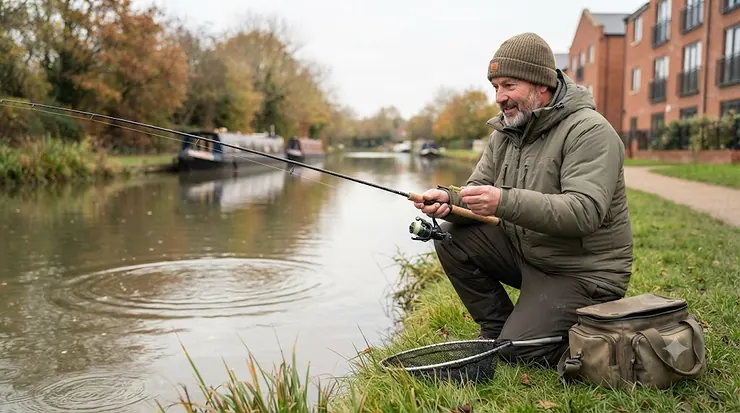
There’s a particular thrill to feeling a perch inhale a lure — that tiny, almost apologetic tap on the rod tip, followed by a stubborn, head-shaking scrap that punches well above the fish’s actual weight. Get the wrong perch fishing rod in your hand, though, and that same bite can vanish completely, swallowed by a blank too stiff to register anything subtler than a tug-of-war.
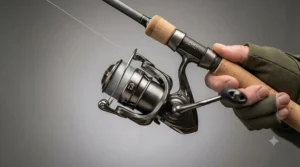
Perch have famously soft, vacuum-style mouths — they inhale prey rather than snatching it — which means a rod that’s too rigid can pull the lure straight back out before the hook ever finds purchase. The European perch is one of the UK’s most widespread predatory freshwater fish, found in canals, rivers, lakes and reservoirs across the country, which is part of why matching your rod to its feeding style matters so much. What actually makes a good perch rod, then? In short: a light, sensitive blank rated somewhere around 1-10g, matched to a small reel and light line, capable of transmitting the faintest knock through to your hand while still having enough backbone to steer a decent stripey away from snags.
This guide rounds up seven genuinely available UK spinning rods, from budget-friendly all-rounders to dedicated finesse blanks built for light rock fishing and micro-lure work, alongside a proper buying guide covering action, casting weight, and the small details that separate a rod that merely casts a lure from one that actually helps you catch on it. Whether you’re canal-bank casting on a lunch break or working a favourite stretch of river for double-figure sport, there’s a sensible match for your budget and your style below.
Quick Comparison Table
| Rod | Length / Rating | Best For | Price Range |
|---|---|---|---|
| Shakespeare Ugly Stik GX2 Spinning Rod | 6’6″, light power | Beginners wanting a tough all-rounder | £30-£45 range |
| Sougayilang Ultralight Spinning Rod | 2-piece, ultralight | Budget dedicated ultralight fishing | under £25 |
| Mitchell Epic MX2 Spinning Rod | Multiple sizes, fast action | Value-focused freshwater lure fishing | £20-£35 range |
| Shakespeare Agility 2 Spinning Rod | 7ft, 2-15g, 4-piece | Travelling anglers, tight swims | £35-£55 range |
| Daiwa Ninja Spin Spinning Rod | 7ft-8ft, 5-25g | All-round predator and perch fishing | £35-£55 range |
| Abu Garcia Venerate Spinning Rod | Multiple sizes, 24T carbon | Anglers wanting a genuine all-rounder | £40-£65 range |
| HTO Nebula Light Gamer | 7’2″, 2-10g | Finesse and light rock fishing specialists | £50-£75 range |
Scanning across the list, there’s a fairly clean split between generalist rods and dedicated finesse tools. The Ugly Stik GX2, Sougayilang Ultralight and Mitchell Epic MX2 are built to cover multiple species and survive the odd knock, which is exactly what a first perch rod needs to be. Once you know you’re hooked on lure fishing specifically, the Shakespeare Agility 2 and Daiwa Ninja Spin step up in casting range and sensitivity, while the Abu Garcia Venerate and HTO Nebula Light Gamer are built with finesse fishing front of mind — narrower casting weights, softer tips, and components chosen specifically to transmit the faintest perch knock rather than just cast a lure a long way.
💬 Just one click — help others make better buying decisions too!😊
Top 7 Perch Fishing Rods: Expert Analysis
Perch fishing spans everything from a quick lunchtime session on an urban canal to a dedicated river trip chasing double-figure specimens, so the rods below cover a genuine spread of budgets and specialisations rather than one narrow niche.
1. Shakespeare Ugly Stik GX2 Spinning Rod — near-indestructible budget all-rounder
The Shakespeare Ugly Stik GX2 Spinning Rod has built its reputation over decades on one simple promise: it is genuinely very hard to break. Constructed from Shakespeare’s signature blend of graphite and fibreglass using the Howald process, the blank flexes deep into a full parabolic curve rather than snapping under sudden pressure, which matters enormously for anyone still learning to play a fish on light gear.
Available in light-power spinning configurations with lure ratings suited to small spinners and jigs, the GX2 comes backed by a 7-year manufacturer warranty — a genuine vote of confidence from a brand that’s been making rods since well before most modern carbon composites existed. The newly designed guides and lighter blank in the GX2 generation improve on older Ugly Stik models, reducing casting fatigue over a long session.
Based on the spec comparison with the more specialised rods further down this list, the trade-off is sensitivity: the glass-graphite blend that makes the GX2 so tough also dulls some of the finer bite detection you’d get from a pure high-modulus carbon blank, so the very lightest perch taps can occasionally get lost in the rod’s natural flex. Reviewers consistently praise the durability angle, though, particularly among owners who’ve accidentally trodden on the rod, slammed a car boot on it, or handed it to a child — situations where a premium finesse blank simply wouldn’t survive.
Pros:
- ✅ Exceptionally durable Howald-process construction
- ✅ Backed by a genuine 7-year warranty
- ✅ Forgiving action suits beginners learning to play fish
Cons:
- ❌ Less sensitive than pure carbon finesse blanks
- ❌ Heavier in the hand than premium alternatives
In the £30-£45 range, the Ugly Stik GX2 earns its place as the rod I’d recommend to anyone buying their very first dedicated perch fishing rod, particularly if young or inexperienced anglers will be using it too.
2. Sougayilang Ultralight Spinning Rod — dedicated ultralight for small predators
For anglers specifically hunting an ultralight rod perch fishing setup on a tight budget, the Sougayilang Ultralight Spinning Rod is built around exactly that brief: a two-piece carbon blank designed for small, active species like perch, trout and other panfish-style predators.
The rod uses stainless steel guides for smooth line flow with braid or fluorocarbon, an ergonomic EVA grip designed to resist slipping in wet conditions, and a lightweight graphite reel seat that keeps overall balance genuinely ultralight rather than merely marketed as such. Its portable two-piece design also makes it a sensible option to keep permanently in the car boot for opportunistic sessions.
Here’s what the spec sheet won’t tell you, but user reports suggest: at this price point, quality control on any budget carbon blank can vary slightly between units, so a quick check of the guides and reel seat fit on arrival is worth the two minutes it takes. What most buyers overlook, though, is that a genuinely ultralight blank like this one is precisely what turns a small perch into a fun fight rather than a non-event — the whole point of scaling down tackle is feeling every headshake from even a modest fish.
Aggregated review sentiment is largely positive on value for money, with owners frequently noting it performs well above its price bracket for casting small lures accurately, though a small number of reviews flag the included reel (on combo listings) as the weaker link compared with the rod blank itself.
Pros:
- ✅ Genuinely ultralight blank built for small species
- ✅ Portable two-piece design for car-boot convenience
- ✅ Stainless guides handle braid and fluorocarbon well
Cons:
- ❌ Quality control can vary slightly at this price point
- ❌ Bundled reels (where included) are the weaker component
At under £25, the Sougayilang Ultralight is the cheapest genuinely dedicated ultralight option here, making it a sensible low-risk way to try scaled-down perch fishing before investing further.
3. Mitchell Epic MX2 Spinning Rod — lightweight carbon value pick
Mitchell has a long history in freshwater tackle, and the Mitchell Epic MX2 Spinning Rod channels that experience into a lightweight carbon blank aimed squarely at freshwater lure and predator fishing, with perch and trout specifically called out among its intended species.
The rod uses a fast-action carbon construction that loads quickly under casting pressure, an EVA handle for grip in all weathers, and is available across multiple lengths and casting weights, which makes it easy to match to your usual venue — a shorter, lighter option for tight canal swims, or a slightly longer casting weight for open reservoir banks.
On paper this means the MX2 sits as a genuine step up in feel from a pure beginner’s rod without moving into specialist finesse pricing, which is exactly the gap many second-rod buyers are looking to fill. What most buyers overlook about fast-action blanks like this one is that they reward a slightly different casting technique than a slower, more forgiving glass rod — a crisper, more compact casting stroke tends to load the tip more efficiently and improve accuracy when flicking small lures tight to snags and structure.
Reviewer feedback across similar freshwater lure rods in the Mitchell range consistently highlights good value for the build quality on offer, with the usual caveat at this price tier being that guide inserts and reel seats, while functional, aren’t quite up to the premium Fuji componentry found on pricier finesse rods.
Pros:
- ✅ Fast-action carbon blank loads quickly for accuracy
- ✅ Multiple length and casting weight options available
- ✅ Genuine step up in feel from entry-level rods
Cons:
- ❌ Guide and reel seat components are budget-tier
- ❌ Fast action needs a slightly refined casting stroke
Priced in the £20-£35 range, the Mitchell Epic MX2 is a sensible mid-step for anglers outgrowing a pure beginner’s rod but not yet ready for specialist LRF pricing.
4. Shakespeare Agility 2 Spinning Rod — travel-friendly four-piece light lure rod
The Shakespeare Agility 2 Spinning Rod was originally designed to complement Shakespeare’s fly-fishing range, but its 7ft, 2-15g casting configuration has become a genuine favourite among perch and trout anglers who value portability as much as performance.
Built from high-modulus carbon in a slim, lightweight blank, the Agility 2 breaks down into four sections small enough to fit inside a rucksack or the boot of a small car, with a DPS reel seat and AAA-grade cork handle rounding out the specification. The shorter casting weight versions in the range are specifically pitched as light lure rods for perch and trout with small spinners and lures, rather than the longer, heavier models built for salmon and pike spinning.
Based on the spec comparison with fixed one- or two-piece rods, the four-piece breakdown does introduce marginally more joints for potential wear over time, but Shakespeare’s build quality on this range has a strong track record of holding a clean, consistent action even after years of regular packing and unpacking. Reviewers who use the Agility 2 for opportunistic sessions consistently highlight how easy it is to always have a rod on hand — tucked into a rucksack on a dog walk, or thrown in the car “just in case” — which, for many perch anglers, ends up catching more fish simply through sheer availability.
Aggregated feedback is strongly positive on the rod’s action, described by several long-term owners as surprisingly powerful for such a light, portable travel rod, with genuine backbone for playing fish rather than just casting lures.
Pros:
- ✅ Packs down small for genuine portability
- ✅ Surprisingly powerful action for its light build
- ✅ Quality cork handle and DPS reel seat
Cons:
- ❌ More joints than a one- or two-piece rod
- ❌ Casting weight range suits perch better than heavier predators
In the £35-£55 range, the Shakespeare Agility 2 is the pick for anglers who want a genuinely capable light lure rod for perch that’s always ready to grab on the way out the door.
5. Daiwa Ninja Spin Spinning Rod — versatile mid-range freshwater workhorse
Daiwa’s Ninja range has long been a byword for solid mid-range value in UK freshwater lure fishing, and the Daiwa Ninja Spin Spinning Rod continues that tradition with premium carbon spinning blanks aimed at anglers targeting perch and pike interchangeably.
Available in 7ft and 8ft options with 5-25g casting weight ranges, the rod uses stainless steel frame guides with titanium oxide rings that reduce line friction for both mono and braided lines, a DPS downlocking reel seat that accommodates a wide range of reel sizes, and a hook keeper ring that prevents tangles when moving between swims. The AAA-grade cork handle with EVA fore-grip gives a comfortable, secure hold through long casting sessions.
What most buyers overlook about this model is its genuine dual-purpose design: the 5-25g casting range sits right at the crossover point between dedicated perch finesse work and general predator lure fishing, so it’s a sensible single-rod choice for anyone who splits their sessions between light perch tactics and the occasional pike encounter without wanting to carry two separate outfits. Reviewers consistently rate the sensitivity as excellent for the price bracket, with several long-term owners noting the rod holds its action well even after seasons of regular use.
Aggregated review sentiment highlights the titanium oxide guide rings as a genuine step up over cheaper stainless alternatives, particularly for casting distance and reduced line wear when paired with fine braid.
Pros:
- ✅ Titanium oxide guides reduce friction and line wear
- ✅ 5-25g range covers perch through to light pike work
- ✅ Comfortable AAA cork handle for long sessions
Cons:
- ❌ Wider casting range means less pure finesse feel
- ❌ Some older stock has been discontinued and replaced
At around £35-£55, the Daiwa Ninja Spin offers strong value for anglers who want one capable rod rather than a narrow specialist tool.
6. Abu Garcia Venerate Spinning Rod — cork-handled all-round predator rod
The Abu Garcia Venerate Spinning Rod is built with a very clear design brief: an all-round spinning rod for lure fishing across predatory species including perch, pike, zander and trout, without compromising too heavily in any single direction.
Constructed from 24-ton graphite with a medium-fast blank action, the Venerate uses lightweight stainless steel guides, a good quality cork handle, and a matching lightweight reel holder, plus a hook holder that keeps lures secure and tangle-free while moving between swims. It’s available across a genuine range of lengths and casting weights, so shorter, lighter configurations suit dedicated perch work while longer, heavier options handle general predator duties.
The spec sheet won’t tell you this, but reviewers note that the medium-fast action strikes a particularly good balance for perch fishing specifically: fast enough in the tip to register subtle bites and set hooks cleanly on that soft, inhaling take, but with enough progressive bend through the mid-section to protect light hooklinks from a sudden lunge. On paper this makes the Venerate a strong choice for anglers who want genuine crossover capability between perch finesse work and slightly heavier predator sessions on the same rod.
Aggregated feedback consistently praises the component quality relative to price, with the cork handle and guide setup frequently singled out as feeling closer to a premium rod than the mid-range price tag suggests.
Pros:
- ✅ Medium-fast action balances sensitivity and hook-setting power
- ✅ Genuine range of lengths and casting weights available
- ✅ Component quality punches above its price point
Cons:
- ❌ Not a dedicated finesse blank for the lightest lures
- ❌ Multiple options can make choosing the right spec confusing
In the £40-£65 range, the Abu Garcia Venerate is a strong pick for anglers who want one genuinely capable all-round rod rather than a narrow specialist.
7. HTO Nebula Light Gamer — finesse specialist with Fuji fittings
The HTO Nebula Light Gamer sits at the specialist end of this list, purpose-built for light lure and light rock fishing (LRF) enthusiasts who want maximum sensitivity for the smallest presentations. The 2.18m, 2-10g configuration in particular has become a genuine favourite among UK perch anglers working micro soft plastics and tiny hard lures.
Every Light Gamer in the range is fitted with a full complement of Fuji components, including Fuji Stainless Alconite K spinning guides and a Fuji VSS reel seat, plus a Fuji SiC tip ring specifically engineered to reduce friction and noise when casting lures as light as 1g. The extra-fast action blank generates exceptional sensitivity while still loading progressively enough to protect light hooklinks from a sudden lunge, and the whole rod is genuinely ultra-light in the hand for long, active sessions.
Here’s what the spec sheet won’t tell you, but reviewers consistently note: this is precisely the category of soft tip perch rod that lets you feel a perch simply nudge or mouth a lure before it fully commits, which is the single biggest factor separating anglers who miss subtle bites from those who convert them into fish. The finesse rod perch fishing crowd rate the 2-10g model specifically as an ideal all-rounder within the range — light enough for true finesse work, but with just enough backbone to handle an occasional pike or catfish bycatch without drama.
Aggregated review sentiment is very strong on build quality and sensitivity, with the Fuji componentry singled out repeatedly as the standout feature relative to rods at a similar price from less specialist brands.
Pros:
- ✅ Full Fuji guide and reel seat componentry throughout
- ✅ Extra-fast action delivers exceptional bite sensitivity
- ✅ SiC tip ring improves casting with 1g lures
Cons:
- ❌ Highest price point on this list
- ❌ Less backbone than heavier predator-focused rods
In the £50-£75 range, the HTO Nebula Light Gamer is the pick for anglers who’ve decided perch fishing with light lures is a genuine passion rather than an occasional pastime.
Step-By-Step Guide: Setting Up for Your First Perch Session
Getting properly set up before you ever reach the bank saves a huge amount of on-the-day frustration, so here’s a practical run-through for anyone new to lure fishing for perch.
Match your reel to your rod first. A 1-10g lure rod perch setup wants a genuinely small reel — typically a 1000 to 2500 size from a reputable brand — since an oversized reel throws the whole outfit off balance and makes casting light lures feel clumsy rather than precise.
Choose your line carefully. Braid in the 0.06-0.10mm range paired with a short fluorocarbon leader is the standard finesse setup, since braid’s lack of stretch transmits bite sensitivity far better than mono, while the fluorocarbon leader adds abrasion resistance and reduces visibility near the lure.
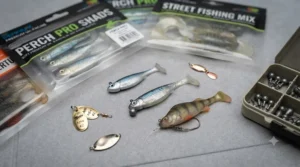
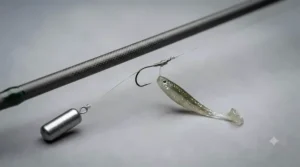
Start with a small, proven lure selection. A handful of 2-5cm soft plastics on light jig heads, plus one or two small spinners, covers the vast majority of perch situations without overwhelming a first session with too many choices.
Practise casting somewhere open before your first proper session. A back garden or open park lets you get a feel for how little effort a light rod needs to cast a small lure — overpowering the cast is the single most common early mistake, and it usually shows up as tangled line rather than distance.
Fish structure, not open water. Perch relate strongly to snags, reed beds, moored boats and undercut banks, so cast tight to visible structure rather than blind-casting into featureless open water.
Common mistakes in this first outing include using line that’s too heavy for the rod’s rating (which kills casting distance and feel alike), striking too hard on the initial bite detection (a firm, controlled lift usually beats a violent strike), and giving up on a swim too quickly before perch have had a chance to investigate. If you’re completely new to the sport, the Angling Trust’s Get Into Fishing programme is a genuinely useful starting point for coaching sessions and beginner-friendly events run across the UK.
Real-World Scenarios: Which Perch Rod Suits Your Fishing?
The opportunistic lunch-break angler. If you’re grabbing 30 minutes on a local canal whenever the chance arises, portability matters more than ultimate sensitivity — the Shakespeare Agility 2‘s four-piece breakdown means it can live permanently in a rucksack, ready whenever the opportunity strikes.
The dedicated light lure rod perch specialist. For anglers who’ve decided finesse perch fishing is their main pursuit, investing in a true LRF-style blank like the HTO Nebula Light Gamer pays off through dramatically improved bite detection on the subtlest takes, particularly in cold water when perch feed more tentatively.
The mixed-species predator angler. If your sessions regularly swing between perch, pike and the occasional zander, a genuine crossover rod like the Daiwa Ninja Spin or Abu Garcia Venerate avoids the cost and hassle of carrying multiple specialist outfits for a single trip.
The parent introducing a child to lure fishing. Durability trumps everything else here — the Shakespeare Ugly Stik GX2‘s near-unbreakable construction means an inevitable knock, drop or overly enthusiastic cast won’t end the session in tears.
Problem → Solution: Fixing Common Perch Rod Frustrations
Problem: you’re missing bites you can feel but can’t hit. This is usually a rod-sensitivity or reaction-time issue rather than a hooking problem. Solution: switch to a genuinely fast-action tip like the HTO Nebula, and practise a controlled, firm lift rather than a hard strike the moment you feel resistance.
Problem: your casts keep falling short of structure. Solution: check your lure weight actually matches the rod’s lower casting rating — a lure too light for the blank simply won’t load it enough to cast efficiently, however good your technique.
Problem: the rod feels like it’s fighting you on the retrieve. Solution: this is often a reel-balance issue rather than the rod itself; an oversized reel on a light blank like the Sougayilang Ultralight throws off the whole outfit’s natural feel.
Problem: you keep losing fish on the take. Solution: check hook sharpness first, then consider whether your rod’s action is too stiff for the soft take a perch typically gives — a softer tip, as found on dedicated finesse rods, gives a fish longer to fully commit before feeling resistance.
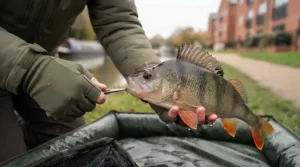
How to Choose the Best Spinning Rod for Perch
- Match the casting weight to your typical lure size. Most perch lure work sits comfortably within a 1-10g lure rod perch range, so avoid rods rated well above this unless you’re regularly casting larger baits too.
- Prioritise tip sensitivity over raw power. A soft, responsive tip that registers the faintest knock matters more for perch than a rod built to horse in bigger predators.
- Consider a solid tip for dead-sticking in cold water. A solid-tipped blank flexes further into a still lure, making it easier to detect the tentative bites typical of sluggish winter perch.
- Choose length based on your typical venue. Shorter rods around 6-7ft suit tight, overgrown swims; longer rods closer to 8ft help with casting distance on open reservoirs and wide rivers.
- Check guide quality, not just brand name. Fuji or titanium oxide guide rings, as found on the HTO Nebula and Daiwa Ninja Spin, reduce friction significantly with fine braid compared with generic stainless inserts.
- Balance the outfit with an appropriately sized reel. A 1000-2500 size reel typically suits genuine ultralight and light perch rods; going larger unbalances the whole setup.
- Buy the most durable rod you can within budget if you’re new to the sport. A slightly less sensitive but genuinely tough rod, like the Ugly Stik GX2, will teach you more through actual fishing time than a delicate premium blank you’re afraid to use.
Common Mistakes When Buying a Perch Rod
The single most common mistake is buying a rod rated for far heavier lures “just in case,” assuming versatility is always a virtue — a rod rated 10-40g simply cannot present a 2g soft plastic with any finesse, no matter how skilled the angler holding it. A close second is ignoring action entirely and shopping on length or brand name alone, when action (how and where the blank bends) has a far bigger practical impact on bite detection than most first-time buyers realise.
Owners also frequently under-spend on the reel while over-spending on the rod, not realising that a mismatched, oversized reel undermines even the best blank’s natural balance and casting feel. Finally, many new lure anglers assume the most expensive rod on the shelf is automatically the right choice — but a specialist LRF blank like the HTO Nebula would actually be a poor match for someone regularly targeting pike-sized bycatch, where the extra backbone of a rod like the Daiwa Ninja Spin serves them far better.
Ultralight vs Light Lure Rods: Which Wins for Perch Fishing?
| Factor | Ultralight (1-7g) | Light Lure (5-25g) |
|---|---|---|
| Bite sensitivity | Exceptional — feels the softest takes | Good, but less refined |
| Lure range | Micro soft plastics, tiny spinners | Wider range including larger jigs |
| Casting distance | Shorter, more precise casts | Longer casting range |
| Bycatch handling | Limited backbone for larger fish | Better equipped for pike/zander bycatch |
Choosing between an ultralight rod perch fishing setup and a broader light lure rod ultimately comes down to how narrowly you intend to specialise. As one detailed UK perch rod guide explains, a rod that’s too stiff can result in lures being pulled straight out of a perch’s mouth before the hook finds purchase, which is why sensitivity so often trumps raw casting distance for this species specifically. The Sougayilang Ultralight and HTO Nebula Light Gamer sit firmly in the ultralight camp, rewarding you with genuinely superior feel on the smallest lures at the cost of casting distance and bycatch capability. The Daiwa Ninja Spin and Abu Garcia Venerate, by contrast, trade a small amount of ultimate sensitivity for a wider working range that copes better with an unexpected pike grabbing your perch lure. Neither approach is objectively “better” — it depends entirely on whether your local water regularly throws up larger predators alongside perch.
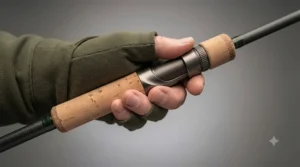
What to Expect: Real-World Performance on the Bank
Specification sheets rarely capture what an actual session feels like, so here’s the honest version. On a light, well-matched perch rod, a decent fish — anything from half a pound upwards — produces a satisfying, stubborn fight full of headshakes and short, determined runs, entirely disproportionate to the fish’s actual size. Smaller perch, meanwhile, still register as a genuine bite through a sensitive blank even if the fight itself is brief.
The biggest real-world difference between the rods on this list shows up not in casting distance but in bite detection during slow, cold-water sessions, when perch feed cautiously and a bite might amount to nothing more than a slight change in tip tension rather than a decisive pull. A finesse blank like the HTO Nebula genuinely earns its price premium here; a stiffer, more general-purpose rod like the Ugly Stik GX2 will still catch fish, but expects the angler to compensate with sharper concentration and faster reactions.
Finesse Rod Perch Fishing: Why Soft Tips Change the Game
A soft tip perch rod isn’t a gimmick — it directly addresses how perch actually feed. Because a perch creates suction to draw prey into its mouth, a lure needs to move naturally with minimal resistance during that initial take; too stiff a rod tip resists that movement and can result in the fish rejecting the lure before you even feel anything happen.
Solid-tipped blanks, as opposed to hollow tubular tips, flex noticeably further under the same light pressure, which makes them particularly effective for slow, deliberate presentations like dead-sticking a soft plastic in cold water when perch are feeding half-heartedly. Tubular tips, by contrast, tend to suit more active techniques like twitching lures or working spinners, offering slightly more casting feedback at the cost of some of that ultra-soft take detection.
For anyone serious about finesse rod perch fishing specifically, the practical takeaway is straightforward: match tip construction to technique rather than assuming one type suits every situation, and don’t be afraid to own two light rods — a solid tip for still, patient work and a tubular tip for active retrieves — if perch genuinely become your main quarry.
Long-Term Cost and Maintenance
Budget rods like the Sougayilang Ultralight or Mitchell Epic MX2, priced under £35, represent excellent value for occasional use but may show wear in guide inserts or reel seat fittings sooner under heavy, regular use than pricier alternatives. Mid-range options such as the Shakespeare Agility 2 and Daiwa Ninja Spin, in the £35-£55 bracket, typically hold their action and componentry well across several seasons of regular fishing provided they’re rinsed after saltwater or brackish sessions and stored properly between trips.
Premium rods like the Abu Garcia Venerate and HTO Nebula Light Gamer, at £40-£75, use higher-grade Fuji or titanium oxide componentry that resists line-groove wear far longer than generic guides, which can genuinely extend a rod’s useful life by years under regular use. Across all seven rods, the simplest maintenance habit that extends lifespan is a quick rinse with fresh water after any session near brackish or saltwater, plus periodic checks of guide rings for tiny grooves that can fray fine braid over time.
Features That Actually Matter (And Those That Don’t)
Genuine tip sensitivity, appropriate casting weight range, and quality guide componentry all matter enormously for a perch rod’s real-world performance — these are the features that directly affect whether you feel and convert a bite. A well-balanced reel seat and comfortable handle material matter too, particularly across longer sessions, since fatigue genuinely affects concentration and reaction time.
What matters considerably less, despite marketing emphasis, is cosmetic blank finish and colour — a stunning gunmetal or satin blank casts no better than a plain matt one. Extreme claims about “feeling every bite from 50 yards” are also worth treating with healthy scepticism; sensitivity is real and meaningfully different between rods, but it operates within realistic physical limits regardless of marketing language.
Safety, Regulations and Compliance Guide
Freshwater perch fishing in England and Wales comes with one non-negotiable legal requirement: anyone aged 13 or over must hold a valid rod fishing licence issued by the Environment Agency before fishing for freshwater fish, including perch, with a rod and line, whether on public waters, private land, or a members-only club water. Fishing without a valid licence can result in a fine of up to £2,500, so it’s genuinely worth the modest annual cost before your first session.
Beyond the legal side, sensible bankside practice matters too. Wet your hands before handling any perch, since their protective slime layer is easily damaged by dry skin, and always support the fish’s weight properly rather than gripping too firmly around the gills. Careful, quick handling gives every fish the best possible chance after release, whatever species you’re targeting.
Frequently Asked Questions
❓ What is the best spinning rod for perch fishing?
❓ What length rod is best for perch fishing?
❓ Do I need an ultralight rod for perch?
❓ What lure weight is best for perch fishing?
❓ Is a soft tip better for perch fishing?
Conclusion
Choosing the right perch fishing rod comes down to being honest about how you actually fish rather than chasing the most impressive-looking specification. A durable, forgiving all-rounder like the Shakespeare Ugly Stik GX2 or Sougayilang Ultralight is genuinely the smarter starting point for anyone new to lure fishing, while dedicated finesse tools like the HTO Nebula Light Gamer reward anglers who’ve already discovered how addictive chasing perch on light tackle can be.
Whichever rod you land on, the fundamentals matter more than the price tag: match casting weight to your typical lure size, balance the outfit with an appropriately sized reel, and prioritise tip sensitivity over raw power, since perch reward finesse far more consistently than force. Take the time to get the basics right, fish tight to structure, and let the rod do the job of telling you when something interesting has happened at the other end of the line.
Recommended for You
- Treble Hook Size for Pike Deadbait: 7 Best Picks (2026 Guide)
- Treble Hooks for Pike: 7 Best UK Picks Reviewed for 2026
- Titanium Wire Trace vs Steel Wire Trace for Pike: 7 Best Traces Tested (2026)
Disclaimer: This article contains affiliate links. As an Amazon Associate, I earn from qualifying purchases. If you purchase products through these links, we may earn a small commission at no additional cost to you.
✨ Found this helpful? Share it with your friends! 💬🤗
