
In This Article
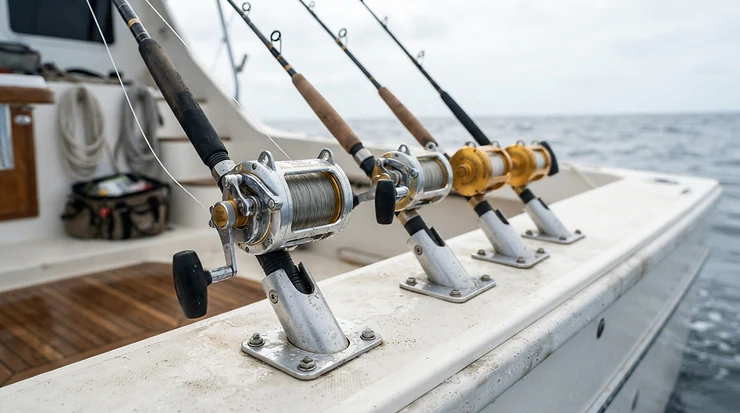
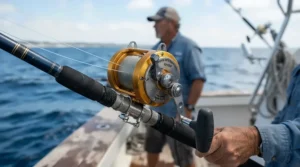
Boat rods for tope and smoothhound fishing are compact, powerful rods, usually 7ft to 8ft long and rated in the 12-20lb line class. They are built to hold heavy leads in a running tide while still bending enough to cushion the lunges of a hard-running shark. They trade extreme casting distance for backbone, bite detection and guides that cope with braid.
Here’s the funny thing about these two fish. A smoothhound feels like a bad-tempered bass with a grudge. A tope feels like someone has tied your rod to a moving bus. Yet both turn up on the same boat, over the same tide-swept ground, often on the same day. One sensible rod can cover both, as long as you choose it with your head rather than your wallet’s first instinct.
That’s the job of this guide. I’ve pulled together manufacturer specifications, UK retailer data and published reviews, then asked what each spec means when a 40lb tope is peeling line in a three-knot tide. A transparency note: I haven’t fished these rods myself, so you’ll get honest spec-and-review analysis rather than invented war stories.
Handling matters too. A University of Exeter-led study tracked nearly 70 tagged sharks, tope among them, and found fewer than 5% died after release when best-practice handling was followed. A rod with the right power lets you land fish quickly, which is kinder to the shark.
Along the way you’ll get a rundown of medium power boat rods for tope and a plain-English explanation of rod rating in lb. You’ll also find a look at boat rods for smoothhound over sandbanks and a no-nonsense guide to braid compatible rings.
Quick Comparison: 7 Boat Rods for Tope and Smoothhound Fishing at a Glance
| Rod | Line class | Length | Price range | Best For |
|---|---|---|---|---|
| Penn Wrath II | 12-20lb | 7ft | £40-£55 | First rod or occasional charter days |
| Penn Squadron III Boat | 12-20lb | c.7ft (2.12m) | £55-£70 | Light, compact budget alternative |
| Daiwa Seahunter Z Boat | 12-20lb | 7ft 6in-7ft 10in (by listing) | £60-£90 | All-round downtide smoothhound work |
| Daiwa Seahunter Z Uptide | 4-10oz casting weight | 9ft 6in | £85-£100 | Sandbank smoothhound uptiding |
| Daiwa Super Kenzaki Boat | 12-20lb | 7ft | £160-£180 | Long-term mid-range all-rounder |
| Daiwa Super Kenzaki FS | 12-20lb | 7ft 6in | £140-£170 | Fixed spool and braid users |
| Century Eliminator | 12-20lb | 7ft 6in | Mid-£300s | Regular anglers wanting a premium braid rod |
Prices are ranges at the time of research, so check current price before buying. Looking at the table, Penn Wrath II and Penn Squadron III Boat make the strongest case under £70, while the Daiwa Super Kenzaki Boat is where the build-quality jump becomes obvious. If sandbank smoothhounds are your priority, the Daiwa Seahunter Z Uptide changes the maths, because it is built to cast away from the boat rather than drop straight down. The Century Eliminator only makes sense if you fish often enough to appreciate its refinements.
💬 Just one click — help others make better buying decisions too!😊
Top 7 Boat Rods for Tope and Smoothhound Fishing: Expert Analysis
Every rod below sits in the 12-20lb “medium” bracket, except the uptider, which is rated by casting weight. Prices are ranges at the time of research, so check current price before you buy.
1. Penn Wrath II — budget backbone for occasional trips
The Penn Wrath II does the unglamorous basics properly and cheaply. For a rod you’ll use a handful of times a year, that is a rather attractive trait.
It’s a two-piece 7ft rod in the 12-20lb class, weighing around 284g, with K-frame stainless guides and titanium oxide inserts. In practice, 7ft keeps things manageable in a crowded cockpit. The 12-20lb rating also puts it among medium power boat rods for tope: enough butt to turn a running fish, enough bend to stop hooks tearing free. How those inserts cope with braid over a long season is a question for the braid compatible rings section below.
Here’s what to weigh. This is a first rod, a back-up rod or a charter-day rod. At 284g it’s noticeably heavier than the Daiwa Super Kenzaki Boat (230g), and the action is simpler, so don’t expect refined bite detection on a fussy smoothhound day.
Reviewers on eTackle score it 8.0/10. They praise the value and corrosion-resistant guides, but call the action basic and the handle merely adequate. Some anglers add that it suits fixed spool reels better than multipliers.
Pros:
- ✅ Exceptional value for a 12-20lb boat rod
- ✅ Corrosion-resistant K-frame guides
- ✅ Works with multiplier and fixed spool reels
Cons:
- ❌ Basic action compared with premium rods
- ❌ Handle quality is only average
Expect around £40-£55, which makes it a smart entry point among boat rods for tope and smoothhound fishing.
2. Penn Squadron III Boat — light 24T carbon without the price tag
The Penn Squadron III Boat suits anglers who want something slightly more modern than the usual budget fare without crossing into three-figure territory.
The 12-20lb version is a two-piece, medium-action rod on a 24T carbon blank. It has high-density EVA grips and saltwater-resistant guides, and it packs down to roughly 1.10m. That pack-away length matters, because it slides into a car boot or a skipper’s rod rack without drama. Penn pitches the range at bottom fishing and lure work for cod and pollock. That translates neatly to downtide ledgering for smoothhounds, and to modest-sized tope.
Based on the spec comparison, it’s a rod for anglers who value low weight and low cost. What the listings don’t make clear is the exact guide insert material, so braid users should check before spooling up. I also couldn’t verify its weight in the sources I found, so treat weight comparisons with caution.
User sentiment is thin. Only a handful of reviews appear on one retailer, all recommending it, which is too small a sample to lean on. One UK stockist also lists the model as replaced, so confirm availability.
Pros:
- ✅ 24T carbon blank keeps weight down
- ✅ Compact 1.10m pack-away length
- ✅ Medium action suits downtide ledgering
Cons:
- ❌ Guide insert material isn’t clearly specified
- ❌ Small review pool and possible replacement model
At around £55-£70, it’s decent value among boat rods for tope and smoothhound fishing if you can live with Penn’s no-frills approach.
3. Daiwa Seahunter Z Boat — the dependable smoothhound workhorse
Sea Angler’s smoothhound tackle guide singles out the 7ft 6in 12/20lb Daiwa Seahunter Z Boat as a go-to for standard downtide fishing, and it’s easy to see why.
It’s a two-piece rod with a light blank, a sensitive tip, LS rings, an EVA handle and a DPS reel seat. Older reviews list 7ft 6in, while one current UK retailer lists a 7ft 10in 12-20lb version. Check which one you’re buying. The light blank matters over an eight-hour tide, because fatigue is the silent enemy of good bite detection. The DPS seat clamps a multiplier firmly, and Sea Angler suggests a reel holding around 300yd of 30lb braid.
Here’s the honest bit. This is a smoothhound-first rod that can double as one of the more affordable medium power boat rods for tope when fish are modest. If you expect 50lb-plus tope in heavy tide, the 20-30lb sibling is the safer choice.
Retailer buyer-rating widgets show 96% to 100% approval, which is only indicative. The stronger evidence is the editorial endorsement.
Pros:
- ✅ Light blank reduces fatigue on long drifts
- ✅ Sensitive tip helps with bite-shy hounds
- ✅ Excellent value for the build
Cons:
- ❌ Lengths vary between retailer listings
- ❌ Stock can be patchy at some stockists
Around £60-£90 buys a proven performer among boat rods for tope and smoothhound fishing.
4. Daiwa Seahunter Z Uptide — built for casting off sandbank edges
Most of this list drops baits straight down. The Daiwa Seahunter Z Uptide is built to throw them across the tide, which changes everything when you’re fishing banks.
It’s a 9ft 6in long-tip, short-butt carbon composite rod with a 4-10oz casting weight and a hi-viz yellow tip. It also has stainless LS rings with ceramic inserts, a DPS seat and a full EVA handle. The long tip lets you cast a bait well up-tide of an anchored boat, and the visible tip shows bites in poor light. Notice that it’s rated by casting weight rather than rod rating in lb, which is how uptiders are usually labelled.
For boat rods for smoothhound over sandbanks, this is the budget-friendly option. Sea Angler notes that experienced anglers often prefer 10-11ft touch-tip rods in shallow water, so 9ft 6in is a compromise rather than a distance monster.
eTackle scores it 8.1/10. Forum anglers report no loss of casting distance and good bite indication, but others find it bulky and heavy next to rivals.
Pros:
- ✅ Classic uptide layout at a fair price
- ✅ Hi-viz tip aids bite detection
- ✅ Ceramic-insert guides resist friction
Cons:
- ❌ Fairly bulky in the hand
- ❌ Heavier than some competitors
At around £85-£100, it’s good value for sandbank work.
5. Daiwa Super Kenzaki Boat — V-joint strength in a mid-priced all-rounder
The Daiwa Super Kenzaki Boat pioneered the equal-length two-piece design, and its V-joint is the headline feature.
The 7ft 12-20lb model weighs 230g and uses Fuji O-ring guides with zirconium ceramic inserts, which Daiwa designs for both mono and braid. It also has a Fuji DPS reel seat and a GRC gimbal butt cup. In practice, the V-joint spreads load across the join, so the rod bends smoothly without a stiff spot. That’s valuable when a tope bores for the bottom. The built-in gimbal also means no lost push-on butt caps.
The eTackle reviewer found the 12/20lb class capable when downtiding for rays, tope and smaller conger, which tells you it sits comfortably among medium power boat rods for tope. It’s priced above the budget crowd, but the fittings justify the gap for regular anglers.
eTackle scores it 8.4/10, praising the V-joint, the Fuji components and the balance of power and sensitivity. The grumbles are that there’s no 10ft version and that equal-length sections can be awkward to store.
Pros:
- ✅ V-joint adds strength without stiffness
- ✅ Premium Fuji fittings throughout
- ✅ Integrated gimbal butt cup
Cons:
- ❌ No 10ft version in the range
- ❌ Equal-length sections suit some storage badly
At around £160-£180, it’s a long-term investment in boat rods for tope and smoothhound fishing.
6. Daiwa Super Kenzaki FS — fixed spool ringing for braid fans
The Daiwa Super Kenzaki FS exists because more boat anglers are switching to fixed spool reels, and standard boat-rod guides aren’t spaced for them.
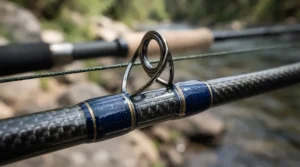
The 7ft 6in 12/20lb model weighs 255g and carries ten Fuji O-ring guides including the tip, positioned for the line corridor of a fixed spool. It also has a Fuji DPS seat and a push-in V-joint. Sea Angler notes that fixed spools cast easily from the boat and retrieve faster, which helps when a smoothhound suddenly changes direction and creates slack.
Analytically, this is the rod for anglers who run braid on a 5000-6000 size fixed spool. Its published use covers downtiding for rays, tope and small conger, so it fits the medium power boat rods for tope brief. Multiplier users should stick with the standard Super Kenzaki, because the ringing is different.
The evidence is limited. I found one editorial review from 2019 and no broad pool of customer reviews. That review calls the build quality superb and the fittings excellent.
Pros:
- ✅ Guides spaced for fixed spool reels
- ✅ Light 255g blank with Fuji fittings
- ✅ Easy push-in V-joint assembly
Cons:
- ❌ Not ideal for multiplier reels
- ❌ Main published review dates from 2019
At around £140-£170 (launch RRP was £150), it’s a niche but excellent pick among boat rods for tope and smoothhound fishing.
7. Century Eliminator — three-zone blank engineered for braid
The Century Eliminator is the rod you buy when you’ve stopped asking “does it work?” and started asking “does it feel right?”
The 7ft 6in 12-20lb model has a 100-300g casting range. It is built from multi-modulus carbon in an autoclave-cured resin and has a three-zone action. The supple tip cushions braid’s non-elastic nature, the mid-section adds power progressively and the butt gives leverage near snags. Anti-Twist Technology reduces rod twist under load, and nine titanium double-leg K guides plus the tip are designed for braid. It also has a Fuji DPS Black 20 seat.
What does that mean in practice? Braid is unforgiving, and this blank is designed to forgive on its behalf. eTackle says the 12-20lb version has the backbone for tope and rays, but calls the rod best suited to experienced anglers who fish often.
eTackle scores it 8.6/10 and praises its build, line control and versatility. The cons are the price and a slightly stiff 20-50lb sibling.
Pros:
- ✅ Premium blank with anti-twist technology
- ✅ Braid compatible rings with titanium frames
- ✅ Excellent line control under pressure
Cons:
- ❌ Expensive for occasional anglers
- ❌ Limited edition, so availability may be short
In the mid-£300s, it’s the luxury option among boat rods for tope and smoothhound fishing.
✨ Ready to Gear Up for Tope and Smoothhounds?
🔍 Take your next boat trip to the next level with these carefully researched rods. Click on any highlighted product name to check current pricing and availability. These rods will help you land strong, well-handled fish your whole crew will talk about all season!
Rod Rating in Lb Explained: How to Read the Numbers
Few tackle terms trip up newcomers like rod rating in lb, so let’s defuse it. A rod rating in lb (12-20lb, 20-30lb and so on) describes the breaking-strain range of line the rod was designed around. It is not a limit on the weight of fish you can land.
That distinction matters for tope. A 12-20lb rod can land fish well above 20lb because the rod absorbs pressure while the reel’s drag does the heavy lifting. One angler on a UK-and-Ireland sea angling forum reports a 50-60lb tope on a cheapish 12-20lb boat rod. Treat that as anecdote, not licence, because your drag setting, line and technique matter far more than the number on the blank.
Two other numbers sit beside the rod rating in lb. Casting weight tells you what lead the rod can throw. The Century Eliminator is listed at 100-300g and the Daiwa Seahunter Z Uptide at 4-10oz. Power labels also vary: retailers often call 12-20lb “medium”, though Penn labels its Squadron III Travel Boat in that class “Medium-Heavy”.
Braid causes the most confusion. Thirty-pound braid on a 12-20lb rod isn’t a mismatch, because braid is far thinner for its breaking strain than mono. Sea Angler’s own pairing of 12/20lb rods with 30lb braid is a good template.
The rule of thumb is simple. Choose by rod rating in lb for depth and tide, then check the casting weight covers the lead you’ll actually need, typically 4oz to 12oz.
How to Choose Boat Rods for Tope and Smoothhound Fishing
The short answer: choose a 7ft-8ft, two-piece, 12-20lb rod with braid compatible rings, a secure reel seat and a tip sensitive enough to show bites. Step up to 20-30lb for deep water or very big tope. Here’s the reasoning, step by step.
- Start with line class. Sea Angler calls a 12/20lb rod between 7ft 6in and 8ft the workhorse for standard downtide smoothhound fishing. Move to 20/30lb in deeper water.
- Match length to boat and tide. Shorter rods are easier in crowded boats, while shallow-water and uptide work favours 10-11ft touch-tip rods.
- Inspect the guides. Braid chews through soft inserts, so look for ceramic inserts and sturdy frames (more in the guide section below).
- Choose your tip action. A soft tip improves bite detection when smoothhounds are moody and bite-shy.
- Match the reel. Sea Angler’s smoothhound tackle guide pairs 12/20 and 20/30lb rods with a multiplier holding around 300yd of 30lb braid. It suggests a 5000-6000 fixed spool for longer touch-tip rods.
- Check handle and seat. A Fuji-style screw-lock seat and a comfortable gimbal butt matter at hour seven.
- Set a budget honestly. Occasional trips rarely justify a premium rod, whereas weekly sessions often do.
Medium Power Boat Rods for Tope: Is 12-20lb Enough?
For most boat anglers, yes. Medium power boat rods for tope (the 12-20lb class) deliver enough butt to turn a running fish while leaving enough bend to protect hooks and light hook-holds.
Tope are a different animal from smoothhounds. Angling Direct describes them as among the hardest-fighting fish off the UK coast, and they’re mostly caught afloat because big ones rarely venture shallow. Their teeth are sharp and triangular, whereas a smoothhound has flat, broad grinding teeth. That’s why tope rigs use wire traces (Greys sells a 7/0 wire tope trace) while smoothhound hooklengths are 30-40in of 30-40lb fluorocarbon.
What does that mean for the rod? Tope runs are long and strong, so you want a forgiving mid-section rather than a poker. Sea Angler’s tope tackle feature, written around shore fishing, highlights circle hooks for reducing deep hooking. Sea Angler’s big tope tackle essentials also shows how different a 14ft 6in shore rod such as the Akios Nitron SVR is from a compact boat rod.
Step up to 20-30lb when the water is deep, the tide is fierce or you’re after genuinely big fish. Otherwise the medium class is the versatile choice, and the Daiwa Super Kenzaki Boat and Penn Wrath II both fit it.
Boat Rods for Smoothhound Over Sandbanks: Uptide or Downtide?
Sandbanks are where smoothhound fishing gets interesting. Boat rods for smoothhound over sandbanks need to cope with fast tides, shallow water on the bank tops and the need to place baits accurately.
Talk Sea Fishing lists top smoothhound areas including the east coast as high as The Wash, the Thames Estuary, the Hampshire coast, both sides of the Bristol Channel, north-west Anglesey and Luce Bay. It adds that uptide rods remain popular mainly in The Wash, the Thames Estuary and inside the Bristol Channel, all famously bank-heavy waters.
On paper, the logic is simple. Uptiding means casting up-tide of the anchored boat so the line forms an angle that holds the lead in the flow. It also keeps your bait away from the boat’s noise. In shallower water, Sea Angler says experienced anglers favour 10-11ft touch-tip rods with soft tips for casting distance and bite detection. The Daiwa Seahunter Z Uptide (9ft 6in) is the budget version of that idea.
Downtiding with a 7ft 6in 12/20lb rod such as the Daiwa Seahunter Z Boat works on bank edges where depth increases. Keep leads as light as you can get away with, typically 4oz to 12oz. Use a weak link over rough ground so you lose the weight rather than the fish.
Braid Compatible Rings: Why Your Guides Matter More Than You Think
Braid doesn’t stretch and it’s abrasive. Soft guide inserts can groove over a season, which then frays line precisely when a tope is bolting. That’s why braid compatible rings deserve a paragraph of their own.
Look at three things. First, the inserts: ceramic types are generally the safer choice for braid. The Daiwa Super Kenzaki Boat uses Fuji O-ring guides with zirconium ceramic inserts designed for mono and braid, and the Daiwa Seahunter Z Uptide has stainless LS rings with ceramic inserts. Second, the frame: the Century Eliminator‘s titanium double-leg K guides (nine plus the tip) show what premium braid compatible rings look like. Third, the spacing: the Eliminator’s carefully considered layout is what keeps line flowing smoothly under maximum pressure.
The Penn Wrath II has titanium oxide inserts in stainless K-frames. They resist corrosion and reduce friction, though I’d inspect them regularly if you run braid heavily.
A practical test: draw a cotton wool ball or a nylon stocking through each guide. If it snags, the insert is cracked and the ring needs replacing. Check this every few trips, not once a year.
Side-by-Side Specs: Seven Rods Compared on Paper
| Rod | Class | Weight | Guides | Price range | eTackle score | Best For |
|---|---|---|---|---|---|---|
| Penn Wrath II | 12-20lb | 284g | K-frame stainless, titanium oxide | £40-£55 | 8.0 | Budget buyers |
| Penn Squadron III Boat | 12-20lb | Not verified | Saltwater-resistant (unspecified) | £55-£70 | Not scored | Compact travel |
| Daiwa Seahunter Z Boat | 12-20lb | Not verified | LS rings | £60-£90 | Not scored | Downtide hounds |
| Daiwa Seahunter Z Uptide | 4-10oz | Not verified | Stainless LS, ceramic | £85-£100 | 8.1 | Sandbank uptiding |
| Daiwa Super Kenzaki Boat | 12-20lb | 230g | Fuji O-ring, zirconium | £160-£180 | 8.4 | Regular anglers |
| Daiwa Super Kenzaki FS | 12-20lb | 255g | Fuji O-ring (10) | £140-£170 | Not scored | Fixed spool users |
| Century Eliminator | 12-20lb | Not verified | Titanium double-leg K | Mid-£300s | 8.6 | Premium braid use |
The scores climb with price, but not proportionally. The jump from the Penn Wrath II (8.0) to the Daiwa Super Kenzaki Boat (8.4) costs roughly £120, while the next step to the Century Eliminator (8.6) costs roughly £180 more for 0.2 points. For most anglers, the mid-range Daiwas offer the best return, and the Daiwa Seahunter Z Uptide is the specialist bargain. Where weights show “Not verified”, I couldn’t confirm them from reliable sources.
Boat Rods vs Alternative Rod Types for Tope and Smoothhounds
| Rod type | Typical spec | Strengths | Weaknesses | Best For |
|---|---|---|---|---|
| Standard downtide boat rod, e.g. Daiwa Super Kenzaki Boat | 7ft-8ft, 12-20lb | Compact, powerful, easy on a boat | Limited casting distance | Anchored downtide fishing |
| Uptider, e.g. Daiwa Seahunter Z Uptide | 9ft-11ft, 4-10oz | Casting distance, bite detection | Bulkier, needs space | Sandbank smoothhounds |
| Fixed spool boat rod, e.g. Daiwa Super Kenzaki FS | 7ft 6in, 12-20lb | Fast retrieve, easy casting | Poor fit for multipliers | Braid and light line |
| Shore tope rod, e.g. Akios Nitron SVR | 14ft 6in, 4-8oz | Huge casting range | Unwieldy afloat | Shore tope only |
Notice how the types split by job rather than quality. A standard boat rod wins in tight spaces and deep, direct fishing. An uptider wins when distance and tide angle matter, which is exactly the sandbank scenario. A shore rod such as the Akios Nitron SVR is a fine tool but entirely wrong for a boat deck.
The takeaway is to own the type that matches your most frequent trip. If you fish both banks and deeper marks, pair a standard rod with an uptider rather than forcing one rod to do everything.
Practical Usage Guide: Setting Up and Looking After Your Rod
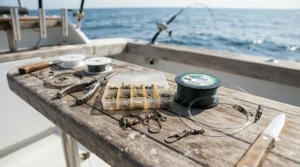
A rod is only as good as its setup, and most problems appear in the first 30 days. Start with assembly. Align the guides carefully, and on equal-length rods such as the Daiwa Super Kenzaki Boat use the push-in V-joint and twist to line up the eyes. Tighten the reel seat firmly but without brute force.
Next, spool sensibly. Sea Angler suggests 30/35lb braid as an all-round compromise. Add a 60lb braid leader, or a 40lb fluorocarbon leader in shallow water where stealth and abrasion resistance help. A sliding ledger with a weak link keeps you in contact with the rod tip.
Avoid the classic first-month mistakes:
- Over-tightening the drag until the rod does all the work
- Lifting the rod tip too high while fighting (high-sticking)
- Leaving salt on the guides overnight
- Using leads heavier than the casting weight allows
A simple maintenance schedule works wonders:
- After every trip: rinse with fresh water, wipe the guides and dry the rod before bagging it.
- Monthly: run a cotton wool ball through each guide to check the inserts.
- Each season: inspect the reel seat threads and butt cap.
Treat a £170 rod like a £170 rod and it will repay you for years.
Real-World Scenarios: Three Anglers, Three Rods
The occasional charter angler. Five boat trips a year, a £60 budget, mostly Bristol Channel and south coast charters. The Penn Wrath II or Penn Squadron III Boat keeps costs low, and the 12-20lb class handles hounds and smaller tope. Choose the Penn Squadron III Boat if you’re travelling by car and need a compact pack-down.
The Thames Estuary skipper. Twenty sessions a year on his own boat, fishing bank edges, with around £100 to spend. The Daiwa Seahunter Z Uptide handles the up-tide casts, and a second Daiwa Seahunter Z Boat covers downtide work. For boat rods for smoothhound over sandbanks, this two-rod combination is hard to beat for the money.
The dedicated tope-and-hound regular. Forty trips a year on the west coast, running braid on a fixed spool, with £350 in the budget. The Daiwa Super Kenzaki FS suits the fixed spool, while the Daiwa Super Kenzaki Boat suits a multiplier. If budget stretches and every ounce of refinement matters, the Century Eliminator is the indulgent choice.
Notice the pattern. Environment and frequency decide the rod, not the badge on the blank.
Problem → Solution: Common Rod Headaches
Bite-shy smoothhounds. Use a soft-tipped rod such as the Daiwa Seahunter Z Boat. If baits keep vanishing without indication, Sea Angler suggests shortening the hooklength for more direct contact. If fish pick up and drop, lengthen it.
Rod twist under braid. Twisting makes fights feel vague. The Century Eliminator‘s anti-twist blank targets this directly, and an equal-length V-joint rod such as the Daiwa Super Kenzaki Boat helps keep sections aligned.
Hook pulls on tope. Strike early and consider circle hooks, which Sea Angler’s tope feature notes virtually eliminate deep hooking. A forgiving mid-section on medium power boat rods for tope also helps hooks stay put.
Slack line with smoothhounds. These fish change direction suddenly. A fixed spool’s faster retrieve helps, which makes the Daiwa Super Kenzaki FS a strong candidate.
Cramped storage. Rods that pack down small win here. The Penn Squadron III Boat packs to roughly 1.10m, while equal-length rods such as the Daiwa Super Kenzaki Boat may need a longer tube.
Long-Term Cost & Maintenance: What Each Rod Really Costs You
| Price tier | Rods | What you gain | What you give up | Best For |
|---|---|---|---|---|
| Under £100 | Penn Wrath II, Penn Squadron III Boat, Daiwa Seahunter Z Boat, Daiwa Seahunter Z Uptide | Low cost, capable performance | Refinement, premium guides | Occasional and budget anglers |
| £140-£180 | Daiwa Super Kenzaki Boat, Daiwa Super Kenzaki FS | Fuji fittings, V-joint | Higher outlay | Regular anglers |
| Mid-£300s | Century Eliminator | Premium blank and braid compatible rings | Value for money | Frequent specialists |
Cost per trip tells the real story. A rod costing around £170 and used on 20 trips a year for five years works out at under £2 per trip. The Century Eliminator, around £360, used on 40 trips a year over the same period lands at roughly £1.80 per trip. In other words, heavy use makes premium rods surprisingly economical, while light use makes the Penn Wrath II the rational choice.
Maintenance costs are small but real: fresh-water rinses, occasional replacement of a cracked guide and a decent rod tube. Neglect them and a cheap rod dies early, while a well-kept one can outlive your reels.
Tope Handling, Rules and Safety: Protecting the Fish
Tope fishing carries responsibility. Under rules that took effect in April 2008, anglers may only catch tope on a catch-and-release basis in England and Wales. Check current regulations for your region before you sail.
Best-practice guidance approved by UK angling bodies and the Shark Trust says to release tope at the side of the boat where possible. It also says gaffs and lasso-type tailers should never be used, and that gut-hooking is usually down to poor practice and avoided by striking early. For more, read the Shark Trust’s angling best-practice guidance.
Your rod choice matters here. Medium power boat rods for tope should be strong enough to land fish quickly without exhausting them. Too light a rod prolongs the fight, and an exhausted shark has a harder time recovering. Fish with a sensible drag and keep handling to a minimum, a point the Exeter research underlines.
On safety, mind those sharp teeth. Use long-nosed pliers, keep fingers clear and have a disgorger handy. Keep the rod secure in a gimbal rather than leaving it loose on the deck when a run starts.
FAQ
❓ What reel suits boat rods for tope and smoothhound fishing?
❓ Can one rod really cover both species?
❓ What braid strength should I spool on a 12-20lb rod?
❓ Are braid compatible rings worth paying extra for?
❓ How much should I spend on a boat rod for smoothhounds?
Conclusion
Choosing among boat rods for tope and smoothhound fishing comes down to honest answers about how you fish. If you’re an occasional angler, the Penn Wrath II or Penn Squadron III Boat gives you real capability for very little money. If you fish regularly, the Daiwa Super Kenzaki Boat or Daiwa Super Kenzaki FS earns its price through fittings and balance. Sandbank specialists should look hard at the Daiwa Seahunter Z Uptide alongside the Daiwa Seahunter Z Boat, because boat rods for smoothhound over sandbanks live or die on casting and bite detection. And if you’re a committed regular who runs braid, the Century Eliminator is the indulgent endgame.
Whatever you choose, understand your rod rating in lb, check your guides and respect the fish you catch. Medium power boat rods for tope are more than capable when matched with sensible tackle, and a well-chosen rod will do both jobs for years. Check current prices and availability before you buy, because stock and pricing move quickly.
Recommended for You
- Boat Rods For Heavy Conger Fishing: 7 Best Picks For UK Wrecks (2026)
- Pennel Rig For Flatfish: 7 Best Ready-Tied Picks (UK 2026)
- Rigs For Cod Fishing Beach: 7 Best Picks For UK Winter (2026)
Disclaimer: This article contains affiliate links. As an Amazon Associate, I earn from qualifying purchases. If you purchase products through these links, we may earn a small commission at no additional cost to you.
✨ Found this helpful? Share it with your friends! 💬🤗
