
In This Article
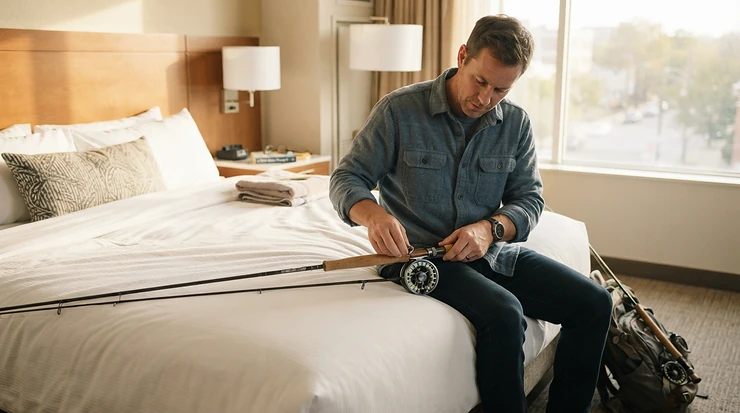
Two piece boat rods for travelling to charters are boat rods that split into two sections at one joint, usually a spigot joint or a ferrule. That lets them slot into a rod tube, car boot or airline hold while still fishing like a single blank. They suit anglers who join day-boat charters at home or abroad and want one dependable rod without a luggage drama.
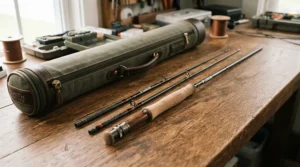
Picture the scene. The skipper is grinding the engine into life, the deck is slick with last night’s rain, and your seven-foot one-piece rod is wedged diagonally across the minibus like a very expensive javelin. A two piece rod fixes that. Fewer joints than a four piece travel rod also means fewer places for the action to go dead.
The catch is that “two piece” covers a lot of ground. Some rods snap down to a tidy 1.1m. Others are 1.5m a section and won’t fit the rod tubes airlines are happy with. Airlines also disagree about what counts as acceptable. Ryanair’s own sports equipment page, for instance, lists large fishing rods among large sporting equipment, which generally means checking them in for a fee rather than carrying them aboard.
This guide compares seven real rods using their specifications, retailer data and aggregated buyer scores, all explained in plain English. It also covers spigot joint design, transit length, and the maths of travelling with a rod on a budget. Prices below are ranges, so check current price before you buy.
Quick Comparison: Two Piece Boat Rods for Travelling to Charters at a Glance
| Rod | Length / Class | Blank | Best For |
|---|---|---|---|
| Angling Pursuits Boat Max | 6ft, 25lb class | Fibreglass | First-timers on a one-off trip |
| Leeda 8ft 12-20lb Boat Rod | 8ft, 12-20lb | Not specified | Tight-budget beginners |
| Fladen Warbird Boat | 7ft, 30-50lb (lighter versions listed) | Carbon | Budget carbon for heavier ground |
| Penn Squadron III Boat 212 | 2.10m or 2.40m, 20-30lb | 24T carbon | All-round value for UK charters |
| Penn Prevail III LE 212 Inline | 6ft 9in, 20-30lb or 30-50lb | Carbon | Compact transit length, braid users |
| Daiwa Seahunter Z Uptide | 9ft 6in, casting-weight rated | Carbon composite | Tidal uptide charters |
| Daiwa Saltist Boat Rod | 8ft 6in, two equal sections | Carbon | Premium, repeat travellers |
Looking at the table, the Penn Squadron III Boat 212 is the sensible centre of gravity for most buyers: carbon, workable classes and a modest outlay. If your priority is the smallest possible packed rod, the Penn Prevail III LE 212 Inline and Daiwa Saltist Boat Rod have verifiable packed lengths. Only the Angling Pursuits Boat Max and Leeda 8ft 12-20lb Boat Rod undercut them on cost, and that saving shows up in blank material and finish.
💬 Just one click — help others make better buying decisions too!😊
Top 7 Two Piece Boat Rods for Travelling to Charters: Expert Analysis
Each entry below turns the spec sheet into everyday meaning and flags where the evidence is thin. Where independent reviews couldn’t be verified, I’ve said so rather than guess.
1. Angling Pursuits Boat Max — shortest, cheapest way in
At 6ft this is the most compact rod here, and short rods are a blessing on a crowded charter deck where elbows and leads are in constant negotiation.
The 25lb class rating on a fibreglass blank means a forgiving, bendy action built for bottom fishing and feather rigs rather than long casts. Fibreglass is heavier than carbon and passes on less bite detail. In exchange it shrugs off the knocks and scrapes of life inside a rod tube. Each section should pack to roughly 0.9m (an estimate from the 1.8m length, not a manufacturer figure).
On paper, this suits a once-a-year holiday charter where the aim is a few mackerel and a good story, not tide-hammered ground. Independent reviews couldn’t be verified, so treat retailer descriptions of it as novice-friendly with caution. Combo versions with a reel and feathers also exist.
Pros:
- ✅ Compact 6ft length suits busy decks
- ✅ Tough fibreglass survives rough baggage handling
- ✅ Budget entry point with combo versions available
Cons:
- ❌ Heavier, less sensitive than carbon rivals
- ❌ Little verifiable independent review data
Budget bracket, so check current price; it is good value only if the trip is occasional.
2. Leeda 8ft 12-20lb Boat Rod — beginner guidance, tiny outlay
This is entry-level to the core: it comes with a swing-tag setup guide covering basic rigging and bait selection.
The 8ft length is conventional for inshore boat work. It reaches over the side without becoming a hazard when someone is netting a fish next to you. The screw reel fitting and EVA handle give a secure grip when wet, and the 12-20lb class suits lighter species such as pollock, whiting and mackerel. Packed length should be around 1.2m a section (an estimate from the 2.44m length).
The honest take: this rod is a gateway, not a destination. It suits a first trip where you’re still deciding whether sea angling is for you, and the price tracker I found showed it sitting in the high-£10s to low-£20s. Verified independent reviews weren’t available, so I can’t claim a buyer consensus on durability.
Pros:
- ✅ Very low cost of entry
- ✅ Includes beginner setup guidance
- ✅ Secure EVA handle in wet weather
Cons:
- ❌ Light 12-20lb class limits heavier ground
- ❌ Blank specification not clearly stated
Under £25 at the time of research; excellent for experimenting, less so for repeat trips.
3. Fladen Warbird Boat — carbon for pocket money
Carbon at this price is the headline. The Fladen Warbird Boat is a 2 piece carbon rod pitched as an all-rounder, and the 7ft 30-50lb version suits heavier ground.
That 30-50lb class means it can handle strong tides and bigger leads that would flatten the shorter budget rods above. The listing also mentions 1.80m and 1.95m versions in 15-30lb classes, which is the better pick for lighter marks. A 7ft rod should pack to roughly 1.05-1.1m a section (estimate).
Based on the spec comparison, it suits anglers who want carbon’s lighter feel without paying Penn or Daiwa prices. I couldn’t verify a meaningful pool of independent reviews, so check recent retailer feedback before ordering.
Pros:
- ✅ Carbon blank at a budget price
- ✅ Heavier 30-50lb class available
- ✅ Lighter-class variants for easier marks
Cons:
- ❌ Limited independent review evidence
- ❌ Fit and finish unlikely to match premium rivals
Around £30 at the time of research; sharp value if class suits your marks.
4. Penn Squadron III Boat 212 — carbon blank, sensible money
The standout here is the 24T high-modulus carbon blank at a mainstream-brand price, with saltwater-resistant components.
The rod comes in 2.10m and 2.40m lengths with 20-30lb classes in the range. Retailers describe a fast, progressive action, which in practice means a rod that loads smoothly under a lead but still has enough backbone to lift a fish off the bottom. A gimbal with a protective cap and EVA grips keep the handle comfortable. Estimated packed length is around 1.1m (a four-piece Squadron III Travel Boat version packs to 65cm, if size matters more than feel).
My read: this is the best all-rounder for UK charters where you’ll meet cod, pollock, bream and ray in one day. Several retailers describe it as value-for-money, but I couldn’t find a large pool of independently verified reviews.
Pros:
- ✅ Quality 24T carbon at a fair cost
- ✅ Two lengths to match deck space
- ✅ Saltwater-resistant fittings
Cons:
- ❌ Packed length is longer than four piece alternatives
- ❌ Independent review volume hard to verify
Roughly £50-£75 depending on retailer; strong value.
5. Penn Prevail III LE 212 Inline — short transit length, inline guides
Where many rivals leave transit length vague, this one is clear: both line classes pack to 114cm.
That is a 6ft 9in rod, available in 20-30lb and 30-50lb versions, weighing roughly 280-330g depending on class and listing. The inline guide train reduces line twist, and the guides are one-piece stainless steel with no ceramic inserts, a design choice aimed at saltwater abrasion and braid. That suits modern braid-heavy boat fishing, matched with a 4000-6000 size reel.
In practice, 114cm will fit most rod tubes and a long suitcase diagonal, but it won’t squeeze into every cabin bag. A mid-range choice for people who want carbon performance and certainty about the packed size. I couldn’t confirm a verified independent review score.
Pros:
- ✅ Verified 114cm packed length
- ✅ Corrosion-resistant one-piece stainless guides
- ✅ Light for its class
Cons:
- ❌ Short 6ft 9in length limits reach
- ❌ Reviews not independently verified
Around £65-£80 in comparison listings; good value if packing is your priority.

6. Daiwa Seahunter Z Uptide — spigot joint collars, uptide reach
The headline is the metal spigot joint collar, which holds the two sections firmly together at a point where cheaper rods often fail.
At 9ft 6in, this is a longer rod made for uptide fishing, where a lead is cast uptide of the boat to hold bottom in the tide. The carbon composite blank keeps weight sensible, and the DPS-style reel seat clamps the reel securely. Expect each section to measure roughly 1.5m (an estimate), so it needs a bigger tube than the Penn options.
The case for it: it’s the best fit for tidal charters targeting rays, hounds or cod. One retailer-comparison site reports a high aggregated score from a few dozen verified buyer reviews across several sources, though forum opinions on it are mixed, which is useful context for an affordable rod.
Pros:
- ✅ Metal spigot joint collars add confidence
- ✅ Suits uptide charter work
- ✅ Strong aggregated buyer score
Cons:
- ❌ Longer sections need a bigger rod tube
- ❌ Forum views are mixed
Around £80-£100 in comparison listings; fair value for tidal work.
7. Daiwa Saltist Boat Rod — premium V-Joint, equal sections
Two equal sections and a verified packed length of 134cm make this a premium design for repeat travellers.
The 8ft 6in version splits into two equal sections, and Daiwa’s V-Joint is a specialised spigot joint intended to make the rod behave like one piece. That matters on a long day when a mid-rod flat spot would otherwise show up. At 134cm packed, you’ll need a rod tube rated for that length, not a small holdall.
Based on the specs, this is for anglers who return to charters yearly and want a rod to match. Only a handful of buyer reviews were verifiable, so the evidence base is thin, and this is a spec-and-reputation purchase.
Pros:
- ✅ V-Joint keeps action consistent
- ✅ Verified 134cm packed length
- ✅ Premium Daiwa Saltist range build
Cons:
- ❌ Highest cost in this comparison
- ❌ Few verifiable buyer reviews
Roughly £190-£250 depending on stock and retailer; priced for committed anglers.
Pre-Trip Setup Guide: Getting Two Piece Boat Rods for Travelling to Charters Charter-Ready
A rod that arrives with you safely is half the battle. The other half is making sure it works once you get there.
Before you leave:
- Assemble the rod fully at home and fit your reel to check the seat tightens properly.
- Wipe both sections of the joint before and after every session. Grit acts like sandpaper.
- Check every guide for cracks by running a cotton wool ball around the inside of each one. Snags mean a chipped insert.
- Pack the rod in a padded tube or sleeve with tip protection, and carry the tip section in the cabin if you can.
On arrival:
- Rinse in fresh water after every charter, particularly the reel seat and joint.
- Line the guides up before you tighten the reel. A twisted guide train will cost you casting efficiency and tip sensitivity.
- Retrieve your rod from the car boot at the last moment rather than leaving it in a hot vehicle.
Common mistakes in the first 30 days: forcing a stiff joint, leaving a wet rod in a sealed tube, and dragging an assembled rod through a narrow hatch. Each of these can crack a blank or loosen a joint faster than a day’s fishing.
Real-World Scenarios: Matching Two Piece Boat Rods for Travelling to Charters to Real Trips
Different trips need different rods. Here are three profiles and the logic behind each pairing.
The once-a-year holidaymaker (budget under about £60, one trip a year). The Leeda 8ft 12-20lb Boat Rod or Angling Pursuits Boat Max keeps costs down while you test whether you enjoy it. Their light classes suit shallow marks and mackerel. Skip them if you’re booked on a deep-water charter with serious tides.
The regular UK charter angler (budget £60-£120, five or six trips a year). The Penn Squadron III Boat 212 or Penn Prevail III LE 212 Inline gives you carbon performance, sensible weights and flexible classes. If your skipper often fishes strong tides, step up to the 30-50lb class.
The uptide and tidal specialist (budget £80-£250, targeting rays, hounds and cod). The Daiwa Seahunter Z Uptide is the budget route, with its spigot joint collar and longer reach. If you travel by air and want a compact, premium build, the Daiwa Saltist Boat Rod is the better long-term investment, provided your rod tube is at least 1.4m.
✨ Ready to find your perfect charter rod?
🔍 Take your next boat trip further with these carefully selected rods. Click on any highlighted product to check current pricing and availability. These rods can help you pack smarter and fish harder!
Problem and Solution: Fixing the Common Headaches of Travel Rods
Problem 1: “My rod won’t fit in the tube.” Measure packed length before buying, not after. If the rod is 134cm and your tube is 120cm, you have a problem no amount of fiddling fixes. Pick a rod with a verified packed length, such as the Penn Prevail III LE 212 Inline at 114cm.
Problem 2: “The joint feels loose after a few trips.” Dirt in the joint is the usual culprit. Wipe both mating surfaces and check for a hairline crack at the female end. A loose joint on a budget rod like the Fladen Warbird Boat often means grit, not failure.
Problem 3: “The rod feels dead at the joint.” This is a known weakness of cheap joint designs. A spigot joint that extends into both blanks can change the flex pattern, which is why the Daiwa Saltist Boat Rod uses a dedicated V-Joint, and why the Daiwa Seahunter Z Uptide reinforces its collars in metal.
Problem 4: “The rod is too long for the deck.” Pick a shorter length. The 6ft Angling Pursuits Boat Max and 6ft 9in Penn Prevail III LE 212 Inline are easier to manage in a crowd.
How to Choose Two Piece Boat Rods for Travelling to Charters
Follow these numbered steps to narrow the field quickly.
- Check transit length first. Measure your rod tube or the airline’s limit before you look at anything else. A fabulous rod that won’t fit your bag is a very expensive paperweight.
- Match line class to your marks. A 12-20lb rod suits shallow, light-tide fishing. For strong tides and heavier leads, step up to 20-30lb or 30-50lb.
- Pick the blank material. Carbon is lighter and more sensitive. Fibreglass is tougher and cheaper but heavier.
- Inspect the joint design. A metal-collared spigot joint or dedicated system like the V-Joint tends to give a more consistent action than a basic sleeve.
- Consider guide quality. Saltwater and braid chew through weak guides. One-piece stainless or quality inserts last longer.
- Decide your length. Shorter rods (6ft to 7ft) suit packed decks. Longer rods (8ft 6in and above) help with uptide casting.
- Set a realistic budget. For occasional use, a budget rod is fine. For yearly trips, the extra spend on a better joint repays itself.
Spigot Joint Explained: What the Joint Means for Strength and Feel
The spigot joint is where a two piece rod lives or dies. In a spigot design, a plug or insert extends into the hollow core of both blanks, locking them together. The alternative, a glued sleeve, adds stiffness at the joint and can create a “dead spot” in the flex curve.
Rod-building patents describe this difference clearly: a spigot-type joint inherently alters flex because the insert extends into both blanks, while sleeve designs can create dead spots. Well-engineered versions, such as the V-Joint on the Saltist range, aim for a smooth transition so the rod behaves like one blank.
What does it mean for you? A good spigot joint keeps the action consistent when a fish pulls hard, and a metal collar like the Daiwa Seahunter Z Uptide‘s adds durability. A poor one flexes unevenly or works loose.
Maintenance is simple. Mud Hole’s rod-building guidance advises keeping both mating surfaces clean before assembly, and notes that some ferrule designs leave a deliberate small gap, so follow your maker’s instructions instead of forcing sections together. Wipe the joint before every session, check for hairline cracks, and never twist a stuck joint violently.
Transit Length Explained: Will Your Rod Fit the Hold?
Transit length is the length of the rod when broken down for transport. It’s the single most useful number for anyone flying, and the one most often missing from listings.
| Rod | Pieces | Packed Length | Source |
|---|---|---|---|
| Angling Pursuits Boat Max | 2 | Approx. 0.9m | Estimate |
| Leeda 8ft 12-20lb Boat Rod | 2 | Approx. 1.2m | Estimate |
| Fladen Warbird Boat | 2 | Approx. 1.05-1.1m | Estimate |
| Penn Squadron III Boat 212 | 2 | Approx. 1.1m | Estimate |
| Penn Prevail III LE 212 Inline | 2 | 114cm | Retailer-listed |
| Daiwa Seahunter Z Uptide | 2 | Approx. 1.5m | Estimate |
| Daiwa Saltist Boat Rod | 2 | 134cm | Retailer-listed |
The table shows a spread of roughly 0.9m to 1.5m. The listed figures for the Penn Prevail III LE 212 Inline and Daiwa Saltist Boat Rod are the most trustworthy, and the rest are my estimates based on half the rod’s length. Always check the maker’s packed length before buying.
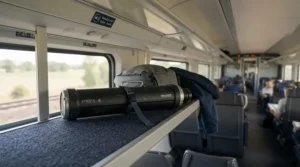
Airlines also set their own rules. Some treat rods as sports equipment with a fee, others count them within your baggage allowance, and tube length limits vary. Confirm with your airline before you fly, and carry the airline’s written policy with you.

Travel Boat Rods for Sea Angling Trips: Two Piece vs the Alternatives
Travel boat rods for sea angling trips come in several formats, and two piece is only one of them.
| Type | Packed Size | Action Quality | Best For |
|---|---|---|---|
| Two piece (e.g. Penn Squadron III Boat 212) | Around 1.1m | Excellent, one joint | Car and hold travel |
| Four piece (e.g. Squadron III Travel Boat, 65cm packed) | Around 65cm | Good, more joints | Cabin bags, tight luggage |
| Telescopic | Very short | Compromised | Casual, light use |
| One piece | Full length | Best | Local charters only |
A four piece travel rod wins on packed size: the Squadron III Travel Boat packs to 65cm. But every extra joint is another place for the action to flatten and another thing to loosen. Two piece rods keep the feel closer to a single blank while still halving the length. If you’re driving to a UK port, two piece is usually the better trade. If you’re flying with only carry-on, four piece may be the practical answer.
Two Piece Boat Rods for Holidays: Value, Family Trips and Budget Choices
Two piece boat rods for holidays work best when you treat them as a one-trip tool or a seasonal companion, not a lifetime investment.
For a family week away, the Leeda 8ft 12-20lb Boat Rod or Angling Pursuits Boat Max give you low-cost entry. Their light classes suit gentle charters aimed at mackerel and easy species. The Fladen Warbird Boat is a sensible step up if you want carbon and heavier classes without a big spend.
Think in cost-per-use. A rod costing around £30 used on three holidays works out far cheaper than hiring a rod each time. But if you fish ten times a year, a better rod such as the Penn Squadron III Boat 212 wins on feel and durability.
One caution: some charter skippers supply rods, and quality varies. Confirm what’s included when you book, and bring your own if you want a consistent feel.
Price Range and Value Analysis
| Rod | Price Range | Value Verdict | Best For |
|---|---|---|---|
| Angling Pursuits Boat Max | Budget bracket | Fair for occasional use | One-off trips |
| Leeda 8ft 12-20lb Boat Rod | Under £25 | Outstanding for the cost | Beginners |
| Fladen Warbird Boat | Around £30 | Strong for carbon | Budget carbon seekers |
| Penn Squadron III Boat 212 | £50-£75 | Very strong | All-rounders |
| Penn Prevail III LE 212 Inline | £65-£80 | Strong | Packing-conscious anglers |
| Daiwa Seahunter Z Uptide | £80-£100 | Strong | Tidal charters |
| Daiwa Saltist Boat Rod | £190-£250 | Premium | Repeat travellers |
The cheapest rods are good value only if your use is light. The best overall value sits in the middle, with the Penn Squadron III Boat 212 and Daiwa Seahunter Z Uptide. The Daiwa Saltist Boat Rod earns its price only if you travel often and want a premium joint.
Safety and Regulations: Fishing Rules to Know on a UK Charter
Charter anglers need to know the catch rules. Under current bass rules, recreational anglers can keep three bass per day outside the closed season, and the minimum size is 42cm. February and March are catch-and-release only. These rules apply whether you fish from a boat or the shore.
For the full picture, read the official GOV.UK bass fishing guidance, which covers commercial and recreational rules.
On safety, wear the buoyancy aid your skipper provides, follow deck instructions, and never cast without checking behind you. A rod swung carelessly on a busy deck is a hazard to everyone aboard. Tell your skipper if you’re unsure about anything.
Finally, check any overseas rules before travelling. Regulations vary by country, and your charter operator can usually point you in the right direction.
FAQ: Two Piece Boat Rods for Travelling to Charters
❓ Can I take two piece boat rods for travelling to charters in hand luggage?
❓ What transit length should I look for in a travel rod?
❓ Is a spigot joint better than a sleeve joint?
❓ Do UK charter boats supply rods?
❓ Are two piece boat rods for holidays worth buying over hiring?
Conclusion: Which Two Piece Boat Rod Should You Pack?
The right pick depends on three things: how often you fish, how you travel, and what you target. For most anglers, the Penn Squadron III Boat 212 is the safest all-round buy, with carbon, sensible classes and fair pricing. If packed size rules your life, the Penn Prevail III LE 212 Inline is the clearest choice thanks to its verified 114cm. For tidal uptide work, the Daiwa Seahunter Z Uptide brings a metal spigot joint collar and good reach. And if you travel yearly and want a premium build, the Daiwa Saltist Boat Rod earns its price.
If budget is tight, the Leeda 8ft 12-20lb Boat Rod, Angling Pursuits Boat Max and Fladen Warbird Boat let you get afloat without a big outlay. Match the class to your marks and check the packed length first.
Finally, fish responsibly. The Angling Trust’s update on the bass bag limit is a good reminder that recreational anglers play a part in stock recovery.
✨ Ready to pack your rod?
🎣 Click any highlighted product above to check current price and availability, then book that charter!
Recommended for You
- Short Boat Rods For Small Charter Boats: 7 Proven Picks (2026)
- Boat Rods For Tope And Smoothhound Fishing: 7 Proven Picks (2026)
- Boat Rods For Heavy Conger Fishing: 7 Best Picks For UK Wrecks (2026)
Disclaimer: This article contains affiliate links. As an Amazon Associate, I earn from qualifying purchases. If you purchase products through these links, we may earn a small commission at no additional cost to you.
✨ Found this helpful? Share it with your friends! 💬🤗
