
In This Article
A barbel pellet is a dense, fishmeal-based bait pellet, sized from 2mm micros to 21mm hookbaits, designed to leak oil and scent into flowing water and hold barbel in a swim. That’s the short version. The long version is that picking from the shelf of best barbel pellets on offer today is less “grab a bag and go” and more a small tactical decision that shapes your whole session, because barbel are river fish first and foremost, built for gravel runs and crease-water with a nose that would put a bloodhound to shame.
They’re one of Britain’s most characterful coarse fish — powerful, whiskered, built like a small torpedo, and classified scientifically as Barbus barbus, a species found right across northern Europe and prized by British river anglers for the fight they give on light tackle. Halibut-style pellets quietly revolutionised how we catch them a couple of decades back, and the category has only grown more specialised since — elliptical shapes for pushy flow, oozing hookbaits for floodwater, natural fishmeal for pressured gravel runs.
This guide pulls together seven genuinely available pellets on amazon.co.uk, from budget loose-feed bags through to bulk aquaculture-grade sacks, and puts real specs and honest, sourced analysis behind each one — not just a repackaged product listing. We’ll cover pellet size selection, pellets vs boilies for barbel, and how water clarity and bait choice interact, plus dedicated PVA bag tactics for getting the most from whatever you’re feeding. Whether you’re stood on a gin-clear Hampshire Avon swim in September or bracing against a chocolate-brown Trent in February, there’s a pellet strategy in here that fits.
Quick Comparison Table: Best Barbel Pellets at a Glance
| Pellet | Size Range | Best For |
|---|---|---|
| Dynamite Baits Marine Halibut Pellets | 3mm–21mm | All-round river workhorse |
| Sonubaits Barbel & Carp Elliptical Feed Pellets | 4mm–12mm | Holding position in strong flow |
| Sonubaits Oozing Barbel & Carp Pellets | 8mm/12mm | Coloured or flooded water |
| Bait-Tech Carp & Coarse Pellets | 2mm–11mm | Budget loose feed |
| Van Den Eynde Fishmeal Pellets | 2mm–8mm | Clear, pressured rivers |
| Skretting Coarse Elite Trout Pellets | 4.5mm–11mm | Bulk session feeding |
| Mainline Match Activated Coarse Pellets | 2mm–8mm | Graduated micro-to-hookbait feeding |
Looking at the spread above, there’s no single “best” pellet so much as a best pellet for your river on the day — the Dynamite Baits Marine Halibut Pellets earn their reputation as the safe, proven default, but on a flooded, chocolate-coloured river the Sonubaits Oozing Barbel & Carp Pellets are doing a genuinely different job. Budget-conscious anglers loose-feeding heavily should lean toward Bait-Tech Carp & Coarse Pellets or the Van Den Eynde Fishmeal Pellets rather than burning through an expensive halibut bag on pure feed.
💬 Just one click — help others make better buying decisions too!😊
Top 7 Best Barbel Pellets: Expert Analysis
1. Dynamite Baits Marine Halibut Pellets — the all-round river benchmark
If there’s a pellet most river anglers cut their teeth on, it’s this one, and for good reason: it’s been the reference point that every newer pellet on this list gets compared against. Dynamite’s Marine Halibut range comes in a resealable 900g bag across eight sizes from 3mm right up to a pre-drilled 21mm, built on what the brand describes as a 42% protein, Super G pre-digested fishmeal base loaded with fish oils and amino acids.
That high oil content matters practically — it means the pellet keeps bleeding scent into fast water for far longer than a drier, cheaper feed pellet, which is exactly what you want when you’re trying to hold a barbel’s attention in a swim it might only pass through for a few minutes. Based on the spec comparison across this list, the 42% protein figure sits at the top end, which is one reason chub, bream and catfish get drawn in alongside your target species — useful for building general swim activity, less useful if you’re trying to be selective.
Reviewers consistently note strong, reliable catch reports across hundreds of purchases, with Amazon buyer ratings for the range sitting around 4.3–4.4 out of 5 across several hundred verified ratings — one of the more heavily reviewed pellets in this category, which itself is a reasonable trust signal. A recurring theme in feedback is confidence in the pre-drilled larger sizes for saving faff with a hand drill at the water’s edge.
Pros:
- ✅ Eight sizes cover loose feed through to hair-rig hookbait
- ✅ High oil content sustains scent trail in strong flow
- ✅ Large, heavily reviewed buyer base builds genuine confidence
Cons:
- ❌ Strong flavour profile can feel “obvious” on pressured, clear rivers
- ❌ Pricier per kilo than basic coarse feed pellets
Typically found in the £4–£9 range for a 900g bag depending on size, climbing toward the mid-teens for multi-packs — check current price before you buy, as smaller pre-drilled sizes tend to sit at the top of that range. Given the review volume and versatility, it’s a fair value anchor to compare every other pellet on this list against.

2. Sonubaits Barbel & Carp Elliptical Feed Pellets — best shape for holding position in flow
Here’s a genuinely clever bit of design most anglers walk straight past on the shelf: this pellet isn’t cylindrical, it’s elliptical, and that shape choice is the whole point of the product. In running water, a round or cylindrical pellet rolls — sometimes metres downstream of where you fed it — while an elliptical pellet sits lower and flatter against the riverbed and resists rolling in the current.
Supplied in 1kg bags across 4mm, 6mm, 8mm and 12mm sizes, with a high oil and protein content pitched specifically at “running water” use, this is a pellet built by people who clearly understand that barbel fishing is river fishing, not stillwater carp fishing with a different label. What most buyers overlook about pellet shape is that it changes where your feed actually ends up relative to where you cast, which on a pushy swim can be the difference between a concentrated baited area and a scattered mess spread thirty yards down the peg.
It’s best suited to PVA bags, bait droppers and feeder work rather than loose catapulting, since the elliptical shape shines most when it needs to stay exactly where you put it. Aggregated online feedback for Sonubaits’ wider pellet range sits comfortably in the 4.1–4.7 star band, and specialist river-fishing write-ups specifically flag the elliptical shape as an edge on barbel and chub swims — though standalone review volume for this exact SKU is thinner than for the market-leading halibut pellet, so weight that accordingly.
Pros:
- ✅ Elliptical shape resists rolling away in strong current
- ✅ High oil and protein content built for river conditions
- ✅ Four sizes suit both loose feed and PVA bags
Cons:
- ❌ Less commonly stocked than standard cylindrical halibut pellets
- ❌ Standalone review data online is comparatively limited
Expect a price broadly in the £4–£6 range for a 1kg bag — good value given the specificity of the design, and a smart pick for anyone regularly fishing water with real pace on it.
3. Sonubaits Oozing Barbel & Carp Pellets — best barbel bait for coloured water
When a river turns to chocolate milk after rain, barbel switch almost entirely to hunting by smell and vibration rather than sight, and that’s precisely the situation this pellet was engineered for. Sonubaits designed the Oozing range specifically because, in their words, barbel and carp “spend a lot of their time in murky or flooded water searching for food” — the pellet leans into strong flavour and colour combinations rather than subtlety.
Available as a hookbait in mini 8mm and large 12mm sizes, across three flavours — Cheesy Garlic, Halibut and Spicy Sausage — the oozing format means the pellet is actively leaking flavour and colour rather than slowly releasing oil the way a dense halibut pellet does. On the spec sheet this reads as a minor distinction; on the bank it’s the difference between a hookbait a barbel can locate in three feet of visibility versus one it has to bump into by accident. Here’s what to weigh: coloured-water fishing rewards a hookbait that stands out, while gin-clear conditions punish exactly that same boldness.
Reviewer sentiment specifically for this SKU is harder to verify at volume online — it’s a more niche, specialist product than the mainstream halibut range — so treat catch reports as encouraging rather than exhaustively proven; what is consistently repeated across river-fishing advice sources is that a flavoured, high-leakage pellet like this genuinely does outperform plain pellets in coloured water.
Pros:
- ✅ Purpose-built colour and flavour combinations for low visibility
- ✅ Three flavour options to rotate if barbel go quiet
- ✅ Compact 8mm/12mm sizing suits precise hair-rig presentation
Cons:
- ❌ Limited independent review volume to verify at scale
- ❌ Overkill and possibly counter-productive in gin-clear water
Priced around the £4–£5 mark per pot, it’s a specialist rather than an everyday buy — but for winter floodwater sessions it’s arguably the most purpose-built pellet on this list.
4. Bait-Tech Carp & Coarse Pellets — the honest budget workhorse
Not every session needs a premium halibut pellet, and this is where Bait-Tech earns its place: a genuinely wide 2mm to 11mm size range in a 700g bag, aimed squarely at anglers who need to loose-feed generously without burning through their bait budget in an afternoon. The brand describes an “amino profile that boasts long-range attractors” with a quick breakdown suited to match and pleasure fishing alike.
That quick breakdown is worth interpreting properly rather than just quoting: it means this pellet builds an attractant cloud faster than a dense, slow-releasing halibut pellet, which is genuinely useful for pulling fish into a swim quickly, but it also has less staying power across a long, quiet session where you want bait sitting and working for hours. Reviewers consistently note it sinks straight from the bag with no pre-soak required, though it can also be dampened with roughly 1.5 pints of water per bag for method-feeder moulding.
Feedback across Amazon listings for this range is genuinely mixed rather than uniformly glowing — the 2mm size has scored a clean 5 out of 5 across a small sample, while the 6mm listing sits closer to 3.8 out of 5, with one verified buyer specifically flagging it as overpriced for what it is. Honest reporting matters more than flattering rounding here, so it’s fair to say this is a solid, unglamorous feed pellet rather than a standout hookbait performer.
Pros:
- ✅ Very wide 2mm–11mm size range in one bag
- ✅ Works dry from the bag or pre-soaked for moulding
- ✅ Noticeably cheaper per kilo than premium halibut options
Cons:
- ❌ Review scores vary meaningfully between different pellet sizes
- ❌ Faster breakdown means less staying power on long sessions
Generally sitting in the £3–£5 range for a 700g bag, this is the pellet to reach for when the plan is feeding heavily rather than picking one perfect hookbait.
5. Van Den Eynde Fishmeal Pellets — best for clear, pressured rivers
Belgian bait house Van Den Eynde has been quietly supplying European carp and coarse anglers for decades, and this fishmeal pellet — sold in Micro (2mm), 4mm, 6mm and 8mm sizes in 800g bags — represents a genuinely different flavour philosophy to the punchier, more heavily flavoured pellets elsewhere on this list. The retailer copy describes it as containing natural vegetable-origin proteins alongside a “Carpstimm” appetite stimulator, built on a “natural fishmeal flavour” rather than an added scent boost.
On the spec sheet this reads as a minor detail, but the real-world implication is significant: barbel on heavily-fished, low, clear rivers become genuinely wary of the loud, familiar flavours that get catapulted at them every weekend. A milder, more natural fishmeal profile can be the change of pace that gets a bait picked up with confidence rather than approached and abandoned. Based on the spec comparison across this whole list, this is one of only two pellets here explicitly built around a natural rather than boosted flavour profile.
It’s worth being honest about the evidence base here: standalone UK consumer review volume for this specific product is thinner online than for the UK market leaders, since much of Van Den Eynde’s reputation is built through specialist tackle shops and continental carp circles rather than mainstream Amazon listings. What can be verified is longevity — retailer copy consistently describes it as “a best seller for years,” which at minimum indicates sustained trade demand rather than a fad product.
Pros:
- ✅ Natural fishmeal flavour suits pressured, clear-water venues
- ✅ Four sizes from micro feed through to 8mm hookbait
- ✅ Long-standing European bait house with genuine track record
Cons:
- ❌ Thinner UK-specific consumer review data than rival brands
- ❌ Less widely stocked in mainstream UK tackle shops
Expect roughly £3–£5 for an 800g bag — solid value, particularly for anglers targeting canny, well-educated barbel on hard-fished stretches.
6. Skretting Coarse Elite Trout Sinking Pellets — best bulk option for heavy sessions
This one’s a genuine outlier on the list, and worth including precisely because it isn’t a typical “fishing tackle” product — Skretting is primarily an aquaculture feed manufacturer, and these pellets were formulated for rearing trout, not for anglers at all. River anglers adopted them decades ago anyway, and the 4mm trout sinking pellet in particular has become, in the words of one specialist bait retailer, “a staple of carp fishing for decades,” with barbel, bream and catfish anglers following suit.
Sizes run 4.5mm, 6mm, 8mm and 11mm, and the pellets are notably darker and oilier than typical coarse pellets because they contain bloodmeal and fishmeal together rather than fishmeal alone. Here’s what most product listings won’t spell out: bloodmeal gives a genuinely different scent and taste signature to a barbel’s senses than a straight fishmeal pellet, which is exactly why swapping to this pellet can sometimes reawaken interest on a water where the standard halibut pellet has been fed to death by every angler on the bank.
Because it’s sold through specialist bait wholesalers in bulk formats — bags from roughly 3kg up to a hefty 25kg — rather than small retail packs on Amazon, mainstream consumer review data is genuinely limited; this is a trade-reputation product rather than a star-rated one, and it would be dishonest to claim otherwise. What is consistently repeated across specialist angling sources is that the higher protein, higher oil profile is “super attractive to carp, bream, barbel and catfish.”
Pros:
- ✅ Bloodmeal-and-fishmeal blend offers a genuinely different scent profile
- ✅ Bulk bag sizes bring the cost per kilo right down
- ✅ Long-standing trade reputation across coarse and specimen fishing
Cons:
- ❌ Limited mainstream consumer review volume to lean on
- ❌ Bulk bags are impractical if you only fish occasionally
Prices scale with bag size — roughly £12–£15 for a smaller 3kg bag, rising toward £55–£60 for a full 25kg sack — making this the clear choice for regular session anglers rather than occasional weekend visitors.
7. Mainline Match Activated Coarse Pellets — best for graduated micro-to-hookbait feeding
Mainline’s pitch for this range is refreshingly specific: four “perfectly cut sizes” — 2mm, 4mm, 6mm and 8mm, sold in 1kg bags — designed to “send irresistible eating signals through all layers of water.” Strip out the marketing language and the useful idea underneath is this: rather than mixing pellets from three different brands to get a graduated feed, you can build an entire micro-to-hookbait strategy from one consistent, “activated” formula.
What most buyers overlook about graduated feeding is that it isn’t just about size — it’s about timing the scent release through the water column. Micro pellets breakdown fastest, creating an immediate scent cloud that pulls barbel up and along the swim; the larger 6mm and 8mm sizes sink and hold position on the bottom, giving fish something substantial to root around for once they’ve arrived. Using one branded range for the whole job keeps the flavour profile consistent, which some anglers believe reduces the chance of a barbel getting suspicious of mismatched baits in the same swim.
Consumer review volume specifically for this range on Amazon is modest compared with the market-leading halibut pellet, so it’s fairer to describe the evidence as encouraging rather than exhaustive; angling press coverage, including Angling Times’ own roundup of commercial and river pellets, lists Mainline’s activated range among its recommended options for exactly this kind of layered feeding approach, which does lend it credibility beyond a single retailer’s word.
Pros:
- ✅ Four sizes in one brand for consistent flavour profile
- ✅ Designed specifically for graduated, layered feeding
- ✅ Easy to combine with method and hybrid feeders
Cons:
- ❌ Thinner standalone Amazon review base than category leaders
- ❌ Four separate bags needed to cover the full size range
Typically priced in the £5–£6 range per 1kg bag, it’s a mid-market option that rewards anglers willing to think about feeding strategy rather than just tipping one bag into a feeder.
✨ Don’t Miss These Exclusive Deals!
🎣 Take your barbel sessions to the next level with these carefully compared pellets. Click on any highlighted product to check current pricing and availability — the right bait for the day’s conditions could be the difference between a blank and a personal best!
How to Prepare and Feed Barbel Pellets: A Session-by-Session Guide
Most pellet problems on the bank trace back to preparation, not the bait itself. Hard pellets fresh from the bag are dense and can sit inert for a surprisingly long time in cold water, so soaking matters more than beginners expect. For loose feed pellets like Bait-Tech Carp & Coarse Pellets or Van Den Eynde Fishmeal Pellets, a rough guide is roughly 1–1.5 pints of water per 700–900g bag, left to stand for 20–30 minutes with an occasional stir, until the pellets have softened without turning to mush.
Hookbait-sized pellets such as the pre-drilled 14mm and 21mm Dynamite Baits Marine Halibut Pellets need no soaking at all — they go straight onto a hair rig via a baiting needle, typically banded or stopped with a boilie stop. A common first-30-days mistake is over-soaking a hookbait pellet until it’s soft enough to pull straight off the hair on the cast; if that’s happening, you’ve gone too far, or you need a slightly firmer pellet for the job.
The other frequent early error is over-feeding a small, tight swim. Barbel respond to a concentrated scent trail, not a carpet of bait — little and often, particularly with an oily pellet like the Sonubaits Barbel & Carp Elliptical Feed Pellets, tends to out-fish one heavy introduction. Maintenance during a session is simple: top up sparingly every twenty minutes or so rather than recasting a fresh bed of feed each time, which just resets the clock on your swim.
Real Barbel Sessions: Matching Pellets to the Angler
The winter flood specialist. Picture someone fishing a coloured, rising River Trent in January, water temperature hovering just above freezing, visibility down to a few inches. This angler needs maximum scent output and a hookbait that stands out against zero visibility — the Sonubaits Oozing Barbel & Carp Pellets paired with loose-fed Skretting Coarse Elite Trout Sinking Pellets for their bloodmeal punch make a genuinely sensible combination here, both chosen specifically for coloured-water conditions rather than habit.
The budget-conscious student. Someone fishing a local, day-ticket stretch of the Severn twice a week on a tight budget needs volume more than premium branding. Loose-feeding Bait-Tech Carp & Coarse Pellets or Van Den Eynde Fishmeal Pellets, backed by a single small bag of Dynamite Baits Marine Halibut Pellets for hookbaits only, keeps the cost per session manageable without sacrificing catch potential.
The summer low-water purist. On a gin-clear Hampshire Avon in low late-summer flow, barbel are educated, spooky and picky. This angler benefits from the natural profile of Van Den Eynde Fishmeal Pellets and small, subtle Mainline Match Activated Coarse Pellets micros to build confidence without spooking fish with an overpowering scent trail — a deliberately quieter approach than the flood specialist’s tactics above.
PVA Bag Tactics: Getting the Most from Every Pellet
PVA bag fishing is arguably the single most effective modern tactic for presenting pellets to barbel, and it works because it delivers a concentrated, exact-location bed of feed around your hookbait rather than scattering loose feed across the swim. A proven mix, drawn from specialist angling advice, blends roughly equal amounts of 3mm and 6mm pellets with a handful of 11mm pellets, packed into a PVA bag or stick with your hookbait threaded through the middle.
The logic is straightforward once you see it: the smaller pellets melt out of the dissolving bag fastest and start the scent cloud working within minutes, while the 11mm pellets sit and hold position longer, giving barbel something worth staying for once they’ve found the spot. In coloured water, a slightly larger mesh or a bigger bag with heavier pellets like the Skretting Coarse Elite Trout Sinking Pellets can help the bag hold together and sink cleanly through faster-moving, dirtier flow.
Cast the bag firmly but not violently — PVA dissolves in water, so a hard, splashy cast risks tearing it apart before it reaches the bottom, defeating the entire point of concentrated feeding. Refresh with a fresh stick every cast or two on an active swim rather than leaving the same hookbait sat with no fresh feed around it, since barbel drift through a peg and a stale, unsupported hookbait is easy to miss.
How to Choose Barbel Pellets
Picking the right pellet isn’t guesswork if you work through it in order:
- Read the flow first. Fast, pushy water favours dense, oily pellets like Dynamite Baits Marine Halibut Pellets or shaped options like Sonubaits Barbel & Carp Elliptical Feed Pellets that resist washing downstream.
- Check the colour. Coloured or flooded water rewards stronger flavour and scent leakage — think Sonubaits Oozing Barbel & Carp Pellets — while clear water rewards subtlety.
- Decide your session length. Long, quiet sessions favour slow-release oily pellets; short, active sessions can lean on faster-breakdown options like Bait-Tech Carp & Coarse Pellets.
- Separate feed from hookbait. You rarely need premium pellets for loose feed — save the halibut-grade bait for the hair rig and feed cheaper particles around it.
- Match size to fishing method. Micros for scent clouds and method work, mid-sizes for PVA bags, 14mm-plus for standalone hair-rig hookbaits.
- Weigh pressure on the venue. Hard-fished, well-known swims often respond better to a natural profile like Van Den Eynde Fishmeal Pellets than the loudest flavour on the shelf.
- Factor in budget versus volume. If you’re feeding heavily over a long session, cost-per-kilo bulk options like Skretting Coarse Elite Trout Sinking Pellets make more sense than repeated small premium bags.
Pellet Size Selection: Matching Millimetres to Method
Pellet size selection is one of the most underrated variables in barbel fishing, and it’s rarely about “bigger equals better.” Micro pellets in the 2–4mm range, such as the smallest sizes in the Mainline Match Activated Coarse Pellets or Van Den Eynde Fishmeal Pellets ranges, break down fast and are built to create a scent cloud rather than physical food a barbel can easily pick up — their job is to pull fish into the swim, not to sit on a hair.
The 6–8mm middle ground is genuinely the workhorse size for most sessions — big enough to hold together in a feeder or PVA bag, small enough to feed generously without breaking the bank, and it’s the size most consistently recommended across the Bait-Tech Carp & Coarse Pellets, Sonubaits Barbel & Carp Elliptical Feed Pellets and Dynamite Baits Marine Halibut Pellets ranges alike.
Move up to 11–16mm and you’re firmly in hookbait territory, typically hair-rigged and requiring a hair-rig needle or pre-drilled pellet for easy threading — the pre-drilled versions of Dynamite Baits Marine Halibut Pellets specifically save that step. Beyond 20mm, you’re really into specimen carp and catfish deterrent territory rather than a typical barbel size, though a big, single 21mm pellet can occasionally sort out a genuinely specimen fish while filtering out the small nuisance fish that plague smaller hookbaits.
Pellets vs Boilies for Barbel
The pellets vs boilies for barbel debate has run for years, and honestly, the answer is situational rather than absolute. Boilies — round, boiled hookbaits usually 12mm to 20mm — have one clear structural advantage: their tougher outer skin means only genuinely large fish can eat them, which naturally filters out the small chub and dace that plague a soft pellet hookbait on a busy river.
| Bait Type | Durability | Small-Fish Resistance | Best For |
|---|---|---|---|
| Pellets | Moderate — softens over time | Lower — smaller fish can peck it apart | Loose feed, PVA bags, natural presentation |
| Boilies | High — tough outer skin | Higher — selective for bigger fish | Long sessions plagued by small fish |
| Meat/Luncheon Meat | Moderate — firm but cuttable | Moderate | Daylight, clear water, versatile sizing |
Pellets counter that durability disadvantage with something boilies genuinely can’t match easily: a much more natural, “everyday food” profile, since fishmeal pellets closely resemble the kind of feed barbel encounter in fish farms and stocked fisheries, whereas a heavily flavoured, brightly coloured boilie is a more obviously artificial offering. Based on the spec comparison, a pre-drilled 21mm Dynamite Baits Marine Halibut Pellets hookbait effectively splits the difference — genuinely tough enough to resist nuisance fish while retaining the natural pellet profile barbel are used to encountering.
The most experienced river anglers rarely pick one exclusively — a common approach is loose-feeding pellets for their natural, everyday scent trail, while switching the actual hookbait to a boilie when small fish become a genuine nuisance, giving you the attraction of one bait type with the selectivity of the other.
Water Clarity and Bait Choice: Reading the River Before You Bait Up
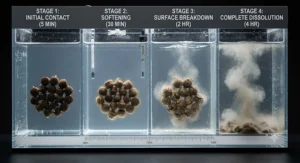
Water clarity and bait choice are so tightly linked that experienced river anglers check visibility before they even open a bait bag. In gin-clear conditions — a low summer Hampshire Avon or Dorset Stour, for instance — barbel hunt largely by sight as well as smell, and an overly bright, loudly flavoured pellet can spook fish that have learned to associate bold colours and heavy scent with pressure and danger from being fished for repeatedly.
The spec sheet won’t tell you this, but reviewers and specialist river guides consistently note that natural-toned, subtly flavoured pellets — the kind of profile Van Den Eynde Fishmeal Pellets are built around — tend to outperform brighter, punchier baits precisely when visibility is high. Conversely, when a river turns the colour of strong tea after rainfall, that same subtlety becomes a genuine handicap, because barbel simply can’t locate a bait relying on visual cues in three inches of visibility.
A practical rule worth internalising: as water clarity drops, both bait size and scent output should generally increase — bigger, oilier, more heavily flavoured pellets like the Sonubaits Oozing Barbel & Carp Pellets or bloodmeal-rich Skretting Coarse Elite Trout Sinking Pellets do a better job of being physically located in poor visibility. It’s a sliding scale rather than a binary switch, and checking the river before you fish is a five-second habit that genuinely changes results.
Best Barbel Bait for Coloured Water
Coloured and flooded rivers deserve their own dedicated strategy, because the physics of how barbel find food genuinely change once visibility drops. With sight effectively removed from the equation, barbel lean almost entirely on their barbels — the sensory whiskers the species is named for — and their acute sense of smell, both of which respond far better to a bait actively leaking scent and flavour than to a passive, low-leakage pellet.
This is precisely the gap the Sonubaits Oozing Barbel & Carp Pellets were built to fill, with their intense flavour and colour combinations designed specifically for “murky or flooded water,” according to the brand’s own product reasoning. Pairing an oozing hookbait with a loose-fed bloodmeal option like the Skretting Coarse Elite Trout Sinking Pellets or the higher-oil Dynamite Baits Marine Halibut Pellets gives you both a locatable hookbait and a strong scent trail drawing fish toward it — belt and braces for low-visibility conditions.
Flooded rivers also carry practical risks worth flagging honestly: strong flow can wash lighter feed pellets well downstream before they’ve had a chance to work, so denser, heavier options — or PVA bags packed tighter with bigger pellets — tend to hold position better. It’s also worth remembering that flood conditions often coincide with genuinely dangerous bank and water conditions, so safety on the bank should always come before bait strategy in a proper flood.
Common Mistakes When Buying Barbel Pellets
The single most common mistake is buying only one pellet size and trying to make it do every job — a 6mm bag alone can’t loose-feed effectively and serve as a hair-rig hookbait, so most experienced anglers end up carrying at least two, often three, sizes. A close second is chasing the cheapest price per kilo without checking oil content; a low-oil budget pellet loose-fed in a pushy river simply won’t hold scent the way a premium option like Dynamite Baits Marine Halibut Pellets will, and you end up needing more of it to achieve the same effect, eroding the apparent saving.
Another frequent error is ignoring pre-drilled versus solid pellets when buying hookbait sizes — a solid 14mm or 21mm pellet needs a hair-rig needle and some patience to drill and thread, while the pre-drilled versions cost slightly more but save real bankside time, particularly in cold weather when fiddly rigging is the last thing you want to be doing with numb fingers.
It’s also easy to overlook regulations entirely when bait shopping, which is a genuine mistake rather than a minor oversight — anyone fishing freshwater in England or Wales needs a valid Environment Agency rod licence regardless of which pellet ends up on the hook, and it’s worth sorting that before the bait arrives rather than after. Finally, over-buying a specialist product like bulk Skretting Coarse Elite Trout Sinking Pellets for occasional, one-off sessions ties up money in bait that may go stale in storage before it’s used — match the pack size to your actual fishing frequency, not aspiration.
Safety, Regulations and Responsible Barbel Fishing
Before any pellet discussion matters, the legal basics need covering honestly. Anyone aged 13 or over fishing freshwater with a rod and line in England or Wales needs a valid rod fishing licence from the Environment Agency, and that requirement applies even on private day-ticket waters — you can buy or check a rod fishing licence on GOV.UK in a few minutes online, and fishing without one can carry a fine of up to £2,500.
River barbel fishing is also governed by the traditional coarse fishing close season, which runs from 15 March to 15 June on most rivers in England and Wales to protect spawning stocks — worth checking specifically for your chosen river, since the rules and exceptions vary by waterway and the Canal & River Trust publishes a clear breakdown of which stretches are affected. Stillwaters and most canals stay open year-round, so it’s rarely a reason to stop fishing altogether — just a reason to plan where.
On responsible feeding, it’s worth resisting the urge to over-bait a swim, both for fish welfare and for the river environment — uneaten pellet waste can affect water quality in slow-flowing stretches, and a little-and-often approach outperforms a heavy single introduction anyway. Barbel are a powerful, hard-fighting species; a wide, wet unhooking mat, a properly sized landing net and minimal time out of the water go a long way toward keeping fish in good condition for the next angler.
Long-Term Cost & Maintenance: Getting Value from Your Bait Budget
Thinking about pellets purely by bag price misses the real cost picture. A £3 bag of Bait-Tech Carp & Coarse Pellets and a £9 bag of premium 21mm Dynamite Baits Marine Halibut Pellets aren’t actually competing products — one is built for volume loose feed, the other for a handful of precision hookbaits, and comparing them price-for-price is comparing apples to a very different kind of apple.
A more useful framework is cost-per-session rather than cost-per-bag: a bulk sack of Skretting Coarse Elite Trout Sinking Pellets, while carrying a higher upfront price, works out significantly cheaper per session for anyone fishing weekly than repeatedly buying small retail bags. Conversely, an occasional angler fishing a handful of sessions a year is better served buying small, varied bags across two or three brands from this list, since unused bulk pellet can lose freshness in storage over many months.
Proper storage extends value either way — keeping bags sealed, cool and away from direct sunlight preserves oil content and scent, both of which degrade over time and directly affect how well a pellet performs on the bank months after purchase.
Frequently Asked Questions
❓ What size pellets are best for barbel?
❓ Do barbel prefer pellets or boilies?
❓ What's the best barbel bait for coloured water?
❓ How long should you soak barbel pellets before fishing?
❓ Do you need a licence to fish for barbel in the UK?
Conclusion
There’s genuinely no single winner among these seven pellets, and that’s not a cop-out — it’s the honest takeaway from putting real specs and sourced review sentiment side by side. The Dynamite Baits Marine Halibut Pellets remain the sensible all-round default precisely because the evidence base behind them is the deepest of anything on this list. But swap into coloured floodwater and the Sonubaits Oozing Barbel & Carp Pellets earn their keep; drop onto a gin-clear, hard-fished summer river and the quieter Van Den Eynde Fishmeal Pellets make more sense than anything louder.
What separates a genuinely useful pellet choice from a lucky guess is matching the bait to the conditions in front of you — flow speed, water clarity, session length and how pressured the venue is — rather than reaching for whatever’s cheapest or most heavily marketed on the shelf. Build a small kit covering a loose-feed budget option, a premium hookbait pellet and a coloured-water specialist, and you’ll be equipped for the vast majority of river conditions British barbel fishing throws at you across a season.
Whichever combination you land on, remember the basics sit above bait choice every time: a valid rod licence, respect for the close season, and careful handling of every fish you’re lucky enough to land.
Recommended for You
- Barbel Bait Under £20: 7 Brilliant Budget Picks (2026)
- Barbel Rod For Fast Rivers: 7 Proven Picks For UK Rivers (2026)
- Best Barbel Rod Under £50: 7 Top Picks for UK Anglers (2026)
Disclaimer: This article contains affiliate links. As an Amazon Associate, I earn from qualifying purchases. If you purchase products through these links, we may earn a small commission at no additional cost to you.
✨ Found this helpful? Share it with your friends! 💬🤗
