In This Article
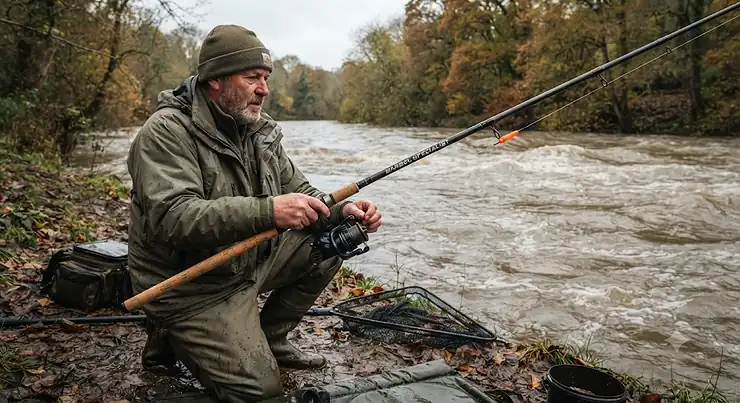
There’s a particular kind of stubbornness that only a barbel seems to possess. Hook one in a slow, lazy stretch of river and it’s a fight. Hook one where the current is barrelling through like it’s late for something, and you’re suddenly holding a bent bit of carbon that’s trying to relocate you downstream. That’s the honest starting point for anyone shopping for a barbel rod for fast rivers: this isn’t really about finding “a rod.” It’s about finding the one tool that can absorb a big fish’s first, furious run while the river itself is already pulling against you.
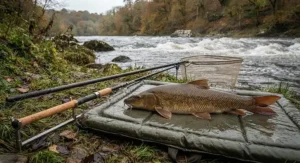
Barbel (Barbus barbus) are built for this kind of water. According to Wikipedia’s entry on barbel, the species is usually found in gravel and rocky-bottomed, moderate-to-fast-flowing rivers with high dissolved oxygen — the stretch of river anglers often call the “barbel zone.” That preference for pace and oxygen is exactly why a rod built for stillwater carp or gentle canal fishing falls apart under pressure here: it hasn’t got the backbone to control a powerful fish while also fighting the current that fish is using as a weapon.
This guide cuts through the marketing fluff. We’ve researched seven genuine, currently available rods spanning budget, mid-range and premium territory, and we’ve matched each one against what actually matters in fast water: test curve, blank stiffness, guide spacing, tip sensitivity and how the rod behaves when a 10lb fish decides the swim is over. You’ll also find honest analysis on rod action, feeder-versus-float tactics, and how to read a river before you even wet a line. Let’s get into it.
Quick Comparison Table
| Rod | Length | Test Curve | Price Range | Best For |
|---|---|---|---|---|
| Daiwa Infinity EVO Barbel Rod | 12ft | 1.75lb–2.75lb | around £320–£330 | Premium power in heavy flow |
| Drennan Specialist Barbel Rod | 12ft | 1.75lb–2.25lb | around £110–£125 | Reliable mid-range workhorse |
| Korum Barbel Rod | 11ft–13ft | 1.75lb–2.5lb | around £65–£90 | Best value for beginners |
| Greys Prodigy VX Barbel | 12ft | 1.75lb–2.0lb | around £145–£160 | Twin-tip versatility |
| Sonik Xtractor Specialist Avon Rod | 11ft | 1.25lb–1.5lb | around £60–£85 | Tight, powerful swims |
| Drennan Specialist River Float Rod | 13ft–15ft | N/A (float) | around £130–£165 | Best float rod for barbel |
| Korum Barbel Quiver | 12ft | Quiver-tip | around £65–£75 | Shy bites in flow |
If there’s one thing this table makes obvious, it’s that “best barbel rod for fast rivers” doesn’t have one single answer — it depends heavily on method. The Daiwa Infinity EVO Barbel Rod sits at the top for anglers leger-fishing big rivers who want power without the usual weight penalty, while the Korum Barbel Rod proves you don’t need to spend £300 to get a rod that’ll cope with a genuinely angry fish. Anyone planning to trot a stick float through a fast glide, meanwhile, should skip straight to the Drennan Specialist River Float Rod, because feeder-style barbel rods and float rods are built around completely different priorities, which we’ll unpack properly a little further down.
💬 Just one click — help others make better buying decisions too!😊
Top 7 Barbel Rods for Fast Rivers: Expert Analysis
1. Daiwa Infinity EVO Barbel Rod — best power-to-weight in heavy flow
The standout feature of the Daiwa Infinity EVO Barbel Rod is how little it weighs for what it can actually do — Daiwa built this on a high-volume carbon blank that stays slim and light while still generating serious lifting power. Available across test curves from 1.75lb through to 2.75lb, the heavier end of that range is the one that matters most for genuinely fast, pushy rivers, because it loads up quickly enough to turn a barbel’s head before the current adds its own leverage to the fight. The 12ft length is a sweet spot too: long enough to keep an acute rod angle over snags and streamer weed, short enough to still control a fish in a tight swim.
Based on the spec comparison with rivals in this price bracket, what stands out is the blank’s recovery speed — after the initial lunge, a fast-taper premium blank like this settles and telegraphs every head-shake straight back through your hands, rather than absorbing it and leaving you guessing. That matters enormously in coloured, fast water where you can’t see the fish and the rod tip is doing all the talking. This is the rod for anglers who fish big, demanding rivers regularly and want one tool that won’t be found wanting on the biggest fish of the session.
Reviewers consistently rate this rod highly for its playing action and finish quality, and aggregated feedback from UK tackle review sites points to very few structural complaints, though as with any premium carbon blank, a hard knock against a bridge or boat can still cause damage that cheaper glass-reinforced rods might shrug off.
Pros:
- ✅ Exceptional power-to-weight ratio for extended sessions
- ✅ Fast-taper blank suits genuinely fast, pushy rivers
- ✅ Wide test curve range covers multiple river types
Cons:
- ❌ Premium price puts it out of reach for casual anglers
- ❌ Carbon blank is less forgiving of careless handling
Priced around £320–£330 at the time of research, the Daiwa Infinity EVO Barbel Rod sits firmly in premium territory, but for anglers who fish fast rivers as a serious pursuit rather than an occasional day out, the extra investment buys genuine performance rather than just a brand badge.
2. Drennan Specialist Barbel Rod — the reliable mid-range workhorse
What most buyers overlook about the Drennan Specialist Barbel Rod is that it isn’t trying to be the flashiest option — it’s trying to be the one rod you can trust every single time you unpack it, and on that measure it delivers. The 12ft blank, offered with test curves between 1.75lb and 2.25lb, has a progressive-through-fast action that loads smoothly on the strike rather than feeling stiff and unforgiving, which is exactly what you want when a barbel bolts for the near-bank snag the instant it feels the hook.
In practice, the 1.75lb test curve version handles medium-paced rivers and moderate feeder weights with ease, while the 2.25lb model is the one to reach for on genuinely fast, weir-pool-style water where you need to hold bottom with heavier leads. Drennan’s build quality here — full cork handles, SiC-lined guides — means the rod resists the line wear and grit ingress that ruin cheaper guide setups over a season of muddy-river fishing.
Long regarded as one of the benchmark barbel rods in UK specialist angling circles, this model’s reputation is built on consistency rather than headline-grabbing specs. Aggregated review sentiment across UK tackle retailers reflects strong satisfaction with the rod’s fish-playing action, with the most common praise centring on how forgiving it feels even when a big fish surges close to the net.
Pros:
- ✅ Smooth, forgiving action reduces hook-pulls on big fish
- ✅ SiC guides resist wear from grit-laden fast rivers
- ✅ Strong reputation for long-term durability
Cons:
- ❌ Not the lightest rod in its class for all-day use
- ❌ Extra length options are limited compared with rivals
At around £110–£125, the Drennan Specialist Barbel Rod represents the point where price and performance genuinely balance out — you’re not paying for a brand premium, but you’re also not compromising on the components that actually fail first on a budget rod.
3. Korum Barbel Rod — best value for beginners on fast water
The standout feature here is simple: the Korum Barbel Rod punches well above its price bracket, built on eight years of range development aimed squarely at modern big-fish river angling. Offered across 11ft to 13ft lengths with test curves from 1.75lb to 2.5lb, it gives newcomers to fast-river barbel fishing genuine flexibility to match rod length to swim size without needing to buy multiple rods.
Every model in the range comes with a white bite-detection tip, SiC-lined guides and a slimline cork handle — features that, on paper, you’d expect to see on rods costing two or three times as much. Here’s what the spec sheet won’t tell you outright: those SiC guides matter disproportionately on fast, silty rivers, because cheaper guide linings wear grooves under abrasive grit-laden line far quicker, eventually fraying your reel line at the worst possible moment — usually mid-fight.
This rod suits the angler who’s serious about progressing into fast-river barbel fishing but isn’t ready to commit premium-rod money before they know if the pursuit is for them. Aggregated feedback from UK angling publications repeatedly flags this range as punching above its price point, with the most common minor criticism being that the very top of the test curve range can feel slightly underpowered against the biggest fish in the fastest swims.
Pros:
- ✅ Genuinely strong value against premium-priced rivals
- ✅ White tip aids bite detection in low light
- ✅ Wide length range suits varied swim sizes
Cons:
- ❌ Top-end test curve can feel light on biggest fish
- ❌ Finish quality noticeably below flagship-tier rods
At roughly £65–£90, the Korum Barbel Rod is the rod we’d point most beginners toward — it’s proof that “budget” and “capable” aren’t mutually exclusive in fast-river barbel fishing.
4. Greys Prodigy VX Barbel — twin-tip versatility for changing conditions
The Greys Prodigy VX Barbel earns its spot here through a genuinely clever bit of engineering: a twin-tip system that lets you swap between a quiver tip for finesse bite detection and a stiffer tip for driving hooks home at range with heavier feeders. On a 12ft blank with a 1.75lb–2.0lb test curve, that adaptability means one rod can cover both a gently flowing summer river and the same stretch in flood-swollen autumn spate, without needing two separate setups.
What that spec actually means in practice is fewer compromises on days when river conditions change mid-session — something that happens constantly on fast, rain-fed UK rivers. Based on the spec comparison against single-tip rivals, the trade-off is a slightly higher price for what’s essentially two rod tips’ worth of technology bundled into one blank, but for anglers who fish the same river across multiple conditions, that versatility pays for itself.
Reviewers commonly highlight the quality of the twin-tip system’s fit and the rod’s balanced feel in the hand, with aggregated sentiment suggesting it’s viewed as a genuine step up from Greys’ entry-level ranges, particularly among anglers who split their time between feeder and quiver-tip tactics on the same stretches of river.
Pros:
- ✅ Twin-tip system adapts to changing river conditions
- ✅ Balanced, comfortable blank for long sessions
- ✅ Strong middle-ground between budget and premium tiers
Cons:
- ❌ Interchangeable tips add a component that can be lost
- ❌ Narrower test curve range than dedicated barbel specialists
Priced around £145–£160, the Greys Prodigy VX Barbel sits in a useful gap between mid-range and premium, aimed at anglers who value flexibility over outright raw power.
5. Sonik Xtractor Specialist Avon Rod — best for tight, powerful swims
Short, punchy and unapologetically stiff — the Sonik Xtractor Specialist Avon Rod is what you reach for when the swim is tight, the far bank is close, and there’s absolutely no room to let a fish run. Built to the classic Avon-rod format at around 11ft with a shorter, more compact action than the longer specialist rods on this list, it’s designed to bully a barbel away from cover fast rather than play a long, patient fight.
That compact power comes from a stiffer through-action blank, which means less “give” on the initial take but considerably more control once a fish is on. In practice, this translates to fewer break-offs against snags in swims where a longer, softer rod simply can’t apply enough side-strain quickly enough. It’s the rod experienced river anglers reach for on tight, overgrown stretches where barbel and chub share the same fast-flowing runs and there’s genuinely nowhere for a hooked fish to go except through your terminal tackle or your net.
Aggregated commentary from UK river-fishing guides consistently places this rod in the “great for barbel and chub in tight swims” category, with the recurring theme being confidence under pressure rather than casting distance or finesse — this isn’t a rod built for open, sweeping glides.
Pros:
- ✅ Compact, powerful action excels in tight swims
- ✅ Strong side-strain control near snags and cover
- ✅ Good value against dedicated premium Avon rods
Cons:
- ❌ Shorter length limits reach on wide, open rivers
- ❌ Stiffer action feels less forgiving on smaller fish
At an estimated £60–£85 based on its market positioning, the Sonik Xtractor Specialist Avon Rod is a smart, focused buy for anyone whose fast-river fishing happens in confined, snaggy swims rather than open water.
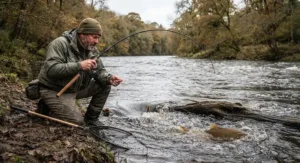
6. Drennan Specialist River Float Rod — the best barbel rod for float fishing
If you’ve searched specifically for the best barbel rod for float fishing, this is where the search ends. The Drennan Specialist River Float Rod is built with genuine backbone beneath a light, responsive tip — a combination that lets you trot a stick float or centrepin-controlled float through fast, powerful water while still having enough authority in the lower blank to turn a big barbel away from danger. Running from around 13ft to 15ft depending on the model, the extra length is functional, not decorative: it lifts more line off the water’s surface, which is essential for controlling a float’s speed against a current that’s constantly trying to drag your line faster than the float itself.
What that length and power combination means practically is far better presentation control in fast glides and crease water, where a shorter, softer float rod would be dragged around by the flow and give an unnatural bait presentation that barbel — a genuinely wary species in clear water — will often refuse outright.
Long trotting for barbel and chub on bigger rivers is exactly the scenario this rod is built around, and reviewers regularly point to its balance between length and weight as a defining strength; a rod this long needs to remain manageable in the hand across a full session, and aggregated feedback suggests Drennan has struck that balance well.
Pros:
- ✅ Excellent line control in fast, powerful glides
- ✅ Enough backbone to turn big barbel from snags
- ✅ Well balanced despite considerable length
Cons:
- ❌ Longer length needs practice to handle confidently
- ❌ Overkill for smaller, slower-paced rivers
Expect to pay somewhere around £130–£165 for this rod, positioning it firmly as a premium-leaning purchase — but for committed float anglers on fast rivers, it’s arguably the most specialised, purpose-built tool on this entire list.
7. Korum Barbel Quiver — best for shy bites in strong flow
The Korum Barbel Quiver solves a very specific fast-river problem: detecting a delicate, tentative bite when the current is already making your rod tip bounce and judder constantly. Built on a 12ft blank with genuine quiver-tip sections rather than a single fixed tip, it gives anglers multiple tip-strength options to match conditions — a softer tip for finicky, pressured barbel, and a stiffer option when you need to punch a heavier feeder further out into the flow.
Here’s what most anglers get wrong when they first try quiver-tipping fast rivers: they assume a softer tip will get lost in the current’s own movement. In practice, a well-designed quiver-tip rod like this one filters out the rhythmic pull of the flow and isolates the sharper, distinct pull of an actual bite — something a stiffer standard rod tip simply can’t do as effectively.
Aggregated review sentiment for this rod tends to focus on its bite-detection sensitivity relative to price, with anglers who fish heavily pressured barbel rivers — where fish have learned to mouth bait cautiously — repeatedly citing it as a confidence-inspiring tool for exactly that scenario.
Pros:
- ✅ Multiple quiver tips suit varying bite confidence
- ✅ Strong bite detection even in fast, choppy flow
- ✅ Genuinely accessible price for a specialist tool
Cons:
- ❌ Less suited to visual float-based tactics
- ❌ Lighter tips can be fragile if mishandled
At around £65–£75, the Korum Barbel Quiver rounds out this list as the specialist’s answer to fast-river finesse fishing — proof that “fast river” doesn’t always mean “brute force only.”
Setting Up and Fishing Your Barbel Rod in Fast Water
Getting a new barbel rod out of its sleeve for the first time is the easy part — setting it up properly for fast, unforgiving water is where sessions are actually won or lost. Start by matching your reel’s line capacity and drag range to the rod’s test curve rather than the other way around; a Daiwa Infinity EVO Barbel Rod rated to 2.75lb paired with an undersized reel and a soft drag washer is a mismatch that will cost you fish on the very first proper run.
Before your first cast, check every guide ring for hairline cracks — fast, silty rivers are brutal on guide linings over a season, and a damaged ring will fray your line invisibly until it snaps under load. Set your reel’s drag noticeably looser than you think necessary; barbel hooked in strong current effectively fight the river as well as your rod, so an overly tight drag multiplies the strain on your hook-link and knots at the exact moment you can least afford a failure. A rolling or eddying swim close to the near bank is often where fish first bolt, so keep your rod tip low and to the side rather than high, applying side-strain to steer fish away from snags rather than trying to out-muscle them vertically.
Maintenance matters more here than on stillwater gear. Rinse guides and reel seats in fresh water after every session on silty rivers, and re-wax cork handles every few months to stop grit embedding into the surface. Common first-30-days mistakes include over-tightening drags out of nervousness, using line far heavier than the rod’s test curve calls for (which kills the blank’s natural cushioning action), and failing to check rod rings after accidentally banging the rod against a wall or gate on the walk to the swim.
✨ Don’t Miss These Exclusive Deals!
🔍 Take your barbel rod for fast rivers setup to the next level with these carefully selected products. Click on any highlighted item to check current pricing and availability. These tools will help you land genuinely memorable fish on your local fast-flowing river!
Real-World Scenarios: Matching the Rod to Your River
Picture three different anglers, three different rivers, and three very different rod choices. First, there’s the weekend angler who fishes a moderate-paced Midlands river once a fortnight on a tight budget — for them, the Korum Barbel Rod at 12ft with a 2lb test curve gives enough power for the occasional big fish without demanding a serious financial commitment before they’ve even confirmed they enjoy the pursuit.
Then there’s the committed specimen hunter who fishes a genuinely powerful Severn-style river most weekends, targeting double-figure barbel in heavy, coloured flow after rain. For that angler, the Daiwa Infinity EVO Barbel Rod in its 2.75lb test curve variant is the sensible investment — the extra backbone and recovery speed directly translate into more fish successfully landed rather than lost to snags during those crucial first ten seconds of a big fish’s run.
Finally, consider the trotting purist who prefers to watch a float disappear rather than stare at a motionless quiver tip, fishing long, clean glides on a river like the Hampshire Avon. Here, the Drennan Specialist River Float Rod is the obvious pick, since its length and backbone were designed specifically around controlling a float through exactly this kind of current while retaining enough power to handle a big fish hooked at range. In each case, the “best” rod isn’t a fixed answer — it’s a function of budget, river character and personal method.
Common Fast-River Problems, Solved
Fast-river barbel fishing throws up a recognisable set of recurring headaches, and most have a specific, practical fix. Line abrasion against rough, gravelly riverbeds is one of the most common culprits behind lost fish — the solution is running a length of stronger, abrasion-resistant hook-link material and checking it for nicks after every take, regardless of whether you landed the fish or not.
Rod tips getting lost in a river’s own natural surface disturbance is another classic fast-water problem, particularly with quiver-tip setups like the Korum Barbel Quiver — increasing your feeder weight slightly to hold bottom more firmly, or switching to a stiffer of the available tip options, often resolves false readings caused by current movement rather than genuine bites.
Perhaps the most overlooked problem is simply misjudging river conditions before you even start fishing. Fast rivers can rise and become genuinely dangerous within hours of heavy rainfall upstream, and the Environment Agency’s flood warning and river level service lets you check current conditions and forecasts for your stretch before setting off — a five-minute check that avoids arriving to find your usual swim underwater or unsafely fast. It’s also worth remembering that anyone aged 13 or over fishing freshwater in England and Wales needs a valid rod licence; you can buy or check yours directly via GOV.UK’s rod fishing licence service.
Finally, snapped or crushed rod tips during transport remain a surprisingly common and entirely avoidable problem — investing in a padded rod sleeve or hard case costs a fraction of a replacement tip section and prevents an otherwise avoidable end to a session before it’s begun.
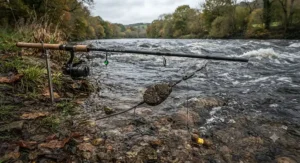
Barbel Rod vs Feeder Rod: What’s the Real Difference
It’s a genuinely common point of confusion, so let’s settle it plainly: a dedicated barbel rod and a general feeder rod aren’t the same tool, even though they can look similar propped against a rod pod. A feeder rod is built primarily around casting accuracy and bite detection across a wide range of species and conditions, typically with a lighter, more sensitive quiver tip and a blank optimised for medium-power fish. A barbel rod, by contrast, is built first for raw fish-fighting power in strong current, with everything else — including bite detection — designed around supporting that primary goal.
In practice, this means a dedicated barbel rod like the Drennan Specialist Barbel Rod typically carries a noticeably higher test curve than a standard feeder rod, giving it the backbone to control a powerful fish the moment it bolts, whereas a lighter feeder rod would simply be overpowered and risk a straightened hook or snapped line under that same strain. The trade-off is finesse: a true feeder rod often out-performs a dedicated barbel rod for detecting subtle, cautious bites from smaller or more pressured fish.
For anglers who fish exclusively for barbel on genuinely fast, powerful rivers, a purpose-built barbel rod is the smarter long-term investment. For those targeting mixed species — bream, chub and the occasional barbel — across varied venues, a quality feeder rod with a reasonably high test curve, such as the twin-tip flexibility offered by the Greys Prodigy VX Barbel, offers a sensible middle ground.
The Best Barbel Rod for Float Fishing
Float fishing for barbel in fast water is a different discipline entirely from leger or feeder tactics, and it demands a rod built around a completely different skill set: line control over distance, rather than raw casting weight. As covered above, the Drennan Specialist River Float Rod stands out here specifically because its extra length allows an angler to hold more line off the water’s surface, slowing a float’s drift to match a natural bait presentation rather than letting the current drag it unnaturally fast.
What most newcomers underestimate is how much technique still matters even with the right rod. Mending the line — flicking slack upstream of the float as it travels down — becomes essential in fast water, because without it, the current grabs the line between rod tip and float and drags the whole rig off-course within seconds. A rod with a soft-enough tip section cushions the strike on the often-lightning-fast take that follows a float’s dip, since barbel frequently hit a moving bait hard and instantly turn, putting sudden shock-load through light hooklinks.
For anglers building toward this method who aren’t ready for the investment of a dedicated float specialist rod, a mid-range option with a forgiving tip — again, the Drennan Specialist Barbel Rod can double up reasonably well for light float work on slower sections — offers a workable, if imperfect, entry point before committing to purpose-built float tackle.
River Flow and Rod Action: Getting the Match Right
Rod “action” describes where along the blank a rod bends under load — fast-action rods flex mainly near the tip, while slower, more progressive-action rods bend further down toward the middle and butt sections. On genuinely fast rivers, this distinction stops being a technical footnote and starts directly affecting how many fish you actually land, because the river’s own current adds constant extra load on top of whatever the fish itself is doing.
A fast-action blank, like that used in the Daiwa Infinity EVO Barbel Rod, transmits information from the fish extremely quickly and generates strong, immediate lifting power — ideal when you need to turn a big fish’s head fast before it reaches a snag downstream. A more progressive, through-action blank, closer to what you’ll find in the Drennan Specialist Barbel Rod, cushions sudden lunges more gently, reducing the risk of a hook pulling free or a light hooklink snapping under a sharp, sudden shock-load.
On paper this means neither action is objectively “better” — it’s about matching the blank to how your local river behaves. Genuinely torrential, weir-pool-style water tends to favour faster, more powerful actions that can dominate a fish quickly, while moderately fast, gravel-bed rivers with fewer immediate snag hazards often suit a more forgiving, progressive action that reduces lost fish from hook-pulls during a longer, more prolonged fight.
Feeder vs Float Tactics for Barbel in Strong Currents
Choosing between feeder and float tactics on a fast river ultimately comes down to how much of the swim you can physically cover and how confident the fish are feeling that day. Feeder fishing, using a rod like the Korum Barbel Quiver, excels at holding bait static in one spot, building a concentrated feed area over time — a genuinely effective approach on rivers where barbel hold in predictable, current-broken pockets behind boulders or bridge pilings.
Float tactics, by contrast, cover far more water per cast, presenting a moving, natural-looking bait to fish that may be spread across a longer glide rather than concentrated in one spot. This makes float fishing, using something like the Drennan Specialist River Float Rod, particularly effective on clear, well-oxygenated rivers where barbel are actively feeding and moving rather than sitting tight in one holding spot.
Here’s what the spec sheet won’t tell you: many experienced fast-river anglers actually switch between both methods within a single session, starting with a searching float approach to locate active fish, then switching to a static feeder presentation once a productive area or feeding pocket has been identified. Carrying two rods, or at minimum being comfortable with both methods on one adaptable rod, genuinely increases catch consistency across a full day on unpredictable fast water.
Barbel Habitat in Fast Water: Reading the River Before You Cast
Understanding where barbel actually live in fast water dramatically improves your chances before you’ve even made a first cast. According to research summarised on FishBase’s barbel species profile, barbel favour the deeper, faster-flowing upper and middle reaches of rivers with stony or gravel bottoms — precisely the zones biologists refer to as the barbel zone — and they feed chiefly on bottom-dwelling invertebrates including insect larvae, small crustaceans and molluscs.
In practice, that means the most productive swims on a fast river are rarely the smooth, uniform-flow sections that look inviting from the bank. Instead, look for current breaks: the slacker water immediately behind a boulder, the crease where fast and slow water meet along a weir sill, or the deeper scoured hole below a bridge. Barbel conserve energy by holding in these current-broken pockets while still being close enough to intercept food being swept past by the main flow.
Gravel and stony river beds are also significant for a practical, tackle-related reason: they’re precisely the substrate most likely to abrade line and leader material during a prolonged fight, reinforcing why a rod with genuine backbone — capable of quickly steering a fish up and away from the riverbed — matters just as much as your choice of hook-link strength.
How to Choose a Barbel Rod for Fast Rivers
Picking the right rod doesn’t need to be complicated if you work through it methodically. Here’s the reasoning, step by step:
- Match test curve to your river’s typical pace. Genuinely fast, powerful rivers call for test curves at 2lb or above; moderate rivers can comfortably use 1.75lb rods.
- Prioritise rod length for your typical swim size. Longer rods (13ft+) suit open water and float control; shorter, stiffer rods (11ft) dominate tight, snag-heavy swims.
- Decide between fixed and quiver tips early. Quiver tips excel at detecting cautious bites; fixed tips generally cast heavier feeders further with more accuracy.
- Check guide quality before anything else on the spec sheet. SiC-lined guides resist abrasive, grit-laden fast-river line far better than budget alternatives.
- Weigh blank weight against session length. A lighter premium blank like the Daiwa Infinity EVO Barbel Rod reduces fatigue on long, active sessions holding a rod at the ready.
- Consider action type against your local snag density. Fast action suits snaggy, dangerous swims; progressive action suits open water where a longer fight is less risky.
- Set a realistic budget band and stick to it. A well-specified rod like the Korum Barbel Rod at under £90 will outperform an overpriced, poorly built alternative every time.
Common Mistakes When Buying a Barbel Rod for Fast Rivers
The single most frequent mistake is buying based on test curve number alone without considering blank action — two rods with an identical 2lb test curve can behave completely differently in a fight depending on whether the action is fast or progressive. Another recurring error is under-buying on guide quality to save money, not realising that cheap guide linings are frequently the actual point of failure on fast, silty rivers, not the blank itself.
Anglers also commonly overlook rod length relative to their typical swim, buying a shorter rod because it seems easier to transport, then struggling to control fish or line in open, wide river sections where extra length genuinely earns its keep. Finally, many newcomers assume the most expensive option is automatically the “safest” purchase — but as this list demonstrates, a well-specified mid-range rod like the Drennan Specialist Barbel Rod frequently outperforms an ill-matched premium rod bought for the wrong style of river.
Long-Term Cost & Maintenance
Thinking beyond the initial purchase price genuinely changes which rod represents the smartest buy. A premium rod like the Daiwa Infinity EVO Barbel Rod costs considerably more upfront, but its build quality and guide durability typically mean fewer replacement parts over several seasons of fast-river use — SiC guide linings, in particular, resist the abrasive wear that eventually cracks cheaper ceramic alternatives.
Budget and mid-range rods, including the Korum Barbel Rod and Korum Barbel Quiver, remain excellent value provided you factor in realistic wear-and-tear costs: expect to occasionally replace worn guide rings or a damaged tip section over several years of regular fast-river fishing. Before heading out, it’s always worth a quick check of current conditions via the Environment Agency’s river and flood level service, since fishing a river in genuinely unsafe, flood-swollen conditions accelerates gear wear and risks losing tackle — and far worse — unnecessarily.
Cost-per-use is a useful way to frame the decision: a £320 rod fished fifty times a year works out to roughly £6.40 per session in year one alone, while a £70 rod fished with the same frequency costs closer to £1.40 per session — the “right” answer depends entirely on how often you’ll genuinely use it and how demanding your local river actually is.
Frequently Asked Questions
❓ What test curve is best for a barbel rod on fast rivers?
❓ Can I use a feeder rod instead of a dedicated barbel rod?
❓ How long should a barbel rod be for fast rivers?
❓ Do I need a fishing licence to fish for barbel in the UK?
❓ What's the difference between a quiver tip and a float rod for barbel?
Conclusion
Choosing a barbel rod for fast rivers ultimately comes down to being honest about how and where you actually fish. If you’re chasing big fish in genuinely powerful, snag-strewn water on a regular basis, the Daiwa Infinity EVO Barbel Rod earns its premium price through raw control and recovery speed. If you want dependable, proven performance without breaking the bank, the Drennan Specialist Barbel Rod remains a benchmark for good reason, while the Korum Barbel Rod proves that a genuinely capable setup doesn’t have to cost a small fortune.
For float purists, the Drennan Specialist River Float Rod is the specialist tool built specifically around controlling a float through fast, demanding glides, and for anglers battling shy, pressured fish, the Korum Barbel Quiver brings finesse bite detection to water that would otherwise mask every subtle take. Whichever direction you go, matching test curve, action and length to your actual local river — rather than chasing the biggest number on a spec sheet — is what separates a rod that performs from one that simply looks good propped on a rest.
Fast rivers reward preparation as much as they reward the right rod. Check conditions before you go, respect the current’s own power alongside the fish’s, and the right tool in your hands will do the rest.
Recommended for You
- Best Barbel Rod Under £50: 7 Top Picks for UK Anglers (2026)
- Top Barbel Rods Under £100: 7 Best Picks for UK Rivers
- Catfish Hooks Review: 7 Best Picks Anglers Rate in 2026
Disclaimer: This article contains affiliate links. As an Amazon Associate, I earn from qualifying purchases. If you purchase products through these links, we may earn a small commission at no additional cost to you.
✨ Found this helpful? Share it with your friends! 💬🤗
