
In This Article
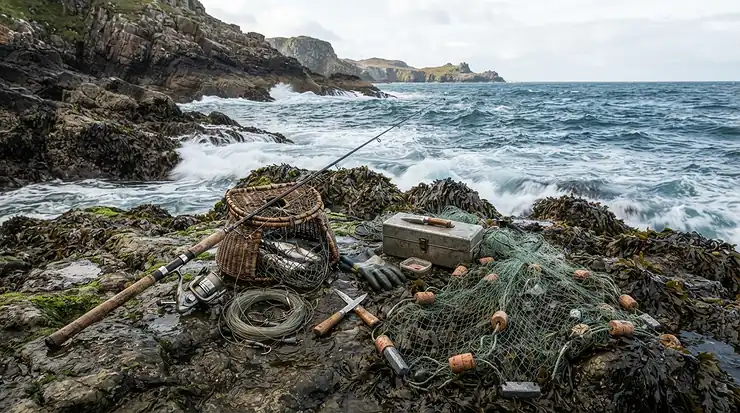
Every beachcaster reaches the same fork in the road sooner or later. Do you build for the fish, or build for the distance? The pulley rig vs clipped down rig debate is that question in disguise. One design exists to lift your lead away from the seabed’s grabbing fingers the moment a fish is hooked. The other exists to slice through the air so your bait lands where the fish are actually feeding.

Neither is “better” in the abstract. A clipped down rig can out-cast almost anything, but it can’t haul a lead out of a kelp bed. A pulley rig can save you a pocketful of lost leads, but forum veterans will tell you it gives up some bite-to-hook-up efficiency on clean sand. Your answer depends on the mark you’re standing on, the species you’re after and how far the fish are sitting.
Beachcasting is the British name for what Wikipedia calls surf fishing. It’s a sport where tide, current and seabed all conspire to complicate your life, so rig choice matters more than most people admit.
A note on method: this guide is built from spec sheets, retailer listings, published rig-building guides and angling-forum discussion. It contains no claims of personal testing. Where real buyer ratings exist, I’ve reported them as aggregated figures and flagged how small or limited they are.
Quick Comparison: Pulley Rig vs Clipped Down Rig at a Glance
| Feature | Pulley rig | Clipped down rig |
|---|---|---|
| Main job | Lifts the lead clear of snags once a fish is hooked | Maximises distance and protects the bait in flight |
| Rig aerodynamics | Good when clipped, but a long snood adds drag | Best in class: bait and lead fly as one unit |
| Casting range | Medium to long (long if clipped down) | Long to maximum |
| Ground type | Rough, rocky, weedy, snaggy | Clean sand, shingle, mud and mixed-but-open |
| Bite-to-hook-up | Often described as weaker on clean ground | Generally better, especially with paternoster layouts |
| Build complexity | Simple (a pulley bead plus a hook length) | Fiddly (shields, clips, precise snood lengths) |
| Best For | Cod, rays and big baits over rough marks | Match-style distance, delicate baits, clean beaches |
Looking at the comparison above, the two designs solve different problems rather than competing head-to-head. The pulley rig is an insurance policy against the seabed, while the clipped down rig is a performance upgrade for the cast. If your marks are clean and the fish sit well out, the right-hand column wins. If you’re losing a lead every other trip, the left-hand column pays for itself quickly.
💬 Just one click — help others make better buying decisions too!😊
Top 7 Rigs and Components for Pulley Rig vs Clipped Down Rig Decisions: Expert Analysis
Here are seven real, widely stocked UK products spanning both rig styles, plus the components that make or break them. Prices are given as ranges only, so check current price and availability before you buy.
1. Sonik Super Sea Rigs Pulley Single Hook — cheapest way to try pulley fishing
The big appeal is simplicity: one hook, one pulley action, very little to tangle. Retailer listings pitch it at rough ground and snaggy marks, with cod, bass and thornback rays named as targets, in hook sizes 1/0, 3/0 and 4/0.
In practice, a 3/0 or 4/0 hook means big baits such as whole squid or bunched worm. The pulley mechanism works because a hooked fish’s weight drags line through the top swivel and lifts the sinker off the bottom. That is the entire reason this design exists.
Based on the spec comparison, a single hook means fewer tangles but only one shot per cast. For a newcomer fishing mixed ground, that trade is reasonable. At the time of research, one UK retailer showed a 96% rating from genuine buyers. That is a single-retailer figure, so treat it as a hint rather than a verdict. Forum posters repeatedly note that pulley rigs hook fewer bites than paternosters on clean ground.
Pros:
- ✅ Very low cost per rig
- ✅ Lifts the lead away from snags
- ✅ Simple layout resists tangling
Cons:
- ❌ Only one hook per cast
- ❌ Weaker bite-to-hook-up on clean ground
Price: under £3 per rig. A low-risk way to learn the style before you start tying your own.
2. Sonik Super Sea Rigs Pulley Pennel — two-hook grip for monster baits
A pennel simply means two hooks tied close together on one hook length. It secures a large bait firmly rather than letting it flop about. This version comes in 1/0 and 3/0 and is aimed at cod, dogfish and coalfish over rough ground.
British Sea Fishing’s guide to pennell hooks describes the pennell pulley rig as a classic for big winter cod from snaggy rock marks. That fits the spec: big bait, rough ground, heavy fish that dive for cover.
My honest read is that this is the better buy than the single-hook version if you regularly fish whole squid or fat worm baits. The second hook improves your odds of connecting when a fish mouths the bait rather than inhaling it. The retailer listing showed a 100% buyer rating, though the sample behind it isn’t disclosed.
Pros:
- ✅ Two hooks hold large baits securely
- ✅ Pulley action protects the lead on snaggy marks
- ✅ Suits winter cod and dogfish
Cons:
- ❌ Limited hook-size choice
- ❌ Large baits cost casting distance unless clipped
Price: under £3 per rig. Excellent value for rough-ground bait fishing.
3. Greys Pulley Pennel — heavier-duty line for punishing marks
What sets this one apart is a hybrid role. The listing specifies an 80lb rig body and 60lb snood, in 1/0 or 3/0, and says it can be used with an impact lead for a clipped down rig. It is a pulley rig that can also be clipped for the cast.
That heavier rig body means more abrasion resistance against barnacled rock and weed. The 60lb snood is stout enough that you won’t worry about it parting on a hard strike. The pulley mechanism then does its job once a fish is on.
Here’s the interesting bit for the pulley rig vs clipped down rig argument: this product shows the two ideas aren’t mutually exclusive. Clip it for the cast, and you get some of the flight benefits while keeping the snag-clearing action. Reviewer sentiment was the weakest in this round-up, with the retailer showing 86%, and the listing I found showed it out of stock. Check availability before planning a trip around it.
Pros:
- ✅ Strong 80lb rig body for abrasive ground
- ✅ Can be clipped down with an impact lead
- ✅ Sturdy 60lb snood
Cons:
- ❌ Stock can be patchy
- ❌ Lowest buyer rating of the seven
Price: low single pounds, so check current price. Good value if you can find stock.
4. Tronixpro Pulley Beads — the component that protects your rig body
Not a rig, but arguably the most important part of any homemade pulley rig. The old method was to use a large swivel as the pulley. The manufacturer’s description explains that this concentrated the entire force of a cast on a tiny area of line, risking breakages. The bead houses a rolling swivel in plastic so the load spreads across a wider stretch of line.
British Sea Fishing’s pulley rig guide agrees that swivel-based pulleys are now rare because they stress the line more. The bead can also be used for Portland-style rigs or as a short boom on one-up, two-down boat rigs.
If you tie your own rigs, this is the upgrade to buy first. It is cheap, and a rig that survives a big cast is worth far more than the pennies you spend. The retailer listing showed a 100% buyer rating, but it also showed the item out of stock, so you may need to shop around. Forum users mention rival pulley beads from Gemini and Breakaway as alternatives.
Pros:
- ✅ Spreads casting load across the line
- ✅ Reduces rig-body damage
- ✅ Doubles for Portland and boom rigs
Cons:
- ❌ Component only, so you must tie your own rig
- ❌ Stock can be inconsistent
Price: a few pounds per pack, so check current price. Cheap insurance.
5. Sonik Super Sea Rigs 2 Hook Clipped — two baits at medium to long range
This is the clipped down rig for anglers who want a second bait in the water without sacrificing too much flight. It uses an impact lead, comes in hook sizes 2 and 1/0, and is pitched at fish sitting in deeper water on ebb tides or in rough conditions.
Why does that matter? Because when the sea is lumpy, fish often sit further out and bait presented close in simply won’t be found. A Sea Angler magazine guide notes that hook baits clipped close to the lead improve balance and shape, which is exactly why a two-hook clipped layout is the next step towards distance.
Two small baits on size 2 or 1/0 hooks suit flatfish, whiting and smaller bass. The retailer listing showed a 100% buyer rating. It is not a rig for rough ground, because there is no mechanism to free a snagged lead.
Pros:
- ✅ Two baits at medium to long range
- ✅ Impact lead streamlines the cast
- ✅ Suits ebb tides and rough water
Cons:
- ❌ Unsuitable for snaggy seabeds
- ❌ Only two hook sizes available
Price: under £3 per rig. Strong value for general-purpose beach fishing on clean ground.
6. Sonik Super Sea Rigs 1 Hook Clipped Roughground — streamlined single-hook distance
A single hook, clipped down, in sizes 2/0, 3/0 and 4/0, designed for maximum casting distance with a variety of baits. The listing highlights a simple layout that resists tangling even in heavy surf, and names big baits and cod as the target.
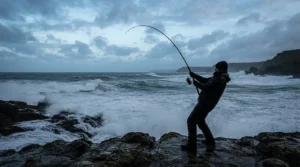
A single hook on a clipped trace is as aerodynamic as rigs get. There’s no second snood to wrap around the main line mid-flight. British Sea Fishing’s single-hook clipped down guide describes this style as built for maximum distance over clean, snag-free marks, especially with powerful pendulum casts.
The “Roughground” label deserves a note. Clipping helps your cast, not your snag recovery, so the name likely refers to the rig’s build rather than any lead-freeing feature. The listing doesn’t state line strengths, so check the pack. Retailer buyer rating: 90%.
Pros:
- ✅ Minimal drag and low tangle risk
- ✅ Handles big baits for cod
- ✅ Three hook sizes to match bait
Cons:
- ❌ One hook means one chance per cast
- ❌ Doesn’t lift the lead on snags
Price: under £3 per rig. Great for long throws over open ground.
7. Breakaway Impact Leads — the engine of a clipped down rig
A combined lead and bait clip, sold in 125g, 150g, 170g and 200g. The listing calls it a favourite of match anglers, and says the aerodynamic shape adds distance while the wire formation holds the bait in position on the seabed. On impact with the water, the cone releases the baited hook from the built-in clip.
The Sea Angler guide cited earlier rates the Breakaway Impact lead and Cascade swivel combination as the most efficient and fail-safe clip system, because other clips can jam and stay clipped up for the entire cast. Heavier leads (170g and 200g) suit strong tides and bigger baits, while 125g and 150g suit calmer water.
Retailer buyer rating: 94%. The related Breakaway Impact Shields (sold in packs of four, ideal for single-hook and wishbone rigs) are the alternative when you’d rather keep a conventional lead.
Pros:
- ✅ Lead and clip combined for streamlined casting
- ✅ Four weights suit different tides
- ✅ Reliable hook release on impact
Cons:
- ❌ No snag-release feature
- ❌ Weights multiply your losses on rough ground
Price: around £2-£3 per lead depending on weight. Exceptional value for distance work.
Top 7 Comparison Table
| Product | Type | Hook setup | Best For | Price range | Retailer buyer rating* |
|---|---|---|---|---|---|
| Sonik Super Sea Rigs Pulley Single Hook | Pulley | 1 hook (1/0, 3/0, 4/0) | Beginners on snaggy marks | Under £3 | 96% |
| Sonik Super Sea Rigs Pulley Pennel | Pulley | 2-hook pennel (1/0, 3/0) | Big baits, winter cod | Under £3 | 100% |
| Greys Pulley Pennel | Pulley/hybrid | 2-hook pennel (1/0, 3/0) | Abrasive rock marks | Low single pounds | 86% |
| Tronixpro Pulley Beads | Pulley component | Build your own | DIY rig builders | A few pounds/pack | 100% |
| Sonik Super Sea Rigs 2 Hook Clipped | Clipped | 2 hooks (2, 1/0) | Ebb tides, flatfish, whiting | Under £3 | 100% |
| Sonik Super Sea Rigs 1 Hook Clipped Roughground | Clipped | 1 hook (2/0-4/0) | Distance with big baits | Under £3 | 90% |
| Breakaway Impact Leads | Clipped component | Lead and clip | Match-style distance | Around £2-£3 | 94% |
*Percentages are aggregated “genuine buyer” figures from one UK retailer at the time of research, with sample sizes not disclosed. Treat them as indicative.
Looking at the table, the pulley products cluster around rough ground and big baits, while the clipped products cluster around distance and clean ground. The Greys Pulley Pennel is the odd one out, offering a hybrid approach at the cost of patchy stock and a weaker rating. If you’re building from scratch, the Tronixpro Pulley Beads and Breakaway Impact Leads are the two components that quietly decide whether your rigs survive and fly.
Practical Usage Guide: Tying and Setting Up Both Rigs
Pre-tied rigs get you fishing, but understanding the build makes you a better troubleshooter. Here are the practical steps, drawn from published rig-building guides.
Building a clipped pennel pulley rig:
- Start with roughly 30 inches of 80lb rig body and tie a lead-clip link at the base.
- Slide on a 5mm bead, a pulley bead (better than a plain rolling swivel), then another 5mm bead.
- Add a strong size 4 swivel to the free end, then tie a hook length of roughly 24 inches of 30lb to 40lb line.
- Clip the bottom hook into the lead clip for casting. It drops free when the lead hits the water.
Setting up an impact shield rig:
- Use a neoprene or rig-tubing stop knot above the shield rather than a crimp. British Sea Fishing notes this allows far more adjustment when matching the hooks to the shield.
- Make sure the snood length lets the hook sit snugly in the shield, because a loose fit means a premature release.
Tuning tips:
- One forum angler noted it’s easier to shorten a pulley while fishing than to lengthen it, so start slightly long.
- Another report claimed shortening a pulley hook length to around 8 inches improved hook-ups on a surf beach, which the poster put down to greater resistance when a fish hit the bait. It’s anecdotal, but easy to test.
Common first-30-day mistakes:
- Skipping a bait stop, so baits slide up the line mid-cast.
- Tying a snood too long for the clip, which ruins aerodynamics.
- Fishing a clipped rig over weed and then wondering why the leads keep vanishing.
✨ Don’t Miss These Exclusive Deals!
🔍 Ready to put these builds into practice? Click on any highlighted product above to check current pricing and availability. A few well-chosen rigs and components will help you create a tackle box that genuinely works for your marks!
Real-World Scenarios: Which Rig for Which Angler?
These are illustrative profiles, not case studies of real people. They show how the reasoning works for different situations.
Scenario 1: the winter cod hunter on a rocky headland. Budget is modest, trips are weekly, and the seabed is a jumble of boulders and weed. Here the pulley rig wins comfortably. The Sonik Super Sea Rigs Pulley Pennel handles big baits, and the pulley action gives the lead a fighting chance of coming home. If the mark demands more abrasion resistance, the Greys Pulley Pennel with its 80lb body is the heavier-duty option.
Scenario 2: the summer beach angler on clean sand. The fish sit well out beyond the surf. A clipped down rig is the obvious choice, and the Sonik Super Sea Rigs 2 Hook Clipped paired with Breakaway Impact Leads gives two baits at range. Bass are a common target on such beaches. Under current MMO bass guidance on GOV.UK, the minimum size is 42cm, and regional authorities report a bag limit of three per day outside February and March, when fishing is catch-and-release only. Check the latest rules before you keep anything.
Scenario 3: the beginner on mixed ground. Budget is tight and the seabed is unknown. Start with the Sonik Super Sea Rigs Pulley Single Hook for rough patches and the Sonik Super Sea Rigs 1 Hook Clipped Roughground for open stretches. Both are cheap enough that losing a rig won’t sting, and you’ll quickly learn what each seabed demands.
What Is Pulley Rig vs Clipped Down Rig?
A pulley rig lets the lead slide up the line once a fish is hooked, lifting it away from snags. A clipped down rig tucks the baited hook behind the lead until the rig splashes down, cutting drag in flight. The comparison is snag-clearing and fish-playing against casting distance and bait protection.
It helps to remember that these are not mutually exclusive. A pulley rig can be clipped down for the cast, and a clipped rig can use a sliding lead. The two ideas overlap, which is why pre-tied options like the Greys Pulley Pennel exist.
The key difference is what happens at each stage of the trip. In the air, the clipped layout reduces drag. On the seabed, the clipped hook releases and the bait fishes as normal. Once a fish is hooked, the pulley design pays off by lifting the lead clear. Understanding this timeline makes every other decision in this guide easier.
Rig Aerodynamics: Why a Clipped Down Rig Flies Further
Rig aerodynamics decide whether your bait lands at your target or falls short. Every loose snood on a cast acts like a small parachute.
The Fisherman describes the “helicopter effect” as the bait acting like a parachute during the cast and robbing distance. Clipping the hook leader down makes the bait and sinker act as one unit, and the bait is also less likely to fly off the hook on a hard cast. The impact shield is described as the secret to these rigs.
The Sea Angler guide adds a useful rule of thumb: a short, stubby rig with three hook baits spaced over around 4ft will cast further than one spread across a 6ft trace. Shorter means tighter, and tighter means better rig aerodynamics.
A further refinement is the Gemini Splash Down Solo. A British Sea Fishing explainer notes it encloses the hook completely until it hits the water, so it can’t fall out at any point during the cast. A pulley rig can borrow these tricks. Clip the hook length down and the flight profile improves noticeably, but a long pulley snood still adds drag compared with a purpose-built distance rig.
Casting Range: How Far Can Each Rig Realistically Go?
I’m deliberately not quoting yardages here. Real casting range depends on your technique, rod, line, lead weight and the wind on the day, and no verified source gives a universal number for either rig.
What the evidence does support is a ranking. Clipped down rigs sit at the top for distance, with a single-hook clipped layout the most streamlined of all. A clipped pulley sits in the middle, and an unclipped pulley with a long snood sits at the bottom.
What does casting range mean for your fishing? If fish are within the surf zone, any of these rigs will reach them, and you should choose on ground type rather than distance. If the fish are holding far out on an ebb tide or in rough conditions, the extra reach of a clipped layout may decide whether you get bites at all.
| Rig style | Typical use | Distance potential | Best For |
|---|---|---|---|
| Single-hook clipped down | Big baits, clean ground | Highest | Powerful pendulum casters |
| Multi-hook clipped down | Several small baits | High | Match-style flatfish and whiting |
| Clipped pulley | Rough ground, longer throws | Medium to high | Cod anglers wanting both |
| Unclipped pulley | Snaggy close to mid range | Medium | Rough-ground beginners |
| Traditional flapper | Close range, clean ground | Lower | Short-range, relaxed fishing |
This table shows why the debate isn’t simply “pulley loses on distance”. A clipped pulley recovers much of the gap. If you need maximum reach and the ground is clean, go fully clipped. If you need a compromise, clip the pulley and accept a slightly shorter cast.
Ground Type: Matching Pulley Rig vs Clipped Down Rig to the Seabed
Ground type is the single most important variable, and it’s the one beginners underweight. Forum consensus is blunt: on clean ground there is little need for a pulley, and a paternoster usually gives a better bite-to-hook-up ratio. On rocky or weedy ground the logic flips.
Clean sand, shingle or mud. Choose a clipped down rig. Nothing here threatens your lead, so the pulley’s advantage is wasted while its weaker hook-up rate remains.
Mixed ground. This is where hybrids shine. A clipped pulley gives some range plus insurance against occasional snags. The Greys Pulley Pennel is designed for exactly this role.
Rough, rocky or kelp-covered ground. Go with a pulley rig. One forum voice warns that a three-hook flapper fished into a kelp forest is a recipe for disaster, and few would argue. For extreme snags, many anglers add a rotten bottom, a deliberately weak link that lets the lead break free.
Unknown ground. Start cheap. A handful of pre-tied rigs like the Sonik Super Sea Rigs Pulley Single Hook let you probe the seabed without risking expensive components.
As a rule, let ground type pick the rig style first, then let your required casting range refine the details.

Best Pulley Rig for Beach Fishing: What to Look For
The best pulley rig for beach fishing is rarely the most elaborate. On a beach, you’re usually dealing with scattered rough patches rather than a solid reef, so you want a rig that casts reasonably well and still protects your lead.
Here is what to prioritise:
- A proper pulley bead, not a bare swivel. As covered with the Tronixpro Pulley Beads, a bead spreads the load and protects the rig body.
- A short hook length. Anecdotal forum reports suggest shorter snoods improve hook-ups by creating more resistance when a fish takes the bait.
- A clip option. A pulley that can be clipped down for the cast, like the Greys Pulley Pennel, narrows the distance gap.
- Hook size to match bait. A 3/0 or 4/0 on the Sonik Super Sea Rigs Pulley Single Hook suits big baits, while smaller fish need smaller hooks.
For most UK beach anglers, my pick would be the Sonik Super Sea Rigs Pulley Pennel for big-bait work, with the single-hook version as a cheaper entry point. Neither is a miracle, but both match the job.
Best Clipped Down Rig for Distance Casting: What to Look For
The best clipped down rig for distance casting does one thing: it removes every source of drag between you and the water.
- A reliable release system. The Sea Angler guide rates the Breakaway Impact lead with Cascade swivels as the most fail-safe, because other clips can jam. The Breakaway Impact Leads are the heart of this setup.
- Fewer hooks, shorter trace. A single hook, as on the Sonik Super Sea Rigs 1 Hook Clipped Roughground, is the most aerodynamic layout.
- Bait stops. The Sonik three-hook clipped listing highlights bait stops that prevent baits sliding up the line during casting, a small detail that protects your range.
- Matched lead weight. Go heavier for tide, lighter for calm. The four Breakaway weights (125g to 200g) cover most conditions.
If you want two baits, the Sonik Super Sea Rigs 2 Hook Clipped balances reach and fishing power. If maximum distance with one big bait is the goal, the single-hook rig wins.
How to Choose Between a Pulley Rig and a Clipped Down Rig
- Check the seabed first. Rough ground points to a pulley, clean ground points to clipped down. This one decision settles most debates.
- Decide how far the fish are. If they’re in the surf, range is irrelevant. If they’re far out, favour a clipped layout.
- Match the rig to your bait. Big baits suit pennel hooks, which the Sonik Super Sea Rigs Pulley Pennel provides. Delicate baits benefit from shield protection.
- Consider your target species. Cod and rays reward pulleys over rough ground. Flatfish and whiting reward clipped multi-hook rigs.
- Weigh your budget for losses. If you lose gear constantly, a cheap rig and a pulley action pay off. If you rarely lose gear, spend on distance components.
- Think about build skill. Clipped rigs with precise snood lengths take practice. Pre-tied options remove the guesswork.
- Carry both. A small stock of each style means you can switch the moment the mark tells you what it wants.
Safety, Regulations and Responsible Angling
Rig choice matters little if you aren’t safe on the beach. The Angling Trust works with the RNLI to reduce fatalities and incidents in recreational sea angling, with dedicated advice for fishing safely on shore.
RNLI guidance reported in the angling press includes wearing a lifejacket on exposed or rocky shorelines, checking the weather and tides before you go, and telling someone your plans and expected return time. Powerful waves, sudden drop-offs and slippery rocks are all real hazards for beachcasters.
Responsible angling also means respecting size and bag limits, especially if bass are on the menu. Handle any fish you plan to release carefully so it has the best chance of survival, and always check the latest rules for your region before the trip. Rules can change between seasons.

FAQ
❓ Which is better for beginners, a pulley rig or a clipped down rig?
❓ Can you clip down a pulley rig?
❓ What does a clipped down rig do?
❓ Do pulley rigs lose fish?
❓ What lead weight suits a clipped down rig?
Conclusion
So, which wins the pulley rig vs clipped down rig contest? Neither, and both. Ground type and casting range decide the answer, and rig aerodynamics explain why. Clipped down rigs win in the air by turning bait and lead into one streamlined missile, and they usually hook more bites on clean sand. Pulley rigs win on the seabed, rescuing your lead from rocks and weed and giving big baits a firm grip.
If I had to give one rule: choose the ground first, the rig second. Rough marks call for the Sonik Super Sea Rigs Pulley Pennel or the sturdier Greys Pulley Pennel. Clean beaches call for the Sonik Super Sea Rigs 2 Hook Clipped or the Sonik Super Sea Rigs 1 Hook Clipped Roughground, powered by Breakaway Impact Leads. If you tie your own, a Tronixpro Pulley Beads pack is the cheapest insurance you’ll ever buy.
Rigs this cheap mean experimentation costs almost nothing, and that’s the real secret. Carry both styles, read the mark, and let the fish tell you who won.
✨ Ready to rig up?
🎣 Click any highlighted product above to check current pricing and availability, then head to the beach with the right rig for the ground. Tight lines! 🌊
Recommended for You
- Beach Lead Weights For Strong Tide: 7 Proven Picks (2026)
- Rig Bodies For Sea Fishing: 7 Proven Picks For UK Beaches (2026)
- Impact Shields For Beach Casting: 7 Best Picks For UK Anglers (2026)
Disclaimer: This article contains affiliate links. As an Amazon Associate, I earn from qualifying purchases. If you purchase products through these links, we may earn a small commission at no additional cost to you.
✨ Found this helpful? Share it with your friends! 💬🤗
