
In This Article
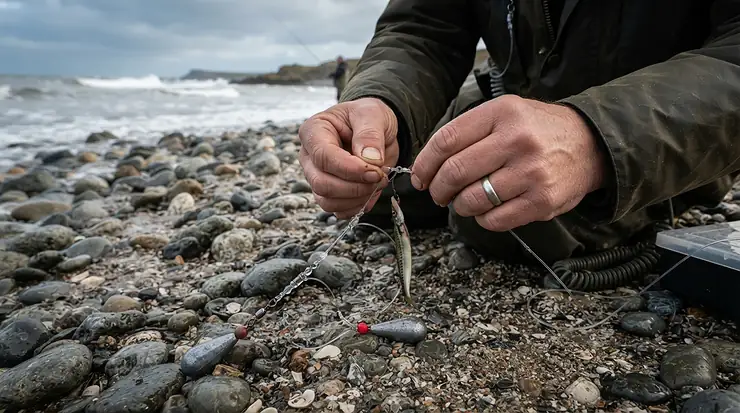
There’s a special kind of heartbreak reserved for the beach angler. You spend ten minutes lacing a beautiful lugworm-and-squid cocktail onto the hook. You power a 6 oz lead into a headwind. Then you reel in to find a sad rag of bait hanging by a thread. Impact shields for beach casting exist to stop exactly that. They’re tiny, brutally simple and cost less than a bag of chips, yet they’ve stayed popular on British shores for a very long time.
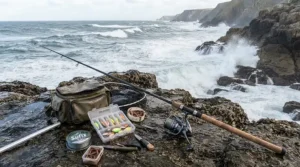
Beachcasting is simply the British name for surf fishing from the shore. It rewards distance, and distance punishes bait. A baited hook flapping loose behind a fast-moving lead gets shredded by air resistance, tangles around the rig body, or smacks the water so hard the bait tears off. A well-chosen shield holds everything streamlined in flight, then lets go on splashdown.
So which ones should you buy? In this guide I’ve compared seven real, widely sold options. They range from the classic four-pack to off-the-ground designs, glow-in-the-dark versions and bulk budget packs. For each one I explain what the specs mean on a cold beach at 5 am. You’ll also find rigging walkthroughs, troubleshooting, a decision framework and the 2026 bass rules you need to know.
Quick Comparison: Impact Shields for Beach Casting at a Glance
Short on time? This table sorts the seven picks by what they do best. Prices are ranges seen at UK retailers at the time of research, so check current price before buying.
| Product | Best For | Standout Trait | Price Range (check current) |
|---|---|---|---|
| Breakaway Impact Shields | Beginners and pulley rigs | Cheap, proven, widely stocked | Around £1-£2 |
| Breakaway OTG Impact Shields | Off-the-ground casters | Hook stays put on a slack line | Around £3-£4 |
| Breakaway Luminous Impact Shields | Night sessions | Glow-in-the-dark plastic | Around £1.50-£3 |
| Gemini Splash Down Solo Bait Clip | Locking a bait behind the lead | Locks the hook until impact | Around £3-£4 |
| Gemini Genie Alpha Bait Clip | Big baits and two-hook set-ups | One slider can handle two clips | Around £2-£3 |
| Gemini Genie Juno Bait Clip | Multi-hook rigs | Fits anywhere on the rig body | Around £2-£3 |
| Impact Shield Sea Fishing Clips (20-piece multipack) | Stocking up cheaply | Volume for the price | Around £6-£7 |
Looking at the table, the Breakaway Impact Shields are the obvious starting point for anyone on a budget. The Breakaway OTG Impact Shields and Gemini Splash Down Solo Bait Clip cost a little more but solve a specific problem: baits that fall out when you cast from the ground with a slack line. The multipack is tempting for volume, but the branded options have more track record.
💬 Just one click — help others make better buying decisions too!😊
Top 7 Impact Shields for Beach Casting: Expert Analysis
Quick caveat before we dive in. A true impact shield and a releasable bait clip aren’t quite the same animal, so the list mixes both. Each is a legitimate way to protect bait on a beach cast, and each suits a different casting style. The review notes below come from retailer ratings and angler forum discussions, not from me pretending I’ve cast them off a Cornish beach.
1. Breakaway Impact Shields — the proven, pocket-money classic
The reason Breakaway Impact Shields are still everywhere is simple. They work, and they’re ridiculously cheap. They come in packs of four, in black, red or clear.
The design is intended for wishbone or single-hook rigs. It also suits multi-hook rigs when paired with a cascade swivel. The shield slides onto the rig body just behind the lead, you clip the baited hook into it, and on splashdown it tilts and lets the hook go. Because it sits on the line rather than being tied to it, you can reposition or replace it without rebuilding the rig.
Based on the spec comparison, this is the best-value way to learn clipped-down fishing. One UK retailer listing shows a 95% independent buyer rating. In Irish shore-angling forum threads, anglers report no breakages under power casting. They also note it’s cheaper to lose a rig with a shield than one built around a pricey impact lead.
The common gotcha is beads. Reviewers warn that tiny micro beads can get forced through the slot, so use a decent-sized bead.
Pros:
- ✅ Very low cost per cast
- ✅ Slides on the line, so easy to reposition
- ✅ Copes with power casting, say forum users
Cons:
- ❌ Hook can drop out if the line goes slack
- ❌ Small beads can jam in the slot
Price range: roughly £1-£2 per pack at the time of research, so excellent value.
2. Breakaway OTG Impact Shields — built for off-the-ground casting
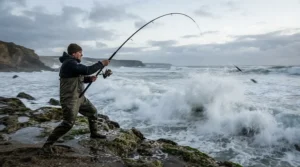
If you cast with the rig lying on the sand rather than dangling from the rod tip, this is the one to know. The standard shield’s known weakness is that an off-the-ground style can let the baited hook fall out if the line isn’t kept tight. Breakaway OTG Impact Shields are the redesign aimed squarely at that problem.
What does that mean in practice? The hook stays seated while the rig lies loose on the beach, while you adjust your stance, or while a gust nudges the line. It still releases when it meets the water. That’s a big deal if your sessions involve a long, deliberate sweep from a standing start, because nothing is dropped before the cast.
Honestly, the evidence base here is thin. I couldn’t verify a meaningful pool of independent customer reviews, so treat the design intent as a promise rather than a proven result. The reasoning is sound, though. The problem it targets is well documented by UK sea-fishing sources.
Pros:
- ✅ Designed to keep the hook seated on a slack line
- ✅ Same familiar release principle as the classic
- ✅ Suits off-the-ground casters specifically
Cons:
- ❌ Costs more per shield than the standard version
- ❌ Few verifiable independent reviews
Price range: around £3-£4 at the time of research. Worth the premium if you cast off the ground, otherwise stick with the classic.
3. Breakaway Luminous Impact Shields — glow-in-the-dark for night sessions
Plenty of beach fishing happens in the dark, because many target species feed at night. If you’ve ever tried threading a hook into a black plastic clip by head torch, with cold fingers and a rolling tide, you’ll understand the appeal. Breakaway Luminous Impact Shields are the same basic idea as the classic, moulded in glow-in-the-dark plastic.
The practical benefit is visibility. A glowing shield is easier to find in a tackle box, easier to line up with a hook and easier to check on a pre-cast inspection. It also helps when you’re rigging in a dim shelter or car park before walking down. Like all luminous plastic, expect the glow to fade and need a quick recharge from a torch beam.
I found these listed in packs of ten for surf casting, which works out as sensible value for night sessions. The honest limitation is evidence. I couldn’t verify independent review data, and the release function should be identical to the standard shield. You’re paying for convenience, not for different physics.
Pros:
- ✅ Much easier to see and handle in low light
- ✅ Same proven release mechanism
- ✅ Available in bulk packs
Cons:
- ❌ Glow fades and needs recharging
- ❌ No independent reviews verified
Price range: around £1.50-£3 depending on pack size. Good value for night anglers.
4. Gemini Splash Down Solo Bait Clip — locks the bait until impact
The Gemini Splash Down Solo Bait Clip takes a different approach. Instead of a sliding shield, it’s a precision-moulded clip that holds the baited hook directly behind the sinker and locks it in place until the rig hits the water. Gemini describes it as a fail-safe, universal clip, refreshed in a 2017 update, and the packs I found hold five.
For off-the-ground casting this is a strong idea. Locking the hook means a slack line won’t dump the bait onto the sand. The streamlined position behind the lead also reduces the drag and flapping that cost you distance. Orange and glow-in-the-dark versions exist, which helps in poor light.
Reviewer sentiment is anecdotal but positive. In a New Zealand forum thread, an angler fed up with pre-tied shields coming apart in the air was pointed towards Gemini’s clips, and another poster praised the brand’s general reliability. That’s one thread, not a trend, so view it as a pointer rather than proof.
Pros:
- ✅ Locks the hook until it hits the water
- ✅ Suits off-the-ground casting
- ✅ Available in glow-in-the-dark
Cons:
- ❌ Pricier per clip than basic shields
- ❌ Clips sit behind the lead, so rig must be built for them
Price range: around £3-£4 for a five-pack. Pay a little more for a secure hold.
5. Gemini Genie Alpha Bait Clip — one slider, one or two baits
This is the clever one. The Gemini Genie Alpha Bait Clip uses a single slider that can hold and release one bait clip or two, or two single clips in line for bigger baits. It ships as a basic one-hook pack, with a two-hook conversion kit sold separately.
You load it by holding the clip against the line and sliding the slider over it. On impact the slider is forced up the main line and the clip opens, freeing the hook. The advantage is tidiness: the line, slider and clips travel as one streamlined bundle, which matters when you’re casting a chunky bait that would otherwise flap.
Here’s what to weigh. It’s more of a rig-builder’s tool than a drop-in shield, so the learning curve is steeper. The retailer page I checked showed no customer reviews yet, so independent confirmation is missing. On paper, though, it solves a real problem for anglers who want a big double-bait presentation to survive a long cast.
Pros:
- ✅ Handles one or two bait clips
- ✅ Streamlined for big baits
- ✅ Predictable slider release
Cons:
- ❌ Conversion kit needed for two hooks
- ❌ No reviews yet on the page checked
Price range: around £2-£3 for the basic version. Good value if you fish big baits.
6. Gemini Genie Juno Bait Clip — flexible clip for multi-hook rigs
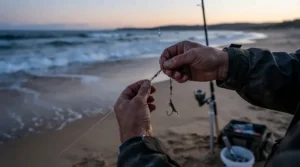
The Gemini Genie Juno Bait Clip is the utility player of this list. Its maker says it can be used in numbers, anywhere on the main rig body. That makes it handy for multi-hook rigs where you want each hook streamlined and neatly stowed for the cast.
The value is flexibility. Rather than relying on a single shield behind the lead, you can distribute clips along the body to keep two or three baits tidy. That’s useful when you’re fishing a long trace for flatfish or whiting and want every bait to travel straight.
The honest caveat is that this is a bait clip, not a dedicated impact shield. I didn’t find enough published detail to claim it protects bait at the moment of impact the way a shield does, so think of it as a clip that stops tangles, not a shock absorber. No independent reviews turned up either. That doesn’t make it a bad product. It means you’re buying on design logic rather than a crowd verdict.
Pros:
- ✅ Can be used in numbers along the rig
- ✅ Keeps multi-hook rigs tidy in flight
- ✅ Low cost
Cons:
- ❌ Not a dedicated impact shield
- ❌ No independent reviews verified
Price range: around £2-£3 at the time of research. Handy supporting kit.
7. Impact Shield Sea Fishing Clips (20-Piece Multipack) — bulk budget stock-up
If you lose rigs regularly, buying in bulk is tempting, and this Impact Shield Sea Fishing Clips (20-Piece Multipack) is a typical example. The listing I found shows twenty black polyethylene shields, each about 1.5 x 0.7 x 0.7 inches, with a UK delivery option. That works out at roughly 30-35p a piece, which is in the same ballpark as the branded four-packs.
Practical advice from the listing is useful on its own. Leave the hook bend clear of the bait so it ejects smoothly, and put a small bait on the hook point so it can’t fall out of the holder. That echoes what forum anglers say about preparation.
Now the honest bit. Unbranded plastics vary in tolerance. A New Zealand forum thread complained about cheap pre-tied shields letting hooks fall off in the air. Amazon blocked me from reading this listing’s reviews, so I can’t report sentiment. If you buy a multipack, test a few on a calm day before trusting it with a night session.
Pros:
- ✅ Lots of spares in one purchase
- ✅ Lightweight, simple design
- ✅ Low cost per shield
Cons:
- ❌ Unbranded, with unknown quality control
- ❌ No verified review data
Price range: around £6-£7 at the time of research. Fine as spares, but verify before you rely on them.
Spec and Value Comparison: All Seven Picks
| Product | Format | Casting Style Fit | Price Range (check current) | Review Signal |
|---|---|---|---|---|
| Breakaway Impact Shields | Pack of 4 sliding shields | Over-the-head and pulley rigs | Around £1-£2 | Strong retailer and forum approval |
| Breakaway OTG Impact Shields | Redesigned shield | Off the ground | Around £3-£4 | Few verifiable reviews |
| Breakaway Luminous Impact Shields | Glow shields, packs up to 10 | Night sessions | Around £1.50-£3 | Few verifiable reviews |
| Gemini Splash Down Solo Bait Clip | Pack of 5 locking clips | Off the ground | Around £3-£4 | Positive anecdote |
| Gemini Genie Alpha Bait Clip | Slider plus clip system | Big baits, 1-2 hooks | Around £2-£3 | None found |
| Gemini Genie Juno Bait Clip | Single clip, usable in numbers | Multi-hook rigs | Around £2-£3 | None found |
| Impact Shield Sea Fishing Clips (20-Piece Multipack) | 20 shields | General use | Around £6-£7 | Unverified |
Reading across the rows, the Breakaway Impact Shields win on proof, the Gemini Splash Down Solo Bait Clip wins on lock security and the multipack wins on volume. The glaring pattern is that review evidence thins out as products get more specialised. Pay extra for specialist designs only if you genuinely cast in the style they’re built for.
How to Rig and Use Impact Shields for Beach Casting: Step-by-Step Guide
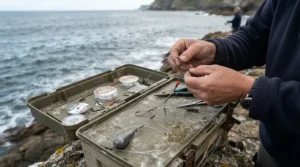
Getting a shield onto a rig takes about two minutes, but small mistakes cost you bait and distance. Here’s the practical flow, assuming a simple clipped-down pulley or wishbone set-up.
- Slide the shield onto the rig body. Thread it so it sits just behind the lead, with the hook side facing up, the way UK sea-fishing guides describe it.
- Add a bead and a stopper. The bead cushions the shield, and the stopper (a crimp or knot) stops it travelling too far. Use a bead big enough that it can’t be forced through the slot.
- Bait up compactly. Keep the bait tidy and streamlined. If it’s bulky, trim it, because chunky baits are a common cause of hooks that won’t release.
- Leave the hook bend clear. Seat the hook point in the shield so the bend is free of the bait. That lets it eject cleanly on impact.
- Keep tension on the line. For standard shields, keep the snood tight during the swing. If you cast off the ground, consider the OTG version or a locking clip.
- Check release on a calm day. Test a few casts on gentle water before a night session.
A maintenance habit worth adopting: inspect each shield for cracks or a loose slot before you clip a hook into it. A damaged shield is exactly the sort of failure that wastes a good tide.
Problem to Solution: Fixing Common Impact Shield Headaches
Even the best gear misbehaves sometimes. These are the recurring complaints from shore-angling forums, with fixes grounded in what anglers actually report.
Problem 1: The hook falls out mid-swing. The usual cause is a slack line or a hook length that’s too long for the rig body. Shorten the snood so it’s distinctly shorter than the body, and keep tension on the line. If you cast from the ground, switch to the Breakaway OTG Impact Shields or the Gemini Splash Down Solo Bait Clip.
Problem 2: The shield won’t release. Messy, bulky baits can cling and stop the hook ejecting. Trim the bait, leave the hook bend clear of it and test the release on calm water. Some anglers on a North East forum noted that older bait clips sometimes failed to release in the water, whereas shields behaved better for them.
Problem 3: The bead jams in the slot. Micro beads can get forced through the shield. Fit a decent-sized bead, then replace any shield that’s been deformed.
Problem 4: Snags on rough ground. One forum angler argued shields and similar clips can aid snagging over rough ground and prefers a simple clip with a rotten-bottom link. Another uses a shield as a home-made lead lift to keep rigs off the snags. Opinions differ, so match the tool to your ground.
Problem 5: Wind pushes a worm bait up the hook. A shield can help, because forum users note it shelters the bait from the wind.
Real-World Scenarios: Which Impact Shields for Beach Casting Fit Which Angler?
These scenarios are illustrative profiles, not real people. They show how the choice shifts with budget, environment and how often you fish.
Scenario A: The winter cod beginner. A newcomer fishing a Norfolk or Lincolnshire beach a couple of times a month on a tight budget doesn’t need anything exotic. A few packs of Breakaway Impact Shields will cover learning-curve losses at pocket-money cost. The 20-piece multipack is a sensible backup once the technique settles.
Scenario B: The night-time bass hunter. Someone targeting bass off a Welsh or South West beach after dark, casting from the ground, wants a hook that stays put and shields they can find in the dark. The Breakaway OTG Impact Shields and Breakaway Luminous Impact Shields suit that. Note the rules. Under the 2026 bass guidance on GOV.UK, the regulations include seasonal catch-and-release periods and a daily retention limit for recreational anglers, so check the current wording before you plan a trip.
Scenario C: The big-bait power caster. An experienced distance angler throwing large baits for a bigger quarry wants streamlined presentation. The Gemini Genie Alpha Bait Clip and the Gemini Splash Down Solo Bait Clip suit that style, and the Gemini Genie Juno Bait Clip can tidy a secondary hook.
Decision shortcut: if you’re a beginner, buy the classic. If you cast off the ground, pay for OTG or a locking clip. If you fish at night, go luminous.
What Are Impact Shields for Beach Casting?
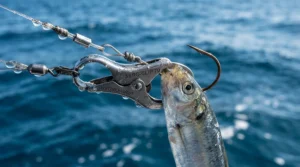
Impact shields for beach casting are small plastic bait-protection clips that slide onto your rig body just behind the lead. They hold a baited hook streamlined and tight during the cast, then tilt on contact with the water and release the hook automatically, so the bait lands intact and your rig fishes properly.
How They Work in Three Moments
First, the shield holds the hook against the line during the swing, which cuts air resistance and stops flapping. Second, in flight it keeps the rig compact, which reduces tangles. Third, on splashdown the shield tilts or slides, freeing the hook so the bait sits naturally on the seabed.
Where They Differ From a Plain Bait Clip
A plain bait clip holds the bait behind the lead, but UK sea-fishing guides point out it doesn’t protect the bait as it hits the water the way an impact shield does. A rig clip combines a bait clip with a link, so it connects the weight and holds the bait. The shield’s special trick is protecting on impact, and that’s what you’re paying for.
How to Choose Impact Shields for Beach Casting
Choosing well comes down to matching the product to your casting style and your ground. Work through these steps in order.
- Check your casting style. Over-the-head casters can use classic shields. Off-the-ground casters should look at the Breakaway OTG Impact Shields or the Gemini Splash Down Solo Bait Clip, because they’re built to keep the hook seated on a slack line.
- Match your bait size. Chunky or oversize baits need a clip that won’t let them wobble out. Forum users note shields suit oversize baits that can wobble out of impact leads.
- Think about light. Night anglers benefit from luminous plastic, because fumbling in the dark causes mistakes.
- Consider your rig. Wishbone, single-hook and pulley rigs suit standard shields. Multi-hook rigs may suit cascade swivels or additional clips like the Gemini Genie Juno Bait Clip.
- Check the slot and bead pairing. Use a decent-sized bead so it can’t be forced through the shield.
- Weigh price against proof. Established products have more track record. Unbranded multipacks save money but need testing.
- Buy spares. Shields are cheap, and losing rigs is part of the sport, so carry extras.
Bait Protection: How Impact Shields Keep Your Bait on the Hook
Bait protection is the headline benefit, and it’s easy to see why. A delicate bait like a peeler crab or a soft squid strip takes a real beating when a heavy lead slams into the sea at speed. Without a shield, the bait is exposed to air resistance in flight and a violent meeting with the surface.
A shield tackles both. In flight, it holds the bait tight against the line so it can’t flap. On impact, the shield takes the initial shock and then releases, so the bait arrives in better condition. Sources describing the Breakaway Impact Shields say they save and protect baits, and angler forums back that up in general terms.
There’s a subtle second benefit. If you fish worm baits, a shield can shelter the bait from wind that would otherwise blow it up the hook and line, according to forum contributors. That’s the sort of detail the spec sheet never mentions.
Where bait protection falls short is poor loading. If the bait is too bulky or the hook bend is buried, even the best shield can’t release cleanly. Good bait protection starts with a neat bait, so keep it compact and leave the hook bend clear. Pair that with a sensible shield and you’ll notice more intact baits after each cast.
Casting Power: Do Impact Shields for Beach Casting Add Distance?
Casting power is where things get interesting, and where a little honesty is needed. UK sea-fishing guides explain that clipping bait behind the weight streamlines the rig, which increases casting distance and reduces tangles. The logic is straightforward aerodynamics: a bait flapping behind a lead is dragging a tiny parachute through the air.
I can’t offer lab-tested distance gains, because I haven’t found independent measurements. What I can say is that distance-casting rigs commonly feature shields. One magazine guide to long-range rigs calls the impact shield the star of the pulley rig. The pulley rig was designed to help surf anglers reach deeper water, where larger fish often sit.
Does it survive proper power? Irish forum users say they’ve used impact shields with power casting without breakages, and some prefer them to pricier impact leads. That’s reassuring if you’re swinging a heavy lead with a long, powerful stroke.
The takeaway: shields won’t turn a poor cast into a great one, but they remove a drag penalty and protect your bait on the way. For anglers chasing maximum casting power, that combination of streamlining and survival is the point.
Rig Damage Prevention: Tangles, Snags and Lost Gear
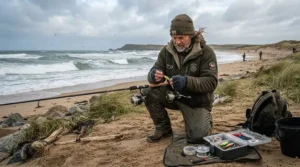
Rig damage prevention is the quiet benefit nobody advertises. Tangles are the enemy of beach anglers because a twisted trace costs time and often a rig. By holding the hook tight to the line, shields reduce the chance of the bait and snood wrapping around the rig body mid-flight.
UK sea-fishing sources note that clipping devices reduce the chance of rigs tangling, and with practice tangles become rare. A shield can do more, because it’s also cheap to lose. Forum anglers say they prefer shields to impact leads precisely because a lost rig costs less.
Use caution on rough ground. One forum angler warns that shields and similar clips can aid snagging, preferring two clips joined for lead-and-bait set-ups. Another uses a shield as a home-made lead lift to keep a rig off snags, because it slides on the line rather than being tied to it. Both experiences are valid, so match your set-up to your ground.
For rig damage prevention in general, inspect shields for cracks, replace deformed ones and keep spares. A fifty-pence part failing mid-cast can cost you a whole rig and a tide.
Sea Fishing Terminal Tackle: Impact Shields vs Alternatives
Sea fishing terminal tackle is a crowded aisle, so where do impact shields for beach casting sit? Here’s how they compare with the other common ways of presenting a bait.
| Option | Protects Bait on Impact? | How It Releases | Best For | Watch-Outs |
|---|---|---|---|---|
| Impact shield (e.g. Breakaway Impact Shields) | Yes | Tilts or slides on splashdown | Pulley and wishbone rigs | Hook may drop with slack line |
| Locking clip (e.g. Gemini Splash Down Solo Bait Clip) | Locks until impact | Releases on contact with water | Off-the-ground casting | Rig must be built for it |
| Simple bait clip (e.g. Gemini Genie Juno Bait Clip) | Not in the same way | Pulled free by the line | Tidy multi-hook rigs | Less impact protection |
| Impact lead (e.g. Breakaway Impact Lead) | Built into the weight | Cone or clip releases | Anglers wanting an all-in-one | Costly to lose |
The table shows that shields and locking clips offer the best bait protection on impact, while simple clips mainly tidy the rig. Impact leads combine the weight and the clip, which suits some anglers, but forum users note shields are cheaper to lose and cope better with oversize baits. If you want a simple, flexible, inexpensive upgrade to your sea fishing terminal tackle, a shield is the logical first step.
Features That Actually Matter (And Those That Don’t)
Marketing copy loves big claims, so here’s a quick filter.
Features that matter:
- Secure hold in flight. If the hook drops out before splashdown, nothing else counts.
- Clean release. The hook should free itself every time. Retailers call it a “100% clean release”, but treat that as a claim, not a guarantee.
- Slot and bead compatibility. A shield that lets a bead pass through will jam.
- Fit to your casting style. OTG versus standard is the biggest practical divide.
Features that matter less:
- Colour. Red, black and clear all work, though luminous helps at night.
- Pack size. Bulk is handy, but only if the quality holds.
- Brand fanfare. A brand gives you track record, not magic.
A shield is a very simple mechanical part. If it holds the hook in flight and lets go on impact, it’s doing its job. Spend your money on the casting-style fit, not on extras.
Long-Term Cost and Maintenance
Shields are consumables, so the sensible way to think about cost is per session, not per pack. Even the pricier options sit in the low single pounds, and a single saved bait often covers the difference.
| Product | Price Range (check current) | Pack | Value Verdict |
|---|---|---|---|
| Breakaway Impact Shields | Around £1-£2 | 4 | Excellent starter value |
| Breakaway OTG Impact Shields | Around £3-£4 | Varies | Worth it for off-the-ground casters |
| Breakaway Luminous Impact Shields | Around £1.50-£3 | Up to 10 | Good for night anglers |
| Gemini Splash Down Solo Bait Clip | Around £3-£4 | 5 | Pay for a secure lock |
| Gemini Genie Alpha Bait Clip | Around £2-£3 | 1 hook kit | Fair, plus extras |
| Gemini Genie Juno Bait Clip | Around £2-£3 | Varies | Useful support |
| Impact Shield Sea Fishing Clips (20-Piece Multipack) | Around £6-£7 | 20 | Cheap stock, test first |
The cheapest classic offers the best value for most beginners, while specialist options pay off only when they solve a specific problem. Think of the multipack as an insurance policy for spares rather than your primary choice.
Maintenance is minimal. Rinse shields in fresh water after a session, check for cracks and deformation, and keep them dry in a small box. Replace any that look tired, because the cost of a new shield is trivial next to a lost rig.
Safety and Regulations for Beach Casters
Good gear doesn’t help if you ignore the rules or the sea. Two points matter in the UK.
Bass rules. If you’re after bass, the legal framework changes year to year. For 2026, regional fisheries bodies report a recreational limit of three bass per angler per day outside February and March, catch-and-release only during those two months, and a minimum size of 42 cm. These apply from boat or shore. Always check the official guidance before you fish, because rules can be updated.
Personal safety. Beach and rock fishing carry real risks. The RNLI runs a dedicated angling safety hub covering how to plan a trip safely. The wider advice is consistent: check tide times and weather, wear a lifejacket on exposed or rocky shorelines, and tell someone where you’re going.
Tackle responsibility. Lost rigs and discarded line harm wildlife, so collect spent shields and snagged gear where you can. Also check local byelaws, because access rules differ by beach and region.
FAQ: Impact Shields for Beach Casting
❓ How much do impact shields for beach casting cost in the UK?
❓ Which impact shields suit off the ground casting?
❓ Can you reuse impact shields?
❓ Are cheap multipack impact shields any good?
❓ Do I need beads and stoppers with impact shields?
Conclusion
Impact shields for beach casting are one of the cheapest upgrades in sea fishing terminal tackle, and one of the easiest to justify. They protect your bait, support your casting power and cut down rig damage, all for a few pounds.
Here’s the short version. If you’re starting out, buy Breakaway Impact Shields. If you cast off the ground, pay a little more for the Breakaway OTG Impact Shields or the Gemini Splash Down Solo Bait Clip. For night sessions, choose Breakaway Luminous Impact Shields. For big baits and multi-hook rigs, the Gemini Genie Alpha Bait Clip and Gemini Genie Juno Bait Clip add flexibility. And if you want spares in bulk, the Impact Shield Sea Fishing Clips (20-Piece Multipack) will do the job once tested.
Whatever you choose, match the product to your casting style and your ground, keep your hook length short, and always check the current bass rules before you fish. Your baits will thank you, and so will your wallet.
✨ Ready to Upgrade Your Beachcasting Rigs?
🎣 Pick the shield that fits your casting style, click through to check current pricing and availability, and stock up before your next tide. A few pounds of protection could save your best bait of the season!
Recommended for You
- Value Beach Fishing Leads: 7 Proven Picks For UK Beaches (2026)
- Grip Leads Vs Plain Leads For Beach Fishing: 7 Proven Picks (2026)
- Sea Fishing Reel For Rough Weather: 7 Tough Picks For UK (2026)
Disclaimer: This article contains affiliate links. As an Amazon Associate, I earn from qualifying purchases. If you purchase products through these links, we may earn a small commission at no additional cost to you.
✨ Found this helpful? Share it with your friends! 💬🤗
