
In This Article
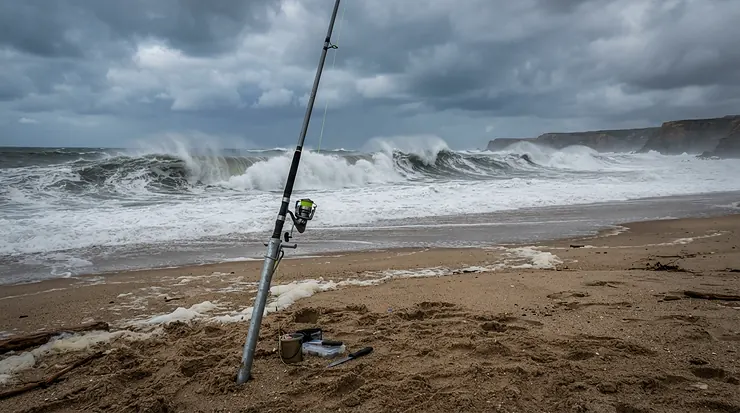
A sea fishing reel for rough weather is a saltwater reel built to keep working when wind, spray, surf and heavy leads are all trying to wreck your session. It combines protected internals, corrosion-resistant metals, a smooth drag and enough winding power to keep a lead moving through a rolling sea.
Anyone who has fished a winter beach knows the feeling. The wind is sideways, the rod tip is bouncing, and your reel is being sandblasted by spray. A fishing reel is a simple machine at heart: a spool, a gear train and a brake. Salt water makes every part of that simple machine harder to run. It creeps into gears, crusts over bearings and turns a smooth drag into a grumpy one.
That is why the best sea fishing reel for rough weather is rarely the flashiest on the shelf. It is the one that shrugs off a soaking, keeps casting when the wind picks up, and still feels smooth in March after a winter of abuse.
This guide covers seven reels worth your attention. I’ve picked them from published specifications, aggregated reader ratings and angler discussion, not from personal testing. They include a multiplier reel for beach fishing, fixed spool reels and a few budget heroes. Along the way you’ll get a surf fishing reel review, a plain-English look at saltwater corrosion resistance and sealed drag systems, and a maintenance routine that will genuinely extend a reel’s life.
Quick Comparison: Best Sea Fishing Reel for Rough Weather at a Glance
Here’s the shortlist in one table. Price bands are deliberately broad, because prices shift daily. Check current prices before you buy.
| Reel | Type | Standout trait | Price band | Best For |
|---|---|---|---|---|
| Daiwa 7HT Mag | Multiplier | Magnofuge braking | Premium | Experienced casters wanting distance |
| Penn 535 Mag 2 | Multiplier | Built for rough ground | Check current price | Heavy ground and big leads |
| Shimano Bullseye 9120 | Fixed spool | 20kg drag, AR-C spool | Premium | Distance on a fixed spool |
| Okuma Surf 8k | Fixed spool | Water resistance, big capacity | Under £100 | Budget beachcasting |
| Penn Spinfisher VII | Spinning | IPX5 sealed metal body | Mid-range | Bass and lure fishing from rocks |
| Daiwa 20 BG MQ | Spinning | One-piece aluminium body | Above average | One tough reel for everything |
| Daiwa 23 Ninja LT | Spinning | Light, smooth ATD drag | Under £70 | Beginners on a tight budget |
Look at the table as three tiers. The Okuma Surf 8k and Daiwa 23 Ninja LT show that sensible money buys a capable shore reel. The Penn Spinfisher VII and Daiwa 20 BG MQ are where sealing and body construction start to matter. The Daiwa 7HT Mag and Shimano Bullseye 9120 are the specialist distance tools, and they cost accordingly.
💬 Just one click — help others make better buying decisions too!😊
Top 7 Picks for a Sea Fishing Reel for Rough Weather: Expert Analysis
Every reel below is judged on what matters when conditions turn: how it handles salt, how it handles wind, how it handles load. Review sentiment comes from aggregated reader ratings and angler forum discussion. Where a sample is tiny, I say so.
1. Daiwa 7HT Mag — Magnofuge braking that tames the bird’s nest
In gusty conditions a multiplier’s free-spinning spool is a liability, which is why the Magnofuge control on the Daiwa 7HT Mag has such a following.
The one-piece duraluminium frame stays rigid under load, and the brass main drive gear and stainless pinion are the sort of metals you want near salt. The 5.8:1 gear ratio recovers around 71cm of line per turn. That is fast enough to stay in touch with a lead when the tide drags your line sideways. The star drag is rated to 11kg, plenty for anything a UK beach will throw at it. Bearing counts have varied between versions, so check the current spec.
On the spec comparison, this is a multiplier reel for beach fishing that rewards experience. Magnofuge lets the spool reach full speed at the start of the cast, then adds braking as it slows. That matters in changeable wind. Beginners should practise on a calm day first.
One review site gives it 4.8/5, but from just four reader reviews, which is too few to be conclusive. Angler forums keep calling it a long-serving estuary and light-beach reel. Some owners fit a power handle for heavier cranking.
Pros:
- ✅ Braking system that largely prevents bird’s nests
- ✅ Rigid one-piece duraluminium frame
- ✅ Fast retrieve for keeping in touch with leads
Cons:
- ❌ Standard handle feels small for some anglers
- ❌ Needs practice and thumb control to master
Premium price band. The value case rests on years of service, provided you look after it.
2. Penn 535 Mag 2 — purpose-built for rough ground
Rough ground eats tackle, and the Penn 535 Mag 2 is aimed squarely at the anglers who fish it.
I could not verify a complete independent spec sheet at the time of research, so check Penn’s current figures for gear ratio, drag and line capacity before buying. What the Total Sea Fishing magazine review confirms is the intent: a rough-ground design with a clearly marked casting control knob on the side opposite the handle.
That knob matters more than it sounds. Adjusting magnetic braking with cold, wet fingers is easier when the control is large and obvious. From the design brief, I’d read this as a reel for heavy leads and snaggy marks, not delicate open-ground distance work. That is an inference, not a tested fact.
Review data is thin. There’s no verified aggregated rating, and the sea angling forum threads I found mostly discuss Penn’s wider multiplier range rather than this reel specifically. If you’re after a multiplier reel for beach fishing over rough ground, treat this as a strong candidate to research further rather than a proven winner.
Pros:
- ✅ Designed specifically for rough-ground fishing
- ✅ Clearly marked casting control knob
- ✅ Penn’s saltwater heritage behind it
Cons:
- ❌ Limited independent rating data to verify
- ❌ Likely overbuilt for light estuary work
Check current price. Treat it as a rough-ground specialist, and compare specs against the Daiwa 7HT Mag first.
3. Shimano Bullseye 9120 — a fixed spool with 20kg of drag
If you’d rather skip the multiplier learning curve, the Shimano Bullseye 9120 is the premium fixed spool answer.
It weighs a hefty 540g, and that weight comes with a 20kg drag, Hagan gearing and the X-Ship system for gear alignment under load. Corrosion-resistant bearings are fitted, which is the kind of detail that matters after a few winters. The AR-C spool and Aero X-Wrap line lay are both about casting distance. The 3.5:1 gear ratio looks slow on paper, but it is a power-first choice for cranking heavy leads through surf.
My read: a fixed spool takes the bird’s nest out of the equation. In a headwind that is a real advantage for anyone who hasn’t spent years on multipliers. The weight is the price you pay.
Reader ratings are 5.0/5, but from only four reviews. Treat it as promising rather than proven. The review describes build quality and casting distance in glowing terms.
Pros:
- ✅ 20kg drag handles serious fish
- ✅ Corrosion-resistant bearings and robust gearing
- ✅ Aero X-Wrap line lay helps distance
Cons:
- ❌ Heavy at 540g for long sessions
- ❌ Premium pricing
Premium price band. If budget is tighter, the Okuma Surf 8k covers the beach job for far less.
4. Okuma Surf 8k — strong water resistance under £100
The Okuma Surf 8k proves you do not need to spend a fortune to fish the surf.
Its Super Slow Oscillation line lay is the headline feature. The spool moves slowly up and down per turn, so line sits in tight, even coils that leave the spool cleanly. In practice that means longer casts and fewer tangles, which matters when the wind is making everything harder. Water resistance features are described as comprehensive, and capacity is generous.
The catch is the graphite body. It is lighter and corrosion-proof, but not as stiff as metal under heavy load. For most beach sessions that is fine. For years of hard use on rough ground, a metal-bodied reel is the safer long-term bet.
This is the best-reviewed volume seller here: 4.7/5 from 97 reader reviews. That is a substantial sample, and it supports the idea that it works for beachcasters on a budget.
Pros:
- ✅ Slow oscillation line lay for cleaner casts
- ✅ Water resistance features suit salt conditions
- ✅ Large line capacity for the money
Cons:
- ❌ Graphite body less rigid than metal
- ❌ Not a long-term rough-ground workhorse
Under £100, which makes it the value pick in this guide.
5. Penn Spinfisher VII — IPX5 sealing in a full metal body
The Penn Spinfisher VII is the reel to look at when spray and rain are the main threats.
The IPX5 rating on the body is the maker’s promise that water jets stay out of the gears. Under that sits a full metal body, CNC-machined brass main gear and the HT-100 drag. The 3500 size is a sweet spot for UK lure fishing. IPX5 covers jets of water, not full immersion, so don’t treat it as a licence to dunk the reel.
My take: this is saltwater corrosion resistance done sensibly. The sealing does the defensive work and the metal body does the structural work. The one practical warning is spool filling. Overfilling close to the rim can upset line lay, so leave a gap.
It scores 4.5/5 across 284 reader reviews, the biggest sample in this guide, so the trend is trustworthy. Reviewers consistently praise durability and the sealed build.
Pros:
- ✅ IPX5 sealing keeps salt spray out
- ✅ Full metal body with brass gearing
- ✅ Smooth, reliable HT-100 drag
Cons:
- ❌ Line lay suffers if the spool is overfilled
- ❌ Heavier than light lure reels
Mid-range price band, well under premium money. Good value for what it protects.
6. Daiwa 20 BG MQ — one-piece aluminium body for salt and sand
Seams are where salt gets in, and the Daiwa 20 BG MQ has far fewer of them.
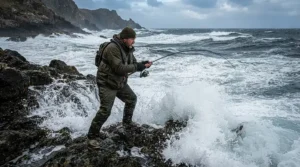
The Monocoque body is a single aluminium casting, so there’s no join for water to creep through. It stays rigid when you wind a fish in against the tide. The Digigear gearing and carbon ATD drag deliver smooth power, and sizes run from 2500 to 20000. Smaller sizes suit lure fishing from rocks, while the big ones go afloat or after rays.
On the spec comparison, this is a reel for people who rinse it, use it hard and repeat. It is above average in price, and it is heavier than the graphite reels it replaces. If weight bothers you, look elsewhere. If you want one reel for the beach, the rocks and the odd winter pike session, it covers the lot.
I couldn’t find published reader ratings for it at the time of research, so I’m relying on spec and design. That is worth knowing before you buy.
Pros:
- ✅ Seamless one-piece aluminium body
- ✅ Carbon ATD drag stays smooth
- ✅ Huge size range from lures to boat work
Cons:
- ❌ Above average price for a fixed spool
- ❌ Heavier than graphite alternatives
Above average price band. It’s a buy-once reel if you maintain it.
7. Daiwa 23 Ninja LT — an entry price with a smooth drag
Not everyone wants to spend serious money, and the Daiwa 23 Ninja LT is the sensible answer for newer anglers.
At under £70 you get the lightweight DS4 body, the ATD Type-L drag and Twist Buster 3 line management, which helps tame braid. A machined aluminium handle and LC-ABS spool are touches usually found on dearer models. It’s light, which means less fatigue on a long session.
Be honest about the limits. It lacks the sealed construction of the Penn Spinfisher VII, so it needs more diligent rinsing after use. It also isn’t the reel for relentless heavy rough-ground work. But for bass and pollack from rocks and beaches, it’s hard to fault for the money.
It has a 4.6/5 rating across 45 reader reviews, a reasonable sample. The one grumble is that the latest version dropped the metal line clip and the fold-down handle.
Pros:
- ✅ Great value for the money
- ✅ Light and comfortable all session
- ✅ Smooth ATD drag
Cons:
- ❌ No metal line clip on latest version
- ❌ Less protected than sealed premium reels
Under £70, which makes it the entry point. If you outgrow it, the Penn Spinfisher VII is the logical step up.
Top 7 Compared: Specs, Ratings and Best For
| Reel | Verified highlights | Reader rating | Best For |
|---|---|---|---|
| Daiwa 7HT Mag | 5.8:1, 11kg drag, duraluminium frame | 4.8/5 (4 reviews) | Distance multiplier fans |
| Penn 535 Mag 2 | Rough-ground design, marked control knob | Not verified | Heavy, snaggy ground |
| Shimano Bullseye 9120 | 20kg drag, 540g, AR-C spool | 5.0/5 (4 reviews) | Premium fixed spool distance |
| Okuma Surf 8k | Slow oscillation, graphite body | 4.7/5 (97 reviews) | Budget beachcasting |
| Penn Spinfisher VII | IPX5, full metal, HT-100 drag | 4.5/5 (284 reviews) | Sealed spray protection |
| Daiwa 20 BG MQ | One-piece aluminium, carbon ATD | None published | One reel for everything |
| Daiwa 23 Ninja LT | DS4 body, ATD Type-L drag | 4.6/5 (45 reviews) | First sea spinning reel |
Treat the ratings column with care. The Okuma Surf 8k and Penn Spinfisher VII have the biggest samples, so their scores carry real weight. The 5.0 and 4.8 for the Shimano Bullseye 9120 and Daiwa 7HT Mag rest on four reviews each, which is promising but not proof. If you want sealed spray protection, the Penn Spinfisher VII leads on evidence. If you want distance, the premium pair do the job.
How to Choose a Sea Fishing Reel for Rough Weather
Choosing the right sea fishing reel for rough weather comes down to a handful of decisions. Work through them in order.
- Decide fixed spool or multiplier first. A fixed spool is forgiving in wind. A multiplier offers control and power but demands skill. If you’ve never cast one, start fixed.
- Prioritise saltwater corrosion resistance. Look for sealed bodies, brass or stainless gearing and corrosion-resistant bearings. This is what separates a reel that lasts years from one that lasts a season.
- Check the drag. A smooth, consistent drag protects your line when a fish runs in heavy surf. Jerky drags cause breakages.
- Match reel size to rod and ground. Larger reels suit rough ground and heavy leads. Smaller ones suit estuaries and clean ground.
- Look at line recovery, not just gear ratio. Recovery per turn tells you how quickly you can lift a lead out of trouble.
- Think about line lay. Even line lay reduces friction and tangles, particularly with braid in wind.
- Budget for maintenance. Even the best reel needs rinsing and servicing, so set aside a little time and money for it.
A reel that scores well on these seven points will cope with almost anything the coast throws at it.
Multiplier Reel for Beach Fishing: Is the Learning Curve Worth It?
A multiplier reel for beach fishing sits above the rod, with a narrow spool that spins freely on the cast. You control that spin with your thumb and the reel’s brakes. Done well, it gives distance, accuracy and strong cranking power. Done badly, it gives you a bird’s nest in the dark.
Rough weather magnifies both outcomes. Wind adds drag to the line, and a spool that spins too fast overruns. That’s why braking systems such as Magnofuge on the Daiwa 7HT Mag and the control knob on the Penn 535 Mag 2 matter so much. Treat brakes as a starting point, set them higher in a headwind and ease them off as you gain confidence.
| Factor | Multiplier | Fixed spool |
|---|---|---|
| Learning curve | Steep | Gentle |
| Bird’s nest risk | Higher | Lower |
| Cranking power | Excellent | Good |
| Wind tolerance | Skill dependent | Forgiving |
| Best For | Experienced casters | Beginners and all-rounders |
If you’re an experienced angler fishing rough ground, the Daiwa 7HT Mag or Penn 535 Mag 2 can reward your skill. If you’re newer, the Shimano Bullseye 9120 or Okuma Surf 8k let you focus on fishing rather than thumb control. Many seasoned anglers own both types and choose by conditions.
Surf Fishing Reel Review: What Real-World Performance Looks Like
Spec sheets say little about how a reel behaves at 6am in a force 6. This surf fishing reel review section turns numbers into everyday experience.
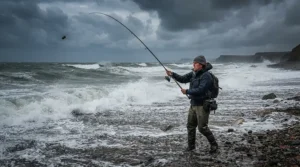
Start with the forecast. The Met Office inshore waters forecast highlights strong coastal winds of Beaufort force 6 or above, and covers coastal waters up to 12 miles offshore. That’s your cue for how hard your tackle will work. At force 6 and above, spray carries well up the beach, so sealed bodies like the Penn Spinfisher VII and the Daiwa 20 BG MQ earn their keep.
Then consider the casting. In a headwind, a fixed spool such as the Shimano Bullseye 9120 loses less to line drag because there’s no overrunning spool. A multiplier needs tighter braking. Meanwhile, the Okuma Surf 8k‘s slow oscillation keeps coils neat, which helps when wind is already pushing your line around.
Finally, the retrieve. Heavy leads loaded with weed need torque, not speed. The Shimano Bullseye 9120‘s power-first gearing and 20kg drag favour exactly that. The Daiwa 7HT Mag‘s quicker 71cm per turn suits keeping in touch with the lead.
Saltwater Corrosion Resistance: Features That Actually Matter (and Those That Don’t)
Every manufacturer claims saltwater corrosion resistance. Here’s how to separate the substance from the marketing.
Features that matter:
- Body material and construction. Graphite and composite don’t corrode. Aluminium, especially in a one-piece casting like the Daiwa 20 BG MQ, resists corrosion and cuts down on entry points for salt.
- Gear metals. Brass and stainless gears, as in the Daiwa 7HT Mag and Penn Spinfisher VII, handle salt better than cheap alloys.
- Bearings. Corrosion-resistant bearings, as fitted to the Shimano Bullseye 9120, stay smooth after repeated soakings.
- Sealing. IPX5 on the Penn Spinfisher VII is a meaningful, measurable claim.
Features that matter less:
- Bearing count alone. More bearings means little if they’re unprotected.
- Shiny colour schemes and gold anodising.
- “Marine grade” labels with no detail behind them.
The caution here is simple. No reel is immune. Even a sealed reel needs rinsing, because salt crystals build up on the outside and work into moving parts over time.
Sealed Drag Explained: Do You Really Need One?
A sealed drag is a drag stack, the washers that apply braking pressure, enclosed so salt and sand can’t reach it. When drag washers get gritty or corroded, pressure becomes jerky and unreliable. That’s exactly what you don’t want when a big fish runs in heavy surf.
Not every reel advertises a fully sealed drag. The Penn Spinfisher VII has IPX5 sealing on the body and uses the HT-100 drag. The Daiwa 20 BG MQ uses a one-piece body that keeps salt and grit out. The Okuma Surf 8k lists water resistance features. Always check the manufacturer’s current specification to see exactly which parts are protected, as marketing language varies.
Is a sealed drag essential? For rough weather, I’d say it’s strongly worth having. If you’re on a tight budget, the Daiwa 23 Ninja LT can still do the job, but you’ll need to be strict about rinsing and loosening the drag after sessions. One caution from review notes elsewhere: felt washers, such as those in some light reels, can need servicing and replacing over time. Carbon washers generally cope better with heat and wet.
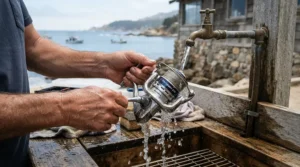
Maintenance: A Practical Usage Guide for Salt-Tough Reels
Maintenance is the cheapest upgrade you can give any reel. Here’s a routine that works for everything in this guide. Always check your reel’s manual first, as procedures vary.
After every session:
- Wipe the reel down with a damp cloth. Avoid hosing it with a high-pressure jet, which can push salt past seals.
- Rinse gently with a light trickle of fresh water, then wipe dry.
- Back off the drag so washers aren’t compressed in storage.
- Let the reel dry fully before putting it in its bag.
Monthly:
- Check line for abrasion at the first few metres, and respool if needed.
- Apply a drop of light reel oil to handle knobs and exposed bearings.
- Check that the handle and bail arm or levelwind move freely.
Once a year, or when it feels rough:
- Strip, clean and re-grease the gears.
- Check drag washers and replace worn ones.
- Inspect for any sign of corrosion, and treat it early.
First-month mistakes to avoid:
- Overfilling the spool, which causes line lay problems, a known issue on the Penn Spinfisher VII.
- Over-oiling, which attracts sand.
- Storing the reel wet.
A reel that gets ten minutes of care after each trip will outlast one that gets none, whatever the price tag.
Real-World Scenarios: Matching Reel to Angler
Specs are abstract. Here are three typical anglers and the reels I’d shortlist for each.
The weekend beginner on a budget. You fish a sheltered beach twice a month, mostly for bass and whiting, with a budget of under £100. The Okuma Surf 8k gives you capacity and water resistance, while the Daiwa 23 Ninja LT suits you if you’re more of a lure angler. Both are forgiving, and neither demands multiplier skills.
The winter rock angler. You fish exposed rocks on stormy days and spray is constant. The Penn Spinfisher VII is the logical fit because of its IPX5 sealing and full metal body. If you also want a reel for freshwater pike in the quieter months, the Daiwa 20 BG MQ covers both.
The experienced distance caster. You fish open beaches at night, you know your way around a multiplier, and you want maximum control. The Daiwa 7HT Mag suits clean ground, while the Penn 535 Mag 2 is the one to research for rough ground. If you want distance without multiplier skills, the Shimano Bullseye 9120 is the premium fixed spool alternative.
In each case, notice that budget, environment and frequency of use drive the decision, not the spec sheet alone.
Common Problems and Quick Solutions
Even the best reel misbehaves sometimes. Here are the most common rough-weather problems and how to fix them.
Bird’s nests on multipliers. Increase the brake setting, especially in a headwind. Reduce thumb pressure gradually, and practise casting on calm days. A reel with advanced braking, such as the Daiwa 7HT Mag, forgives more but doesn’t eliminate the need for technique.
Line tangles on fixed spools. Check spool fill. Overfilling is a documented issue on the Penn Spinfisher VII. Leave a small gap below the rim.
Gritty or crunchy retrieve. Sand or salt has got into the gears. Rinse gently, dry, then service the reel. If it persists, a strip-down and re-grease is due.
Jerky drag. Worn or dirty washers. Back the drag off after fishing and replace washers when they feel rough.
Salt crust on the exterior. Rinse and wipe after every trip. Don’t wait for it to build up.
Most of these problems come back to the same root cause: salt left to sit. A consistent rinse-and-dry routine fixes more than any upgrade.
Common Mistakes When Buying a Sea Fishing Reel for Rough Weather
Even careful buyers make avoidable errors. Here are the ones I see most often in angler discussions.
Buying the biggest reel you can afford. Size should match your rod and your ground. An oversized reel unbalances the rod and tires you out.
Choosing a multiplier too early. Forum threads regularly show anglers moving from fixed spools to multipliers for particular fishing. That’s sensible, but it works best when you’ve got casting experience. Starting with a multiplier in poor weather is a recipe for tangles.
Ignoring body material. A graphite body, like on the Okuma Surf 8k, is fine for many sessions. But if you fish hard rough ground for years, a metal body like the Daiwa 20 BG MQ is the safer long-term bet.
Trusting tiny review samples. A perfect 5.0 from four reviews doesn’t tell you much. Look for volume, as with the 284 reviews behind the Penn Spinfisher VII.
Forgetting maintenance costs. Washers, grease and the occasional service all add up. Budget for them.
Assuming sealed means invincible. Sealing helps, but nothing replaces rinsing.
Long-Term Cost and Value: What You Really Pay for a Sea Fishing Reel for Rough Weather
Price tags only tell half the story. A reel that costs more but lasts ten years often beats a cheaper one replaced every other season.
| Price band | Reels | What you gain | Best For |
|---|---|---|---|
| Under £100 | Okuma Surf 8k, Daiwa 23 Ninja LT | Capable performance, lighter bodies | Beginners and occasional anglers |
| Mid-range | Penn Spinfisher VII | Sealed metal build | Regular rough-weather anglers |
| Above average | Daiwa 20 BG MQ | Seamless aluminium body | Hard-use all-rounders |
| Premium | Daiwa 7HT Mag, Shimano Bullseye 9120 | Specialist casting performance | Experienced distance anglers |
Think in cost per session. A reel used fifty times a year for five years is 250 sessions, so even a premium price breaks down to little per trip. The bigger risk is false economy: buying cheap, ignoring maintenance, and replacing it early. The Okuma Surf 8k and Daiwa 23 Ninja LT offer excellent value if you accept their limits. For regular rough-weather use, I’d lean towards the Penn Spinfisher VII as the best balance of protection and cost.
Safety Guide: Fishing in Rough Weather
The best reel in the world is no use if you’re in trouble. Rough-weather fishing carries real risk, and a little preparation goes a long way.
The Angling Trust’s sea angling safety guidelines stress checking weather and tides before you go, and telling someone where you’re fishing and when you’ll be back. RNLI advice reported by Fishing Magic adds that anglers on exposed or rocky shorelines, and on boats, should wear a lifejacket.
Practical steps for rough days:
- Check the inshore forecast and tide times before leaving.
- Wear a lifejacket on rocks and exposed marks.
- Tell someone your location and expected return time.
- Keep a safe distance from the water’s edge, especially on a rising tide.
- Carry a charged phone in a waterproof pouch.
Reels and rods can be replaced. You can’t. If the forecast is truly severe, the best choice is sometimes to stay home and spend the evening on reel maintenance instead.
Frequently Asked Questions
❓ How much should I spend on a sea fishing reel for rough weather?
❓ Can I use a freshwater reel for sea fishing?
❓ Are sea fishing reels waterproof?
❓ What line should I use on a multiplier in windy conditions?
❓ How do I stop bird's nests when casting a multiplier?
Conclusion
The right sea fishing reel for rough weather is the one that matches your skill, your ground and your willingness to look after it. There’s no single winner, and the seven reels here prove it.
If you want proven protection against spray, the Penn Spinfisher VII has the strongest evidence behind it, with 284 reader reviews. If budget rules, the Okuma Surf 8k and Daiwa 23 Ninja LT do a lot for under £100 and under £70 respectively. If you want one tough reel for everything, the Daiwa 20 BG MQ is built for it. And if you’re an experienced caster, the Daiwa 7HT Mag and Penn 535 Mag 2 reward your skill, while the Shimano Bullseye 9120 gives you premium fixed spool distance without multiplier fuss.
Whichever you pick, remember that saltwater corrosion resistance, a sealed drag and honest maintenance matter more than any spec on the box. Rinse it, dry it, back the drag off and it’ll look after you. Check current prices, compare the options, and tight lines.
✨ Ready to Fish Through the Worst of It?
🎣 Pick the reel that suits your ground, give it a little care after every session, and make rough weather your advantage. Click any highlighted reel above to check current pricing and availability!
Recommended for You
- Fixed Spool Reel For Long Distance Casting: 7 Proven Picks (2026)
- Multiplier Reel For Beginners: 7 Best Picks For UK Anglers (2026)
- Beach Fishing Reels: 7 Proven Picks For UK Shores (2026)
Disclaimer: This article contains affiliate links. As an Amazon Associate, I earn from qualifying purchases. If you purchase products through these links, we may earn a small commission at no additional cost to you.
✨ Found this helpful? Share it with your friends! 💬🤗
