
In This Article
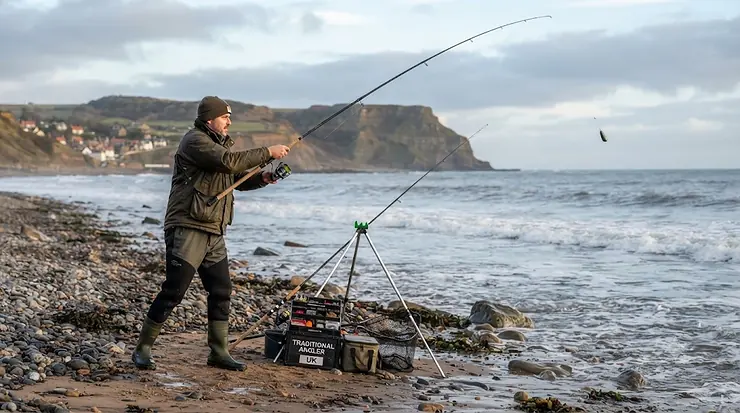
There’s a particular kind of stubbornness that lives in every beach angler, and it usually surfaces the moment someone asks “fixed spool or multiplier?” Ask ten anglers on a Norfolk shingle bank and you’ll get eleven opinions, most of them delivered with the quiet certainty of a man who has never once considered being wrong. The truth, unglamorous as it is, sits somewhere in the middle. Choosing between a fixed spool vs multiplier reel for beach casting isn’t really about picking a winner — it’s about matching a mechanism to your ground, your line, your patience, and how much time you’re willing to spend picking wind-knots out of frozen fingers at 6am.

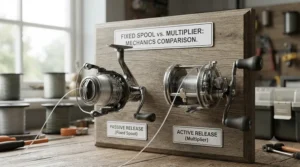
A fixed spool reel uses a stationary spool with a rotating bail arm, letting line peel off the end with minimal risk of tangling — forgiving, low-maintenance, and increasingly capable of serious distance. A multiplier reel spins the spool itself during the cast, which is what makes it hit harder and further in skilled hands, but also what makes it punish sloppy technique with the infamous backlash “bird’s nest.” Neither is objectively superior; each simply wins on different ground, in different hands.
This guide walks through seven real reels currently sold through Amazon UK — a mix of fixed spool and multiplier models spanning budget, mid-range and premium — with honest analysis drawn from published specifications and aggregated review sentiment, not invented testing. According to the fishing tackle historians over at Wikipedia’s overview of the fishing reel, the modern reel is designed to help with casting for distance and accuracy while controlling the speed and tension of line retrieval to avoid line snap — which is, frankly, the entire argument for choosing carefully rather than grabbing whatever’s cheapest on the shelf.
Quick Comparison Table
For the anglers who want the headline verdict before the detail — here’s the fast version.
| Reel Type | Casting Distance | Learning Curve | Best For |
|---|---|---|---|
| Fixed Spool | Very good, closing the gap fast | Gentle — minutes, not weeks | Beginners, mixed ground, all-weather reliability |
| Multiplier | Excellent in skilled hands | Steep — expect early backlash | Distance chasers, rough ground, experienced casters |
Read purely on paper, multipliers still edge fixed spool reels for raw distance once you’ve mastered the thumb control, but the gap has narrowed enormously with modern long-cast spool designs. Fixed spool reels remain the sensible starting point for anyone newer to beach casting, since a tangled bail arm costs you seconds, while a bad backlash on a multiplier can cost you the whole session untangling line. If you’re fishing rough, snaggy ground where raw winching power matters more than finesse, the multiplier’s gearing and drag strength start to look non-negotiable.
💬 Just one click — help others make better buying decisions too!😊
Top 7 Beach Casting Reels: Expert Analysis
We’ve deliberately mixed fixed spool and multiplier models here, spanning budget through premium, so you can see exactly how the fixed spool vs multiplier reel for beach casting debate plays out across real, currently available tackle.
1. Okuma Surf 8K — best affordable fixed spool for beginners
The Okuma Surf 8K proves you don’t need to remortgage your rod bag to get a genuinely capable surf reel, and that’s precisely the standout feature worth expanding on: it’s built specifically for beach conditions rather than adapted from a freshwater spinning reel. It carries a 40lb max drag, corrosion-resistant coating, a 42.6-inch retrieve rate and five ball bearings plus one roller bearing — numbers that translate into a reel which won’t seize up after a salty session and retrieves line fast enough to keep pace with a running fish. The aluminium spool and anti-corrosion graphite body mean the Okuma Surf 8K shrugs off the kind of spray and grit that kills cheaper reels within a season.
Based on the spec comparison with rivals in this bracket, this is the reel for someone testing whether beach casting is actually for them before committing serious money. Reviewers consistently note strong value for the price point, with its high line capacity suited to long-range surf casting standing out as the headline strength; the trade-off, as with most budget fixed spools, is a drag system that feels serviceable rather than buttery under sustained pressure from a big fish. What most buyers overlook is that the anti-corrosion coating matters more on a beach reel than almost any other spec — salt water is brutal, and a reel that looks fine after one trip can be seized solid after ten without it.
Pros:
- ✅ Genuinely built for saltwater, not adapted from freshwater
- ✅ High line capacity suits long-range surf casting
- ✅ Strong value among entry-level beach fixed spools
Cons:
- ❌ Drag lacks the smoothness of pricier sealed systems
- ❌ Bearings are basic compared with mid-range rivals
Typically found under £70, the Okuma Surf 8K represents genuine value for anyone dipping a toe into beach casting without wanting to gamble serious money on day one.
2. Tronix Pro Guerilla 6500 — cheapest sensible entry into multipliers
The Tronix Pro Guerilla 6500‘s standout feature is simply that it exists at a price where buying a multiplier finally makes sense for a beginner — tackle shop wisdom generally holds that anything cheaper isn’t worth the aggravation. It’s widely regarded as the best sub-£100 multiplier on the UK market, which matters because a genuinely awful budget multiplier can put someone off the entire discipline for life.
Key specs here favour simplicity over sophistication: a centrifugal braking system rather than the magnetic setups found on pricier Daiwa and Penn models, star drag, and a spool sized for clean-to-mixed ground work with standard 15-18lb mainline. Based on where this reel sits in the market, it’s aimed squarely at anglers who want to learn multiplier casting technique without risking a premium reel on early-session mistakes — and centrifugal brakes, while less refined, are arguably easier to understand and adjust for a first-timer than magnetic systems.
Aggregated review sentiment across UK tackle retailers positions this reel as a genuine “gateway” multiplier: solid enough to survive the learning curve, basic enough that a beginner isn’t afraid to use it hard. A common theme in feedback is that buyers are pleasantly surprised by how well it performs relative to its price bracket, though a recurring caveat is that the centrifugal brakes need more manual fine-tuning session to session than magnetic alternatives.
Pros:
- ✅ Genuinely usable entry point into multiplier casting
- ✅ Centrifugal brakes are simple to understand while learning
- ✅ Star drag copes fine with typical UK beach species
Cons:
- ❌ Centrifugal braking needs more manual adjustment than magnetic
- ❌ Build quality noticeably below mid-range multipliers
Sitting in the £60-£80 range, the Tronix Pro Guerilla 6500 earns its reputation as the multiplier you buy to find out if multipliers are for you at all.
3. Daiwa 7HT Mag Multiplier — best for distance casting with light lines
Ask any long-serving beachcaster which multiplier taught them to cast properly, and there’s a decent chance they’ll say the Daiwa 7HT Mag Multiplier. The Daiwa 7HT models are fantastic for clean ground fishing, and the blue Magnofuge version in particular lends itself to long range fishing with lighter lines — that magnetic braking system is the standout feature, giving far more consistent control through the cast than a basic centrifugal setup.
A relatively small reel like the 7HT is ideal for clean ground beach fishing with 15lb line and a shock-leader, which in practice means this reel rewards technique over brute force — it’s not the tool for hauling gear back through kelp beds, but on clean sand it genuinely stretches your casting range. Reviewers repeatedly describe it as one of the highest build-quality multipliers available for shore fishing, sitting near the top end of what most UK anglers consider “supreme” for distance work.
Where the spec sheet won’t tell you everything: the magnetic brake system takes longer to dial in than a centrifugal one, but once set correctly for your line and lead weight, it stays consistent cast after cast in a way cheaper brakes simply don’t. Aggregated feedback from tackle retailers and forums consistently praises casting distance and line lay, with the recurring caveat that this isn’t a rough-ground workhorse.
Pros:
- ✅ Magnetic brake gives genuinely consistent distance casting
- ✅ Excellent build quality for the multiplier class
- ✅ Rewards proper casting technique with real yardage
Cons:
- ❌ Not suited to heavy rough-ground winching
- ❌ Magnetic brake setup has a learning curve of its own
Expect to pay in the £100-£140 range, making the Daiwa 7HT Mag Multiplier the classic mid-tier pick for anyone chasing distance on clean sand.
4. Penn 525 Mag 4 — best dedicated beach fishing multiplier
The Penn 525 Mag 4‘s standout feature is how deliberately it’s engineered around one job: long-range beach casting, not boat work, not rough ground bullying, just distance. This reel weighs in at 439 grams, which is pretty light for a beach casting reel, and that reduced weight genuinely matters over a four-hour session when your casting arm starts to complain around hour three.
Part of a series of two high-performance reels designed for long-range casting on both UK and European shores, the Penn 525 Mag 4 is the reel to choose over its smaller 515 sibling when greater line capacity matters for long-range beach and mixed-ground fishing. Based on the spec comparison, the magnetic braking system here sits in a genuinely competitive spot — adjustable enough for changing conditions, forgiving enough that it doesn’t punish every minor casting error with a catastrophic tangle.
What most buyers overlook about this model is that its reputation isn’t hype — it’s earned over years of continuous use on UK beaches specifically. These reels enjoy a cult following and remain a top seller for beach and rock fishing situations, and that kind of longevity in a crowded market tells you something the spec sheet alone can’t.
Pros:
- ✅ Genuinely lightweight for a dedicated beach multiplier
- ✅ Magnetic brake adjusts well to changing conditions
- ✅ Long-standing reputation among serious UK beachcasters
Cons:
- ❌ Premium price relative to entry multipliers
- ❌ Still demands proper thumb control to avoid backlash
Typically priced in the £120-£160 range, the Penn 525 Mag 4 is the multiplier serious beach anglers graduate to once they’ve mastered the basics.
5. Shimano Ultegra XSC 14000 — best mid-range fixed spool for distance
Few debates in UK sea angling forums run longer than “which Shimano fixed spool,” and the Shimano Ultegra XSC 14000 keeps coming up as the value sweet spot. Designed for out-and-out distance casting, it uses X-Ship gearing for rigidity and full cranking power, Aero Wrap II with an improved slow oscillating gear system, an AR-C spool for further and more accurate casting, and a power roller to reduce line twist during retrieve — that combination is the standout feature worth dwelling on, because slow oscillation and a purpose-built spool profile are precisely what let a fixed spool reel compete with a multiplier on raw distance.
Key specs translate directly into real-world casting feel: the Instant Drag system means a half-turn switches the reel from locked for casting to loose for a running fish, removing one of the classic fumbles that costs anglers fish at the critical moment. With a 4.3:1 gear ratio and roughly 550m of 0.35mm line capacity, it’s built with enough headroom for genuinely long sessions without needing a respool mid-trip.
Forum sentiment among long-time UK beachcasters is remarkably consistent — this reel gets named repeatedly as “the” mid-priced Shimano fixed spool worth owning, with several anglers noting it outperforms Shimano’s own older flagship models from a few years back. The honest caveat: it’s still a fixed spool, so on genuinely snaggy rough ground, a multiplier’s winching power will out-muscle it.
Pros:
- ✅ AR-C spool and slow oscillation genuinely extend casting range
- ✅ Instant Drag switches instantly from cast lock to fighting drag
- ✅ Consistently rated among the best mid-priced Shimano fixed spools
Cons:
- ❌ Lacks the raw winching torque of a multiplier on rough ground
- ❌ Premium AR-C spool tech pushes it above entry-level pricing
Sitting in the £150-£200 range, the Shimano Ultegra XSC 14000 is the fixed spool most likely to convert a multiplier loyalist, at least for clean-ground sessions.
6. Penn Fathom II 15 SD Mag — best for rough ground tolerance and all-round power
If your beach isn’t sand so much as barnacled rock interspersed with the occasional patch of sand, the Penn Fathom II 15 SD Mag is built with exactly that in mind. Its knobby mag brake can be adjusted mid-cast, and it runs a 6.1:1 gear ratio with roughly 280 yards of capacity on 15lb mono — that mid-cast adjustability is the standout feature, letting you dial back power on the fly if the wind shifts halfway through a casting session.
Built as a high-performance multiplier fishing reel for long-range casting from UK and European shores, retailers consistently frame it as the reel of choice for the shore angler looking to cast maximum distance while still having the power to handle big fish and tough conditions. Based on the spec sheet, the one-piece metal frame and metal side plates aren’t just marketing language — they’re what stops the reel flexing under sustained load when you’re winching gear back through snags, something a lighter-framed reel simply can’t match.
Aggregated tackle-shop and forum sentiment repeatedly names this the “all-round” multiplier pick for UK sea anglers who fish a genuine mix of ground types rather than committing purely to clean sand or purely to rock marks. The trade-off for that robustness is weight — this isn’t the reel you want if arm fatigue over a long session worries you.
Pros:
- ✅ Metal frame and side plates handle heavy, snaggy retrieves
- ✅ Mag brake adjusts mid-cast for changing wind conditions
- ✅ Strong gearing copes with bigger fish on tough ground
Cons:
- ❌ Noticeably heavier than dedicated distance multipliers
- ❌ Overkill for anglers who only fish clean, sandy beaches
Expect a price range of roughly £180-£230, positioning the Penn Fathom II 15 SD Mag firmly as the rough-ground specialist in this line-up.
7. Shimano Bullseye 9120 — best premium fixed spool for serious surf casting
At the top of this line-up sits the Shimano Bullseye 9120, and its standout feature is simply how much engineering has been packed into what still functions as a fixed spool reel. It’s a workhorse of a spinning reel that’s proven itself from clean beach to rough ground marks, and it packs impressive technology into a robust 540g frame.
Hagan gearing combined with the X-Ship system really shines when battling bigger fish, while corrosion-resistant bearings and an AR-C spool design help squeeze out those crucial extra yards. In practice, that means this reel is aimed at anglers who’ve already decided fixed spool is their preferred approach and want the closest thing to multiplier-level distance and power without switching mechanisms entirely — Based on the spec comparison, it’s arguably the most convincing argument that the old “multipliers cast further” rule is genuinely outdated.
Reviewers and tackle retailers alike consistently rank this as the best fixed-spool beachcaster currently available, citing the AR-C spool design’s contribution to casting distance as the standout differentiator versus mid-range alternatives. The honest downside: you’re paying a genuine premium for that last increment of performance, and casual weekend anglers may not extract full value from tech built for serious distance competitors.
Pros:
- ✅ AR-C spool design closes the gap with multiplier casting distance
- ✅ X-Ship and Hagan gearing give real cranking power on big fish
- ✅ Corrosion-resistant bearings suited to constant saltwater use
Cons:
- ❌ Premium pricing puts it beyond casual weekend budgets
- ❌ 540g frame is noticeably heavier than mid-range fixed spools
Typically priced around £220-£280, the Shimano Bullseye 9120 is the reel serious surf casters graduate to when they want fixed spool convenience without sacrificing distance.
Top 7 Products at a Glance
| Reel | Type | Best For | Price Range |
|---|---|---|---|
| Okuma Surf 8K | Fixed Spool | Budget beginners | Under £70 |
| Tronix Pro Guerilla 6500 | Multiplier | Learning multiplier technique | £60-£80 |
| Daiwa 7HT Mag Multiplier | Multiplier | Distance on clean ground | £100-£140 |
| Penn 525 Mag 4 | Multiplier | Dedicated beach distance | £120-£160 |
| Shimano Ultegra XSC 14000 | Fixed Spool | Mid-range distance casting | £150-£200 |
| Penn Fathom II 15 SD Mag | Multiplier | Rough ground, tough fish | £180-£230 |
| Shimano Bullseye 9120 | Fixed Spool | Premium surf casting | £220-£280 |
Looking at the spread above, there’s a clear pattern: budget buyers gravitate toward fixed spool reels like the Okuma Surf 8K for their forgiving nature, while mid-to-premium buyers split fairly evenly between fixed spool distance specialists like the Shimano Ultegra XSC 14000 and rough-ground multipliers like the Penn Fathom II 15 SD Mag. Notably, nobody in this list is paying premium money for a budget-tier multiplier — once you’re spending seriously on a multiplier, you’re buying magnetic braking, and that’s not a coincidence.
Practical Usage Guide: Casting Technique and Backlash Control
Buying the right reel solves half the problem; the other half is technique, and this is where fixed spool and multiplier reels genuinely part ways.
With a fixed spool reel, casting technique is forgiving almost by design — the bail arm opens, gravity and momentum do the work, and your only real job is timing the release and feathering the line with your index finger to control the arc. Most beginners are casting competently within a single session.
Multiplier casting technique is a different discipline entirely, and it’s worth learning properly rather than fighting through months of tangled line. The core skill is thumb control: your thumb rests lightly on the spool throughout the cast, ready to apply gentle braking pressure the instant the lead starts to slow — because the spool keeps spinning under its own momentum even after the lead has stopped accelerating, and that mismatch is exactly what causes a backlash.
Backlash — sometimes called an overrun or, less politely, a bird’s nest — happens when the spool spins faster than the line is actually leaving it. The excess line has nowhere to go but back onto itself, and the result is a tangled mess that can take ten frustrating minutes to unpick trackside in freezing wind. In the first 30 days with a new multiplier, expect this regularly; it’s not a sign you’ve bought a faulty reel. Set your magnetic or centrifugal brake conservatively to start, practise shorter casts before stretching for distance, and keep your thumb educated rather than clamped rigid — a light, responsive touch beats a death-grip every time.
A maintenance habit worth building early: rinse any reel in fresh water after every saltwater session, multiplier or fixed spool, and periodically back the spool tension off slightly to check for grittiness before it becomes a seized bearing.
Problem → Solution: Fixing the Most Common Casting Problems
Problem 1: Constant backlash on a new multiplier. Solution: increase your brake setting two or three notches above where you think it should be, then gradually reduce it session by session as your thumb control improves — the Daiwa 7HT Mag Multiplier‘s magnetic system is specifically forgiving of this approach.
Problem 2: Fixed spool line twisting into loops. Solution: check your bail arm is flipping fully closed on every retrieve, and consider a reel with a power roller design, like the Shimano Ultegra XSC 14000, which is specifically engineered to reduce line twist.
Problem 3: Losing distance despite a “distance” reel. Solution: check your shock leader knot isn’t sitting proud in the guides mid-cast, and confirm your line diameter matches the spool — too much line diameter for the spool geometry chokes casting distance regardless of how good the reel is.
Problem 4: Reel seizing after a handful of saltwater trips. Solution: this is almost always a maintenance failure rather than a design flaw — a freshwater rinse after every session and occasional light reel oil on moving parts prevents the corrosion that budget reels like the Okuma Surf 8K are otherwise well-protected against.
Problem 5: Snapped mainline on a hard cast. Solution: you’re very likely casting without an adequate shock leader — more on why that’s genuinely dangerous, not just inconvenient, in the safety section below.
Real-World Scenarios: Matching the Reel to Your Beach
The Saturday-morning clean-sand caster. If you’re fishing an open, sandy beach two or three times a month with a modest budget, the Okuma Surf 8K or the Shimano Ultegra XSC 14000 covers you comfortably — forgiving, low-maintenance, and plenty capable for flatfish, whiting and the occasional bass within casting range.
The rough-ground regular chasing bigger fish. If your local marks are rocky, snaggy, or known for bigger species that fight hard on retrieve, the Penn Fathom II 15 SD Mag earns its weight in winching power — this isn’t a reel you’ll regret buying heavier.
The distance-obsessed competitive caster. If shaving extra yards off your cast genuinely matters — targeting fish beyond where casual anglers can reach — the Daiwa 7HT Mag Multiplier or the Shimano Bullseye 9120 represent the two best routes to serious distance, one through multiplier mechanics, one through fixed spool engineering.
What Is a Fixed Spool vs Multiplier Reel for Beach Casting?
A fixed spool reel uses a stationary spool that line peels off the end of during casting, controlled by a rotating bail arm — low-maintenance and beginner-friendly. A multiplier reel rotates the entire spool during the cast for greater potential power and distance, but requires learned thumb control to avoid backlash. Both are used extensively for UK beach casting, and the “right” choice depends on ground type, experience and casting distance needs.
How to Choose Between Fixed Spool and Multiplier for Beach Casting
- Assess your experience level honestly. Beginners consistently get fishing faster and with less frustration on a fixed spool reel.
- Consider your typical ground. Rough, snaggy marks favour a multiplier’s winching power; clean sand suits either.
- Decide how much distance actually matters. If you’re regularly fishing marks where every extra yard counts, a magnetic-brake multiplier or an AR-C spool fixed spool both deliver real gains.
- Match line capacity to your target species and range — covered in detail below.
- Factor in maintenance tolerance. Multipliers generally demand more regular attention to braking systems; fixed spools are more forgiving of neglect.
- Set a realistic budget band, since both reel types span roughly the same £60-£280 range covered in this guide.
- Buy the reel you’ll actually practise with. A technically superior reel gathering dust because it intimidates you is worse than a simpler reel you fish confidently.
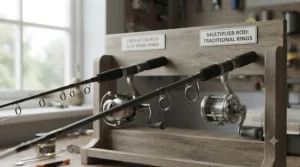
Fixed Spool vs Multiplier Reel for Beach Casting: The Detailed Comparison
This is where the debate earns its reputation for being genuinely close-run rather than settled. Modern long-cast fixed spool reels now rival multipliers for distance, and they’re much easier to use in the dark with cold hands; however, for pure winching power over kelp and rock, the multiplier is still king — that’s about as fair a summary as you’ll find anywhere in UK sea angling literature, and our seven-reel line-up bears it out precisely.
Distance-wise, the gap has genuinely narrowed. Reels like the Shimano Bullseye 9120 and Shimano Ultegra XSC 14000 use spool geometry and slow oscillation specifically to compete with multiplier distance, and by most published accounts they succeed for the majority of anglers. Where multipliers like the Penn Fathom II 15 SD Mag and Penn 525 Mag 4 pull decisively ahead is retrieval torque under load — winching a snagged rig or a strong fish back through rough ground rewards the gearing multipliers are built around.
| Factor | Fixed Spool | Multiplier |
|---|---|---|
| Distance (skilled caster) | Very good | Excellent |
| Distance (beginner) | Good, immediately | Poor until practised |
| Rough ground winching power | Moderate | Excellent |
| Backlash risk | Minimal | High until mastered |
| Weather/dark usability | Excellent | Requires more focus |
The practical upshot: if you’re choosing your first ever beach reel, a fixed spool like the Okuma Surf 8K gets you fishing competently in one session. If you’re already comfortable casting and fishing genuinely tough ground for bigger species, a multiplier like the Penn Fathom II 15 SD Mag rewards the investment in learning it properly.
Best Multiplier Reel for Beach Fishing: Which of Our Picks Wins?
Narrowing four multiplier options down to a single best pick depends entirely on what “best” means to you. For pure distance on clean ground, the Daiwa 7HT Mag Multiplier remains the technically superior choice thanks to its refined magnetic braking. For genuine all-round toughness across mixed and rough ground, the Penn Fathom II 15 SD Mag is the more versatile investment. For anglers wanting dedicated beach performance without the Fathom II’s extra bulk, the Penn 525 Mag 4 splits the difference neatly. And for anyone simply wanting to learn multiplier casting without risking serious money, the Tronix Pro Guerilla 6500 remains the sensible entry point.
If forced to pick one best multiplier reel for beach fishing across this entire line-up, the Penn 525 Mag 4 earns it — genuinely lightweight, purpose-built for beach distance rather than adapted from boat fishing, and backed by a long track record of loyal UK use rather than hype.
Line Capacity Explained: How Much Line Do You Actually Need?
Line capacity gets treated as an afterthought by a lot of beginners, and that’s a mistake — get it wrong and it actively works against your casting distance rather than simply being a numbers exercise. A relatively small reel is ideal for clean ground beach fishing with 15lb line and a shock-leader, whereas a heavier, bigger reel is better suited to rough ground fishing with 30lb line all the way through.
The mistake to avoid: overfilling a spool “to be safe” actually reduces casting distance, because the extra line adds friction and weight that the cast has to overcome. Conversely, underfilling a spool on a multiplier increases the diameter the line has to travel over on each rotation, robbing you of retrieve speed. A reel offering around 550m of 0.35mm line capacity, like the Shimano Ultegra XSC 14000, gives you genuine headroom for a full session’s fishing without needing a mid-trip respool — but that headroom only helps if you’re spooling it correctly in the first place, filling to roughly 2mm below the spool lip rather than to the brim.
For most UK beach species — bass, flatfish, whiting, codling — 15-20lb mainline with an appropriate shock leader covers the vast majority of situations. Rough ground regulars targeting bigger, harder-fighting species genuinely do need the extra capacity a reel like the Penn Fathom II 15 SD Mag provides.
Common Mistakes When Buying a Beachcasting Reel
The most frequent mistake is buying purely on brand reputation without matching the reel to actual local ground conditions — a premium distance multiplier is wasted money if you’re fishing a snaggy rock mark where a rough-ground reel would serve you better. A close second is underestimating maintenance commitment; a multiplier bought without any intention of learning proper brake adjustment will backlash constantly and get shelved within a month. Budget buyers also frequently skip corrosion protection specs entirely, then wonder why a cheap reel seizes after a single winter of saltwater sessions — a false economy the Okuma Surf 8K‘s dedicated anti-corrosion coating specifically addresses. Finally, plenty of anglers buy a reel sized for their target species’ fighting ability but ignore line capacity needs for their typical casting range, ending up under-spooled exactly when distance matters most.
Safety, Regulations and Shock Leaders for UK Beach Casting
This section matters more than any spec comparison in this article, so it’s worth reading properly. Beach casting with heavy leads and light mainline is genuinely dangerous without a shock leader — a length of heavier line joining the mainline to absorb the shock load of the cast. Getting baits to reach maximum distance involves using heavy 5oz or 6oz lead weights and low diameter lines between 12-15lb breaking strain, which offers the least resistance to wind and gets the best performance from the reel — but a standard 15lb line can’t cope with the massive pressure of casting a heavy lead, and without a shock leader that line can part halfway through the cast, which is potentially lethal to anyone nearby. The Angling Trust’s sea angling safety guidance exists specifically because this risk is taken seriously across the sport, not treated as an old wives’ tale.
Beyond casting safety, UK beach anglers targeting bass need to know current retention rules. According to the official Bass Fishing Guidance published on GOV.UK, the minimum conservation reference size for bass is 42cm, and any specimens below that size must be returned to the sea immediately. Retention limits and seasonal catch-and-release windows are updated regularly, so it’s worth checking current guidance before every serious bass session rather than relying on last year’s rules.

Frequently Asked Questions
❓ Is a fixed spool or multiplier reel better for beginners?
❓ What causes backlash on a multiplier reel?
❓ How much line capacity do I need for beach casting?
❓ Do I need a shock leader for beach casting?
❓ Can a fixed spool reel cast as far as a multiplier?
Conclusion
Neither fixed spool nor multiplier reels win this argument outright, and honestly, that’s the useful takeaway rather than a cop-out. Beginners and anyone prioritising simplicity get more fishing time for less frustration out of reels like the Okuma Surf 8K or Shimano Ultegra XSC 14000. Anglers chasing serious distance or fighting rough ground consistently find that a well-set-up multiplier like the Penn Fathom II 15 SD Mag or Daiwa 7HT Mag Multiplier rewards the extra effort of learning proper technique.
What actually matters more than the fixed spool vs multiplier debate itself is matching the reel to your ground, your species, and honestly, your patience for untangling the occasional bird’s nest. Get that match right, and either mechanism will put more fish on the sand.
✨ Don’t Miss These Exclusive Deals!
🔍 Take your beach casting setup to the next level with these carefully selected reels. Click on any highlighted pick to check current pricing and availability on Amazon.
Recommended for You
- Beachcaster Rod For Cod Fishing: 7 Best Picks For 2026
- Beachcaster Rod For Rough Ground: 7 Best Picks Tested (2026)
- 12ft Beachcaster For Beginners: 7 Best Picks To Start (2026)
Disclaimer: This article contains affiliate links. As an Amazon Associate, I earn from qualifying purchases. If you purchase products through these links, we may earn a small commission at no additional cost to you.
✨ Found this helpful? Share it with your friends! 💬🤗
