
In This Article
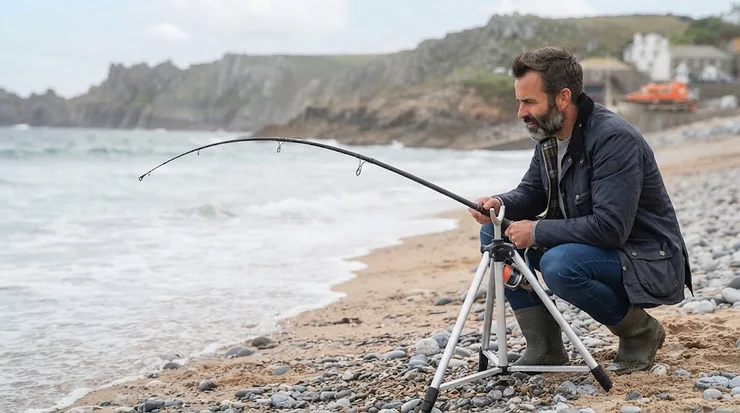
There’s a particular kind of chaos that greets every new beach angler standing in a tackle shop for the first time: walls of rods, three different casting weight units, and a member of staff asking questions you didn’t know you needed answers to. A 12ft beachcaster for beginners cuts through most of that noise, because 12ft sits right in the sweet spot British shore anglers have quietly settled on for decades — long enough to punch a bait past the breakers, short enough that you’re not fighting the rod before you’ve even hooked a fish.
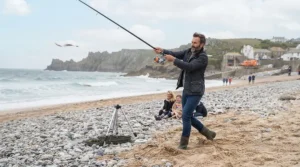
A beachcaster is a long, purpose-built sea fishing rod designed to launch heavy leads and rigs from the shore into the surf, typically between 12ft and 14ft, with a casting weight rating that tells you what size lead it’s happiest throwing. For a first rod, 12ft with a 4-6oz rating covers roughly nine out of ten UK beach venues without punishing your arms or your budget.
What most beginners get wrong isn’t the brand, it’s the mismatch between rod weight and casting technique — buying something built for tournament distance casting and then wondering why every third cast ends in a tangle. This guide walks through seven real 12ft beachcasters currently sold in the UK, from bargain-bin starters to rods you’ll happily use for years, with honest analysis drawn from manufacturer specifications and aggregated angler feedback rather than invented testimonials. According to Wikipedia’s overview of the sport, surf fishing refers to land-based fishing from the shoreline or while wading into the surf zone, with the specific British term “beachcasting” describing casting into the surf at or near the shore. Sea fishing itself doesn’t require a rod licence in England and Wales, which makes a beachcaster genuinely one of the lowest-barrier ways into the sport — you only need to sort the tackle.
Quick Comparison Table
Before the deep dive, here’s the shortlist at a glance. Every rod below is a genuine 12ft (or near-12ft) model sold through UK tackle retailers and Amazon UK, spanning fibreglass starters through to a premium British-built upgrade pick.
| Rod | Length | Casting Weight | Best For |
|---|---|---|---|
| Angling Pursuits Beachcaster Max | 12ft | 4-6oz | Absolute cheapest way in |
| Leeda 2XL Beachcasting Rod | 12ft | 4-6oz | Lightest carbon under £30 |
| NGT 12ft Telescopic Beachcaster | 12ft (folds to ~95cm) | 4-6oz | Portability and travel |
| Shakespeare Salt XT Beachcaster | 12-13ft | 4-8oz | Best value guide upgrade |
| Penn Wrath II Surfcasting Rod | 12ft8-14ft | Up to 250g | Bigger baits, rougher ground |
| Daiwa Seahunter Z Beachcaster | 12ft6 | 4-8oz | All-round growth rod |
| Century Fireblade Delta | 13-14ft | 4-6oz | The rod to grow into |
Looking at the spread, there’s a clear budget cluster under £35, a solid mid-range between roughly £75-£140, and one deliberate premium outlier that isn’t technically a 12ft rod at all but earns its place as the aspirational upgrade. Beginners chasing pure value should start at the top of the table; anyone who already knows they’ll fish year-round is better served skipping straight to the mid-range picks to avoid buying twice.
💬 Just one click — help others make better buying decisions too!😊
Top 7 12ft Beachcasters for Beginners: Expert Analysis
1. Angling Pursuits Beachcaster Max — cheapest genuine way to try beachcasting
If you’re not yet sure whether beach fishing is a hobby or a one-weekend curiosity, the Angling Pursuits Beachcaster Max removes the financial risk almost entirely. It’s a 12ft, two-section fibreglass blank rated 4-6oz, sold as a deliberately no-frills starter or spare rod. Fibreglass is heavier and less sensitive than carbon, but it’s also close to indestructible — it shrugs off the knocks and drops that would crack a premium carbon tip on day one. Here’s what to weigh: this is a rod for learning the physical motion of casting and playing a fish, not for detecting a shy whiting nibble at 80 yards. Dedicated review volume for this specific budget listing is thin across UK retailers, so rather than invent sentiment, it’s worth noting that comparable entry-level fibreglass beachcasters in this price bracket are consistently described by owners as “tough but heavy in hand” — a fair trade at this price point. At well under £30, the value verdict is simple: buy it, fish it hard, and don’t feel guilty if it lives in the shed for six months.
Pros:
- ✅ About as cheap as a genuine 12ft beachcaster gets
- ✅ Fibreglass blank shrugs off beginner mishaps
- ✅ Solid choice as a spare or lend-to-a-mate rod
Cons:
- ❌ Heavier in the hand than any carbon rod here
- ❌ Tip sensitivity lags behind pricier alternatives
2. Leeda 2XL 12ft Beachcasting Rod — lightest carbon blank under £30
Once you’ve decided beach fishing is worth a proper go, the Leeda 2XL is the natural next step without spending much more. It’s a 12ft, three-piece rod with a “superslim, lightweight high modulus carbon blank” and a progressive power action, casting 4-6oz, and it comes in at around £30. What that carbon construction means in practice is a noticeably lighter rod for a full session’s casting — your arm feels it after two hours of a fibreglass blank, less so with this one. The progressive action also matters more than it sounds: it lets the rod bend deeper under load, which is what actually stops you cracking off rigs or pulling hooks out of soft-mouthed fish while you’re still learning to feel the strain through the blank. Reviewers of comparable Leeda budget carbon rods consistently flag it as strong value for the price bracket, with the main gripe being that the fitted guides are basic and benefit from an eye check after a few saltwater sessions. For a beginner wanting genuine carbon performance without genuine carbon pricing, this is very hard to beat.
Pros:
- ✅ Genuine carbon blank at a fibreglass-adjacent price
- ✅ Three-piece build is easy to transport by bike or bus
- ✅ Progressive action reduces break-offs while learning
Cons:
- ❌ Basic guide rings need rinsing and checking regularly
- ❌ Casting ceiling of 6oz limits use on rough, tide-heavy marks
3. NGT 12ft Telescopic Beachcaster — most portable set-up for travel or storage
Not everyone has boot space or a hallway for a two-piece rod bag, and this is where the NGT 12ft Telescopic Beachcaster earns its keep. It collapses down to roughly 95cm across six telescopic sections, comes bundled with a reel, 70 yards of line and mackerel feathers, and typically sells for well under £30 as a complete kit. Telescoping construction always trades a little blank consistency and casting distance for that shrink-to-fit convenience, so don’t expect tournament-grade tip recovery here. What the spec sheet won’t tell you, but the review pattern makes clear, is that this rod’s real audience is holiday anglers and total beginners rather than anyone chasing personal-best distances. Across large volumes of verified buyer reviews on major retail marketplaces, this exact model sits around 4.7-4.8 out of 5 stars from tens of thousands of ratings, with recurring praise for value for money and portability, alongside a consistent minority note that the guides can rust with heavy saltwater use over a season or two. For a first purchase you can throw in a car boot without a second thought, that trade-off is entirely reasonable.
Pros:
- ✅ Folds to under a metre for cars, flats and holidays
- ✅ Complete kit — rod, reel, line and feathers included
- ✅ Extremely low cost of entry
Cons:
- ❌ Guides prone to corrosion without regular rinsing
- ❌ Telescopic action can’t match a two or three-piece blank for feel
4. Shakespeare Salt XT Beachcaster — best value guide-and-blank upgrade
Somewhere around your second season, corroded guides and a soft blank start costing you fish, and this is exactly the gap the Shakespeare Salt XT Beachcaster fills. Built on a high-grade slim carbon blank in 12ft and 13ft options with a 4-8oz casting weight, its standout feature is the SW Proof Zirconium Oxide guide rings — saltwater-resistant inserts that resist the pitting and line-grooving that ruins cheaper lined guides within a season. Practically, that means smoother, longer casts as the rod ages rather than a gradual decline, plus genuinely better bite detection thanks to the tip highlight built into the blank. This is a rod for the beginner who has already caught the bug and wants gear that will still be performing properly in year three, not just week three. Aggregated reviews for this model consistently describe it as remarkable value for the money in the budget-to-mid bracket, with the sliding DPS reel seat occasionally noted as needing a firmer lock-down when paired with heavier multiplier reels. At roughly £75-95, it sits at the genuine tipping point between “starter kit” and “proper tackle.”
Pros:
- ✅ Zirconium Oxide guides resist saltwater corrosion long-term
- ✅ Slim carbon blank casts further with less effort
- ✅ Tip highlight genuinely improves bite detection at range
Cons:
- ❌ Sliding reel seat can work loose with heavier multipliers
- ❌ Step up in price from pure starter rods
5. Penn Wrath II Surfcasting Rod — sturdiest big-brand pick for bigger baits
If your local marks favour rough ground, big tides or larger baits like whole squid and crab, the Penn Wrath II Surfcasting Rod is worth stretching the budget for. Available from roughly 12ft8 up to 14ft, it’s built on a graphite composite blank with titanium oxide guide inserts and a 250g maximum casting weight — noticeably more headroom than the 4-6oz rods above. What that extra ceiling means in practice: you can safely punch out a heavier lead-and-bait combination on a blustery day without feeling like you’re overloading the blank, something a 4oz-rated starter rod genuinely can’t do safely. The trade-off is that a beginner casting light 3-4oz leads on a calm day will find this rod feels a touch over-specified and less sensitive to delicate bites than the lighter options here. Penn’s own published customer data for the closely related Wrath II combo range shows an aggregate rating around 4.2 out of 5 from dozens of verified reviewers, with durability and value for price cited most often and grip comfort during long sessions the recurring criticism. Around £90-110 for the rod alone, it’s the pick for anyone whose beach isn’t gentle.
Pros:
- ✅ 250g casting ceiling handles bigger baits and tides
- ✅ Titanium oxide guides shrug off saltwater wear
- ✅ Big-brand backing means parts and support are easy to find
Cons:
- ❌ Overkill for calm-water, light-lead beginner sessions
- ❌ Anti-slip grip reported as less comfortable over long casts
6. Daiwa Seahunter Z Beachcaster — best all-rounder to grow your skills with
For a beginner who already knows they’re committing to the sport, the Daiwa Seahunter Z Beachcaster is the rod most UK tackle shops will point you toward, and for good reason. The 12ft6 version runs a premium-grade two-piece carbon blank with a power progressive action, stainless frame guides fitted with aluminium oxide rings, and a 4-8oz casting weight rated to reach roughly 150 yards. Aluminium oxide rings matter more than they sound: they run cooler and smoother than basic guides during a hard cast, which reduces both line wear and the friction that saps distance — a genuinely useful upgrade once your casting technique starts to demand more from the blank. Based on the spec comparison against the budget rods above, this is the point where the rod stops being the limiting factor in how far or how well you cast. Daiwa doesn’t publish a large bank of star-rated reviews for this specific model across UK retailers, but where owner feedback does exist it consistently describes “proper Daiwa build quality” and notes it performs above its roughly £110-140 price bracket. It’s the rod most likely to still be in your rack five years from now.
Pros:
- ✅ Aluminium oxide guides reduce friction on long casts
- ✅ Premium blank feel without flagship pricing
- ✅ Widely stocked, so parts and advice are easy to find
Cons:
- ❌ Costs roughly three to four times the cheapest options here
- ❌ Individually verified customer reviews are harder to find than for bigger-volume sellers
7. Century Fireblade Delta — the rod to grow into, not start with
It would be dishonest to call the Century Fireblade Delta a beginner’s first rod, and it’s worth saying plainly: it doesn’t even come in 12ft, starting instead at 13ft. It earns its place here as the honest answer to “what do I upgrade to eventually?” Built in Britain using a multi-phase high-tensile composite butt with 3K carbon twill, a hybrid rapid-recovery tip blending glass and carbon, and cured using computer-controlled oven technology, it’s rated for a 125-175g (roughly 4-6oz) casting weight. What the spec sheet won’t tell you is that this level of manufacturing consistency — every blank cured to the same tolerances — mainly pays off once your own casting technique is repeatable enough to exploit it; on a beginner’s inconsistent cast, a £250 blank and a £30 blank will often land the bait in roughly the same postcode. Angling forum sentiment around Century’s premium range is consistently positive on build quality and finish, with the recurring pushback being straightforward: it costs considerably more than mid-range alternatives that do 90% of the job. At £220-280, this isn’t where a beginner should spend their first pound, but it’s genuinely useful to know it exists as the ceiling worth aiming for.
Pros:
- ✅ British-made with genuinely premium blank construction
- ✅ Hybrid tip gives exceptional bite detection at range
- ✅ A rod that will outlast several seasons of hard use
Cons:
- ❌ Doesn’t come in 12ft — starts at 13ft
- ❌ Price puts it well outside a sensible first-rod budget
Top 7 Beachcasters: Full Spec Comparison
| Rod | Material | Sections | Casting Weight | Price Range | Best For |
|---|---|---|---|---|---|
| Angling Pursuits Beachcaster Max | Fibreglass | 2 | 4-6oz | Under £30 | Trying the hobby cheaply |
| Leeda 2XL | Carbon | 3 | 4-6oz | Around £30 | Lightweight budget upgrade |
| NGT 12ft Telescopic | Fibreglass | 6 (telescopic) | 4-6oz | Under £30 (with reel) | Travel and storage |
| Shakespeare Salt XT | Carbon | 2-3 | 4-8oz | £75-95 | Long-term value |
| Penn Wrath II | Graphite composite | 3 | Up to 250g | £90-110 | Bigger baits, rough ground |
| Daiwa Seahunter Z | Carbon | 2 | 4-8oz | £110-140 | Growing with your skills |
| Century Fireblade Delta | Carbon/glass hybrid | 2 | 4-6oz (125-175g) | £220-280 | Long-term upgrade goal |
Reading across the table, the jump in price from the top three to the middle two rods buys you meaningfully better guides and blank consistency, not just a brand name — that’s the aluminium oxide and zirconium oxide guide upgrades doing real work against saltwater corrosion. The Century Fireblade Delta sits apart from the rest of this comparison entirely, since it’s a length and price bracket up from a genuine first purchase. Budget-conscious beginners get excellent value from the top three, while anyone planning to fish weekly through a British winter should look at the £75-140 bracket to avoid replacing corroded guides within a year.
What to Expect: Real-World Performance From a 12ft Beachcaster
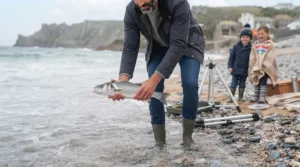
Specs on a box rarely translate cleanly into what a rod actually feels like on a cold beach at 6am, so here’s the honest version. A 12ft rod rated 4-6oz will comfortably launch a standard 3-4oz lead with bait roughly 60-90 yards for a beginner with reasonable technique — nowhere near what a distance-casting specialist achieves with a 14ft continental rod, but genuinely far enough to reach fish on the vast majority of British beaches. British beachcasting typically uses rods between 12ft and 16ft, casting a lead weight of roughly 120g to 200g out into the surf zone, so a 12ft rod at the shorter end of that range sacrifices a little raw distance for a rod that’s genuinely manageable to control while you’re still learning.
The other thing beginners consistently underestimate is arm fatigue over a full session. A fibreglass rod like the Angling Pursuits Beachcaster Max will feel noticeably heavier after three hours of repeated casting than the carbon-bladed Leeda 2XL or Daiwa Seahunter Z, even though the difference feels trivial when you first pick each one up in a shop. If you’re planning dawn-to-dusk sessions rather than a quick hour after work, that weight difference is worth paying for.
Rod Weight Explained: What It Really Means for Beginners
“Rod weight” causes more confusion for beginners than almost any other spec, mainly because it gets used to mean two completely different things. The first is casting weight — the range of lead weights (in ounces or grams) the rod is designed to cast, printed as something like “4-6oz” on the blank just above the handle. The second is physical rod weight — literally how heavy the rod itself is in grams, which affects arm fatigue rather than casting performance.
Here’s what most beginners overlook about casting weight specifically: it’s not just about what the rod can throw, it’s about what it throws well. Overload a 4-6oz-rated rod with an 8oz lead and you risk a cracked blank or, at minimum, a horribly inaccurate cast; underload a rod rated 4-8oz with a 2oz lead and the blank won’t load properly, so you lose distance and feel. Matching your typical lead weight to the rod’s rated range — not just staying under the maximum — is the single biggest factor in whether a beginner enjoys their first few sessions or gets frustrated and gives up.
Physical rod weight matters most over a long session. Fibreglass blanks like the Angling Pursuits Beachcaster Max typically sit heavier in the hand than an equivalent carbon rod such as the Leeda 2XL or Daiwa Seahunter Z, and that difference compounds across dozens of casts. If you know you’ll be fishing multi-hour sessions rather than quick evening trips, prioritising a lighter carbon blank over a slightly cheaper fibreglass one is usually the better long-term call.
Beach Caster Rod vs Spinning Rod: Which Should Beginners Start With?
New anglers researching their first purchase inevitably run into the question of whether a dedicated beach caster rod is even necessary, or whether a general-purpose spinning rod would do the job. The honest answer is that both can catch fish, but they’re built for genuinely different jobs.
| Factor | Beach Caster Rod (12ft Beachcaster) | Spinning Rod |
|---|---|---|
| Typical length | 12-14ft | 7-10ft |
| Casting weight | 4-8oz (heavier leads) | Under 2oz typically |
| Best for | Distance casting with bait rigs from open beaches | Lures, light baits, estuaries, rock marks |
| Learning curve | Steeper for pendulum-style casts | Easier for overhead casting |
| Reel type | Multiplier or large fixed-spool | Small-to-medium fixed-spool |
A dedicated beach caster rod exists to do one thing well: launch a heavy lead-and-bait rig well beyond the breakers on an open, exposed beach, which a shorter, lighter spinning rod simply isn’t built to do without risking a snapped tip or a badly mangled cast. If your local marks are open surf beaches — the classic image most people picture when they think of UK sea fishing — a proper beachcaster like the ones in this guide will out-fish a spinning rod every time. Spinning rods earn their keep on estuaries, harbour walls, and rock marks where casting distance matters less than presentation and finesse, which is a different style of fishing entirely. As John Holden’s expert casting guidance in Sea Angler magazine notes, a medium-fast 12-13ft beachcaster is usually the best length for learning to cast at respectable distances, precisely because taking on too much rod before you can control it “ends in tears” — advice that applies whether you’re choosing a beachcaster in the first place, or deciding between one and a spinning rod.
✨ Don’t Miss These Exclusive Deals!
🔍 Take your beach fishing setup to the next level with these carefully selected rods. Click on any highlighted item to check current pricing and availability. These picks will help you land genuine results on your very first few trips!
How to Choose a 12ft Beachcaster for Beginners
Cutting through the marketing copy, here’s what actually matters when choosing your first rod, in order of importance:
- Match casting weight to your local marks first. Call a nearby tackle shop and ask what leads locals typically use — a 4-6oz rating covers most sheltered and moderate UK beaches, while 6-8oz suits stronger tides and rougher ground.
- Choose carbon over fibreglass if your budget stretches to it. The Leeda 2XL proves you don’t need to spend much extra for a noticeably lighter, more sensitive blank than fibreglass alternatives.
- Check the guide material, not just the blank. Aluminium oxide or zirconium oxide guides, as found on the Daiwa Seahunter Z and Shakespeare Salt XT, resist saltwater corrosion far better than basic lined guides.
- Decide on sections based on how you’ll transport it. Two-piece rods generally cast slightly better; three-piece and telescopic rods trade a little performance for genuinely easier storage and travel.
- Buy slightly under your ambition, not over it. A 4-6oz rod you can control confidently will out-fish an 8oz rod you’re afraid to load up fully, every single time as a beginner.
- Factor in the reel seat type. Sliding DPS seats suit multiplier reels; if you’re starting with a fixed-spool reel, check compatibility before buying.
- Treat the first rod as a two-to-three-season tool, not a lifetime purchase. Even experienced anglers upgrade as their casting technique develops — buying a mid-range starter rather than a premium blank on day one is rarely a mistake.
Common Mistakes When Buying a Beach Caster Rod
The single most common error is buying on length or brand name alone without checking casting weight against local conditions — a rod that’s perfect for a sheltered Norfolk beach can be hopelessly underpowered on an exposed Cornish surf mark, and vice versa. Reviewers and tackle shop staff alike consistently flag this mismatch as the reason so many beginner rods end up unused after a handful of frustrating sessions.
A second frequent mistake is prioritising the reel over the rod, or buying a mismatched combo where an oversized reel unbalances a lightweight blank. Since your hands are on the rod for the entire session, a well-matched, comfortable rod-and-reel pairing beats an expensive reel bolted onto the wrong rod every time.
Third, many beginners skip checking guide material entirely, focusing purely on price and casting weight. As covered above, cheap lined guides can visibly pit and groove within a single saltwater season, quietly costing you casting distance long before the blank itself shows any wear — an unglamorous spec that matters more than most marketing copy admits.
Features That Actually Matter (And Those That Don’t)
Marketing copy on beachcaster listings loves to lean on words like “tournament-grade” and “professional casting system,” so it’s worth separating genuine performance features from padding. Guide ring material genuinely matters, as does blank material (carbon versus fibreglass) and a correctly matched casting weight — these three factors do more to determine your actual fishing experience than anything else on a spec sheet.
Cosmetic details, on the other hand, matter far less than the marketing suggests. Blank colour, handle colour schemes, and “signature” paint finishes have zero effect on casting performance, however striking they look in a listing photo. Similarly, an extremely high maximum casting weight is not automatically better for a beginner — a rod rated to throw 250g is not a superior beginner rod purely because the number is bigger; if your local marks only need 4-6oz, that extra headroom is dead weight you’ll never use, both literally and figuratively.
Setting Up Your First 12ft Beachcaster: A Beginner’s Walkthrough
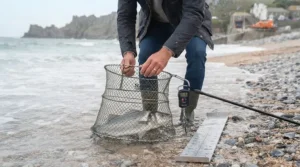
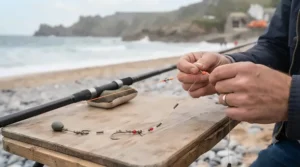
Getting a new beachcaster set up correctly in the first week matters more than most retailers mention at the till. Start by spooling your reel with mono or braid rated to comfortably handle your rod’s maximum casting weight — as a rough guide, a 4-6oz rod pairs well with 15-18lb mono or 30lb braid with an appropriate shock leader for casting safely. Attach the reel to the rod’s reel seat and check it’s seated firmly before your first cast; a loose reel seat is one of the most common (and easily avoided) causes of a dropped rod mid-cast.
For your first few sessions, practise casting with a bare lead weight rather than a baited rig, ideally on an open field or empty beach at low tide, to build the timing of your cast before you’re worrying about hooks and bait at the same time. Rinse the entire rod — guides, reel seat and blank — in fresh water after every saltwater session, even a short one; this single habit does more to prevent guide corrosion than any premium guide material can compensate for on its own.
Common first-30-days mistakes include over-tightening the reel’s drag (which risks snapped line on a hard take), forgetting to check the rod’s whip-check or leash on windy days, and storing a damp rod in a closed rod bag, which accelerates corrosion on any guides not fully rinsed beforehand.
Which Beachcaster Suits Your Fishing Style? Three Beginner Scenarios
The weekend dabbler: Fishing perhaps once a month from a local, sheltered beach, on a tight budget, and genuinely unsure if the hobby will stick. The NGT 12ft Telescopic Beachcaster combo fits perfectly here — low cost, everything included, and easy to store without a dedicated rod rack.
The committed weekly angler: Fishing most weekends, targeting a mix of species from a moderate-tide beach, and ready to invest in gear that will last. The Shakespeare Salt XT Beachcaster or Daiwa Seahunter Z Beachcaster both suit this profile well, trading a higher upfront cost for guides and blanks that hold up over multiple seasons.
The rough-ground regular: Fishing exposed marks with strong tides and bigger baits, often after cod, bass or conger from rockier or storm-affected beaches. The Penn Wrath II Surfcasting Rod, with its higher casting weight ceiling, is built to handle this environment without feeling undergunned.
Safety and Regulations Guide for UK Beach Anglers
Before your first session, it’s worth knowing the basic legal and safety picture. sea fishing in England and Wales does not require a rod fishing licence — licences are only mandatory for freshwater fishing for salmon, trout, freshwater fish, smelt or eel with a rod and line, which makes beach fishing genuinely one of the most accessible outdoor hobbies available. That said, species-specific rules still apply: bass, for example, carry a minimum conservation reference size of 42cm, and any fish below that size must be returned to the sea immediately under UK bass fishing guidance. Check current bag limits and size restrictions for whatever you’re targeting before keeping anything.
Physical safety matters just as much as the legal picture. The RNLI’s beach safety guidance is unambiguous that checking tide times before you set out, telling someone where you’re fishing, and carrying a means of calling for help are the three simplest steps that prevent the majority of shore-fishing incidents around the UK coast. Beachcasting often means fishing exposed, isolated marks at dawn, dusk or through the night when bite rates improve, which is exactly when it’s easiest to be caught out by a rising tide you didn’t check. A cheap tide app and thirty seconds before you leave the house is a genuinely proportionate precaution for a hobby that otherwise carries very little risk.
Long-Term Cost & Maintenance of Your Beachcaster
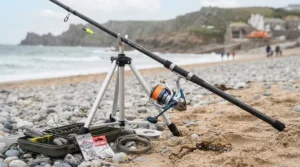
Total cost of ownership on a beachcaster is refreshingly low compared to most outdoor hobbies, but it isn’t zero. Beyond the initial rod price, budget for a reel (£20-£150 depending on tier), line, terminal tackle, bait, and a rod holder or tripod for hands-free sessions — realistically another £40-100 on top of the rod for a complete first setup.
Maintenance cost scales almost entirely with how well you look after guides and reel seats rather than with how much you originally spent. A £30 Leeda 2XL that’s rinsed after every session and stored dry will comfortably outlast a £140 Daiwa Seahunter Z that’s left salty in a damp shed. Guide replacement, when it’s eventually needed, typically costs a tackle shop £5-15 per guide fitted, which is far cheaper than replacing an entire rod prematurely through neglect. Over a three-year ownership window, a well-maintained budget rod and a poorly-maintained premium rod can end up costing roughly the same amount once you factor in guide repairs and eventual replacement — which is the strongest practical argument for spending thirty seconds rinsing your rod after every trip, regardless of what it cost you.
FAQ
❓ What is the best 12ft beachcaster for beginners UK?
❓ How much should I spend on my first beach caster rod?
❓ What rod weight do I need for beach fishing?
❓ Can I use a spinning rod instead of a beachcaster?
❓ Do I need a fishing licence for sea fishing in the UK?
Conclusion
Choosing a first beachcaster doesn’t need to be the paralysis-inducing exercise it can feel like standing in a tackle shop aisle. A 12ft beachcaster for beginners rated 4-6oz will comfortably cover the vast majority of UK shore marks, and as this guide has laid out, the real decision isn’t really about brand prestige — it’s about matching casting weight to your local beach, choosing carbon over fibreglass where your budget allows, and being honest with yourself about how often you’ll actually be fishing.
Start at the budget end with the Angling Pursuits Beachcaster Max or NGT Telescopic combo if you’re genuinely testing the hobby, step up to the Leeda 2XL or Shakespeare Salt XT once you know you’re staying, and keep the Daiwa Seahunter Z, Penn Wrath II or Century Fireblade Delta in mind as the rods worth growing into as your technique and commitment develop. None of these choices is wrong, provided the casting weight suits your beach and the rod feels comfortable in your hand for a full session. Rinse it after every trip, check the tide before you leave, and the rest of the learning curve genuinely takes care of itself with time on the beach.
Recommended for You
- Best Beachcaster Rods: 7 Top Picks for UK Anglers (2026)
- 12ft Beachcaster vs 13ft Beachcaster: 7 Rods Rated (2026)
- Best Barbel Boilies: 7 Top UK Picks for Big Fish (2026)
Disclaimer: This article contains affiliate links. As an Amazon Associate, I earn from qualifying purchases. If you purchase products through these links, we may earn a small commission at no additional cost to you.
✨ Found this helpful? Share it with your friends! 💬🤗
