
In This Article
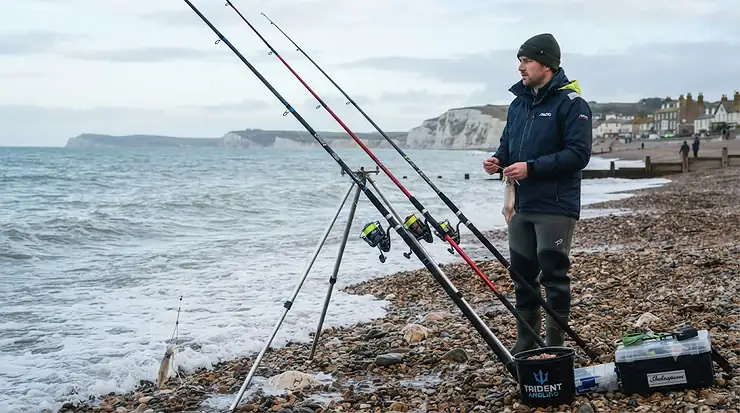
Stand on any British beach at first light in cod season and you’ll spot the same thing: a line of anglers, tripods dug into the shingle, rods bent gently under the weight of the surf. Choosing from the best beachcaster rods on the market isn’t about chasing the flashiest blank in the tackle shop window — it’s about matching length, casting weight and action to the marks you actually fish, the leads you actually cast, and the budget you actually have.
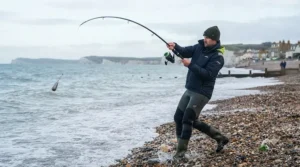
In short: a beachcaster is a long (typically 12-15ft), multi-section rod built specifically for launching leads and bait well beyond the breakers from open beaches, designed to handle everything from a gentle estuary session with light rigs to a full-blooded cast into a rough winter surf. Get the casting weight, length and action wrong for your fishing and even the most expensive rod on the rack will feel like hard work.
This guide has done the research properly. We’ve dug into seven genuine rods currently sold to UK anglers, weighed their specs against what reviewers and dedicated sea angling publications actually report, and built in honest commentary on the two questions every beginner asks and every experienced caster still argues about down the pub: what rod rating do you actually need, and does tip action matter as much as the marketing suggests? We’ll also cover what separates a top rated beach casting rod from a merely adequate one, and where a best budget beach caster rod can genuinely compete with rods costing three times as much.
What Are Beachcaster Rods?
A beachcaster is a long, multi-section fishing rod — usually between 12ft and 15ft — engineered specifically for casting weighted leads and bait a considerable distance from open shorelines, built with a stiffer, more powerful blank than a general-purpose spinning or coarse rod to cope with heavy sinkers, strong tides and the physical demands of an overhead or pendulum cast. Unlike a boat or estuary rod, a true beachcaster is rated in ounces or grams of casting weight (commonly 4-8oz, or roughly 112-225g) and is built to survive repeated casting sessions in salt, sand and wind rather than the odd gentle afternoon on a calm river.
One useful fact worth knowing before you buy: unlike freshwater fishing, sea angling from the shore in England and Wales does not require a rod fishing licence at all — that requirement only applies to fishing for salmon, trout, freshwater fish, smelt or eel, as confirmed on gov.uk. Beachcasting is refreshingly free of paperwork; the only real cost is getting the rod, reel and rig right.
Quick Comparison Table
| Product | Best For | Casting Weight | Price Range |
|---|---|---|---|
| Daiwa D-Wave Surf | Absolute beginners | 4-8oz | Under £70 |
| Shakespeare Salt XT Beachcaster | Best budget beach caster rod | 4-8oz | Under £100 |
| Penn Wrath II Surfcasting Rod | Long-distance fast action fans | Up to 250g | £95-£115 range |
| Daiwa Seahunter Z Beachcaster | Mixed ground, multiple lengths | 4-8oz | £60-£95 range |
| TronixPro Xenon C-6 MX | Forgiving parabolic casting | 4-8oz | Around £245 |
| Anyfish Anywhere Six & Bait MK2 | Trusted British all-rounder | 150-175g | £170-£185 range |
| Century Fireblade Delta | Serious, regular sea anglers | 125-175g | Around £299 |
Looking at the spread here, there’s a clear pattern that runs right through UK beachcasting: budget rods like the Daiwa D-Wave Surf and Shakespeare Salt XT Beachcaster prioritise forgiving actions that don’t punish imperfect timing, while premium rods like the Century Fireblade Delta and Anyfish Anywhere Six & Bait MK2 reward anglers who’ve already developed a consistent cast with sharper bite detection and marginally longer distance. The TronixPro Xenon C-6 MX sits deliberately in between, using a slow-loading parabolic action to make long casting more accessible without the entry-level price tag.
💬 Just one click — help others make better buying decisions too!😊
Top 7 Best Beachcaster Rods: Expert Analysis
1. Daiwa D-Wave Surf — best true beginner beachcaster
The standout feature here is simple honesty: this is a rod built specifically to be forgiving, not flashy. Daiwa’s entry-level D-Wave range uses a straightforward carbon fibre blank paired with a fixed-spool-only guide setup, which strips away the decision-making that trips up first-time buyers over multiplier compatibility.
Available in 12ft (580g) or 13ft (600g) three-piece versions, both handle the standard 4-8oz casting weight that covers the vast majority of UK beach marks. Based on the spec comparison with pricier rods in this guide, what you’re trading for the low price is refinement rather than capability — the guides are basic lined rings rather than premium inserts, and the action is noticeably softer than a rod like the TronixPro Xenon C-6 MX, but for someone who has never held a beachcaster before, that softness is actually a benefit rather than a flaw.
Reviewers consistently note that the D-Wave casts well and is genuinely forgiving of mistimed casts, which matters enormously when you’re still learning the pendulum or off-the-ground technique. What most buyers overlook about beginner rods like this is that “cheap” and “bad” aren’t the same thing — this is a rod that will happily see someone through their first two or three seasons before they’ve developed strong enough preferences to know what they’d want to upgrade to.
Pros:
- ✅ Genuinely forgiving action suited to learning proper casting technique
- ✅ Carbon fibre blank outperforms its low price point
- ✅ Three-piece breakdown makes transport straightforward
Cons:
- ❌ Basic lined guides rather than premium zirconium or Fuji inserts
- ❌ Action feels noticeably softer once you progress to faster-tip rods
Typically priced under £70, this is the rod to buy before you know exactly what you want — a proper, capable starting point rather than a compromise.
2. Shakespeare Salt XT Beachcaster — best budget beach caster rod for stepping up
The standout advantage is how far above its price point this rod genuinely feels. Shakespeare’s Salt XT uses a high-grade, slim carbon blank that several independent reviewers have described as feeling like a rod twice its actual cost — a claim that holds up reasonably well against the spec sheet.
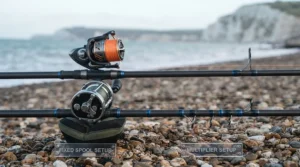
At 13ft and split into three sections, it’s rated for 112-225g (4-8oz), with a medium-fast tapered blank that offers a deeper bend under load — useful because it’s more versatile across casting styles than a pure fast-tip rod, and it reduces the risk of pulling hooks on a lively fish. Saltwater-proof zirconium oxide guides are a genuine step up from the basic rings found on true entry-level rods, resisting the line-groove wear that ruins cheaper guides after a season or two of sand and salt exposure.
Here’s what to weigh up before buying: the sliding DPS reel seat accommodates both fixed spool and multiplier reels, which gives you flexibility if you’re not yet committed to one reel type. On paper, this makes the Salt XT the natural next step for anyone who has outgrown a true entry-level rod like the Daiwa D-Wave Surf but isn’t ready to spend on the TronixPro Xenon C-6 MX or above.
Pros:
- ✅ High-grade carbon blank feels considerably pricier than it is
- ✅ Sliding DPS reel seat works with fixed spool or multiplier reels
- ✅ Saltwater-proof zirconium oxide guides resist corrosion well
Cons:
- ❌ Medium-fast action needs slightly more casting timing than a fast tip
- ❌ Three sections mean marginally more setup time at the water’s edge
Priced around £90 (often discounted from an RRP closer to £130), this is consistently flagged by UK tackle retailers as the top budget option in its class, and the spec sheet backs that reputation up.
3. Penn Wrath II Surfcasting Rod — best fast-action rod for long-distance casting
The headline feature is casting performance: a fast-action, lightweight graphite blank paired with durable titanium oxide guides is specifically engineered for long, accurate casts, and Penn backs this up by offering the Wrath II across three different lengths, all rated to a maximum casting weight of 250g.
The anti-slip casting grip is a small but genuinely useful detail, particularly given how often UK beach sessions involve wet hands and driving rain. Based on the spec comparison with the more forgiving rods on this list, the fast action here means the bend is concentrated closer to the tip, which translates to snappier, more responsive casts once your timing is dialled in — but it also means less margin for error than a parabolic rod like the TronixPro Xenon C-6 MX.
What the spec sheet won’t tell you, but is worth knowing before you buy, is that several anglers report the tip feeling slightly light when pushed toward the very top of the 250g casting range with a full bait attached — a common trait of fast-action rods generally rather than a specific flaw in this model. For anglers who already have consistent technique and want to push distance, though, this remains one of the more capable options at its price.
Pros:
- ✅ Fast action and titanium oxide guides support genuinely long, accurate casts
- ✅ Available in three lengths to match different marks and preferences
- ✅ Anti-slip grip stays secure in wet, cold conditions
Cons:
- ❌ Fast action punishes mistimed casts more than a forgiving parabolic blank
- ❌ Can feel tip-light when pushed to the very top of its casting range
Typically priced in the £95-£115 range depending on the length chosen, it’s a strong mid-tier pick for anglers who’ve already got their timing sorted.
4. Daiwa Seahunter Z Beachcaster — best for matching length to your local mark
The standout feature is genuine choice: the Seahunter Z range spans multiple lengths from around 12ft through to 15ft, in fixed spool, multiplier and travel-friendly multi-section versions, meaning there’s a real chance of finding the exact configuration your local beach or rock mark demands rather than compromising.
Built from a high-density carbon fibre blank with hard-chromed aluminium oxide guides, the range consistently carries a 4-8oz casting weight rating across its beachcaster models. Reviewers consistently describe the Seahunter Z as offering a strong, solid feel without pushing into premium pricing, and the DPS slide-locking reel seat holds firm under hard, repeated casting — a detail that matters more than it sounds once you’re three hours into a session and your grip is tiring.
Here’s what to weigh up: aluminium oxide guides are perfectly serviceable and saltwater resistant, but they sit a rung below the zirconium oxide or Fuji K rings found on the Shakespeare Salt XT Beachcaster and pricier rods further up this list, meaning very slightly more friction on long casts with braided line. For anglers who prioritise finding the exact right length over chasing the absolute last word in guide technology, though, this remains one of the more sensible mid-range choices going.
Pros:
- ✅ Genuinely wide range of lengths and configurations to choose from
- ✅ DPS slide-locking reel seat holds firm under repeated hard casting
- ✅ Solid, proven Daiwa carbon blank at a reasonable price
Cons:
- ❌ Aluminium oxide guides are a step below zirconium or Fuji K options
- ❌ Standard finish is noticeably plainer than the premium rods here
Prices vary meaningfully by length and configuration, generally sitting in the £60-£95 range, making this one of the better-value mid-range beachcasters currently available.
5. TronixPro Xenon C-6 MX — best forgiving parabolic action for developing casters
The standout feature, and the reason this rod solves a very specific problem, is its parabolic action: rather than concentrating power near the tip, the blank loads slowly through the mid and butt sections, which — based on the spec comparison with fast-action rivals — is exactly what helps intermediate anglers whose timing isn’t yet perfectly consistent still achieve genuinely long casts.
At 13ft 2in with a 110-225g (4-8oz) casting weight, the C-6 MX is fitted with Fuji K guides and a Fuji DPS reel seat — proper mid-to-premium components rather than budget substitutes — and the tip section carries Mighty Bright tip tape, a small but genuinely useful addition for spotting subtle bites under a head torch on a dark winter session. What most buyers overlook about parabolic rods generally is that the slower load doesn’t mean less power; it means the power arrives more progressively, which is precisely why tournament and experienced casters as well as improving anglers get along with this design.
Here’s what to weigh up before buying: at a price considerably above the Penn or Daiwa options covered so far, this rod asks for a genuine commitment, and its two-piece equal-section construction, while excellent for power transfer, is a longer single carry than a three-piece travel-friendly rod. For anyone serious about developing a consistent, long-range cast without needing years of casting-court practice first, it’s a compelling middle ground before stepping up to the true premium tier.
Pros:
- ✅ Slow-loading parabolic action forgives imperfect casting timing
- ✅ Fuji K guides and Fuji DPS reel seat are genuinely premium components
- ✅ Mighty Bright tip tape aids bite detection in low light
Cons:
- ❌ Considerably pricier than the Penn or Daiwa alternatives on this list
- ❌ Two-piece design means a longer carry than three-piece travel rods
Sitting at around £245 at full RRP, this is a serious mid-to-premium purchase, best suited to anglers ready to invest in genuinely improving their casting distance.
6. Anyfish Anywhere Six & Bait MK2 — best trusted British all-rounder
The standout claim, repeated consistently across UK tackle retailers, is that this is “the UK’s number one beach rod” — and while that’s obviously a piece of marketing language, the underlying reputation among British sea anglers for genuine all-round capability across mixed ground and varying conditions is real and well documented.
At 14ft with a 150-175g casting weight and a total rod weight of around 820g, the Six & Bait MK2 comes fitted with Fuji rod rings and a sliding reel seat, letting you configure the rod for reel-up or reel-down fishing depending on personal preference — a level of flexibility not every rod on this list offers. Based on the spec comparison with the Penn and Daiwa mid-range options, what genuinely sets this rod apart is small-batch British craftsmanship rather than mass-production efficiency, and that shows in the consistency anglers report between individual units.
What most buyers overlook about all-rounder rods like this is that “does everything reasonably well” is a genuinely difficult design brief to execute properly — plenty of rods claim versatility and deliver mediocrity in every category instead. Reviewers consistently note this Anyfish Anywhere model manages to avoid that trap, handling both open sandy beaches and rougher mixed ground without feeling like a compromise in either scenario.
Pros:
- ✅ Widely regarded among UK anglers as a genuine go-anywhere all-rounder
- ✅ Fuji rod rings hold up well against saltwater and abrasive sand
- ✅ Sliding reel seat allows reel-up or reel-down configuration
Cons:
- ❌ Premium pricing reflects small-batch build rather than mass production
- ❌ At 14ft and 820g, it’s a longer, heavier carry than shorter rods here
Typically priced in the £170-£185 range, it sits just below the very top tier while delivering genuine British-brand trust that’s hard to put a number on.
7. Century Fireblade Delta — premium pick for serious, regular sea anglers
The standout feature is the hybrid rapid-recovery tip: a blend of glass and high-tensile carbon that snaps back to true almost instantly after a cast, which — according to Sea Angler magazine’s own testing of the Fireblade range — delivers genuinely sharper bite detection than a purely carbon tip, without sacrificing the casting power needed to launch a 125-175g lead at range, as covered in detail by Sea Angler.
Manufactured in the UK, available in 13ft and 14ft lengths, the Fireblade Delta uses a multi-phase high-tensile composite butt with 3K-3K carbon twill construction, computer-controlled oven curing, and marine-grade stainless steel trim — the kind of finishing detail that signals a rod built by a company whose reputation rests almost entirely on premium beachcasters. Two equal sections keep the casting action balanced and consistent, a deliberate design choice that professional and competitive casters particularly value.
Here’s what to weigh up: this sits among the most expensive rods covered in this guide, and the 125-175g casting weight window, while ample for the vast majority of UK beach fishing, is narrower than some of the do-it-all mid-range rods here that stretch comfortably to 8oz and beyond. For regular, committed sea anglers who fish often enough to feel the difference in tip recovery speed and overall build quality session after session, though, it’s consistently rated among the very best beachcaster rods available to UK anglers.
Pros:
- ✅ Hybrid rapid-recovery tip delivers genuinely sharper bite detection
- ✅ Made in the UK to a high standard of finish and quality control
- ✅ Two equal sections keep the casting action balanced and consistent
Cons:
- ❌ Among the most expensive rods on this list, a serious investment
- ❌ Narrower casting weight window than some do-it-all mid-range rods
Priced around £299 at typical retail (often discounted from a higher RRP), this is the rod for anglers who fish often enough to justify — and genuinely feel — the premium.
How to Choose the Best Beachcaster Rods
Picking the right rod comes down to matching a handful of specs to your actual fishing, rather than simply buying the most expensive option available. Here’s how to work through it:
- Start with your local marks, not the marketing copy. If you mostly fish open, sandy beaches, a 4-8oz casting weight like the Shakespeare Salt XT Beachcaster covers you; rougher, mixed ground often benefits from the slightly heavier range on the Anyfish Anywhere Six & Bait MK2.
- Be honest about your casting experience. A forgiving parabolic or medium-fast action, such as the Daiwa D-Wave Surf or TronixPro Xenon C-6 MX, suits developing technique far better than a demanding fast-action tip.
- Decide on reel type before you buy the reel seat. Fixed spool, multiplier, or a sliding seat that takes both, as fitted to the Shakespeare Salt XT Beachcaster, changes which rods are realistically compatible.
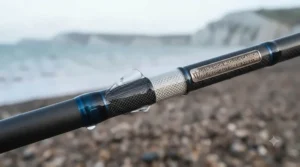
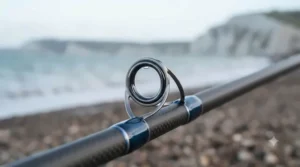
- Check the guide material, not just the brand name. Zirconium oxide and Fuji K guides resist saltwater wear noticeably better over a season than basic lined rings, which matters more the more often you fish.
- Match length to how far you actually need to cast. A longer 14-15ft rod generally adds distance over rough ground, but a shorter 12-13ft rod is easier to handle in tight spots and for less experienced casters.
- Weigh up how often you’ll actually use it. A best budget beach caster rod like the Daiwa D-Wave Surf makes complete sense for occasional trips; a premium rod like the Century Fireblade Delta earns its price only through regular, committed use.
Practical Usage Guide: Setting Up and Casting Your New Beachcaster
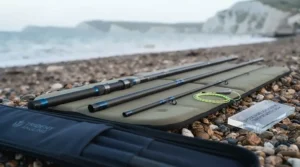
Getting the first few sessions right with a new beachcaster makes a genuine difference to both your results and the rod’s long-term condition. Start by setting the reel seat position to match your hand span comfortably before you ever attempt a full-power cast — a reel seated too far forward or back throws off your leverage and makes a controlled pendulum or off-the-ground cast far harder to learn.
Practise your casting technique first with a lighter lead than the rod’s maximum rating, gradually working up as your timing improves; loading straight in with a maximum 8oz weight before you’ve found your rhythm is a common first-month mistake that leads to mistimed casts and unnecessary strain on both rod and shoulder. Always check guides and the tip section for grit or sand after every session — a stray grain trapped in a guide ring will slowly groove even a quality ring over a season of regular casting.
For maintenance, rinse the whole rod in fresh water after every saltwater session, paying particular attention to the reel seat threads and any sliding mechanisms where salt crystals build up unseen. Store rods horizontally or in a proper rod bag rather than leaning them in a corner, since prolonged bending under their own weight in storage can subtly affect the blank’s action over time. Rotate between two rods of slightly different actions if you fish regularly across varied ground — this single habit does more to extend a rod’s working life than almost any single product feature.
Real-World Scenarios: Matching a Rod to Your Fishing Style
If you’re completely new to beachcasting and heading out with a mate who already fishes, the Daiwa D-Wave Surf is a genuinely sensible first purchase — its forgiving action means early mistimed casts don’t feel like a fight against the equipment, letting you focus entirely on learning the technique itself.
If you’ve fished a season or two on a fixed-spool set-up and want to step up without overspending, the Shakespeare Salt XT Beachcaster or Penn Wrath II Surfcasting Rod both make sense depending on whether you prioritise a forgiving medium-fast blank or a snappier fast-action tip for distance. And if you regularly travel between different marks — a clean sandy beach one weekend, rougher mixed ground the next — the multiple lengths and configurations available across the Daiwa Seahunter Z Beachcaster range solve that variability better than committing to a single specialist rod.
If you fish several times a month and have started noticing the small things — how quickly a tip recovers after a cast, how a reel seat holds up after a wet, gritty session — the TronixPro Xenon C-6 MX or Anyfish Anywhere Six & Bait MK2 reward that growing attention to detail. And if beachcasting has become a genuine, regular part of your life rather than an occasional hobby, the Century Fireblade Delta is consistently the rod experienced UK anglers point newcomers toward once budget stops being the primary constraint.
Your Buyer’s Decision Framework
- If you’ve never held a beachcaster before, choose the Daiwa D-Wave Surf, because its forgiving action lets you learn proper casting technique without fighting the rod itself.
- If you want the strongest value step-up from a true beginner rod, choose the Shakespeare Salt XT Beachcaster, because its zirconium oxide guides and sliding reel seat outperform its price point.
- If distance matters more to you than forgiveness, choose the Penn Wrath II Surfcasting Rod, because its fast action and titanium oxide guides are specifically built for long, accurate casts.
- If you fish a genuine mix of marks and want flexibility over specialisation, choose the Daiwa Seahunter Z Beachcaster, because its range of lengths and configurations covers more scenarios than a single-length rod.
- If you’re a regular, committed sea angler ready to invest properly, choose the Century Fireblade Delta or Anyfish Anywhere Six & Bait MK2, because both deliver the build quality and bite detection that only becomes noticeable with frequent use.
Rod Rating Explained: What Casting Weight and Power Actually Mean
A rod’s rating — usually printed on the blank just above the handle — tells you the range of lead weight, plus bait, that the rod is designed to cast safely and effectively, typically expressed in ounces or grams (4-8oz or 112-225g, for example). This isn’t a suggestion; casting a lead significantly heavier than a rod’s top rating risks overstressing and eventually cracking the blank, while consistently casting well under the rating means you’re not loading the rod enough to get its full power and distance.
Power and casting weight are closely linked but not identical concepts, and the general principle explored in detail by resources such as Wikipedia’s overview of fishing rod design holds true for beachcasters specifically: a heavier-rated rod requires more force to fully load the blank, which means more strength needed from the caster but greater lifting power once a big fish is on the line. In practice, this means that most UK beach anglers targeting typical species like cod, bass, rays and whiting are well served by the common 4-8oz rating found on rods like the Shakespeare Salt XT Beachcaster and Daiwa Seahunter Z Beachcaster, while heavier-rated rods like the Century Fireblade Delta‘s 125-175g window suit anglers fishing specifically for distance with moderate leads rather than maximum weight capacity.
What most buyers overlook about rod rating is that matching your typical lead weight to the middle, rather than the top, of a rod’s casting range generally produces the most consistent, controllable casting — pushing right at the maximum rating regularly is harder on both technique and equipment than staying comfortably within it.
Tip Action Explained: Fast, Medium and Parabolic Actions Compared
Tip action describes where along the blank a rod bends most under load, and it’s arguably the single most misunderstood spec on any beachcaster. A fast-action rod, like the Penn Wrath II Surfcasting Rod, concentrates most of its bend near the tip section, which produces a snappy, responsive cast that rewards precise timing but offers less margin for error if your technique isn’t yet consistent.
A medium or medium-fast action, such as that found on the Shakespeare Salt XT Beachcaster, bends further down into the mid-section, offering a more versatile feel across different casting styles and generally reducing the risk of pulling hooks during a fight with a lively fish. Parabolic action, the defining feature of the TronixPro Xenon C-6 MX, loads progressively through almost the entire blank from butt to tip, which — based on the spec comparison across this whole list — is what makes it noticeably more forgiving for anglers still developing a consistent cast, since the power builds gradually rather than depending on a single precisely-timed moment.
Here’s what to weigh up before buying based on tip action alone: none of these three types is objectively “better” — a fast tip genuinely does register bites faster and cast further for an experienced angler with good timing, while a parabolic action genuinely does forgive more mistakes for someone still learning. Choosing based on your actual current skill level, rather than which action sounds most impressive on the box, consistently produces better results on the beach.
Best Budget Beach Caster Rod: What to Expect Under £100
Spending under £100 on a beachcaster doesn’t mean settling for a poor rod — both the Daiwa D-Wave Surf and Shakespeare Salt XT Beachcaster demonstrate that genuinely capable carbon blanks are achievable at this price point, provided you understand exactly what you’re trading away compared with rods costing two or three times as much.
What most buyers overlook about budget beachcasters is that the compromises are almost always in refinement rather than core capability: guide materials tend to be more basic (lined rings rather than zirconium oxide or Fuji K inserts), cosmetic finishing is simpler, and the action is generally tuned to be more forgiving rather than maximally responsive. None of that stops a best budget beach caster rod from landing fish or covering the vast majority of standard UK beach marks perfectly competently.
Where budget rods genuinely do fall short of pricier options is in the margins that only become apparent with heavy, regular use: guide wear over hundreds of casts, tip recovery speed for bite detection in fast tides, and the subtle balance that experienced anglers notice after years of casting. For anyone fishing occasionally, or still deciding whether beachcasting is a hobby worth investing heavily in, a sub-£100 rod remains a genuinely sound, honest purchase rather than a compromise to be embarrassed about.
Top Rated Beach Casting Rods vs Budget Rods: Is the Extra Spend Worth It?
| Factor | Budget Rods (Under £100) | Top Rated / Premium Rods (£200+) |
|---|---|---|
| Example | Daiwa D-Wave Surf, Shakespeare Salt XT Beachcaster | Anyfish Anywhere Six & Bait MK2, Century Fireblade Delta |
| Guide quality | Basic lined rings or zirconium oxide | Fuji K rings or premium stainless steel |
| Tip recovery | Adequate for casual use | Noticeably faster, sharper bite detection |
| Best For | Occasional anglers, beginners | Regular, committed sea anglers |
| Typical lifespan | Good with reasonable care | Excellent, built for repeated heavy use |
For an angler fishing a handful of times a season, the practical difference between a budget and a top rated beach casting rod is genuinely hard to detect — both will cast a lead, register a bite, and land a fish. The gap widens considerably for anglers fishing weekly or more, where faster tip recovery, superior guide materials and more consistent blank quality across repeated heavy casting sessions start to translate into real, felt differences on the beach rather than just numbers on a spec sheet.
Safety and Best Practice for Shore Fishing
Beachcasting comes with real, well-documented hazards that have nothing to do with the rod itself but everything to do with the environment you’re fishing in, and taking them seriously matters as much as any equipment choice. Tides move faster and more unpredictably than they appear from the shoreline, and getting cut off is a genuine, recurring cause of coastal rescue call-outs — always check tide times before setting up, and never judge how much time you have left purely by looking at the current waterline, as advised by the RNLI’s guidance on tidal risks.
Beyond tides, practical safety on a beach session includes wearing appropriate footwear for wet rocks and shingle, being cautious around groynes and structures where currents can behave unpredictably, fishing with a companion or at least telling someone your planned location and return time, and carrying a means of calling for help in areas with patchy mobile signal. Long rods and heavy leads also present their own hazards during casting itself — always check your surroundings are clear before a full-power cast, particularly on busier beaches where dog walkers and other beach users may not expect a lead travelling at speed nearby.
FAQ
❓ What is the best casting weight for a beginner beachcaster?
❓ Do I need a fishing licence to use a beachcaster rod on a UK beach?
❓ What's the difference between a beachcaster and a continental rod?
❓ How long should a first beachcaster rod be?
❓ Can a budget beachcaster rod handle bigger fish like rays or conger?
Conclusion
There’s no single best beachcaster rod for every UK angler — only the right rod for your current skill level, your local marks, and how often you’re realistically going to be out on the beach. Complete beginners consistently get the most out of a forgiving, honestly-priced rod like the Daiwa D-Wave Surf, while anglers stepping up their commitment find genuine value in the Shakespeare Salt XT Beachcaster or Penn Wrath II Surfcasting Rod. For those fishing regularly enough to feel the difference in tip recovery and build quality, the TronixPro Xenon C-6 MX, Anyfish Anywhere Six & Bait MK2 and Century Fireblade Delta represent a genuine step up rather than an unnecessary splurge.
What matters most across every rod on this list is understanding rod rating and tip action well enough to match a rod to how you actually fish, rather than chasing whichever model looks most impressive on the shelf. Buy within your casting weight, respect the tides, and the right rod will genuinely earn its keep season after season.
Recommended for You
- 12ft Beachcaster vs 13ft Beachcaster: 7 Rods Rated (2026)
- Best Barbel Boilies: 7 Top UK Picks for Big Fish (2026)
- Best Barbel Pellets: 7 Proven UK Picks for 2026
Disclaimer: This article contains affiliate links. As an Amazon Associate, I earn from qualifying purchases. If you purchase products through these links, we may earn a small commission at no additional cost to you.
✨ Found this helpful? Share it with your friends! 💬🤗
