
In This Article
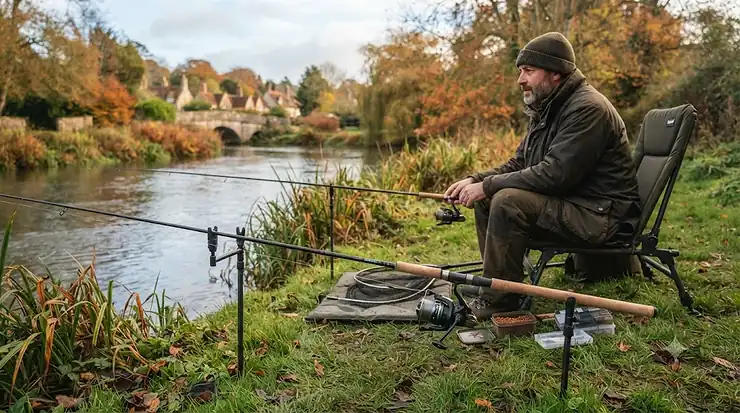
Somewhere on the Hampshire Avon right now, someone is leaning into a rod that cost less than a decent pair of wading boots, watching the tip judder as a barbel the size of a rugby ball tries to bury itself under a raft of tree roots. That’s the appeal of this hobby in a nutshell — you don’t need to remortgage anything to feel that jolt. A barbel rod under £100 is simply a purpose-built carbon rod, typically 11-13ft long with a test curve between 1.25lb and 2.75lb, designed to cast feeders or leger rigs into fast, snaggy rivers and absorb the brutal first run of a hard-fighting barbel without snapping or pulling the hook.
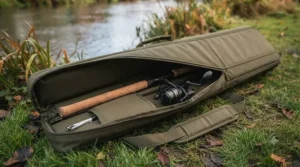
This barbel rod review exists because the budget end of the market is genuinely confusing. Walk into any tackle shop and you’ll find a wall of near-identical black blanks, all promising “progressive action” and “powerful butt sections,” and precious little to tell you which one actually suits the river you fish. Prices between £40 and £100 span everything from genuinely capable specialist tools to rods that feel like they were designed by someone who has never hooked a double-figure fish in flood water.
We’ve dug through real UK retailer listings, manufacturer specifications and aggregated angler feedback from forums like Barbel World and FishingMagic to build a shortlist of seven rods that consistently earn respect at this price point. Along the way we’ll cover blank material, the barbel feeding behaviour that should actually influence which test curve you buy, and the rod test curve for barbel maths that most product pages gloss over entirely. Everything here is priced in ranges rather than fixed figures, because rod fishing licence rules aside, one thing UK anglers can rely on is that tackle prices move around constantly depending on stock and season.
Quick Comparison Table
| Rod | Length | Test Curve | Price Range | Best For |
|---|---|---|---|---|
| Sonik Specialist Barbel Rod | 12ft | 1.75lb-2lb | around £50-£55 | True budget carbon starter |
| Korum 3K Barbel Rod | 11-13ft | 1.75lb-2.75lb | around £50-£65 | Big-river power on a budget |
| Shakespeare SKP Concept Barbel Rod | 12ft | 1.75lb-2.25lb | around £49-£75 | Best looks-to-price ratio |
| Wychwood Rogue Barbel Rod | 12ft | 1.5lb-2.25lb | around £60-£80 | Smoothest fish-playing action |
| Sonik Angl-R Multi-Tip Barbel Rod | 12ft | 1.75lb (+carrier) | around £65-£90 | Most versatile tip system |
| Kodex QX-i Twin Tip Barbel Rod | 12ft | 1.75lb & 2lb tips | around £90-£95 | Best twin-tip all-rounder |
| Drennan Series 7 Avon/Quiver 1.5lb | 12ft | 1.5lb | around £75-£90 | Best all-round specialist blank |
Looking at the spread above, the gap between the cheapest and priciest rod here is barely £40, yet the practical difference in guide quality, blank consistency and tip sensitivity is considerable. Budget-conscious anglers targeting smaller rivers like the Kennet or Wensum can comfortably start with the Sonik Specialist Barbel Rod or Korum 3K Barbel Rod, while those chasing bigger fish on heavier venues such as the Wye or Severn should lean toward the higher test curves and twin-tip flexibility of the Kodex QX-i or Drennan Series 7.
💬 Just one click — help others make better buying decisions too! 😊
Top 7 Barbel Rods Under £100: Expert Analysis
1. Sonik Specialist Barbel Rod — best true budget carbon blank
The Sonik Specialist Barbel Rod is the rod most forum threads point beginners toward first, and it’s easy to see why once you look past the modest price tag. Built from a high-modulus carbon blank with a powerful butt section and a noticeably sensitive tip, it’s fitted with built-in isotope inserts for night fishing, a screw winch reel seat and low-profile SiC-lined guides rated for both mono and braid. On paper that’s a spec sheet that would have cost double a decade ago.
What most buyers overlook about this model is that the 1.75lb and 2lb test curve options aren’t just marketing filler — they represent a genuine difference in how the rod loads under a running fish, with the 2lb version noticeably better suited to swims with snags or fast flow. Reviewers consistently report that the isotope holders are a small but appreciated touch for dusk sessions, and that the slim cork handle stays comfortable through long, cold winter sits. Based on the spec comparison with rods twice the price, the main compromise is guide finish rather than blank performance — cosmetic rather than functional.
Pros:
- ✅ High-modulus carbon blank punches above its price point
- ✅ Built-in isotope inserts genuinely useful after dark
- ✅ SiC-lined guides handle both mono and braid cleanly
Cons:
- ❌ Only offered in 12ft, so no length flexibility
- ❌ Reel seat feels basic next to premium rivals
Priced around £50-£55 at the time of research, the Sonik Specialist Barbel Rod represents arguably the strongest pound-for-pound value on this list — a genuine no-compromise entry point rather than a scaled-down toy.
2. Korum 3K Barbel Rod — toughest for big river power
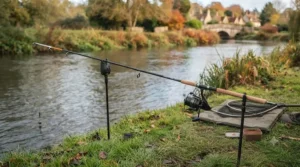
Korum built its reputation on rods that survive being dragged in and out of a car boot for a decade, and the Korum 3K Barbel Rod continues that tradition. It’s available across 11ft, 12ft and 13ft lengths with test curves stretching from 1.75lb right up to 2.75lb, which makes it one of the few rods in this bracket genuinely suited to bigger, pushier rivers rather than just canal-adjacent stretches.
Here’s what to weigh with the 3K: the anti-frap tip guide and tough SiC-lined rings are aimed squarely at anglers who fish big feeders and heavier leads, and the timeless, slightly through action means it plays fish rather than simply hauling them. Aggregated review sentiment across UK tackle retailers puts satisfaction consistently high, with anglers repeatedly praising how the rod copes with abuse that would rattle apart a flimsier blank. What the spec sheet won’t tell you, but reviewers note, is that the white bite-detection tips are a genuinely practical addition rather than a gimmick — visible against dark tree lines in low light in a way plain carbon tips simply aren’t.
Pros:
- ✅ Widest test curve range of any rod on this list
- ✅ Anti-frap tip guide reduces tangles on big casts
- ✅ Slim cork handle stays comfortable through long sessions
Cons:
- ❌ Heavier 2.75lb version is overkill for small rivers
- ❌ Basic screw reel seat lacks premium locking feel
Expect to pay in the £50-£65 range depending on length and test curve, making the Korum 3K Barbel Rod a strong pick for anyone who fishes more than one river type and doesn’t want a drawer full of specialist blanks.
3. Shakespeare SKP Concept Barbel Rod — best looks-to-price ratio
The Shakespeare SKP Concept Barbel Rod is proof that budget tackle doesn’t have to look budget. Built around a 24T/30T mixed carbon blank with a bold grey finish, coloured guide whipping, full cork handles and dedicated LS guides and reel seat, it’s the sort of rod that gets a second glance on the bank despite costing a fraction of premium alternatives.
Beyond the styling, the mixed carbon construction matters practically — 24T fibre brings toughness to the lower and mid sections while higher-modulus material in the tip improves sensitivity, a blending technique borrowed from more expensive specialist ranges. Based on the spec comparison, this gives the SKP Concept a slightly crisper bite indication than pure lower-grade carbon blanks in the same price bracket, though it can’t quite match the outright power of the heaviest test curve Korum options. Reviewers consistently note that for the asking price, the fit and finish feels closer to a £120-£150 rod than a sub-£75 one.
Pros:
- ✅ 24T/30T mixed carbon blank improves tip sensitivity
- ✅ Premium styling and coloured whippings for the price
- ✅ Three test curve options cover most river conditions
Cons:
- ❌ Availability can be patchy between test curve variants
- ❌ Less proven long-term track record than older Korum/Drennan ranges
At around £49-£75 depending on retailer promotions and test curve, the Shakespeare SKP Concept Barbel Rod is an easy recommendation for anglers who want their tackle to look as sharp as it fishes.
4. Wychwood Rogue Barbel Rod — smoothest fish-playing action
Ask any long-time barbel angler about budget rods and the Wychwood Rogue Barbel Rod comes up within the first few replies, almost without fail. It’s built from a two-piece multi-modulus carbon blank finished in matt black anti-flash coating, strung with double-leg, silicon-lined SVT rings designed to cut friction during both casting and the fight itself.
What most buyers overlook about this model is just how forgiving the through-action is under pressure. The blank bends progressively right down to the butt rather than stacking power in the tip alone, which means lunges and sudden runs get absorbed rather than fought — genuinely useful when a big fish decides to kite hard through faster water. Aggregated forum sentiment is remarkably consistent here: anglers who’ve owned a pair for years report no complaints beyond the odd cosmetic scuff, and several describe it as one of the best-value specialist rods they’ve ever fished with, budget or otherwise.
Pros:
- ✅ Multi-modulus blank gives an exceptionally forgiving through action
- ✅ SVT silicon-lined rings noticeably reduce casting friction
- ✅ Strong long-term reputation among experienced barbel anglers
Cons:
- ❌ Matt finish shows wear marks more visibly than gloss blanks
- ❌ Test curve range tops out lower than the heaviest rivals
Prices fluctuate more on this one than most, so treat around £60-£80 as a working guide and always check current price before buying — but on reputation alone, the Wychwood Rogue Barbel Rod earns its place here.
5. Sonik Angl-R Multi-Tip Barbel Rod — most versatile tip system
Where most rods on this list commit to a single configuration, the Sonik Angl-R Multi-Tip Barbel Rod hedges its bets. It ships with a 1.75lb Avon-style top plus a separate 1.25lb carrier section fitted with three push-in quiver tips, effectively giving you two distinct rods — a leger rod and a quivertip feeder rod — from one blank.
The practical upshot, as any angler who’s arrived at an unfamiliar stretch of river will appreciate, is flexibility. Here’s what to weigh: on a day when barbel are picking up bait tentatively rather than smashing a static bolt rig, swapping to the softer carrier section with a lighter quiver tip can be the difference between spotting a drop-back bite and missing it entirely. High-modulus carbon blanks, clip-on isotope holders and anti-frap M-series guides round out a spec sheet that punches well clear of its price bracket. The one honest caveat, echoed across owner feedback, is that the quiver tips themselves aren’t individually weight-rated, so matching tip to feeder weight takes a bit of trial and error early on.
Pros:
- ✅ Two genuinely different fishing styles from one rod
- ✅ Clip-on isotope holders make night bite detection easier
- ✅ High-modulus carbon keeps the whole package lightweight
Cons:
- ❌ Quiver tips lack printed weight ratings
- ❌ Carrier section adds another part to lose or damage
At roughly £65-£90 depending on retailer discounting from an RRP just under £100, the Sonik Angl-R Multi-Tip Barbel Rod is the pick for anglers who refuse to commit to just one method.
6. Kodex QX-i Twin Tip Barbel Rod — best twin-tip all-rounder
The Kodex QX-i Twin Tip Barbel Rod takes a similar dual-purpose idea to the Sonik above and pushes it further upmarket, without quite breaking the £100 ceiling. It’s built as a modern take on the classic Avon-quiver format, with a progressive through action carrying real power through the mid-section — enough, as owners note, to actually play a barbel rather than simply hauling it up the bank on brute force.
Reviewers consistently note the versatility here: use the hollow non-quiver top for bigger feeders or bag set-ups up to roughly 6oz, or switch to the quivertip carrier section — supplied with 2oz and 4oz tips — for slower, more delicate presentations on quieter rivers. The rod is rated for lines up to 15lb, which is comfortably enough headroom for confident hooksetting in snaggy swims without the setup feeling over-gunned for average-sized fish. On paper this means one rod genuinely covers both aggressive feeder work and finesse quivertipping, which is precisely the kind of versatility Amazon listings rarely explain in practical terms.
Pros:
- ✅ Genuine dual-purpose Avon and quivertip performance
- ✅ Rated to 15lb line for confident hooksets near snags
- ✅ Progressive through action plays fish rather than hauling
Cons:
- ❌ Sits right at the top of the sub-£100 bracket
- ❌ Less widely stocked than mainstream Korum or Drennan ranges
At around £90-£95, the Kodex QX-i Twin Tip Barbel Rod is best viewed as the “spend a little more, get noticeably more rod” option on this list.
7. Drennan Series 7 Specialist Avon/Quiver 1.5lb — best all-round specialist blank
Drennan’s Series 7 range is something of an institution in UK specialist angling, and the 1.5lb test curve Drennan Series 7 Specialist Avon/Quiver is the version that slips in comfortably under £100 while retaining the same high-modulus carbon blank, full cork handle, screw-down reel seat and SiC line guides found across the pricier siblings in the range.
What stands out on the spec comparison is the two entirely separate top-joint system: a classic Avon-style top for float work, stillwater bream and tench, or light stalking with bite alarms, plus a quiver carrier top supplied with slow-taper glass tips for chub and barbel work on running water. The forgiving, softer-actioned 1.5lb rating is specifically designed to reduce hook pulls — a genuinely useful trait when barbel make their trademark first-run lunge straight for cover. Based on aggregated Drennan owner feedback, the trade-off for that forgiving action is slightly less outright lifting power than the heavier 1.75lb version, which itself creeps just over the £100 mark.
Pros:
- ✅ Twin top-joint system covers Avon and quiver styles
- ✅ Softer action reduces hook-pull risk on the take
- ✅ Full SiC guides and screw reel seat feel genuinely specialist
Cons:
- ❌ 1.5lb test curve undergunned for the biggest, snaggiest swims
- ❌ Heavier 1.75lb sibling nudges just above the £100 budget
Typically found around £75-£90, the Drennan Series 7 Specialist Avon/Quiver 1.5lb rewards anglers who want a genuinely multi-purpose specialist blank without stepping into three-figure territory.
Rod Test Curve for Barbel Explained: How to Choose the Right Rating
Test curve is simply the weight, in pounds, needed to bend a rod tip through 90 degrees — and it’s the single most misunderstood spec on any barbel rod’s listing. Here’s how to work through it properly when comparing options like the Sonik Specialist Barbel Rod or Korum 3K Barbel Rod:
- Match test curve to average river flow. Slower, smaller rivers such as short Hampshire streams suit 1.25lb-1.5lb rods like the Drennan Series 7 Avon/Quiver 1.5lb; faster, pushier venues need 1.75lb-2.5lb.
- Consider typical feeder or lead weight. A rod’s test curve should comfortably cast the weights you’ll actually use — heavier feeder work needs a rod like the Korum 3K Barbel Rod at 2.25lb-2.75lb.
- Factor in snag density. Swims thick with tree roots and rafts demand more backbone to turn a fish’s head quickly, favouring the Kodex QX-i Twin Tip Barbel Rod.
- Think about line class. Higher test curves generally pair with heavier main lines (10lb+), while softer rods like the Drennan suit 6-8lb line for smaller specimens.
- Weigh your target fish size. Waters with a genuine chance of a double-figure barbel justify erring toward the top of a rod’s test curve range rather than the bottom.
- Don’t ignore rod length. Longer 13ft rods, such as the top-end Korum 3K, generally offer more casting distance and line control on wide rivers, at the cost of a little manoeuvrability in tight swims.
- Try before you commit where possible. Two rods sharing an identical test curve figure can still feel completely different in hand depending on blank taper and material — a point echoed repeatedly across barbel forums.
Reviewers consistently note that anglers who buy purely on test curve number, without considering flow and snag density, end up either undergunned in a fight or casting further than they need to. The honest advice from experienced river anglers is to buy for your hardest likely swim, not your easiest one.
Best Carbon Barbel Rod: Blank Material Comparison
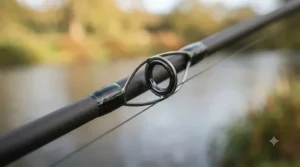
Every rod on this list is built from some form of carbon fibre, but “carbon” covers a surprisingly wide range of actual performance. Understanding carbon fibre reinforced polymer construction helps explain why two rods with identical test curves can feel wildly different on the bank.
| Blank Type | Found On | Feel | Best For |
|---|---|---|---|
| High-modulus carbon | Sonik Specialist Barbel Rod, Drennan Series 7 | Stiff, fast recovery, sensitive tip | Distance casting, precise bite detection |
| Multi-modulus carbon | Wychwood Rogue Barbel Rod | Progressive, forgiving through action | Playing fish in snaggy swims |
| 24T/30T mixed carbon | Shakespeare SKP Concept Barbel Rod | Balanced stiffness with tip sensitivity | All-round river work, budget builds |
| Standard carbon composite | Korum 3K Barbel Rod, Kodex QX-i | Tough, durable, slightly heavier feel | Big rivers, repeated hard use |
What the spec sheet won’t tell you, but reviewers note, is that higher-modulus carbon isn’t automatically “better” — it’s stiffer and lighter, which suits distance casting and sharp bite indication, but it can also transmit fish lunges more abruptly, increasing hook-pull risk on light hook links. Multi-modulus and mixed-carbon blanks like those on the Wychwood Rogue and Shakespeare SKP Concept trade a touch of outright sensitivity for a more forgiving fight, which many barbel anglers actually prefer given how violently the species can bolt on the take.
Barbel Feeding Behaviour and What It Means for Your Rod Choice
Barbel are bottom-feeding fish equipped with sensitive barbels — the whisker-like organs either side of their mouth — which they use to root through gravel and silt for caddis larvae, shrimp and dislodged bait, a behaviour well documented on the Barbel (fish) Wikipedia entry. Understanding this matters more for rod choice than most tackle shops let on.
Because barbel typically feed head-down and often move in loose shoals along known feeding lanes, bites frequently start as a series of tentative knocks before developing into a full pull-round — which is exactly why quiver tip sensitivity, as found on the Sonik Angl-R Multi-Tip Barbel Rod and Kodex QX-i Twin Tip Barbel Rod, matters so much in practice. A rod with too stiff a tip in low, clear conditions can genuinely cost you bites that a softer quiver would register clearly. Conversely, once hooked, barbel are renowned for an explosive first run followed by dogged, close-quarters resistance — the reason a forgiving through action like the Wychwood Rogue Barbel Rod offers, rather than raw tip stiffness, tends to land more fish rather than pulling hooks on the initial lunge.
Feeding intensity also shifts with water temperature and flow, generally picking up in coloured, rising water after rain — precisely when a rod’s backbone gets tested hardest by both bigger casts and stronger fish. Matching your test curve to these conditions, rather than to an arbitrary “recommended” figure on a box, is where genuine river experience pays off.
Common Mistakes When Buying a Barbel Rod Under £100
Even experienced coarse anglers occasionally trip up when shopping in this bracket, and the mistakes tend to repeat themselves with predictable regularity.
Buying purely on test curve number without considering blank material is probably the most common error — a 1.75lb high-modulus rod and a 1.75lb standard carbon rod can feel like entirely different tools in hand. A close second is ignoring guide quality; cheap unlined guides wear grooves from braid surprisingly quickly, something that doesn’t show up in a product photo. Reviewers consistently note that anglers who skip checking recommended line ratings sometimes pair a soft-actioned rod like the Drennan Series 7 Avon/Quiver with line far heavier than it was designed for, blunting the rod’s forgiving action entirely.
Another frequent pitfall is assuming a single rod must cover every river you fish — which is precisely the gap multi-tip designs like the Sonik Angl-R Multi-Tip Barbel Rod and twin-tip rods like the Kodex QX-i were built to close. Finally, several forum threads flag the risk of buying secondhand without checking for hairline blank cracks near the ferrules, a common and easily missed fault on rods that have seen years of use.
Practical Usage Guide: Setting Up and Looking After Your New Rod
Getting a new barbel rod fishing-ready properly, and keeping it that way, is straightforward but easy to rush through on a first trip.
Start by checking the ferrule joints fit snugly without excessive force — a loose joint risks the rod parting mid-cast, while an overly tight one strains the blank on removal. Thread the line through every guide before attaching a reel, then flex the rod gently by hand indoors first, away from any risk of catching furniture, to get a feel for where the test curve actually loads. On the bank, always support the full length of the rod when playing a fish rather than lifting purely from the butt, since concentrated stress at one point is a common cause of blank failure on budget rods.
Maintenance-wise, rinse guides and reel seat threads in fresh water after any session near brackish or heavily silted water, and check SiC guide linings periodically for chips, since a cracked guide will fray line surprisingly fast. Store rods horizontally or in a padded sleeve rather than propped in a corner, where their own weight can introduce a permanent set over months. A common first-30-days mistake is over-tightening reel seat locking rings, which on rods like the Korum 3K Barbel Rod with a simple screw seat can gradually wear the threads and introduce play exactly where you need a secure connection.
Real-World Scenarios: Matching the Rod to the River
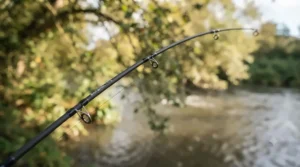
Consider three genuinely different anglers shopping this bracket. First, a student fishing a short, snag-free stretch of a local canalised river once a fortnight on a tight budget — for them, the Sonik Specialist Barbel Rod at around £50-£55 delivers proper carbon performance without overspending on power they’ll rarely need.
Second, picture a weekend regular fishing a mid-sized river like the Trent, alternating between static feeder tactics and light quivertipping depending on conditions — the Sonik Angl-R Multi-Tip Barbel Rod or Kodex QX-i Twin Tip Barbel Rod genuinely earns its slightly higher price by covering both approaches from one rod, avoiding the cost and hassle of owning two.
Third, imagine an experienced angler targeting a snag-heavy stretch of the Wye where double-figure barbel are a realistic prospect and every fight matters — here the extra backbone and test curve range of the Korum 3K Barbel Rod at 2.5lb-2.75lb, or the through-action confidence of the Wychwood Rogue Barbel Rod, makes far more sense than the softest option on this list.
Problem → Solution: Fixing the Most Common Barbel Rod Headaches
Problem: Missed tentative bites in low, clear water. Solution: switch to a softer quiver tip setup such as the carrier section on the Sonik Angl-R Multi-Tip Barbel Rod, which registers subtle knocks far better than a stiff Avon top.
Problem: Hook pulls on the initial run. Solution: a more forgiving through-action blank like the Wychwood Rogue Barbel Rod absorbs sudden lunges better than a fast, tip-heavy design.
Problem: Struggling for distance on wide rivers. Solution: step up to a 13ft option such as the Korum 3K Barbel Rod, which offers noticeably more casting leverage than 11-12ft alternatives.
Problem: Line fraying near snags. Solution: check line rating carefully — the Kodex QX-i Twin Tip Barbel Rod‘s 15lb rating gives more confidence for hard hooksets near cover than lighter-rated budget rods.
Problem: One rod feeling wrong for every venue you fish. Solution: a genuinely dual-purpose design like the Drennan Series 7 Avon/Quiver, with its two separate top joints, removes the need to compromise between float and feeder work.
Barbel Rods vs Premium Specialist Rods: Is £100 Enough?
| Factor | Sub-£100 Barbel Rods | Premium (£150-£350+) Rods | Best For |
|---|---|---|---|
| Blank material | High-modulus, multi-modulus or mixed carbon | Ultra-high-modulus, often nano-resin carbon | Budget: casual anglers; Premium: dedicated specialists |
| Guides | SiC-lined, generally reliable | Titanium or premium SiC, marginally lighter | Both perform well; premium edges out on weight |
| Fittings | Cork or slim cork handles, screw seats | Custom DPS seats, hand-finished cork | Premium for aesthetics and resale value |
| Warranty/support | Standard manufacturer cover | Often extended or lifetime cover | Premium for long-term security |
| Typical lifespan | Several seasons with care | A decade or more of regular use | Both, if properly maintained |
The honest verdict here is that for the vast majority of UK river anglers, a well-chosen sub-£100 rod like the Kodex QX-i Twin Tip Barbel Rod or Drennan Series 7 Avon/Quiver will land just as many fish as a £300 blank in the hands of the same angler. Premium rods buy incremental gains — slightly lighter blanks, marginally crisper tip response, better resale value — rather than a fundamentally different fishing experience. Where premium genuinely earns its price is for anglers casting all day at distance in competitive match-style specimen hunting, where every gram and every degree of tip sensitivity compounds over hundreds of casts.
Long-Term Cost and Maintenance: Getting the Most From a Budget Rod
Total cost of ownership on a sub-£100 barbel rod extends well beyond the sticker price. Replacement guide linings, should a SiC ring chip, typically cost a few pounds each plus fitting, while a snapped tip section — the most common failure point on any rod, budget or premium — can often be sourced directly from manufacturers like Korum or Drennan rather than requiring a full replacement rod.
Cost-per-use tells a more favourable story than the upfront price suggests. A Sonik Specialist Barbel Rod bought for around £50 and fished twenty times a season across three seasons works out at roughly 80-90p per session before factoring in resale value — genuinely competitive against premium alternatives once you account for the extra capital tied up. Reviewers consistently note that rods built with anti-frap tip guides and SiC linings, such as the Korum 3K and Kodex QX-i, hold up notably better under repeated big-feeder casting than unlined budget alternatives, reducing the likelihood of costly mid-season replacements.
Safety, Regulations and River Etiquette for UK Barbel Anglers
Every angler over 12 fishing for freshwater fish with a rod and line in England and Wales needs a valid Environment Agency rod fishing licence, regardless of which rod you’re using or whether you’re fishing club, syndicate or day-ticket water — and fines for fishing without one can run into the thousands. Beyond the licence itself, most rivers carry local byelaws around close seasons, barbed hook restrictions and permitted bait, so always check with the fishery or club before your first session.
Practically, a few safety habits matter more than they first appear. Always point a loaded rod away from other anglers and yourself when playing a fish near overhanging branches, since a sudden release of tension can whip a rod tip back sharply. Wading in fast-flowing barbel rivers carries genuine risk, and a wading staff plus a properly fitted life jacket are sensible investments regardless of how capable your rod is. Joining a local club through a body like the Angling Trust is also one of the most practical ways to learn river-specific safety knowledge, from wading depths to swim etiquette, that no product listing will ever teach you.
Frequently Asked Questions
❓ What test curve barbel rod do I need for a UK river?
❓ Is a £50 barbel rod actually any good?
❓ Can I use a barbel rod for other coarse fishing?
❓ What's the difference between Avon and quiver top sections?
❓ Do I need a fishing licence to use a barbel rod in the UK?
Conclusion
There’s no single “best” barbel rod under £100 — only the best rod for your river, your casting distance and the size of fish you’re realistically likely to hook. For pure value and a first step into specialist tackle, the Sonik Specialist Barbel Rod is difficult to beat. For raw power on bigger rivers, the Korum 3K Barbel Rod earns its reputation the hard way, through years of abuse on tackle shop counters and riverbanks alike. Anglers who want genuine tactical flexibility should look closely at the Sonik Angl-R Multi-Tip Barbel Rod or Kodex QX-i Twin Tip Barbel Rod, while those chasing that classic, forgiving specialist feel will find it in the Wychwood Rogue Barbel Rod or Drennan Series 7 Specialist Avon/Quiver.
Whichever you choose, the underlying truth holds: test curve, blank material and barbel feeding behaviour matter far more to your success than brand names or price alone. Match the rod to the water, respect the fish, and the results tend to follow.
Recommended for You
- Catfish Hooks Review: 7 Best Picks Anglers Rate in 2026
- 7 Best Catfish Rigs for River Fishing in 2026 (Compared)
- Catfish Terminal Tackle Kit: 7 Best Picks for UK Anglers (2026)
Disclaimer: This article contains affiliate links. As an Amazon Associate, I earn from qualifying purchases. If you purchase products through these links, we may earn a small commission at no additional cost to you.
✨ Found this helpful? Share it with your friends! 💬🤗
