
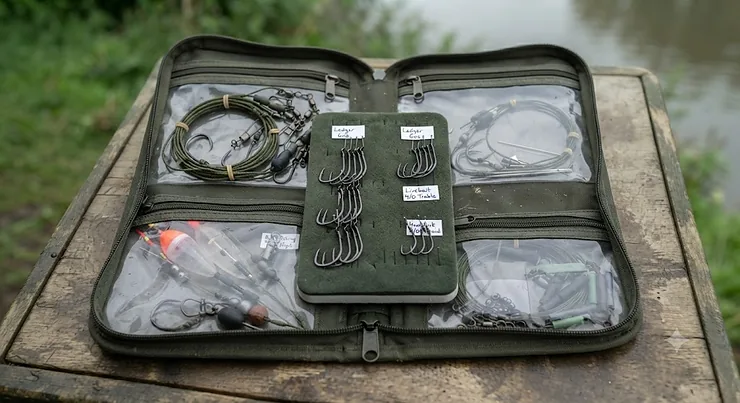
In This Article
There’s a particular kind of stubbornness required to fish a river for catfish rather than a stocked, catfish-only lake. Rivers move. They drag your line sideways, bury your lead in silt, and turn a beautifully tied rig into a tangled mess within about four minutes of it hitting the water — unless the rig itself was built to cope with all of that in the first place. Catfish rigs for river fishing are simply hook, leader, swivel and weight arrangements engineered to stay put and stay tangle-free in flowing water, rather than the static, current-free setups anglers use on commercial still waters…
That distinction matters more than most tackle articles admit. A rig that sits beautifully on a gravel pit will roll, spin and foul itself on a river with any pace to it. This guide walks through seven genuinely useful pieces of tackle — hooks, swivels, running-rig kits, and both braided and mono mainlines — that between them let you build a proper river catfish rig, whether you’re after a modest Trent-style wels or just want your terminal tackle to survive a session without a snarl-up. We’ll also dig into the current-stability question properly, because it’s the one thing that separates anglers who catch on rivers from anglers who spend the evening re-tying.
Britain’s wels catfish (Silurus glanis) population is a relatively recent — and non-native — phenomenon, established in still waters far more thoroughly than in flowing rivers, which is exactly why river-specific rigging gets so little proper coverage. As the Wikipedia entry on the wels catfish notes, the species’ UK range now stretches from stocked commercial fisheries into a scattering of river systems, and the rigging demands of the two environments genuinely differ. Everything below is built with that difference front and centre.
Quick Comparison Table
| Product | Category | Best For | Price Range |
|---|---|---|---|
| NGT Angling Pursuits 175pc Terminal Tackle Set | Starter kit | Beginners building their first rigs | Under £25 |
| Drennan Run Rig Kits | Running rig components | Tangle-free stability in current | Under £10 |
| Korda Krank Barbless Hooks | Hooks | Aggressive, secure hook-holds | Under £10 |
| Fox Edges Kwik Change Swivels | Swivels | Fast rig changes, low resistance | Under £10 |
| Daiwa J-Braid X8 | Braided mainline | Bite detection, cutting current | £15-£40 range |
| Berkley Trilene Big Game Monofilament | Mono mainline/leader | Shock absorption, abrasion resistance | Under £20 |
| Gamakatsu Catfish Rig Circle Hook | Pre-tied rig | Ready-to-fish convenience | Under £15 |
Looking at the spread above, there’s no single “best” product because a river catfish rig is a system, not one item — the Drennan Run Rig Kits solve stability, the Korda Krank Barbless Hooks solve hook-holds, and the mainline choice between Daiwa J-Braid X8 and Berkley Trilene Big Game Monofilament solves bite detection versus forgiveness. Budget-conscious anglers building from scratch should start with the NGT Angling Pursuits 175pc Terminal Tackle Set, while anyone short on rig-tying time should lean on the Gamakatsu Catfish Rig Circle Hook as a ready-made option.
💬 Just one click — help other make better buying decisions too!😊
Top 7 Catfish Rigs and Components for River Fishing: Expert Analysis
Every product here has been chosen because it plays a specific, real role in a river catfish rig — not because it’s simply popular. Coverage spans budget starter kits through to premium pre-tied rigs, and every entry gets an honest look at what the spec sheet doesn’t tell you.
1. NGT Angling Pursuits 175pc Terminal Tackle Set — best all-in-one starter kit for building rigs
If you’ve never tied a rig in your life, the NGT Angling Pursuits 175pc Terminal Tackle Set is where most river catfish anglers quietly start, and there’s no shame in that. The box bundles hooks in a range of sizes, swivels, beads, boilie stops and line stops into one compartmentalised case, which means you can experiment with running rig combinations without buying six separate packets first. On paper this means variety; in practice it means you can build, break, and rebuild a rig on the bank without a tackle shop run.
Based on the spec comparison with single-purpose packs, the trade-off is obvious — nothing in the box is specialist-grade, so the swivels and hooks are adequate rather than exceptional. Reviewers consistently note that the box itself is the star of the show, praised for organisation and durability far more than for the individual components inside it, several of which anglers replace once they know what they actually need. What most buyers overlook is that this is a learning tool as much as a tackle box: it’s genuinely well suited to beginners and to anyone teaching a child or a mate the basics of leger and running rig construction, and less suited to anyone targeting specimen fish who already knows their preferred hook pattern.
Pros:
- ✅ Huge variety of components in one compartmentalised box
- ✅ Ideal for learning rig construction from scratch
- ✅ Genuinely useful storage long after components are replaced
Cons:
- ❌ Individual components are mid-range, not specialist
- ❌ Some swivels and hooks get swapped out by experienced anglers
Priced under £25, the NGT Angling Pursuits 175pc Terminal Tackle Set represents strong value purely on a cost-per-component basis, even if a portion of that value is the box rather than the fishing performance.
2. Drennan Run Rig Kits — best for tangle-free stability in flowing water
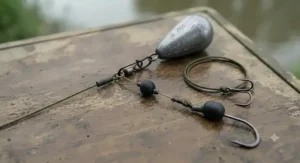
This is the component most river catfish anglers are missing without realising it. The Drennan Run Rig Kits bundle a run ring, anti-tangle sleeve, stop bead and quick-change swivel into a single pack, and the anti-tangle sleeve specifically is what stops your hooklink whipping round the mainline as current drags your lead downstream. What the spec sheet won’t tell you is that most tangles blamed on “bad casting” are actually caused by the absence of exactly this component.
The sinking polymer sleeve is denser than the water around it, so it settles rather than floats, which matters on a river where a floating sleeve gets caught in sub-surface drift and twisted round the lead. Reviewers consistently report smoother, faster lead changes and noticeably fewer tangled hooklinks after switching to a proper run rig system versus tying loose swivel-to-mainline connections by hand. Anglers running standard running leger rigs on pushy river swims are the obvious audience here — anyone on dead-still water genuinely doesn’t need this level of anti-tangle engineering, and that’s an honest admission worth making rather than overselling the product to everyone.
Pros:
- ✅ Purpose-built anti-tangle sleeve for flowing water
- ✅ Fast lead and feeder changes mid-session
- ✅ Small, genuinely well-engineered components
Cons:
- ❌ Overkill for completely static, weed-free still waters
- ❌ Small parts are easy to lose in a cluttered tackle box
At around £5-£10 per pack of four kits, this is one of the cheapest ways to noticeably improve rig stability in current, and the value verdict here is straightforwardly excellent.
3. Korda Krank Barbless Hooks — best hook pattern for aggressive, secure hook-holds
The Korda Krank Barbless Hooks were designed around a wide gape and an offset point, and that combination genuinely changes hooking behaviour rather than just looking different on the packet. A wider gape means more surface area makes contact with a catfish’s tough mouth on the take, while the offset point encourages the hook to turn and set on initial resistance rather than sliding past soft tissue. Paired with a simple knotless knot presentation, this pattern is built to hook fish with minimal angler input — useful on a night session when you’re not watching every indicator.
Based on the aggregated review sentiment, this hook pattern draws consistent praise for sharpness straight from the packet and for holding an edge across a session, though a handful of reviewers note it needs re-sharpening sooner than premium chemically-sharpened alternatives when fished over abrasive river gravel. What most buyers overlook is that barbless patterns like this one are frequently mandated on club and syndicate waters in the UK, so checking your fishery’s hook rules before you buy a barbed alternative can save a wasted purchase. This is best suited to anglers running simple hair-rig or bottom-bait presentations who want a hook that self-sets rather than one requiring a deliberate strike.
Pros:
- ✅ Wide gape and offset point improve hook-up ratio
- ✅ Barbless design meets most UK fishery rules
- ✅ Sharp straight out of the packet
Cons:
- ❌ Needs re-sharpening sooner on abrasive river bottoms
- ❌ Aggressive gape can be excessive for smaller baits
In the under-£10 bracket, the Korda Krank Barbless Hooks offer strong value for anyone building rigs from components rather than buying pre-tied.
4. Fox Edges Kwik Change Swivels — best swivel system for fast, low-resistance changes
Swivels are the unglamorous backbone of any rig, and the Fox Edges Kwik Change Swivels do the job that matters most: letting you swap a hooklink, PVA bag or lead in seconds without dismantling the whole rig. The quick-change eye clips a hooklink loop in and out instantly, while the barrel itself rotates freely enough to stop line twist building up as a bait spins in current — a genuinely common problem on rivers that still waters rarely produce.
Here’s what to weigh: a swivel’s stated breaking strain only tells half the story, because the real-world failure point on a river rig is usually the eye opening under sustained current pressure rather than the barrel snapping outright. Reviewers consistently note that these swivels feel noticeably stronger than own-brand alternatives at a similar size, and several long-term users report no eye-opening failures even on repeated hookless-lead casts. Anglers who change rigs frequently through a session — switching hooklink length or hook pattern as conditions shift — get the most out of this product; someone tying one static rig and leaving it all night arguably doesn’t need the quick-change mechanism at all.
Pros:
- ✅ Genuine quick-change convenience mid-session
- ✅ Strong eye that resists opening under load
- ✅ Smooth rotation reduces line twist
Cons:
- ❌ Small pack sizes mean frequent re-ordering
- ❌ Quick-change mechanism unnecessary for static overnight rigs
At under £10 for a pack, this is a low-cost upgrade with a genuinely outsized effect on rig reliability.
5. Daiwa J-Braid X8 — best braided mainline for bite detection and cutting current
Braid earns its keep on a river specifically because of how little it stretches and how thin it runs for its breaking strain, and the Daiwa J-Braid X8 demonstrates both traits clearly. The eight-strand weave produces a genuinely round, smooth profile that casts further and glides through rod rings more quietly than cheaper four-strand braids, while the near-zero stretch transmits a river catfish’s take almost instantly up the rod tip rather than absorbing it the way mono does.
On paper this means better bite detection at distance, and that’s borne out in practice: a thinner diameter for the same breaking strain cuts through river current with less belly forming in the line, which keeps your rig anchored rather than slowly dragged downstream. Reviewers consistently mention the line’s smoothness and casting distance as standout qualities, with the main recurring criticism being that abrasion resistance against rough riverbed structure is genuinely lower than mono, meaning a wire or heavy mono leader section becomes sensible rather than optional. What most buyers overlook is that braid’s lack of stretch, which helps with bite detection, also removes the shock-absorbing cushion mono provides on an unexpected lunge — tightening your drag settings accordingly matters more with braid than most anglers assume.
Pros:
- ✅ Minimal stretch delivers near-instant bite detection
- ✅ Thin diameter cuts through river current effectively
- ✅ Smooth eight-strand weave casts quietly and far
Cons:
- ❌ Lower abrasion resistance against rough riverbeds
- ❌ Needs a leader section for durability near structure
In the £15-£40 range depending on spool length, the Daiwa J-Braid X8 sits at the premium end of this line-up but earns it for serious river work.
6. Berkley Trilene Big Game Monofilament — best mono for stretch and abrasion resistance
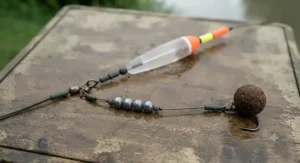
Where braid transmits everything, the Berkley Trilene Big Game Monofilament absorbs it, and on a river that absorption is arguably underrated. Its stretch acts as a shock buffer against a catfish’s initial lunge, reducing the chance of a hook pulling free or a knot failing on the strike — a real consideration given how explosively catfish tend to take a bait compared with most coarse species. The line’s thicker, tougher build also shrugs off contact with submerged branches, gravel and rip-rap far better than braid manages.
Based on the spec comparison, the obvious cost of that toughness is reduced sensitivity: stretch that cushions a take also dulls it, so bite indication at range is genuinely less precise than with braid, and anglers compensate with sensitive bobbins or bite alarms rather than relying on feel alone. Reviewers consistently describe this line as reliable and forgiving under pressure, with abrasion resistance singled out repeatedly as the standout trait versus other budget mono lines. This is best suited to anglers fishing tight to structure — undercut banks, fallen trees, weir pools — where a line’s ability to survive contact matters more than its ability to telegraph a subtle pick-up.
Pros:
- ✅ Strong shock absorption on aggressive takes
- ✅ Excellent abrasion resistance near structure
- ✅ Forgiving under sudden pressure spikes
Cons:
- ❌ Less sensitive than braid for distant bite detection
- ❌ Thicker diameter creates more resistance in strong current
Typically under £20 for a bulk spool, this is genuinely good value as either a full mainline or a dedicated leader section.
7. Gamakatsu Catfish Rig Circle Hook — best premium pre-tied ready rig
For anglers who’d rather spend their evening fishing than tying, the Gamakatsu Catfish Rig Circle Hook is a pre-tied rig built around a premium circle hook, heavy monofilament and a quality barrel swivel, arriving genuinely ready to clip on and fish. The circle hook pattern is worth understanding on its own merits: rather than requiring a deliberate strike, it’s designed to rotate and set in the corner of a fish’s mouth as it turns away with the bait, which noticeably reduces deep-hooking and makes catch-and-release considerably safer.
What most buyers overlook is that a pre-tied rig removes a genuine source of angler error — a poorly tied knot or a swivel attached at the wrong angle — which matters more on a river where current stress-tests every connection point far harder than still water does. Based on aggregated review sentiment, this rig draws consistent praise for hook sharpness and knot reliability straight out of the packet, with the main criticism being that the fixed hooklink length and hook size limit the presentation flexibility a hand-tied rig would offer. This suits anglers who prioritise convenience and consistent hook-ups over rig customisation, and it’s a genuinely sensible option for anyone new to circle-hook presentations who wants a professionally tied benchmark to compare their own rigs against.
Pros:
- ✅ Ready-to-fish convenience with zero tying required
- ✅ Circle hook design reduces deep-hooking risk
- ✅ Consistent, professional-grade knot and swivel connections
Cons:
- ❌ Fixed length and hook size limit customisation
- ❌ Costs more per rig than tying your own
At under £15 for a small pack, it’s a premium-per-unit price that buys genuine convenience and consistency.
Practical Usage Guide: Setting Up a River Catfish Rig That Lasts
Building the rig is only half the job — keeping it fishing properly through a session is where most river anglers lose time. Start by testing your running rig’s free-running action on the bank before you cast: hold the mainline vertical and let the lead drop, and if the run ring hesitates or catches, your anti-tangle sleeve or bead is seated wrongly. Re-tie rather than fish through it, because a sticking run rig is exactly what causes bite indication to disappear on a river where drag from current already masks subtle takes.
Check your leader and hooklink for abrasion every hour or two on rivers with gravel, rubble or woody structure nearby — a river’s moving bed does more damage to line in a single session than a still water manages in a week. Common first-30-days mistakes include over-tightening quick-change swivels until the eye deforms, using a lead too light for the current so the rig constantly drags downstream, and neglecting to grease or check bobbin runs on braid, which can bind and mask a take entirely. A simple maintenance habit — retying hooklinks every session rather than “one more trip” — costs a few pence in materials and saves a lost fish that a fatigued knot would otherwise have cost you.
Real-World Scenarios: Matching Your Rig to the River
Picture three different river anglers on three different evenings. The first is a weekend beginner fishing a gentle, slow-paced stretch of the Great Ouse for the first time, working with a modest budget and an afternoon to spare — the NGT Angling Pursuits 175pc Terminal Tackle Set paired with the Berkley Trilene Big Game Monofilament gives them everything needed to learn rig construction without the steep cost of specialist components, and mono’s forgiving stretch covers for the inevitable beginner mistakes in playing a fish.
The second is a more committed angler fishing a pacier stretch of the Severn at night, prioritising bite detection above almost everything else because they’re covering two rods across a wide swim. Here, the Daiwa J-Braid X8 mainline paired with the Drennan Run Rig Kits and a Berkley Trilene Big Game Monofilament leader section makes sense — braid for sensitivity, a run rig for stability against the current, and a mono leader to absorb the abrasion risk near the riverbed. The third is a time-poor angler snatching two hours after work who wants reliability over ceremony — the Gamakatsu Catfish Rig Circle Hook clipped straight onto a mainline via a Fox Edges Kwik Change Swivels connection gets a rig in the water in minutes, with the circle hook doing the hooking work so they don’t need to watch the rod tip constantly.
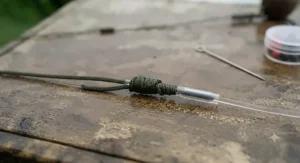
How to Choose Catfish Rigs for River Fishing
Choosing the right rig setup comes down to a short list of genuinely decisive factors rather than an overwhelming spec-sheet comparison.
- Assess your river’s current strength first. A sluggish, canalised stretch behaves almost like still water, while a pushy, weir-fed section demands a proper running rig with anti-tangle components — get this wrong and nothing else about the rig matters.
- Match your mainline to your priority. Choose braid if bite detection at range matters most; choose mono if playing fish near structure and shock absorption matter most.
- Pick a hook pattern suited to your bait. Larger, offset-point hooks like the Korda Krank Barbless Hooks suit bigger deadbaits; smaller circle hooks suit livebaits or smaller cut-bait sections.
- Prioritise swivel quality over quantity. A handful of reliable swivels like the Fox Edges Kwik Change Swivels beats a bag of forty unbranded ones that might fail under load.
- Check your fishery’s rules before buying barbed hooks. Many UK club and syndicate waters mandate barbless patterns, so confirm this before committing to a hook style.
- Budget for leader material separately. Don’t assume your mainline should also be your leader — a dedicated abrasion-resistant leader section, discussed in detail below, is often the single cheapest upgrade available.
- Buy pre-tied rigs for convenience, component rigs for control. The Gamakatsu Catfish Rig Circle Hook suits time-poor sessions; building your own from a kit like the NGT Angling Pursuits 175pc Terminal Tackle Set suits anglers who want full control over every element.
Braided Line vs Mono for Catfish
This is arguably the single most-debated question in river catfish rigging, and honestly, there’s no universally correct answer — only a correct answer for your specific water. Braid’s near-zero stretch and thin diameter make it the clear pick for bite detection and cutting through current, which is why the Daiwa J-Braid X8 performs so well as a mainline on pacier stretches. Mono’s stretch and thickness work against it in current, but that same stretch becomes a genuine asset in the fight, cushioning against hook-pulls and forgiving angler error in a way braid simply won’t.
| Factor | Braided Line | Monofilament |
|---|---|---|
| Bite detection | Excellent — near-zero stretch | Moderate — stretch dulls signal |
| Current resistance | Low diameter cuts through current | Thicker diameter drags more |
| Abrasion resistance | Weaker, needs a leader | Stronger, handles structure well |
| Shock absorption | Poor — transmits everything | Strong — cushions sudden takes |
| Best For | Daiwa J-Braid X8 on open, pacier water | Berkley Trilene Big Game Monofilament near structure |
Reading the table above, the practical answer for most river catfish anglers is to combine both rather than choose one exclusively — a braided mainline for sensitivity and current-cutting, paired with a mono or fluorocarbon leader for abrasion resistance where the rig actually meets the riverbed. Anglers fishing open, obstruction-free swims can lean harder into pure braid, while anyone fishing tight to snags should weight their setup toward mono for the extra forgiveness it offers when a fish inevitably heads for cover.
✨ Don’t Miss These Exclusive Deals!
🔍 Take your river catfish sessions to the next level with the tackle covered above. Click through to check current pricing and availability, and build a rig set-up that actually holds together when a big fish decides to test it.
Best Catfish Swivels and Leaders
A weak swivel or a mismatched leader is the single most common cause of lost fish on a river, and it’s almost always avoidable. The Fox Edges Kwik Change Swivels earn their place here because the eye genuinely resists opening under sustained load — a failure mode that’s far more common on rivers than lakes, since current applies constant, low-level stress to every connection point throughout a session rather than the intermittent stress of a still water take.
Leader choice interacts directly with swivel choice: a strong swivel connected to a leader that’s already compromised by abrasion is still a weak link, so the two need thinking about together rather than separately. What most buyers overlook is that leader length matters almost as much as leader material — a leader too short doesn’t cover enough abrasion-prone distance near the hook, while one too long adds unnecessary stretch or stiffness depending on the material chosen. For most river setups, a leader of roughly 60-90cm using either the Berkley Trilene Big Game Monofilament in a heavier breaking strain than your mainline, or a dedicated fluorocarbon leader material, strikes the right balance between abrasion coverage and manageable rig length.
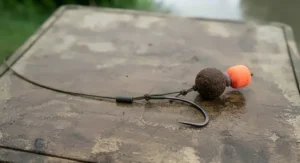
River Current and Rig Stability
Current is the variable that separates river catfish rigging from every other style of coarse or predator fishing, and it deserves more attention than most tackle guides give it. A rig that isn’t anchored properly doesn’t just drift — it drags your hookbait unnaturally, alerts wary fish, and tangles your hooklink round the mainline with almost predictable regularity. The Canal & River Trust’s guidance on catfish notes that catfish favour slower, deeper pockets even within moving river systems, which gives anglers a genuine tactical edge: fish the seams and slacks rather than fighting the main flow directly.
Rig stability in current comes down to three interacting factors — lead weight relative to flow speed, anti-tangle component quality, and mainline diameter. Undergunning your lead is the single most common mistake; a lead that’s too light simply rolls downstream with the current, dragging your entire rig out of the intended swim within minutes. Pairing a heavier, flat-bottomed lead with a proper running system like the Drennan Run Rig Kits solves most stability problems in one move, since the anti-tangle sleeve keeps the hooklink clear of the mainline exactly when current pressure is highest.
Leader Material Choices
The leader is the section of line that takes the most physical punishment on any river catfish rig, which makes material choice genuinely consequential rather than a minor detail. Heavy monofilament, like a higher breaking-strain section of Berkley Trilene Big Game Monofilament, remains a popular default because it’s abrasion-resistant, reasonably priced, and forgiving of minor nicks that would compromise a thinner material outright. Fluorocarbon leaders offer lower visibility underwater and slightly better abrasion resistance again, though usually at a noticeably higher cost per metre.
Wire or coated wire leaders occasionally appear in catfish setups aimed at genuinely snaggy, structure-heavy swims, though for the vast majority of UK river catfish fishing this is unnecessary overkill — wels catfish don’t have teeth capable of severing standard mono or fluorocarbon the way pike do, so the wire’s main benefit (bite-off resistance) simply isn’t relevant here. Here’s what to weigh when choosing: match leader breaking strain to your realistic worst-case snag risk on that specific swim, not to the theoretical maximum size of fish present, since an oversized leader adds stiffness and reduces natural bait presentation without a corresponding safety benefit in most river scenarios.
Catfish Feeding Zones in Rivers
Understanding where catfish actually feed in a river system does more for your success rate than any single piece of tackle, and it’s the context that makes rig choice make sense in the first place. Catfish are opportunistic, largely nocturnal feeders that rely heavily on scent and vibration detection through their barbels rather than sight, meaning they patrol current seams, undercut banks, and the slack water immediately downstream of obstructions where food naturally accumulates. A rig presented dead in the main flow, away from these features, is simply fishing an area catfish rarely use.
Deeper holes adjacent to faster water, the base of weir pools, and confluence points where a tributary meets the main river all concentrate food and consequently concentrate feeding activity. This is exactly where a stable, tangle-resistant rig — built using components like the Drennan Run Rig Kits — earns its keep, because these feeding zones are almost always where current is at its most turbulent and where a poorly anchored rig is most likely to fail. Reviewers and experienced river anglers alike consistently point to dusk and full darkness as the peak feeding windows, so positioning a stable rig in one of these zones before light fades is a far better use of session time than repeatedly recasting through open, featureless water.
Common Mistakes When Buying and Rigging Catfish Tackle
Even well-intentioned anglers make a handful of recurring errors that quietly undermine an otherwise solid setup. Buying hooks and swivels purely on breaking-strain numbers without considering how those components behave under the sustained, low-level stress of river current is one of the most common — a swivel rated for a huge static load can still fail from fatigue after hours of current pressure that a still-water swivel never experiences.
Another frequent mistake is mismatching mainline and leader diameters so drastically that the knot connecting them becomes the weakest point in the entire rig — a thin braid mainline knotted directly to a thick mono leader without a proper connecting knot or swivel is asking for trouble. Overlooking hook pattern rules at a given fishery, buying excessive quantities of unbranded budget components instead of fewer reliable branded ones, and neglecting to retie hooklinks between sessions round out the list of pitfalls that cost UK river anglers fish far more often than any genuine tackle failure does.
Safety, Regulations and Compliance Guide
Fishing for catfish on UK rivers sits inside a genuinely important regulatory framework that every angler needs to understand before casting a line. Anyone aged 13 or over fishing for freshwater fish with a rod and line in England or Wales needs a valid rod fishing licence, obtainable directly through the official GOV.UK fishing licence service — carrying one is a legal requirement, not an optional courtesy, and failing to produce one when asked can result in a substantial fine.
Wels catfish also carry specific regulatory weight as a non-native species in England: current guidance classifies them as an invasive non-native species, meaning it’s illegal to release catfish into any water without proper authorisation, and moving fish between waters without permission is a further offence. Anglers targeting river catfish should always check the specific byelaws and any catch-and-release requirements for their chosen stretch before fishing, since rules can vary noticeably between fisheries and river authorities. Barbless-only rules are common on many UK waters too, which is precisely why a pattern like the Korda Krank Barbless Hooks is worth having in your tackle box even if you occasionally fish barbed elsewhere.
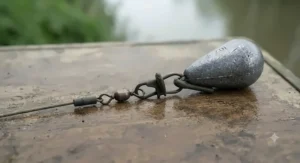
Frequently Asked Questions
❓ What's the best rig for catfish in a river?
❓ Do you need a leader for catfish fishing?
❓ Is braid or mono better for catfish rigs?
❓ What size hook is best for river catfish?
❓ Do I need a fishing licence to catch catfish in UK rivers?
Conclusion
River catfish rigging genuinely comes down to fighting current rather than fighting the fish — get the anti-tangle components, the lead weight, and the leader material right, and the catches tend to follow. Start simple if you’re new to it: a kit like the NGT Angling Pursuits 175pc Terminal Tackle Set paired with reliable mono gets you fishing competently, and you can layer in braid, dedicated leaders, and premium swivels like the Fox Edges Kwik Change Swivels as your understanding of your specific stretch of river develops.
None of the seven products covered here is a magic bullet on its own — a beautiful hook on a poorly anchored rig still gets dragged out of the feeding zone, and the best braid in the world still needs a proper leader near structure. Build the system, not just the shopping list, and treat every component as working alongside the others rather than in isolation. That’s genuinely the difference between a rig that survives a session on flowing water and one that comes back in a knot.
Recommended for You
- Catfish Terminal Tackle Kit: 7 Best Picks for UK Anglers (2026)
- Best Catfish Rod: 7 Brilliant Picks for UK Cat Anglers in 2026
- Catfish Rod Under £80: 7 Best Budget Picks for 2026
Disclaimer: This article contains affiliate links. As an Amazon Associate, I earn from qualifying purchases. If you purchase products through these links, we may earn a small commission at no additional cost to you.
✨ Found this helpful? Share it with your friends! 💬🤗
