
In This Article
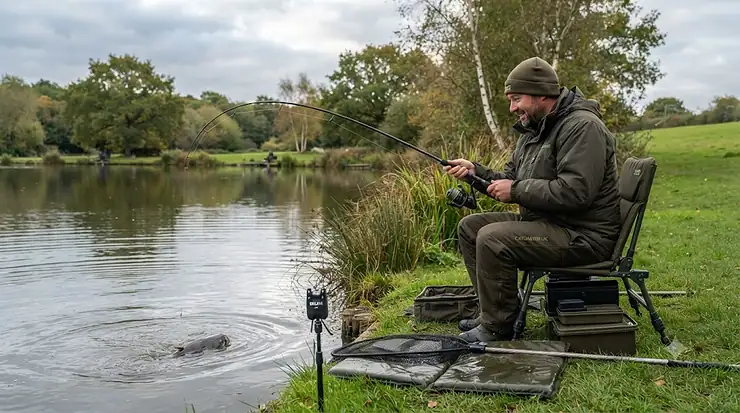
There’s a particular kind of silence that happens on a UK gravel pit at 2am, right before something enormous decides your bait looks like dinner. If you’ve ever felt a “bite” that turned out to be your own rod tip nodding in the wind, and then felt an actual bite that nearly dragged your rod pod into the lake, you already know why catfishing has quietly become one of Britain’s fastest-growing coarse fishing pursuits. The good news? You don’t need to remortgage your house to get started. A genuinely capable catfish rod under £80 exists, several times over, and this guide is going to walk you through exactly which ones deliver real value.’
Finding a catfish rod under £80 in the UK means navigating a slightly odd corner of the tackle market — one where dedicated catfish-branded rods sit right alongside beefed-up carp rods, spod rods, and the odd continental import, all vying for your attention with similar test curves and wildly different quality. Some of it is genuinely excellent for the money. Some of it will fold like a wet paper straw the first time a 40lb cat decides to make a run for the far bank. We’ve dug into real specifications, genuine UK retailer listings, and aggregated customer feedback to separate the two.
Whether you’re chasing your first wels catfish on a day ticket water in the Midlands, upgrading from a battered old carp rod, or building a full rig from scratch, this article covers seven real, currently available rods, honest comparisons between them, and the practical knowledge — species facts, licensing rules, setup advice — that most Amazon listings simply won’t tell you.
What Is a Catfish Rod, and Why Does It Matter?
A catfish rod under £80 is a rod built with a stiffer test curve (typically 3.5-5lb) and reinforced components — usually a heavy-duty reel seat, oversized guides, and a through-action carbon or composite blank — designed to cast heavier baits and absorb the sustained, powerful runs of large freshwater catfish without snapping or losing fish.
That extra stiffness isn’t marketing fluff. Wels catfish, the species you’ll almost certainly be targeting in the UK, don’t fight like carp or barbel. They don’t do delicate, darting runs — they do slow, colossal, sustained pulls that test the backbone of a rod for minutes at a time. A standard 2.5lb test curve carp rod will often survive a small cat, but ask it to turn a 50lb fish away from a snag and you’ll quickly find out why dedicated catfish rods exist. According to the Environment Agency’s fishing licence guidance, anyone aged 13 or over needs a valid rod fishing licence to legally fish for freshwater species in England and Wales — including catfish — so before you even get to rod choice, that’s the first box to tick.
Quick Comparison Table
Before diving into the full breakdown, here’s a snapshot of how these seven options stack up against each other on the things that actually matter: length, power, and who each rod suits best.
| Rod | Length | Test Curve / Power | Price Range | Best For |
|---|---|---|---|---|
| NGT XPR Catfish Rod | 10ft | ~200g casting weight | Under £35 | Absolute beginners on a tight budget |
| NGT Carp Max | 12ft | 2.75lb TC | Under £30 | Starter/spare rod, light cats |
| Shakespeare Firebird Carp Rod | 12ft | Medium-heavy | £35-£45 range | All-rounders who also carp fish |
| NGT XPR Spod/Cat Rod | 12ft | 5lb TC | £30-£45 range | Long-range casting and bigger baits |
| Rovex Catfish Rod | 12ft | 5lb TC | £45-£60 range | Dedicated bank catfishing |
| NGT Catfish Rod & Big Pit XT-8000 Combo | 12ft | 5lb TC (bundled reel) | Around £75 | Anyone who wants a complete kit in one box |
| Wychwood Agitator A9220 | 11ft | 4lb TC | £65-£80 range | Buyers who want the best build quality under the cap |
Looking at this table, a clear pattern emerges: the rods under £35 are genuinely fine for smaller cats and cautious first outings, but anything approaching serious wels catfish territory pushes you toward the 4-5lb test curve bracket, which is where the Rovex Catfish Rod, the NGT XPR Spod/Cat Rod, and the Wychwood Agitator A9220 live. If you’d rather skip the “buy a reel separately” headache entirely, the NGT Catfish Rod & Big Pit XT-8000 Combo solves that in a single purchase, albeit right at the top of the £80 ceiling.
💬 Just one click — help others make better buying decisions too!😊
Top 7 Catfish Rods Under £80: Expert Analysis
We’ve researched real specifications, UK retailer listings, and aggregated customer sentiment for each of these seven picks. None of the pricing below is exact — Amazon prices shift constantly — so treat these as indicative ranges to check at the time of purchase.
1. NGT XPR Catfish Rod — best true beginner budget option
The NGT XPR Catfish Rod opens our list because it’s genuinely designed as a catfish rod from the ground up, not a relabelled carp blank, and it comes in at the lowest price point on this entire list. Specced at 10ft in two pieces with a black carbon fibre blank and a roughly 200g/7oz casting weight, it’s built to be manageable on cramped swims where a 12ft rod becomes a liability against overhanging trees.
Based on the spec comparison against pricier options, what you’re sacrificing here is reach and outright casting distance, not fundamental strength — the carbon blank still has real backbone in the butt section, which matters more than length for playing fish once they’re hooked. Reviewers consistently report that the action feels more powerful than the low price suggests, with several noting they’ve landed catfish well into double figures and even one account of a fish over 80lb landed in France using this exact rod paired with heavy braid. A common theme in user feedback is surprise at how forgiving the tip is when casting moderately heavy leads, which reduces the risk of a cracked-off rig on your first few casts.
Pros:
- ✅ Lowest price point of any dedicated catfish rod on this list
- ✅ Shorter 10ft length suits tight, overgrown swims
- ✅ Reviewers report genuine big-fish capability despite the price
Cons:
- ❌ No formal test curve rating listed, making it harder to compare directly
- ❌ Shorter length reduces casting distance on open, featureless waters
At a price comfortably under £35, this is the value verdict of the bunch: for a first rod you’re not entirely sure you’ll stick with, it’s very hard to argue with the risk-to-reward ratio here.
2. NGT Carp Max — best low-risk starter or spare rod
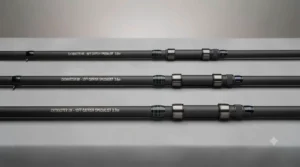
The NGT Carp Max isn’t marketed as a catfish rod at all — it’s a 12ft, 2-piece, 2.75lb test curve carp rod built from fibreglass — but it earns its place here because plenty of UK beginner anglers genuinely start their catfishing journey on exactly this kind of rod before upgrading, and it’s worth being honest about that rather than pretending everyone starts with dedicated tackle.
What most buyers overlook about a rod like this is that fibreglass, while heavier and less “high-tech” than carbon, is also more forgiving under sudden shock loading — useful when a catfish takes a bait and you weren’t quite braced for it. The 2.75lb test curve is genuinely on the light side for anything beyond smaller cats in the 10-20lb bracket, so this is best framed as a training-wheels rod or an emergency spare rather than your primary setup for serious specimen hunting. Aggregated review sentiment around NGT’s budget carp range is broadly positive on value but mixed on longevity, with some buyers noting guide rings can show wear after heavy use over a season or two.
Pros:
- ✅ Extremely affordable entry point into big-fish rods
- ✅ Fibreglass construction is durable and shock-absorbent
- ✅ Doubles as a legitimate carp rod, not single-purpose
Cons:
- ❌ 2.75lb test curve is light for larger wels catfish
- ❌ Heavier fibreglass blank tires the arm on long sessions
Priced under £30 in most listings, the value case is straightforward: this is the rod you buy when you genuinely don’t know yet whether catfishing is going to become your thing, and you don’t want to find out the expensive way.
3. Shakespeare Firebird Carp Rod — best all-rounder for mixed species fishing
The Shakespeare Firebird Carp Rod brings a recognisable, long-established brand name into this list, and it shows in the component spec: lightweight carbon construction, modern EVA handles, a cushioned DPS reel seat, and titanium oxide insert guides — details that punch above what you’d expect at this price bracket.
Here’s what to weigh with a rod like this: it’s built primarily as a carp rod, so the medium-heavy action favours casting and playing fish in the 10-30lb range rather than specifically absorbing the brutal, sustained runs of a big wels. On paper this means it’s an excellent dual-purpose tool if you split your time between carp and catfish sessions, but a dedicated cat angler chasing 50lb-plus fish should treat it as a stepping stone rather than an end point. The titanium oxide guide inserts are a genuinely useful upgrade over cheaper ceramic-free alternatives, since they resist grooving from abrasive braided lines — a common failure point on budget rods that get used with the thick braid catfishing demands.
Pros:
- ✅ Titanium oxide guides resist braid wear far better than budget rivals
- ✅ Genuinely dual-purpose for carp and catfish sessions
- ✅ Well-known, established brand with wide parts availability
Cons:
- ❌ Action leans toward carp rather than dedicated cat power
- ❌ Less headroom for genuinely oversized specimen fish
In the £35-£45 range, this is the pick for anglers who don’t want a single-species rod cluttering the shed — a sensible, flexible choice rather than a specialist tool.
4. NGT XPR Spod/Cat Rod — best for long-range casting and bigger baits
The NGT XPR Spod/Cat Rod is technically marketed as a 12ft, 5lb test curve spod and marker rod, but it’s become something of an open secret among budget catfish anglers precisely because that 5lb rating and heavy-duty build translate directly into serious lifting and casting power.
What the spec sheet won’t tell you, but user reports suggest, is that the stiff blank makes this rod noticeably more forgiving when casting heavier PVA bags and larger deadbaits than a dedicated 4lb catfish rod might handle — a genuinely useful crossover if your local water rewards long-range presentations. Reviewers frequently mention pairing this rod with big pit reels loaded with 50-65lb braid and landing catfish comfortably into the 60-80lb bracket, which for a rod not even branded as a catfish rod is a strong real-world endorsement. The trade-off is a stiffer, less forgiving tip section that isn’t designed for finesse bite detection, so it suits a bolt-rig, alarm-based setup better than delicate float or leger presentations.
Pros:
- ✅ 5lb test curve gives genuine big-fish backbone at a budget price
- ✅ Excellent for casting heavier baits and rigs long distance
- ✅ Widely used successfully by real catfish anglers despite its “spod” label
Cons:
- ❌ Stiff tip section limits sensitivity for subtle bites
- ❌ Marketed primarily for carp anglers, so catfish-specific features are absent
Typically sitting in the £30-£45 range, the value verdict here is that you’re effectively getting a higher test-curve rod than its price point would normally suggest — a genuine budget outlier.
5. Rovex Catfish Rod — best dedicated bank catfishing rod under £80
The Rovex Catfish Rod, produced under the Masterline/Rovex banner and designed in Tewkesbury, England, is one of the few rods on this list built specifically around UK-style bank catfishing rather than adapted from a carp or spod blueprint. At 12ft with a 5lb test curve and a high-modulus composite blank, it sits firmly in dedicated catfish territory.
Based on the spec comparison, the “composite blank” construction — a carbon and glass fibre blend — is a deliberate engineering choice rather than a cost-cutting one: it trades a small amount of the ultra-light feel of pure carbon for extra durability under repeated shock loading, which matters when you’re bank fishing for species that regularly test 40lb-plus. The braid-friendly guides address a genuine weak point on cheaper rods, where standard guide linings groove and fray under thick catfish braid over a season of use. Reviewers consistently note the EVA handle stays comfortable through long, static bank sessions, and several highlight the rod’s British design pedigree as a point of trust compared with unbranded imports.
Pros:
- ✅ Purpose-built for UK-style bank catfishing, not adapted from another discipline
- ✅ Braid-friendly guides reduce wear from thick catfish lines
- ✅ Designed and engineered in England with a specialist pedigree
Cons:
- ❌ Sits toward the upper end of the budget bracket
- ❌ Composite blank is marginally heavier than full carbon alternatives
Priced in the £45-£60 range depending on retailer, this represents strong value for anyone who wants a genuinely purpose-built catfish rod without stepping into three-figure territory.
6. NGT Catfish Rod & Big Pit XT-8000 Combo — best ready-to-fish combo deal
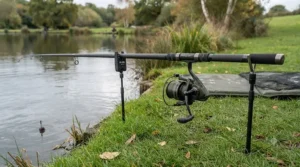
If choosing a reel separately feels like one decision too many, the NGT Catfish Rod & Big Pit XT-8000 Combo solves it in one purchase: a 12ft catfish rod bundled with a big pit reel sized to hold enough heavy braid for serious specimen fishing, at a combined price that undercuts buying the two components individually in most cases.
Here’s what most first-time buyers overlook about combo deals: they’re not automatically inferior to separately chosen components — a matched rod-and-reel pairing designed to work together often balances better in the hand than two mismatched purchases, and it removes the genuine risk of a beginner pairing an underpowered reel with a powerful rod (or vice versa) and being disappointed with the result. The XT-8000-class reel size is specifically chosen to accommodate the thick, low-diameter braid catfish anglers rely on for both casting distance and abrasion resistance against snags. Aggregated feedback on NGT’s rod-and-reel bundles tends to praise the value proposition strongly, while noting — fairly — that the bundled reel won’t match the smoothness of a standalone premium big pit reel costing that much on its own.
Pros:
- ✅ Removes the guesswork of matching a rod to a suitable reel
- ✅ Big pit reel size suits heavy braid for genuine catfish work
- ✅ Bundled pricing typically beats buying components separately
Cons:
- ❌ Included reel is a budget unit, not a premium standalone product
- ❌ Sits right at the top of the £80 ceiling, leaving little room for extras
At around £75, this is the pick for anyone who wants to walk away with a complete, functional setup in a single transaction — genuinely useful if tackle shopping isn’t your idea of a fun Saturday.
7. Wychwood Agitator A9220 — best premium feel within the budget cap
Closing out the list, the Wychwood Agitator A9220 brings a recognised specialist tackle brand’s design sensibility to the budget bracket. At 11ft with a 4lb test curve, it’s shorter and slightly softer than some rivals here, a deliberate choice that trades a little raw power for improved playability and casting accuracy.
On paper this means the Wychwood Agitator A9220 suits anglers who prioritise a controlled, engaging fight over sheer horsepower — a 4lb test curve is still comfortably capable of subduing 40-60lb catfish with correct drag settings and playing technique, and the shorter 11ft length makes it noticeably easier to manoeuvre in swims with restricted overhead space. What most buyers overlook about Wychwood as a brand is its reputation among specialist carp and predator anglers for component quality that often exceeds what the price tag implies, a reputation that appears to carry through to this rod’s build. Reviewers frequently comment on the rod’s balance and how “alive” it feels compared with stiffer budget alternatives, though a smaller number note this comes at the cost of some raw lifting power against the very largest specimens.
Pros:
- ✅ Reputable specialist brand with strong component quality
- ✅ 11ft length and softer action improve playability and control
- ✅ Genuinely capable against 40-60lb class catfish
Cons:
- ❌ Sits at the very top of the £80 price bracket
- ❌ Less outright lifting power than the stiffest 5lb TC options here
Typically found in the £65-£80 range, the value verdict is that this rod rewards anglers who value feel and control as much as raw power — a genuinely different proposition from the stiffer, more utilitarian options elsewhere on this list.
Catfish Species Overview: What You’re Actually Casting For
Before you fine-tune rod choice any further, it helps to understand exactly what’s likely to be on the other end of the line, because UK catfishing is a much narrower world than American catfishing, and the two get confused constantly.
The species you’ll overwhelmingly encounter in UK waters is the wels catfish (Silurus glanis), a non-native predator originally introduced to British stillwaters in the 1880s at Woburn Abbey and expanded through subsequent 20th-century stockings. According to Wikipedia’s entry on the species, the wels is the largest native freshwater fish in mainland Europe, capable of growing well beyond 100kg in warmer continental waters, though UK specimens are generally smaller due to shorter growing seasons. Most UK-caught cats run somewhere between 10-40lb, with specimen fish in the best-managed day ticket fisheries reaching 60-80lb and occasionally beyond — the current British record, recognised by the British Record Fish Committee, stands at 150lb 3oz, caught at Chigborough Farm and Fisheries in Essex in September 2024.
Crucially, wels catfish in the UK are almost entirely confined to stocked commercial fisheries and former gravel pits rather than natural river systems, which the Canal & River Trust’s species guide confirms, noting the species is classed as non-native and that fish over 100lb have historically been recorded but not always accepted for records due to concerns over illegal stocking. This matters practically: it means your rod choice is being made almost entirely around commercial fishery conditions — clearer banks, managed swims, known stock sizes — rather than the unpredictable variables of wild river fishing, which is one reason a well-chosen budget rod genuinely can compete with far pricier options in this specific discipline.
How to Choose the Best Budget Catfish Rod for Beginners
Cutting through the spec sheets, here’s the practical decision-making process we’d recommend for anyone shopping specifically for a beginner-friendly catfish rod:
- Start with test curve, not brand name. Anything from 3.5lb upward is workable for most UK commercial cat waters; 4-5lb gives genuine headroom for larger specimens without becoming unwieldy to cast.
- Match length to your typical swim. Shorter 10-11ft rods suit tight, tree-lined pegs; 12ft rods cast further and suit open, featureless banks.
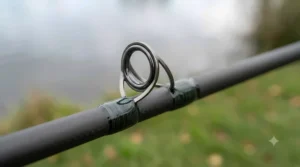
- Check the reel seat and guides before anything else. These are the components that fail first under braid and heavy drag pressure — a heavy-duty metal reel seat is worth prioritising over cosmetic extras.
- Decide whether you want a combo or separate components. Combos remove guesswork for total beginners; separate purchases let more experienced anglers fine-tune balance and reel quality.
- Read aggregated review themes, not star ratings alone. A 4.5-star rod with recurring complaints about a specific failure point tells you more than the headline number.
- Budget for the whole rig, not just the rod. Line, terminal tackle, an unhooking mat, and a suitably sized landing net or sling all matter as much as the rod itself.
- Buy from a listing with genuine, verifiable reviews. Aggregated sentiment across dozens of real purchases is far more reliable than a handful of five-star ratings on a brand-new listing.
Catfish Rod and Reel Combo vs Buying Separately
This is one of the most common decision points for anyone shopping a catfish rod under £80, so it’s worth a proper comparison rather than a throwaway line.
Buying a combo, like the NGT Catfish Rod & Big Pit XT-8000 Combo covered above, has one clear advantage: it guarantees a rod and reel that are at least broadly balanced for each other, removing a genuine failure point for beginners who don’t yet know how to judge whether a given reel size suits a given rod’s power rating. Combos are also almost always cheaper than buying the same-tier components separately, since manufacturers bundle stock to move volume. What most first-time buyers overlook, however, is that combo reels are nearly always the compromise component — brands protect their margin by fitting a perfectly serviceable, but rarely exceptional, reel alongside a genuinely good rod.
Buying separately, by contrast, lets you allocate your full £80 budget toward whichever component matters most to you — perhaps a mid-tier rod like the Rovex Catfish Rod paired with a slightly better-specced reel bought on its own, rather than splitting the budget evenly. Reviewers who’ve made this choice consistently report more satisfaction with the reel’s smoothness and drag consistency, though it does require enough product knowledge to avoid mismatching components. As a rule of thumb: total beginners with no prior tackle generally do better with a combo; anyone upgrading from an existing coarse or carp setup, who may already own a serviceable reel, is usually better off buying the rod alone and reallocating the saved budget elsewhere.
Entry-Level Big Fish Setups: What Else You Need Beyond the Rod
A catfish rod under £80 is only one part of a functional entry-level big fish setup, and it’s worth being honest that under-budgeting the rest of the rig is one of the most common beginner mistakes.
Line choice matters enormously: braided mainline in the 50-65lb range is standard for catfishing, since its thin diameter-to-strength ratio allows the reel to hold enough capacity while resisting abrasion against snags and gravel bars far better than monofilament. A heavy-duty rod pod or set of bank sticks capable of supporting the extra weight of a catfish-rated rod and reel is a genuinely overlooked purchase — standard coarse-fishing rests can buckle or slip under the sustained pressure of a hooked cat. An unhooking mat sized appropriately for a fish that might weigh 40-80lb, not a standard carp mat, is a welfare essential as much as a practical one, and a suitably large landing net or purpose-made catfish sling completes the picture. Terminal tackle — heavy-duty hooks in the 4/0-8/0 range, strong swivels, and rig components rated well beyond standard coarse fishing gear — rounds out a realistic entry-level big fish setup, and budgeting roughly a further £40-£80 alongside your rod choice for this supporting kit is a sensible, honest expectation rather than an afterthought.
Practical Usage Guide: Setting Up and Fishing Your New Rod in the First 30 Days
Getting a new catfish rod set up correctly in the first month makes a genuine difference to both performance and longevity, and it’s an area most product listings skip entirely.
Start by checking every guide ring runs smoothly with your chosen braid before your first session — even quality guides occasionally have manufacturing imperfections that can fray line over repeated casts, and it’s far better to catch this at home than mid-fight with a good fish. Spool your reel to within a few millimetres of the lip, since underfilled spools noticeably reduce casting distance on a rod already designed for long-range work. In your first few sessions, deliberately practise setting your drag under load rather than guessing — tie off to a fixed point and pull to feel roughly what your intended drag setting will do against real resistance, since an incorrectly set drag is one of the most common reasons beginners lose fish or, worse, snap rods on the strike. A light wipe-down of the blank and guides after any session near sand, gravel, or brackish water prevents the slow abrasive wear that shortens the working life of budget components, and a proper rod bag or sleeve for transport avoids the chipped guide linings that cause line fraying down the road.
Real-World Scenarios: Three Anglers, Three Budget Setups
Matching a rod to your actual circumstances, rather than an abstract “best overall” pick, tends to produce far better satisfaction. Here are three realistic UK angler profiles.
The curious first-timer, someone who’s caught carp before and wants to try catfishing without a big financial commitment, is generally best served by the NGT XPR Catfish Rod or the NGT Carp Max — low-risk purchases that let them discover whether the discipline suits them before investing further. The committed weekend specimen hunter, fishing day ticket cat waters most weekends and targeting genuinely large fish, is better matched to the Rovex Catfish Rod or Wychwood Agitator A9220, both of which offer the sustained power and component durability that regular, serious use demands. The budget-conscious complete beginner with zero existing tackle at all is generally best served by the NGT Catfish Rod & Big Pit XT-8000 Combo, since it removes every matching decision and gets them fishing with a coherent setup in a single purchase, freeing remaining budget for line, terminal tackle, and a proper unhooking mat.
Common Mistakes When Buying a Budget Catfish Rod
A handful of recurring errors show up again and again in aggregated review feedback and angling forum discussion, and they’re worth flagging explicitly.
The single most common mistake is buying purely on test curve number without checking blank material and guide quality — a cheap 5lb test curve rod with poor components can genuinely underperform a well-built 4lb rod in practice. A close second is under-budgeting for supporting tackle, spending the entire £80 on the rod alone and then discovering line, rests, and an unhooking mat cost nearly as much again. Buyers also frequently overlook rod length relative to their actual fishing venues, purchasing a 12ft rod for a tight, overgrown swim where an 11ft or 10ft option would be far more practical to cast and manage. Finally, a genuinely underrated mistake is skipping aggregated review reading entirely and buying on price and photography alone — a five-minute scan of recurring complaint themes across dozens of verified purchases reveals far more than a product’s star rating in isolation.
Catfish Rods vs Carp Rods: What’s the Real Difference
Given how often carp rods get pressed into catfish duty on a budget, this comparison deserves proper treatment rather than a passing mention.
The core difference lies in how the two rod types are engineered to handle sustained load. Carp rods are generally optimised for casting accuracy and bite sensitivity against fish that, while powerful, tend to fight in bursts rather than prolonged, grinding pulls. Catfish rods, by contrast, prioritise a stiffer, more powerful through-action specifically designed to absorb minutes of continuous heavy pressure without the blank fatiguing or the angler losing control of a fish that simply doesn’t tire the way a carp does. Reel seats and guides on dedicated catfish rods are typically oversized and reinforced compared with equivalent-price carp rods, reflecting the reality that catfishing almost universally uses much heavier braided line than standard carp fishing. A carp rod can absolutely land smaller catfish without issue — plenty of UK anglers’ first cats come on standard carp gear — but as target fish size increases toward the 40lb-plus bracket, the gap in reliability and control between a genuine catfish rod and a repurposed carp rod widens considerably, which is precisely why dedicated options like the Rovex Catfish Rod exist at accessible price points.
What to Expect: Real-World Performance on Bank and Boat
Specs on a page rarely translate intuitively into what a session actually feels like, so here’s what the numbers above mean in practice.
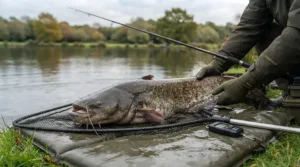
A 4-5lb test curve rod casting a moderate deadbait or pellet-based rig will typically manage 60-90 metres depending on wind and technique — plenty for the vast majority of UK commercial cat waters, which rarely require truly extreme range. Playing a hooked catfish on one of these rods feels distinctly different from playing carp: rather than sharp, darting resistance, expect a slow, immensely heavy pull that tests your arms and the rod’s mid-section rather than producing dramatic surface splashes early in the fight. Bank-based sessions place more strain on rod rests and reel seats than boat fishing, since the rod sits under sustained static tension between bites, which is part of why the reinforced reel seats on dedicated catfish rods like the NGT XPR Spod/Cat Rod genuinely earn their keep over standard carp hardware. Expect the fight itself, once a decent fish is hooked, to regularly run five to fifteen minutes even on the stiffer rods here — patience, not brute strength, tends to land the biggest specimens.
Long-Term Cost & Maintenance: The True Cost of Ownership
Sticking purely to the purchase price undersells the real economics of budget catfish tackle, so it’s worth running the numbers honestly.
A well-maintained carbon or composite catfish rod in this price bracket, cleaned after sessions and stored properly, can realistically last several seasons of regular use before guide wear or blank fatigue become genuine issues — meaning the effective annual cost of even the pricier options here, like the Wychwood Agitator A9220, works out to a fairly modest sum once spread across its working life. The components most likely to need replacement first are guide linings (particularly on rods paired with abrasive braided line) and, on combo purchases, the bundled reel’s drag washers after heavy use. Compared with mid-range dedicated catfish rods costing two to three times as much, the total cost of ownership gap narrows considerably once you factor in that most budget anglers aren’t landing hundred-plus-pound specimens weekly — the stress that genuinely separates premium and budget components. For most UK anglers fishing occasional to regular sessions on stocked commercial waters, a well-chosen sub-£80 rod represents genuinely sound long-term value rather than a compromise you’ll regret within a season.
Safety, Regulations and Licensing: What UK Law Actually Requires
Before your rod even touches water, there’s a legal side to UK catfishing worth understanding properly, since it’s an area of genuine confusion for newcomers.
Anyone aged 13 or over fishing for freshwater fish — including catfish — with a rod and line in England and Wales must hold a valid Environment Agency rod fishing licence, a requirement that applies equally on private fisheries and public waters, as confirmed directly by GOV.UK’s national rod fishing byelaws guidance. Fishing without one carries real legal consequences, including a maximum fine on conviction, so it’s not a step worth skipping regardless of how casual your first session might be. Beyond the licence itself, individual fisheries typically layer on their own rules around permitted rig types, bait restrictions, and specific handling requirements for large specimens — always check venue-specific rules before setting up, since catfish waters in particular often mandate specific unhooking mat sizes and sling use given the welfare considerations around handling genuinely large, powerful fish. Given that wels catfish are a non-native species in the UK, most well-managed fisheries also have strict rules around never transporting or introducing catfish to new waters, both for legal and ecological reasons.
Problem → Solution: Fixing Common Beginner Catfishing Mistakes
A handful of recurring problems trip up nearly every beginner catfish angler, and each has a specific, practical fix.
Problem: losing fish on the strike due to an incorrectly set drag. Solution: set your drag under real load before fishing, not by feel alone — tie the line to a fixed point and adjust until it slips at a tension appropriate to your line strength and the rod’s power rating. Problem: guide rings fraying and grooving after a season of braid use. Solution: rinse guides after each session, inspect regularly for grooving with a cotton bud (it’ll snag on damage invisible to the eye), and replace worn guides promptly rather than continuing to fish through them. Problem: casting distance falling well short of expectations. Solution: check spool fill level first, since an underfilled reel is the most common and easiest-fixed cause, followed by checking guide alignment and rig weight against the rod’s actual casting rating. Problem: struggling to control a hooked fish near snags. Solution: increase drag pressure gradually rather than locking up entirely, which risks a straight break, and use the rod’s full length and angle — held high and to the side — to steer fish away from danger rather than fighting it in a straight line. Problem: uncertainty over whether a rod under £80 is “enough” rod for a genuinely big fish. Solution: match test curve to your specific target water’s typical stock size using the comparison table above rather than assuming more expensive automatically means safer — a well-matched budget rod consistently outperforms a mismatched expensive one.
Frequently Asked Questions
❓ What test curve rod do I need for catfish in the UK?
❓ Can I use a carp rod for catfishing?
❓ How much line do I need for catfishing?
❓ Do I need a fishing licence to catch catfish in the UK?
❓ What's the difference between a catfish rod and a spod rod?
Conclusion
Choosing a catfish rod under £80 doesn’t mean settling for a compromised experience — it means understanding exactly which specifications matter for the fish you’re actually likely to encounter on UK stocked waters, and buying accordingly. Whether that’s the ultra-affordable NGT XPR Catfish Rod for a genuine first attempt, the purpose-built Rovex Catfish Rod for dedicated bank sessions, or the all-in-one NGT Catfish Rod & Big Pit XT-8000 Combo for a complete kit in one purchase, each of the seven options covered here represents honest, real value within the budget bracket.
What ties every recommendation together is a simple principle: match the rod’s test curve and build quality to your actual target fishery, not to the biggest number on the spec sheet. A well-chosen 4lb rod that suits your local water and casting style will consistently outperform an ill-matched 5lb rod bought on spec alone. Combine that thinking with proper supporting tackle — braided line, a suitable unhooking mat, correctly set drag — and a legitimate rod fishing licence, and you’ve got everything you genuinely need to start landing UK catfish without breaking your budget.
Recommended for You
- Top Catfish Rods Under £150: 7 Proven Picks for 2026
- Zander Lures for Night Fishing: 7 Top UK Picks for 2026
- Best Zander Lures UK 2026: 7 Proven Picks Anglers Trust
Disclaimer: This article contains affiliate links. As an Amazon Associate, I earn from qualifying purchases. If you purchase products through these links, we may earn a small commission at no additional cost to you.
✨ Found this helpful? Share it with your friends! 💬🤗
