In This Article
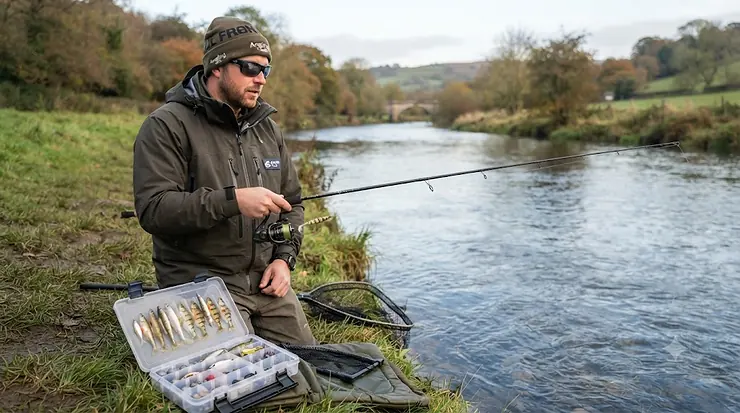
Zander are the ghosts of British still waters. One cast they’re not there, the next you’ve got a fish with eyes like a cat’s and teeth like a bag of pins thrashing about your net, and you’re left wondering how something that size stayed invisible for three hours. If you’ve ever blanked on a canal that “definitely holds zander” according to the bloke in the tackle shop, you already know the problem isn’t effort. It’s usually the lure hanging off your line.
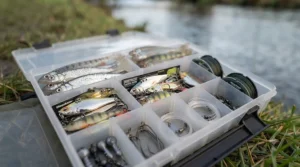
Choosing best zander lures isn’t about grabbing whatever’s shiny on the shelf — it’s about matching profile, action and running depth to how these fish actually feed: low light, close to structure, often within inches of the bottom, and with a strike window that can slam shut the moment the sun climbs. This guide breaks down seven real, currently available lures across soft plastics, jerkbaits and crankbaits, explains what each spec means once it’s wet, and digs into aggregated buyer feedback rather than inventing glowing quotes. The species itself, sander lucioperca, is native to the Danube and Baltic basins but has thrived in British canals and reservoirs since deliberate introductions in the 1960s and 70s.
Whether you’re rigging your first soft shad on a jighead or you’re a river regular chasing double-figure fish through winter, you’ll find honest, sourced guidance here — not a repackaged Amazon listing.
Quick Comparison Table
| Lure | Type | Best Size for Zander | Best For |
|---|---|---|---|
| Westin ShadTeez | Soft plastic paddle tail | 9-12cm | All-round canal and river fishing |
| Fox Rage Zander Pro Shad | Soft plastic shad | 10-14cm | Purpose-built zander imitation |
| Fox Rage Slick Shad | Slim soft plastic | 7-9cm | Clear water and finesse presentations |
| Rapala CrushCity The Stingman | Soft plastic pintail | 7.5-12.5cm | Drop shot and vertical jigging |
| Rapala Down Deep Husky Jerk | Deep diving jerkbait | 10-12cm | Deep rivers and reservoir trolling |
| Westin BuzzBite Crankbait | Suspending crankbait | 6cm | Holding the strike zone over structure |
| Berkley Pulse Realistic Roach | Pre-rigged soft shad | 12-15cm | Beginners wanting a ready-to-fish setup |
Looking at the spread above, soft plastics dominate the zander world for good reason — their bottom-hugging jig presentation matches how these fish actually hunt. That said, the Rapala Down Deep Husky Jerk and Westin BuzzBite Crankbait earn their place when zander sit suspended over deep structure rather than pinned to the bottom, which happens more often than most anglers assume. Beginners short on rigging confidence should lean toward the Berkley Pulse Realistic Roach, since it removes jighead selection from the equation entirely.
💬 Just one click — help others make better buying decisions too!😊
Top 7 Zander Lures: Expert Analysis
1. Westin ShadTeez — best all-round soft shad for canal zander
The Westin ShadTeez built its reputation the unglamorous way: by simply out-fishing flashier designs, cast after cast, across a decade of British predator angling. Available from roughly 7cm up to 19cm, the 9cm and 12cm sizes at 7g and 15g respectively sit in the sweet spot for most UK canal and river zander, striking a paddle-tail action that rolls and flashes even on a painfully slow retrieve.
That slow-speed action matters more than it sounds. Zander typically feed with short, deliberate takes rather than the smash-and-grab of a pike, so a lure that still wobbles convincingly at walking pace out-fishes anything that needs speed to come alive. Based on the spec comparison against cheaper own-brand shads, the deeper body profile and slender wrist on the Westin ShadTeez create noticeably more belly flash at low speed, which is exactly the trigger zander respond to in coloured canal water.
Aggregated buyer feedback across UK tackle retailers consistently highlights the exaggerated body roll and colour range as standout features, with several long-term users specifically noting it as a reliable “go-to” for bigger zander when scaled up to the 12cm size. A recurring theme in reviews is that the soft compound, while excellent for hook-ups, does wear through faster on abrasive canal beds than tougher composite shads.
Pros:
- ✅ Reliable belly-flash action even at very slow retrieve speeds
- ✅ Wide size range covers small canal fish through to double-figure zander
- ✅ Excellent colour range for matching local baitfish
Cons:
- ❌ Softer compound tears more easily on snaggy or rocky bottoms
- ❌ Smaller sizes can be fiddly to rig weedless
Priced in the under-£4 range for singles, the Westin ShadTeez delivers strong value as a first purchase — buy a mixed pack in 9cm and 12cm and you’ve covered most UK zander scenarios in one go.
2. Fox Rage Zander Pro Shad — purpose-built for precise depth control
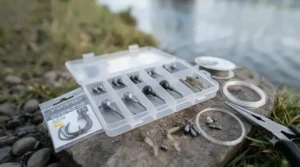
Where the Westin ShadTeez is a generalist, the Fox Rage Zander Pro Shad was engineered with one species in mind. Available from 10cm through to 14cm, its tail shape was specifically designed to eliminate the over-stretching that happens to cheaper shads when worked hard against current — a genuine problem on flowing rivers where zander often sit tight to crease lines.
What most buyers overlook about this model is the rubber composite itself. Fox Rage claims a lifespan roughly five times longer than standard soft plastics, and the practical upshot is that you’re not re-rigging every third fish, which matters enormously when you’re grinding through a session on a cold February afternoon and don’t want numb fingers fumbling with jigheads. The tail also produces a genuinely high-frequency vibration at rest, useful when fishing water with reduced clarity where zander are hunting more by lateral line than eyesight.
Reviewers consistently note strong durability as the headline benefit, with several buyers specifically comparing catch counts favourably against Berkley and generic imports. A common thread in feedback is that the 14cm size, while excellent for targeting genuinely large fish, can be oversized for smaller venue zander in the 2-3lb bracket.
Pros:
- ✅ Reinforced tail resists over-stretching in flowing water
- ✅ Significantly more durable rubber compound than budget alternatives
- ✅ Produces strong vibration in low-visibility conditions
Cons:
- ❌ Larger sizes can be too big for smaller canal zander
- ❌ Premium durability comes at a higher per-unit price than basic shads
At around £1-£2 per lure when bought in multi-packs (roughly £5-£8 for a pack), the Fox Rage Zander Pro Shad is a mid-range pick that rewards anglers doing repeat sessions on the same venue.
3. Fox Rage Slick Shad — best slim profile for clear water finesse
The Fox Rage Slick Shad takes a completely different approach: rather than pushing water with a fat body, it relies on a slender, round-section profile with belly and back slots for Texas rigging. Available in three sizes across seven colours, including newer Ultra UV finishes, it creates subtle action even at painfully low retrieve speeds — precisely the presentation clear-water zander demand when they’re feeling cagey.
Here’s what to weigh when picking between shad shapes: a bulkier shad displaces more water and gets noticed from further away, but a slim shad like this one looks more like the small roach, bleak and gudgeon zander naturally target in gin-clear reservoirs and canals during bright, settled weather. The 3D eye strike points are a small but genuinely useful touch, since zander frequently nip short at a bait’s head end, and having a clear visual trigger there improves hook-up ratios on finicky takers.
User reports suggest this lure performs particularly well fished on the drop or worked with long pauses, and the belly/back slot design is repeatedly praised for making weedless rigging genuinely straightforward rather than a token gesture. Some buyers note the round-body profile makes it slightly less stable at faster retrieve speeds compared with paddle-tail designs.
Pros:
- ✅ Subtle action ideal for pressured or gin-clear water
- ✅ Genuinely functional weedless rigging via belly/back slots
- ✅ Wide colour range including UV-reactive finishes for low light
Cons:
- ❌ Less stable action at faster retrieve speeds
- ❌ Subtle profile can be overlooked by zander in murky water
Sitting in the £5-£8 range for a multi-pack, the Fox Rage Slick Shad earns its keep as the finesse option in a well-rounded zander wallet.
4. Rapala CrushCity The Stingman — best pintail for drop shot and vertical work
Developed through Rapala’s collaboration with tournament bass anglers before being specifically reshaped for European predator fishing, the Rapala CrushCity The Stingman is a thin plastic pintail rather than a paddle tail, built for drop shotting, darting, weightless rigging and vertical winter jigging. It’s available from around 7.5cm up to 12.5cm, and uses what Rapala calls Smart Injection Technology — essentially scent, salt and flake baked into the plastic during moulding rather than sprayed on afterwards.
On paper this means the scent profile survives far longer in the water than a dip-and-spray treatment, and based on the design brief Rapala published for its European range, the Stingman and its paddle-tail sibling the Kickman were built specifically with zander and perch anglers in mind, unlike most CrushCity shapes aimed at American bass. The pintail’s thinner vibration is genuinely better suited to vertical presentations than a paddle tail, which tends to over-power subtle winter jigging strokes.
Reviewers highlight the responsive tail action on even the slightest rod movement as a standout, particularly for drop shot rigs fished static over marked fish. A recurring observation is that the salted, scented plastic degrades a touch faster in storage if left mixed with other lure types, which is a minor but worth-knowing quirk of the material.
Pros:
- ✅ Purpose-designed pintail action for European predator species
- ✅ Scent and salt built into the plastic rather than surface-applied
- ✅ Excellent for finesse techniques like drop shot and vertical jigging
Cons:
- ❌ Thinner profile offers less water displacement than paddle-tail shads
- ❌ Salted plastic can degrade faster if stored with other lure materials
At around £5 for a pack, the Rapala CrushCity The Stingman is a smart mid-range addition for anglers who fish vertically over marked winter shoals.
5. Rapala Down Deep Husky Jerk — best deep diving jerkbait for river zander
When zander hold deep against a crease or a drop-off in a big river or reservoir, soft plastics on light jigheads sometimes simply can’t get down fast enough or stay in the zone long enough. This is where the Rapala Down Deep Husky Jerk comes in — an oversized deep-diving lip drives it down to roughly 8-19 feet depending on the size chosen, with neutral buoyancy that lets it hang, suspended, mid-column on a paused retrieve.
The 4-3/4 to 5-1/2 inch sizes cover most UK zander scenarios, and the internal rattle chamber genuinely earns its keep here — in deep, often coloured river water, sound carries further than sight, and a rattling suspending jerkbait held on pause directly in a zander’s face is a difficult thing for a hungry fish to ignore. What the spec sheet won’t tell you, but experienced river anglers note, is that the twitch-pause-hang cadence is what actually triggers strikes; a straight retrieve barely gets a look in.
Aggregated feedback on this lure repeatedly praises its true-tracking action even at depth and speed, alongside the hand-tuned, tank-tested consistency that’s become something of a Rapala trademark. Some buyers flag that the treble hooks, while sharp out of the box, benefit from an upgrade to heavier-gauge hooks when targeting genuinely large fish.
Pros:
- ✅ Reaches genuine depth (8-19ft) that soft plastics struggle to match on the cast
- ✅ Neutral buoyancy suspends in the strike zone during pauses
- ✅ Internal rattle adds a sound trigger in coloured or deep water
Cons:
- ❌ Stock trebles may need upgrading for larger zander
- ❌ Less effective in shallow canals under 6 feet deep
Typically priced in the £9-£14 range depending on size and finish, the Rapala Down Deep Husky Jerk is the specialist tool for deep-water and trolling situations that soft plastics simply weren’t built for.
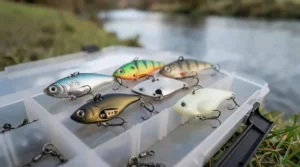
6. Westin BuzzBite Crankbait — best suspending crankbait for holding the strike zone
The Westin BuzzBite Crankbait was designed with perch and trout in mind, but its 1-2.5 metre running depth and neutral buoyancy make it equally effective for zander and pike, particularly around structure in mid-depth canals and drainage systems. At 6cm and 10g, it’s a compact, castable crankbait rather than a heavyweight trolling lure.
Here’s the practical value: because it suspends rather than floats or sinks on the pause, you can work it right up to a piece of structure — a bridge pillar, a moored boat, a bed of reeds — stop the retrieve, and let it simply hang there. For a species that’s famous for cautious, considered takes rather than reaction strikes, that suspended hang time is often the difference between a follow and a hook-up. The high-frequency rattle also does real work in low-visibility water, giving zander an acoustic target to home in on when the wire-through-lip construction keeps the lure tracking true even under aggressive twitches.
Reviewers consistently describe the wobble as “tight” and the swimming action as reliable straight out of the packet without any tuning needed, a point worth noting given how many budget crankbaits run crooked from the box. A minority of buyers mention the treble hooks catching weed more readily than expected around dense structure, which is a fair trade-off for a lure designed to fish that close to cover.
Pros:
- ✅ Neutral buoyancy allows extended suspended pauses near structure
- ✅ Runs true out of the box with no tuning required
- ✅ Compact size casts easily on standard predator gear
Cons:
- ❌ Trebles can snag more in dense weed or reed cover
- ❌ Limited running depth compared with dedicated deep divers
At around £8-£12, the Westin BuzzBite Crankbait fills the structure-hugging niche that neither soft plastics nor deep divers cover quite as well.
7. Berkley Pulse Realistic Roach (Pre-Rigged) — best ready-to-fish pack for beginners
Not everyone wants to think about jighead weight, hook gauge and rigging angle on their first zander trip, and that’s exactly the gap the Berkley Pulse Realistic Roach fills. Sold as a pre-rigged pack — typically four lures around 12-15cm and 14-15g complete with jig hooks already fitted — it removes the single biggest barrier for newcomers: getting the rig right before you’ve even made a cast.
Reviewers consistently note the “impressively lifelike” paint finish and profile as standing out from typical shad packs, and honestly, the realism does matter here — zander have excellent low-light vision and are notoriously put off by anything that looks obviously synthetic under close inspection. Based on the spec comparison with rigging your own shads from scratch, a beginner using a pre-rigged pack saves real time on the bank and avoids the common early mistake of pairing too heavy a jighead with too small a lure, which kills the swimming action before it’s even started.
What most first-time buyers overlook is that pre-rigged packs, while convenient, offer less flexibility to fine-tune jighead weight to water depth compared with buying jigheads and shads separately. Aggregated feedback flags this as the main trade-off, alongside praise for the negative buoyancy that helps the lure settle naturally on bottom-hugging retrieves.
Pros:
- ✅ No rigging knowledge required — genuinely ready to fish out of the pack
- ✅ Highly realistic finish that holds up under close inspection
- ✅ Negative buoyancy suits natural bottom-hugging presentations
Cons:
- ❌ Fixed jighead weight limits depth-matching flexibility
- ❌ Costs more per lure than buying components separately
At around £12-£16 for a pack of four, the Berkley Pulse Realistic Roach is a sensible first purchase for anyone who’d rather spend their first session learning to read the water than learning to tie a jig.
Soft Plastic Lures for Zander: What the Reviews Really Say
Soft plastic shads dominate zander fishing for a structural reason, not a marketing one: their jig-head presentation lets you control depth precisely and work them at the painfully slow speeds zander often demand. Looking across aggregated buyer feedback for the Westin ShadTeez, Fox Rage Zander Pro Shad, Fox Rage Slick Shad and Rapala CrushCity The Stingman, a few consistent patterns emerge rather than the generic five-star praise you’d expect from a manufacturer’s own page.
Durability is the most commonly discussed factor, and reviewers are refreshingly specific about it — the Fox Rage composite is repeatedly singled out as tougher than budget imports, while softer compounds like the standard Westin ShadTeez trade some longevity for a more natural, lifelike wobble. Colour selection is the second recurring theme, with natural roach and perch patterns favoured in clear water and brighter UV finishes preferred in coloured canals, which tracks with what’s known about zander relying more heavily on lateral line detection than sight once visibility drops below a metre or so. Buyers also consistently flag jighead weight as the variable that makes or breaks a soft plastic’s action, more so than the lure choice itself — a point worth remembering before blaming the bait for a slow session.
Jerkbait vs Softbait for Zander
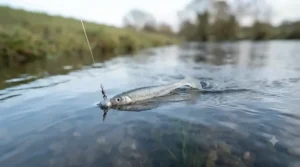
This is probably the single most debated choice in zander fishing, and the honest answer is that neither wins outright — they solve different problems. Softbaits on jigheads, like the Fox Rage Zander Pro Shad or Rapala CrushCity The Stingman, offer precise depth control through jighead weight, a natural falling action zander find hard to resist, and the ability to fish painfully slowly without losing the wobble. Jerkbaits like the Rapala Down Deep Husky Jerk, by contrast, cover water horizontally far faster and reach genuine depth on the retrieve itself rather than relying on sink rate, with a suspending pause that holds position in the strike zone without touching bottom.
The practical rule most experienced zander anglers apply: reach for softbaits when fish are tight to the bottom in canals, drains or shallow stretches of river, and switch to jerkbaits or suspending crankbaits when sonar or local knowledge suggests fish are holding mid-column over deep water, particularly in reservoirs or wide river sections. Water temperature plays a role too — in cold winter water, zander metabolism slows and the twitch-pause-hang cadence of a suspending jerkbait often out-fishes a soft plastic that needs constant micro-jigging to stay lively.
Best Deep Diving Lures for Zander: When (and Why) to Go Deep
Deep diving lures earn their place in a zander wallet specifically because these fish are creatures of depth and structure — daytime zander regularly sit tighter to the bottom of deep holes, drop-offs and channel edges than almost any other UK predator species. The Rapala Down Deep Husky Jerk, with its oversized lip and 8-19ft working depth, is the clearest example of a lure built for this exact scenario, while the Westin BuzzBite Crankbait covers the shallower end of the mid-depth range at 1-2.5m.
The mistake many anglers make is assuming a deep diver needs to be trolled to be effective. Cast-and-retrieve deep divers reach a decent portion of their maximum depth surprisingly fast if you pause briefly on the drop before starting the retrieve, letting the lure’s own buoyancy characteristics do some of the depth work before the lip takes over. On canals and shallow drains under roughly two metres, however, a genuine deep diver is often the wrong tool entirely — its lip will simply plough into silt, and a soft plastic on a light jighead will outfish it every time.
Lure Size for Zander: Matching the Hatch
Getting lure size right matters more for zander than almost any other UK predator, largely because their mouths, while wide, aren’t built to comfortably engulf oversized prey the way a pike’s is. Here’s a practical, numbered approach to sizing your lure correctly:
- Start with local forage. Match your lure to the roach, bleak, gudgeon or small perch present in the venue — a quick chat with local anglers or a look at surface activity tells you plenty.
- Default to 9-12cm on canals and drains. This range covers the bulk of UK canal zander without looking oversized to smaller resident fish.
- Size up to 12-16cm for known big-fish waters. Reservoirs and large river systems holding double-figure zander justify a bigger profile.
- Size down in cold water. Zander metabolism drops sharply below around 8°C, and a smaller, slower-moving bait often out-fishes a big one that demands more energy to chase.
- Match jighead weight to depth, not just lure size. A 9cm shad on a 3g head behaves completely differently to the same shad on a 14g head — get this pairing wrong and even the right lure size won’t swim properly.
- Downsize after a run of follows with no takes. Repeated follows without commitment is a classic sign the profile is too intimidating for that session.
- Carry two sizes of everything. Conditions change through a session; a smaller and larger version of your confidence lure covers more scenarios than one size fished all day.
Water Clarity and Lure Choice
Water clarity arguably influences lure choice more than any other single variable in zander fishing, because it directly determines whether a fish is hunting primarily by sight or by lateral-line vibration detection. In clear water — reservoirs, gravel pits, or canals after a dry spell — natural, subtle-profile lures like the Fox Rage Slick Shad in roach or perch patterns tend to out-fish bright, high-vibration baits, since an obviously synthetic-looking lure gets more scrutiny time from a fish that can actually see it clearly.
As explained by an expert zander fishing guide, zander feed most actively in low light, which is precisely when clarity and lure choice intersect most sharply — dawn and dusk sessions in clear water can still favour natural presentations, since even low light doesn’t fully blind a zander’s famously light-sensitive eyes. Once water turns properly coloured or turbid after rain, the priority flips: bright, UV-reactive finishes and high-vibration paddle tails like the standard Westin ShadTeez or rattling baits like the Rapala Down Deep Husky Jerk give a struggling zander something to detect through lateral line and residual light alone, and subtlety simply becomes wasted effort.
Seasonal Predator Activity: Zander Through the Year
Zander behaviour shifts dramatically across a British year, and lure choice should shift with it rather than staying static.
Spring (March-May): Post-spawn zander feed aggressively to recover condition, often shallower than expected around structure. Soft plastics worked with an aggressive jigging action, like the Fox Rage Zander Pro Shad, tend to produce well as water temperatures climb past 10°C.
Summer (June-August): Warm water pushes zander deeper and into low-light feeding windows almost exclusively — dawn, dusk and genuinely overcast days. This is peak season for deep divers like the Rapala Down Deep Husky Jerk worked over deep holes during the brief feeding windows.
Autumn (September-November): Falling temperatures and dropping light levels extend the feeding window through more of the day, and zander often shoal more predictably around structure. A mixed approach combining the Westin BuzzBite Crankbait around structure with soft plastics on the drop covers this transitional period well.
Winter (December-February): Cold water slows zander metabolism significantly, and slow, precise presentations dominate. Vertical jigging with the Rapala CrushCity The Stingman over marked winter shoals, or a painfully slow twitch-pause retrieve with the Rapala Down Deep Husky Jerk, typically out-fishes anything requiring energy-intensive chasing.
How to Choose Zander Lures
Choosing the right lure comes down to matching a handful of variables to your specific venue, rather than chasing whatever’s trending on social media. Here’s the reasoning behind each factor, in priority order:
- Venue depth and structure. Shallow canals demand soft plastics or shallow crankbaits; deep reservoirs and rivers justify deep divers and jerkbaits.
- Water clarity on the day. Natural, subtle presentations for clear water; brighter, higher-vibration lures once visibility drops.
- Time of year and water temperature. Aggressive presentations in warmer months, slow and precise ones once temperatures fall below roughly 8-10°C.
- Local forage size. A lure roughly matching the resident baitfish size out-fishes an arbitrarily chosen profile almost every time.
- Your retrieve confidence. A lure you can work correctly and consistently beats a “better” lure fished with the wrong action.
- Budget for realistic loss rates. Snags happen; build a lure collection around price points you’re comfortable replacing regularly.
- Rigging skill level. Beginners benefit genuinely from pre-rigged options like the Berkley Pulse Realistic Roach while they build confidence.
Common Mistakes When Buying Zander Lures
The most expensive mistake anglers make isn’t buying a bad lure — it’s buying the right lure in the wrong size or colour for their specific venue, then blaming the fish. Oversized lures are a persistent issue; a 16cm shad might look impressive in the packet, but on a canal holding predominantly 2-4lb zander, it’s simply too intimidating a mouthful for most fish to commit to.
A second common error is neglecting jighead weight relative to depth and current — pairing a lightweight soft plastic with too heavy a head kills the natural swimming action stone dead, while too light a head means the lure never reaches the bottom-hugging zone zander favour. Colour selection mistakes follow closely behind: buying an entire collection in one bright colour scheme leaves you unable to adapt when water clarity changes mid-session, which it regularly does after rainfall on river systems. Finally, many newcomers underestimate the value of carrying both a slow, subtle presentation and a louder, more aggressive one — zander mood swings are real, and having only one gear in the tackle box limits your options exactly when adaptability matters most.
Practical Usage Guide: Rigging, Retrieves and the First 30 Days
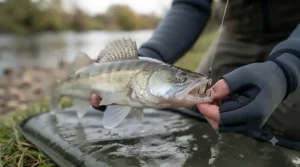
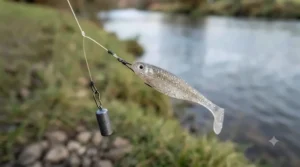
Getting the fundamentals right in your first month of lure fishing for zander saves a lot of frustrated blank sessions. Start with jighead selection: as a rough rule, use 3-7g in canals under 2 metres deep, 7-14g in typical river or reservoir margins down to 4 metres, and 14g-plus when working genuinely deep water or fighting current. Rig soft plastics like the Fox Rage Slick Shad with the hook point exiting dead-centre along the back for a true, wobble-free swim — a slightly off-centre hook is one of the most common causes of a lure spinning unnaturally on retrieve.
For retrieve technique, resist the urge to fish quickly. A slow, steady retrieve punctuated with occasional pauses of two to four seconds consistently out-produces a fast, constant retrieve, since most takes come during that pause as the lure settles or flutters. With jerkbaits like the Rapala Down Deep Husky Jerk, use a firm twitch of the rod tip followed by a genuine pause of several seconds rather than a continuous twitch-twitch-twitch cadence — the suspending hang is doing the work, not the movement itself.
As explained in seasoned zander tips from experienced canal anglers, covering water systematically to locate feeding fish matters more than perfecting technique on a single spot, since zander distribution is notoriously patchy and tied closely to structure and depth changes. In your first month, prioritise mobility over precision — moving every 15-20 casts without a take teaches you more about a venue than staying rooted to one swim all session.
Maintenance-wise, rinse soft plastics in fresh water after saline or heavily polluted venues, store different plastic types separately to prevent chemical bleed between compounds, and check hook points for dulling every session — zander have bony mouths, and a blunted hook point costs far more fish than most anglers realise.
Real-World Scenario: Matching Lures to Your Zander Venue
The canal commuter: Fishing a short evening session on an urban canal after work, with maybe 45 minutes of usable light. Budget matters, snags are frequent around moored boats, and mobility is key. The Westin ShadTeez in 9cm on a 5g jighead offers durability-conscious value here, letting you fish confidently near structure without agonising over every lost lure.
The weekend river specialist: Dedicating full weekend days to a known big-river venue with depths reaching 4-5 metres and a healthy population of double-figure zander. Here, the Rapala Down Deep Husky Jerk paired with the Fox Rage Zander Pro Shad in 14cm covers both the deep, structure-holding fish and the shallower margin feeders as light conditions shift through the day.
The winter reservoir specialist: Targeting a large, deep reservoir through the coldest months when zander shoal predictably but feed cautiously. Vertical jigging with the Rapala CrushCity The Stingman over marked fish, worked with minimal movement, suits the lethargic winter feeding pattern far better than an aggressive search bait.
Problem → Solution Guide
Problem: Constant snagging on canal structure. Solution: switch to weedless rigging using the belly/back slots on the Fox Rage Slick Shad, or fish a lighter jighead that lifts more readily over obstructions.
Problem: Follows with no committed takes. Solution: downsize your lure by 2-3cm and slow the retrieve further — this is the classic sign of an overly intimidating profile or retrieve speed for that session.
Problem: Lure spinning unnaturally on retrieve. Solution: check hook alignment runs dead-centre along the lure’s back, and confirm jighead weight isn’t overpowering the tail action.
Problem: No response in coloured water after rain. Solution: switch to a brighter, higher-vibration option like the Westin BuzzBite Crankbait or a rattling jerkbait, and slow your retrieve to let sound and vibration do more of the work than sight.
Problem: Losing fish on the take. Solution: check hook sharpness every session and consider upgrading stock trebles on hardbaits like the Rapala Down Deep Husky Jerk, since zander’s bony mouths blunt hooks faster than softer-mouthed species.
Long-Term Cost & Maintenance
Zander lure fishing is genuinely affordable compared with deadbaiting once you factor in the cost of bait over a season, but total cost of ownership still varies meaningfully between lure types. Soft plastics like the Westin ShadTeez or Fox Rage Zander Pro Shad have the lowest per-unit cost but the highest replacement rate, since snags and toothy takes shred plastic bodies over time — budget for replacing a portion of your soft plastic stock every few sessions on snaggy venues. Hardbaits like the Rapala Down Deep Husky Jerk and Westin BuzzBite Crankbait cost considerably more per unit but last far longer if retrieved carefully and stored properly, making their cost-per-session lower over a full season despite the higher upfront price.
The genuinely underrated cost factor is jigheads — buying quality jigheads separately rather than relying solely on pre-rigged packs like the Berkley Pulse Realistic Roach lets you match weight precisely to conditions, extending the useful life of every soft plastic you own by ensuring correct action rather than forcing a mismatched pairing that tears the lure apart faster. Over a full season, anglers who build a small, well-maintained rotation of five or six proven lures typically spend less than those constantly chasing the newest release, simply because familiarity with a lure’s action translates directly into more efficient, more productive fishing time.
Safety, Regulations and Compliance Guide
Zander occupy a genuinely unusual legal position in UK angling that every lure angler should understand before targeting them. As a non-native species introduced to Britain in the 1960s, zander caught in most stretches of the British canal network cannot legally be returned to the water, reflecting long-standing concern over their impact on native coarse fish populations in colonised waterways. Regulations do vary by specific water and region, so always check the rules posted at your venue or club before fishing, since some stillwaters and clubs manage zander differently from canal authorities.
More broadly, anyone considering introducing or moving non-native fish species between waters in England and Wales needs to be aware that specific non-native fish rules apply, with unlicensed introduction or keeping of controlled species carrying real legal consequences including fines. This matters directly to lure anglers too, since transporting live zander between venues — even unintentionally via a livewell or bait bucket — falls squarely within these regulations. Beyond the legal picture, a valid Environment Agency rod licence is required for all freshwater fishing in England and Wales regardless of species targeted, and it’s worth checking current byelaws for your specific venue given how zander management policy continues to evolve across different regions.
Frequently Asked Questions
❓ What is the best lure for zander in murky water?
❓ What size lure is best for zander?
❓ Do zander prefer soft plastics or hard lures?
❓ Can you legally return zander to UK canals?
❓ What time of day is best for zander lure fishing?
Conclusion
There’s no single best zander lure that works everywhere, every session, in every mood a zander happens to be in — and honestly, anyone claiming otherwise is selling something. What genuinely moves the needle is matching profile, size and depth to the specific water in front of you: soft plastics like the Westin ShadTeez and Fox Rage Zander Pro Shad for precise bottom-hugging control, finesse options like the Fox Rage Slick Shad and Rapala CrushCity The Stingman for clear water and vertical work, and deeper-running options like the Rapala Down Deep Husky Jerk and Westin BuzzBite Crankbait for the days these fish sit stubbornly out of soft-plastic reach.
Build a small, varied rotation rather than a single confidence bait, pay attention to water clarity and depth before you even tie on, and let seasonal patterns guide your presentation speed. Zander reward anglers who adapt more than anglers who simply persist with one method regardless of conditions — get the lure choice right, and the ghost fish stop being quite so invisible.
Recommended for You
- Top Zander Lures Under £20: 7 Proven UK Picks for 2026
- Best Zander Rod 2026: 7 Rods That Actually Handle That Bite
- 7 Best Zander Rods Under £100 (2026): Honest Budget Guide
Disclaimer: This article contains affiliate links. As an Amazon Associate, I earn from qualifying purchases. If you purchase products through these links, we may earn a small commission at no additional cost to you.
✨ Found this helpful? Share it with your friends! 💬🤗
