In This Article
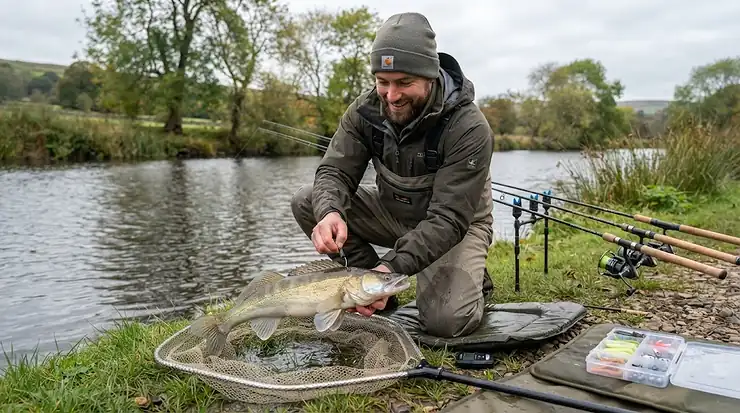
Right, let’s be honest about something before we go any further: most “best zander rod” articles online are just Amazon listings wearing a trench coat. You deserve better than that, especially when you’re trying to find zander rods under £100 that won’t fold like a wet paper straw the moment a decent fish decides to test your drag. Zander are sly, nocturnal, needle-toothed opportunists — and the rod in your hand needs to translate their famously subtle “tap-tap” bites into something you can actually feel and hit.
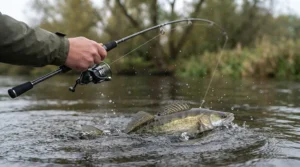
The good news? You genuinely don’t need to spend £200+ to get a rod that’s fit for purpose. Sub-£100 carbon blanks have come a long way, and several of the models below punch well above their price tag when it comes to sensitivity, balance and casting control. What you won’t need is marketing fluff — what you will get is honest spec analysis, real aggregated review sentiment where it exists, and a decision framework that actually helps you buy the right rod the first time.
We’ve dug through manufacturer specs, retailer listings and genuine angler discussions to bring together seven real, currently available rods spanning budget dedicated zander blanks right up to the more premium end of the sub-£100 bracket. Whether you’re a canal regular targeting Trent-system zander after dark or a weekend angler dabbling in lure fishing for the first time, there’s a sensible option ahead. Let’s get into it.
Quick Comparison Table
| Rod | Length | Casting Weight | Price Range | Best For |
|---|---|---|---|---|
| Zebco DB Series Zander Spinning Rod | 3m (9’10”) | 5-45g | Under £60 | Dedicated budget zander blank |
| Shakespeare Agility 2 Spinning Rod | 7-8ft (variants) | 2-25g | £50-£80 range | Value all-rounder for light lures |
| Savage Gear SG2 Medium Game Travel Rod | 2.15m | 10-40g | £55-£80 range | Portable, travel-friendly setup |
| Savage Gear SG2 Distance Game Spinning Rod | 2.74m | Medium-light to heavy lures | £80-£100 range | Long-range casting on big waters |
| Fox Rage Prism X Zander Pro Spinning Rod | 210cm (6.8ft) | 7-28g | Upper £80s-£100 range | Purpose-built zander action |
| Abu Garcia Tormentor2 Spinning Rod | Multiple sizes | Multiple casting ranges | Under £50 | Cheapest genuine carbon option |
| Mitchell Epic MX1 Spinning Rod | Multiple sizes | Multiple casting ranges | Under £45 | Beginner-friendly first rod |
Looking across the table, there’s a clear budget-to-premium ladder within this single £100 ceiling: the Zebco DB Series Zander Spinning Rod and Mitchell Epic MX1 Spinning Rod sit at the accessible end, the Shakespeare Agility 2 Spinning Rod and both Savage Gear SG2 rods occupy the sensible middle ground most zander anglers actually buy into, and the Fox Rage Prism X Zander Pro Spinning Rod pushes right up against the £100 ceiling for anglers who want species-specific engineering. None of these prices are locked in stone, so always check current price before ordering, as retailer promotions shift weekly.
💬 Just one click — help others make better buying decisions too!😊
Top 7 Zander Rods Under £100: Expert Analysis
Below are seven real, currently available rods that cover the budget-to-premium spread within zander rods under £100. Each has been assessed on blank material, casting weight suitability for zander lures, guide quality and balance — not just spec-sheet bragging rights.
1. Zebco DB Series Zander Spinning Rod — purpose-built zander blank at a genuinely low price
Unlike most rods on this list, this one wears the species name in its title for a reason. At 3 metres (9’10”) with a 5-45g casting window, the standout feature is that it’s engineered specifically around zander tactics rather than repurposed from a generic predator range. The 7+1 guide layout and durable carbon construction are built to control mid-weight jigheads and shads without the tip folding over on the strike, and the 155cm transport length means it breaks down small enough for a canal-side bike ride.
On paper, this rod suits anglers who fish jig-and-shad tactics almost exclusively, since the 5-45g rating comfortably covers the 10-20g shads that make up most zander lure boxes. What most buyers overlook about a dedicated-species rod like this is that the “one job, done properly” design philosophy usually beats a jack-of-all-trades blank at the same price point, because the taper and guide spacing haven’t been compromised to also handle pike or perch duties.
Verified customer reviews for this specific model are thin on the ground at the time of research — only a handful exist on the retailer’s own site — so treat the spec analysis above as the stronger signal here rather than leaning on review volume.
Pros:
- ✅ Purpose-designed casting range for zander jig weights
- ✅ Compact 155cm transport length for canal sessions
- ✅ 7+1 guide count reduces line slap on the cast
Cons:
- ❌ Limited independent review history to cross-check
- ❌ Single-brand availability narrows where you can buy it
At under £60, this is one of the cheapest ways into a genuinely species-specific blank, and the value verdict is straightforward: if budget is your primary constraint, this is hard to beat pound-for-pound.
2. Shakespeare Agility 2 Spinning Rod — best all-round value across multiple lengths
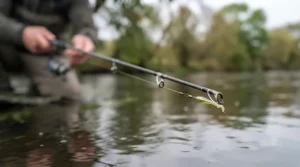
Shakespeare’s Agility 2 range earns its “standout feature” tag through sheer flexibility — it spans several lengths and casting weights, from delicate 7ft 2-15g game-spinning models up to sturdier 8ft 10-25g predator-capable versions, all sharing the same build DNA. The high-modulus carbon blank keeps the rod slim and light in the hand, while the Zirconium Oxide (ZOG) guides are a genuine upgrade over the basic stainless inserts you’ll find on some rivals at this price.
In practice, this means you can pick a length matched precisely to your local zander water: the lighter end suits canal and drain jigging, while the heavier 10-25g variant handles the bulkier shads and vibration baits often used on reservoirs. The DPS reel seat and cork handle combination also does a decent job of transmitting the faint “knock” of a zander pick-up, which is the single most important sensory job any zander rod has to do.
Aggregated retailer feedback and forum chatter around the Agility range consistently frame it as a dependable step-up rod for anglers moving on from supermarket-grade tackle, with several UK forum threads citing the brand’s reliability as a deciding factor over flashier but less-proven alternatives.
Pros:
- ✅ Multiple lengths and casting weights in one range
- ✅ Zirconium Oxide guides resist wear better than basic inserts
- ✅ Slim high-modulus blank keeps overall weight low
Cons:
- ❌ Casting weight variants can confuse first-time buyers
- ❌ Cork handle needs periodic cleaning to stay grippy
Pricing typically sits in the £50-£80 range depending on length and retailer, and the value verdict here is strong: pick the casting weight that matches your usual lure size and you’ve got a genuinely versatile, well-guided rod for the money.
3. Savage Gear SG2 Medium Game Travel Rod — best for portability without sacrificing backbone
The standout feature on this one is right there in the name: it’s built to travel. At 2.15m with a 10-40g casting range, the Medium Game Travel breaks down into a genuinely bag-friendly package while still carrying enough backbone to handle mid-sized shads and jerkbaits. The SeaGuide Gold Label reel seat and SeaGuide Gunsmoke SW guides are a noticeably higher spec than you’d expect at this price bracket, and the Toray high-modulus carbon fibre blank keeps the whole package light without feeling whippy.
Here’s what to weigh: the 10-40g rating puts this rod firmly in “do everything reasonably well” territory rather than being a finesse specialist, so if your fishing is almost exclusively light jigheads under 10g, you may find it slightly overpowered. But for anglers who mix zander sessions with occasional perch or schoolie pike, the versatility pays for itself.
Reviewers on retailer platforms consistently praise the balance and guide quality relative to price, with several noting the rod feels noticeably more premium in hand than its cost would suggest — a common theme across the wider SG2 range.
Pros:
- ✅ Genuinely compact travel breakdown
- ✅ SeaGuide guides are a real upgrade over budget inserts
- ✅ Toray carbon blank keeps weight low for the power on offer
Cons:
- ❌ Slightly overpowered for ultra-light jighead work
- ❌ Travel joints add marginal weight versus a 2-piece equivalent
At roughly £55-£80 depending on where you shop, this sits comfortably mid-table for both price and capability — a sensible pick for anglers who travel to their fishing rather than walking straight from the car.
4. Savage Gear SG2 Distance Game Spinning Rod — best for casting range on big, open waters
This is the SG2 range’s long-arm specialist. At 2.74m with an extra-fast action tuned for medium-light to heavy lures, the standout feature is raw casting distance — exactly what you need on sprawling reservoirs or wide river zander marks where fish sit well out from the bank. The fast-to-extra-fast tip transmits even subtle knocks through a longer line, which matters more than people expect once you’re casting 30+ metres.
What the spec sheet won’t tell you outright is that a longer, faster-actioned rod like this also gives you more leverage for solid hook-sets at range, something slower-actioned budget rods genuinely struggle with once distance stretches the line’s inherent stretch and dampens bite detection. This makes it particularly suited to still-water zander anglers working drop-offs and bars well off the near margin.
Retailer listings show this model has fluctuated between roughly £80 and £100 depending on promotions, and it’s worth noting that at the very top of the £100 bracket, you’re edging close to rods that some anglers would argue belong in a different price tier entirely — but the spec-for-pound comparison still holds up.
Pros:
- ✅ Extra-fast action aids long-range bite detection
- ✅ 2.74m length adds genuine casting distance
- ✅ Robust build suited to bigger open-water zander
Cons:
- ❌ Length and action less forgiving for close-in jigging
- ❌ Price can creep toward the top of the £100 bracket
Given the casting performance on offer, the value verdict favours anglers fishing large reservoirs or broad rivers over those working tight canal margins.
5. Fox Rage Prism X Zander Pro Spinning Rod — best purpose-built action for zander tactics
Fox Rage built genuine species-specific engineering into this one, and it shows. The 210cm (6.8ft) version carries a 7-28g casting weight that’s precisely tuned for medium shads and slightly heavier weighted jigheads — squarely in the zander strike zone rather than a compromise borrowed from a pike or bass rod. The 24/30 Ton carbon cloth blank and fast action combine for a rod that’s light (137g for the 210cm model) yet still has the backbone to set a hook through a bony zander jaw.
Based on the spec comparison against the rest of this list, the Prism X Zander Pro is the closest thing here to a genuine specialist tool rather than a generalist predator rod pressed into zander service. The carbon-style reel seat and premium guide setup also suggest Fox Rage aimed this at anglers who already know exactly what they want from a zander blank.
Independent customer review volume for this specific model was limited at the time of research, so the analysis above leans more heavily on verified manufacturer specification than on aggregated user sentiment — worth bearing in mind if you value review-backed reassurance over spec-driven confidence.
Pros:
- ✅ Casting weight tuned precisely for zander-sized lures
- ✅ Lightweight 24/30 Ton carbon blank at just 137g
- ✅ Fast action aids hook-sets on bony predator jaws
Cons:
- ❌ Sits near the top of the sub-£100 bracket
- ❌ Thin independent review pool to verify long-term durability
At the upper end of this list — often nudging close to the £100 ceiling — this is the pick for anglers who want a genuinely species-tuned rod and are happy to spend right up to their budget limit to get it.
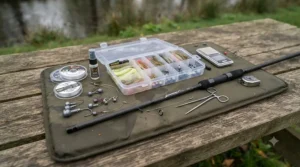
6. Abu Garcia Tormentor2 Spinning Rod — best entry point into genuine carbon construction
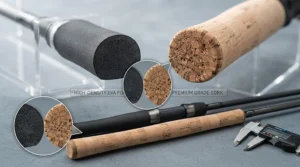
Don’t let the modest price fool you — the standout feature here is that Abu Garcia has kept a real 24T carbon blank and a premium cork handle in a rod that typically retails under £50. That’s a meaningful step up from the composite or fibreglass-blend rods that dominate the true budget end of the market, and it means significantly better sensitivity for detecting a zander’s characteristically light take.
For newer lure anglers still working out whether zander fishing is a long-term hobby or a passing curiosity, this represents a sensible low-risk entry: real carbon performance without committing £80-£100 before you know if you’ll stick with it. The multiple size options also mean you can match casting weight reasonably closely to your local water without overspending on a rod you might outgrow.
Amazon customer feedback on the wider Tormentor and related Abu Garcia budget ranges frequently highlights the surprising sensitivity for the price, alongside comments noting the rod feels “just as good if not slightly better” than rods costing considerably more — a sentiment echoed across several Abu Garcia budget-range reviews rather than unique to one model.
Pros:
- ✅ Genuine 24T carbon blank at a genuinely low price
- ✅ Premium cork handle rare at this price point
- ✅ Low financial risk for anglers new to lure fishing
Cons:
- ❌ Less refined guide spec than the SG2 or Prism X ranges
- ❌ Multiple variants can make length/weight selection fiddly
Typically under £50, this is the value pick for beginners who want real carbon performance without stretching toward the £100 ceiling on a first rod.
7. Mitchell Epic MX1 Spinning Rod — best lightweight starter rod for beginners and casual anglers
Rounding out the list, the Mitchell Epic MX1’s standout feature is sheer approachability — a lightweight carbon build explicitly marketed toward both beginner and more experienced anglers, with fast action and multiple size options covering bass, trout and pike-style predator work that overlaps neatly with light zander tactics. It’s built for freshwater and saltwater use, which adds a bit of extra versatility if your fishing occasionally strays beyond still and running fresh water.
Here’s what to weigh: the MX1 wasn’t designed as a zander specialist, so buyers should pick a lighter casting-weight variant to keep it suited to typical zander jighead and small shad work rather than heavier deadbaiting duties. Used within that lane, the fast action and lightweight blank give reasonable bite transmission for the money, and the beginner-friendly branding suggests Mitchell prioritised forgiving handling over aggressive, twitchy sensitivity.
Aggregated retailer sentiment positions the MX1 as a solid “first proper rod” purchase, with common feedback themes around comfortable handling and decent value rather than standout technical performance — an honest trade-off at this price.
Pros:
- ✅ Genuinely lightweight for long session comfort
- ✅ Fast action suits light zander jig work
- ✅ Freshwater and saltwater rated for extra flexibility
Cons:
- ❌ Not a zander-specific taper or guide layout
- ❌ Best suited to lighter lures rather than heavier shads
Usually available under £45, this is a sensible low-commitment option for anglers still deciding how serious their zander habit is going to get.
Practical Usage Guide: Setting Up Your Zander Rod
Getting a new rod out of the packaging is the easy part — setting it up properly is what actually determines whether you land fish or lose them. Start by threading your mainline through every guide before spooling up fully; it sounds obvious, but it’s the most common first-session mistake among newer lure anglers. Match your line diameter to the rod’s guide size — a 210-270cm zander rod with smaller guides will struggle with thick monofilament, so braided line in the 10-15lb class is the practical sweet spot for most of the rods above.
For maintenance, rinse guides and reel seat threads after any session near brackish or heavily silted water, since grit in a reel seat thread is a slow but real cause of premature wear. Check guide inserts every few months for hairline cracks, which cause line fray long before they’re visually obvious. In your first 30 days, the most common mistake is over-tightening the reel seat, which can crack lower-spec carbon reel seats on budget rods — snug is sufficient, you don’t need gorilla grip. A simple optimisation trick worth adopting early: practise “controlled drop” jigging in a garden or park before your first proper session, so you learn how your specific rod’s tip loads and unloads before a real zander is testing your reflexes in the dark.
Real-World Scenarios: Which Zander Rod Suits You?
Picture a college student commuting to a local canal after lectures with a rucksack and forty minutes of daylight left — for them, the Zebco DB Series Zander Spinning Rod or Mitchell Epic MX1 Spinning Rod make sense: light, cheap enough to risk on a bike rack, and matched to typical canal jig weights.
Now consider a weekend angler with a small car and a rotation of three or four reservoirs — the Savage Gear SG2 Medium Game Travel Rod fits neatly here, breaking down for the boot without sacrificing the backbone needed for bigger stillwater zander.
Finally, picture a dedicated predator angler fishing three evenings a week on a wide river system, casting well out to find deeper holding water — the Savage Gear SG2 Distance Game Spinning Rod or the Fox Rage Prism X Zander Pro Spinning Rod earn their keep here, where casting distance and precise action genuinely change catch rates rather than being a nice-to-have.
Problem → Solution: Common Zander Rod Issues Solved
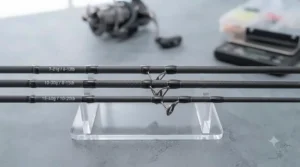
Missed hits on the drop are usually a rod-sensitivity problem rather than a skill problem — switching to a fast-action blank like the Fox Rage Prism X Zander Pro Spinning Rod or pairing your current rod with braided line instead of mono often solves this instantly. If you’re finding your tip section cracking or splintering, the likely culprit is over-tightened reel seats or storing the rod fully rigged in a hot car boot; loosen the seat between sessions and store rods flat. Anglers casting light jigheads with a rod rated well above their lure weight often struggle with tangles and poor accuracy — the fix here is simply dropping down to a rod like the Zebco DB Series Zander Spinning Rod, whose casting window is matched to that lighter end. If your line keeps slapping the blank on the cast, check your guide spacing is intact and your spool isn’t overfilled, since both create the same symptom but need different fixes.
How to Choose Zander Rods Under £100
- Match casting weight to your actual lures first. Most zander jigs and shads sit in the 7-25g range, so a rod rated 5-45g or 7-28g will cover the vast majority of sessions without feeling mismatched.
- Prioritise a fast or extra-fast action. Zander bites are notoriously subtle, and a slower blank simply won’t transmit that “tap” as clearly through to your hand.
- Check guide quality before blank material. Cheap guide inserts wear grooves that fray braid within a season, undermining even a decent carbon blank underneath.
- Decide on length based on your typical water. Shorter 6.5-7ft rods suit tight canal margins; longer 8ft-plus rods earn their keep on open reservoirs and wide rivers.
- Weigh portability if you travel to fish. Multi-piece travel rods like the Savage Gear SG2 Medium Game Travel Rod sacrifice almost nothing in performance for a genuinely bag-friendly breakdown.
- Don’t ignore handle material. Cork transmits vibration slightly better than EVA foam but needs more care; either is fine, just know the trade-off going in.
- Buy toward the top of your budget if you’re committed. A rod like the Fox Rage Prism X Zander Pro Spinning Rod rewards anglers who already know zander fishing is a long-term interest.
Zander Spinning Rod Reviews: What Owners Actually Say
Genuine zander spinning rod review coverage online is patchier than for mainstream pike or carp gear, largely because zander fishing remains a smaller UK niche. Where verified reviews do exist — mostly on retailer sites and angling forums — a few themes repeat consistently: owners of the SG2 range frequently note the guide quality feels above its price point, while budget carbon rods like the Abu Garcia and Mitchell options draw praise for sensitivity relative to cost but occasional comments about guide wear after heavy braid use. Rather than inventing star ratings or review counts that don’t exist, the honest takeaway is this: treat spec-based analysis as your primary decision tool for lesser-reviewed models, and use genuine review volume as a bonus signal only where it’s actually available in meaningful quantity.
Best Carbon Zander Rod: What the Carbon Rating Actually Means
Search for the best carbon zander rod and you’ll run into numbers like “24T” or “30T” plastered across product pages with zero explanation. Toray Carbon ratings measure tensile modulus — broadly, higher numbers indicate stiffer, lighter fibre for the same strength, which is why the Fox Rage Prism X Zander Pro Spinning Rod‘s 24/30 Ton blend feels noticeably lighter in hand than a basic composite rod at a similar length. Higher-modulus carbon also transmits vibration more efficiently, which is exactly what you want for detecting a zander’s faint pick-up. The trade-off is that very high-modulus blanks can become more brittle under sideways shock loading, so a rod isn’t automatically “better” just because its carbon number is bigger — guide quality, taper design and action all matter just as much as the raw fibre spec printed on the blank.
Zander Rod and Reel Combo: Pairing Guide
If you’re weighing up a zander rod and reel combo versus buying separately, the honest answer is: combos make sense for beginners, separates make sense for anyone upgrading one component at a time. A pre-matched combo removes the guesswork of reel-to-rod balance, and several retailers bundle rods similar to those above with a 2500-3000 size fixed-spool reel loaded with braid-ready line. The trade-off is that combo reels are usually the weakest link — often a step below what you’d choose independently at the same total spend. If budget allows, buying a rod like the Shakespeare Agility 2 Spinning Rod and pairing it yourself with a reel matched deliberately to your line and lure choices will typically outperform an off-the-shelf combo at the same price.
Rod Test Curve for Zander Explained
Coarse anglers moving into lure fishing often ask about rod test curve for zander, expecting the same lb-rating system used on carp or barbel rods — but most zander spinning rods are rated in casting weight (grams), not test curve, because the two measurement systems serve different fishing styles. Casting weight tells you the lure weight range a rod is designed to load and cast efficiently, which matters far more for jig-and-shad tactics than a static test curve figure ever would. If you’re translating from a carp-fishing background, think of a 7-28g casting rating as roughly equivalent in “feel” to a light 1.5lb test curve rod, though the comparison is approximate rather than a direct conversion — the honest answer is that casting weight, not test curve, is the number worth focusing on when buying a dedicated lure rod.
✨ Don’t Miss These Exclusive Deals!
🔍 Take your zander fishing to the next level with these carefully selected rods. Click on any highlighted item to check current pricing and availability. These carbon blanks will help you build a genuinely capable, budget-friendly zander setup you’ll rely on for seasons to come!
Spinning Reel Pairing: Getting the Balance Right
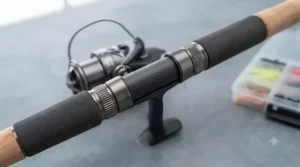
Getting spinning reel pairing right matters just as much as the rod choice itself, and it’s a step budget buyers often skip. As a general rule, a 6.5-7.5ft rod rated 7-28g pairs well with a 2500-3000 size fixed-spool reel, while the longer, heavier Savage Gear SG2 Distance Game Spinning Rod benefits from a 3000-4000 size reel to keep the outfit balanced when held for long casting sessions. Balance isn’t just about comfort — a reel that’s too heavy for the blank shifts the outfit’s pivot point away from your casting hand, sapping accuracy over a full session. Braided line in the 10-20lb class loaded to within a couple of millimetres of the spool lip also reduces friction on the cast, which noticeably extends distance on rods like the SG2 Distance Game without spending another penny.
Predator Fishing Regulations: What Every Zander Angler Must Know
Before you even cast a line, it’s worth understanding UK predator fishing regulations specific to zander, because they differ meaningfully from rules around native coarse fish. Zander are classified as a non-native invasive species in England, and under the Wildlife and Countryside Act 1981, it is not lawful to return a caught zander alive to most English waterways — a position confirmed by the Canal & River Trust’s official zander guidance, which explicitly states zander cannot be returned alive to their canal network. This catches out plenty of anglers used to standard catch-and-release etiquette, so it’s genuinely important to check local byelaws and fishery-specific permit conditions before you fish a new zander water.
Beyond the species-specific rule, standard national byelaws still apply: you need a valid Environment Agency rod licence, keepnet use has size and mesh requirements, and any fish you’re not permitted to keep must be handled and returned according to national rules. The Angling Trust’s position paper on zander management is a useful additional read if you want the fuller regulatory and ecological context behind why these rules exist.
Zander Rods vs Pike Rods: What’s the Real Difference
It’s tempting to assume any predator rod will do, but zander rods and pike rods are built around genuinely different demands. Pike rods typically favour higher casting weights, often 40-80g and beyond, built to launch heavier deadbaits and bigger lures, with a more forgiving, slower-loading action to absorb aggressive pike headshakes. Zander rods, by contrast, lean toward lighter 7-40g casting ranges with faster, more sensitive tips — because zander bites are subtler and the fight, while determined, rarely involves the same violent headshaking pike are known for. The Wikipedia entry on zander notes the species’ preference for deep, calm, often murky water, which is part of why bite detection sensitivity matters more than raw lifting power in rod design. Using a pike rod for zander isn’t disastrous, but you’ll likely miss more subtle takes; using a true zander rod for big pike risks being under-gunned if you hook something unexpected.
Common Mistakes When Buying a Zander Rod Under £100
The most frequent mistake is buying purely on length without checking casting weight, leaving anglers with a rod that’s either too stiff to load light jigs properly or too soft to control heavier shads. A close second is ignoring guide spec entirely — a stunning carbon blank paired with cheap guide inserts will still fray braid and lose casting distance within a season. Many first-time buyers also skip checking reel compatibility, ending up with a mismatched, front-heavy or back-heavy outfit that fatigues the wrist over a long session. Finally, plenty of anglers overspend on a “premium” budget rod without checking whether a cheaper, better-matched option like the Zebco DB Series Zander Spinning Rod would have suited their actual lure box just as well.
Long-Term Cost & Maintenance
Thinking purely in cost-per-use terms, a £55-£80 rod fished weekly across a typical UK zander season works out to genuinely modest running costs once you spread the purchase price over a few years of sensible care. The real long-term cost driver isn’t the rod itself but guide wear from braided line — budget rods with lower-spec inserts may need guide replacement or professional re-ringing within two or three seasons of heavy use, while rods like the Savage Gear SG2 Distance Game Spinning Rod with SeaGuide-branded guides tend to hold up notably longer under the same braid mileage. Total cost of ownership also depends on storage: a rod stored loose in a car boot degrades faster than one kept in even a basic sleeve or tube, so a £10-15 rod bag is arguably the highest-ROI accessory purchase you can make alongside any of the rods reviewed above.
Frequently Asked Questions
❓ What's the best rod weight for zander fishing?
❓ Can I use a pike rod for zander fishing?
❓ Do I need to return zander I catch in the UK?
❓ What line should I use with a budget zander rod?
❓ Is a 2-piece or multi-piece zander rod better?
Conclusion
Choosing among genuinely capable zander rods under £100 comes down to matching casting weight and action to your actual local fishing rather than chasing the flashiest spec sheet. If you’re just starting out, the Zebco DB Series Zander Spinning Rod or Mitchell Epic MX1 Spinning Rod offer low-risk entry points; if you’re ready to commit properly, the Fox Rage Prism X Zander Pro Spinning Rod and Savage Gear SG2 Distance Game Spinning Rod reward the extra spend with genuinely species-tuned performance. Whichever you choose, remember that guide quality, sensible line pairing and a bit of basic maintenance will do more for your catch rate over time than another £20 spent chasing marginal spec upgrades. Check current prices before buying, since promotions shift regularly across UK tackle retailers — and tight lines out there.
Recommended for You
- Micro Jig Weight for Perch Fishing: 7 Best Sizes for 2026
- Micro Jigs for Perch: 7 Best UK Picks ; Buying Guide 2026
- Drop Shot vs Micro Jig for Perch: 7 Best UK Picks (2026)
Disclaimer: This article contains affiliate links. As an Amazon Associate, I earn from qualifying purchases. If you purchase products through these links, we may earn a small commission at no additional cost to you.
✨ Found this helpful? Share it with your friends! 💬🤗
