
In This Article
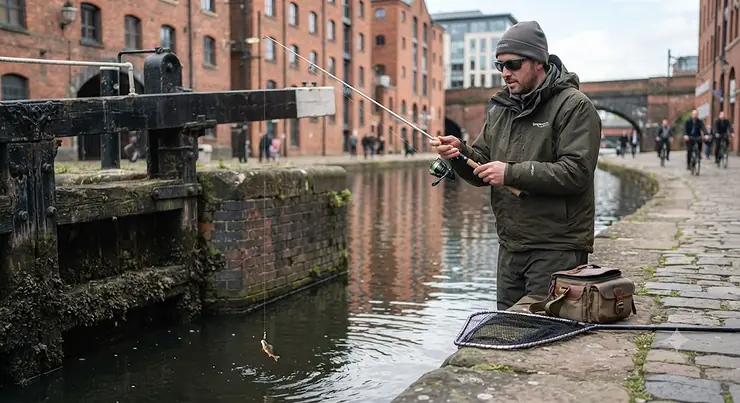
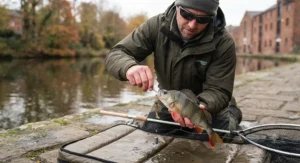
There’s a very particular thrill in watching a rod tip barely twitch, knowing full well a perch has just inhaled a soft plastic sitting motionless six inches off the bottom. Drop shot fishing for perch is a finesse lure technique where a hook is tied part-way up the line, with a small weight below it, so the bait hangs suspended in the strike zone while the weight anchors everything in place. Unlike a jig, which you’re constantly retrieving and re-dropping, a drop shot rig lets you hold a lure dead still in front of a fish’s nose for as long as it takes.
That stillness is precisely why it’s become the go-to method for pressured perch on hard-fished stillwaters and clear canals across the UK. Perch are visual, opportunistic predators that hunt invertebrates, crayfish and smaller fish across ponds, lakes, reservoirs, canals and lowland rivers, according to The Wildlife Trusts — and a drop shot bait held quivering at eye level often triggers a reaction strike that a fast-moving jig simply can’t.
This guide covers seven genuinely useful pieces of drop shot kit, from budget rod-and-rig combinations through to specialist rods built specifically for the technique, alongside honest analysis of who each one suits. We’ve also broken down exactly how to set up a drop shot rig, which weight sizes to reach for and when, how depth affects your presentation, and the finer points of nose hooking a soft plastic so it swims correctly rather than spinning uselessly on the drop. Whether you’re rigging up for the first time or refining an existing setup, there’s a section here for you.
Quick Comparison Table
| Product | Type | Best For | Price Range |
|---|---|---|---|
| Fox Rage Warrior Dropshot Rod | Rod | Budget entry into the technique | £30-£45 range |
| Savage Gear SG2 Drop Shot Specialist Rod | Rod | Serious, sensitive bite detection | £70-£100 range |
| VMC SpinShot Hooks | Hook system | Reducing line twist and rig changes | £4-£8 range |
| Savage Gear Dropshot Rig Kits | Pre-tied rig | Saving time on the bank | £6-£10 range |
| Berkley Gulp! Minnow | Soft lure | Scented realism in clear water | £6-£9 range |
| Berkley Gulp! Sandworm | Soft lure | Coloured or murky water | £6-£9 range |
| Savage Gear Dropshot Academy Kit | Complete kit | Beginners wanting everything in one box | £20-£30 range |
Looking at the spread above, the logical starting point depends on what you already own. Anyone with a spinning rod already in the shed can begin with just the Savage Gear Dropshot Rig Kits and a pack of Berkley Gulp! Minnow lures, while a genuine beginner with no relevant gear at all is far better served by the Savage Gear Dropshot Academy Kit, which bundles hooks, weights and a spread of lures into a single purchase. Those planning to make drop shotting a regular part of their perch fishing, rather than an occasional experiment, will feel the difference a dedicated rod like the Fox Rage Warrior Dropshot Rod or Savage Gear SG2 Drop Shot Specialist Rod makes to bite detection almost immediately.
💬 Just one click — help others make better buying decisions too!😊
Top 7 Drop Shot Products for Perch: Expert Analysis
1. Fox Rage Warrior Dropshot Rod — budget entry into the technique
The Fox Rage Warrior Dropshot Rod is built specifically for this method rather than adapted from a general spinning blank, with a soft, sensitive tip section designed to register the shy taps of a cautious perch rather than swallow them.
Rated for casting weights of 4-17g over a 220cm two-piece blank, it sits comfortably in the sweet spot for the light drop shot weights most perch fishing calls for. Based on the spec comparison with heavier all-round spinning rods, the noticeably softer tip here is the whole point — a stiffer blank simply won’t transmit the faint knock of a perch mouthing a static lure the way this one does. Reviewers and anglers who’ve used the wider Warrior range consistently note that the components feel well above what you’d expect at this price point, with a smooth, progressive action through the midsection when a better fish is finally hooked.
What most buyers overlook when shopping by price alone is that a rod’s tip sensitivity matters more for drop shotting than for almost any other lure technique, because you’re relying on watching and feeling the rod rather than a fast retrieve to signal a bite. For anglers trying the method for the first time without wanting to commit serious money before knowing if they enjoy it, this is a sensible, low-risk starting point.
Pros:
- ✅ Purpose-built soft tip for shy perch bites
- ✅ Well-specified components for the price
- ✅ Lightweight enough for long sessions
Cons:
- ❌ Less backbone for accidental larger predator hookups
- ❌ Only available in a limited length range
At £30-£45, it’s an accessible way to feel the genuine difference a dedicated drop shot rod makes over a generic spinning rod.
2. Savage Gear SG2 Drop Shot Specialist Rod — serious, sensitive bite detection
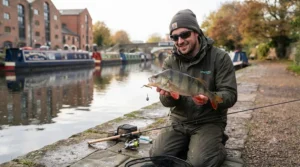
Savage Gear SG2 Drop Shot Specialist Rod steps up considerably in build quality, using Japanese Toray carbon blanks and stainless steel guides to create a rod that’s noticeably lighter in the hand while still delivering more feedback through the tip.
The higher-modulus carbon construction means less material is needed to achieve the same stiffness profile, which on paper translates to a rod that transmits vibration more efficiently up the blank and into your hand. In practice, anglers who’ve fished both the SG2 and cheaper alternatives back to back describe a genuinely different level of feel — able to distinguish between a perch mouthing the bait and simply brushing past it, which matters enormously when fishing pressured, well-educated stillwaters where bites can be extremely subtle.
Honest analysis of the trade-off here: this level of refinement costs meaningfully more than an entry-level rod, and the sensitivity that makes it excellent for detecting delicate bites also means it’s less forgiving of an aggressive hookset. Reviewers who fish it regularly say the reel seat and handle ergonomics hold up well over long, repetitive casting sessions, which matters if you’re covering a lot of swims in a day.
Pros:
- ✅ Premium Toray carbon blank transmits bites clearly
- ✅ Lightweight for extended casting sessions
- ✅ Available across multiple casting weight ranges
Cons:
- ❌ Noticeably pricier than entry-level dropshot rods
- ❌ Sensitive tip needs a gentler hookset technique
Priced at £70-£100, this is the pick for anglers who’ve confirmed they enjoy the technique and want the sharper bite detection that separates a good session from a great one.
3. VMC SpinShot Hooks — reducing line twist and rig changes
VMC SpinShot Hooks solve a specific, well-known annoyance with traditional drop shot rigging: the hook is mounted on its own small swivel rather than tied directly inline, so the whole assembly rotates freely instead of twisting your leader.
The swivel system also brings a second, less obvious benefit — because the up-trace and down-trace sections attach to opposite ends of the swivel independently, you can replace just the weight-side trace if it’s damaged or worn, without retying the entire rig from scratch. Anglers who’ve made the switch from conventional inline drop shot hooks describe fewer wasted rigs over a session, since fluorocarbon leader material is notably brittle and prone to snapping exactly at the point where a weight has been repositioned.
Based on the spec comparison with basic inline hooks, the trade-off is a marginally bulkier connection point, which some anglers feel is slightly more visible to extremely cautious fish in ultra-clear water. For most perch fishing situations, though, aggregated feedback suggests the practical time saved on the bank comfortably outweighs that concern.
Pros:
- ✅ Swivel design virtually eliminates line twist
- ✅ Down-trace can be replaced without full re-rig
- ✅ Straightforward to tie even for less experienced anglers
Cons:
- ❌ Slightly bulkier connection than a plain inline hook
- ❌ A marginally higher cost per hook than basic alternatives
At £4-£8 for a small pack, this is a low-cost upgrade that pays for itself in saved rigging time across a season of fishing.
4. Savage Gear Dropshot Rig Kits — saving time on the bank
Savage Gear Dropshot Rig Kits take the rigging step out of the equation entirely, arriving as three pre-tied fluorocarbon leaders complete with carbon steel hooks and stealth black brass weights already attached.
The kits come in small, medium and large sizes, with the small option built around a size 6 hook and 3.5g weights on 0.26mm fluorocarbon — a sensible starting spec for typical UK perch. What the packaging won’t spell out, but experienced users note, is that having three ready-tied rigs on hand means a snag or break-off costs you seconds rather than the several minutes it takes to retie fluorocarbon in cold, wet conditions on the bank. That convenience factor is easy to underestimate until you’re the angler still rigging up while everyone else is already fishing.
Reviewers consistently rate the fluorocarbon quality as genuinely soft and supple rather than the stiff, kinked material sometimes found in budget rig kits, which matters for natural lure presentation. The main limitation, fairly, is that you’re locked into the pre-set hook and weight combination for each size rather than being able to fine-tune every element yourself.
Pros:
- ✅ Three ready-to-fish rigs, no tying required
- ✅ Soft, high-quality fluorocarbon leader material
- ✅ Available in sizes matched to different perch weights
Cons:
- ❌ Fixed hook and weight combinations per pack
- ❌ Works out pricier per rig than tying your own
At £6-£10 per pack, these earn their keep on days when time on the water matters more than saving a few pounds by tying rigs yourself.
5. Berkley Gulp! Minnow — scented realism in clear water
Berkley Gulp! Minnow brings scent into the equation, using a water-based formula designed to disperse through the water and hold a perch’s attention for longer once it’s found the bait — a genuine advantage on a static drop shot presentation where the lure isn’t relying on movement alone to get noticed.
The realistic, tapered minnow profile and subtle tail flutter give it lifelike motion even sitting almost still, which is exactly the situation a drop shot rig creates. Reviewers frequently mention that perch appear to hold onto the bait noticeably longer than with unscented plastics, giving a slightly wider window to detect the bite and set the hook — useful for anyone still learning to read the subtle knocks a drop shot rig produces. Based on the spec comparison with scentless soft plastics, the trade-off is that Gulp! baits dry out if left unsealed, so they need storing in their liquid-filled packaging between trips.
Aggregated angler sentiment is strongly positive on effectiveness in clear water specifically, where the realistic profile and scent combination gives perch a longer, closer look at the bait than a plain plastic silhouette would.
Pros:
- ✅ Scent formula holds fish interest longer
- ✅ Realistic profile suits static drop shot presentation
- ✅ Wide range of sizes for different perch venues
Cons:
- ❌ Dries out quickly once removed from packaging
- ❌ Stronger scent can attract more small, immature fish
At £6-£9 per pack, it’s a small step up from basic plastics that reviewers consistently credit with extra bites on tricky days.
6. Berkley Gulp! Sandworm — coloured or murky water
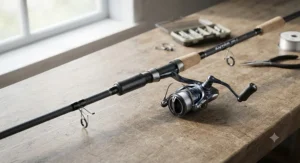
Berkley Gulp! Sandworm takes a different profile entirely, mimicking a worm rather than a baitfish, and reviewers who fish coloured canals and stained stillwaters rate it as one of the most reliable options when visibility is poor and a bold silhouette matters more than realistic swimming action.
The strong scent dispersion becomes even more valuable in low-visibility water, where perch are relying more heavily on smell and vibration to locate prey than on sight. Anglers commonly rig this with a simple head hook so the flattened body profile sits parallel to the riverbed, mimicking a natural worm resting on the bottom — a subtly different presentation to the minnow-style baits above, and one worth having in the tackle box for venues where the water rarely runs clear.
The honest downside, based on aggregated reviews, is that the sandworm shape offers less inherent action than a tailed minnow bait, so its effectiveness leans more heavily on scent and colour than movement — meaning it performs best paired with an occasional gentle rod-tip twitch rather than being left entirely static.
Pros:
- ✅ Bold profile works well in low-visibility water
- ✅ Strong scent compensates for reduced water clarity
- ✅ Versatile head-hooking option for bottom presentation
Cons:
- ❌ Less inherent swimming action than minnow-style lures
- ❌ Best paired with occasional twitches rather than static fishing
Priced at £6-£9, it’s the natural companion to the Berkley Gulp! Minnow above, covering the murky-water scenarios where a baitfish profile alone can fall short.
7. Savage Gear Dropshot Academy Kit — beginners wanting everything in one box
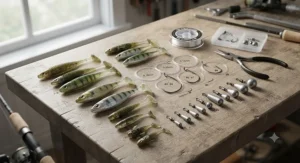
Savage Gear Dropshot Academy Kit is aimed squarely at anglers picking up the technique for the first time, bundling 24 different shads, minnows and crayfish-style soft plastics together with six drop shot hooks and six weights in a single package.
The sheer variety here is the main selling point: rather than guessing which single lure style and colour will work on a given day, a beginner has enough variation to experiment across a session and start learning what their local water responds to. Reviewers consistently describe it as excellent value specifically because buying this many individual components separately would cost noticeably more, and the included hooks and weights mean there’s genuinely nothing extra needed to get started beyond a rod, reel and line.
What most buyers overlook with all-in-one kits generally is quality consistency across such a wide component spread — and the aggregated feedback here is reassuringly positive, with anglers noting the hooks in particular hold an edge well rather than needing immediate replacement, which isn’t always the case with budget bundle kits.
Pros:
- ✅ Twenty-four lures across multiple styles and colours
- ✅ Hooks and weights included, ready to fish
- ✅ Excellent value versus buying components separately
Cons:
- ❌ Individual lure colours can’t be chosen in advance
- ❌ Hooks are functional rather than premium-grade
At £20-£30, this is the single best-value starting point for anyone building a drop shot kit from absolutely nothing.
Practical Usage Guide: How to Set Up a Drop Shot Rig for Perch
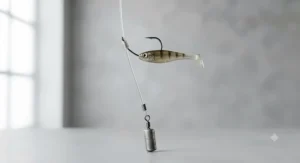
Setting up a drop shot rig for perch starts with roughly an arm’s length of fluorocarbon leader, doubled over and threaded through a drop shot hook so the hook sits perpendicular to the line and points upward — this is what allows the bait to hang naturally away from the leader rather than lying flat against it. If you’re using a swivel-style hook such as the VMC SpinShot Hooks, this step is largely done for you, since the hook attaches to its own rotating eye rather than needing a specific knot orientation.
Once the hook is in place, thread the tag end of the leader down to your chosen weight and attach it — clip-style drop shot weights simply pinch onto the line without a knot, making on-the-bank depth adjustments far quicker than tying weights on directly. Nose hook or lightly lip hook your chosen soft plastic, such as the Berkley Gulp! Minnow, through the very front of the head, keeping the hook point exposed so it can pivot freely as the lure moves.
A common mistake in the first few sessions is setting the hook too far up the leader, placing the bait well above where perch are actually holding. Start with 15-30cm between hook and weight for typical stillwater perch fishing, and adjust based on where you’re marking fish or getting bites. Cast out, let the weight settle on the bottom, then gently shake the rod tip in short, sharp movements rather than a sweeping retrieve — the goal is to make the bait quiver on the spot, not to move it any real distance.
✨ Ready to build your perfect drop shot setup?
🔍 Compare all seven picks above and put together the combination that matches your local water. Click through to check current pricing and availability on each item — the right rig turns a quiet session into a proper haul.
Real-World Scenarios: Matching Gear to Your Perch Session
If you’re heading to a clear, pressured stillwater where perch have seen every jig in the book, pair the Savage Gear SG2 Drop Shot Specialist Rod with the Berkley Gulp! Minnow and a light 3.5g weight — the combination of superior bite detection and scent-driven realism suits fussy, well-educated fish.
If you’re fishing an urban canal after rain, with visibility down to a foot or less, reach for the Berkley Gulp! Sandworm on a Savage Gear Dropshot Rig Kits setup, leaning on scent and a bold silhouette rather than realistic swimming action to get found in the murk.
If you’re completely new to lure fishing and want to try the technique without significant outlay, the Fox Rage Warrior Dropshot Rod paired with the Savage Gear Dropshot Academy Kit gives you everything needed for a full session, with enough lure variety to start working out what your local perch respond to without multiple separate purchases.
Common Drop Shot Problems, Solved
Problem: I can’t feel any bites at all. This is very often a rod sensitivity issue rather than a lack of fish. Upgrading from a generic spinning rod to a purpose-built option like the Fox Rage Warrior Dropshot Rod resolves this for most anglers, since the softer, more responsive tip transmits far more information than a stiffer all-round blank.
Problem: My leader keeps twisting into a mess. Standard inline drop shot hooks are the usual culprit, since the whole rig rotates with the current or retrieve. Switching to a swivel-based system such as the VMC SpinShot Hooks largely eliminates this.
Problem: The lure spins instead of swimming naturally. This almost always comes down to hooking position — a soft plastic nose hooked slightly off-centre will spin on the drop and look unnatural. Take the extra few seconds to hook dead-centre through the nose, checking the bait hangs straight before casting.
Problem: I’m getting snagged constantly. Heavier weights sink faster and dig into soft bottoms more readily. Dropping to a lighter weight, or switching to a pencil-shaped weight rather than a round one, reduces snagging on silty or weedy venues considerably.
Problem: Bites but no hook-ups. This is frequently a hookset timing issue rather than a gear problem — perch often mouth a static bait more gently than a moving one, so a slightly delayed, firm sweep rather than an immediate hard strike tends to convert more bites into fish.
How to Choose Drop Shot Gear for Perch
- Start with the rod, not the lures. A soft, sensitive tip matters more for this technique than almost any other lure method, since bite detection relies on feel rather than a fast retrieve signalling a take.
- Match hook size to typical perch mouth size locally. A size 4-6 hook covers most UK perch comfortably without being too large for smaller fish to take confidently.
- Choose weight based on depth and conditions, not habit. Heavier weights suit deeper water or windy days; lighter weights improve bite detection in calm, shallow swims.
- Prioritise fluorocarbon leader quality. Stiff, kinked fluorocarbon fights the natural presentation this technique depends on — softer material genuinely improves lure action.
- Decide between pre-tied rigs and DIY tying based on time, not just cost. Pre-tied options like the Savage Gear Dropshot Rig Kits cost more per rig but save real time on the bank.
- Stock at least two lure profiles. A minnow-style bait for clear water and a worm-style bait for coloured water, such as the Berkley Gulp! Minnow and Berkley Gulp! Sandworm, covers most UK venues between them.
- Read aggregated reviews for durability, not just initial impressions. Hook sharpness retention and fluorocarbon quality matter more after a full season than they do on the first cast.
Drop Shot Weight Size for Perch: What to Use and When
Getting drop shot weight size right for perch is mostly about matching the weight to depth, current and how much feel you want to retain, rather than following a single fixed number. As a general starting point, 3.5-5g weights suit shallow stillwaters and calm canals down to around two metres, giving excellent bite detection without sacrificing castability. Deeper venues, or sessions with any noticeable wind or current, generally call for 7-10g to maintain proper bottom contact and keep the rig from drifting out of the strike zone.
| Weight | Typical Depth/Conditions | Best For |
|---|---|---|
| 2-3.5g | Shallow, calm, under 2m | Maximum bite sensitivity |
| 5-7g | Moderate depth, light wind | All-round stillwater perch |
| 7-10g | Deeper water or breezy conditions | Maintaining bottom contact |
| 10g+ | Strong current or very deep swims | Rivers, canals with flow |
The pattern above holds fairly consistently across UK perch venues: as depth or water movement increases, so does the weight needed simply to keep the rig anchored and in contact with the bottom, even though a heavier weight does slightly dull the subtle feel a lighter one provides. Pencil-shaped weights, favoured by many experienced drop shot anglers, offer an additional advantage over round ball weights in this context — their shape reduces snagging on silty or debris-strewn bottoms, which matters enormously on canals and commercial fisheries with years of accumulated bottom debris.
Drop Shot vs Jig for Perch
| Factor | Drop Shot | Jig |
|---|---|---|
| Best For | Static, pressured, or fussy fish | Actively searching multiple swims |
| Bite detection | Excellent, direct feel | Good, but less refined |
| Presentation control | Bait held stationary at chosen depth | Bait moves throughout retrieve |
| Learning curve | Slightly steeper to rig correctly | Simple to cast and retrieve |
| Ground covered per hour | Lower, more static | Higher, covers more water |
Drop shot and jig fishing aren’t really rivals so much as complementary tools suited to different moments in a session. A jig lets you search a large area quickly, covering multiple swims to locate active, feeding perch — genuinely useful early in a session or on unfamiliar water where you don’t yet know where fish are holding. Once you’ve found fish, particularly if they’re showing interest but not committing fully, switching to a drop shot rig such as the Fox Rage Warrior Dropshot Rod paired with the Berkley Gulp! Minnow lets you hold a bait in front of them for far longer than a jig’s constantly moving presentation allows. Many experienced perch anglers carry both rigged and ready, switching between the two based on how fish are responding rather than committing to one technique for an entire session.
Drop Shot Depth for Perch Fishing
Drop shot depth for perch fishing refers to two related but distinct measurements: how far your hook sits above the weight, and how deep the whole rig is fished in the water column. Get the hook-to-weight distance wrong and even perfect weight choice and lure selection won’t save the session, since the bait simply won’t be presented at the height perch are holding.
As a starting point, 15-30cm between hook and weight suits most UK perch fishing, positioning the bait just above where fish are typically feeding close to the bottom. On venues where perch are known to hold higher in the water column — often the case over deep, clear water in summer when fish suspend to follow baitfish shoals — extending this to 40-60cm can put the bait directly in their feeding zone rather than well below it. Watching a fishfinder or simply noting where takes occur during a session lets you fine-tune this distance as you go, rather than guessing at a fixed setting for the whole day.
Total fishing depth matters just as much: perch frequently sit tight to structure such as sunken trees, reed margins or drop-offs, and identifying these features before casting, rather than fishing blind across open water, consistently produces better results than depth alone.
Nose Hooking Drop Shot Perch: Technique Guide
Nose hooking is the standard hooking method for drop shot perch fishing, and getting it right is the difference between a lure that swims naturally on the shake and one that spins uselessly, twisting your leader and looking nothing like a living creature. To nose hook correctly, insert the hook point directly through the very centre of the lure’s head, exiting cleanly on the opposite side, keeping the point exposed rather than burying it back into the plastic.
Centring the hook matters more than it might seem — even a few millimetres off-axis causes the bait to rotate unnaturally when shaken rather than pulsing side to side as intended. Some anglers prefer to bury the hook slightly, similar to a weedless jig rigging style, which reduces snagging in heavy cover but noticeably limits the lure’s natural movement; for most open perch swims, exposed nose hooking gives a far more convincing presentation and is worth the slightly higher snag risk.
After rigging, always test the bait’s action in clear water beside the bank or boat before casting properly — a lure that hangs crooked or spins on a gentle shake needs re-hooking before it goes anywhere near a fish. This thirty-second check, skipped by many beginners in their haste to get fishing, prevents an entire session of fishing an unnaturally presented, unappealing bait without realising why the bites aren’t coming.
Common Mistakes When Buying Drop Shot Gear for Perch
The single most common mistake is buying a general-purpose spinning rod and expecting drop shot-level sensitivity from it — the softer, purpose-built tip on rods like the Fox Rage Warrior Dropshot Rod genuinely isn’t marketing fluff, and the difference in bite detection is significant. A second frequent error is over-weighting the rig, reaching for a heavier weight than the venue needs simply because it’s what’s already in the tackle box, which dulls feel and increases snagging on softer bottoms unnecessarily.
Buyers also regularly underestimate how much fluorocarbon quality matters, opting for the cheapest leader material available and then wondering why lure action feels stiff and unnatural compared to what more experienced anglers describe. Finally, many newcomers buy a single lure colour or style and stick with it regardless of conditions, rather than carrying at least one clear-water and one coloured-water option, such as the Berkley Gulp! Minnow and Berkley Gulp! Sandworm pairing covered above.
Long-Term Cost & Maintenance: Building a Drop Shot Kit Over a Season
| Approach | Typical Upfront Cost | Ongoing Cost | Best For |
|---|---|---|---|
| Budget starter (rod + academy kit) | £50-£75 combined | Occasional lure top-ups | Trying the technique |
| Mid-range (dedicated rod + rig kits) | £40-£55 combined | Rig kits, lure replacement | Regular weekend anglers |
| Premium (SG2 rod + SpinShot system) | £75-£110 combined | Leader material, hooks | Frequent, serious perch anglers |
Set against the cost of a single wasted session using unsuitable gear — missed bites, snapped leaders, and a rod too stiff to register a single take — even the premium combination of the Savage Gear SG2 Drop Shot Specialist Rod and VMC SpinShot Hooks represents solid value for anglers fishing regularly. The budget route using the Fox Rage Warrior Dropshot Rod and Savage Gear Dropshot Academy Kit remains entirely sensible for anyone testing whether the technique suits their fishing style before committing further, and most anglers who take to drop shotting end up gradually upgrading individual components, like a rod or hook system, rather than replacing the whole kit at once.
A Note on Rules Before You Head Out
Before fishing for perch anywhere in England or Wales, anyone aged 13 or over needs a valid Environment Agency rod licence, and national byelaws set out specific rules on methods, seasons and catch limits for coarse fish including perch that apply on top of any local fishery rules. Many stillwaters and canal stretches also carry their own permit or day-ticket requirements separate from the rod licence itself, so it’s worth checking with the fishery or venue owner before setting up. On canal venues specifically, the Canal & River Trust’s species guide is a useful reference for identifying good perch holding areas along the network, since these waters make up a significant share of accessible UK perch fishing.
Frequently Asked Questions
❓ What size hook is best for drop shot perch fishing?
❓ How heavy should a drop shot weight be for perch?
❓ Is drop shot better than jigging for perch?
❓ How do you nose hook a soft plastic for drop shot?
❓ Do I need a special rod for drop shot fishing?
Conclusion
Drop shot fishing for perch rewards patience and attention to small details far more than raw casting distance or expensive gear alone. For anglers testing the water, the Fox Rage Warrior Dropshot Rod paired with the Savage Gear Dropshot Academy Kit gives everything needed to learn the technique properly without overcommitting financially. Those ready to refine bite detection further should look to the Savage Gear SG2 Drop Shot Specialist Rod and VMC SpinShot Hooks, while stocking both the Berkley Gulp! Minnow and Berkley Gulp! Sandworm covers the clear-to-coloured water range most UK venues present across a season.
Whichever combination you settle on, remember that success with this method comes down to getting the fundamentals right — correct hook-to-weight spacing, a centred nose hook, and weight chosen for the conditions in front of you, not habit. Get those details right consistently, and the subtle knock of a perch investigating a motionless bait becomes a far more common feeling on the end of your line.
Recommended for You
- Drop Shot Lures for Perch: 7 Brilliant Picks for 2026
- Perch Lures for Canal Fishing: 7 Best Value Picks for 2026 (UK)
- Perch Lures for Winter: 7 Best Cold Water Picks for 2026
Disclaimer: This article contains affiliate links. As an Amazon Associate, I earn from qualifying purchases. If you purchase products through these links, we may earn a small commission at no additional cost to you.
✨ Found this helpful? Share it with your friends! 💬🤗
