
In This Article
Walk into any tackle shop from Cornwall to the Scottish Highlands, and you’ll hear the same conversation: anglers raving about their latest haul on the ronnie rig setup. This isn’t mere fishing folklore — it’s backed by results. The ronnie rig, also known as the spinner rig or 360 rig, has transformed into the most widely used carp presentation across UK waters, and for rather good reason.
What makes this setup so devastatingly effective? The rotating hook presentation spins 360 degrees when a carp picks up your bait, turning aggressively to find purchase regardless of approach angle. Whether you’re fishing the silty depths of a Cambridgeshire gravel pit or casting over the firm clay bottom of a Yorkshire syndicate water, the ronnie rig setup delivers consistent hook holds that would make your grandfather’s hair rig blush with inadequacy.
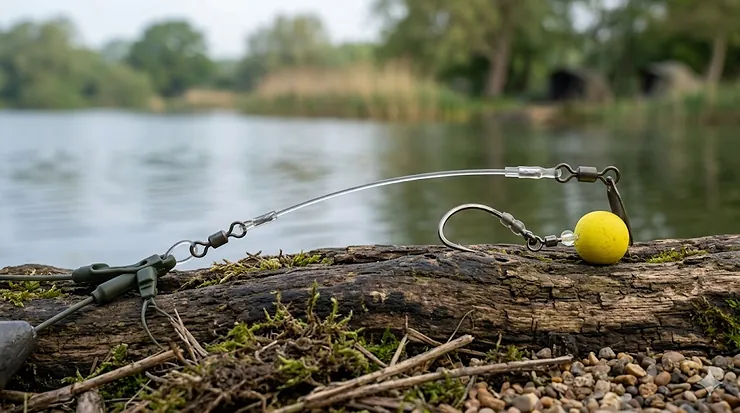
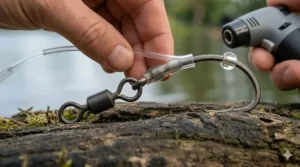
I’ve watched this rig evolve from a specialist technique to an absolute necessity in the modern UK carp angler’s arsenal. The beauty lies in its simplicity — a curved shank hook mounted on a spinner swivel, held in place with shrink tubing and a hook stop. Yet beneath this straightforward construction lurks a wickedly efficient hooking mechanism that catches everything from scrappy doubles to specimen forties with equal ruthlessness.
Quick Comparison: Top Ronnie Rig Products Available in the UK
| Product | Type | Hook Sizes | Best For | Price Range |
|---|---|---|---|---|
| Gardner Ready Tied Ronnie Rigs | Ready-made rig sections | 4, 6 | Time-poor anglers | £8-£12 |
| Bank Tackle Ronnie Rig Component Set | Complete kit (130+ pieces) | 4, 6, 8 | DIY enthusiasts | £15-£22 |
| Korda Kurv Shank Hooks | Curved hooks | 2-12 | Versatile presentations | £4-£7 |
| Korda Flexi Ring Swivels | Quick-change swivels | 8 | Helicopter/chod setups | £3-£5 |
| Torchwood Micro Hook Swivels | Bait mounting swivels | 22 | Ronnie rig bait attachment | £4-£6 |
| Gardner Ronnie Rig Kit | Starter kit with ready rig | 4, 6 | Beginners | £12-£16 |
| Nash Pinpoint Claw Hooks | Wide gape curved hooks | 4-8 | Aggressive hooking | £5-£8 |
💬 Just one click — help others make better buying decisions too!😊
Top 7 Ronnie Rig Setup Products: Expert Analysis
1. Gardner Ready Tied Ronnie Rigs – Best for Hassle-Free Performance
The Gardner Ready Tied Ronnie Rigs arrive in packs of three perfectly constructed hook sections, manufactured to exacting standards in the UK using Gardner’s Covert Dark Mugga hooks (sizes 4 and 6, barbed or barbless). Each rig features the dedicated XT Flexi-Ring Kwik Lok Swivel that allows you to thread hooks on and off in seconds — rather handy when you’ve just dulled your hook point on gravel during a night session in the pouring rain.
What sets these apart from cheaper alternatives is the quality of the Mugga hook itself. The 25-degree in-turned eye positions the flexi-ring at the optimum angle for aggressive, fast-reacting hooking mechanics. Gardner Tackle’s research into rig mechanics shows that this specific eye angle creates optimal turning dynamics. I’ve tested these across silty Midlands pits and firm southern gravel lakes, and the razor-sharp, re-profiled Covert Dark points penetrate with minimal resistance. The combination of swept shank and beaked point creates a firm hook hold that typically seats at least an inch inside the carp’s mouth — exactly where you want it.
Each hook section includes a mat-finished sliding Covert Hook Swivel held in position with a Covert Hook Stop. This allows independent rotation of hook and bait, ensuring the presentation straightens out when a carp mouths your pop-up. British anglers appreciate the thoughtful design: everything stays compact for casting distance, yet the rig resets perfectly after aborted takes.
Pros:
✅ UK-manufactured to consistent quality standards
✅ Quick-change swivel saves time on the bank
✅ Exceptionally sharp Covert Dark points
Cons:
❌ Limited to two hook sizes (4 and 6)
❌ Requires separate hooklink material purchase
Around £10 per pack of three represents solid value when you consider each rig section lasts multiple sessions before the hook needs replacing. Far cheaper than losing fish to blunt hooks.
2. Bank Tackle Large Ronnie Rig Component Set – Best Value for Frequent Anglers
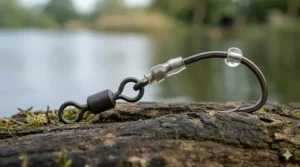
The Bank Tackle Large Ronnie Rig Component Set delivers unbeatable value with over 130 pieces of terminal tackle packed into one box. This comprehensive kit includes 10 each of size 4, 6, and 8 Continental Hooks (your choice of micro barbed or barbless), plus the full spectrum of swivels, shrink tubing, hook stops, and bait screws needed to construct dozens of rigs.
What most buyers overlook about this set is the sheer variety it offers. You get 10 size 11 Quick Change Flexi Ring Swivels, 10 QC Ring Swivels, and 10 Spinner Swivels — meaning you can experiment with different swivel styles to find what works best in your local waters. The inclusion of three types of bait screws (standard, oval link loop, and those with 3.1mm rig rings) gives you flexibility whether you’re fishing pop-ups, wafters, or even snowman presentations.
British anglers fishing multiple sessions per month will appreciate the economics here. Instead of paying £8-12 for three ready-tied rigs, this kit lets you tie 30+ rigs for around £18-20. Even accounting for the learning curve if you’re new to rig tying, the savings accumulate rapidly. The components are perfectly adequate quality — not premium Gardner or Korda standard, but more than sufficient for day-ticket waters where you might lose a rig or two to snags.
The hook stops come in four colours (clear, black, translucent green, translucent brown), allowing you to match your rig to the lakebed. The inclusion of both black and clear shrink tubing means you can create stealthy presentations for pressured waters or high-visibility rigs for murky conditions.
Pros:
✅ Outstanding value with 130+ pieces
✅ Three hook sizes for versatile applications
✅ Multiple colour options for camouflage
Cons:
❌ Hooks not quite as sharp as premium brands
❌ Requires tying skills and time investment
Priced in the £15-22 range, this set costs less than two packs of ready-tied rigs whilst providing enough components for an entire season. Perfect for anglers who enjoy the meditative process of rig tying in front of the telly on winter evenings.
3. Korda Kurv Shank Hooks – Best Premium Hooks for Ronnie Rigs
The Korda Kurv Shank Hooks represent the gold standard in curved shank patterns, designed specifically for pop-up presentations and ronnie rig setups. Available in sizes 2 through 12 (both barbed and barbless), these PTFE-coated hooks feature a 28-degree downturned eye that, when coupled with the aggressively swept shank, helps the hook flip round and take hold inside a carp’s mouth without requiring shrink tube manipulation.
What you’re paying for with Korda is precision Japanese manufacturing and quality control that shows in the details. The long, straight, needle-sharp point penetrates with frightening ease — I’ve had these hooks take hold on the gentlest of pick-ups, where the carp barely lifted the bait before the hook found purchase. The PTFE coating reduces friction, which translates to better point penetration and improved longevity in the British climate where rust can claim inferior hooks within days.
British carp anglers targeting pressured syndicate waters or specimen fish will appreciate how this pattern performs in the IQ D-Rig and various pop-up combi setups. The in-turned eye creates that critical claw-like effect when a carp sucks in your bait, ensuring the hook point is always positioned downwards, ready to grip the lower lip. Unlike cheaper alternatives that might straighten under pressure from a hard-fighting twenty-pounder, the Kurv Shank’s forged construction provides reassuring strength.
The hook works brilliantly with simple knotless knot presentations — you don’t need complex shrink tube aligners to achieve devastating hooking efficiency. This simplicity matters on cold February mornings when your fingers are numb and you just want to get fishing.
Pros:
✅ Exceptionally sharp points maintain edge longer
✅ PTFE coating for smooth penetration
✅ Wide size range (2-12) for all carp sizes
Cons:
❌ Premium price compared to budget alternatives
❌ Extreme sharpness means careful handling required
Around £5-7 for 10 hooks positions these firmly in premium territory, but the hookup rate and reliability justify the investment when you’re serious about consistent results on challenging UK waters.
4. Korda Flexi Ring Swivels – Best for Helicopter and Chod Rigs
The Korda Flexi Ring Swivels (size 8, packs of 8) represent essential terminal tackle for anglers running ronnie rigs on helicopter or chod presentations. These premium PTFE-coated swivels feature a design that minimises friction for smooth rotation whilst providing the durability to handle powerful British carp runs across gravel and through weedbeds.
What makes these swivels particularly useful for ronnie rig applications is their quick-change compatibility. The large ring integrates seamlessly with lead clips and inline leads, whilst the swivel body allows your rig to pivot freely — crucial for maintaining optimal bait presentation regardless of lakebed contours. I’ve found these especially effective on waters with undulating bottoms, where a fixed setup might cant your rig at awkward angles.
British anglers fishing at range will appreciate how these swivels enhance bait presentation. The flexi ring design allows your hooklink material to move naturally, mimicking free-swimming food items rather than telegraphing “danger” to educated carp. The matt black anti-glare finish disappears against most UK lakebeds, from dark silt to mid-tone gravel.
The build quality reflects Korda’s Japanese manufacturing standards. Each swivel spins smoothly even after multiple casts and several fish captures. On pressured day-ticket waters where carp inspect rigs closely before committing, this attention to detail separates consistent catchers from frustrated blankers.
Pros:
✅ Premium PTFE coating for longevity
✅ Perfect integration with lead clip systems
✅ Smooth rotation maintains bait movement
Cons:
❌ Only size 8 available
❌ 8-piece packs run out quickly for frequent anglers
Priced around £3-5 per pack, these swivels cost more than budget alternatives but deliver superior performance when presentation matters more than penny-pinching.
5. Torchwood Micro Hook Swivels – Best for Bait Attachment
The Torchwood Micro Hook Swivels (size 22 with flexi-ring, packs of 20) solve the bait attachment challenge that frustrates many ronnie rig newcomers. These tiny swivels slide onto your hook shank and secure with hook stops, creating a mounting point for pop-ups without requiring traditional hair rigs — a genuine time-saver when you’re setting up multiple rods in fading light.
What British anglers particularly appreciate about these micro swivels is their versatility. You can attach pop-ups using bait floss threaded through the flexi-ring, creating a presentation where the bait moves independently of the hook. This separation allows the hook to spin freely on takes, maintaining the ronnie rig’s aggressive turning mechanics even when a carp clamps down on your bait.
The matt black anti-glare finish provides crucial camouflage on clear gravel or sand bottoms common in southern England syndicate waters. Carp in these pressured environments have learned to avoid shiny terminal tackle, so the subdued coating helps your presentation blend seamlessly with natural food items.
Each pack contains 20 swivels, which sounds generous until you realise how quickly you’ll work through them. I typically lose 2-3 per session to snags or after landing fish, so a pack lasts roughly 6-8 outings. The quality is perfectly adequate for the price point — these won’t win engineering awards, but they function reliably and the flexi-rings maintain their spring tension across multiple bait changes.
Pros:
✅ Eliminates traditional hair rigging complexity
✅ 20-piece packs offer decent value
✅ Allows independent bait and hook movement
Cons:
❌ Smaller size can be fiddly in cold weather
❌ Flexi-rings eventually lose tension
Around £4-6 per pack of 20 represents fair value, working out to roughly 20-30p per swivel — reasonable when you consider the convenience and improved presentation they provide.
6. Gardner Ronnie Rig Kit – Best Starter Kit for Beginners
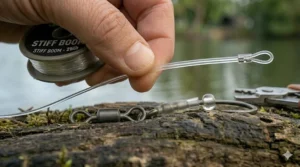
The Gardner Ronnie Rig Kit provides everything a newcomer to ronnie rig fishing needs in one convenient package: one ready-made rig to get you started, 9 additional hooks (sizes 4 and 6), 9 hook stops, 3 tungsten ronnie sleeves, and 3 QC Hook Flexi-Ring Swivels. This thoughtful combination allows beginners to fish immediately with the pre-tied section whilst learning to construct their own rigs using the supplied components.
What makes this kit particularly valuable for British anglers new to specimen carp fishing is the educational aspect. The included ready-tied rig serves as a perfect reference when you’re attempting your first DIY ronnie setup. You can examine exactly how Gardner positions the shrink tubing, where the hook stop sits on the shank, and how the components align to create that aggressive turning action.
The tungsten sleeves included in the kit deserve special mention. These weighted sections help counterbalance buoyant pop-ups, allowing you to achieve that critical “just off bottom” presentation that fools wary carp. On UK waters with soft silt overlaying firmer substrates, getting this balance right separates productive sessions from frustrating blanks. The kit provides three sleeves, letting you experiment with different weights to match various pop-up buoyancies.
The QC (Quick Change) Flexi-Ring Swivels make hook replacement simple when you’ve dulled a point or lost sharpness after landing fish. This convenience matters more than beginners initially realise — changing a complete rig mid-session wastes precious fishing time, whilst swapping just the hook keeps you fishing effectively.
Pros:
✅ Complete starter package with ready-tied example
✅ Tungsten sleeves for precise bait balancing
✅ Mix of hook sizes for versatile applications
Cons:
❌ Only one ready-tied rig included
❌ May need additional components fairly quickly
Priced around £12-16, this kit costs slightly more than buying individual components separately, but the convenience and learning value justify the modest premium for newcomers to modern carp rig methods.
7. Nash Pinpoint Claw Hooks – Best Wide Gape Alternative
The Nash Pinpoint Claw Hooks offer a wide gape alternative to traditional curved shank patterns, featuring an enlarged eye designed for heavier hooklinks (sizes 4-8). These hooks incorporate Nash’s renowned Pinpoint sharpening technology, delivering needle-sharp points that penetrate with minimal pressure — crucial when fishing at range on windswept British waters where bite indication might be subtle.
What distinguishes the Pinpoint Claw from standard ronnie rig hooks is the sweeping beaked point combined with a wider gape. This design creates exceptional hooking and holding power, particularly useful when targeting larger specimens in thick weed or amongst snags. British anglers fishing challenging venues like heavily weeded gravel pits or tree-lined estate lakes appreciate how these hooks maintain their hold during powerful carp runs through obstacles.
The enlarged eye accommodates thicker hooklink materials (up to 25lb fluorocarbon or heavy coated braids) without compromising the hook’s action. This matters when you’re fishing areas with sharp gravel or mussel beds that can abrade lighter materials. Southern England anglers dealing with these conditions will find the Pinpoint Claw’s robustness reassuring.
The hooks work brilliantly with ronnie rig presentations, though they equally excel in combi-rigs and blow-back setups. The wide gape ensures the hook point clears the shank during rotation, maintaining that aggressive turning mechanics even when a carp tries to eject your bait. The beaked point grips like a claw — hence the name — once it finds purchase.
Pros:
✅ Exceptional sharpness from Pinpoint technology
✅ Enlarged eye suits heavier hooklinks
✅ Wide gape for improved hooking percentage
Cons:
❌ Limited size range (4-8)
❌ Wider gape can snag on debris during retrieval
Around £5-8 for a pack positions these as mid-premium options, sitting between budget Continental hooks and top-tier Korda patterns. The quality-to-price ratio makes them excellent value for specimen hunters.
How to Set Up a Ronnie Rig: Step-by-Step UK Guide
Setting up your first ronnie rig might seem daunting, but this presentation is actually simpler than its reputation suggests. I’ll walk you through the process using materials readily available from any UK tackle shop. For additional visual guidance, Korda’s official ronnie rig tutorial provides excellent video demonstrations of the techniques described below.
Materials Needed
Before starting, gather these components:
- Curved shank hook (size 4 or 6 recommended)
- Quick-change spinner swivel (kwik lok type)
- Shrink tubing (2.4mm diameter, roughly 12mm length)
- Hook stop (rubber or silicone)
- Hooklink material (15-25lb fluorocarbon or stiff coated braid)
- Bait attachment (bait screw, micro swivel, or hair)
- Kettle for steaming shrink tube
Construction Process
Step 1: Prepare the Hook Slide your shrink tubing over the hook eye. Cut approximately 12mm of 2.4mm tubing — this should cover the hook eye and extend slightly down the shank. Don’t steam it yet; we’ll do that after mounting the swivel.
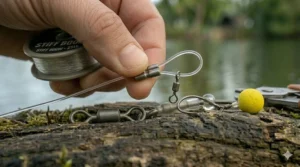
Step 2: Attach the Spinner Swivel Open the crook of your quick-change swivel slightly using pliers. Thread the swivel through the hook eye, then carefully close the crook back into position. The swivel should sit snugly on the hook eye but retain freedom to rotate. This rotation is what gives the ronnie rig its deadly effectiveness.
Step 3: Position and Steam the Shrink Tube Push the shrink tubing down to cover both the hook eye and the barrel of the spinner swivel. Leave a slight overhang (4-5mm) down the hook shank. Hold the assembly over steam from a boiling kettle for 3-5 seconds, rotating slowly. The tubing will shrink tight, creating a smooth, snag-free connection. Don’t overdo the steaming — British tap water boils hot enough to shrink the tubing without melting it into uselessness.
Step 4: Add the Hook Stop Push a hook stop onto the hook shank, positioning it roughly halfway between the bend and the point on the curved section. This critical component prevents the micro swivel from sliding off whilst allowing enough hook rotation for aggressive turning mechanics. Position it too close to the eye and you restrict movement; too far towards the bend and you risk the swivel sliding off during the cast.
Step 5: Attach Your Hooklink Tie your chosen hooklink material to the free eye of the spinner swivel using a palomar or grinner knot. For firm UK gravel bottoms, use 6-9 inches of stiff fluorocarbon (0.45-0.50mm). For softer silt or when fishing longer range, extend this to 12-15 inches and switch to supple coated braid. The boom section determines how your rig presents on the lakebed — stiffer materials create a more aggressive stance, softer materials allow the rig to settle naturally.
Step 6: Mount Your Bait Thread a micro swivel onto the main hook shank, securing it with your hook stop. Attach your chosen pop-up using bait floss, threading the floss through the swivel’s ring and then through your bait. Pull tight and blob the tag ends with a lighter. Alternatively, use a bait screw for quick changes, though this adds slightly more bulk.
UK-Specific Considerations
Wet Weather Protection British anglers face more rain than our continental counterparts. After tying your rigs, store them in a dry rig wallet with silica gel packets. Moisture can weaken knots and corrode cheaper hooks within days — something you’ll discover only when a good fish straightens your hook on the run.
Balancing for British Waters UK carp tend to feed more cautiously than their European relatives, particularly on pressured day-ticket venues. Balance your pop-up precisely using tungsten putty moulded around the shrink tubing. The ideal presentation sees your bait barely hovering (5-10mm) off bottom — visible enough to attract attention, subtle enough to avoid suspicion. Test the balance in the margins before casting; it should sink very slowly when you lift the rig then lower it back down.
Seasonal Adjustments During colder British months (November through March), carp feed less aggressively. Downsize your hook to size 6 or even 8, and use smaller pop-ups (10-12mm). The reduced profile spooks fewer fish, whilst the smaller hook still provides adequate holding power on winter carp that fight less vigorously than summer specimens.
Ronnie Rig vs Spinner Rig vs 360 Rig: Understanding the Differences
British carp anglers often use these terms interchangeably, creating confusion for newcomers. Let me clarify the relationships and subtle distinctions between these rotating hook presentations.
The Original 360 Rig
The 360 rig emerged first, featuring a hook mounted directly onto a ring swivel with shrink tubing covering everything. This early iteration achieved the rotating hook action but gained an unfortunate reputation for causing mouth damage to carp. The problem stemmed from the hook stop positioning — early versions placed it opposite the hook point, creating a claw-like arrangement that occasionally caused tears in the scissors (the thin membrane at the back of a carp’s mouth).
British fisheries managers and specimen groups raised concerns about this mouth damage, particularly on heavily fished waters where the same carp might encounter 360 rigs repeatedly. This pressure drove development of safer alternatives that comply with UK angling welfare standards.
The Ronnie Rig Evolution
The ronnie rig evolved as a safer refinement of the 360 principle. The critical difference lies in the quick-change swivel design and improved hook stop positioning. By placing the stop on the shank’s swept section (furthest from the point), the ronnie maintains aggressive hooking whilst reducing trauma risk. The hook still rotates 360 degrees, but the mechanics produce cleaner hookups in the bottom lip rather than the delicate scissors tissue.
UK tackle companies like Gardner and Korda refined the component specifications, creating dedicated quick-change swivels that allow hook replacement without retying the entire rig. This innovation transformed the ronnie from specialist technique to mainstream presentation — anglers could swap blunt hooks streamside in seconds, maintaining effectiveness throughout sessions.
The Spinner Rig Nomenclature
“Spinner rig” is simply another name for the ronnie rig, popularised by different angling personalities. Some British anglers prefer “spinner” because it emphasises the hook’s rotating action. Others stick with “ronnie” as a tribute to the angler who popularised the setup. Functionally, they’re identical — curved shank hook, spinner swivel, shrink tubing, hook stop, presenting a pop-up or critically balanced bait.
Which Name Should You Use?
Honestly, it barely matters. Walk into any UK tackle shop and ask for “ronnie rig components” or “spinner rig bits” — the staff will hand you the same swivels, hooks, and shrink tube. What matters is understanding the mechanics: a freely rotating hook that turns aggressively to find purchase regardless of approach angle.
Performance Comparison in UK Conditions
On British waters, the modern ronnie rig setup outperforms traditional rigs in several scenarios:
Hard Gravel Bottoms (Southern England, Midlands) The ronnie’s stiff boom presentation keeps your bait visible above the gravel, whilst the rotating hook catches hold quickly when carp hoover up your offering. Traditional hair rigs can lie flat, making them easier for carp to eject before the hook sets properly.
Silty Waters (Cambridgeshire, Norfolk) Switch to a longer, softer hooklink (12-15 inches of supple braid) and the ronnie still functions effectively. The hook’s rotation compensates for the more subtle presentation, turning to grip even when the carp barely lifts the bait from the silt.
Pressured Venues British day-ticket waters see incredible fishing pressure — some carp encounter dozens of rigs weekly. The ronnie’s low profile and natural movement fool educated fish that have learned to avoid more obvious presentations. The ability to quick-change hooks also means you’re always fishing with needle-sharp points, critical when targeting wise old warriors.
Best Hooks for Ronnie Rig: UK Angler’s Guide
Choosing the right hook for your ronnie rig setup transforms good results into exceptional catches. British waters present unique challenges — from abrasive gravel to thick weed, from cautious doubles to powerful thirties. Here’s what actually matters when selecting hooks for UK conditions.
Curved Shank Patterns: The Essential Choice
The ronnie rig demands curved shank hooks. This isn’t negotiable — straight shank patterns simply don’t create the aggressive turning mechanics that make this presentation so effective. The sweep of the shank, combined with an in-turned eye, causes the hook to flip and grab inside a carp’s mouth with minimal movement required.
Popular UK options include the Korda Kurv Shank, Gardner Covert Dark Mugga, ESP Cryogen Curve Shanx, and Nash Pinpoint Claw. Each brings subtle variations in curve radius, eye angle, and point profile, but all share that essential swept geometry.
In-Turned Eye Angle: 25-28 Degrees Optimal
The eye angle determines how quickly your hook rotates on takes. British hook manufacturers typically spec 25-28 degrees of in-turn, creating a tipping point where the hook naturally wants to turn downwards. Less than 20 degrees and you sacrifice hooking speed; more than 30 degrees can make hook attachment fiddly.
This angle works perfectly with the quick-change swivels used in ronnie rigs. The swivel sits at the optimal position to allow rotation whilst maintaining a low profile that doesn’t spook fish.
Point Profile: Straight vs Beaked
Straight points (like those on Korda Kurv Shanks) penetrate with minimal resistance, ideal for long-range fishing where bite indication might be subtle. The downside? They can pull out if a carp shakes its head violently — something British mirror carp excel at during autumn fights.
Beaked points (Nash Pinpoint Claw, Gardner Mugga) grip more aggressively once they find purchase. The slight offset creates a barb-like effect even on barbless hooks, reducing the chance of fish losses during powerful runs through weed. For UK waters with heavy vegetation, beaked points provide reassurance.
Wire Gauge: Matching to Target Size
British carp vary enormously in size and fighting power. Here’s how to match wire gauge to your quarry:
Standard Gauge (Size 4-6 Kurv Shank) Perfect for mixed fisheries containing carp from doubles to mid-twenties. The finer wire penetrates easily whilst providing adequate strength for most UK scenarios.
Heavy Gauge (Kurv Shank X, Wide Gape XX) Essential when targeting larger specimens (25lb+) or fishing in extreme snag conditions. The thicker wire resists straightening when a thirty-pound common powers into a weedbed, but requires more force to achieve initial penetration.
Coating: PTFE vs Uncoated
PTFE-coated hooks (Korda’s standard) reduce friction during penetration and resist corrosion in British conditions. Our wet climate can rust uncoated carbon steel hooks within a week of storage, making PTFE worth the minor cost premium.
Uncoated hooks (Gardner’s Covert Dark range) rely on specialist finishes that actually enhance sharpness whilst providing reasonable corrosion resistance. Some British anglers prefer these for ultra-sharp points, accepting the need for more frequent hook replacement.
Size Selection for UK Waters
Size 4: All-round choice for 15-30lb carp, pop-ups 14-18mm Size 6: Pressured waters, winter fishing, smaller pop-ups (10-14mm) Size 8: Delicate presentations, educated fish, very small baits
Larger British specimen waters might justify size 2 when targeting genuine forties, though this sacrifices some of the ronnie rig’s subtlety.
Barbed vs Barbless: UK Regulations
Check your water’s specific rules — British fisheries policies vary wildly. Many southern syndicates mandate barbless hooks to reduce mouth damage. Day-ticket waters often permit micro-barbed patterns. According to Angling Trust guidelines, fishery owners have discretion to set their own hook regulations within their private waters. Personally, I find modern barbless hooks with beaked points hold just as well as barbed versions when you maintain steady pressure during the fight.
Ready Tied Ronnie Rigs UK: Are They Worth It?
The ready tied ronnie rigs market in the UK has exploded over the past five years, with dozens of brands offering pre-constructed hook sections. Having tested most of them across various British waters, I can offer an honest assessment of when these products make sense and when you’re better off tying your own.
Quality Considerations
Premium Brands (Gardner, Korda, Nash) These ready-tied sections consistently deliver tight, reliable construction using quality components. The Gardner Ronnie Rigs, for instance, use genuine Covert Dark Mugga hooks and proper XT Kwik Lok swivels — not cheap imitations. You’re paying for proven components and UK manufacturing standards that ensure each rig performs identically.
Budget Options (Bank Tackle, Generic Brands) Cheaper ready-tied rigs save money but introduce variability. I’ve purchased packets where two rigs were perfect and the third had wonky shrink tubing or a poorly positioned hook stop. For casual anglers fishing a few times yearly, this gamble might be acceptable. Specimen hunters targeting syndicate waters should avoid the disappointment.
Time Value Analysis
Tying a ronnie rig from scratch takes 8-12 minutes once you’ve mastered the technique. Sounds quick, but multiply that by the 6-10 rigs you might lose during a season on snaggy British venues, and you’re looking at 1-2 hours of tying time.
Ready-tied sections reduce this to zero. You simply attach your preferred hooklink material and start fishing. For time-poor British anglers juggling work, family, and fishing, this convenience justifies the premium. A pack of three Gardner rigs (£10) versus the components to tie three yourself (£4-5) costs an extra fiver — roughly equivalent to 45 minutes of tying time valued at minimum wage.
Learning Curve Advantages
Beginners benefit enormously from having a correctly constructed rig to examine and copy. The ready-tied section shows exactly where components should sit, how tight to steam the shrink tubing, and what the finished product should look like. This education alone can justify the purchase price.
When to Buy Ready-Tied
Ideal scenarios:
- First-time ronnie rig users wanting a reference example
- Important sessions where you can’t risk dodgy homemade rigs
- Emergency replacements when you’ve lost rigs and forgotten spares
- Anglers with dexterity issues finding rig tying frustrating
When to Tie Your Own
Better value scenarios:
- Fishing frequently (10+ sessions yearly)
- Wanting specific customisation (unusual hook sizes, particular swivel types)
- Enjoying the meditative aspect of tackle preparation
- Targeting budget-conscious fishing where every pound counts
Hybrid Approach: My Recommendation
I keep three ready-tied Gardner sections in my rig wallet as insurance against loss, but tie most rigs myself using quality components. This hybrid strategy provides emergency backup whilst controlling costs. On a typical British carp session, I’ll use my homemade rigs first, reserving the ready-tied sections for replacement if needed.
Common Mistakes When Setting Up Ronnie Rigs (And How to Avoid Them)
During my years fishing British carp waters and helping other anglers troubleshoot their setups, I’ve witnessed the same ronnie rig mistakes repeatedly. Here’s what to watch for and how to fix each issue before it costs you fish.
Mistake 1: Oversteaming the Shrink Tubing
The Problem British anglers using electric kettles often hold the shrink tubing in the steam for too long, causing it to melt, bubble, or become brittle. This creates rough surfaces that can damage hooklinks and reduces the rig’s stealth.
The Solution Steam for just 3-5 seconds, rotating slowly. The tubing should shrink smoothly without discolouration. If it starts to bubble or develop a glossy sheen, you’ve overdone it. Remember that UK tap water boils vigorously — you don’t need extended exposure.
Mistake 2: Poorly Positioned Hook Stops
The Problem Positioning the hook stop too close to the hook point restricts the swivel’s movement, reducing the ronnie rig’s rotation. Too far from the point and the swivel slides off during casting or when a carp picks up the bait.
The Solution Position the stop on the curved section of the shank, roughly at the point where the curve is most pronounced (furthest from the hook eye). This gives the micro swivel maximum freedom to rotate whilst preventing it from sliding towards the bend. Test by holding the rig horizontally and gently shaking — the swivel should move slightly but not slide completely to the stop.
Mistake 3: Using Incompatible Hooklink Materials
The Problem British anglers sometimes pair ronnie rigs with soft, supple hooklinks designed for hair rigs. The ronnie needs sufficient stiffness in the boom section to present the bait correctly above the lakebed. Overly supple materials cause the rig to lie flat, negating its advantages.
The Solution For firm UK gravel bottoms, use 0.45-0.50mm fluorocarbon or stiff-coated braid in 6-9 inch lengths. For silt, extend to 12-15 inches but maintain some stiffness. The boom should retain enough rigidity to keep your pop-up elevated, whilst still allowing natural movement that doesn’t spook carp.
Mistake 4: Incorrect Pop-Up Balancing
The Problem Ronnie rigs work best with precisely balanced pop-ups that hover just off bottom. Too buoyant and the bait floats unnaturally high, telegraphing “trap” to educated British carp. Insufficient buoyancy and the presentation lies flat like a hair rig, wasting the ronnie’s potential.
The Solution Test balance in clear water (your bath works perfectly). The rig should sink very slowly when lowered, with the pop-up hovering 5-10mm off bottom. Add small amounts of tungsten putty to the shrink tubing, testing after each addition. British carp on pressured waters prefer subtle presentations — err towards less buoyancy rather than more.
Mistake 5: Neglecting Hook Sharpness
The Problem The quick-change swivel makes hook replacement so easy that some anglers fish with dulled points for multiple sessions. British gravel and mussel beds quickly blunt even premium hooks. A dull hook might achieve initial penetration but fails to find secure purchase, resulting in lost fish.
The Solution Check hook sharpness before every cast using the thumbnail test — a sharp point should catch on your nail with minimal pressure. Replace hooks after landing 2-3 fish, after snagging on the retrieve, or at the start of each new session. With ready-tied sections or quick-change swivels, this takes literally 30 seconds — time well invested compared to losing a personal best.
Mistake 6: Ignoring Local Lakebed Conditions
The Problem Some British anglers use identical ronnie rig setups regardless of venue, expecting one configuration to work everywhere. Reality: a short, stiff rig perfect for southern gravel pits fishes terribly on silty Cambridgeshire meres.
The Solution Adjust hooklink length and stiffness to match the bottom. Cast a bare lead and feel the drop — if it plummets through soft silt, extend your hooklink to 12-15 inches and use slightly more supple material. Firm drops onto gravel or clay suit shorter (6-8 inches), stiffer hooklinks that create a more aggressive presentation.
Mistake 7: Poor Storage Practices
The Problem British anglers often store tied rigs in damp tackle boxes or car boots, exposing hooks to moisture. Within days, cheaper hooks show surface rust that weakens the steel and dulls the point. Even stainless or PTFE-coated hooks can develop corrosion at stress points.
The Solution Store rigs in a dedicated rig wallet with silica gel packets to absorb moisture. Before storage, spray hooks with WD-40 or similar moisture-displacing oil (wipe off before fishing). Keep the wallet in your house, not in a damp garage or vehicle. Well-maintained rigs stay sharp and reliable for months rather than weeks.
Modern Carp Rig Methods: Where the Ronnie Fits In
British carp fishing has evolved dramatically over the past two decades. Understanding where the ronnie rig setup sits within the broader context of modern presentations helps you choose the right tool for specific situations.
The Ronnie’s Strengths
Versatility Across Substrates The ronnie rig works on virtually any British lakebed — gravel, silt, clay, light weed, or mixed bottoms. Adjust the hooklink length and stiffness, and you have a presentation that functions reliably regardless of conditions. This adaptability matters on the UK circuit where you might fish three different venue types in a month.
Self-Resetting Capability When a carp picks up and ejects your bait (common on pressured waters), the ronnie typically resets into a fishable position. The stiff boom kicks away from the lead, the pop-up floats back up, and the rig continues fishing effectively. Traditional hair rigs often tangle or lie awkwardly after aborted takes, requiring reeling in and recasting.
Low-Level Pop-Up Presentation The ronnie excels at presenting pop-ups close to the lakebed — typically 10-30mm height. This sweet spot attracts carp searching the bottom for food whilst maintaining enough separation for the hook to turn freely. Higher pop-ups (50mm+) suit chod or hinged stiff rigs better; bottom baits work better on traditional hair rigs.
Comparing to Other Modern Rigs
Ronnie vs Chod Rig The chod rig presents a critically balanced bait on a short, curved hooklink designed to sit on top of debris or weed. It shines when you can’t find a clean lakebed — something increasingly common on neglected British day-ticket waters.
The ronnie requires a relatively clear bottom to present effectively. Trying to fish a ronnie through thick blanket weed results in frustration and tangles. Conversely, the chod’s stiff, helicopter-style setup looks unnatural on clean gravel where the ronnie’s more subtle presentation fools educated fish.
Use the chod: Weedy venues, unknown lakebeds, silkweed layers Use the ronnie: Clean spots, light debris, known hard bottoms
Ronnie vs Hinged Stiff Rig The hinged stiff rig (HSR) uses a boom section that hinges at the swivel, creating aggressive separation on takes. It presents pop-ups at similar heights to the ronnie but with more dramatic movement when a carp picks up the bait.
British anglers targeting ultra-cautious fish on heavily fished waters sometimes find the HSR’s more aggressive mechanics spook educated carp. The ronnie’s smoother rotation often works better on pressured venues where subtlety matters.
Use the HSR: Big-fish waters, targeting twenties and thirties, moderate pressure Use the ronnie: Heavily pressured venues, cautious fish, clearer water
Ronnie vs Traditional Hair Rig The classic hair rig — a simple hooklink with the bait mounted on a hair extending from the bend — remains highly effective for bottom bait presentations. It lies naturally on the lakebed, mimicking free offerings in a spread.
The ronnie’s pop-up presentation creates more visual attraction, drawing carp from a wider area. However, on waters where natural food items (bloodworm, snails, naturals) dominate the diet, a bottom bait hair rig often outfishes the ronnie because it better mimics what carp are actively seeking.
Use the hair rig: Bottom baits, matching natural food items, ultra-subtle presentation Use the ronnie: Pop-ups, attracting attention, areas with competing anglers
Strategic Rig Selection for British Waters
Day-Ticket Venues (High Pressure) Start with ronnie rigs on 2-3 rods to cover different areas. The presentation’s effectiveness on educated fish makes it your default choice. If you’re blanking whilst others catch, consider switching one rod to a hair rig with bottom bait — sometimes simplicity wins.
Syndicate Waters (Moderate Pressure, Bigger Fish) Rotate between ronnie rigs, hinged stiff rigs, and occasional chod rigs depending on what you’re finding with your lead. The ronnie handles most situations competently, but don’t be afraid to adapt when conditions demand it.
Low-Stock Big-Fish Waters Presentation sophistication matters less than location and bait on waters with just 50-100 carp. Here, the ronnie’s reliability and self-resetting capability provide consistency across multi-day sessions. Stick with what works rather than constantly changing.
Seasonal Adjustments
Spring (March-May) Carp feed cautiously as water temperatures rise. Downsize to size 6 ronnie rigs with 12-14mm pop-ups. The subtle presentation matches their tentative feeding behaviour.
Summer (June-August) Fish feed more aggressively. Size 4 ronnie rigs with 16-18mm pop-ups work well. The larger profile attracts attention in busy swims where multiple baits compete for attention.
Autumn (September-November) Peak feeding period before winter. Mix ronnie rigs with bottom bait hair rigs, as carp pack on weight by consuming naturals. The ronnie still works brilliantly, but diversifying presentations increases chances.
Winter (December-February) Scale down to size 6-8 ronnie rigs with tiny pop-ups (10-12mm). Carp feed less frequently, so ultra-subtle presentations reduce spooking and capitalise on brief feeding windows.
Frequently Asked Questions
❓ Are ronnie rigs allowed on all UK carp waters?
❓ What's the best hooklink length for ronnie rigs on UK waters?
❓ How often should I replace hooks on ronnie rigs?
❓ Can you use ronnie rigs with bottom baits instead of pop-ups?
❓ Do ready tied ronnie rigs from Amazon UK fish as well as custom-tied versions?
Conclusion: Mastering the Ronnie Rig Setup for UK Success
The ronnie rig setup has earned its position as the dominant carp presentation across British waters through proven effectiveness, versatility, and reliable performance. Whether you’re targeting cautious doubles on a pressured Midlands day-ticket venue or specimen thirties from a southern syndicate lake, this rotating hook presentation delivers consistent results that traditional rigs struggle to match.
What makes the ronnie particularly suited to UK conditions is its adaptability. Adjust the hooklink length and stiffness, and you have a rig that functions on gravel, silt, clay, or light debris. The self-resetting capability means your presentation continues fishing effectively even after aborted takes — crucial on British waters where educated carp might inspect and reject multiple offerings before committing.
For British anglers just discovering this presentation, start with quality ready-tied sections from Gardner or Korda whilst learning to construct your own rigs. The investment in premium components — sharp curved shank hooks, reliable quick-change swivels, proper shrink tubing — pays dividends through improved catch rates and reduced frustration from tackle failures.
Remember that rig choice represents just one element of successful carp fishing. Location, bait quality, watercraft, and patience matter equally. The ronnie rig setup gives you a proven tool that works reliably when these other factors align. It won’t catch fish where none exist, but it maximises your chances when opportunity presents itself.
British carp fishing continues evolving, but the ronnie rig’s fundamental effectiveness suggests it will remain relevant for years to come. Master this presentation, understand its strengths and limitations, and you possess a versatile technique that produces results across the diverse range of venues our island offers.
Recommended for You
- 7 Best Chod Rigs UK 2026 – Expert Tested for Weedy Waters
- How to Tie Hair Rigs: 7 Best UK Products & Expert Guide 2026
- 7 Best Wafter Boilies for Carp Fishing 2026 | UK
Disclaimer: This article contains affiliate links. As an Amazon Associate, I earn from qualifying purchases. If you purchase products through these links, we may earn a small commission at no additional cost to you.
✨ Found this helpful? Share it with your mates! 💬🤗
