
In This Article
There’s something wonderfully democratic about spinning fishing rods and reels – they’re the Swiss Army knife of the angling world, equally at home teasing out perch from a canal or battling sea bass in the surf. Whether you’re a complete novice wondering which end of the rod to hold (we’ve all been there!), or a seasoned angler looking to upgrade your arsenal, choosing the right combo can feel like navigating a tackle shop blindfolded.
The beauty of spinning reels, invented by British businessman Albert Holden Illingworth back in 1905, lies in their versatility and forgiving nature. Unlike their baitcasting cousins that demand practice and finesse, spinning rods and reels offer instant gratification – open the bail, cast, and you’re fishing. That’s precisely why they’ve become the go-to choice for UK anglers targeting everything from tiny trout to powerful pike.
But here’s the rub: walk into any fishing shop or browse Amazon.co.uk, and you’ll find yourself drowning in options ranging from £30 budget combos to premium setups costing north of £300. How do you separate the gems from the junk? Which specifications actually matter? And crucially, what represents genuine value for your hard-earned pounds in 2025? This comprehensive guide cuts through the marketing fluff to deliver honest, practical advice based on real-world UK fishing conditions.
Quick Comparison Table
| Product | Length | Casting Weight | Price Range | Best For |
|---|---|---|---|---|
| Mitchell Epic MX1 | 1.8m-2.7m | 1-15g | £23.99-£43.73 | Budget ultralight |
| Abu Garcia Devil | 1.7m-2.7m | 2-60g | £33.99-£39.99 | All-round value |
| Sougayilang Telescopic | 1.8m-3.3m | Variable | £35-£55 | Travel/beginners |
| Shakespeare Ugly Stik GX2 | 1.5m-2.4m | Various | £45-£75 | Durability |
| PENN Battle IV | 2.1m | 20-65g | £182-£203 | Saltwater |
| PENN Wrath II | 2m | 1/16-5/8 oz | £100-£127 | Versatile inshore |
| Shimano STC/Stradic | Various | Various | £65-£175+ | Premium performance |
💬 Just one click – help others make better buying decisions too! 😊
Top 7 Spinning Fishing Rods and Reels: Expert Analysis
1. Mitchell Epic MX1 Spinning Rod
The Mitchell Epic MX1 represents exceptional value in the UK market, particularly for anglers who appreciate lightweight lure fishing without demolishing their budget. This French brand’s offering features HG M carbon blanks with moderate action that’s surprisingly refined for the £23.99-£43.73 price bracket.
Key Specifications:
- Available lengths: 1.5m to 2.7m (2-piece construction)
- Casting weights: 1-8g, 2-12g, or 5-15g options
- EVA rear grip with SKSS reel seat
UK buyers consistently praise the Epic MX1’s sensitivity for detecting subtle bites – one Edinburgh angler noted it exceeded expectations for ultralight fishing. The blanks telegraph every tap and nibble beautifully, making it brilliant for finesse presentations when targeting trout, perch, or cautious canal fish.
Pros:
✅ Outstanding value for money
✅ Genuinely sensitive tips for bite detection
✅ Multiple length/power options for different situations
Cons:
❌ Not suitable for heavy lures or large fish
❌ Basic components compared to premium rods
The Mitchell Epic MX1 suits UK anglers perfectly for still-water trout fishing, river float fishing, or light lure work. Available across Amazon.co.uk and specialist retailers like Glasgow Angling Centre.
2. Abu Garcia Devil Spinning Rod
If versatility had a name, it would be Abu Garcia Devil. This graphite composite range bridges the gap between budget and mid-range territory at £33.99-£39.99, offering remarkable performance that belies its affordable price point.
Key Specifications:
- Length range: 5ft 6in (1.7m) to 9ft (2.7m)
- Casting weights: 2-10g up to 20-60g
- Cork handle with DPS reel seat
The Devil series employs double-leg TS stainless steel guides suitable for both mono and braid – a thoughtful touch often missing from budget rods. The moderate-fast action provides that sweet spot between casting distance and fish-playing cushion. UK tackle shops report it’s their best-selling spinning rod for good reason: it simply works for almost everything from small trout to specimen pike.
Pros:
✅ Exceptional versatility across species and techniques
✅ Comfortable cork handle for extended sessions
✅ Proven Abu Garcia quality at budget-friendly pricing
Cons:
❌ Graphite composite less responsive than pure carbon
❌ Limited colour options if aesthetics matter
The Abu Garcia Devil represents the Goldilocks choice – not too specialised, not too compromised, just right for UK anglers wanting one rod to rule them all.
3. Sougayilang Telescopic Combo
Chinese manufacturer Sougayilang has carved out a substantial niche in the UK market with their telescopic combos, typically priced £35-£55 for complete rod, reel, and accessories packages. The value proposition here is undeniable – you’re fishing within minutes of delivery.
Key Specifications:
- Telescopic lengths: 1.8m to 3.3m (5-8 sections)
- 13+1 ball bearing reel with 5.5:1 gear ratio
- Complete with carrier bag, lures, and line
The carbon fibre/fibreglass composite construction prioritises portability over ultimate performance. When collapsed, these rods measure just 40-50cm (16-20 inches), fitting easily into backpacks, car boots, or motorcycle panniers. Perfect for UK anglers who fancy a spontaneous canal session after work or holiday fishing without luggage headaches.
Pros:
✅ Incredible portability for travel and storage
✅ Complete package including reel and tackle
✅ Multiple length options for different venues
Cons:
❌ Telescopic joints compromise sensitivity
❌ Basic reel quality compared to dedicated brands
The Sougayilang excels for beginners, children, or experienced anglers wanting a convenient backup setup. UK buyers particularly appreciate the included carrier bag for travelling to fishing spots nationwide.
4. Shakespeare Ugly Stik GX2
Nothing in fishing inspires more devotion than Shakespeare Ugly Stik rods. The GX2 iteration maintains that legendary near-indestructibility whilst incorporating improved components. UK pricing sits around £45-£75 depending on length and whether you opt for rod-only or combo versions.
Key Specifications:
- Ugly Tech construction (graphite and fibreglass blend)
- Clear Tip design for enhanced sensitivity
- Ugly Tuff one-piece stainless steel guides
The magic of Ugly Stik rods lies in their Ugly Tech construction – a proprietary graphite and fibreglass blend that’s famously forgiving. You can bend these rods into alarming curves that would snap lesser offerings. UK anglers fishing rocky marks or boat fishing particularly value this durability when rods inevitably get knocked about.
Pros:
✅ Legendary durability – these rods survive abuse
✅ Clear Tip technology provides surprising sensitivity
✅ 7-year warranty demonstrates manufacturer confidence
Cons:
❌ Heavier than pure graphite equivalents
❌ Not the most fashionable aesthetically
The Shakespeare Ugly Stik GX2 represents old-school reliability meeting modern enhancements. It’s the rod equivalent of a Land Rover Defender – unfashionable perhaps, but you’d trust it anywhere.
5. PENN Battle IV Combo
Step into proper saltwater territory with the PENN Battle IV (£182-£203), a combo engineered specifically for UK coastal conditions where corrosion and power demands test equipment ruthlessly. PENN’s American heritage runs deep – they’ve been building saltwater tackle since 1932.
Key Specifications:
- 2-piece graphite composite rod (2.1m typical)
- Hydro Armor sealing system on reel
- HT-100 carbon fibre drag (6.8kg max)
The Battle IV features PENN’s proprietary Dura-Guides – one-piece stainless steel construction eliminating those annoying guide insert pop-outs that plague cheaper rods. The reel’s 5+1 bearing system with 6.2:1 gear ratio delivers smooth power when battling bass, pollack, or even small tope along UK coastlines.
Pros:
✅ Purpose-built for saltwater with extensive sealing
✅ CNC gear technology for ultimate durability
✅ Proven performance on UK saltwater species
Cons:
❌ Significantly higher price point
❌ Overkill for freshwater applications
UK sea anglers consistently rate the PENN Battle IV amongst the best saltwater combos under £250. It’s particularly popular for kayak fishing and shore casting along British coasts.
6. PENN Wrath II Spinning Combo
The PENN Wrath II (£100-£127) occupies interesting middle ground – genuinely capable for both freshwater and lighter saltwater applications without the premium pricing of the Battle series. It’s PENN’s answer to anglers wanting versatility without compromising too much on quality.
Key Specifications:
- 2-piece graphite composite rod (typically 2m)
- 2+1 stainless steel bearing system
- Felt front drag with 4.5kg maximum
The Wrath II employs PENN’s Dura-Guides and features comfortable EVA grips suitable for extended UK fishing sessions. The 6.2:1 gear ratio provides decent retrieval rates – recovering 84cm of line per crank handle turn. UK anglers appreciate its competence across venues from stillwater carp fisheries to inshore marks.
Pros:
✅ Genuine crossover capability (fresh and saltwater)
✅ Trusted PENN reliability at accessible pricing
✅ Lightweight yet corrosion-resistant construction
Cons:
❌ Basic bearing count compared to premium reels
❌ Generic appearance lacks distinctive character
The PENN Wrath II suits UK anglers seeking quality American engineering without the flagship pricing. It’s the sensible choice for mixed fishing portfolios.
7. Shimano STC and Stradic Ranges
Japanese engineering excellence reaches its zenith with Shimano offerings. The STC (Shimano Travel Concept) range starts around £65-£95, whilst premium Stradic spinning rods command £135-£175+. You’re investing in cutting-edge materials and manufacturing precision.
Key Specifications:
- Full carbon blanks with Nanosheet technology
- Fuji guides and reel seats (Stradic/higher models)
- Multiple piece construction (4-5 sections) for STC
Shimano rods incorporate technologies like Spiral X and Hi-Power X that eliminate blank torsion during casting and fish-fighting. The difference is palpable – these rods transmit information with crystal clarity whilst maintaining reserve power. UK specimen hunters and serious lure anglers gravitate towards Shimano for this refined performance.
Pros:
✅ Cutting-edge construction technologies
✅ Outstanding sensitivity and responsiveness
✅ Wide range catering to specific applications
Cons:
❌ Premium pricing limits accessibility
❌ Specialist nature means less versatility
Shimano represents the pinnacle for UK anglers who’ve progressed beyond entry-level kit and demand the finest tools available. The investment rewards with performance and longevity.
✨ Don’t Miss These Exclusive Deals!
🔍 Take your angling to the next level with these carefully selected products. Click on any highlighted item to check current pricing and availability on Amazon.co.uk. These tools will help you create authentic catches your mates will envy!
Understanding Spinning Rod Specifications
Choosing spinning fishing rods and reels needn’t feel like decoding nuclear physics, though manufacturers sometimes make it seem that way! Let’s demystify the jargon that actually matters for UK fishing conditions.
Rod Length Considerations
UK anglers typically work with spinning rods between 1.8m (6ft) and 2.7m (9ft). Shorter rods excel in tight spaces – think overgrown riverbanks or small boats where longer rods become unwieldy liabilities. They also provide superior accuracy for precise casting to visible fish. Conversely, longer rods generate greater casting distance and offer better line control when playing fish at range. For general UK freshwater fishing, 2.1m-2.4m (7-8ft) represents the Goldilocks length.
Saltwater scenarios often demand longer rods (2.7m+) for beach casting distance, though shorter models suit boat and kayak fishing where space is premium. Consider your primary fishing venue before committing to length.
Power and Action Explained
Rod “power” describes resistance to bending under load – how much force it takes to flex the blank. UK freshwater species generally pair with light to medium power rods, whilst coastal fishing demands medium-heavy to heavy options for fighting powerful fish against currents and rocks.
“Action” refers to where the rod flexes along its length. Fast action rods bend predominantly in the upper third, providing quick hook sets and sensitivity for detecting bites. Moderate action rods flex deeper into the blank, offering more cushion for playing fish on lighter lines. Most UK anglers find moderate-fast action offers the best compromise across species and techniques.
Casting Weight Ratings
Pay serious attention to casting weight ranges – they’re not mere suggestions! A rod rated 5-15g means it performs optimally within that lure weight bracket. Use significantly lighter lures, and you’ll struggle to load the rod for casting. Exceed the upper limit, and you risk blank failure or compromised casting performance.
Match your rod’s casting weight to your target species and preferred lures. Ultralight rods (1-10g) suit small trout and perch with tiny lures. Light rods (5-20g) cover general UK coarse fishing beautifully. Medium setups (15-40g) handle larger lures for pike and sea bass. Heavy rods (30g+) target serious saltwater species or big pike with substantial lures.
Reel Specifications That Matter
Spinning reels seem deceptively simple, yet subtle differences dramatically impact fishing experience. Understanding these nuances helps UK anglers make informed purchasing decisions.
Gear Ratios Decoded
Gear ratios (e.g., 5.2:1 or 6.2:1) indicate how many times the spool rotates per single handle turn. Higher ratios retrieve line faster – valuable when fishing lures requiring quick retrieval or covering water efficiently. Lower ratios provide more cranking power for battling heavy fish, though at slower speeds.
For UK freshwater fishing, 5.2:1 to 6.2:1 ratios offer excellent versatility. Saltwater applications sometimes benefit from slightly higher ratios (6.4:1+) for rapidly retrieving lures away from hazards or maintaining contact with fast-moving gamefish.
Bearing Quality vs Quantity
Marketing departments love touting “13+1 ball bearings!” as if more automatically equals better. Reality proves more nuanced – bearing quality trumps quantity every time. Two properly sealed, precision-manufactured bearings outperform six cheap alternatives that corrode after a few saltwater sessions.
UK anglers should prioritise sealed or shielded bearings, particularly for coastal fishing where salt spray wreaks havoc on unprotected mechanisms. Reputable manufacturers like Shimano, PENN, and Abu Garcia specify corrosion-resistant bearings in saltwater-designated reels.
Drag System Importance
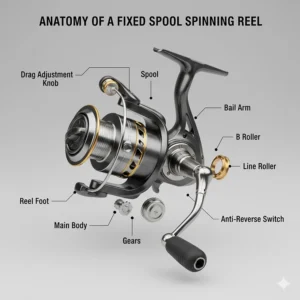
The drag system controls resistance when fish pull line from the reel – essentially your insurance policy against broken lines and lost fish. Front drag systems (adjustment knob atop the spool) offer superior power and smoothness, ideal for larger UK species like pike, carp, or saltwater gamefish.
Rear drag systems mount the adjustment behind the reel body, offering convenient adjustment during fights but typically providing less maximum drag pressure. For UK freshwater fishing targeting species under 10lb (4.5kg), either system suffices. Serious saltwater work demands front drag reliability and power.
Comparing Rod and Reel Materials
| Material | Advantages | Disadvantages | Best Applications |
|---|---|---|---|
| Carbon Fibre | Lightweight, sensitive, powerful | Brittle, expensive | Premium rods, sensitive applications |
| Fibreglass | Durable, forgiving, affordable | Heavy, less sensitive | Budget rods, beginners, abuse-prone scenarios |
| Graphite Composite | Balanced performance, moderate cost | Compromises sensitivity | All-round UK fishing |
| Aluminium (Reels) | Corrosion-resistant, strong | Heavier than composites | Saltwater reels, premium models |
| Graphite (Reels) | Lightweight, affordable | Less durable than metal | Freshwater applications |
Freshwater vs Saltwater Considerations
UK anglers blessed with access to both freshwater and coastal venues face equipment decisions balancing versatility against specialisation. Can one setup genuinely handle both environments without compromise?
Corrosion Concerns
Saltwater remains the arch-nemesis of fishing tackle, its corrosive properties attacking guides, reel seats, and internal reel mechanisms relentlessly. UK coastal conditions – particularly exposed marks along windswept British coastlines – accelerate this deterioration through salt spray and harsh weather.
Dedicated saltwater spinning rods and reels incorporate stainless steel or titanium guides, sealed bearings, and corrosion-resistant frames. Freshwater rods often use cheaper chrome-plated or standard stainless guides that corrode rapidly in marine environments. If you fish saltwater even occasionally, prioritise corrosion-resistant specifications and rinse equipment thoroughly with fresh water after each session.
Power Requirements
UK freshwater species rarely exceed 20lb (9kg) outside specialist venues, meaning light to medium power rods suffice beautifully. Coastal fishing presents harder-fighting species, stronger currents, and occasionally substantial fish (think double-figure bass or small tope) demanding medium-heavy to heavy power ratings.
A single rod struggles to excel across such disparate power requirements. Many UK anglers maintain separate freshwater and saltwater setups, though quality mid-range combos like the PENN Wrath II offer reasonable crossover capability with thorough post-session maintenance.
Line and Lure Differences
Freshwater typically employs lighter lines (4-12lb test) and smaller lures, whilst coastal work demands heavier lines (12-30lb+) and larger lures for casting distance and handling powerful fish. Reel line capacity must accommodate these differences – a reel perfect for canal perch fishing lacks sufficient capacity for serious beach casting.
Essential Maintenance Tips
Quality spinning fishing rods and reels represent significant investments deserving proper care to maximise longevity and performance. UK conditions – damp storage sheds, salty coastal sessions, muddy river banks – test equipment durability.
Post-Session Cleaning
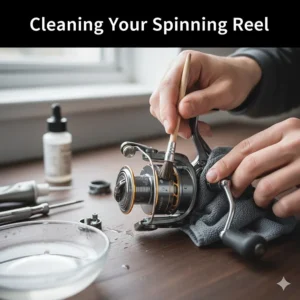
Always rinse saltwater tackle with fresh water after coastal sessions, paying particular attention to reel exteriors and rod guides. Don’t blast the reel with high-pressure hoses (water forces into sealed bearings), instead using gentle running water whilst rotating the handle to flush mechanisms.
Freshwater gear also benefits from occasional cleaning, particularly after muddy venue sessions or contact with weedy water. Dirt and debris accelerate guide wear and compromise reel smoothness.
Storage Best Practices
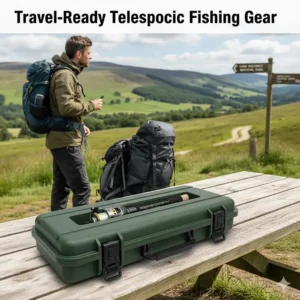
Store rods horizontally or vertically (tip up) to prevent blank warping. Avoid leaning rods in corners under tension – gravity gradually induces permanent bends over months. UK garage or shed storage often experiences temperature fluctuations and humidity; consider rod tubes or cases for protection.
Reels benefit from loosened drags when stored long-term, relieving spring tension. Apply light reel oil to bearings and moving parts annually, following manufacturer specifications for quantity and oil type.
Line Maintenance
Monofilament line degrades under UV exposure and gradually loses strength over seasons. UK anglers should replace mainline annually minimum, more frequently for intensively used setups. Braided lines last longer but benefit from checking for frays near knots and the terminal end.
Budget vs Premium: What’s Worth Paying For?
Every UK angler eventually confronts this question: do premium spinning fishing rods and reels genuinely justify 3-5x pricing compared to budget alternatives? The answer, frustratingly yet truthfully, depends on your fishing intensity and aspirations.
Diminishing Returns Reality
Entry-level combos (£30-£60) have improved dramatically in recent years. Brands like Sougayilang and Mitchell deliver genuinely functional kit that catches fish reliably. Moving to mid-range offerings (£80-£150) brings noticeable refinements – better components, improved sensitivity, enhanced durability. These differences matter increasingly to experienced anglers.
Premium territory (£200+) offers marginal performance gains apparent primarily to skilled anglers who’ve developed sensitivity for subtle tackle differences. That final 10-15% performance improvement costs disproportionately, yet serious UK specimen hunters and competitive anglers gladly pay for every advantage.
Consider Your Fishing Intensity
Casual anglers fishing monthly during summer derive excellent value from budget to mid-range combos. Why spend £300 on kit used 15 times annually? Conversely, enthusiasts fishing weekly year-round justify premium investments through enhanced performance, reliability, and longevity. A £250 combo lasting 10+ years with consistent performance represents better value than replacing £50 combos every 18 months.
Choosing the Right Setup for UK Species
Trout and Panfish
Light to ultralight spinning rods (1.8-2.1m, 1-12g casting weight) paired with size 1000-2000 reels loaded with 4-6lb line. The Mitchell Epic MX1 excels here, offering sensitivity for detecting gentle takes whilst remaining affordable enough to risk near snaggy bankside vegetation.
Pike and Zander
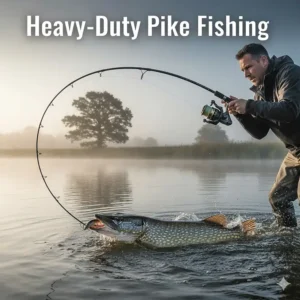
Medium power rods (2.1-2.4m, 15-40g) with size 2500-3000 reels spooled with 15-20lb braid. The Abu Garcia Devil provides versatility for various lure types whilst offering backbone for controlling powerful pike away from snags. UK pike anglers appreciate cork handles for cold-weather grip comfort.
Carp
Specialist carp fishing typically employs dedicated carp rods rather than spinning setups, though lighter carp to around 15lb can be targeted enjoyably on medium-power spinning gear. This represents controversial territory amongst UK carp anglers – purists insist on proper carp rods, whilst some enjoy the increased sport of fighting carp on lighter tackle.
Sea Bass and Coastal Species
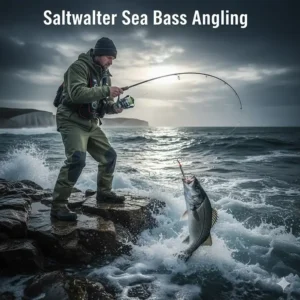
Medium to medium-heavy power (2.4-2.7m, 20-60g) with size 3000-4000 reels. The PENN Battle IV delivers purpose-built saltwater performance with corrosion resistance for UK coastal conditions. Consider longer rods for beach casting, shorter versions for rock fishing or boat work.
Frequently Asked Questions
❓ What's the best spinning rod length for UK canal fishing?
❓ How much should I spend on my first spinning combo?
❓ Can I use freshwater spinning gear in saltwater?
❓ What's the difference between spinning and casting rods?
❓ How often should I replace fishing line on my spinning reel?
Conclusion: Making Your Decision
Choosing from the myriad spinning fishing rods and reels available across Amazon.co.uk and UK tackle shops needn’t induce paralysis by analysis. Focus on matching specifications to your primary fishing scenarios rather than chasing imaginary “perfect all-rounder” that excels nowhere.
Budget-conscious UK anglers discover exceptional value in offerings like the Mitchell Epic MX1 or Abu Garcia Devil – both deliver branded quality and genuine fishing performance without requiring second mortgages. These represent sensible starting points for newcomers or perfectly adequate choices for casual anglers prioritising function over cachet.
Experienced anglers fishing intensively, or those targeting specific challenging scenarios, justify investments in premium territory. PENN and Shimano offerings reward with refined performance, enhanced durability, and subtle advantages that accumulate over thousands of casts. The question isn’t whether premium kit performs better – it indisputably does – but whether those improvements matter sufficiently for your fishing style and frequency.
Whatever budget tier attracts you, prioritise reputable brands with established UK presence. Warranty support, spare parts availability, and community knowledge bases prove invaluable when problems inevitably arise. Anonymous Chinese brands might save £20 initially but cost considerably more through frustration and premature replacement.
UK fishing offers incredible diversity – from intimate Pennine streams to exposed Cornish marks, from tranquil Norfolk Broads to rugged Scottish lochs. Your spinning rod and reel combo serves as the crucial interface between you and these experiences. Choose thoughtfully, maintain diligently, and those same rods and reels will deliver thousands of hours of British fishing pleasure across coming seasons. Tight lines!
Recommended for You
- 7 Best Match Fishing Rods UK 2026 | Expert Reviews & Guide
- 7 Best Carp Fishing Rods UK 2026 – Expert Tested & Reviewed
- 7 Best Spinning Fishing Rods UK 2026 | Expert Reviews
Disclaimer: This article contains affiliate links. If you purchase products through these links, we may earn a small commission at no additional cost to you. Prices shown are approximate and may vary.
✨ Found this helpful? Share it with your mates! 💬🤗
