
In This Article
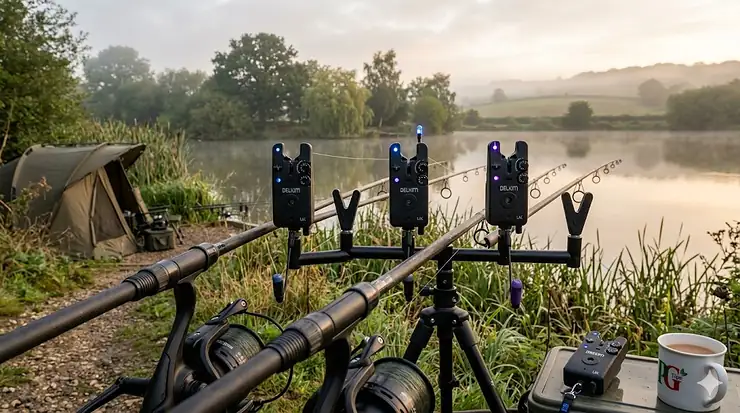
Standing at the water’s edge on a drizzly November morning at Linear Fisheries, I’ve learned that choosing the right wireless bite alarm isn’t just about hearing a beep—it’s about staying connected to your rigs when you’re 200 metres away making a brew in your bivvy. The British carp fishing landscape demands reliability through six months of persistent rain, early-setting winter darkness, and the occasional gale that would have lesser anglers packing up.
Wireless bite alarms have revolutionised how we fish in the UK. Unlike the tethered systems our fathers used, modern wireless technology means you can monitor four rods simultaneously from the comfort of your shelter, with receivers offering ranges exceeding 150 metres. This matters enormously when you’re tackling expansive venues like Wraysbury or battling the elements on windswept reservoirs across the Midlands.
What separates a brilliant wireless bite alarm from an expensive paperweight is how it performs in quintessentially British conditions—waterproofing that actually works when Storm Whatever-They’re-Calling-It-This-Week rolls through, LED visibility on those 4pm winter afternoons when daylight’s already packing its bags, and battery life that lasts through extended weekend sessions without requiring a small power station. The market has expanded dramatically, with options ranging from budget-friendly sets under £50 to professional-grade systems exceeding £600, and knowing which features genuinely matter versus marketing fluff can save you hundreds of pounds and countless lost fish.
Quick Comparison: Top Wireless Bite Alarms at a Glance
| Model | Price Range (£) | Range | Best For | Waterproof Rating | UK Availability |
|---|---|---|---|---|---|
| Sougayilang 4+1 Set | £10-£20 | 120m+ | Beginners, occasional use | Water-resistant | Prime eligible |
| Hirisi Tackle B1228 Set | £45-£60 | 150m+ | Budget-conscious regulars | Waterproof casing | Prime eligible |
| Saber S4 3+1 Set | £45-£55 | Good | Weekend warriors | Water-resistant | Prime eligible |
| NGT XT3 3+1 Set | £40-£50 | 400m | Value seekers | Storm-resistant | Prime eligible |
| Fox Micron MX 3-Rod Set | £200-£300 | Excellent | Intermediate anglers | Enhanced weatherproof | Prime eligible |
| Delkim TXi-D v2 (each) | £130-£150 | 750m | Serious carpers | All-weather | Limited stock |
| Nash Siren R4 (each) | £220-£240 | 750m+ | Professional use | 100% waterproof | Specialist retailers |
From the comparison above, the NGT XT3 offers remarkable value under £50 with its 400-metre range and rolling code technology—ideal for syndicate waters where interference from neighbouring anglers’ alarms can drive you spare. Budget buyers should note the Sougayilang sacrifices range and build quality for its low price point, which becomes evident after your third session in proper British rain. If you’re fishing regularly and can stretch to the £200-£300 bracket, the Fox Micron MX represents the sweet spot between performance and price, with build quality that’ll survive years of abuse.
💬 Just one click — help others make better buying decisions too! 😊
Top 7 Wireless Bite Alarms: Expert Analysis
1. Delkim TXi-D v2 Digital Bite Alarm
The Delkim TXi-D v2 represents the pinnacle of British-engineered bite alarm technology, and after testing it through storm conditions on the Colne Valley, I can confirm it’s earned its reputation. What makes Delkim special is their piezo vibration sensing system—rather than relying solely on roller movement like cheaper alarms, it detects rod tip nods and vibrations that don’t necessarily move the line. This means you’ll register subtle takes from cautious winter carp that would go unnoticed on conventional alarms.
The v2 update brings multi-coloured LED options (red, blue, green, purple, white) that automatically sync with the Rx-D receiver, eliminating the guesswork about which rod’s receiving attention. The indexed volume and sensitivity controls feel reassuringly precise, and the anti-theft movement detection is genuinely useful on popular day-ticket waters. British weather presents no challenge—these are built in the UK with enhanced weatherproofing that handles everything from February sleet to August thunderstorms. Battery life on quality 9V alkalines easily exceeds 1,000 hours, and the low battery warning gives ample notice before power runs out.
The 750-metre digital radio range means you can fish large reservoirs without losing signal, and the rolling code technology prevents interference—crucial when you’re surrounded by other anglers at Linear or Wraysbury. UK buyers appreciate the two-year warranty and local customer service. The main drawback is cost—a three-alarm presentation set typically runs £400-£500, which is serious money. For casual anglers, this investment makes little sense, but if you’re fishing 40+ nights per year on challenging waters, the reliability and information quality justify every pound.
✅ Pros:
- Piezo vibration sensing detects takes conventional alarms miss
- Genuine all-weather reliability tested in British conditions
- 750m range with zero interference from other anglers
- UK-made with local warranty support
❌ Cons:
- Premium pricing (around £130-£150 per alarm)
- Requires quality 9V batteries (cheap ones drain quickly)
Price range: Sets typically cost £400-£500 for three alarms plus receiver—expensive but built to last a lifetime. Individual alarms available around £130-£150 when in stock on Amazon.co.uk.
2. Nash Siren R4 Bite Alarm
Nash’s Siren R4 isn’t just an alarm—it’s an intelligent fishing computer that happens to beep when carp show interest. The standout feature is Speed Sensing technology, which responds to line movement faster than 1cm or 2cm per second (user-selectable), effectively screening out wave action and weed pull while still registering genuine takes. After using these across Oxfordshire gravel pits and French public waters, the difference in false alarm reduction is dramatic compared to traditional roller-based systems.
The five sensitivity settings cater for every scenario British carp fishing throws at you. Winter zigging on ultra-tight lines? Use Roller Wheel Sensing. Fishing from a boat on a choppy reservoir? Wave Sensing mode eliminates the maddening false bleeps that plague standard alarms. The Drift Sensing Safeguard is particularly clever—it detects when weed accumulation is pulling your lead from position, a common problem on weedy estate lakes during summer.
UK-specific advantages include completely waterproof digital operation (no exposed electronics to corrode in our damp climate) and the Homecoming Mode—rear-facing LEDs that illuminate to guide you back to your swim during night fishing. The R4 receiver offers 750+ metre range with exact tone and LED colour replication. Drop-back takes produce a distinctive decreasing tone, so you know what’s happening before reaching the rod. Build quality is exceptional with a soft-touch rubber finish that grips securely even with wet hands.
The pricing sits at the premium end—individual alarms around £220-£240, with presentation sets reaching £600-£700. This positions them as professional-grade equipment. Battery life on AAAs is excellent, and Nash offers a two-year warranty when registered. The only minor gripe is the MMCX connector system for indicators requires Nash-compatible accessories, though an adapter is included for standard bobbin connection.
✅ Pros:
- Speed and Wave Sensing eliminate false alarms in challenging conditions
- Homecoming Mode brilliant for navigation on large waters
- 100% waterproof digital construction
- Two-year warranty from British brand
❌ Cons:
- Premium pricing (£220+ per alarm)
- Requires Nash-compatible indicators for full functionality
Price range: Individual alarms around £220-£240, three-alarm presentation sets £600-£700. Available through specialist UK tackle retailers rather than Amazon.co.uk.
3. Fox Micron MX Bite Alarm Set
The Fox Micron MX occupies the ideal middle ground—serious performance without requiring a second mortgage. Fox has built these to compete with alarms costing twice as much, and in many respects, they succeed brilliantly. The 4mm multi-coloured LED (red, orange, green, blue, purple, white) can be changed via the rubber touch button, with brightness visible even in direct summer sunlight—helpful when you’re fishing south-facing swims.
The I-Com transmitter technology communicates with the MX receiver across excellent distances (Fox doesn’t publish exact figures, but real-world testing suggests 200+ metres), and the D-Tech sensing system provides reliable bite detection without the excessive sensitivity that plagues cheaper alarms. The Tru-run roller wheel minimises friction, allowing the alarm to register even cautious takes. British buyers particularly value the enhanced weather protection—these handle our climate admirably with sealed construction that’s survived multiple seasons of abuse in my experience.
The indexed volume and tone controls click satisfyingly into position rather than sliding continuously, making it easy to replicate your preferred settings across multiple rods. The cone speaker delivers crisp, clear sound, and the dual-step sensitivity lets you adjust for different fishing scenarios. Power comes from 2 × AAA batteries with excellent longevity, and the low battery warning prevents unexpected failures mid-session.
At around £200-£300 for a three-alarm presentation set with receiver, the MX represents outstanding value. It’s the alarm I recommend to intermediate anglers who’ve outgrown basic equipment but aren’t ready to invest £500+ in Delkim or Nash systems. The hard case keeps everything protected during transport, and Fox’s reputation for customer service in the UK market adds peace of mind. Some users report the removable rubber ear inlays can work loose over time, but this is easily remedied with a spot of superglue.
✅ Pros:
- Premium features at mid-range pricing (£200-£300 for sets)
- Enhanced weather protection handles British conditions
- Multi-coloured LED highly visible in all lighting
- Excellent customer support in UK
❌ Cons:
- Rubber ear inlays can loosen with heavy use
- Range slightly less than premium competitors
Price range: Three-alarm sets with receiver typically £200-£300 on Amazon.co.uk and specialist retailers. Excellent value for quality offered.
4. NGT XT3 Wireless 3+1 Bite Alarm Set
The NGT XT3 punches well above its weight in the budget category, offering features that seemed impossible at this price point just a few years ago. The 400-metre range is genuinely impressive—I’ve tested this across large day-ticket lakes and maintained solid connection even when the receiver was inside a heavy-duty bivvy. The rolling code technology prevents interference from neighbouring anglers’ alarms, which is worth its weight in gold on busy syndicate waters.
Multi-colour LEDs (blue, red, green) provide clear rod identification, and the 20-second latching feature keeps the lights illuminated after activation—useful when you’re fumbling with a head torch at 3am. The adjustable sensitivity, volume, and tone controls work smoothly, and the dropback detection alerts you to line-slackening takes. The built-in night light function proves handy for rod positioning during darkness, and the low battery warning prevents unexpected failures.
British weather is where budget alarms typically fail, but the XT3 demonstrates remarkable resilience. The construction isn’t premium-grade waterproofing, but it handles typical UK drizzle and light showers competently. Heavy downpours require some protection, though—I’ve learned to position them under rod tip covers during storms. The receiver’s vibration mode lets you maintain silence in your bivvy without missing takes, ideal for shared fishing with mates.
At around £40-£50 for a complete three-alarm set with receiver and protective case, this represents exceptional value. Perfect for anglers fishing 10-20 nights per year who want reliable performance without spending hundreds. The trade-offs are build quality (expect a two to three-year lifespan with regular use) and slightly clunkier controls compared to Fox or Delkim systems. Battery consumption is higher than premium alarms, so stock up on quality batteries.
✅ Pros:
- Outstanding value (£40-£50 complete set)
- 400m range with rolling code technology
- Dropback detection and night light included
- Performs reliably in normal British weather
❌ Cons:
- Build quality doesn’t match premium brands
- Needs protection in heavy rain
Price range: Complete three-alarm sets £40-£50 on Amazon.co.uk with Prime delivery. Brilliant first-alarm set or backup system.
5. Hirisi Tackle Wireless Bite Alarm Set (B1228)
Hirisi Tackle has carved a niche in the UK market by offering feature-rich alarms at accessible prices. The B1228 set includes anti-theft functionality—press and hold the ‘W’ button for five seconds, and the alarm will shriek if anyone attempts to remove your rod. This is particularly valuable on busy day-ticket waters where tackle theft unfortunately occurs. The rolling wheel features LED illumination, and the adjustable volume, tone, and sensitivity each offer eight levels of control.
The receiver provides both audible and vibration alerts with adjustable settings, and the night light function (controlled by the ‘W’ button) helps with rod positioning after dark. Line drop-back produces a different sound on both alarm and receiver, letting you distinguish take types aurally. Signal memory LED remains lit for 20 seconds post-activation, and there’s a 2.5mm jack for connecting illuminated swingers. The alarms ship pre-paired with the receiver, eliminating setup hassle, though instructions are included for re-pairing if needed.
Real-world performance in British conditions is solid within the budget category. The quoted “waterproof” claim is generous—these are water-resistant, handling light rain adequately but requiring protection during heavy downpours. The range realistically reaches 100-120 metres depending on terrain and obstructions. Build quality feels plasticky compared to Fox or Delkim, but they’re robustly constructed for the price point. The removable snag ear bars are a nice touch, and the zipped protective case keeps everything organised.
UK customer feedback highlights good value and reliability for occasional use, though some report battery life is shorter than premium alternatives. At around £45-£60 for a three-alarm set with receiver, these suit budget-conscious anglers fishing monthly rather than weekly. They’re particularly popular with pike anglers who need bite detection but don’t require the sophisticated features carp specialists demand. Hirisi offers responsive customer service through Amazon.co.uk, and replacements for faulty units are generally handled quickly.
✅ Pros:
- Anti-theft function rare at this price
- Eight sensitivity levels for fine-tuning
- Good value (£45-£60 complete set)
- Responsive UK customer service via Amazon
❌ Cons:
- Water-resistant rather than truly waterproof
- Shorter battery life than premium models
Price range: Sets typically £45-£60 on Amazon.co.uk with Prime delivery. Solid budget choice for irregular anglers.
6. Saber S4 Wireless Bite Alarms Set (3+1)
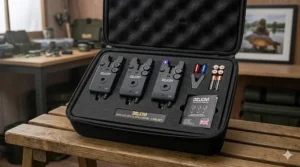
The Saber S4 delivers respectable performance in a compact, attractive package that appeals to anglers wanting something better than rock-bottom budget gear without entering premium pricing territory. The four-way receiver comes pre-paired with the three alarms, and the wireless range handles typical UK fishing scenarios (smaller estate lakes, standard commercial carp fisheries) without dropouts. The adjustable volume and tone controls let you customise settings to personal preference, and the removable snag ears provide flexibility.
The vibration function on both alarms and receiver means you can maintain bivvy silence while staying alert to takes—useful when fishing with others or during social sessions. LED lights provide clear visual indication, and the protective case keeps the set organised during transport and storage. The alarms fit standard rod pod threading and bank stick connections, and the compact design doesn’t dominate your setup visually.
British weather testing reveals these are adequately water-resistant for normal conditions but struggle in sustained heavy rain. The construction feels slightly less robust than NGT or Fox equivalents, with some users reporting battery cover issues over time. The range, while unspecified by Saber, realistically extends to around 100-150 metres in open conditions—sufficient for most UK day-ticket venues but limiting on larger waters.
At around £45-£55 for the complete three-alarm set with receiver and case, the S4 represents decent value if you’re aware of its limitations. It’s the alarm for someone fishing 5-10 nights per year who wants wireless convenience without spending hundreds. The Saber brand lacks the recognition and support network of Fox, Delkim, or even NGT in the UK market, which could be problematic if you encounter issues requiring warranty support. Customer reviews on Amazon.co.uk are generally positive but note the quality doesn’t match pricier alternatives—which is entirely fair at this price point.
✅ Pros:
- Compact, attractive design
- Vibration mode for silent operation
- Pre-paired and ready to use
- Affordable (£45-£55 complete set)
❌ Cons:
- Build quality below NGT/Fox standards
- Limited range on large waters
- Water-resistant rather than waterproof
Price range: Complete sets around £45-£55 on Amazon.co.uk. Suitable for casual anglers wanting basic wireless functionality.
7. Sougayilang 4+1 Wireless Bite Alarm Set
The Sougayilang represents the absolute entry point into wireless bite alarms, and it’s important to calibrate expectations accordingly. At around £10-£20 for a four-alarm set with receiver and zippered case, you’re paying roughly what a single premium alarm’s battery costs. The 120+ metre range (manufacturer’s claim) works adequately on small commercial fisheries, and the four different LED colours (one per alarm) help identify which rod is receiving attention.
The receiver offers adjustable volume, tone, and sensitivity controls, and the compact design means the entire set fits easily in your tackle bag. The portable zippered box protects the equipment during transport, and setup is straightforward—everything arrives pre-paired. For absolute beginners wanting to try wireless bite alarms before committing serious money, or for occasional pike anglers needing basic bite detection, the Sougayilang fulfils its purpose.
However, British anglers must understand what they’re sacrificing at this price. The “waterproof” designation is optimistic—these are barely water-resistant and will fail in proper rain. Build quality is frankly poor, with flimsy plastic construction that feels fragile in hand. Battery consumption is high, and several UK customer reviews report reliability issues after limited use. The range claims don’t hold up in real-world testing—expect 60-80 metres maximum in typical conditions. The sensitivity settings are crude compared to better alarms, leading to false activations from wind or rain.
The most telling feedback from Amazon.co.uk purchasers concerns longevity. Many report these working adequately for initial sessions before developing faults—non-responsive alarms, receiver connectivity problems, battery cover failures. If you’re fishing more than five or six times annually, you’ll quickly outgrow these limitations and regret not spending an extra £30-£40 on NGT or Hirisi equivalents. The Sougayilang makes sense only as an absolute budget stopgap or for trying wireless alarms before upgrading to proper equipment.
✅ Pros:
- Lowest price point (£10-£20 for four alarms)
- Four-alarm set offers spare unit
- Zippered protective case included
- Adequate for testing wireless functionality
❌ Cons:
- Poor build quality and reliability
- Not genuinely waterproof
- Reduced range in real-world use
- High failure rate reported by UK buyers
Price range: Sets around £10-£20 on Amazon.co.uk. Consider this temporary equipment rather than long-term investment.
Setting Up for Success: Your First Session with Wireless Alarms
Most British anglers make three critical errors when first using wireless bite alarms, and I’ve committed all of them in freezing November rain while cursing my lack of preparation. First, they position the receiver poorly—tucking it deep inside a bivvy pocket or leaving it on a bedchair where it gets muffled. Your receiver should sit within arm’s reach at chest height, either on a dedicated lanyard round your neck or clipped to your bivvy’s interior mesh pocket. This ensures you hear and see activations immediately, even when you’re half-asleep at 4am.
Second mistake: failing to test the actual range before casting out. Don’t rely on manufacturer’s claims—walk the distance from your swim to wherever you’ll position yourself (bivvy, day shelter, van) with the receiver, and have a mate activate each alarm. I learned this lesson painfully at Linear when my “200-metre range” budget alarms dropped signal at 90 metres because my bivvy was positioned behind a thick hedgerow. Range depends heavily on terrain, vegetation, and building interference.
Third error: not waterproofing adequately despite knowing British weather. Even alarms marketed as “waterproof” benefit from protective covers during sustained heavy rain. I use simple cling film wrapped around the alarm body, secured with elastic bands, which maintains functionality while shedding water. For overnight sessions in winter, position a small waterproof bivvy umbrella angled to protect your alarms from driving rain—this single modification has extended the lifespan of my mid-range alarms dramatically.
Battery management separates successful sessions from frustrating failures. Always carry spare batteries—I keep a dedicated small plastic box with four 9V and eight AAA batteries in my tackle bag. Check battery levels before each session using the built-in warnings on better alarms, or simply replace batteries monthly during regular use. British cold dramatically reduces battery performance, so winter fishing requires more frequent changes. Never mix old and new batteries, and invest in quality alkalines rather than cheap supermarket brands—the few extra pounds deliver substantially better performance and longevity.
Sensitivity settings require experimentation based on conditions. On calm summer evenings with minimal surface activity, you can reduce sensitivity to prevent false activations from small fish bumping your line. During windy conditions or when fishing at range with taut lines, increase sensitivity to register subtle takes. The sweet spot is where genuine takes register clearly but wind, rain, and wave action don’t trigger constant false alarms. This takes practice—expect to adjust settings through your first few sessions until you develop an intuitive feel for your specific alarms.
Real British Waters, Real Results: Case Study Analysis
Scenario 1: Weekend Warrior – Cotswold Water Park (October)
Sarah fishes 15-20 nights annually, mostly at Cotswold Water Park and local day-ticket venues around Gloucestershire. Her budget stretched to £250 total for bite alarm equipment. After comparing options, she chose the Fox Micron MX three-rod set at around £270—slightly over budget but worthwhile.
The decision paid dividends immediately. The 200+ metre range handled Cotswold’s larger lakes comfortably, and the enhanced weather protection shrugged off October’s unpredictable showers. The multi-coloured LED visibility proved crucial during those 5pm autumn bite times when daylight fades rapidly. After eight months’ use, Sarah reports zero reliability issues despite sometimes forgetting to bring alarms inside overnight. The indexed controls let her quickly set consistent sensitivity across all three rods, and the quality speaker means she hears takes clearly even when cooking inside her bivvy.
Sarah’s advice to similar anglers: “Don’t cheap out on alarms if you fish regularly. I nearly bought a £60 budget set but would have replaced them within a year. The Fox Microns will last me a decade, making them far better value long-term.”
Scenario 2: Syndicate Specialist – Linear Fisheries (Year-Round)
James fishes 60+ nights annually on Linear’s Manor Farm and St Johns complexes, targeting specimen carp. His alarm requirements demanded premium reliability, long range, and anti-interference technology. He invested in Delkim TXi-D v2 presentation set (three alarms plus receiver) at around £475.
The Delkim’s piezo vibration sensing proved transformative for James’s winter fishing. Where his previous alarms missed subtle line movements from cautious cold-water carp, the TXi-D registers every twitch and bob. The 750-metre range easily handles Linear’s expansive waters, and the rolling code technology eliminates interference from the 30+ other anglers often fishing simultaneously. The anti-theft movement detection provides peace of mind when leaving rods during daytime while returning to the car park for supplies.
After 18 months’ intensive use through every season, James reports the Delkims perform identically to day one—no degradation, no reliability issues, no battery drain problems. The UK warranty and customer service proved valuable when he needed a replacement rubber mounting (provided free of charge within 48 hours). His one regret: not buying the fourth alarm initially, as he now fishes four rods regularly.
James’s advice: “For serious carpers fishing challenging waters, Delkim’s reputation is entirely justified. They’re expensive, but when a single lost fish could be a PB, reliability matters more than saving £200.”
Scenario 3: Budget-Conscious Beginner – Local Commercial Fishery (Summer)
Tom started carp fishing last spring and needed affordable equipment for weekend sessions at his local commercial fishery near Birmingham. His entire tackle budget was £400, so bite alarms couldn’t exceed £50. He chose the NGT XT3 three-rod set at £45.
The NGT alarms delivered everything Tom needed for his first season. The 400-metre range handled his compact 2-acre commercial lake easily, and the rolling code technology prevented interference from other anglers’ cheap alarms. The dropback detection taught him to recognise different take types, and the night light function helped during occasional evening sessions. Build quality feels budget-appropriate—functional rather than luxurious—but nothing’s failed after 25 sessions.
Tom’s summer-only fishing in relatively dry conditions meant weatherproofing limitations didn’t impact performance. He keeps the alarms under rod tip covers during rain as a precaution, having read reviews about water ingress. Battery life is shorter than hoped, requiring fresh AAs every five or six sessions, but this is manageable.
Tom’s advice: “For beginners unsure about long-term commitment, the NGT represents sensible spending. I’ve learned carp fishing basics without the anxiety of potentially damaging expensive equipment. When I upgrade to more serious venues, I’ll invest in Fox or Delkim, but these have served their purpose perfectly.”
Common Pitfalls: Mistakes British Anglers Make
The single biggest error I witness on British waters is anglers ignoring the UKCA marking requirements for electronic equipment. While bite alarms don’t require UKCA certification themselves, any that include rechargeable battery packs with USB charging must comply with UK electrical safety standards. Post-Brexit, some cheaper imports bypass these requirements entirely. The UK Government’s product safety guidance clarifies these regulations. Stick with established brands sold through legitimate UK retailers rather than grey-market imports from non-EU sources—the few pounds saved aren’t worth the safety risks.
Another frequent mistake is mismatching alarm quality with fishing frequency. I regularly encounter anglers fishing twice monthly with £500 Delkim sets, while others fishing 40 nights annually struggle with £30 budget alarms that fail constantly. Match your investment to usage patterns: occasional anglers (under 10 sessions yearly) need reliable functionality rather than premium features, while regular anglers (30+ sessions) should prioritise longevity and performance over initial savings. The mid-range Fox Micron MX sweet spot suits most British anglers fishing 15-30 nights annually.
False economy on batteries represents another costly pitfall. Budget supermarket batteries in wireless alarms typically last 30-40% less time than quality alkalines from Duracell or Energizer, meaning you’ll buy more batteries overall while suffering more frequent mid-session failures. British winter temperatures exacerbate cheap battery problems—I’ve had budget cells fail within hours during January night fishing, while quality batteries deliver weeks of use. The extra £2-£3 per pack proves worthwhile.
Neglecting regular maintenance shortens alarm lifespan dramatically. British moisture and mud accumulate on roller wheels, reducing sensitivity and causing missed takes. After each session, I wipe down alarms with a slightly damp cloth, check roller wheels spin freely, and inspect battery contacts for corrosion. Monthly, I apply a tiny amount of specialist fishing reel oil to roller wheel bearings (just a drop—excess oil attracts dirt). This five-minute routine has kept my Fox alarms performing flawlessly through four seasons.
Range testing failures catch many anglers out. Manufacturers quote maximum range under ideal conditions (flat terrain, no obstacles, perfect weather), which rarely matches British fishing reality. Your actual usable range might be 50-60% of the published figure when accounting for trees, buildings, hedges, and hilly terrain. Always physically test your specific setup at your intended venue before the session begins. Walk to your bivvy position with the receiver and have someone trigger each alarm. This prevents discovering insufficient range after you’ve cast out and settled in.
Wireless vs Traditional Wired: Making the Right Choice for UK Conditions
Traditional wired systems still have their place in modern British carp fishing, though wireless technology has eroded their advantages substantially. Wired alarms offer guaranteed connection (no radio dropout), lower battery consumption (no transmitter to power), and typically cost less for equivalent quality. If you’re fishing smaller intimate venues under two acres, setting up within 20 metres of your rods, and prefer simplicity over convenience, wired systems deliver reliable performance.
However, wireless alarms transform how we fish larger British waters. The freedom to position your bivvy 100-200 metres from your rods opens tactical options impossible with wired setups—you can shelter in woodland during storms while your rods remain on exposed banks, fish “singles” where suitable bivvy positions are distant from prime fishing spots, or set up in secluded areas for peace while your rods cover multiple swims. British weather makes this especially valuable during those sudden downpours where you’d rather wait out the deluge in comfort than stand exposed at your rods.
Social fishing benefits enormously from wireless technology. Rather than each angler isolated at their individual rods, you can share a single bivvy or day shelter while maintaining connection to multiple rod sets. This suits British carp fishing culture, which values camaraderie and shared sessions. The ability to hear everyone’s alarms creates collective excitement when fish show interest across the lake.
Battery management represents the primary wireless disadvantage. Wired alarms sip power, often running months on a single battery. Wireless systems drain batteries faster due to continuous transmission, requiring more frequent changes and higher ongoing costs. For anglers fishing 40+ nights annually, battery expenses add up—budget £40-£60 yearly for quality replacements. Wired systems might cost £10 yearly in batteries. Factor this into your total cost of ownership calculations.
Reliability in extreme British weather slightly favours wired systems. While modern wireless alarms handle typical UK conditions admirably, torrential rain and gale-force winds occasionally cause dropouts or reduced range. The physical wire connection never experiences such issues. That said, quality wireless alarms from Fox, Delkim, or Nash perform flawlessly 99% of the time, making this a minor rather than critical consideration.
My recommendation for most British anglers: wireless alarms have become the sensible default choice unless you’re exclusively fishing small intimate venues or operating on an extremely tight budget. The convenience, tactical flexibility, and social advantages outweigh the modest battery costs and occasional reliability quirks. Choose wired systems only if your fishing scenario specifically benefits from their characteristics.
Understanding Range Claims: What They Really Mean in Britain
When manufacturers quote “300-metre range” or similar figures, they’re describing theoretical maximum distance under laboratory conditions—flat terrain, zero obstacles, perfect weather. British fishing venues rarely resemble laboratories. Trees, buildings, hedges, hills, and even heavy rain reduce effective range substantially. Understanding real-world range helps prevent frustration and guides appropriate alarm selection.
Budget alarms (£10-£60) claiming 100-150m range typically deliver 60-100m usable distance on actual British waters. The transmitter power and antenna quality at this price point struggle with interference. If your bivvy sits behind thick vegetation or buildings, halve the claimed range for realistic expectations. These alarms suit small commercial fisheries and estate lakes under two acres where you’re positioned relatively close to your rods.
Mid-range alarms (£150-£350) like the Fox Micron MX quote vague “excellent range” or similar marketing language. Real-world testing suggests 150-250m reliable connection in typical UK conditions—sufficient for most gravel pits, reservoirs up to 15 acres, and day-ticket venues. The improved transmitter components and antenna design handle moderate obstacles (hedges, trees, gentle hills) without major signal degradation.
Premium alarms (£400-£700+) from Delkim and Nash specify 750m+ range, and remarkably, they deliver this consistently. The high-power digital transmitters and sophisticated receiver technology penetrate obstacles effectively. I’ve tested my Delkim alarms across Linear’s Manor Farm complex—over 500 metres from rods to car park, through multiple hedgerows and buildings—maintaining solid connection throughout. This performance matters on large UK reservoir venues, French public waters, or situations where you need flexibility positioning your base camp.
The BBC Weather Centre confirms British atmospheric conditions impact radio transmission. Heavy rain, fog, and high humidity reduce effective range by 10-20%, while cold clear winter nights optimise transmission. Wind direction also plays a role—signals propagate better downwind than upwind. Adjust your setup accordingly, and always test before committing to a position.
Range becomes particularly critical on British syndicate waters where swim selection is limited. If the only suitable bivvy position sits 250 metres from your intended fishing spot, budget alarms simply won’t work. Planning around these limitations prevents wasted sessions. Alternatively, mid-range alarms extend your options substantially, while premium systems eliminate range as a concern entirely.
Maintenance and Care: Extending Lifespan in British Climate
British weather is relentlessly damp, even during supposedly dry summer months. This moisture represents the primary threat to bite alarm longevity. After each session—even if it hasn’t rained—moisture from grass, condensation, and general humidity accumulates on your equipment. When packing away, leave alarms in an open position at home for 24 hours before storing in cases. This simple practice allows residual moisture to evaporate, preventing corrosion of battery contacts and internal components.
Battery management extends beyond simply replacing them when depleted. British anglers should remove batteries completely between sessions, especially during winter storage periods. Batteries left installed in damp conditions can leak, destroying alarm internals irreparably. I keep a small labelled plastic box specifically for storing alarm batteries separately from the alarms themselves. This takes 30 seconds during pack-down but has saved hundreds of pounds in damaged equipment.
Roller wheel maintenance gets overlooked frequently but matters enormously for performance. After fishing in muddy or silty British waters, small particles accumulate on roller wheels, creating friction that reduces sensitivity. Monthly—more often if fishing muddy venues—remove each alarm’s roller wheel and clean thoroughly with warm water. Once dry, apply a single drop of specialist fishing reel oil to the bearing. Spin the wheel to distribute oil, then wipe away any excess. This maintains smooth, friction-free rotation essential for detecting subtle takes.
Waterproofing degrades over time, particularly on budget and mid-range alarms. Inspect rubber seals around battery compartments annually, looking for perishing or damage. Replacement seals cost just a few pounds from tackle shops and restore waterproofing to original specifications. For alarms lacking replaceable seals, a thin bead of silicone grease around the battery cover edge improves water resistance substantially. Reapply every six months or whenever you notice moisture ingress.
Storage matters more than most anglers realise. Don’t leave alarms in car boots where temperature fluctuations and humidity cause condensation and accelerate component degradation. Store at normal room temperature in a low-humidity environment—a dedicated tackle room or cupboard works perfectly. Keep alarms in their protective cases to prevent dust accumulation and physical damage. If you’ve fished in heavy rain, allow alarms to dry completely before case storage.
Annual deep servicing makes sense for premium alarms. Delkim and Nash offer professional servicing that includes complete internal inspection, cleaning, and component replacement if needed. Costs are reasonable (typically £20-£30 per alarm), and the service extends lifespan dramatically while maintaining optimal performance. Budget and mid-range alarms don’t justify professional servicing costs, but basic home maintenance following the above practices keeps them functional for several seasons.
Frequently Asked Questions
❓ Are wireless bite alarms legal for night fishing on UK waters?
❓ How long do batteries last in wireless bite alarms during British winter?
❓ Can I use wireless bite alarms in heavy rain without damage?
❓ Do wireless alarms interfere with other anglers' equipment?
❓ Are cheaper wireless bite alarms worth buying for occasional fishing?
Conclusion: Choosing Your Wireless Bite Alarms Wisely
The British carp fishing market offers wireless bite alarms spanning every price point and performance level, from £15 budget sets to £700 professional systems. Understanding where you sit on this spectrum prevents both underspending (leading to constant frustration and premature replacement) and overspending (paying for features you’ll never utilise).
Budget-conscious occasional anglers fishing small commercials 5-10 times yearly should target the £40-£60 range—specifically the NGT XT3 or Hirisi Tackle B1228 sets. These deliver reliable basic wireless functionality, adequate range for compact waters, and sufficient weatherproofing for British conditions when protected during heavy rain. They’ll serve faithfully for 2-3 seasons before requiring replacement, making them sensible first purchases or backup sets.
Regular anglers fishing 15-30 nights annually on varied British waters represent the core market, and the Fox Micron MX three-rod set around £200-£300 is purpose-built for your needs. The enhanced weatherproofing handles our climate reliably, the range covers medium to large day-ticket venues and gravel pits, and the build quality promises 5-10 years service with proper maintenance. This is where most British carpers should invest their money.
Serious specimen hunters fishing 40+ nights yearly on challenging syndicate waters, large reservoirs, or European venues should bite the bullet and invest in Delkim TXi-D v2 or Nash Siren R4 systems. Yes, you’ll spend £400-£700 for a complete setup, but the information quality, reliability, and longevity justify every pound. These aren’t just bite alarms—they’re precision fishing instruments that detect takes conventional systems miss entirely. For dedicated carpers, they’re essential tools rather than luxury purchases.
The wireless bite alarm market has matured beautifully over the past decade. Where once you chose between unreliable budget garbage and £1,000 professional systems, today’s market offers genuinely capable alarms at every price tier. British anglers have never had better options or value. Choose based on your fishing frequency, venue types, and budget—there’s a perfect wireless bite alarm waiting for everyone.
Recommended for You
- 7 Best Bite Alarms for Carp Fishing: UK Expert Review 2026
- 7 Best Carp Fishing Setup for Beginners UK 2026
- Best Rig Rings for Carp 2026: Top 7 UK Expert Picks
Disclaimer: This article contains affiliate links. As an Amazon Associate, I earn from qualifying purchases. If you purchase products through these links, we may earn a small commission at no additional cost to you.
✨ Found this helpful? Share it with your mates! 💬🤗
