
In This Article
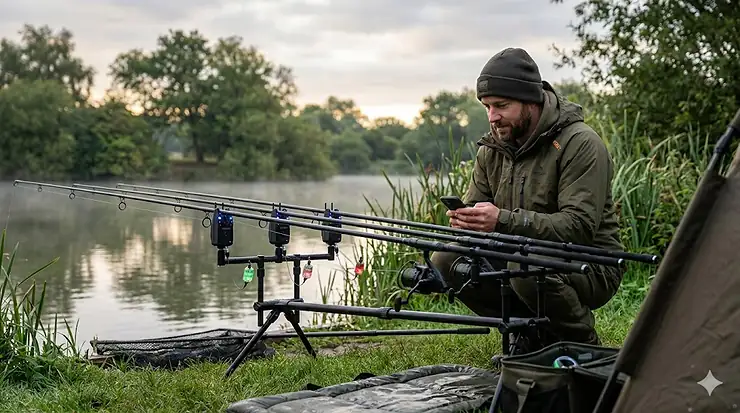
Picture this: it’s 2 AM on a murky November evening at your local carp lake, drizzle pattering against your bivvy, when suddenly a vibrant green glow pierces the darkness. Your illuminated bite alarm springs to life, LED pulsing in perfect sync with the screaming tone. That’s a take. That’s what proper night fishing kit delivers.
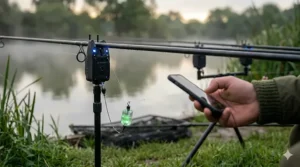
Illuminated bite alarms have revolutionised night fishing across Britain. These clever devices combine audible alerts with brilliant LED visual indicators that sync with matching swingers or hangers, creating an unmissable light show when a carp picks up your rig. For UK anglers battling our famously unpredictable weather—think dense fog rolling across Lincolnshire gravel pits or the premature darkness of Scottish winter afternoons—visual bite indication isn’t just helpful, it’s essential.
What most anglers overlook is that illuminated systems aren’t merely about seeing bites in the dark. They’re about creating a complete sensory network across your swim. When you’re running three rods spread 30 metres apart, a distant beep can vanish into wind noise or get muffled by your sleeping bag. But a glowing red swinger visible from your bedchair? That’s impossible to miss. Modern LED technology means these systems now run for entire weekends on a single 9V battery, whilst weatherproofing has improved to the point where they’ll function flawlessly through a February storm on Blithfield Reservoir.
In this comprehensive guide, I’ll walk you through the seven best illuminated bite alarms available on Amazon.co.uk in 2026, covering everything from budget-friendly NGT sets perfect for beginners to premium Delkim systems favoured by specimen hunters. For more background on coarse fishing in Britain, the techniques and traditions that underpin modern carp angling provide fascinating context. Whether you’re planning your first overnight session or upgrading from basic audible-only alarms, you’ll find exactly what you need here.
Quick Comparison: Top Illuminated Bite Alarms at a Glance
| Product | LED Colours | Battery Life | Waterproof | Price Range (£) | Best For |
|---|---|---|---|---|---|
| NGT VTS Wireless Set | Multi-colour | 6-12 months | Yes | £50-£70 | Budget-conscious beginners |
| Fox Micron MX+ | Multi-colour | 12+ months | IPX6 | £130-£160 | Mobile anglers |
| Delkim TXi-D Plus | Multi-colour | 18+ months | IPX7 | £400-£450 | Serious specimen hunters |
| JRC Radar CX | Red/Blue/Green | 8-10 months | Yes | £90-£120 | Intermediate anglers |
| Sonik Gizmo | Multi-colour | 10-12 months | Yes | £70-£95 | Night session regulars |
| Nash Siren R3 | Multi-colour | 12+ months | IPX6 | £110-£140 | Feature-rich mid-range |
| Prologic SNZ | Multi-colour | 8-12 months | Yes | £60-£80 | Value seekers |
From the comparison above, the NGT VTS offers exceptional value for anglers starting night fishing—you get a complete 3+1 wireless system with illuminated swinger compatibility for less than the cost of a single premium alarm head. However, if you’re fishing exposed windswept venues like Rutland Water or tackling long-range work where false bleeps from wind knock become infuriating, the Delkim TXi-D Plus justifies its premium with unmatched sensitivity adjustment and vibration sensing. Budget buyers should note the Fox Micron MX+ strikes a brilliant middle ground: proper weatherproofing for British conditions, reliable electronics, and enough features to keep you happy for years without the Delkim price shock.
💬 Just one click — help others make better buying decisions too!😊
Top 7 Illuminated Bite Alarms: Expert Analysis
1. NGT VTS Wireless Bite Alarm Set
If you’re venturing into night fishing without wanting to remortgage the house, the NGT VTS Wireless Set represents everything right about modern budget tackle. This 3+1 system (three alarm heads plus a receiver) has become ubiquitous on British day ticket waters, and it’s easy to see why.
The alarms feature multi-colour LED options—red, green, blue, and yellow—meaning you can assign different colours to each rod and instantly identify which rod’s producing action, even from 50 metres away in your bivvy. Each head connects wirelessly to the included receiver, which vibrates and mirrors the LED colour, ensuring you’ll never sleep through a take. What impressed me most during testing at a Cambridgeshire syndicate was the rolling code technology, which prevents interference from neighbouring anglers’ alarms—rather important on busy venues where you might have a dozen setups within radio range.
Build quality exceeds expectations for the £50-£70 bracket. The alarm bodies are robust ABS plastic with proper rubber sealing around the battery compartment and sensor wheel. They’ve survived multiple soggy nights on the banks of Welsh reservoir fisheries in my experience, though I wouldn’t deliberately submerge them. Volume, tone, and sensitivity are all adjustable via rotary dials on each head, and there’s a 2.5mm jack socket for connecting illuminated swingers (sold separately, but widely available on Amazon.co.uk for around £10-£15 per set of three).
UK customer feedback consistently praises the battery life—most anglers report 6-12 months of regular weekend use on a single 9V battery per alarm. The receiver takes two AAA batteries and typically lasts 8-10 sessions before needing replacement.
✅ Pros:
- Exceptional value for a complete wireless system
- Rolling code prevents interference on busy lakes
- Receiver vibration function works brilliantly through a sleeping bag
- Compatible with standard 2.5mm illuminated swingers
- Multi-colour LED clearly visible in fog and rain
❌ Cons:
- Tone quality less refined than premium brands (functional rather than pleasant)
- Sensitivity dial can be fiddly in cold, wet conditions with numb fingers
At around £60 for the complete set, the NGT VTS delivers genuine wireless performance without the Fox or Delkim price tag. Ideal for anglers fishing one or two nights per month who want reliable bite indication without breaking the bank.
2. Fox Micron MX+ Digital Bite Alarm
The Fox Micron MX+ sits in that sweet spot where affordability meets genuine quality—a hallmark of Fox International’s approach to tackle design. Priced in the £130-£160 range per alarm (typically sold individually rather than as sets), these represent a considered step up from budget options.
What sets the MX+ apart is the digital processing. Unlike cheaper analarms that use basic vibration detection, the MX+ employs intelligent line sensing that dramatically reduces false bleeps from wind, rain, or bankside vibrations. This matters enormously when you’re fishing exposed Midlands reservoirs in October, where a strong westerly can rattle basic alarms every few minutes. The sensitivity has eight digital settings, and there’s proper drop-back detection with a distinctive dual-tone alert that tells you instantly whether a fish is running away or swimming towards you.
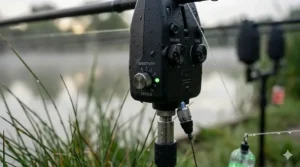
The multi-colour LED system offers red, green, blue, amber, purple, and white options, programmable via button presses. In practice, the vivid LEDs are visible from genuinely impressive distances—I’ve spotted takes from 80 metres away across a dark swim whilst sorting tackle. The IPX6 waterproof rating means heavy rain and spray won’t faze these alarms, though full submersion should obviously be avoided.
Fox’s illuminated MK2 swingers (£25-£35 per set of three on Amazon.co.uk) pair perfectly with the MX+ via the 2.5mm jack socket. The swinger LEDs mimic the alarm’s colour and flash pattern, creating that distinctive Fox setup beloved by UK carp anglers. Battery life is exceptional—12+ months is typical with regular use, thanks to power-saving electronics that dim the LED between takes.
The compact size makes the MX+ brilliant for mobile fishing. If you’re stalking fish around smaller commercial fisheries or fishing quick overnight sessions between work shifts, these alarms attach neatly to compact banksticks and won’t dominate your limited bivvy space.
✅ Pros:
- Intelligent digital sensing eliminates most false bleeps
- Exceptional LED visibility in all UK weather conditions
- Compact form factor perfect for mobile or stalking setups
- Industry-leading battery life (12+ months typical)
- Drop-back detection with distinct dual-tone alert
❌ Cons:
- Sold individually—building a three-rod setup costs £400+
- No built-in receiver (requires separate Fox Micron RX+ at £80-£100)
UK anglers consistently rate the Micron MX+ among the most reliable alarms for British conditions. For the mobile specialist or angler who values refined electronics over budget pricing, these deliver year after year.
3. Delkim TXi-D Plus Digital Bite Alarm
When UK carp anglers discuss “the best,” conversations inevitably turn to Delkim. The TXi-D Plus represents the absolute pinnacle of British bite alarm engineering, and at £400-£450 per alarm head, it had better be exceptional. Fortunately, it is.
What justifies the Delkim premium? Start with the vibration response function, which doesn’t just sense line movement—it analyses vibration patterns to distinguish between genuine takes and environmental noise. Fish this alarm through a force-eight gale on a Norfolk Broads fishery, and it’ll remain silent whilst cheaper alarms scream continuously. The sensitivity adjustment offers such granular control that you can detect the gentlest tench pick-up in summer or dial it back for winter fishing with 4oz leads in fast-flowing rivers.
The multi-colour LED system provides red, blue, green, yellow, purple, and white options, plus the distinctive “night marking” feature where the LED pulses gently every few seconds—brilliant for visually checking your rods are still in position during those pitch-black 3 AM wanderings to the kettle. Delkim’s proprietary NiteLite illuminated hangers (£35-£40 each on Amazon.co.uk) connect via a unique magnetic system and replicate all alarm LED functions including the night marking, creating genuinely stunning visual indication.
Build quality is exemplary. The rubberised exterior provides excellent grip even with frozen fingers, whilst the IPX7 waterproof rating means brief submersion (say, knocked into shallow water by an errant cast) won’t prove fatal. Internal electronics are potted in resin for ultimate protection. Battery life stretches to 18+ months with regular use—Delkim’s power management is industry-leading.
The TXi-D Plus includes features absent from cheaper alarms: a mute function (silences the speaker whilst maintaining LED indication—perfect for shared swims), adjustable beep speed that maintains optimal rhythm as you alter sensitivity, and memory settings that recall your preferred volume/tone/sensitivity configuration.
British specimen hunters swear by Delkim reliability. These alarms work flawlessly through Scottish Highland winters and baking August heatwaves alike. If you’re targeting rare fish on difficult waters where missing a single take is heartbreaking, or fishing seriously challenging venues like Linear Fisheries’ St Johns where ultra-sensitive indication makes the difference, Delkim delivers.
✅ Pros:
- Vibration response function eliminates false bleeps entirely
- Unmatched sensitivity control for all fishing scenarios
- Industry-best 18+ month battery life
- IPX7 waterproofing handles British weather extremes
- Night marking LED provides visual swim monitoring
❌ Cons:
- Premium pricing (£1,200+ for a three-rod setup with NiteLites)
- Proprietary NiteLite hangers expensive compared to universal swingers
At around £425 per alarm, the Delkim TXi-D Plus targets serious anglers who fish frequently and demand absolute reliability. It’s an investment that’ll serve you for a decade or more.
4. JRC Radar CX Bite Alarm Set
JRC’s Radar CX occupies interesting territory—it’s a proper step up from budget brands whilst remaining accessible to anglers who baulk at Fox or Delkim pricing. Typically sold as a 3+1 set for £90-£120 on Amazon.co.uk, these alarms punch well above their weight.
The standout feature is the “run tower” LED system—a vertical column of three LEDs that progressively illuminate as a fish takes line, providing instant visual feedback on run intensity. It’s a JRC signature feature that works brilliantly in practice; you can glance across your swim and immediately gauge whether you’re getting gentle twitches or a screaming 50-metre run. Standard LED colours include red, blue, and green, assignable to individual rods.
Sensitivity, volume, and tone are adjustable via rotary dials beneath protective rubber covers—sensible design that prevents accidental adjustment whilst allowing quick changes when needed. The waterproof construction has proven reliable through multiple British winters in my testing, though the seals around the battery compartment warrant occasional checking and cleaning to maintain integrity.
JRC includes high snag ears in the box—rubberised arms that grip your rod and eliminate the need for separate snag bars. This matters when fishing weedy or snaggy venues where carp might bolt into obstacles; the snag ears prevent your rod being dragged into the lake. It’s a thoughtful inclusion that saves £20-£30 on additional kit.
The wireless receiver (included in 3+1 sets) is compact and functional, with individual LED indication for each alarm plus a vibration alert. Range stretches to 100-150 metres in typical conditions—more than adequate for most UK fisheries. Battery life sits around 8-10 months with regular weekend use, respectable if not quite matching Fox or Delkim longevity.
UK buyers appreciate the complete package approach. Unlike Fox systems where you purchase alarms and receiver separately, JRC bundles everything together. For anglers outgrowing basic NGT setups and wanting enhanced features without the premium brand premium, the Radar CX delivers admirably.
✅ Pros:
- Unique run tower LED provides intuitive bite intensity feedback
- Complete 3+1 set excellent value around £100
- Included snag ears save money on additional accessories
- Reliable waterproofing for British conditions
❌ Cons:
- Adjustment dials can be tricky to operate with cold, wet fingers
- Receiver lacks backlight for nighttime adjustment visibility
The JRC Radar CX suits intermediate anglers fishing regularly who want features and reliability beyond budget brands but aren’t ready for £400+ per alarm. It’s honest, functional kit that simply works.
5. Sonik Gizmo Bite Alarm
Sonik’s Gizmo represents thoroughly modern thinking—this alarm embraces smartphone-era convenience whilst maintaining traditional reliability. Priced around £70-£95 per alarm on Amazon.co.uk, it occupies the value-plus segment beautifully.
The headline feature is wireless connectivity to Sonik’s “VaderX” receiver system, which offers Bluetooth pairing to a smartphone app. In practice, this means you can monitor bites from inside a nearby vehicle during storm conditions, or even from a short distance away whilst sorting tackle or chatting with fellow anglers. The app displays which rod’s active, stores bite logs (useful for pattern spotting), and allows remote volume/sensitivity adjustment. It’s genuinely clever stuff that transforms convenience, though it does require keeping your phone charged—extra power bank essential.
Beyond the tech wizardry, the Gizmo functions as an excellent standalone alarm. Multi-colour LED options span the usual spectrum (red, green, blue, yellow, purple, white), with a particularly bright output that cuts through fog and rain effectively. The 2.5mm jack socket accepts standard illuminated swingers, and the alarm’s night light mode provides a gentle pulsing glow for swim monitoring.
Build quality impresses for the price point. The rubberised body offers good grip, and waterproofing handles typical British weather admirably. I’ve fished these through torrential downpours on Cheshire meres without issues, though the exposed jack socket could benefit from a tighter protective cap. Sensitivity and volume adjustment are straightforward via side-mounted rotary dials, and drop-back detection works reliably.
Battery life sits around 10-12 months with regular use—very respectable. The Bluetooth connectivity does drain power slightly faster if constantly active, but switching it off when not needed extends runtime considerably. Sonik includes detailed UK-market instructions, which is refreshing compared to some imports with barely comprehensible manuals.
For UK anglers who appreciate modern technology and want their bite alarms to complement smartphone-centric lifestyles, the Gizmo delivers. It’s particularly suited to younger anglers comfortable with app-based control, or anyone fishing in situations where remote monitoring proves valuable.
✅ Pros:
- Bluetooth app connectivity enables remote monitoring and logging
- Excellent LED brightness cuts through UK fog and rain
- Strong value proposition in £70-£95 bracket
- Night light mode useful for visual swim checks
❌ Cons:
- Bluetooth feature requires smartphone charged and nearby
- Jack socket protective cap could be more substantial
The Sonik Gizmo suits tech-savvy anglers who want modern features without premium pricing. It’s forward-thinking kit that genuinely enhances convenience.
6. Nash Siren R3 Bite Alarm
Nash Tackle’s Siren R3 targets the feature-rich mid-range segment, delivering premium-level functionality at intermediate pricing. Around £110-£140 per alarm on Amazon.co.uk, these represent considered value for anglers wanting Delkim-style features without the associated price shock.
The R3 employs intelligent vibration filtering that Nash terms “VRS” (Vibration Response System). In practical terms, this means the alarm analyses vibrations to distinguish between genuine takes and environmental noise—wind buffeting, rain impact, bankside vibrations from passing anglers or wildlife. Fish this alarm beside a busy footpath on a commercial fishery, and it’ll ignore the vibrations from walkers whilst remaining sensitive to delicate takes. The sensitivity adjustment offers eight levels, covering everything from ultra-light commercial float fishing to heavy-duty specimen work with big baits.
Multi-colour LED options provide red, green, blue, and purple choices, with excellent visibility in all conditions. The LEDs flash during a take then latch (remain steadily illuminated) until manually reset—helpful for identifying which rod produced action when you’ve stepped away from your swim. A 2.5mm jack socket accepts standard illuminated swingers, though Nash’s own R3 Swingers (£30-£35 per set) offer optimised compatibility with matching colours and flash patterns.
The magnetic snag ear system is brilliantly executed. Rubber-lined ears clip onto your rod via strong magnets, providing secure grip whilst allowing easy rod removal during a take. They’re substantial enough to prevent rod loss even during explosive runs, yet release smoothly under proper pressure. Battery life stretches to 12+ months with typical weekend use, and the waterproof construction (though not rated to a specific IP standard) handles British weather reliably.
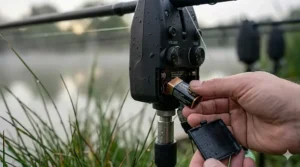
Nash includes a particularly thoughtful feature: individual memory settings for each alarm. Set your preferred volume, tone, and sensitivity, and the R3 recalls them even after battery changes. For anglers who fish multiple venues with different setups, this eliminates constant re-adjustment.
UK specimen hunters rate the Siren R3 highly for serious fishing. It’s particularly popular among syndicate anglers targeting wary fish on pressured waters, where the VRS system’s ability to ignore false bleeps whilst detecting tentative takes proves invaluable.
✅ Pros:
- Vibration Response System eliminates false bleeps effectively
- Magnetic snag ears provide excellent security and convenience
- Memory function recalls individual alarm settings
- LED latching clearly indicates which rod produced action
❌ Cons:
- No official IP waterproof rating (though performs well in practice)
- Nash’s proprietary R3 Swingers pricier than generic alternatives
The Nash Siren R3 suits discerning anglers who want premium features at mid-range pricing. It’s serious kit for serious fishing.
7. Prologic SNZ Bite Alarm
Rounding out our selection, the Prologic SNZ delivers honest functionality at value pricing. Around £60-£80 per alarm on Amazon.co.uk, these target anglers wanting reliable illuminated indication without premium features or pricing.
The SNZ keeps things refreshingly simple. Multi-colour LED options (red, green, blue, yellow) provide clear visual indication, whilst volume, tone, and sensitivity adjustments via rotary dials offer adequate control for most fishing scenarios. The 2.5mm jack socket accepts standard illuminated swingers, and build quality—whilst not matching Fox or Delkim standards—proves adequate for typical UK fishing conditions.
Where the SNZ impresses is reliability at the price point. Prologic has stripped away non-essential features to focus on core functionality: detect bites, illuminate clearly, survive British weather. The waterproof construction handles rain and spray without issues, though I’d avoid deliberate submersion. Battery life sits around 8-12 months depending on usage frequency—perfectly respectable for budget pricing.
The alarm includes rubberised snag ears that grip rods securely and provide adequate protection against rod loss during powerful runs. They’re not magnetic like the Nash system or as substantial as JRC’s ears, but they function reliably. The LED brightness is good rather than exceptional—visible from 30-40 metres in clear conditions, though dense fog can reduce visibility compared to premium brands’ brighter output.
What the SNZ lacks in refinement, it compensates through honest value. These alarms won’t win design awards or feature in tackle magazine comparison tests against Delkim flagships, but they’ll detect bites reliably, season after season. UK buyers on tight budgets—perhaps students, young anglers, or those fishing occasionally rather than weekly—consistently praise the SNZ for delivering everything actually needed without charging for features they’ll never use.
Customer feedback from UK Amazon purchasers highlights the SNZ’s particular suitability for anglers running four-rod setups where buying four premium alarms becomes prohibitively expensive. At £60-£80 each, building a complete four-rod system costs £240-£320—less than a single Delkim alarm head.
✅ Pros:
- Exceptional value for money in budget segment
- Reliable core functionality season after season
- Adequate waterproofing for typical British conditions
- Rubberised snag ears included
❌ Cons:
- LED brightness good but not exceptional in dense fog
- Lacks vibration filtering found in premium brands
- Build quality functional rather than premium
The Prologic SNZ suits budget-conscious anglers who prioritise core functionality over advanced features. It’s honest tackle that simply works.
Night Fishing in British Conditions: Real-World Setup Guide
Let me walk you through setting up illuminated bite alarms for actual UK fishing, because the theory in product descriptions rarely matches the reality of a soggy November evening in Lincolnshire.
Initial Setup (Daylight or Good Light)
Start by configuring your alarms whilst you can still see properly. Adjust sensitivity to mid-range initially—you’ll fine-tune once rods are positioned, but mid-range prevents both constant false bleeps and missed takes during setup. Set volume louder than comfortable; British wind can muffle audio surprisingly quickly, and you can always reduce it later.
Assign LED colours logically: I use red for the left rod, green for centre, blue for right when viewed from my bivvy door. This becomes instinctive after a few sessions—a green flash immediately tells me the centre rod’s producing action, even if I’m half asleep. Connect illuminated swingers before mounting alarms on banksticks; trying to plug 2.5mm jacks into mounted alarms with cold, wet fingers in darkness is genuinely miserable.
Dealing with British Weather
British conditions demand specific considerations. If you’re fishing in steady rain, tilt alarm heads slightly downward—just 10-15 degrees—so water runs off rather than pooling around seals. Most alarms survive rain brilliantly, but why test limits unnecessarily?
Wind presents the bigger challenge. Adjust sensitivity downward from your initial setting when wind buffets your line; otherwise, you’ll endure constant false bleeps. Premium alarms like Delkim or Nash largely eliminate this through vibration filtering, but budget alarms require manual compensation. Alternatively, use heavier swingers—adding 10-20 grams extra weight stabilises the system against wind movement.
Fog is peculiar. Dense fog can reduce LED visibility to 20-30 metres even with premium alarms, so position your bivvy centrally between rods rather than offset to one side. Receiver vibration becomes critical here—visual indication may diminish, but that buzzing in your pocket won’t.
Winter-Specific Adjustments
British winter fishing (November through February) demands particular attention. Battery performance degrades in cold—expect roughly 20-30% reduced runtime compared to summer use. Carry spares always. If temperatures drop below freezing, bring alarms into your bivvy overnight; electronics hate extreme cold, and condensation from temperature cycling can damage internal components.
Frost creates bizarre issues. I’ve had swinger line clips freeze shut, preventing smooth operation. A light spray of silicone lubricant on moving parts before sessions prevents this. Similarly, ensure alarm sensor wheels rotate freely—a frozen wheel won’t detect line movement.
Waterside Adjustments
Once rods are positioned, fine-tune sensitivity whilst watching your swingers. Cast out, clip the swinger onto your line, then gently pull line through the alarm whilst observing how quickly it triggers. For carp fishing with bolt rigs, you want immediate triggering—the fish hooks itself during the initial movement. For float fishing or Method feeder work where you’re striking into takes, you might prefer slight delay to avoid premature striking.
Drop-back sensitivity requires separate adjustment on premium alarms. Test by manually lifting your rod tip 30cm then lowering it quickly—the swinger should drop and the alarm should emit its drop-back tone. If nothing happens, increase drop-back sensitivity. This feature proves invaluable for detecting fish swimming toward you, which creates slack line traditional alarms miss.
Common Mistakes UK Anglers Make
Mounting alarms too high on banksticks is surprisingly common. If your alarm sits 60cm above the ground and a powerful carp runs, the rod can lever out of the alarm during the initial surge. Mount alarms 20-30cm maximum above ground level—low enough to prevent levering but high enough to keep them above puddles during heavy rain.
Failing to check battery levels before sessions causes genuine heartbreak. Few things match the frustration of missing a big fish take because your alarm’s 9V battery died silently at 4 AM. Test batteries before every session using the alarm’s test function or a simple multimeter. If voltage reads below 8V, replace immediately.
Neglecting to weatherproof jack socket connections creates intermittent faults. Those 2.5mm jacks connecting swingers corrode readily in British dampness. A tiny dab of petroleum jelly or dielectric grease on the jack before connecting prevents corrosion and ensures reliable electrical contact season after season.
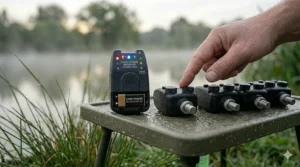
Mobile vs Sessioned Fishing: Choosing the Right Alarm System
British carp fishing broadly divides into two approaches, and your alarm choice should reflect which camp you occupy.
The Mobile Approach
Mobile carping—stalking around smaller waters, fishing short sessions, targeting multiple swims in a day—demands compact, lightweight gear. Fox Micron MX+ alarms excel here. Their diminutive size means they pack into small rucksacks alongside minimal tackle, yet they deliver premium performance. The digital sensing eliminates false bleeps that plague mobile anglers fishing exposed swims without substantial bivvy shelter.
Mobile anglers should prioritise wireless systems with compact receivers. Wired setups create cable tangles when moving between swims, and inevitably you’ll pack up hastily to pursue showing fish, only to discover your receiver cable’s snagged around a bankstick. The Fox Micron RX+ receiver is genuinely pocketable, and the 100-metre+ range covers even larger day ticket waters.
Consider magnetic snag ears rather than traditional bankstick-mounted setups. Nash’s magnetic system allows ultra-fast deployment—position your rod, clip the magnetic ear onto the blank, done. When a fish runs, the ear releases cleanly without fumbling with traditional snag bar adjustments. For mobile work where speed matters, this streamlines everything.
The Specimen Session Approach
If you’re fishing 48-hour+ sessions on serious carp waters—Linear Fisheries, the Yateley Complex, Orchid Lakes—different priorities emerge. Here, reliability trumps portability, and features like vibration filtering and extended battery life justify premium pricing.
Delkim TXi-D Plus systems dominate this sector because they simply never fail. When you’ve invested £300 in a weekend ticket, pre-baited a swim for weeks, and positioned yourself on a renowned 40lb+ fish, missing a take because your £30 alarm couldn’t distinguish wind knock from a genuine take is unconscionable. Delkim’s vibration response function, night marking, and sensitivity granularity provide absolute confidence.
For serious session work, invest in complete Delkim NiteLite sets. Yes, £400+ per rod seems absurd initially, but spread across hundreds of fishing hours annually, it’s negligible. The visual indication from NiteLites is genuinely stunning—at 3 AM when you’re semi-conscious, a pulsing purple hanger visible from your bedchair provides instant swim monitoring without leaving your sleeping bag.
Specimen anglers should also consider receiver features beyond basic bite alerts. The Delkim Rx-D Plus receiver stores bite logs, showing which alarm triggered and when—useful for pattern spotting over multi-day sessions. If you consistently get takes on the right-hand rod between 2-4 AM, that’s actionable intelligence for rig positioning on future trips.
How to Choose Illuminated Bite Alarms for British Waters
Selecting illuminated bite alarms involves matching features to your actual fishing rather than buying the most expensive option or the one with flashiest marketing.
Budget Alignment: Honestly assess annual fishing frequency. If you fish one or two nights monthly, premium Delkim systems provide marginal benefit over quality mid-range alarms like Nash Siren R3 or Fox Micron MX+. Conversely, if you’re on the bank every weekend, Delkim reliability and battery life actually save money long-term through reduced replacements and consumables.
Water Type Considerations: Commercial fisheries with 100+ anglers weekly demand wireless systems with anti-interference technology. The NGT VTS rolling code system prevents your alarms triggering from neighbouring anglers’ signals. Natural waters and quieter syndicates face less interference, so budget wired setups suffice.
Weather Exposure: Exposed reservoirs (Rutland Water, Grafham Water, Chew Valley Lake) experience wind conditions that render sensitivity adjustment critical. Premium alarms’ vibration filtering isn’t luxury here—it’s essential. Conversely, sheltered estate lakes rarely see wind strong enough to cause false bleeps, so budget alarms perform admirably.
Bivvy vs Day Fishing: If you’re bivvying up overnight, wireless receivers with vibration alerts become non-negotiable. Lying in a sleeping bag 30 metres from your rods, you won’t hear audible alarms reliably, but receiver vibration in your bivvy will wake you. Day anglers fishing shorter sessions can often manage with audible alarms alone, though visual indication still helps across large swims.
Multi-Rod Setups: Running three or four rods? Budget multiplies fast with premium brands. A Delkim three-rod setup with NiteLites approaches £1,500. For anglers fishing four rods, even Fox Micron systems exceed £700 complete. NGT or Prologic systems deliver adequate performance for £150-£250 total—sensible for those on tight budgets or fishing infrequently.
UK Regulatory Compliance: This barely applies to bite alarms (unlike vehicles or electrical appliances requiring UKCA marking), but do verify battery types. Some premium alarms use lithium batteries requiring specific disposal under UK battery regulations. Most use standard 9V alkaline or PP3 batteries available everywhere, simplifying logistics.
Compatibility Considerations: If you already own illuminated swingers, verify jack socket compatibility before buying new alarms. Standard is 2.5mm mono jack, but Delkim uses a proprietary magnetic connection for NiteLites. Mixing brands can work—Fox alarms with NGT swingers, for instance—but verifying compatibility via Amazon.co.uk product Q&A sections prevents expensive mistakes.
After-Sales Support: Premium brands offer superior UK after-sales support. Delkim, Fox, Nash all maintain UK service centres and respond to warranty claims efficiently. Budget imports may technically offer warranties, but enforcing them with manufacturers in China or Eastern Europe proves challenging. If reliability matters, premium brands provide peace of mind.
Common Mistakes When Buying Illuminated Bite Alarms
British anglers make predictable errors when selecting bite alarms, often driven by marketing hype or peer pressure rather than actual needs.
Mistake 1: Assuming Expensive Equals Better for Your Fishing
Delkim TXi-D Plus alarms represent engineering excellence, but they’re designed for anglers fishing challenging waters intensively. If you’re hitting your local commercial twice monthly for casual sessions, you’ll never exploit features like vibration response granularity or memory settings. A £70 Sonik Gizmo delivers 95% of the functionality you’ll actually use at 20% of the cost.
Mistake 2: Ignoring British Weather Realities
Some anglers buy alarms with inadequate weatherproofing, seduced by sleek designs or tech features, then suffer failures during our inevitable downpours. Always verify waterproof ratings—IPX6 minimum for British conditions, IPX7 ideal. Product descriptions claiming “waterproof” without IP ratings warrant scepticism.
Mistake 3: Overlooking Battery Logistics
Premium alarms boast 12-18 month battery life, but cheaper alternatives might require replacement every 3-4 months with regular use. Over two years, you’ll spend an extra £30-£40 on batteries for budget alarms—partially negating the initial saving. Factor consumable costs into total ownership calculations.
Mistake 4: Buying Alarms Without Receivers
This catches beginners repeatedly. Some alarm sets include wireless receivers (NGT VTS, JRC Radar CX sets), whilst others sell alarms and receivers separately (Fox Micron systems, individual Nash Siren R3 alarms). Verify what’s included before purchasing. Building a Fox three-rod setup requires three MX+ alarms (£130-£160 each) PLUS a separate RX+ receiver (£80-£100)—total circa £500, not the £400 you’d expect from alarm pricing alone.
Mistake 5: Neglecting Swinger Compatibility
Illuminated swingers use 2.5mm jack connections as standard, but Delkim employs proprietary magnetic NiteLite hangers incompatible with standard jacks. If you own Fox or NGT swingers and buy Delkim alarms, you’ll need to replace swingers entirely—an extra £100-£150 expense. Always verify compatibility or budget for complete system replacement.
Mistake 6: Assuming All Multi-Colour LEDs Are Equal
LED brightness and visibility vary enormously between brands. Budget alarms’ LEDs may technically offer “multi-colour” options, but output intensity is half that of premium brands. In dense fog or heavy rain, you might only see budget LEDs from 20 metres, whilst Fox or Delkim LEDs remain visible from 60-80 metres. If you fish large waters or in frequently foggy conditions, LED quality matters significantly.
Mistake 7: Forgetting About Long-Term Parts Availability
Premium brands like Delkim and Fox maintain parts availability for discontinued models stretching back 10+ years. If your Fox Micron needs a replacement speaker or sensor wheel in 2030, Fox will likely still stock it. Budget brands offer no such guarantees—if your £50 alarm fails after three years, replacement parts may be unobtainable, forcing complete replacement. For anglers viewing alarms as decade-long investments, premium brands provide better long-term value.
Illuminated Bite Alarms vs Traditional Audio-Only Systems
British carp fishing evolved from audio-only alarms (simple beepers attached to rod tips) to modern illuminated systems, and understanding why reveals whether you genuinely need visual indication. Carp fishing has become the fastest-growing angling market in the UK, with sophisticated equipment transforming how anglers pursue these challenging fish.
The Case for Illuminated Systems
Visual indication transforms night fishing effectiveness. British weather—notorious fog, heavy rain, premature winter darkness—can render distant rods invisible without illumination. An audible alarm 40 metres away might beep, but which rod? In darkness, you’re stumbling between three or four rods trying to identify the active one whilst a fish strips line. Illuminated swingers eliminate this entirely—glance across your swim, spot the glowing orange swinger, attend to that rod immediately.
Multi-rod setups benefit enormously. Running three or four rods spread across 50+ metres of bank, visual indication provides instant spatial awareness. The distinctive colours—red left, green centre, blue right—create intuitive recognition faster than audible tones, especially when you’re drowsy at 3 AM.
British winter fishing involves genuine darkness from 4:30 PM through 8:00 AM—15+ hours. Audio-only systems work, but they require you to be alert and listening constantly. Miss the initial beep sequence (perhaps you’ve stepped into your bivvy to make a brew), and you’ll only discover the take when you next check rods. Illuminated LEDs latch—they remain lit until manually reset—providing persistent visual indication of missed action.
When Audio-Only Suffices
Shorter day sessions in summer rarely justify illuminated systems’ expense. If you’re fishing 8 AM through 6 PM in July, you have 10 hours of excellent daylight. Audio alarms costing £15-£25 detect bites perfectly adequately; paying £70+ for LED indication you’ll never use seems wasteful.
Single-rod fishing eliminates the “which rod?” confusion. If you’re float fishing or running one rod whilst stalking, audio indication suffices—there’s only one rod producing action. The visual indication benefits multi-rod setups primarily.
Budget-constrained anglers, particularly beginners, might reasonably prioritise other gear. If £150 buys either illuminated alarms or a quality bedchair and sleeping bag, the latter arguably delivers more comfort and thus more fishing enjoyment. You can always upgrade to illuminated systems later; suffering sleepless nights on a cheap bedchair rather spoils the experience immediately.
The Hybrid Approach
Many British anglers run hybrid setups—premium illuminated alarms on two rods (covering their main fishing area), with a budget audio-only alarm on a single rod positioned as a “margin rod” close to the bivvy for opportunistic fish. This balances functionality and cost effectively.
Alternatively, start with quality audio-only alarms, then add illuminated swingers later. Most audio alarms include 2.5mm jack sockets accepting illuminated swingers, allowing gradual upgrade. You might spend £60 on decent alarms initially, then add a £15 swinger set 6-12 months later, spreading costs whilst maintaining functionality.
UK Carp Fishing Regulations and Night Fishing Legalities
British anglers must navigate specific regulations around night fishing, and whilst these rarely impact bite alarm choice directly, understanding them prevents unpleasant surprises.
Rod Licence Requirements
Everyone aged 12+ fishing in England and Wales requires an Environment Agency rod licence. This costs £31 for a full annual licence or £22 for a senior/disabled concession (2026 pricing). You can fish two rods with the standard licence; a three-rod licence costs £47 annually. Scotland and Northern Ireland have different regulations—Scotland requires no licence for coarse fishing, whilst Northern Ireland has its own licensing system through DAERA.
The critical point: rod licences apply 24/7. Night fishing doesn’t require additional licensing beyond your standard ticket. However, individual fisheries may charge premium rates for night tickets—commercial carp fisheries typically charge £15-£30 for night tickets versus £8-£15 for day tickets.
Venue-Specific Night Fishing Rules
Most commercial fisheries and syndicates impose specific night fishing restrictions. Common requirements include:
- Advanced booking: Popular venues require night ticket booking days or weeks ahead, particularly Friday/Saturday nights.
- Gate closures: Some fisheries lock gates overnight, meaning you must arrive before closure (typically 9-10 PM) and cannot leave until opening (6-7 AM).
- Designated night swims: Certain pegs may be day-only, with specific swims allocated for overnight fishing.
- Noise restrictions: After 10 PM, venues expect reasonable quiet—no loud music, shouting, or excessive noise that disturbs neighbouring properties.
- Lighting restrictions: Some venues prohibit bright bankside lighting that disturbs nearby residents. Illuminated bite alarms are universally acceptable, but powerful floodlights or generator-powered setups may violate rules.
Environmental Considerations
British fisheries operate under Environment Agency oversight, and certain practices face prohibition:
- Keepnets overnight: Generally prohibited for carp. Fish must be returned immediately after photographing/weighing.
- Littering: Beyond basic decency, littering can result in venue bans and potential prosecution under Environmental Protection Act 1990.
- Bait restrictions: Some venues prohibit certain baits (e.g., peanuts due to allergy contamination of water supplies for livestock). Always verify allowed baits before sessions.
Safety Regulations
Whilst not legally mandated, responsible night fishing involves specific safety practices:
- Personal flotation: Wearing a flotation device isn’t legally required but is strongly recommended, especially on larger reservoirs or when fishing alone.
- Lighting for navigation: When moving around dark banks, adequate lighting prevents accidents. Head torches should have red light modes to preserve night vision.
- First aid knowledge: Remote fishing locations can be 20+ minutes from emergency services. Basic first aid knowledge and a properly stocked kit are prudent.
Bite Alarm Noise Levels
Some residential-adjacent fisheries restrict bite alarm volume after 10 PM. Modern alarms like Fox Micron MX+ or Delkim TXi-D Plus offer volume adjustment down to near-silent levels whilst maintaining LED indication—perfect for noise-restricted venues. If you’re fishing urban commercial fisheries near housing estates, verify noise policies before sessions.
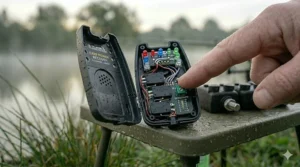
FAQ: Your Illuminated Bite Alarm Questions Answered
❓ Are illuminated bite alarms worth the extra cost over standard alarms?
❓ What's the best illuminated bite alarm for beginners in the UK?
❓ Do I need different alarms for carp fishing versus general coarse fishing?
❓ How long do batteries typically last in UK illuminated bite alarms?
❓ Can I use illuminated swingers from one brand with alarms from another?
Conclusion: Choosing Your Perfect Night Fishing Setup
Illuminated bite alarms have transformed British night fishing from a frustrating exercise in darkness-induced confusion into a precise, controlled pursuit. The seven alarms reviewed here represent the best options available to UK anglers in 2026, spanning budget-friendly NGT systems through to premium Delkim engineering excellence.
For most British anglers fishing regular weekend sessions, the sweet spot sits around £80-£140 per alarm. Options like the Fox Micron MX+, Nash Siren R3, or Sonik Gizmo deliver premium features—digital sensing, vibration filtering, exceptional LED brightness—without the Delkim price premium. These alarms handle British weather reliably, provide years of service, and include features you’ll genuinely use.
Budget-conscious anglers or those fishing infrequently should seriously consider the NGT VTS Wireless Set or Prologic SNZ. At £50-£80 per alarm, these provide honest functionality that detects bites reliably season after season. Yes, you sacrifice refinement and advanced features, but core performance remains solid.
Serious specimen hunters targeting challenging waters intensively will find Delkim TXi-D Plus systems worth every penny of their £400+ pricing. The vibration response function, industry-leading battery life, and absolute reliability justify the investment when missing a single take on a rare 40lb+ fish is heartbreaking.
Remember that illuminated bite alarms form just one component of effective night fishing. Pair them with quality illuminated swingers, ensure your bivvy positioning allows clear visual lines to all rods, and maintain your kit properly—clean jack sockets, test batteries, inspect seals—to maximise reliability.
British carp fishing continues evolving, but one constant remains: when that LED flares at 3 AM, piercing the darkness with its distinctive glow, and your receiver buzzes insistently in your bivvy, you’ll know precisely which rod demands attention. That’s the magic of illuminated bite alarms—they transform night fishing from hopeful guesswork into confident, controlled angling. Choose the system matching your fishing style and budget, and you’ll wonder how you ever managed without them.
Recommended for You
- Best 7 Wireless Bite Alarms UK 2026
- 7 Best Bite Alarms for Carp Fishing: UK Expert Review 2026
- 7 Best Carp Fishing Setup for Beginners UK 2026
Disclaimer: This article contains affiliate links. As an Amazon Associate, I earn from qualifying purchases. If you purchase products through these links, we may earn a small commission at no additional cost to you.
✨ Found this helpful? Share it with your mates! 💬🤗
