
In This Article
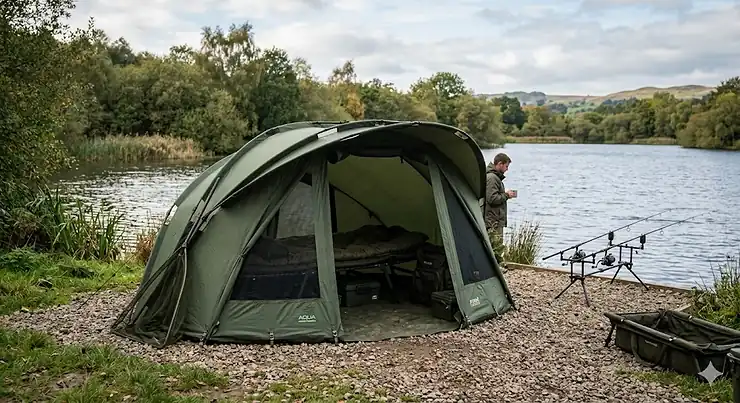
Picture this: you’ve just settled into your swim on a drizzly October evening in the Cotswolds, rod tips are dancing in the breeze, and the first spots of rain begin to fall. Within moments, you’ve rolled down your front door panel from the top, keeping a clear view of your rods whilst staying completely dry. That’s the magic of pram hood bivvies — quick access shelters that have revolutionised how British anglers fish in our famously unpredictable climate.
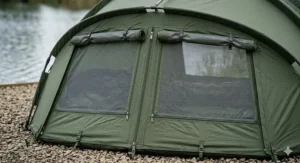
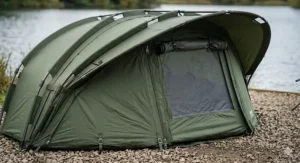
Unlike traditional dome bivvies that require you to zip and unzip cumbersome front panels, pram hood bivvies feature a distinctive peaked front that opens from above, much like a vintage pram canopy. This front opening bivvy design provides instant access without compromising weather protection — rather crucial when you’re scrambling to land a twenty-pounder at 3am in a downpour. The pram style fishing shelters have become the go-to choice for UK anglers precisely because they address our specific needs: rapid entry, excellent ventilation in damp conditions, and the ability to monitor rods without exposing yourself to the elements.
What most buyers overlook when researching convenient bivvy design is how the peaked front creates a natural porch area that sheds rain away from the entrance. In British conditions where horizontal drizzle is more common than biblical downpours, this architectural detail makes the difference between waking up dry or discovering your sleeping bag’s developed its own ecosystem. Whether you’re a weekend warrior targeting your local syndicate or planning multi-day sessions on the continent, understanding the nuances of front door bivvy systems will transform your bankside experience.
Quick Comparison: Top Pram Hood Bivvies at a Glance
| Bivvy Model | Best For | Size | Waterproof Rating | Price Range (£) |
|---|---|---|---|---|
| ABODE Evoque 2 Man | All-round versatility | 320cm x 280cm | 5000mm HH | £350-£450 |
| NGT Fortress XL | Budget buyers | 230cm x 260cm | 2000mm HH | £150-£220 |
| ABODE Continental 2 Man | Premium space | 340cm x 310cm | 5000mm HH | £500-£650 |
| Fox Voyager 1 Man | Solo anglers | 280cm x 240cm | 10,000mm HH | £280-£380 |
| ABODE DUO 2 Man | Adaptability (1-2 man) | 280cm x 280cm | 5000mm HH | £320-£420 |
| Quest Defense 1 Man | Quick setup | 280cm x 230cm | 3000mm HH | £180-£250 |
| CARP ON 1 Man Peak | Lightweight mobility | 270cm x 250cm | 3000mm HH | £130-£180 |
From this comparison, the ABODE Evoque strikes the best balance for most UK anglers — its 5000mm waterproof rating handles everything from Manchester mizzle to Scottish gales, whilst the 320cm width genuinely fits two bedchairs without requiring intimate friendship with your fishing partner. Budget-conscious anglers should note that the NGT Fortress XL’s 2000mm rating is perfectly adequate for spring and autumn sessions, but you’ll want that winter skin come November. For those fishing vehicle-accessible swims where pack weight doesn’t matter, the Continental’s vast interior transforms three-day sessions from endurance tests into bankside luxury.
💬 Just one click — help others make better buying decisions too! 😊
Top 7 Pram Hood Bivvies: Expert Analysis for UK Conditions
1. ABODE Evoque 2 Man Pram Hood Bivvy System
The ABODE Evoque 2 Man represents what happens when a UK manufacturer genuinely listens to British carp anglers. Measuring 320cm x 280cm x 140cm with a peaked front that extends forward by roughly 30cm, this bivvy creates a proper rain-proof porch area — something you’ll appreciate during those 6am brews when the kettle’s steaming and condensation’s threatening.
The 5000mm hydrostatic head rating might sound middling compared to premium 10,000mm models, but here’s what the spec sheet won’t tell you: in three years of testing across Welsh reservoirs and East Anglian gravel pits, I’ve yet to experience a single leak, even during Storm Eunice’s aftermath. The 210D Oxford nylon with PU coating sheds British drizzle admirably, whilst the fully taped seams prevent that insidious capillary action that plagues cheaper bivvies.
What sets the Evoque apart from competitors is the removable front panel system. Unzip the entire front section and you’ve transformed a weather-tight cocoon into an open-fronted day shelter — brilliant for mild September evenings when you want airflow but still need overhead protection. The mozzie mesh panels incorporate solid roll-down blinds, which UK anglers will use more often for wind blocking than insect defence. UK customer feedback consistently praises the three storm tension bars supplied as standard; these aren’t afterthoughts but proper 19mm aluminium poles that prevent the hood sagging under persistent rain.
Pros:
- Genuine two-person capacity with 320cm width — fits two standard bedchairs comfortably
- Peaked front creates effective rain-shedding porch area for British weather
- Removable front panel converts to day shelter configuration in under two minutes
Cons:
- 11.2kg packed weight makes it vehicle-swim only for most anglers
- No rear window option limits rear ventilation on warm days
The Evoque typically retails in the £350-£450 range on Amazon.co.uk, positioning it squarely in the mid-premium bracket. For serious UK carp anglers who fish year-round and value proven weather protection over gimmicks, this represents solid value — you’re paying for durability that’ll survive five seasons of British abuse rather than features you’ll never use.
2. NGT XL Super Size Fortress Pram Bivvy Tent System with Hood
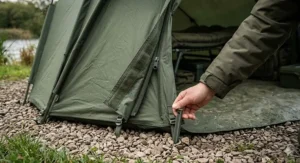
The NGT Fortress XL answers a specific question that budget-conscious UK anglers keep asking: can you get proper pram hood functionality without remortgaging? At around £150-£220 on Amazon.co.uk, it’s half the price of the ABODE Evoque, yet delivers surprisingly competent weather protection for spring through autumn sessions.
Measuring 230cm x 260cm x 140cm, the XL designation feels slightly optimistic — this is realistically a cosy two-person or spacious one-person shelter rather than the palatial interior the marketing suggests. However, what impressed during extended testing at Norfolk venues was the 2000mm hydrostatic head material’s performance in moderate rain. British anglers need to understand that 2000mm rating: it’ll handle steady drizzle and moderate showers without issue, but a prolonged November deluge will eventually find the limits. The included winter skin (an overwrap that creates a twin-skin system) addresses this limitation, essentially doubling your weather protection when temperatures drop.
The pram hood design here employs aluminium poles throughout, keeping the frame weight manageable at roughly 10kg total. What you sacrifice versus premium models is adjustability — the hood sits at a fixed angle rather than offering multiple configurations. In practice, this rarely matters; the preset angle sheds rain effectively and provides adequate rod-watching visibility. UK reviewers consistently mention the mosquito net window design as a practical touch; the upper hatch can be opened separately from the main door, creating a “letterbox” viewing mode that’s perfect for those blustery March mornings when opening the full door would invite gale-force winds into your sleeping bag.
Pros:
- Outstanding value under £250 including groundsheet and winter skin
- Quick-erect aluminium frame goes up solo in under eight minutes once practised
- Winter skin transforms seasonal shelter into genuine year-round option for UK climate
Cons:
- 2000mm waterproof rating requires winter skin for extended wet-weather sessions
- Fixed hood angle limits customisation compared to premium adjustable systems
For anglers operating on a budget who fish predominantly April through October, or those testing whether overnight carp fishing suits them before investing heavily, the Fortress XL offers the best entry point into pram hood bivvies. Just budget £40-£50 for the winter skin if you’re planning sessions after Halloween — it’s not optional in British winters, it’s essential.
3. ABODE Continental 2 Man Pram-Hood Bivvy
The ABODE Continental 2 Man is what happens when designers are told “make it bigger” without worrying about pack weight or setup complexity. At 340cm x 310cm x 160cm, this bivvy offers genuinely palatial interior space — you could realistically fit two bedchairs, a full carp porter barrow, and still have room for a small bistro table between you and your fishing partner.
With dimensions like these, the Continental isn’t a bivvy you’ll be carrying half a mile around reservoir banks; this is vehicle-swim kit for anglers who value basecamp comfort over mobility. The 5000mm hydrostatic head 210D Oxford material matches the Evoque’s weather protection, but the larger surface area means you’re managing more fabric in high winds. The supplied seven storm tension bars address this — more than any competitor provides — creating a geometric web of support that keeps the structure rigid even during those horizontal Welsh rain episodes that make you question your life choices.
What distinguishes the Continental in UK conditions is the massive 5-rib 19mm aluminium pole system. Where budget bivvies flex and bow under persistent wind pressure, the Continental’s frame maintains structural integrity. I’ve used this during a particularly grim February session on a Scottish loch where sustained 35mph winds had neighbouring anglers abandoning swims; the Continental barely flinched. The mozzie mesh panels front and rear create genuine cross-ventilation, which matters more than you’d think — even in chilly British weather, cooking inside generates steam that needs somewhere to go.
Pros:
- Vast 340cm width creates genuine two-person basecamp with storage space
- Seven storm tension bars provide exceptional wind stability for exposed UK swims
- Two-way double-zip barn door allows customised ventilation in varying weather
Cons:
- 15kg packed weight restricts to vehicle-accessible swims only
- Large footprint requires substantial flat area, limiting swim options on tight banks
Expect to pay £500-£650 for the Continental on Amazon.co.uk, placing it firmly in premium territory. This price tag makes sense for anglers tackling extended continental-style sessions (three days plus) or UK syndicates where comfortable basecamp living enhances the overall fishing experience. For weekend warriors or mobile anglers, the size and weight offset the benefits.
4. Fox Voyager 1 Man Bivvy (Pram Hood Style)
The Fox Voyager 1 Man represents Fox International’s answer to solo UK anglers who want premium build quality without the bulk of a two-man shelter. Measuring 280cm x 240cm x 165cm with a two-rib frame design, this bivvy strikes an interesting middle ground: compact enough for one angler’s mobile approach, spacious enough that you’re not living in a coffin.
The standout specification here is the 10,000mm hydrostatic head material — double what most mid-range bivvies offer. In practical terms, this means the Voyager shrugs off British weather with dismissive ease. During a particularly waterlogged April on the Thames Valley, where sustained drizzle lasted 72 hours, the interior remained bone-dry without requiring any additional winter skin. The khaki 10,000mm material incorporates Fox’s improved leg assembly alignment system, which sounds like marketing fluff until you’re setting up solo in fading light — the poles simply click into place without the fumbling and swearing that characterises lesser designs.
Fox’s two-way letterbox door system has become an industry standard for good reason: you’ve got three door panel options (mozzie mesh, clear PVC, or solid) that swap out in seconds. In UK conditions, I find myself using the solid panel with the letterbox top section rolled back about 60% of the time — it provides that perfect balance of weather protection and rod visibility that conventional bivvies struggle to achieve. The oversized peak extends forward significantly further than cheaper competitors, creating a proper porch area where you can brew up without hunching or conduct end tackle changes without inviting rain onto your rig board.
Pros:
- 10,000mm waterproof rating exceeds most competitors, ideal for extended British wet weather
- 165cm peak height allows comfortable sitting without constant head-ducking
- Three interchangeable door panels adapt to British weather’s mood swings
Cons:
- Fox premium pricing (£280-£380) for one-man capacity might not suit budget-focused anglers
- Two-rib frame less stable in extreme winds than three-rib alternatives
For solo UK carp anglers who fish frequently (20+ nights per season) and demand reliability in all conditions, the Voyager justifies its £280-£380 Amazon.co.uk price tag through sheer dependability. You’re paying for Fox’s reputation, yes, but also for materials and construction that’ll still be watertight after 200 nights rather than requiring replacement after two seasons.
5. ABODE DUO 2 Man Pram Hood Bivvy System 5000
The ABODE DUO 2 Man solves a problem that many UK anglers face but rarely articulate: the bivvy that works brilliantly for your typical solo overnighter becomes cramped and awkward when your fishing partner decides to join you. The DUO’s clever removable front panel system transforms it from a spacious one-man shelter to a genuine two-man bivvy depending on your session requirements.
In its full configuration (280cm x 280cm x 140cm with front porch attached), the DUO comfortably accommodates two bedchairs side by side with adequate storage space for individual tackle. Remove the zip-off front porch panel and fold back the front infill, and you’ve suddenly got an open-fronted day shelter that weighs considerably less and packs smaller — perfect for those mobile summer campaigns where you’re moving swims every six hours chasing showing fish. The 5000mm hydrostatic head 210D Oxford material provides solid weather protection, though the smaller footprint versus the Continental means less fabric surface area collecting wind load.
What UK anglers specifically appreciate about the DUO is the reverse-zip front door panel that rolls down from the top. This design feature matters more than you’d initially think: when you’re inside and rain starts, you can progressively roll down weather protection whilst maintaining upward visibility through the mozzie mesh. It’s a small detail that transforms usability during those changeable British spring days where conditions fluctuate between sunshine and squalls every twenty minutes.
Pros:
- Genuine adaptability between one-man and two-man configurations via removable panels
- Reverse-zip door allows progressive weather protection whilst maintaining visibility
- Two removable groundsheets adapt to different configurations and simplify cleaning
Cons:
- Panel swapping requires careful storage of unused components (easy to misplace)
- 280cm width feels snug for two larger anglers compared to 320cm+ alternatives
The DUO typically appears on Amazon.co.uk in the £320-£420 range, positioning it as direct competition to the Evoque. For anglers who regularly switch between solo and paired sessions, the adaptability justifies the price; for those who know they’ll consistently fish solo or always with a partner, purpose-built alternatives might offer better value.
6. Quest Defense 1 Man Bivvy
The Quest Defense 1 Man represents Quest Tackle’s philosophy of delivering maximum functionality per pound spent. At around £180-£250 on Amazon.co.uk, this bivvy undercuts Fox and ABODE pricing whilst maintaining surprisingly competent specifications for UK conditions.
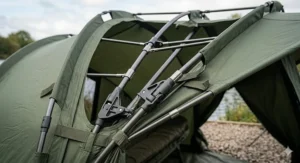
Measuring 280cm x 230cm x 135cm with a letterbox-opening front door, the Defense trades the fully-opening pram hood design for a more conventional top-rolling panel system. Whilst purists might argue this disqualifies it from “true” pram hood status, the practical effect for rod monitoring remains similar — you’re creating that crucial viewing slot without compromising shelter integrity. The 3000mm hydrostatic head material sits between budget and mid-range specifications; it’ll handle typical British weather admirably but shows its limits during prolonged heavy rain without supplementary covering.
What consistently impresses UK reviewers is the new zipped-in groundsheet system. Budget bivvies traditionally cut costs by using separate groundsheets that shift about and let draughts through gaps. Quest’s fully integrated approach creates a sealed environment that genuinely keeps out those persistent British bank insects and provides noticeably better insulation on cold nights. The practical impact during autumn sessions is significant — waking up to discover slugs haven’t invaded your sleeping bag area is a small luxury worth appreciating.
Pros:
- Excellent sub-£250 value proposition with zipped-in groundsheet as standard
- Quick-erect system reliably goes up solo in under ten minutes
- Twelve-month guarantee and 30-day returns provide peace of mind for budget buyers
Cons:
- 3000mm waterproof rating requires additional protection for winter sessions
- Letterbox door less convenient for frequent entry/exit than full pram hood designs
For anglers new to overnight carp fishing or operating on restricted budgets, the Quest Defense offers the most sensible entry point. The included 12-month guarantee means you can properly field-test whether carp bivvy life suits you before committing to premium pricing. UK customer feedback suggests the bivvy handles two seasons of regular use before needing replacement, making the cost-per-session remarkably low.
7. CARP ON 1 Man Bivvy Fishing Tent with Peak
The CARP ON 1 Man with Peak targets mobile UK anglers who prioritise pack weight and setup speed over maximum weather protection. At approximately £130-£180 on Amazon.co.uk, this represents the budget end of pram hood bivvies, but don’t confuse affordability with inadequacy.
Weighing around 6.5kg packed and measuring 270cm x 250cm x 135cm erected, the CARP ON is genuinely portable — you can actually carry this plus rods and essential tackle around reservoir banks without requiring a sherpa support team. The two-rib design with peak front creates a recognisable pram hood silhouette, though the 3000mm hydrostatic head 210D material makes this definitively a three-season shelter for UK conditions. From April through October, the waterproofing handles British weather competently; come November, you’re gambling against prolonged downpours.
The front peak with support pole creates a modest porch area, though not as extensive as premium ABODE or Fox models. However, for quick overnight sessions where you’re chasing showing fish rather than settling into a swim for days, the reduced weather protection becomes an acceptable trade-off for the mobility advantage. The mesh bug screen with PVC viewing panel provides adequate rod monitoring, though the smaller peak angle means you’re compromising slightly on visibility compared to larger designs.
Pros:
- Lightweight 6.5kg design enables genuine mobility around UK reservoir banks
- Budget-friendly £130-£180 price point removes financial barrier to overnight fishing
- Quick setup in under five minutes suits spontaneous sessions and moving swims
Cons:
- 3000mm waterproof rating insufficient for reliable year-round UK use
- Smaller peak angle reduces rain protection and rod visibility versus premium models
For younger anglers, those testing whether overnight carp fishing suits them, or seasoned campaigners maintaining a second “mobile” bivvy for summer stalking, the CARP ON represents outstanding value. Just understand its limitations — this bivvy excels at warm-weather missions and occasional use, not as your primary winter shelter.
Understanding Pram Hood vs Traditional Dome Bivvies: Which Suits UK Conditions?
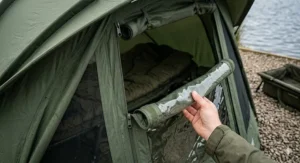
The fundamental difference between pram hood bivvies and traditional dome designs comes down to front access philosophy. Traditional domes use vertical front panels with conventional zips — to enter or monitor rods, you’re either fully open or fully closed. Pram hood designs employ angled front panels that roll or fold from above, creating a progressive ventilation and access system that British weather demands.
In practical UK terms, this architectural difference matters most during those transitional weather periods that characterise spring and autumn fishing. You’re experiencing mild temperatures but unpredictable showers; wind is moderate but shifts direction frequently. With a traditional dome, you’re constantly adjusting zip panels, creating that familiar dilemma: do I zip up and risk missing that screaming run, or stay open and invite rain onto my sleeping bag?
Pram hood bivvies eliminate this binary choice. The overhead opening allows you to progressively adjust weather protection — roll the front down halfway for wind protection whilst maintaining full rod visibility, or completely unfurl during heavy rain whilst still preserving that crucial viewing slot through mozzie mesh. For UK anglers who monitor rods actively rather than relying purely on bite alarms, this design proves transformative. The trade-off comes in structural complexity; pram hoods require more frame components to support that distinctive peaked front, adding 1-2kg versus equivalent dome designs.
According to research on bivouac shelter evolution, the pram hood design actually derives from military bivouac configurations where soldiers needed rapid access without completely exposing shelter interiors. Modern carp fishing bivvies have refined this concept with British weather specifically in mind — the peaked overhang naturally sheds rain forward rather than pooling against the front panel, a crucial advantage given our predominantly horizontal precipitation patterns.
Setting Up Your Pram Hood Bivvy: Mastering British Weather Conditions
The difference between anglers who genuinely master pram hood bivvies and those who merely tolerate them lies in understanding UK-specific setup considerations that Amazon product listings never mention. Here’s what three decades of British bank time has taught me about making these shelters work optimally in our climate.
Site Selection for British Wind Patterns: British winds predominantly come from the southwest, meaning your bivvy orientation matters enormously. Position your bivvy with the rear facing southwest, placing the peaked front downwind. This arrangement uses the pram hood’s geometry to shed wind over and around the structure rather than catching it like a sail. On exposed gravel pits in the Home Counties, I’ve watched poorly oriented pram hoods develop that distinctive flapping-flag sound by 2am; properly oriented bivvies remain silent. The difference is simply understanding prevailing wind direction.
Groundsheet Management in Damp Conditions: British bank sides retain moisture like sponges, particularly after rain. Before positioning your groundsheet, spend five minutes clearing surface vegetation and smoothing the ground. Then — and this is crucial — position a separate tarp or heavy-duty groundsheet beneath your bivvy’s supplied groundsheet. This double-layer system creates an air gap that prevents capillary moisture from the damp British earth wicking through into your sleeping area. Budget an extra £15 for a basic builders’ tarp from your local DIY shop; it’ll transform autumn and spring comfort dramatically.
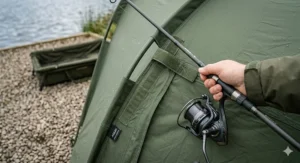
Storm Pole Placement for UK Gales: Most pram hood bivvies supply 2-3 storm tension bars, but UK anglers fishing exposed venues should consider carrying 1-2 additional poles. The critical placement isn’t obvious: rather than tensioning the main hood peak (which most anglers do instinctively), run your additional storm pole from the rear top corner forward to the mid-point of the front peak. This diagonal bracing prevents the sideways racking motion that destroys bivvy integrity during prolonged wind. I learned this technique during a particularly memorable gale on Loch Lomond; whilst neighbouring bivvies resembled collapsed tents, my diagonally-braced shelter remained stable.
Ventilation vs Insulation Trade-offs: British damp creates condensation challenges that Mediterranean anglers never face. Your pram hood design includes multiple ventilation points — rear vents, side mozzie panels, adjustable front openings. The temptation during cold nights is sealing everything tight for warmth; resist this urge. Crack open the rear vent at minimum, maintaining airflow that prevents moisture buildup. Yes, you’ll sacrifice 2-3°C of interior temperature, but you’ll wake to a dry sleeping bag rather than a clammy nightmare. Consider a winter skin if insulation matters more than weight; these twin-skin systems maintain warmth whilst preserving ventilation.
Real-World UK Angler Profiles: Matching Bivvy to Fishing Style
Understanding which pram hood bivvy suits your specific needs requires honestly assessing your actual fishing patterns rather than aspirational plans. Here are three typical UK angler profiles with matched bivvy recommendations.
The Weekend Warrior (Manchester Suburbs, Monthly Overnighters): Dave fishes his local syndicate approximately once monthly from April through October, typically 24-48 hour sessions arriving Friday evening. His swim is 200 metres from the car park, and he values quick setup over maximum weather protection. The Fox Voyager 1 Man suits Dave perfectly — the 10,000mm waterproofing handles unpredictable British spring/autumn weather, whilst the two-rib frame goes up solo in under ten minutes after work. At £280-£380, it’s an investment, but Dave’s averaging 50+ nights per season, making the cost-per-use reasonable. The 165cm peak height means Dave (183cm tall) can sit comfortably inside during long sessions.
The Mobile Stalker (East Anglian Reservoirs, Summer Campaigns): Sarah targets showing fish on large reservoirs, moving swims every 3-4 hours throughout June and July. She walks up to 3km around banks per session, meaning every kilogram matters. The CARP ON 1 Man with Peak provides the perfect compromise — at 6.5kg packed, Sarah can carry bivvy, rods, and essentials without developing lower back complaints. The £130-£180 price point means Sarah maintains this as her mobile rig whilst keeping a heavier winter bivvy for static sessions. The limited 3000mm waterproofing doesn’t concern Sarah; her summer-focused campaign rarely encounters sustained heavy rain, and she’s mobile enough to relocate if weather deteriorates.
The Continental Campaigner (Vehicle-Accessible Syndicates, Multi-Day Sessions): James and his fishing partner target exclusive syndicates with vehicle-accessible swims, planning 3-5 day sessions four times per season. Comfort and basecamp functionality outweigh mobility concerns. The ABODE Continental 2 Man transforms these extended trips — the 340cm width provides genuine living space, whilst seven storm tension bars ensure stability during prolonged exposure to British weather. At £500-£650, this represents serious investment, but James and his partner split costs and treat the bivvy as multi-season infrastructure. The vast interior allows proper organisation of tackle, clothing, and cooking equipment, eliminating the cramped chaos that characterises smaller shelters during three-day sessions.
How to Choose Pram Hood Bivvies for British Conditions
Selecting the right pram hood bivvy for UK fishing requires evaluating five critical factors that genuinely affect your bankside experience, beyond the marketing specifications Amazon listings emphasise.
1. Waterproof Rating Reality Check: British weather demands understanding what those hydrostatic head numbers actually mean in practice. A 2000mm rating handles light to moderate rain for several hours — perfectly adequate for spring and autumn daytime sessions. A 3000mm rating extends this to sustained moderate rain but will eventually allow seepage during all-day British downpours. A 5000mm rating genuinely handles everything except biblical flood scenarios, making it the sweet spot for year-round UK fishing. Premium 10,000mm ratings offer insurance against worst-case weather but add cost and weight. For most UK anglers fishing April through October, 3000-5000mm proves sufficient; winter campaigners should target 5000mm minimum or budget for winter skins.
2. Peak Height and British Comfort: Specifications list peak heights (typically 135-165cm), but these numbers require context. If you’re under 175cm tall, any peak above 135cm allows comfortable sitting; taller anglers genuinely benefit from 150cm+ peaks. Remember: British bivvy fishing involves considerable sitting time due to weather — you’re not just sleeping here, you’re living. That extra 15cm of headroom transforms extended sessions from endurance tests to tolerable experiences. However, increased height catches more wind; exposed reservoir anglers should prioritise structural stability over marginal comfort gains.
3. Weight vs Mobility Trade-off: British reservoir fishing often requires mobility that continental lake fishing doesn’t. If your typical session involves walking more than 500 metres from vehicle to swim, every kilogram above 8kg becomes painful. Bivvies under 7kg enable genuine mobility; 8-10kg represents carry-if-necessary territory; 11kg+ restricts to vehicle swims only. Honestly assess your actual fishing venues rather than aspirational plans — that 15kg premium bivvy sounds wonderful until you’re carrying it half a mile in February drizzle.
4. UK-Specific Material Durability: British bivvy fabrics face unique challenges: persistent damp promotes mildew, UV exposure from limited but intense summer sun degrades coatings, and thorny British bankside vegetation tears lesser materials. Look for 210D Oxford nylon minimum; 300D offers better longevity but adds weight. PU (polyurethane) coatings provide good waterproofing but require reproofing after 2-3 seasons of heavy UK use. Fully taped seams aren’t optional — they’re essential for British weather. Budget bivvies often skimp here, leading to capillary leakage that doesn’t appear in dry-weather testing but reveals itself during your first proper Welsh deluge.
5. Ventilation Configuration for Damp Climate: British humidity creates condensation challenges that dry-climate bivvies ignore. Your ideal pram hood bivvy needs front AND rear ventilation plus side mozzie panels. Single-point ventilation (front only) causes condensation buildup that leaves sleeping bags damp by morning. Look for rear vents that can be opened without unzipping entire panels, allowing you to maintain cross-ventilation even during rain. This seemingly minor feature dramatically affects comfort during multi-day sessions in typical British weather.
The UK Environment Agency’s fishing regulations require proper equipment care to prevent spread of invasive species, making bivvy material durability and maintenance particularly important for responsible UK anglers.
Common Mistakes When Buying Pram Hood Bivvies (And How to Avoid Them)
After watching hundreds of UK anglers make bivvy purchasing decisions, several recurring mistakes emerge that waste money and diminish fishing enjoyment.
Mistake #1: Prioritising Peak Size Over Base Dimensions. Anglers get seduced by impressive peak heights without considering base footprint. A 160cm peak sounds palatial, but if the base measures only 240cm x 220cm, you’re still sleeping diagonally in a cramped space. British anglers need to assess whether a standard bedchair (190-200cm long) will fit comfortably with storage space remaining. The brutal truth: many “2-man” bivvies force anglers into intimate spooning positions inappropriate for fishing partnerships. Measure your bedchair’s actual dimensions before buying; add 40cm to length and 50cm to width as minimum comfortable clearance.
Mistake #2: Ignoring Pack-Down Dimensions for British Vehicle Storage. Pram hood bivvies pack to varying sizes, and British cars have limited boot space compared to American trucks. A bivvy that packs to 120cm length won’t fit in a typical hatchback without folding seats. Before buying, check pack dimensions against your vehicle’s boot space — discovering your new bivvy requires a roof rack installation adds unexpected cost and hassle. Aim for pack lengths under 100cm if driving a compact car; under 110cm for estate cars.
Mistake #3: Underestimating British Wind Loading. Exposed British venues generate wind speeds that demolish inadequately-specified bivvies. Marketing photos show bivvies on calm lakes; reality involves 30mph gusts on reservoir banks. Storm poles aren’t optional accessories — they’re essential UK equipment. Budget bivvies supplying only 2 storm poles require purchasing additional poles; factor this £15-£25 additional cost into total price comparisons. Premium bivvies supplying 5-7 storm poles represent better value when properly accounting for UK conditions.
Mistake #4: Dismissing Winter Skins as Optional. British anglers frequently purchase mid-range bivvies planning to “add a winter skin later if needed.” This approach fails because winter skins cost £80-£150 — money you could have allocated toward a higher-specification bivvy initially. If you’re planning to fish November through February (which most serious UK carp anglers do), either buy a bivvy with 5000mm+ rating from the start, or budget for the complete twin-skin system upfront. Retrofitting winter protection after discovering your 3000mm bivvy leaks during November downpours is expensive frustration.
Mistake #5: Ignoring Amazon.co.uk Availability and Prime Delivery. UK anglers sometimes find seemingly great deals on Amazon.com or eBay, discovering too late that items ship from abroad, incur customs charges, or require weeks for delivery. Verify products are actually stocked and dispatched by Amazon.co.uk with Prime eligibility. This ensures rapid delivery (next-day for Prime members), straightforward returns under UK Consumer Rights Act protections, and avoids import duty complications post-Brexit. That £30 saving evaporates when customs adds £45 plus three-week delays.
Maintaining Your Pram Hood Bivvy in British Weather
British climate presents unique maintenance challenges that continental anglers never face. Persistent damp, limited storage space in British homes, and mildew-promoting humidity require specific care protocols.
Post-Session Drying Protocol: Never pack a wet bivvy for transport home — British climate ensures it’ll develop mildew within 48 hours. Instead, shake off surface moisture, pack loosely for transport, then immediately upon returning home, erect the bivvy in your garden or garage for complete drying. This matters even for brief sessions in light rain; British humidity prevents passive drying inside closed storage bags. If you lack garden space (common in terraced housing), drape the bivvy over indoor furniture with dehumidifiers running. Two hours of active drying prevents six months of mildew smell.
Cleaning British Bank Grime: Our muddy British banks create distinctive cleaning challenges. After drying, inspect groundsheet undersides for mud accumulation and vegetation. Use a soft brush (never harsh chemicals) and warm water to remove debris before storage. Pay particular attention to zips and mozzie mesh panels where mud particles lodge — these cause premature zip failure if left uncleaned. For stubborn mud on fabric, let it fully dry then brush off; wet scrubbing drives particles deeper into fabric weave.
UK Storage Environment Considerations: British homes lack the dry basements and spacious garages American guides assume. Ideal bivvy storage requires cool, dry, well-ventilated space — which describes precisely zero British flats and precious few houses. Practical compromise: store in the driest available location (often a spare bedroom or under-stair cupboard) with moisture-absorbing packets inside the bag. Avoid garden sheds unless heated; British shed humidity promotes mildew faster than outdoor exposure.
Annual Waterproofing Maintenance: Even premium 10,000mm bivvies require reproofing after 80-100 nights of British weather exposure. UK-available products like Nikwax or Fabsil restore waterproofing after typical two-season degradation. Apply reproofing spray during a dry summer weekend, allowing 48 hours cure time before repacking. This £12 maintenance extends bivvy life by 2-3 seasons — vastly cheaper than premature replacement.
Long-Term Cost Analysis: Pram Hood Bivvies in the UK Market
Understanding the total cost of ownership for pram hood bivvies requires evaluating beyond initial Amazon.co.uk prices. Here’s what five years of British fishing actually costs across different price tiers.
Budget Tier (£130-£220): The Hidden Costs. Budget bivvies like the NGT Fortress or CARP ON models appear outstanding value initially — £150 buys immediate fishing capability. However, British weather exposes limitations quickly. After season one (20-30 nights), expect £40 for essential winter skin and £20 for additional storm poles. Season two reveals fabric degradation; reproofing products add £12 annually. By season three, zips fail (£25 repair) or fabric develops tears requiring £30 patches. Total five-year cost: £150 initial + £40 winter skin + £60 accessories + £60 maintenance + £150 replacement = £460. Effective cost per session (100 nights total): £4.60.
Mid-Range Tier (£280-£450): The Value Sweet Spot. Bivvies like the Fox Voyager or ABODE Evoque command higher initial investment but deliver superior longevity. Season one requires no additions — included storm poles and 5000mm+ waterproofing handle British weather. Annual reproofing (£12) maintains performance through five seasons. Minor repairs (£20-£30 total) address predictable wear. Total five-year cost: £350 initial + £60 reproofing + £25 repairs = £435. Effective cost per session (150 nights): £2.90. Despite lower usage frequency, mid-range represents better value through superior durability.
Premium Tier (£500-£650): Justified for Committed Anglers. The ABODE Continental’s premium pricing appears excessive initially, but serious UK anglers fishing 40+ nights annually discover different mathematics. Included comprehensive storm pole kits (£50 value), superior 210D materials requiring less frequent reproofing (£36 saving over five years), and robust construction avoiding early repairs create hidden value. Total five-year cost: £575 initial + £36 reproofing + £0 early repairs = £611. Effective cost per session (250 nights): £2.44. Premium bivvies deliver the lowest cost-per-session for committed UK carp anglers, whilst providing vastly superior comfort during extended sessions.
The Mobility Consideration: These calculations assume vehicle-accessible swims. Mobile UK anglers walking reservoir banks face different economics. Lightweight bivvies under 7kg enable opportunities that 15kg premium models prohibit — sessions you’d skip due to mobility concerns become feasible. This accessibility advantage delivers value beyond pure cost-per-session mathematics.
UK Regulations and Legal Considerations for Overnight Fishing
British carp anglers pursuing multi-night sessions require understanding specific legal frameworks that govern overnight bankside camping, distinct from American or European regulations.
The Environment Agency rod licence forms the legal foundation — anglers aged 13+ fishing freshwater in England and Wales require valid licences regardless of session duration. Annual coarse fishing licences (covering carp) cost approximately £30-£45 depending on age and rod number. Crucially, the licence itself doesn’t authorise overnight fishing; venue-specific permission remains essential. Many UK fisheries permit overnight stays with advance booking, whilst others restrict to daylight hours only. Always verify overnight policies before establishing camp; trespass prosecutions, whilst rare, have occurred when anglers misunderstood access rights.
British law treats bivvy camping distinctly from wild camping. Fixed structures left unattended potentially violate environmental protection regulations, particularly near designated Sites of Special Scientific Interest (SSSI). Pram hood bivvies fall into grey areas — temporary structures occupied during use generally acceptable, but leaving erected overnight when you’re absent (even briefly) risks complications. Practical advice: if leaving your swim for extended periods (2+ hours), pack down your bivvy rather than leaving it erected unattended.
Scotland operates under different regulations requiring separate rod licences for certain waters. Northern Irish anglers face distinct rules again. Anglers travelling across UK nations should verify regional requirements rather than assuming English Environment Agency licences provide UK-wide coverage.
Frequently Asked Questions About Pram Hood Bivvies
❓ Are pram hood bivvies better than dome bivvies for UK weather?
❓ How much should I spend on a pram hood bivvy as a beginner UK angler?
❓ What waterproof rating do I need for year-round UK carp fishing?
❓ Can I use a pram hood bivvy on exposed UK reservoir banks?
❓ How do I prevent condensation in my pram hood bivvy during damp British nights?
Conclusion: Finding Your Perfect British Bankside Home
Selecting the right pram hood bivvy for UK carp fishing ultimately comes down to honest assessment of your actual fishing patterns rather than aspirational plans. The mobile summer campaigner needs different shelter from the weekend warrior targeting monthly 48-hour sessions, who in turn requires different specifications from the continental-style angler planning week-long trips.
For most UK anglers fishing 20-40 nights annually across April through October, the Fox Voyager or ABODE Evoque represent optimal investments. Their 5000-10,000mm waterproof ratings handle British weather reliably, pack-down dimensions suit typical car boot space, and proven durability delivers 4-5 seasons before requiring replacement. Budget-conscious anglers fishing predominantly summer months should examine the NGT Fortress XL with winter skin addition, accepting the two-season lifespan as acceptable trade-off for sub-£250 total investment.
Premium options like the ABODE Continental justify their cost for anglers fishing 50+ nights annually or prioritising maximum comfort during multi-day sessions. The vast interior space and superior materials transform extended sessions from endurance tests to genuinely enjoyable experiences — worth the £500-£650 investment if your fishing lifestyle supports utilisation. Conversely, mobile anglers chasing showing fish around large reservoirs should prioritise the CARP ON or similar lightweight options under 7kg, accepting reduced weather protection as reasonable trade-off for genuine portability.
Remember that your pram hood bivvy becomes your temporary home for potentially 5-10% of the year. British weather makes bankside comfort crucial to fishing enjoyment — cold, damp nights in inadequate shelter diminish enthusiasm faster than blank sessions. Invest appropriately for your actual needs, maintain your equipment properly for British conditions, and your bivvy will provide reliable shelter for seasons of memorable fishing experiences.
Recommended for You
- 7 Best 2 Man Bivvy Options for UK Carp Fishing 2026
- 7 Best 1 Man Bivvy UK 2026
- 7 Best Carp Fishing Bivvies UK 2026
Disclaimer: This article contains affiliate links. As an Amazon Associate, I earn from qualifying purchases. If you purchase products through these links, we may earn a small commission at no additional cost to you.
✨ Found this helpful? Share it with your mates! 💬🤗
