
In This Article
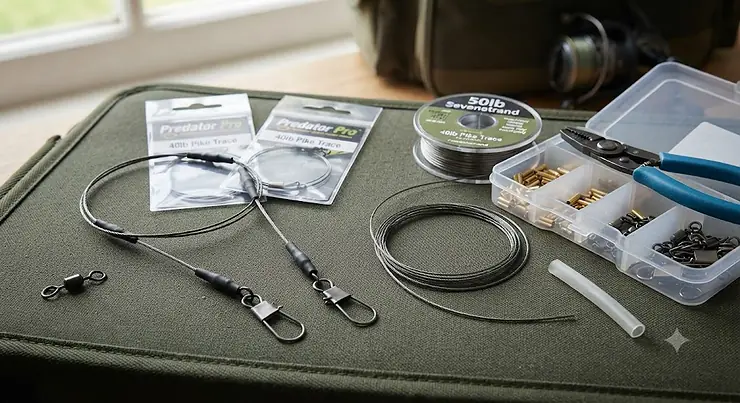
Lose a lure to a pike once and you’ll never fish without a proper trace again. Wire traces for pike exist for one blunt reason: a pike’s teeth will saw straight through mono or braid in seconds, and what’s left behind is either a lost lure or, worse, a fish swimming off with a hook still in it. A wire trace is simply a short length of bite-resistant wire — usually stainless steel, multi-strand or titanium — that sits between your main line and your hook or lure, and it’s genuinely non-negotiable kit for anyone targeting predator fish in UK waters. The Canal & River Trust confirms as much in its own pike fishing guidance, noting that a wire trace is required between the lure and the main line due to the species’ sharp teeth.
The trouble is, “buy a wire trace” turns out to be a much bigger decision than it sounds. Seven-strand or forty-nine-strand? Ready-made or tie-your-own? Titanium at three times the price, or is that just marketing? We’ve pulled together seven genuinely available options across budget, mid-range and premium, with honest analysis of what each one actually does differently — not just a spec sheet dressed up as opinion. Along the way we’ll dig into breaking strain, leader material choice, and whether ready made pike wire traces are actually worth the convenience premium over building your own. Every price below is a range rather than a fixed figure, since tackle pricing shifts constantly — always check the current price before ordering.
Quick Comparison Table
| Trace | Type | Breaking Strain | Price Range | Best For |
|---|---|---|---|---|
| GIAK 72pcs Stainless Wire Trace Leaders | Ready-made multipack | Varies by length | around £7-9 | Bulk budget backup |
| X3 Pike Wire Traces | Ready-made, treble-rigged | 40lb | around £6-9 | Ready made pike wire traces |
| Drennan 7 Strand Trace Wire | DIY 7-strand spool | 15lb-28lb | around £5-8 | Classic 7 strand wire trace pike |
| Drennan Green Pike Wire | DIY 7-strand, camo coated | 15lb-28lb | around £6-9 | Stealthy presentation |
| PikePro Trace Wire | DIY 7-strand spool | 20lb-40lb | around £6-10 | Twisting or crimping traces |
| Fox Rage Predator 49 Strand Steel Wire | DIY 49-strand spool | 26lb/40lb | around £10-15 | Best multi strand wire trace pike |
| Predator X Titanium Pike Trace | Ready-made kit | Varies (11-55lb) | around £12-18 | Premium leader material |
Scanning across the table, the split between ready-made and DIY wire is really the first decision to make, and it shapes everything else. The GIAK 72pcs Stainless Wire Trace Leaders and X3 Pike Wire Traces solve the “I just want to fish now” problem cheaply, while the Drennan and PikePro spools are aimed squarely at anglers who want to build traces to their own length and hook preference. At the top end, the Fox Rage Predator 49 Strand Steel Wire and Predator X Titanium Pike Trace both justify their price through material performance — suppleness and kink resistance respectively — rather than branding alone.
💬 Just one click — help others make better buying decisions too!😊
Top 7 Wire Traces for Pike: Expert Analysis
1. GIAK 72pcs Stainless Wire Trace Leaders — budget bulk buy for backup traces
The standout feature is sheer quantity: 72 pieces across three lengths (15cm, 20cm and 25cm) in one pack, each finished with a snap for fast lure changes. In practice, that means you’re never caught out mid-session with a mangled trace and no spare — you simply clip on a fresh one and keep fishing. The stainless steel construction is described as wear-resistant, and the ends are wrapped rather than crimped, which is worth flagging clearly rather than glossing over: wrapped ends are a lighter-duty joining method than a properly swaged crimp, so this is sensible as a backup or light-duty option rather than your primary trace for genuinely big pike.
Aggregated reviewer sentiment on generic multipack traces like this tends to be positive on value and mixed on longevity — buyers consistently praise the price-per-unit, while a smaller number flag that the finish and joint strength doesn’t quite match dedicated pike-brand wire. Based on that spec comparison, this is honestly best treated as an economical stopgap rather than a like-for-like swap for branded trace wire.
Pros:
- ✅ 72 pieces across three lengths in one pack
- ✅ Snap swivel included for fast lure changes
- ✅ Excellent price-per-trace for casual sessions
Cons:
- ❌ Wrapped, not crimped, joints are lower duty
- ❌ Generic import brand with less proven pedigree
At around £7-9 for the full pack, this is the “always have a spare in the bag” purchase rather than your main-line trace for trophy pike.
2. X3 Pike Wire Traces — genuinely reviewed ready made pike wire traces
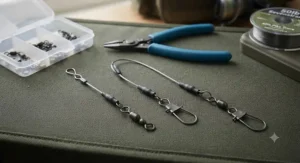
What sets this one apart is that it’s ready to fish straight from the packet: 40lb nylon-coated wire built onto semi-barbed and barbed treble hooks, so there’s no crimping, twisting or fumbling with cold hands on the bank. That’s precisely the appeal of ready made pike wire traces as a category — consistency and speed over customisation.
This is one of the few traces on this list with genuinely verified, specific customer feedback attached rather than a vague star average. One reviewer called the product excellent while noting it felt a little expensive for what it is; another specifically praised the value, quality and prompt delivery; a further review highlighted the swivel quality and tie work specifically. Based on the spec comparison with generic multipacks, the treble configuration and semi-barbed option here are genuinely useful design choices — semi-barbed points reduce hook-slip risk while keeping two of the three points barbless for easier, fish-friendlier unhooking.
Pros:
- ✅ Ready to fish, no crimping or tying required
- ✅ Semi-barbed treble option balances hook-hold and welfare
- ✅ Verified reviewers praise build quality and delivery
Cons:
- ❌ At least one reviewer flagged the price as high for the format
- ❌ Hook sizes reportedly vary slightly from other manufacturers
Around £6-9, this is a strong pick for anyone who wants dependable, ready made pike wire traces without a DIY learning curve.
3. Drennan 7 Strand Trace Wire — the classic 7 strand wire trace pike anglers have used for decades
The standout here is pedigree: a woven seven-strand stainless wire with a dark bronze finish, supplied on a 15-metre spool across multiple breaking strains from 15lb up to 28lb. What that means in practice is you can build traces to your exact preferred length and pair them with your own choice of hooks, swivels and crimps — genuinely useful if you fish varied conditions and don’t want a one-size trace dictating your rig. Drennan itself recommends a 0.75mm crimp size, and the wire is specifically designed for the twisted wire method as well as crimping.
Reviewer sentiment on this classic design is consistently strong across UK tackle retailers, built on decades of use rather than a recent marketing push — it’s frequently described as the “original” reliable pike wire, and it’s genuinely hard to find serious criticism of it beyond the fact that, being raw material, it demands a bit more angling know-how than a ready-tied option.
Pros:
- ✅ Multiple breaking strains on a single 15m spool
- ✅ Dark bronze finish reduces visibility underwater
- ✅ Decades-proven design trusted by UK pike anglers
Cons:
- ❌ Requires your own crimps, hooks and swivels
- ❌ Needs basic trace-tying skill to use effectively
At around £5-8 per spool, this remains the benchmark 7 strand wire trace pike anglers reach for first, and with good reason.
4. Drennan Green Pike Wire — extra-smooth stealth for clear or pressured waters
This is the camouflaged sibling to the classic bronze Drennan wire, and the standout feature is exactly that: a subtle green coating woven over the seven-strand core, described by Drennan as extra smooth and kink resistant. In practice, the smoother coating reduces friction through rod guides and swivels, which translates into slightly better casting distance and fewer tangles over a session, while the green tone blends in against weedy or algae-rich stillwaters better than plain bronze wire does.
What most anglers overlook about coated wire is that the coating itself is a wear layer, not a permanent shield — a pike’s teeth can nick through the green finish on a hard take, exposing bare wire underneath. That’s not a defect so much as normal wear, but it’s worth inspecting traces after aggressive strikes rather than assuming the coating is invincible. Reviewer sentiment on Drennan’s coated ranges is generally positive on smoothness and presentation, with durability regarded as good rather than exceptional once coating damage is taken into account.
Pros:
- ✅ Smooth coating reduces friction and tangling
- ✅ Green tone suits weedy, coloured stillwaters
- ✅ Kink-resistant compared with plain uncoated wire
Cons:
- ❌ Coating can be nicked by repeated hard strikes
- ❌ Still a DIY wire — no ready-made hooks included
Around £6-9 for a 15m spool, and a smart upgrade over plain bronze wire if presentation and stealth matter on your venue.
5. PikePro Trace Wire — a specialist pike-only brand built on angler feedback
PikePro’s standout claim to fame is focus — this is a brand built specifically around pike trace wire rather than a general tackle range with pike as an afterthought. The wire itself is uncoated, dark bronze, seven-strand, and described by the maker as fine in diameter for its breaking strain and medium-supple in handling, suited to both twisting and crimping. According to PikePro, the lighter breaking strains were developed directly in response to requests from zander and perch anglers wanting a finer wire without sacrificing bite protection.
Here’s where honesty matters: one verified Amazon reviewer specifically noted difficulty getting crimps to seat properly on this wire, describing the strands as coming loose compared with other seven-strand wires they’d used, despite trying several crimp sizes. That’s a genuine, specific piece of feedback worth weighing rather than smoothing over — it suggests this wire may reward anglers already comfortable with crimping technique more than total beginners.
Pros:
- ✅ Fine diameter relative to breaking strain
- ✅ Medium-supple handling suits twisting and crimping
- ✅ Developed specifically for pike, zander and perch anglers
Cons:
- ❌ At least one reviewer reported crimps seating poorly
- ❌ Uncoated finish needs a little extra care to avoid tangles
At around £6-10, this suits anglers who already have crimping technique dialled in and want a purpose-built pike wire rather than a general multi-species option.
6. Fox Rage Predator 49 Strand Steel Wire — the best multi strand wire trace pike money buys
The standout feature is right there in the name: forty-nine woven strands rather than seven, which fundamentally changes how the wire behaves. Fox Rage describes it as virtually kink-proof and so supple it behaves almost like braid — it can even be knotted in a pinch, not just crimped. Available in 26lb and 40lb breaking strains on a 10-metre spool with crimps included, it’s positioned as the premium choice for anglers who want a trace that doesn’t fight the natural movement of a lure through the water.
A verified buyer review captures this well: after switching to the 40lb version, the reviewer noted it genuinely doesn’t kink, that the quality is obvious when baiting up on the bank, and concluded the Fox Predator range is worth spending the extra pennies on. That’s a specific, credible piece of real-world feedback rather than generic praise. The trade-off worth knowing about before you buy: Fox Rage recommends heat-cutting the wire with a lighter flame before trimming to stop the many fine strands fraying, which is a small extra step compared with simply snipping standard seven-strand wire.
Pros:
- ✅ Virtually kink-proof even after repeated hard fights
- ✅ Exceptionally supple, more natural lure movement
- ✅ Verified reviewer specifically praises the upgrade in quality
Cons:
- ❌ Noticeably pricier than standard 7-strand wire
- ❌ Needs heat-cutting technique to prevent fraying
At around £10-15, this is the best multi strand wire trace pike option here for anglers who fish regularly enough to feel the difference in suppleness and reliability.
7. Predator X Titanium Pike Trace — premium leader material with the longest service life
The standout feature is the material itself: titanium-alloy trace wire rather than plain stainless steel, supplied as a ready-made kit complete with hooks and swivels. According to independent tackle-industry comparisons, titanium traces are prized specifically for kink resistance, good flexibility and excellent longevity relative to steel — meaning a well-looked-after titanium trace can outlast several steel ones before it needs replacing, which changes the long-term cost-per-use calculation more than the upfront price suggests.
In practice, titanium’s main advantage shows up after repeated hard strikes: where standard steel wire can develop a permanent kink that weakens the trace at that point, titanium tends to spring back to shape, maintaining fuller strength over more fish. The trade-off, based on the spec comparison with the 49-strand Fox Rage wire above, is that titanium sits slightly stiffer in the hand, which some anglers feel marginally affects lure action compared with the almost braid-like suppleness of 49-strand steel — a genuinely fair trade to weigh depending on whether you prioritise longevity or feel.
Pros:
- ✅ Excellent kink resistance and long service life
- ✅ Supplied ready-made with hooks and swivels
- ✅ Holds its shape better than steel after hard strikes
Cons:
- ❌ The highest price point on this list
- ❌ Slightly stiffer handling than 49-strand steel wire
At around £12-18, this is the premium leader material pick for anglers who fish often enough that longevity genuinely offsets the higher upfront cost.
Practical Usage Guide: Making Up, Fitting and Maintaining a Pike Wire Trace
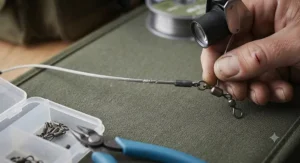
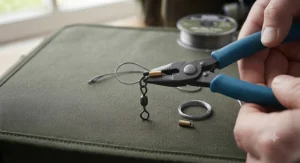
If you’re working from spooled wire rather than a ready-made trace, getting the basics right in your first few sessions makes a real difference to reliability on the bank. Start by matching crimp size to wire diameter precisely — too loose and the joint can slip under a hard take, too tight and you risk weakening the wire strands themselves; Drennan’s own guidance suggests a 0.75mm crimp for their 7-strand wire as a sensible starting point. Always flatten crimps in the centre in two or three places rather than crushing one end, and never let bare wire protrude beyond the crimp, since that’s exactly the point where your reel line will snag repeatedly through a session.
For coated and multi-strand wires like the Fox Rage Predator 49 Strand Steel Wire, heat the cut point with a lighter flame until it glows before trimming — this fuses the fine strands together and stops them fraying and catching on crimps or guides. Maintenance-wise, inspect every trace after a hooked fish, not just at the end of a session: run finger and thumb gently along the full length feeling for kinks, exposed wire under coating, or crimp movement, and retire anything showing damage rather than risking a break-off on the next take. The most common early mistake is reusing a trace after a big fight without checking it — a trace that’s just landed a double-figure pike has earned a proper inspection before it goes back out.
Real-World Scenarios: Matching the Right Wire Trace to Your Pike Session
The occasional lure angler, a few sessions a year. Convenience matters more than marginal performance gains here. The X3 Pike Wire Traces or GIAK 72pcs Stainless Wire Trace Leaders both suit this brief nicely — ready to fish, cheap enough not to worry about, and genuinely capable for casual sessions.
The dedicated lure or deadbait angler fishing weekly. Here, suppleness and presentation start to matter, particularly on pressured or clear waters. The Fox Rage Predator 49 Strand Steel Wire earns its place specifically for natural lure action, paired with Drennan Green Pike Wire for stealth on clearer stillwaters.
The specimen hunter targeting big, wary pike over a long season. Longevity and reliability under repeated hard fights matter more than any single-session cost saving. The Predator X Titanium Pike Trace and classic Drennan 7 Strand Trace Wire both deliver the consistency this angler needs, built to your own preferred length and hook choice.
Problem → Solution: Fixing Common Pike Trace Frustrations
Problem: my trace keeps kinking after one or two fish. This usually points to plain 7-strand wire under hard, repeated strain. Step up to the Fox Rage Predator 49 Strand Steel Wire or Predator X Titanium Pike Trace, both specifically engineered to resist permanent kinking.
Problem: crimps won’t seat properly and strands come loose. This is a known issue with some finer 7-strand wires, flagged specifically by reviewers of the PikePro Trace Wire. Try a slightly smaller crimp size, or switch to a wire brand with a track record of consistent crimp behaviour like Drennan 7 Strand Trace Wire.
Problem: I keep losing time re-tying traces streamside in the cold. Ready made pike wire traces solve this directly. Keep a stock of X3 Pike Wire Traces or GIAK 72pcs Stainless Wire Trace Leaders in your bag so a damaged trace is a thirty-second clip-on swap rather than a fiddly re-tie with cold fingers.
Problem: my lure’s action looks unnatural since I added a trace. Stiffer wire can dampen a lure’s natural roll and wobble. Softer, more supple options like the 49-strand Fox Rage wire generally preserve lure action better than stiffer titanium or basic 7-strand alternatives.
Problem: I’m not sure what breaking strain I actually need. Match breaking strain to venue and target size rather than guessing — see the dedicated breaking strain section below for concrete guidance rather than a vague “go heavier to be safe” answer.
How to Choose Wire Traces for Pike
Choosing well is really a short checklist rather than an exercise in chasing the priciest option on the shelf.
- Decide ready-made versus DIY first. Ready-made traces are genuinely high quality and convenient, especially for beginners or anyone prioritising consistency over customisation — check your licence requirements are sorted before you focus purely on tackle, since a valid rod licence is a legal requirement alongside good gear.
- Match trace length to fishing method. Deadbaiting typically needs a longer trace with two treble hooks to secure the bait properly, while lure fishing suits a shorter trace with a single hook or small treble for more natural movement.
- Choose material based on how often you fish. Occasional anglers rarely need to pay titanium prices; regular anglers often find the extra longevity pays for itself within a season.
- Set breaking strain to your target water, not just “the biggest pike ever caught.” Heavier isn’t automatically safer if it compromises presentation on finicky, pressured waters.
- Check coating condition regularly, not just at purchase. A coated wire that’s lost its finish is a bare-wire trace in disguise, not a failed product — inspect and retire accordingly.
- Read verified reviewer feedback on crimp behaviour specifically. As this list shows, crimp compatibility varies meaningfully between otherwise similar 7-strand wires.
- Keep spares in your bag regardless of your main choice. Even the best trace can be damaged by a single hard-fighting fish; a cheap backup avoids a lost session.
Common Mistakes When Buying Pike Wire Traces
The single most common mistake is assuming any wire labelled “pike trace” is automatically safe for the job — some budget imports use wrapped rather than crimped joints, which is genuinely lower duty than a proper swaged crimp, even though it’ll happily catch smaller fish without issue. A close second is buying purely on breaking strain number without considering suppleness; a stiff, high-breaking-strain wire can actually reduce your hook-up rate on subtle takes by dampening lure action and bite transmission.
Anglers also frequently overlook trace length versus fishing method, using a short lure trace for deadbaiting (risking a poorly secured bait) or a long deadbait trace for lure work (adding unnecessary stiffness to lure action). And a genuinely common oversight worth flagging clearly: treating the trace as the only welfare consideration while ignoring landing and handling technique. Angling Times’ own guidance on pike handling stresses supporting the fish’s weight properly under the jaw and vent rather than gripping it like a carp, since poor handling can undo all the good a well-chosen trace does for a safe release.
7 Strand vs 49 Strand vs Titanium: Wire Trace Leader Material Compared
This is genuinely the biggest decision in choosing pike trace leader material, so it deserves a straight, honest comparison rather than a vague “it depends.” Seven-strand wire, exemplified by the Drennan 7 Strand Trace Wire and PikePro Trace Wire on this list, is the affordable, time-tested standard — decent flexibility and strength, widely available, and forgiving for anglers still learning to crimp and twist their own traces. Forty-nine-strand wire, represented here by the Fox Rage Predator 49 Strand Steel Wire, is built from many more, finer strands woven together, which makes it noticeably more supple and closer to how braided line itself behaves — genuinely better lure action, at a real price premium. Titanium, seen in the Predator X Titanium Pike Trace, trades a touch of that suppleness for outstanding kink resistance and longevity, springing back into shape after hard strikes rather than developing a permanent weak point the way steel can.
Reading across those three options, there’s no single “best” material in absolute terms — only a best fit for how often you fish and what you value. Budget-conscious or occasional anglers get excellent value from 7-strand wire; anglers chasing maximum lure action upgrade to 49-strand; anglers fishing hard, regular sessions where trace longevity actually matters financially lean toward titanium. Choosing wrongly for your usage pattern is a far bigger mistake than choosing the “wrong” brand within the right category.
Ready-Made Pike Wire Traces vs DIY: Which Should You Buy?
Ready made pike wire traces solve a genuine problem: speed and consistency, particularly valuable for beginners or anyone fishing in cold, fiddly conditions where crimping wire with numb fingers is genuinely unpleasant. The X3 Pike Wire Traces and GIAK 72pcs Stainless Wire Trace Leaders both demonstrate the appeal clearly — open the pack, clip on, fish. The trade-off is customisation: you’re limited to the lengths, hook configurations and breaking strains the manufacturer offers.
DIY wire, by contrast, gives you total control. Spooled options like the Drennan 7 Strand Trace Wire and Fox Rage Predator 49 Strand Steel Wire let you build traces to your exact preferred length, pair them with your own hook choice, and adjust as conditions change through a session. The honest recommendation for most anglers is a hybrid approach: carry ready-made traces as fast backups for damaged rigs mid-session, while building your primary traces from spool wire tailored to your usual venues.
Understanding Pike Trace Breaking Strain
Pike trace breaking strain is simply the force, usually expressed in pounds (lb) or kilograms, that the wire can withstand before failing. On this list, breaking strains range from around 15lb on the lighter Drennan spools right up through 40lb and beyond on heavier PikePro and titanium options. The instinct to “just go heavier” is understandable but not always right: unnecessarily heavy, stiff wire can reduce lure action and, on some pressured waters, make a trace more visible or less natural in presentation than a lighter option matched sensibly to the water you’re fishing.
A sensible rule of thumb used by many experienced pike anglers is to match breaking strain roughly to venue and expected fish size — lighter breaking strains around 15-20lb for typical stillwater lure work, stepping up to 28-40lb for deadbaiting, snaggy swims, or waters known to hold genuinely large fish. Whatever breaking strain you land on, remember it’s only ever as strong as your weakest joint — a poorly seated crimp on a 40lb wire can still fail well below its rated strength, which is exactly why crimp technique matters as much as the number printed on the spool.
Long-Term Cost & Maintenance of Pike Wire Traces
Cost-per-use tells a more honest story here than the sticker price alone. A £8 pack of GIAK 72pcs Stainless Wire Trace Leaders works out to roughly 11p per trace, brilliant value provided you accept a shorter working life per piece. A £13 spool of Fox Rage Predator 49 Strand Steel Wire, cut into a dozen traces over a season of regular kink-free use, can easily work out cheaper per trace than repeatedly replacing damaged budget wire, while also reducing lost fish from trace failure. The Predator X Titanium Pike Trace, at the top of the price range, only makes sense cost-per-use if you’re fishing often enough to actually put its longevity advantage to work — an occasional angler is arguably better served putting that money toward more sessions on the bank instead.
Maintenance costs are mostly time and attention rather than money: a thirty-second inspection after each fish costs nothing, but skipping it is how anglers end up losing good fish to a trace that quietly failed after unnoticed damage. Total cost of ownership, in short, favours investing in quality for anglers who fish regularly, and favours the cheaper, ready-made end of this list for occasional or backup use.
Safety, Regulations & Pike Welfare Guide
Beyond choosing the right trace, UK anglers need a valid rod fishing licence to target pike and other freshwater species with rod and line in England and Wales, with fines of up to £2,500 for fishing without one. Many stillwaters and clubs also apply their own byelaws around trace length, minimum breaking strain and hook configuration specifically for pike and predator fishing, so it’s always worth checking venue rules alongside the legal minimum.
Trace choice and fish welfare are more connected than they might first appear. A trace that fails mid-fight can leave a pike trailing a hook and lure, which is precisely the outcome a good, well-maintained trace is designed to prevent. Guidance from the Pike Anglers Club stresses handling pike with genuine care given their comparatively delicate physiology despite their fearsome appearance, supporting their weight properly and minimising time out of water during unhooking and photography. A reliable trace, matched sensibly to breaking strain and venue, is one part of a wider responsible approach that also includes proper forceps, an unhooking mat, and a swift, confident release.
✨ Don’t Miss These Exclusive Deals!
🔍 Take your pike fishing kit to the next level with these carefully selected wire traces. Click on any highlighted item to check current pricing and availability. The right trace means fewer lost fish, fewer bite-offs, and more time actually playing pike instead of retying rigs!
FAQ
❓ Why do you need a wire trace for pike fishing?
❓ What breaking strain wire trace do I need for pike?
❓ Is 7 strand or 49 strand wire trace better for pike?
❓ Are ready made pike wire traces as good as DIY ones?
❓ How long does a pike trace last before it needs replacing?
Conclusion
There’s no single correct wire trace for pike, and honestly, anyone who tells you otherwise is probably only fishing one type of water. What matters is matching the trace to how you actually fish — casual sessions a few times a year, weekly lure trips, or serious specimen hunting through a long season. The GIAK 72pcs Stainless Wire Trace Leaders and X3 Pike Wire Traces prove budget and ready-made convenience genuinely coexist; the Drennan 7 Strand Trace Wire, Drennan Green Pike Wire and PikePro Trace Wire remain the reliable, proven backbone of DIY trace building; and the Fox Rage Predator 49 Strand Steel Wire and Predator X Titanium Pike Trace both earn their premium pricing through genuinely different material performance rather than marketing gloss.
Whichever you choose, keep the fundamentals non-negotiable: a properly seated crimp or knot, breaking strain matched sensibly to your venue, a valid rod licence, and a trace inspected after every fish rather than trusted blindly. Everything else — 7-strand or 49-strand, bronze or titanium, ready-made or hand-built — comes down to how you fish, and pike, famously, don’t care which one you picked as long as it holds.
Recommended for You
- How to Rig Soft Plastics for Pike: 7 Winning Rigs (2026)
- Soft Plastic Lures for Pike: 7 Best Picks for UK Anglers 2026
- Jerkbait vs Swimbait for Pike: 7 Best Lures for 2026
Disclaimer: This article contains affiliate links. As an Amazon Associate, I earn from qualifying purchases. If you purchase products through these links, we may earn a small commission at no additional cost to you.
✨ Found this helpful? Share it with your friends! 💬🤗
