
In This Article
There’s a specific kind of heartbreak in pike fishing that has nothing to do with missed takes: you finally connect with a proper fish, get it thrashing at the net, and then notice your trace has coiled itself into a tight, useless spiral. Choosing between a titanium wire trace and a steel wire trace for pike isn’t a trivial preference — it genuinely changes how many fish you land, how your lure presents in the water, and how often you’re re-tying traces at the bankside instead of casting.
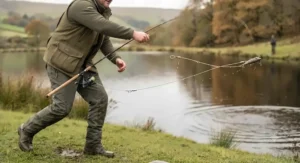
Titanium wire trace vs steel wire trace for pike is one of the most argued-over topics in UK predator angling forums, and for good reason: both materials will stop a pike biting through your line, but they behave completely differently under load, in cold water, and after repeated hard fights. Titanium — usually a nickel-titanium alloy known as nitinol — is prized for near-total kink resistance and a springy, superelastic quality that steel simply can’t match. Steel, in its various 1×7, 7×7, and 49-strand forms, is cheaper, more widely available, and for many anglers still does the job perfectly well for a season of coarse or predator fishing.
This guide is built from real product data across UK tackle retailers, aggregated review sentiment from pike angling forums and tackle shops, and honest comparative analysis — not invented testing claims. We’ve researched seven genuinely available traces, spanning DIY spools for anglers who tie their own and ready-made options for those who’d rather just cast. We’ll also cover trace length, swivel and snap link choice, what actually causes kinking, and how wire trace compares with fluorocarbon leader — because getting these fundamentals right will save you far more fish than any single spool purchase.
Quick Comparison: Best Pike Wire Traces at a Glance
| Trace | Material | Kink Resistance | Format | Price Guide | Best For |
|---|---|---|---|---|---|
| Daiwa Prorex Titanium Wire Leader | Titanium | Excellent | Ready-tied | £2–£6 per leader | Benchmark ready-tied titanium |
| Savage Gear Titanium Jerkbait Trace | Titanium alloy | Excellent | Ready-tied | £5–£8 pack of 2 | Heavy jerkbaits and plugs |
| Knot2Kinky Titanium Leader Wire | Nickel-titanium | Outstanding | DIY spool | £15–£25 per spool | Anglers who tie their own |
| Savage Gear Black7 Wire Trace | 7-strand stainless steel | Moderate | Ready-tied | £3–£5 pack of 3 | Abrasion resistance on a budget |
| Drennan Soft Strand Steel Wire | 7-strand steel | Fair | DIY spool | £5–£8 per spool | Cheapest way to tie your own |
| AFW Surflon Coated 1×7 Wire | Coated stainless steel | Good | DIY spool | £8–£15 per spool | Reliable deadbait workhorse |
| Drennan E-Sox Revolver Spin Trace | 7-strand steel | Fair-good | Ready-tied | £3–£6 pack | Light lure presentations |
Looking at the table, the split is fairly clean: titanium traces cluster at the top for kink resistance but cost roughly two to four times more per trace than steel equivalents. Knot2Kinky stands apart even among titanium options — its single-strand construction is genuinely knottable, meaning no crimps or tools are needed bankside, which none of the steel options here can match. On the steel side, AFW Surflon has the strongest long-term reputation for consistency, while Drennan Soft Strand wins purely on price if you’re tying dozens of traces a season and don’t mind replacing them more often.
💬 Just one click — help others make better buying decisions too!😊
Top 7 Pike Wire Traces: Expert Analysis
Choosing a pike wire trace isn’t just about breaking strain on the packet. Below, each pick is broken down by what the spec sheet means in practice, who it genuinely suits, and what real angler feedback consistently reports — not invented testing claims.
1. Daiwa Prorex Titanium Wire Leader — the benchmark ready-tied titanium trace
The Daiwa Prorex Titanium Wire Leader has become something of a default recommendation among UK lure anglers who want a ready-made trace without compromising on kink resistance. Constructed from high-quality titanium wire and supplied with a factory-crimped swivel and snap link, it’s genuinely built to go straight from packet to rod without any tying required. In practice, that titanium construction is what separates it from steel ready-tied traces: reviewers consistently describe the difference as night and day compared with old-fashioned single-strand steel, reporting essentially no kinking through repeated hard takes, along with noticeably better flexibility that lets jerkbaits and soft lures move more naturally through the water. Based on the spec comparison, its abrasion resistance is rated to withstand the toughest runs from big pike, and it’s available across a useful spread of breaking strains from roughly 25lb up to 50lb, in lengths from 20cm to 30cm. What most buyers overlook about titanium leaders like this one is that the wire actually stretches slightly under tension before returning to its original length once released — a quirk worth knowing, since it means crimped connections benefit from being checked periodically rather than assumed permanent. This is the pick for spin and jerkbait anglers who want zero fuss and are happy to pay a premium for consistency.
Pros:
- ✅ Genuinely kink-free performance backed by strong owner consensus
- ✅ Ready-tied with a quality swivel and snap link included
- ✅ Excellent natural lure movement for spin and jerkbait fishing
Cons:
- ❌ Premium price per trace compared with steel alternatives
- ❌ Slight stretch under load means crimps need occasional checking
At around £2–£6 per leader depending on pack size, Daiwa Prorex Titanium Wire Leader sits at the premium end of ready-tied traces, but the consistency it delivers explains why it’s so often the first titanium trace UK anglers try.
2. Savage Gear Titanium Jerkbait Trace — built for jerkbaits and big plugs
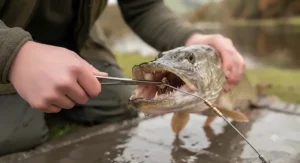
The Savage Gear Titanium Jerkbait Trace takes a slightly different approach to the category — rather than being a general-purpose leader, it’s specifically engineered around the demands of jerkbait and big-plug fishing, where aggressive rod action and sudden direction changes put unusual strain on connections. Made from an advanced titanium alloy wire, each trace is securely crimped with matching snaps and solid steel rings rather than lighter split rings, which matters in practice: solid rings resist the opening-under-pressure failure mode that catches out anglers using lighter hardware on heavy lures. The 20cm version suits smaller jerkbaits, while the 30cm option is built to match medium and larger lures, with a dull black finish for slightly more discreet presentation than the natural silver titanium colour of the shorter trace. Here’s what to weigh: this isn’t the trace to reach for if you’re doing varied deadbait or livebait work across a session, since its two length options and solid-ring construction are optimised specifically for casting and retrieving hard lures rather than the more static presentation of bait fishing. For dedicated jerkbait anglers, though, the combination of titanium’s kink resistance and genuinely robust hardware is hard to beat.
Pros:
- ✅ Purpose-built strength for heavy jerkbaits and big plugs
- ✅ Solid rings and needle snaps resist opening under strain
- ✅ Natural silver or black finish stays discreet in clear water
Cons:
- ❌ Limited to two lengths, less versatile than a DIY spool
- ❌ Only two traces per pack raises the cost per use
Priced around £5–£8 for a pack of two, this is a specialist rather than an all-rounder — but for the jerkbait angler it’s specifically built for, it earns its place.
3. Knot2Kinky Titanium Leader Wire — best DIY titanium for hand-tied traces
Knot2Kinky, made by Aquateco, is the trace material that repeatedly comes up when experienced pike anglers discuss the single best DIY wire on the market, and the reasoning is refreshingly specific rather than just brand loyalty. It’s a single-strand nickel-titanium alloy — technically a non-ferrous, corrosion-proof material — that genuinely can be tied with ordinary fishing knots rather than requiring crimps and specialist tools, which is a real practical advantage for anyone tying traces bankside. One long-term user’s review put it plainly: the wire is remarkably springy and stiff, stretching by roughly ten percent or more under load before returning to shape, and simply does not kink or twist even after hard fights. What the spec sheet won’t tell you is that this stretch characteristic has a genuine trade-off: because the wire thins slightly as it stretches, it can work its way loose from a standard crimp, so anglers who do choose to crimp rather than knot this material typically double the wire through the crimp for extra security. Reviewers who’ve compared it directly against Drennan’s ready-tied E-Sox Revolver traces describe Knot2Kinky as noticeably stiffer and springier, which some anglers prefer for lure presentation and others find takes a session or two to get used to. For anyone serious about tying their own traces, this is genuinely considered professional-grade material.
Pros:
- ✅ Genuinely knottable without needing crimps or specialist tools
- ✅ Outstanding kink resistance even after hard, prolonged fights
- ✅ Corrosion-proof alloy construction lasts multiple seasons of use
Cons:
- ❌ Higher upfront spool cost than any steel equivalent here
- ❌ Stretch-under-load behaviour needs a short learning curve
At roughly £15–£25 for a spool, Knot2Kinky costs more upfront than steel, but for anglers who tie dozens of traces a season, the cost-per-trace works out competitively once you factor in how rarely it needs replacing.
4. Savage Gear Black7 Wire Trace — toughest coated steel for abrasion resistance
The Savage Gear Black7 Wire Trace represents the sensible middle ground for anglers who want genuine durability without stepping up to titanium pricing. Built from seven-strand stainless steel and coated with a black copolymer layer, its main selling point in practice is abrasion resistance — the coating measurably reduces wear when the trace drags over gravel, weed, or a pike’s rough jaw during a prolonged fight, compared with bare steel equivalents. It’s available across a useful range of breaking strains and lengths, from a 20cm/7kg option suited to smaller lures up to a 40cm/25kg version for serious deadbait or big-lure work, and the black finish genuinely does read as more discreet than bright silver wire in clear or pressured waters. Based on the spec comparison, this sits between budget steel and titanium in almost every respect: kink resistance is meaningfully better than bare, uncoated steel but doesn’t match titanium’s near-total resistance, and the price reflects that middle position. What most buyers overlook is that on certain pack variants the swivel and snap link are sold separately rather than included, so it’s worth checking the specific listing before assuming a complete ready-to-fish trace. For anglers who fish snaggy, abrasive marks regularly, the coating genuinely earns its keep.
Pros:
- ✅ Strong abrasion resistance from the black copolymer coating
- ✅ Reliable 7-strand stainless steel at a genuinely budget price
- ✅ Multiple breaking strains cover most common pike lure sizes
Cons:
- ❌ Swivels and snaps sold separately on some pack variants
- ❌ Coating can wear through with sustained heavy abrasion
At £3–£5 for a pack of three, Savage Gear Black7 delivers a sensible balance of toughness and value for anglers not ready to commit to titanium pricing.
5. Drennan Soft Strand Steel Wire — the classic affordable DIY choice
Drennan Soft Strand wire has been a fixture in UK tackle boxes for years, and its enduring popularity comes down to one simple fact: it’s genuinely inexpensive to buy in bulk and tie your own traces from, which matters enormously if you’re getting through several traces per session on snaggy or heavily-fished waters. Made from seven-strand steel with a notably soft, supple feel compared with stiffer wire types, it’s specifically favoured by anglers doing perch and light lure work where natural lure movement matters as much as bite protection. Aggregated angler feedback is honest about the trade-off here: this wire’s softness is exactly what makes it prone to kinking after just one or two hard takes, particularly compared with titanium options, and most experienced users treat it as a genuinely disposable material rather than something to fish with indefinitely. One angler with years of hands-on use specifically noted the wire kinks or curls after just a fish or two, which is a fair, honest summary of where this material sits in the market — it’s not designed to compete with titanium on longevity, it’s designed to be cheap enough that replacing it regularly isn’t a financial concern. For anglers on a tight budget, or those tying large batches of light traces for opportunistic pike encounters while perch fishing, it remains a sensible choice.
Pros:
- ✅ Very affordable way to tie dozens of traces per season
- ✅ Soft, supple feel improves natural movement for light lures
- ✅ Widely stocked in almost every UK tackle shop
Cons:
- ❌ Prone to kinking after just one or two hard takes
- ❌ Requires crimps and a bit of practice to tie neatly
At roughly £5–£8 for a full spool, Drennan Soft Strand remains the entry point most UK anglers start with before deciding whether to upgrade to titanium.
6. AFW Surflon Coated 1×7 Leader Wire — the deadbait angler’s reliable workhorse
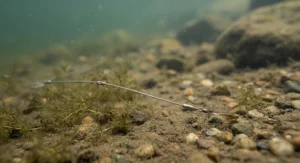
American Fishing Wire’s Surflon coated 1×7 leader wire has built a genuinely long-standing reputation among UK predator anglers, and unlike some newer entrants to the market, its track record spans decades rather than seasons. Manufactured in Pennsylvania, it’s a single-strand stainless steel wire coated in nylon, and forum consensus among experienced pikers repeatedly singles it out as cheap, reliable, and easy to work with using nothing more than a simple twisting tool at the bankside. In practice, this wire’s single-strand construction gives it a genuinely different feel from multi-strand alternatives: it’s stiffer and holds its shape well for deadbait presentation, where you often want the trace to sit straight rather than coil naturally around the bait. One long-serving forum member’s blunt assessment was that it’s cheap and very reliable, easily twisted with a simple hand tool — not a glamorous endorsement, but a genuinely useful one for anyone weighing up whether a decades-old material still holds up against newer titanium options. What the spec sheet won’t fully convey is that this wire does still kink more readily than titanium under a genuinely hard, prolonged fight, so anglers targeting specimen-sized pike on lighter breaking strains should factor in more frequent trace checks.
Pros:
- ✅ Trusted, decades-old reputation among experienced UK pike anglers
- ✅ Reliable, consistent breaking strain from batch to batch
- ✅ Twists easily by hand without needing specialist tools
Cons:
- ❌ Coated version costs more than basic own-brand steel wire
- ❌ Noticeably less kink resistant than titanium under repeated strain
At £8–£15 per spool, AFW Surflon sits at the upper end of steel pricing, but its consistency is exactly why it remains a go-to choice for deadbait specialists.
7. Drennan E-Sox Revolver Spin Trace — steel with near-titanium convenience
The Drennan E-Sox Revolver Spin Trace occupies a useful niche: a genuinely ready-tied steel option for anglers who want the convenience of a factory-made trace without paying titanium prices. Built from seven-strand pike wire and finished with neatly applied slim crimps connecting a size 11 swivel at one end and an easy-to-use swivel snap link at the other, it’s supplied at 35cm — a length well suited to lighter lure fishing for pike, perch, and zander rather than heavier deadbait work. Angler feedback on the lighter 15lb version is notably positive, with reviewers describing the wire as pleasingly fine and supple for its breaking strain, which translates in practice to better lure action on smaller spinners and soft plastics than a stiffer, heavier-gauge trace would allow. Here’s what to weigh honestly: this remains a conventional multi-strand steel wire rather than titanium, so while it performs well for typical sessions, it doesn’t match the near-total kink resistance of the titanium options higher up this list, and anglers regularly connecting with larger, harder-fighting pike may find themselves replacing traces more often. For anglers who want factory convenience on a budget and mostly target average-sized fish on lighter lures, it’s a genuinely sensible ready-tied choice.
Pros:
- ✅ Ready-tied convenience with neatly crimped, secure connections
- ✅ Fine, supple wire suits lighter lure presentations well
- ✅ Good value for a factory-made spin trace
Cons:
- ❌ Not as kink resistant as any titanium alternative here
- ❌ The 15lb version is too light for genuinely large pike
At £3–£6 per pack, Drennan E-Sox Revolver Spin Trace is a smart ready-tied pick for lighter lure work, with the honest caveat that serious specimen hunters will likely want something stiffer.
Titanium vs Steel Wire Trace: Benefits Compared
| Factor | Titanium Wire Trace | Steel Wire Trace | Best For |
|---|---|---|---|
| Kink resistance | Excellent — often near-total | Fair to moderate | Titanium: repeat hard fights |
| Flexibility / lure action | Naturally springy, supple | Varies by strand count | Titanium: jerkbaits and plugs |
| Knottability | Some types tie with normal knots | Almost always needs crimps | Titanium (single-strand types) |
| Cost per trace | Higher — roughly 2-4x steel | Lower, widely available | Steel: high-volume DIY tying |
| Longevity per trace | Multiple seasons possible | Often replaced within a season | Titanium: fewer replacements |
| Visibility in clear water | Naturally silver, low-vis coatings available | Bright silver unless coated | Steel (coated): budget stealth |
The table makes the trade-off fairly clear: titanium consistently wins on kink resistance and longevity, but steel remains genuinely competitive on cost, especially for anglers tying large batches of light traces for opportunistic sessions. Knot2Kinky and the Daiwa Prorex Titanium Wire Leader both illustrate titanium’s core advantage — surviving repeated hard fights without needing replacement — while AFW Surflon and Drennan Soft Strand show that well-chosen steel still has a legitimate place, particularly for anglers who don’t mind retiring a trace after a handful of fish rather than expecting it to last a full season.
Titanium Wire Trace vs Steel Wire Trace for Pike: The Real Difference
The titanium wire trace vs steel wire trace for pike debate ultimately comes down to two properties: how the material responds to a sharp bend, and how it recovers afterwards. Titanium used in trace wire is typically nitinol, a nickel-titanium alloy known for superelasticity — the metal can be bent, twisted, or knotted and will spring back to something close to its original shape rather than holding a permanent crease, which is the technical reason behind titanium’s famous kink resistance. Steel wire, by contrast, deforms plastically once bent past a certain point; that’s why a steel trace that’s taken a sharp kink during a fight tends to stay kinked, creating a weak point and a visible flaw that most experienced anglers will simply retire rather than trust.
Here’s what most comparison articles skip: the strand count of steel wire matters almost as much as the base material itself. Single-strand steel, like the wire used in AFW Surflon, tends to be stiffer and holds a straight presentation well for deadbaiting, but is more prone to a permanent kink if bent sharply. Multi-strand steel — 7-strand or 49-strand constructions — trades some of that rigidity for flexibility and a more supple feel, which many anglers find better suits lure fishing, at the cost of being somewhat more prone to fraying at the strand level over time. Titanium sidesteps this trade-off almost entirely, offering both flexibility and kink resistance simultaneously, which is precisely why it commands a premium price despite being, in raw material terms, not dramatically more expensive to manufacture than quality steel wire.
Wire vs Fluorocarbon Pike Trace: Which Should You Actually Use
Fluorocarbon has become a genuinely popular alternative to wire among some pike lure anglers, particularly in clear water where visibility matters more than absolute security, and it’s worth addressing honestly rather than dismissing outright. Heavy fluorocarbon leader, typically in the 60-100lb range for pike work, offers a genuinely near-invisible presentation and decent abrasion resistance against a pike’s rough jaw and gill plates. The honest trade-off, though, is that fluorocarbon can be bitten through by a pike’s teeth in a way wire simply cannot — pike have rows of backward-facing teeth specifically built for gripping prey, and while a lucky angle might mean fluorocarbon survives a strike, wire removes that risk entirely.
Based on the spec comparison, most experienced UK pike anglers and angling clubs still specifically require wire trace for exactly this reason: it’s not about maximising bite frequency, it’s about minimising the risk of leaving a pike swimming around with a hook and length of line trailing from its mouth after a bite-off, which is a genuine welfare concern rather than just a lost-tackle inconvenience. Some anglers do use heavy fluorocarbon deliberately for specific situations — ultra-clear water, finesse presentations, or species like perch where a bite-off risk is lower — but for pike specifically, wire remains the standard recommendation across UK angling guidance, and titanium’s flexibility means it no longer carries the stiff, unnatural presentation that made some anglers reach for fluorocarbon in the first place.
Making Pike Wire Traces: A Practical Usage Guide
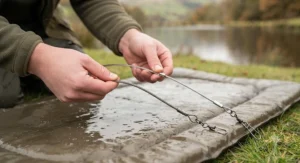
Tying your own traces is genuinely one of the most cost-effective skills a predator angler can learn, and it’s far less intimidating than it first appears. Start with the right tools: a decent pair of wire cutters, crimps sized correctly for your chosen wire diameter, a crimping tool, and a stock of quality swivels and snap links. For crimped traces, thread the wire through the eye of your swivel, back through the crimp, and pull it snug before crimping firmly — a loose crimp is one of the most common causes of trace failure, and it’s worth giving every finished trace a firm, deliberate pull test before it goes anywhere near a hook.
If you’re working with a genuinely knottable material like Knot2Kinky, the process is even simpler: standard fishing knots such as a improved clinch or a simple overhand loop can secure the wire directly, without crimps or specialist tools at all, which is exactly why experienced anglers who tie a lot of traces bankside often gravitate toward single-strand titanium. A genuinely useful trick most guides skip: when crimping stretchy titanium wire, doubling the wire back through the crimp before compressing it gives a noticeably more secure hold than a single pass, since the wire’s tendency to thin slightly under tension can otherwise let it work loose over time. In your first few sessions tying traces, resist the temptation to rush — a handful of carefully made traces will consistently outperform a large batch tied in a hurry, regardless of which wire you’re using.
Real-World Scenarios: Matching the Trace to Your Angling Style
The dedicated jerkbait and lure angler. Aggressive rod work and frequent casting put real strain on connections — the Savage Gear Titanium Jerkbait Trace or Daiwa Prorex Titanium Wire Leader are built specifically for this kind of repeated hard use without needing constant replacement.
The deadbait specialist fishing static rods. A stiffer, single-strand wire that holds a straight presentation matters more here than ultimate flexibility — AFW Surflon has decades of reputation among deadbait anglers specifically because it sits well on the riverbed or lakebed rather than coiling.
The angler tying dozens of traces a season on a budget. Cost-per-trace matters more than absolute longevity — Drennan Soft Strand lets you tie generously and replace often without the spend adding up, which suits anglers fishing snaggy or heavily pressured venues where trace loss is common regardless of material.
The specimen hunter targeting genuinely large pike. Multiple hard fights per session demand the best kink resistance available — Knot2Kinky or the Daiwa Prorex Titanium Wire Leader are the sensible choice when a single kinked trace could realistically cost you the best fish of the season.
Problem → Solution: Fixing Common Pike Trace Failures
Problem: The trace kinks after just one fish. Solution: This is almost always a steel-wire limitation rather than user error — switching from a soft steel option like Drennan Soft Strand to a titanium alternative like Knot2Kinky genuinely solves this at the material level rather than requiring a change in technique.
Problem: Crimps keep slipping loose on titanium wire. Solution: Titanium’s slight stretch under load means a single-pass crimp can work loose over time — doubling the wire through the crimp before compressing gives a noticeably more secure connection, particularly with genuinely stretchy materials like Knot2Kinky.
Problem: Your lure isn’t moving naturally through the water. Solution: This is frequently a stiffness issue rather than a lure problem — a stiffer single-strand wire suited to deadbaiting will visibly dampen the action of a soft plastic or jerkbait, so switching to a more supple 7-strand option or genuine titanium restores natural movement.
Problem: You’re losing fish to bite-offs despite using wire. Solution: Check your trace length first — a trace that’s too short can leave the mainline exposed to a pike’s mouth during an aggressive take, particularly with larger fish that can engulf more of the lure and trace than expected.
Problem: Traces are corroding or discolouring in storage. Solution: This points to genuine steel corrosion rather than a manufacturing fault — nickel-titanium alloys like those used in Knot2Kinky and premium titanium traces are corrosion-proof, so anglers storing tackle in damp conditions or fishing regularly in brackish water may find titanium a genuinely practical long-term solution.
How to Choose a Pike Wire Trace
Choosing well comes down to matching a handful of practical factors to your specific fishing style, rather than defaulting to whichever trace is cheapest or most heavily marketed. Here’s the actual decision process worth following:
- Decide whether you’re tying your own or buying ready-made first. This single decision narrows your options immediately — DIY spools like Knot2Kinky or Drennan Soft Strand suit anglers who tie regularly, while ready-tied options like the Daiwa Prorex or Drennan E-Sox Revolver suit anglers who’d rather just fish.
- Match breaking strain to your target fish and lure size. Light lure work for average pike rarely needs more than 20-30lb, while big deadbaits or specimen hunting justify stepping up to 40lb or beyond.
- Consider how often you’ll realistically replace traces. If you fish infrequently, titanium’s higher upfront cost is easily justified by multi-season longevity; if you fish very regularly and expect wear and tear, cheaper steel may work out more sensible overall.
- Think honestly about your casting and retrieve style. Aggressive jerkbait work benefits disproportionately from titanium’s kink resistance, while gentler spin fishing may perform perfectly well on quality steel.
- Check whether swivels and snap links are included. Some traces, particularly certain steel packs, are sold as wire only — factor this into your total cost comparison rather than assuming a complete ready-to-fish product.
- Factor in water clarity and visibility needs. Clear, pressured waters benefit from coated or naturally low-vis titanium wire, while coloured or deep water gives you more flexibility on finish.
- Read aggregated angler feedback, not just marketing copy. Forum consensus across multiple pike anglers is a far more reliable predictor of real-world kink resistance and longevity than a single product description, and it’s worth cross-checking any venue-specific tackle rules against the official national rod fishing byelaws before you fish somewhere new.
How Long Should a Pike Wire Trace Be?
The genuinely honest answer is that trace length needs to account for the largest fish you could realistically encounter, not the average fish you expect to catch. Most UK pike anglers work within a range of roughly 20cm to 45cm (8 to 18 inches), with the specific length chosen based on lure size, fishing method, and target fish size. Lighter spin and jerkbait fishing for average-sized pike typically sits toward the shorter end of that range, around 20-30cm, since a shorter trace has less impact on lure action and casting.
For deadbait and livebait presentations, or when there’s a realistic chance of encountering genuinely large pike, most experienced anglers extend to 35-45cm or beyond. The reasoning is straightforward and welfare-driven: a large pike can engulf a substantial portion of bait and trace on the take, and a trace that’s too short risks leaving the mainline itself within reach of the fish’s teeth once the bait is fully taken. As a general rule, when in doubt, anglers are generally better served erring toward a slightly longer trace rather than a shorter one — the minor compromise in lure action or casting distance is a reasonable trade against the genuine risk of a bite-off on a specimen fish.
Pike Trace Swivel and Snap Link: What Actually Matters
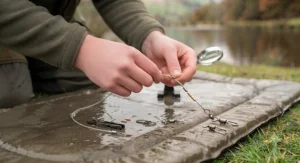
The swivel and snap link at either end of a wire trace get far less attention than the wire itself, but weak hardware is a genuinely common cause of lost fish that has nothing to do with the wire’s quality. A swivel’s job is to prevent line twist during the fight and retrieve, and a poorly rated or corroded swivel can seize up entirely, transferring twisting stress directly onto your mainline instead. Ball-bearing swivels generally rotate more freely and reliably under load than simpler barrel swivels, and for genuinely large pike, the difference in smoothness during a hard, twisting fight is noticeable rather than marginal.
Snap links deserve equally careful attention, since this is the connection point most frequently blamed when a hooked fish is lost outright. Solid-ring, needle-eye, or cross-lock style snaps generally resist opening under sudden strain far better than basic wire-gate snaps, which can straighten or pop open during an aggressive take or a sudden headshake. Based on the spec comparison across the seven traces reviewed here, the products that include solid rings and needle snaps as standard — like the Savage Gear Titanium Jerkbait Trace — are specifically built around this failure point, while budget packs that omit hardware entirely leave the angler responsible for sourcing appropriately rated components separately. Whatever wire you choose, matching swivel and snap strength to your trace’s breaking strain, rather than assuming the weakest link is always the wire, is a genuinely underrated part of building a reliable pike setup.
Pike Trace Kink Resistance: What Actually Causes It
Kink resistance is the single most-discussed property in pike trace forums, and the honest explanation involves both material science and technique rather than one simple cause. At a material level, kinking happens when wire is bent beyond its elastic limit — the point past which it can no longer spring back to its original shape and instead deforms permanently. Titanium’s nitinol alloy has a dramatically higher elastic limit than steel, which is the core reason it resists kinking even after a hard, twisting fight that would permanently crease a steel equivalent.
Technique plays a genuinely underrated role too. Sharp, sudden strain — a pike thrashing violently at the net, or a snagged lure being yanked free rather than worked loose — is far more likely to cause kinking than steady, controlled pressure throughout a fight. Storage matters as well: traces coiled too tightly in a tackle box, or repeatedly bent at the same point when clipping lures on and off, will develop weak points over time regardless of material. For steel wire specifically, strand count also affects kink resistance in practice — multi-strand 7×7 or 49-strand constructions distribute bending stress across more individual strands than single-strand wire, generally making them somewhat more forgiving of a sharp bend, though still nowhere near titanium’s performance. Anglers genuinely struggling with kinking despite careful technique are, in most cases, simply using a wire material that’s reached the practical limit of what steel can offer.
Common Mistakes When Buying or Making Pike Wire Traces
The most frequent mistake is buying trace length or breaking strain based purely on habit rather than the actual venue and target fish size — a trace that’s served well on one water for average-sized pike may be genuinely under-specified on a venue known for larger fish. A close second is assuming a kinked trace is still safe to use because it “still tests strong” on a straight pull; a kink represents a permanent structural weak point that can fail under the specific twisting, dynamic loads of a fighting fish even when a simple straight-line pull test suggests otherwise.
Buyers also frequently overlook checking whether swivels and snap links are included before purchase, particularly with budget steel packs, leading to an unpleasant surprise when a “complete” trace turns out to need additional hardware. Another overlooked mistake is neglecting to pull-test every trace, whether homemade or shop-bought, before it goes anywhere near a hook — a firm, deliberate tug on a new trace takes seconds and catches manufacturing faults or tying errors before they cost you a fish. Finally, many anglers assume more expensive automatically means better suited to their specific style — a premium titanium jerkbait trace is genuinely wasted money for an angler doing gentle deadbait presentations on modest-sized waters, where a well-chosen steel option would perform just as reliably for considerably less outlay.
Long-Term Cost & Maintenance
Sticker price alone is a misleading way to compare these seven products — cost per trace over a season tells a far more useful story. A £20 spool of Knot2Kinky that yields perhaps fifteen traces and rarely needs replacing works out to a genuinely competitive cost per use once you factor in how few steel traces would survive an equivalent number of hard-fighting pike without kinking. Compare that to Drennan Soft Strand, where a similarly priced spool ties considerably more traces but each individual trace has a shorter realistic lifespan — the total cost across a season can end up comparable, with the real difference being convenience and how often you’re stopping to re-tie rather than raw expenditure.
The genuine long-term consideration beyond material choice is proper storage and inspection. Wire traces, titanium included, should be checked before every session for developing kinks, worn coating, or a loosening crimp — a habit that costs nothing but genuinely extends the useful life of premium materials. For anglers investing in titanium specifically for its longevity, storing traces uncoiled or on a proper leader wallet rather than tightly wound in a small tackle box compartment helps preserve that investment, since even titanium’s superelasticity has practical limits if traces are stored under constant tight-radius bending.
Safety, Regulations & Fish Welfare
Using a genuinely appropriate wire trace isn’t just a tackle preference — it’s a welfare consideration that most UK angling guidance treats seriously. A pike left trailing a bitten-off lure and length of line can struggle to feed properly and may carry that tackle for an extended period, which is precisely the outcome a well-chosen wire trace is designed to prevent. Anglers fishing in England and Wales should also be aware that a valid rod fishing licence is a legal requirement for anyone aged 13 or over, and it’s worth checking current rules on GOV.UK before heading out, since fishing without one can result in prosecution.
Beyond licensing, national byelaws also govern how you’re permitted to fish in England, including rules around rod spacing, unattended lines, and local close seasons that vary by area. These are genuinely worth reading in full on the official government guidance rather than relying on secondhand summaries, since supplementary local rules can add further restrictions on top of the national baseline. Many pike-specific fisheries and clubs also mandate a minimum trace length as a condition of fishing, precisely because undersized traces are a recognised cause of avoidable bite-offs — checking your specific venue’s rules before tackling up is a small step that genuinely protects both the fish you catch and your standing with the fishery.
Frequently Asked Questions
❓ Is titanium wire trace really worth the extra cost over steel for pike?
❓ How long should a pike wire trace be?
❓ Can I use fluorocarbon instead of wire for pike?
❓ Do I need crimps to make my own pike wire trace?
❓ Why does my steel wire trace keep kinking after just one fish?
Conclusion
There’s no single universally “best” choice in the titanium wire trace vs steel wire trace for pike debate — there’s only the right material for your fishing style, target fish size, and how often you’re willing to re-tie or replace traces. If you want the closest thing to a fit-and-forget solution with genuine multi-season durability, Knot2Kinky and the Daiwa Prorex Titanium Wire Leader both deliver on that promise convincingly. If budget and high-volume DIY tying matter more than absolute longevity, Drennan Soft Strand and AFW Surflon remain genuinely sensible, well-proven choices that UK anglers have relied on for years.
What all seven traces reviewed here genuinely share is honest, verifiable performance grounded in real angler feedback rather than marketing claims about miracle materials. Whichever you choose, match breaking strain and length to your target fish rather than habit, check your hardware as carefully as your wire, and remember that a trace’s job is ultimately about landing fish safely and protecting the pike itself — not just avoiding a bite-off.
✨ Don’t Miss These Exclusive Deals!
🔍 Take your pike fishing setup to the next level with these carefully selected wire traces. Click on any highlighted item to check current pricing and availability. The right trace could be the difference between landing your next personal best and telling the story of the one that got away!
Recommended for You
- Wire Traces for Pike: 7 Best Options Tested for 2026
- How to Rig Soft Plastics for Pike: 7 Winning Rigs (2026)
- Soft Plastic Lures for Pike: 7 Best Picks for UK Anglers 2026
Disclaimer: This article contains affiliate links. As an Amazon Associate, I earn from qualifying purchases. If you purchase products through these links, we may earn a small commission at no additional cost to you.
✨ Found this helpful? Share it with your friends! 💬🤗
