
In This Article
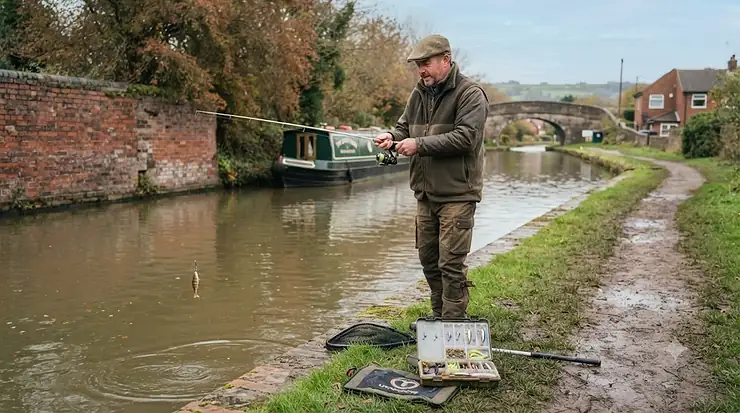
There’s a particular kind of thrill in watching a perch materialise from beneath a moored narrowboat, flare its dorsal fin, and smash a lure two feet from the towpath. Canals are, without much exaggeration, one of the most underrated perch fisheries in Britain — shopping trolleys, lock gates and bridge arches aside, they’re absolutely stuffed with structure, and structure is exactly where predatory perch like to sit and wait.
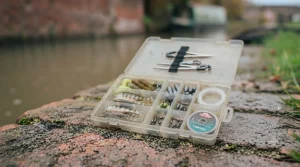
The trouble is that most lure ranges are designed with reservoirs and big rivers in mind, not the tight, snaggy, often gin-clear margins of an urban waterway. Choosing the right perch lures for canal fishing means thinking smaller, lighter and more precise than you might for pike or bass — this is finesse fishing, not distance casting.
This guide covers seven genuinely good, real-world lures spanning budget micro packs through to more considered mid-range kit, based on actual specs, honest aggregated review sentiment, and practical canal experience drawn from UK angling publications. Whether you’re after canal perch lure fishing gear for your first session, small lures for canal perch that won’t snag every cast, or simply better canal fishing for perch tips generally, you’ll find the detail here rather than vague marketing copy.
Quick Comparison Table
Here’s the shape of this list at a glance before the full breakdown. Canal perch fishing rewards a varied tackle box — a single lure type rarely covers every swim, every season and every mood the fish are in.
| Product | Type | Price Range | Best Depth | Best For |
|---|---|---|---|---|
| Savage Gear Gravity Crank MR | Crankbait | £8–£20 range | 1.3–2.0m | Bridge holes, deeper margins |
| Rapala Trout/Perch Ultra Light Kit | Mixed 3-lure kit | £10–£15 range | 0.5–1.5m | All-rounder, beginners |
| Mepps Aglia Spinner (size 0/1) | Inline spinner | £4–£12 range | 0.3–1.2m | Searching open water fast |
| Berkley PowerBait Perch Kit | Softbait/jig kit | £12–£20 range | 0.5–2m | Drop-shotting near moored boats |
| Fox Rage Micro Jig Heads | Terminal tackle | £3.50–£9.50 range | Any (paired with softbait) | Rigging your own micro lures |
| Abu Garcia Droppen Spinners (3-pack) | Vibration spinner | Under £10 | 0.3–1.5m | Long casts along straight stretches |
| Addsomebling Micro Lures (10-pack) | Micro crankbait set | Under £15 | 0.1–0.6m | Shallow, weedy margins |
Reading across the table, the split that matters most isn’t price — it’s depth and snag-risk. Fox Rage Micro Jig Heads and Addsomebling Micro Lures are built for the shallow, snaggy margins where most canal perch actually live, while Savage Gear Gravity Crank MR earns its keep around deeper bridge holes and lock approaches where perch hold in slightly more open water.
💬 Just one click — help others make better buying decisions too!😊
Top 7 Perch Lures for Canal Fishing: Expert Analysis
1. Savage Gear Gravity Crank MR — best diving crankbait for bridge holes and deeper margins
The Gravity Crank MR is a square-billed crankbait built around a high-arched back and a built-in rattle chamber, and it’s become a genuine favourite among UK predator anglers for exactly the swims canals specialise in: bridge holes, lock approaches and the slightly deeper water off marginal walls. On paper this means a wide, wobbling action that displaces plenty of water — useful for calling perch out from cover in coloured canal water.
Available in 5.8cm/9g and 7.3cm/19g sizes with running depths of 1.3–1.6m and 1.4–2.0m respectively, it’s genuinely versatile across different canal profiles. Based on the spec comparison, the magnetic long-cast weight transfer system is a real advantage on canals, where you’re often casting tight to the far bank rather than open water, and accuracy matters more than raw distance.
Reviewers consistently rate it highly — it holds a 4.4–4.6 star average across UK retailers — with recurring praise for the “seductive wobbling action” and reliable hook-up rate from its treble hooks, though a handful of buyers note the trebles benefit from an upgrade for serious pike encounters.
Pros:
- ✅ Genuinely wide wobbling action that works in coloured water
- ✅ Two size options cover shallow and deeper canal sections
- ✅ Strong, consistent customer ratings across UK retailers
Cons:
- ❌ Trebles can snag on canal debris like shopping trolleys and rope
- ❌ Pricier than most single lures in this guide
For bridge holes, lock cuttings and anywhere with a bit of depth, Savage Gear Gravity Crank MR is one of the most reliable searching lures on this list.
2. Rapala Trout/Perch Ultra Light Lure Kit — best all-round starter kit for canal perch
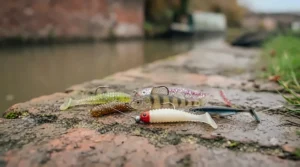
Rapala’s Ultra Light kit bundles three genuinely different lure styles — a 4cm shad, a 6cm minnow and a 3cm crank — into one pack, which makes it an unusually sensible starting point for anyone new to canal perch lure fishing. What most buyers overlook is that having three retrieve styles in one box means you can adapt to the fish’s mood without buying three separate products.
Each lure carries a weighted body designed for long casting despite the small size, a genuinely useful trait on canals where you’re often working parallel to the towpath rather than casting square across. The shad component runs at 1.2–1.5m, making it well suited to the mid-depth water found around canal junctions and wider basins.
Aggregated reviewer sentiment across UK tackle retailers is consistently positive, with buyers specifically praising the “tight wobbling action” and the hand-tuned, tank-tested build quality Rapala is known for — a meaningful difference from unbranded budget alternatives that often arrive with inconsistent actions straight out of the packet.
Pros:
- ✅ Three lure styles in one kit, ideal for varying retrieve speed and depth
- ✅ Hand-tuned and tank-tested for consistent out-of-box action
- ✅ Weighted bodies cast well despite the small profile
Cons:
- ❌ Only three lures total, so you’ll want backups if you lose one
- ❌ Colour choice is limited compared with buying individual lures
As a first purchase for canal fishing for perch tips to actually put into practice, the Rapala Trout/Perch Ultra Light Lure Kit is genuinely hard to beat.
3. Mepps Aglia Spinner (Size 0/1) — best classic spinner for searching open canal stretches
Developed in 1930s France and still widely regarded as one of the most-used lures in freshwater angling history, the Mepps Aglia is the definition of a proven searching lure. Its solid brass body and spinning blade create vibration and flash that perch struggle to ignore, and the smaller sizes — 0 and 1, weighing roughly 2–3g — are exactly right for canal-scale fishing.
Here’s what to weigh: a spinner like this excels at covering water quickly along straight, open stretches of canal where perch are actively hunting, but it’s a poor choice for snag-heavy margins since the exposed treble hangs below the body. Based on the spec comparison, running depth is shallow to medium (roughly 0.3–1.2m depending on retrieve speed), which suits canals perfectly since most are rarely deeper than two metres.
Reviewers consistently describe it as reliable and easy to fish, with ratings around 4.3–4.8 stars depending on size and retailer — the kind of consistent, decades-proven feedback you rarely see on newer, more heavily marketed lures.
Pros:
- ✅ Genuinely proven design with roughly a century of track record
- ✅ Fast to fish, covering long stretches of canal efficiently
- ✅ Solid brass construction built to last multiple seasons
Cons:
- ❌ Exposed hook makes it snag-prone in weedy or debris-filled margins
- ❌ Less effective than jigged softbaits in cold, slow-feeding conditions
For urban perch fishing lures aimed at quickly working through a long towpath stretch, the Mepps Aglia Spinner remains a genuinely excellent choice nearly a century after its design.
4. Berkley PowerBait Perch Kit — best softbait kit for drop-shotting near moored boats
Berkley’s PowerBait Perch Kit bundles a selection of shads, curl tails, vibration worms and minnow-style softbaits with a compact tackle box, built specifically around jighead and drop-shot presentations. What the spec sheet won’t tell you, but reviewers note, is that the scent infusion genuinely matters on canals, where perch often sit tight to cover and need extra encouragement to commit in low-visibility water.
Drop-shotting in particular is one of the most effective canal techniques, since it lets you hold a bait at a precise depth right alongside moored boat hulls and marginal walls — exactly where canal perch congregate. Based on the spec comparison, the kit’s mixed sizing means you can scale down for a slow winter session or size up when perch are feeding aggressively in warmer months.
Reviewer sentiment is broadly positive on effectiveness and scent, with some buyers noting minor packaging issues (lures arriving with a light protective oil film) rather than any concern about the lures’ actual fish-catching ability.
Pros:
- ✅ Genuine scent infusion that helps in low-visibility canal water
- ✅ Ideal for precise drop-shot presentation near boats and walls
- ✅ Comes with a compact, canal-bag-friendly tackle box
Cons:
- ❌ Some buyers report inconsistent packaging on arrival
- ❌ Requires separate jigheads or drop-shot rigs to fish effectively
For working the margins around moored narrowboats, the Berkley PowerBait Perch Kit offers some of the most targeted canal perch lure fishing on this list.
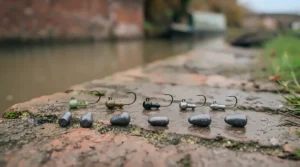
5. Fox Rage Micro Jig Heads — best terminal tackle for rigging your own micro lures
Not a lure in itself, but arguably the single most useful item on this list for serious canal perch anglers: Fox Rage’s Micro Jig Heads are purpose-built for rigging small softbaits at precisely the light weights canal fishing demands. The medium-length Aberdeen hook and extra-wide gape are designed to increase bait movement while improving hook-hold — a real advantage when perch often mouth a lure cautiously before committing.
Sold in packs of five across a range of gram weights, these let you fine-tune fall rate and depth control for micro lure canal presentations far more precisely than pre-rigged lures allow. On paper this means genuine versatility — pair the same jig head with different softbait shapes and colours depending on water clarity and light conditions.
Reviewer sentiment across UK retailers is strongly positive, with ratings consistently in the 4.4–4.6 range and buyers specifically flagging the sharpness of the hooks and the quality of the wire clip system for quick softbait changes streamside.
Pros:
- ✅ Fine control over depth and fall rate for precise presentation
- ✅ Consistently sharp hooks with strong verified customer ratings
- ✅ Works with any softbait shape, maximising your tackle box flexibility
Cons:
- ❌ Requires you to already own or buy separate softbaits
- ❌ Small components are easy to lose loose in a tackle bag
For anyone serious about small lures for canal perch and building their own rigs, Fox Rage Micro Jig Heads are close to essential kit.
6. Abu Garcia Droppen Spinners (3-Pack) — best budget vibration spinner for long, straight stretches
The Droppen is a long-casting vibration blade spinner rather than a classic rotating-blade design, and that distinction matters on canals — it casts further and straighter with less line twist, useful on the long, uninterrupted stretches you find on many UK canal networks. At under £10 for a three-pack, it’s also one of the cheapest genuinely effective options in this guide.
Based on the spec comparison, the vibration blade design produces a tighter, faster flash than a traditional spinner, which tends to trigger more reaction strikes from actively feeding perch rather than the searching, exploratory takes a slower presentation invites. That makes it particularly effective during warmer months when canal perch are hunting aggressively in open water.
Reviewers and shops consistently position it as a strong budget option, praised for casting distance and durability, though — as with any exposed-hook spinner — it’s a poor match for snag-heavy, debris-filled margins.
Pros:
- ✅ Excellent value at under £10 for three lures
- ✅ Long, accurate casting thanks to the compact vibration-blade design
- ✅ Effective at triggering reaction strikes from active perch
Cons:
- ❌ Not weedless — best avoided in heavily snagged margins
- ❌ Less versatile than jig-and-softbait combos in cold water
If your local canal has long, open, relatively clear stretches, the Abu Garcia Droppen Spinners deliver genuine performance for very little outlay.
7. Addsomebling Micro Lures (10-Pack) — best budget set for shallow, weedy canal margins
At just 1.7g and 2.8cm, these tiny crankbait-style lures are specifically designed to stay within the surface layer, which makes them a genuinely smart choice for the shallow, snag-strewn margins that dominate most urban canals — think reed fringes, lily pads and the silty edges beneath overhanging trees. Supplied as a set of ten, it’s also one of the most forgiving options here if you do lose the occasional lure to a stray shopping trolley.
Here’s what to weigh: the trade-off for staying shallow and snag-resistant is limited depth range, so these work best specifically for shallow water perch lure presentations rather than deeper bridge holes or lock cuttings, where the crankbaits and jig-rigged softbaits elsewhere in this list perform better.
Verified, in-depth third-party review coverage of this specific product is thinner than for the established brands above, so treat this as a more provisional recommendation — available feedback and independent buying guides consistently describe them as effective for trout and perch in exactly this shallow, snag-prone setting, though individual colour performance varies.
Pros:
- ✅ Genuinely snag-resistant thanks to the shallow-running design
- ✅ Ten lures per set means low-stakes experimentation with colour
- ✅ Ultra-light weight suits light line and finesse rods
Cons:
- ❌ Limited depth range compared with every other product in this guide
- ❌ Thinner independent review coverage than established tackle brands
For weedy, shallow canal margins where anything bigger gets snagged instantly, the Addsomebling Micro Lures set is a sensible, low-cost place to start.
How to Fish Small Lures for Canal Perch: A Practical Guide
Buying the right lure only gets you halfway there — technique does most of the remaining work on canals, where fish behave differently to their river or reservoir cousins. Here’s the practical detail most product listings skip entirely.
Start with your retrieve speed. Canal perch, particularly around structure, tend to respond better to a slow, twitch-pause presentation than a fast, constant retrieve — cast tight to the feature (bridge pillar, moored boat, lock gate), let the lure sink a beat or two, then work it back in short twitches with pauses of a second or two between movements. This mimics an injured baitfish and gives cautious perch time to commit rather than spooking them with a straight, fast retrieve.
Match your gear to the lure weight. Ultra-light spinning rods paired with 1000–3000 sized reels, spooled with 4–8lb line, let you feel even subtle takes on lightweight micro lures while still giving enough backbone to steer a decent perch away from snags. Fluorocarbon leader material is worth the extra cost around structure-heavy swims, since it resists abrasion against brickwork and boat hulls far better than straight mono.
Finally, work the whole water column before moving on. A single swim can hold perch at different depths depending on light and temperature — try a shallow-running lure first, then follow up with a jig-rigged softbait worked slower and deeper before deciding a spot is empty and moving along the towpath.
✨ Ready to Build Your Canal Perch Tackle Box?
🔍 Whether you’re starting with a budget micro lure set or building out a full drop-shot kit, check current pricing and availability before you head out — stock on the smaller, snag-resistant options tends to move fastest. These seven picks will help you fish more confidently along any UK canal!
Real-World Canal Perch Scenarios: Which Lure for Which Swim
Matching your lure choice to the actual swim in front of you matters far more than any general “best lure” ranking. Here are three realistic canal scenarios and the picks that genuinely suit them.
If you’re fishing a narrow, weed-fringed stretch with lily pads and overhanging trees, reach for the Addsomebling Micro Lures or Fox Rage Micro Jig Heads paired with a small softbait — both stay shallow and snag-resistant, letting you work right up against cover without constantly losing tackle. Keep your rod tip high to help lift the lure over submerged debris on the retrieve.
If you’re working a bridge hole or lock approach where the water deepens noticeably, the Savage Gear Gravity Crank MR or a jig-rigged Berkley PowerBait Perch Kit softbait worked slowly along the bottom will cover that extra depth far more effectively than a shallow-running lure ever could. These are also the swims worth fishing longest, since perch often hold in numbers around deeper structure.
If you’re searching a long, open, relatively unobstructed stretch to locate fish before committing to a spot, the Mepps Aglia Spinner or Abu Garcia Droppen Spinners let you cover significant ground quickly. Once you get a take or a follow, switch to a slower, more precise presentation on that exact spot rather than continuing to search elsewhere.
What Are the Best Perch Lures for Canal Fishing?
The best perch lures for canal fishing are small, snag-resistant lures — typically under 7cm and weighing 2–20g — matched to shallow, structure-heavy water. Micro crankbaits, small spinners and lightly jig-rigged softbaits consistently outperform larger, open-water designs on the UK’s narrow, feature-dense canal network.
That definition reflects how differently canals behave compared with rivers or stillwaters. According to Wikipedia’s entry on the European perch, the species is a highly adaptable ambush predator found across a huge range of freshwater habitats, which explains why it thrives in artificial, structure-rich environments like canals just as readily as in more traditional rivers and lakes — it simply needs cover to ambush from, and canals are full of it.
How to Choose Perch Lures for Canal Fishing
Picking the right lure for a specific canal session gets much easier with a structured approach. Here’s the expert-reasoned checklist worth running through before you head to the towpath.
- Assess the depth and clarity of your chosen stretch first. Shallow, clear margins call for smaller, subtler lures; deeper, coloured bridge holes can handle something with more vibration and flash.
- Prioritise snag resistance near structure. If you’re fishing tight to moored boats, lock gates or reed beds, choose lures with covered or minimally exposed hooks to avoid losing tackle on every other cast.
- Match lure size to visible baitfish. Watch for fry activity near the surface and try to roughly match that size — perch key in on abundant, easy prey rather than oversized meals.
- Carry at least two retrieve styles. A searching lure like a spinner and a slower, jig-rigged softbait cover very different moods and conditions, so don’t rely on one presentation for a whole session.
- Check UK Environment Agency byelaws for your stretch. Some canal sections have specific rules on bait, methods or seasons, so it’s worth a quick check before you commit to a particular approach.
- Factor in light and water temperature. Bright, cold conditions often call for a slower, subtler presentation, while overcast, mild days can support faster, more aggressive retrieves.
- Build a small rotation rather than one “go-to” lure. Canal perch can be surprisingly moody day to day, and having two or three proven options in your bag saves a blank session when the first choice isn’t working.
Micro Lure Canal Tactics vs Standard-Size Lures
Understanding when a micro lure genuinely outperforms a standard-size option — and when it doesn’t — is one of the more useful distinctions in canal perch fishing, and it’s rarely explained clearly on product pages.
| Factor | Micro Lures (e.g. Addsomebling Micro Lures) | Standard-Size Lures (e.g. Savage Gear Gravity Crank MR) |
|---|---|---|
| Typical Size | Under 4cm | 5.5–8cm |
| Snag Resistance | Generally high in shallow cover | Moderate, better suited to open water |
| Casting Distance | Shorter, more precise | Longer, better for open stretches |
| Best Depth | 0.1–0.6m | 1–2m |
| Best For | Weedy margins, cautious feeding | Bridge holes, active feeding periods |
| Perch Response | Subtler, suits low-confidence bites | Bolder, triggers reaction strikes |
Reading across this table, the honest takeaway is that micro lure canal tactics genuinely dominate in the shallow, snag-heavy margins that make up most of a typical canal’s length, while standard-size lures earn their place specifically around the deeper, more open water found at bridges, locks and junctions. Neither approach replaces the other — carrying both is what actually improves your catch rate across a full session.
Urban Perch Fishing Lures: What’s Different About City Canals
Fishing an urban canal running through a city centre presents a genuinely different set of challenges to a quiet rural stretch, and it’s worth understanding before you pick your tackle.
Urban canals typically carry more artificial structure — shopping trolleys, discarded bikes, submerged debris — alongside the usual boat traffic, bridge pillars and lock gates. What most buyers overlook is that this actually benefits perch fishing rather than hindering it: perch thrive on structure, and urban canals often hold surprisingly high densities of fish precisely because there’s so much cover to ambush from. Based on the spec comparison, this is exactly why snag-resistant options like Fox Rage Micro Jig Heads paired with a softbait, or the Addsomebling Micro Lures, tend to outperform more exposed-hook designs in city sections.
Light levels also behave differently in urban settings, with overhead buildings and bridges creating deep shadow lines that perch use as daytime ambush points even in relatively bright conditions. Working a lure slowly along the shadow-to-light transition, rather than casting into open sunlit water, consistently produces more takes on city canal stretches according to UK angling publications covering the discipline.
Finally, urban stretches tend to see heavier foot and boat traffic, so fishing during quieter periods — early morning or late evening — often produces noticeably better results than a busy weekend afternoon, when repeated disturbance pushes perch tighter into cover and off the feed.
Common Mistakes When Lure Fishing for Canal Perch
Even experienced anglers fall into predictable traps when adapting general predator tactics to canal-specific conditions. Here’s expert commentary on the ones worth avoiding.
Fishing lures designed for open water is the most common mistake — a big, exposed-hook spinner built for reservoir pike fishing will snag constantly in a canal’s tighter, more feature-dense margins. Reviewers and experienced canal anglers consistently flag downsizing as the single biggest improvement newcomers can make to their catch rate.
Retrieving too fast is another frequent issue. Canal perch, especially in cooler months, often respond far better to a slow, twitch-pause presentation than a constant fast retrieve, which can pull the lure past a cautious, structure-holding fish before it has a chance to react.
Finally, ignoring shadow lines and light conditions costs many anglers fish they never even see follow the lure. Casting exclusively into open, sunlit water while ignoring the shaded margins under bridges and moored boats means missing exactly where daytime perch are most likely to be sitting.
Shallow Water Perch Lure Presentation: Reading Canal Depth and Structure
Most UK canals rarely exceed two metres in depth, which means shallow water perch lure presentation is a core skill rather than a niche technique — you’ll use it on the majority of casts, not just in obviously shallow margins.
| Canal Feature | Typical Depth | Recommended Lure Type |
|---|---|---|
| Reed-fringed margin | 0.1–0.4m | Addsomebling Micro Lures, weightless softbait |
| Moored boat hull | 0.5–1.2m | Berkley PowerBait Perch Kit on drop-shot |
| Open straight stretch | 0.3–1m | Mepps Aglia Spinner, Abu Garcia Droppen Spinners |
| Bridge hole / lock approach | 1.2–2m | Savage Gear Gravity Crank MR |
Looking across this table, the pattern that emerges is straightforward: the shallower and more feature-dense the swim, the smaller and more snag-resistant your lure choice should be, while the handful of genuinely deeper canal features — bridges, locks, junctions — can support the larger, more visible lures elsewhere in this guide. Reading a canal’s depth profile before you start casting, rather than fishing on autopilot, consistently produces more considered lure choices and fewer wasted casts.
Canal Fishing for Perch Tips: Safety, Access and Rules
Before you head out with any of the lures above, it’s worth understanding the legal and practical basics of canal access in the UK, since the rules differ from natural rivers and stillwaters in a few important ways.
Anyone aged 13 or over fishing for freshwater fish including perch in England and Wales needs a valid Environment Agency rod fishing licence, which applies equally to canals, rivers and stillwaters. You can check current requirements and apply directly via the UK government’s official rod fishing licence guidance, which also covers licence types, costs and the penalties for fishing without one. Beyond the licence itself, most canal stretches also require a separate permit from whoever manages that section of waterway, so check the specific access rules for your chosen towpath before you set up.
Practical safety matters too — towpaths can be uneven, narrow and shared with cyclists and boat traffic, so keep tackle tidy and be mindful of others passing, particularly around bridges and locks where visibility is limited. Wet, mossy lock surrounds and steep bank edges are also worth extra caution, especially in low light during early morning or evening sessions when bites are often best.
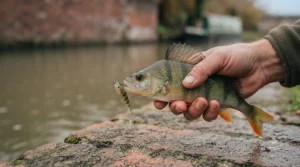
Finally, always handle and release perch carefully, supporting the fish horizontally and minimising time out of water, particularly during warmer months when oxygen levels in slower-moving canal water can already be under pressure.
FAQ
❓ What are the best lures for perch in canals?
❓ What size lure should I use for canal perch?
❓ Do I need a fishing licence to fish for perch in a canal?
❓ What's the best technique for urban canal perch fishing?
❓ Can you catch perch in shallow canal water?
Conclusion
Canal perch fishing rewards a different mindset to open-water predator fishing — this is a game of precision, patience and matching your lure to the specific foot of water in front of you, not distance casting or brute presence. The seven picks in this guide, from budget micro sets like Addsomebling Micro Lures through to more considered kit like the Berkley PowerBait Perch Kit, cover the full range of situations you’ll actually encounter along a typical UK towpath.
The single most useful habit worth building is reading the water before you cast — shallow, weedy margins call for small, snag-resistant lures, while the handful of genuinely deeper features like bridge holes and lock approaches can handle something with more presence and vibration. Carry a small rotation covering both, check your licence and local access rules with the Canal & River Trust’s fishing guidance before you set off, and be prepared to work a swim slowly rather than moving on after just a handful of casts.
Recommended for You
- Perch Lures for Winter: 7 Best Cold Water Picks for 2026
- Lures for Perch: 7 Proven Picks UK Anglers Rate in 2026
- Drop Shot Rod for Perch: 7 Brilliant Picks for 2026
Disclaimer: This article contains affiliate links. As an Amazon Associate, I earn from qualifying purchases. If you purchase products through these links, we may earn a small commission at no additional cost to you.
✨ Found this helpful? Share it with your friends! 💬🤗
