
In This Article
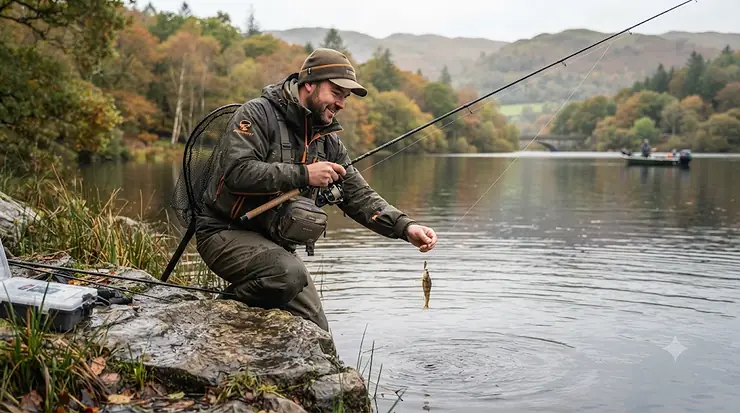
Stand on any UK canal towpath long enough and you’ll spot them: anglers flicking tiny spinners under the far bank, twitching soft plastics past moored boats, working a lure back with the patience of someone who’s done this a thousand times before. They’re not messing about. Perch are one of the most rewarding predators a British angler can target on lures, and picking the right lures for perch is genuinely the difference between a red-letter session and a blank one.
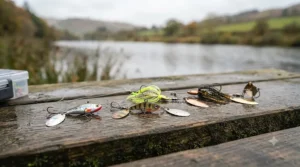
What is lures for perch fishing, exactly? It’s the practice of using artificial baits — spinners, small crankbaits, soft plastics and jigs — designed to mimic the fry, minnows and invertebrates perch naturally hunt, rather than relying on bait like maggots or worms. Done well, it’s faster, more mobile, and often more exciting than static fishing.
Perch aren’t fussy eaters, but they are opportunistic, visual hunters that respond strongly to flash, vibration and a convincing size profile — something confirmed by research on the species’ feeding behaviour and habitat preferences documented on Wikipedia’s European perch page. This guide walks through seven real, currently available lures for the UK market, honest comparison of what actually works, and practical advice you won’t find on a standard Amazon listing. Whether you’re after your first perch lure fishing kit or fine-tuning a river approach, there’s something here for you.
Quick Comparison Table
| Lure | Type | Best For | Price Range |
|---|---|---|---|
| Mepps Aglia | Inline spinner | All-round canal & river perch | £3-£6 |
| Rapala Ultra Light Shad | Hardbait crank | Small streams & clear water | £6-£10 |
| Fox Rage Micro Spikey Shad Pack | Soft plastic | Budget finesse fishing | £4-£7 |
| Savage Gear 3D Roach Shad | Realistic soft lure | Realism-driven bites | £8-£13 |
| Abu Garcia Svartzonker McPerch | Curly tail soft lure | Perch-specific imitation | £6-£10 |
| Berkley PowerBait Perch Kit | Mixed lure kit | Beginners & varied tactics | £10-£16 |
| Berkley Pulse Realistic Perch | Prerigged soft shad | Premium realism, ready-to-fish | £7-£12 |
The spread above matters more than it looks. A Mepps Aglia covers you when you need to search water fast, while the Berkley Pulse Realistic Perch earns its higher price through pre-rigging and lifelike detail that saves you faffing with separate jig heads streamside. Anyone starting from scratch should note that the Berkley PowerBait Perch Kit effectively front-loads your tackle box with four lure styles in one purchase, which is arguably better value per fishing trip than buying single-style packs individually.
💬 Just one click — help others make better buying decisions too! 😊
Top 7 Lures for Perch: Expert Analysis
1. Mepps Aglia — the spinner that’s caught perch for generations
The Mepps Aglia is the lure most UK perch anglers cut their teeth on, and there’s a reason it’s survived decades of fashion in tackle shops. Its solid body and correctly weighted blade mean it spins reliably even on a painfully slow retrieve, which matters enormously in cold water when perch won’t chase anything fast.
Available in sizes #0 through #5 (roughly 2.3g up to 15g), the smaller sizes are the ones to reach for on canals and clear rivers. Based on the spec comparison with other inline spinners, the Aglia’s oval blade produces more flash-per-turn than narrower willow-blade designs, which is exactly the kind of visual trigger that pulls perch out of cover. What most buyers overlook about this model is that the blade’s rotation radius makes it surprisingly weedy-water friendly if you keep the retrieve steady.
Reviewers consistently report the Fluorescent and coloured-blade versions perform especially well in coloured canal water, with several UK anglers noting reliable catches session after session in murky conditions. Verified reviews on brand and retailer testimonial pages back this up repeatedly, with UK canal and river anglers reporting strong results on both perch and pike using the same spinner.
Pros:
- ✅ Spins at ultra-slow retrieve speeds, ideal for cold water
- ✅ Wide range of sizes suits everything from micro perch to specimens
- ✅ Decades of proven UK track record on canals and rivers
Cons:
- ❌ Trebles need frequent sharpening after snagging
- ❌ Limited depth range compared with diving crankbaits
Prices sit around £3-£6 depending on size and finish, and at that price the Aglia earns its place as one of the best-value, most effective perch lures you can own — a genuinely essential starting point rather than a nostalgia pick.
2. Rapala Ultra Light Shad — best small lure for tight, clear water
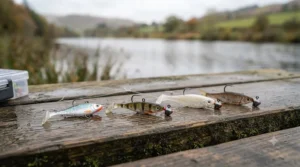
At just 4cm and roughly 3g, the Rapala Ultra Light Shad is purpose-built for finesse work, and it shows. The internal weighting system means it casts far further than its tiny size suggests, which solves the classic problem of trying to reach the far bank of a canal with an ultralight rod.
Its tight wobbling action holds up at both fast and painfully slow retrieve speeds, and the slow-sink pause is where a lot of the magic happens — perch frequently strike as the lure hangs in the water column rather than during the retrieve itself. On paper this means the shad behaves less like a fleeing baitfish and more like a wounded one, which is precisely the profile predatory perch are wired to target.
Aggregated review sentiment across UK and US retailers is strongly positive, with anglers repeatedly describing it as a genuine multi-species workhorse that regularly accounts for perch alongside other species. The main criticism that surfaces in verified reviews concerns the plastic bill, which some long-term users report can loosen after heavy use over multiple seasons.
Pros:
- ✅ Casts unusually far for such a small, light lure
- ✅ VMC hooks give a noticeably higher hook-up rate
- ✅ Slow-sink pause consistently triggers reaction strikes
Cons:
- ❌ Bill can work loose after extended heavy use
- ❌ Limited running depth of roughly 1.2-1.5m
At around £6-£10 per lure, this sits mid-range, but the casting distance alone justifies the premium over own-brand alternatives for river-margin work.
3. Fox Rage Micro Spikey Shad Pack — budget-friendly perch attractor lures
Where the Fox Rage Micro Spikey Shad Pack earns its keep is versatility on a tight budget. Five lures per pack across UV colour variations, available in 6cm, 9cm and 12cm sizes, gives you a genuinely flexible starting kit for jighead, weedless or dropshot rigging without committing much cash.
The small spikes covering the body create subtle water disturbance on the retrieve — a form of built-in attractor that doesn’t rely purely on colour or scent to draw attention. Here’s what to weigh: this texture-based disturbance is particularly effective in low-light conditions (dawn, dusk, overcast days) when perch are hunting more by vibration than sight, according to how UV and low-light lure behaviour is generally understood among predator anglers.
Reviewers on specialist tackle retailer sites consistently praise the value-for-money angle, noting that five colour variants in one pack means you rarely need to buy a separate pack just to test a new pattern.
Pros:
- ✅ Five colours per pack for fast on-bank experimentation
- ✅ Multiple rigging options: jighead, weedless, dropshot
- ✅ Genuinely low cost-per-lure for micro soft plastics
Cons:
- ❌ Softer plastic tears faster than premium alternatives
- ❌ Smallest 6cm size limited to true micro perch
Priced around £4-£7 per pack, this is the lure to buy if you want to fish a genuine perch attractor lures approach without overcommitting before you’ve found your local water’s preferred colour.
4. Savage Gear 3D Roach Shad — realism built from an actual scan
The Savage Gear 3D Roach Shad takes a different route to catching fish: photorealistic detail. Built from a 3D scan of a real roach — one of perch’s primary natural prey items — it carries genuine scale definition, a Photo Chrome skin print, and an internal rattle chamber that adds an acoustic trigger alongside the visual one.
Reviewers consistently note the paddle tail’s kicking action holds up even at slow retrieve speeds, which is exactly what you want when working a lure past a bridge pillar or moored boat where perch tend to sit and ambush rather than chase. Based on the spec comparison with plainer soft plastics, the added DNA scent coating is the standout differentiator — it’s designed to keep a fish holding on for that split-second longer that converts a nudge into a proper hook-up.
The smaller sizes in this range (rather than the larger pike-oriented options) are the ones to reach for specifically targeting perch; going too big risks the lure looking more like competition than food to a fish with a mouth built for ambushing, not engulfing.
Pros:
- ✅ 3D-scanned realism genuinely stands out underwater
- ✅ Internal rattle adds an extra sensory trigger
- ✅ DNA scent coating encourages longer hold times
Cons:
- ❌ Premium pricing compared with plain soft plastics
- ❌ Larger sizes in the range are really pike-focused
At £8-£13, this is a mid-to-premium pick, best suited to anglers who’ve already worked out their local water needs something more convincing than a basic paddle tail.
5. Abu Garcia Svartzonker McPerch — designed specifically for the species
Where most predator lures are marketed as “pike, perch and zander,” the Abu Garcia Svartzonker McPerch curly tail range narrows its focus specifically to imitating perch and small prey fish perch themselves hunt — a subtle but meaningful difference in design priorities.
Swedish lure-maker Svartzonker built this around a natural crawling and swimming action rather than an aggressive, high-vibration wobble, which suits perch’s more cautious, investigative feeding style compared with pike’s ambush-and-smash approach. What most buyers overlook about this model is that its size range is genuinely tuned for the fish perch eat rather than scaled-down versions of pike lures, which matters more than marketing copy usually admits.
Reviewers on UK retailer sites frequently flag the mixed-colour packs as excellent value for testing which pattern a specific venue prefers, since perch preference can shift noticeably between clear rivers and coloured stillwaters.
Pros:
- ✅ Genuinely perch-proportioned rather than scaled pike gear
- ✅ Natural swimming action suits perch’s cautious feeding style
- ✅ Mixed-colour packs speed up on-bank pattern testing
Cons:
- ❌ Less widely stocked than mainstream Berkley or Savage Gear ranges
- ❌ Curly tail wears faster on abrasive gravel bottoms
Sitting around £6-£10, this is the pick for anglers who want gear built around perch specifically rather than adapted from a pike catalogue.
6. Berkley PowerBait Perch Kit — the complete perch lure fishing kit
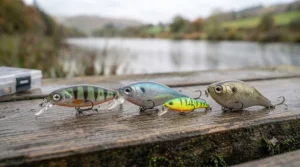
If you’re assembling your first perch lure fishing kit from nothing, this is arguably the single most efficient purchase on this list. The Berkley PowerBait Perch Kit bundles shads, curl tails, vibration worms and minnow-style lures suited to both jighead work and dropshotting, meaning you leave the box with genuine tactical variety rather than five near-identical lures in different colours.
Here’s what to weigh: buying this kit typically works out cheaper per lure than purchasing four separate style-specific packs, and it removes the guesswork of deciding which shape to start with — a real barrier for anyone new to lure fishing for perch specifically. Reviewers consistently highlight the kit as a strong gifting option and a genuinely practical starting point precisely because it doesn’t force a beginner into committing to one lure style before they know what their local water responds to.
Based on the spec comparison with buying components separately, the vibration worms included are worth particular attention on pressured stillwaters, where perch that have seen the same soft plastics all season respond better to a change in profile and movement.
Pros:
- ✅ Four distinct lure styles in a single purchase
- ✅ Ideal entry point for jighead and dropshot techniques
- ✅ Better value per lure than buying single-style packs
Cons:
- ❌ No spinners or hardbaits included in the kit
- ❌ Individual lure quantities are modest per style
At £10-£16, this represents genuinely strong value and belongs in the tackle box of anyone building a perch lure fishing kit from scratch.
7. Berkley Pulse Realistic Perch — the premium, ready-to-fish option
The Berkley Pulse Realistic Perch is a prerigged soft shad available in three sizes (roughly 7cm/7g, 11cm/10g and 15cm/15g), each fitted with Berkley’s Fusion19 hooks straight out of the packet. For anglers who’d rather spend their session fishing than tying jig heads on a cold riverbank, that convenience alone carries real value.
What stands out here is the lifelike shape and swimming action, tuned specifically to imitate a real perch — useful given perch are genuinely cannibalistic and will readily strike smaller members of their own species. The smaller 7cm/7g size is the one to prioritise for dedicated perch work; the larger sizes drift into zander and pike territory.
Reviewers consistently describe the seductive swimming action as a standout, noting it draws strikes from fish that have already ignored plainer lures earlier in a session — exactly the kind of “reserve tactic” every experienced lure angler keeps in a side pocket.
Pros:
- ✅ Prerigged and ready to fish straight from the packet
- ✅ Genuinely realistic perch-on-perch imitation profile
- ✅ Fusion19 hooks improve hook-up and hold rates
Cons:
- ❌ Highest price-per-lure on this list
- ❌ Prerigged jig head limits weight customisation
At £7-£12 per lure or small pack, this is the splash-out pick — not essential for every session, but a genuinely effective option when fussier fish need convincing.
Practical Usage Guide: Setting Up and Fishing Your Lures for Perch
Getting the tackle right matters as much as the lure itself. A light spinning rod rated roughly 5-15g, paired with a small fixed-spool reel loaded with 6-10lb braid and a short fluorocarbon leader, covers almost every scenario on this list. Braid’s lack of stretch means you’ll actually feel the subtle taps perch give a lure, rather than missing them through slack mono.
On your first outings, resist the urge to retrieve too fast. A common beginner mistake in the first 30 days is treating every lure like a search bait — reeling steadily and covering water — when perch frequently respond far better to a stop-start retrieve with genuine pauses. Let the lure sink on the pause; that’s often when the take happens, particularly with soft plastics like the Berkley Pulse Realistic Perch.
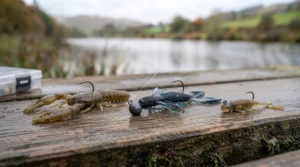
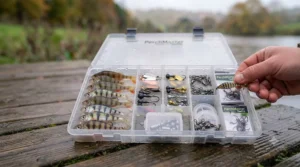
Maintenance is simple but easy to neglect: rinse lures in fresh water after any session near brackish or heavily chlorinated water, check trebles for rust or blunting every few trips, and store soft plastics away from hard-bodied lures, since some plastics react chemically with paint finishes and can melt or discolour adjacent lures in a cramped tackle box overnight. A basic divided lure box solves this instantly and costs very little.
Real-World Scenarios: Matching a Perch Lure Fishing Kit to Your Situation
Picture a college student with £20 to spend, fishing local urban canals after lectures twice a week. For that budget and frequency, a single Berkley PowerBait Perch Kit plus a couple of Mepps Aglia spinners covers spinning, jigging and dropshotting without wasting money on gear that won’t get used. Light, packable, and forgiving of the odd snag on canal debris.
Now picture a retired angler fishing a clear chalk stream twice a month, targeting specimen perch rather than numbers. Here, the extra investment in a Berkley Pulse Realistic Perch and a Savage Gear 3D Roach Shad makes far more sense — fewer, more considered casts to educated fish that have likely seen plainer lures already this season.
Then there’s the family group taking children fishing on a stocked commercial lake for the first time. Durability and forgiveness matter more than finesse here; the Fox Rage Micro Spikey Shad Pack is cheap enough that losing a few to snags or overenthusiastic casting doesn’t sting, and its bright colours help kids see and understand what’s happening underwater. Anglers wanting a proper introduction to this style of fishing can also find genuinely useful pointers from the Canal & River Trust’s guide to becoming a lure angler, which covers exactly this kind of gradual, low-cost entry into the sport.
Problem → Solution: Fixing Common Perch Lure Fishing Mistakes
Problem: Perch follow the lure but won’t commit. This usually means your retrieve is too fast or too uniform. Solution: slow right down, add pauses, and try downsizing to something like the Rapala Ultra Light Shad, which behaves convincingly during a stall.
Problem: Constant snagging in weed or structure. Solution: switch to a weedless-rigged soft plastic from the Fox Rage Micro Spikey Shad Pack range, or fish spinners like the Mepps Aglia slightly higher in the water column to stay clear of bottom debris.
Problem: Catching plenty of small perch but nothing larger. Solution: upsize slightly and switch to a more realistic profile such as the Berkley Pulse Realistic Perch — larger, wary perch are typically more selective and respond better to convincing detail than flash alone.
Problem: No bites at all in coloured or murky water. Solution: prioritise vibration and rattle over pure visual appeal; the Savage Gear 3D Roach Shad‘s internal rattle chamber is specifically useful here, since sound travels further than light in turbid water.
Problem: Lures snapping off or line failing on strikes. Solution: check your leader and knots before blaming the lure — a fresh fluorocarbon leader tied correctly resolves the vast majority of these losses.
How to Choose the Most Effective Perch Lures for Your Water
- Match lure size to prey size in your venue. Watch for fry activity at the surface; if you see tiny fish, downsize accordingly.
- Consider water clarity before colour. Natural patterns work better in clear water; brighter or UV finishes earn their keep in coloured canals and rivers.
- Think about depth and structure. Deep, snaggy swims favour weedless soft plastics over treble-hooked hardbaits.
- Factor in light conditions. Low light favours vibration and rattle; bright, sunny conditions favour flash and realistic finishes.
- Prioritise versatility when starting out. A kit like the Berkley PowerBait Perch Kit avoids overcommitting to one style before you understand your local water.
- Don’t ignore retrieve speed control. The most effective perch lures are often the ones you can fish agonisingly slowly without losing action, which rules out some cheaper spinners that stall below a certain speed.
- Budget for replacements. Snags happen; build lure loss into your ongoing costs rather than treating every lost lure as a disaster.
Best Small Lures for Perch: Why Size Genuinely Matters
There’s a persistent myth that bigger lures simply catch bigger fish. With perch, that logic breaks down quickly. Perch have proportionally small mouths relative to body size, and their feeding behaviour — much of it centred on fry, invertebrates and small baitfish — means the best small lures for perch consistently outfish oversized alternatives, even when targeting genuinely large specimens.
The Rapala Ultra Light Shad and the smaller sizes within the Fox Rage Micro Spikey Shad Pack range exist precisely because manufacturers recognise this. What most buyers overlook about this micro-lure category is that smaller doesn’t mean less effective — internal weighting technology in modern micro lures like the Ultra Light Shad means casting distance and depth control rival much larger baits, without sacrificing the natural profile perch respond to.
Reviewers consistently note that switching down in size, particularly during cold months when perch metabolism slows and feeding becomes more cautious, revives sessions that had otherwise gone quiet on standard-sized gear.
Perch Attractor Lures: Do Scent, Flash and Vibration Actually Work?
The honest answer, based on the spec comparison across this article’s seven products, is: it depends on the sensory channel you’re targeting, and conditions dictate which one matters most. Perch attractor lures generally rely on one or more of three triggers — visual flash (spinner blades, holographic finishes), vibration and rattle (internal rattle chambers, paddle tail thump), and scent (DNA-infused coatings like those on the Savage Gear 3D Roach Shad).
In clear water with good light, visual triggers dominate; a Mepps Aglia‘s flash does most of the work. In murky canal water or low light, vibration and rattle take over as the primary attractor, since perch increasingly rely on their lateral line to detect prey rather than sight alone. Scent coatings are the hardest to verify in terms of measurable impact, but reviewers across multiple retailers do consistently report longer hold times on scented lures — enough of a pattern to take seriously, even without controlled studies to confirm the mechanism.
Natural Colour Lures Perch Anglers Rely On (And When Bright Wins Instead)
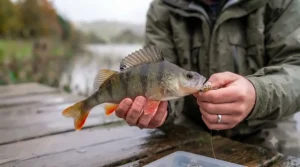
There’s a genuine split in opinion among experienced perch anglers on colour, and the honest answer is that both camps are right — just for different water. Natural colour lures perch fishing typically favours in clear rivers and gin-clear stillwaters include roach, perch and minnow patterns, precisely because these mimic what the fish are actually used to eating and what looks convincing without spooking a wary, well-fed fish.
The Abu Garcia Svartzonker McPerch and natural-finish Savage Gear 3D Roach Shad patterns both lean into this approach. On paper this means less flash, subtler movement, and a greater reliance on realistic proportions doing the work of triggering a strike.
Conversely, coloured or UV-enhanced lures — like the multi-colour packs in the Fox Rage Micro Spikey Shad Pack range — earn their place specifically in coloured water, overcast conditions, or heavily pressured venues where fish have grown wary of natural presentations. The spec sheet won’t tell you this, but experienced river anglers frequently carry both, swapping based on conditions changing through a single session rather than committing to one approach all day.
River Perch Lures Review: What Changes Between Rivers, Canals and Lakes
Venue type genuinely changes which lures perform best, and a fair river perch lures review has to account for current, depth variation and structure differently to still water. In flowing rivers, lures need enough weight or action to hold their profile against current without being dragged unnaturally sideways — the Rapala Ultra Light Shad‘s internal weighting handles this well in moderate flow, while lighter spinners can struggle in anything beyond gentle current.
Canals, by contrast, tend to be shallower and more consistently coloured, which is exactly the environment where the Mepps Aglia‘s slow-spin capability and the Savage Gear 3D Roach Shad‘s rattle chamber both shine, as documented in the Canal & River Trust’s beginner’s guide to canal fishing, which specifically flags perch as one of the most reliably catchable predators on the canal network.
Stillwaters and commercial lakes generally offer the clearest water of the three environments, favouring natural colour finesse presentations and slower, more considered retrieves — conditions where the Berkley Pulse Realistic Perch‘s lifelike detail earns its premium price most convincingly.
Lures for Perch vs Bait Fishing: Which Actually Catches More?
| Factor | Lure Fishing | Bait Fishing (maggot/worm) |
|---|---|---|
| Mobility | High — cover more swims per session | Low — typically static |
| Best For | Active, searching sessions, larger specimens | Steady numbers, patient anglers |
| Set-up Time | Minimal, quick to move on | Moderate, requires feeding/loose feed |
| Weather Sensitivity | More weather-dependent | Less affected by conditions |
Lure fishing genuinely wins on mobility and excitement — you’re covering water, actively hunting, and every cast is a decision rather than a wait. That said, bait fishing with maggots or worms still tends to produce more consistent numbers on pressured venues where fish have grown cautious around artificial presentations. Most experienced perch anglers don’t see this as a binary choice; carrying a light lure rod alongside a simple bait set-up lets you switch tactics mid-session depending on how the fish are responding.
✨ Don’t Miss These Exclusive Deals!
🔍 Take your lure fishing for perch to the next level with these carefully selected products. Click on any highlighted item to check current pricing and availability. These lures will help you build genuine confidence on the bank this season! 🎣
Long-Term Cost & Maintenance: What Perch Lure Fishing Really Costs
Building a genuinely capable perch lure collection needn’t be expensive. A realistic starter set — the Berkley PowerBait Perch Kit, a handful of Mepps Aglia spinners across two or three sizes, and one Fox Rage Micro Spikey Shad Pack — comes in comfortably under £30, and covers the vast majority of UK venues and conditions.
Ongoing cost is where budgeting matters more. Snags are inevitable, particularly around structure and weed, so expect to replace a handful of lures each season. Soft plastics wear out faster than hardbaits or spinners through repeated fish contact and abrasion, meaning something like a Berkley Pulse Realistic Perch may need topping up more often than a durable Mepps Aglia, which can genuinely last years with basic care. Factoring in a modest annual replacement budget of £15-£25 keeps most anglers well stocked without overspending.
Safety, Regulations & Licence Requirements for Lures for Perch Fishing
Before casting a single lure, anyone aged 13 or over fishing freshwater in England and Wales needs a valid Environment Agency rod fishing licence, which covers coarse species including perch. Full details, current pricing and the option to buy online are available directly through gov.uk’s official rod fishing licence guide. Scotland operates differently, requiring permission from the relevant fishing rights owner rather than a national licence, while Northern Ireland runs its own separate DAERA system.
Beyond the licence itself, most stretches of canal and many rivers require a separate permit or day ticket from the relevant landowner or angling club — a licence alone doesn’t grant permission to fish a specific water. Basic safety matters too: unhook perch carefully given their spiny dorsal fin, use a proper landing net rather than lifting fish by hand, and always check bank conditions before wading close to the water’s edge, particularly on canal margins where silt depth can be deceptive.
Frequently Asked Questions
❓ What's the best lure for perch fishing beginners?
❓ What size lure is best for perch?
❓ Do perch prefer bright or natural coloured lures?
❓ What's the best time of day for perch lure fishing?
❓ Do you need a licence to fish for perch in the UK?
Conclusion
Lures for perch fishing rewards preparation more than luck. Get the basics right — a sensible rod and reel set-up, a small but varied selection covering spinners, hardbaits and soft plastics, and a willingness to slow your retrieve down when nothing else is working — and perch become one of the most consistently catchable predators in UK freshwater.
Start simple if you’re new to this: a Mepps Aglia or two, a Berkley PowerBait Perch Kit for variety, and patience while you learn how your local water behaves through the seasons. Build from there as you understand what your venue actually demands, rather than buying everything on this list at once. Every lure covered here earns its place for a genuine reason, and matching the right one to your specific water is what separates a decent session from a brilliant one.
✨ Ready to Build Your Perch Lure Box?
🎣 Check current availability on the lures above and start planning your next session. Small, considered purchases now will save you money and frustration on the bank later!
Recommended for You
- Drop Shot Rod for Perch: 7 Brilliant Picks for 2026
- Perch Rod Under £50: 7 Best Budget Picks for 2026
- Perch Fishing Rod: 7 Best Rods & Buying Guide (2026 UK)
Disclaimer: This article contains affiliate links. As an Amazon Associate, I earn from qualifying purchases. If you purchase products through these links, we may earn a small commission at no additional cost to you.
✨ Found this helpful? Share it with your friends! 💬🤗
