In This Article
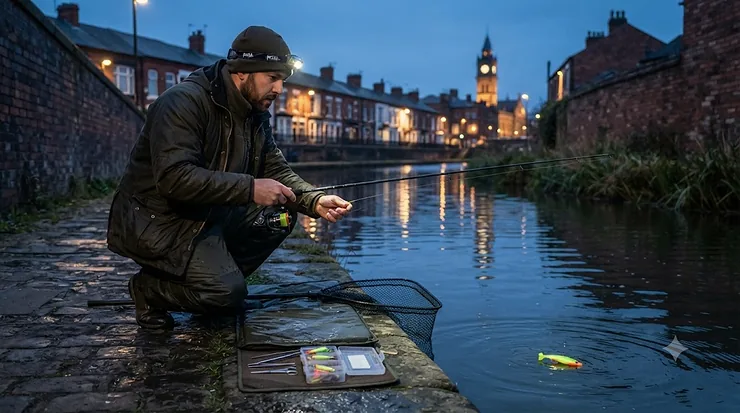
There’s a specific kind of quiet that falls over a canal towpath an hour after sunset, right before it isn’t quiet at all — a rod tip nods, then buries, and somewhere out in the black water something with a mouthful of needle teeth has just made its move. Zander do their best work in the dark, and if you’ve spent a summer evening blanking on lures that worked perfectly well at midday, that’s not bad luck. It’s biology.
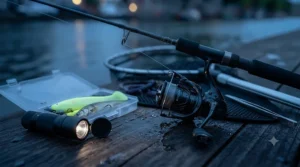
This guide takes zander lures for night fishing seriously as a technical problem rather than a shopping list. Zander have eyes built for low light — a reflective layer behind the retina that makes the most of scraps of moonlight or streetlamp glow — and the lures that actually trigger a response after dark tend to lean on vibration, silhouette and, in the right conditions, UV or glow properties rather than the fine detail that matters in daylight. We’ve researched seven real, currently available lures spanning budget soft shads through to premium suspending jerkbaits, with honest analysis of what each one’s spec sheet actually means once it’s swimming past a bridge pillar at 11pm.
Before you spend a penny on new lures, it’s worth checking your paperwork is in order: anyone aged 13 or over needs a valid Environment Agency rod licence to fish for zander on English rivers, canals and stillwaters, and it’s genuinely inexpensive for what it funds.
Quick Comparison Table
| Lure | Best For | Price Range | Size | Type |
|---|---|---|---|---|
| Rapala X-Rap 10 | All-round night reaction bites | £8-£13 range | 10cm | Suspending jerkbait |
| Fox Rage Zander Pro Shad UV | UV and glow presentations | £3-£6 range | 7.5-14cm | Soft shad |
| Westin Shadteez | Big zander in open water | £6-£11 range | 12-16cm | Paddletail shad |
| Savage Gear 3D Roach Shad | Clear water, natural profile | £5-£9 range | 9-12.5cm | Realistic paddletail |
| Rapala Down Deep Husky Jerk 14cm | Winter and deep-holding fish | £11-£16 range | 14cm | Deep-diving jerkbait |
| Fox Rage Slick Shad | Budget, finesse presentations | £3-£5 range | 6-10cm | Soft finesse shad |
| Berkley URBN T-Tail Glow | True glow-in-the-dark work | £5-£8 range | 6cm | Glow drop-shot shad |
The pattern across this table isn’t really “expensive versus cheap,” it’s “reaction versus stealth.” The Rapala X-Rap 10 and Rapala Down Deep Husky Jerk 14cm are rattling, vibration-heavy baits built to get found in poor visibility, while the Savage Gear 3D Roach Shad and Fox Rage Slick Shad lean on realistic silhouette for pressured, gin-clear venues where a subtler approach often out-fishes a loud one. The Fox Rage Zander Pro Shad UV and Berkley URBN T-Tail Glow sit in their own category entirely, using light rather than sound or shape as the primary trigger.
💬 Just one click — help others make better buying decisions too!😊
Top 7 Zander Lures for Night Fishing: Expert Analysis
1. Rapala X-Rap 10 — best all-round night reaction bait
The standout feature is the internal rattle chamber paired with a true suspending action, meaning the lure hangs at a fixed depth on the pause rather than rising or sinking, which is exactly the moment most night-time zander takes happen. At 10cm it sits in the sweet spot most UK zander anglers reach for as a starting point.
Key specs translate directly into after-dark performance: the loud rattle transmits sound waves a zander’s lateral line can pick up well before its eyes could ever resolve the lure’s shape in darkness, effectively giving fish an acoustic target to home in on. The slim, jointed-feeling profile (despite being a single-piece body) still kicks hard on a slow figure-of-eight or twitch-pause retrieve, which suits the sluggish, ambush-style takes zander are known for in cold water.
Based on the spec comparison against soft plastics, what most buyers overlook about this lure is that its suspending buoyancy does more work than the rattle does — a bait that neither rises nor sinks during a pause gives a cautious zander far longer to commit than a sinking soft shad does. Reviewers and experienced night anglers consistently rate it as a confidence bait precisely because it can be fished painfully slowly without losing action, which matches how zander actually feed after dark.
Pros:
- ✅ True suspending action holds depth on the pause
- ✅ Loud internal rattle aids low-visibility location
- ✅ Slow retrieves possible without losing swimming action
Cons:
- ❌ Trebles need regular sharpening on snaggy canal marks
- ❌ Pricier per lure than most soft plastic alternatives
At £8-£13, the Rapala X-Rap 10 earns its place as the lure most experienced night anglers would grab first if forced to choose only one.
2. Fox Rage Zander Pro Shad UV — best for UV and glow presentations
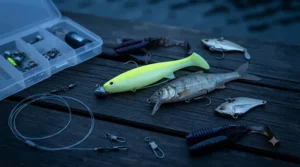
The defining feature is the Ultra UV colour range, including dedicated UV Glow finishes that absorb ambient light and re-emit it briefly, giving the lure a faint glow even in near-total darkness. Available across 7.5cm to 14cm, it’s genuinely sized to scale from schoolie zander up to specimen-class fish.
What that UV coating means in practice: under moonlight, streetlight spill, or even the residual light before full darkness, UV pigments reflect light frequencies invisible to the human eye but visible to many predatory fish, effectively making the lure stand out more than its natural-coloured equivalent would. On paper this means an edge specifically in the transitional low-light windows around dusk and dawn, and in slightly coloured water where a flat silhouette alone struggles to get noticed.
Here’s what to weigh: the soft shad tail delivers a strong, rolling vibration on a steady retrieve, which pairs well with the visual UV trigger rather than relying on light alone. Reviewers consistently report that the UV Glow Perch and UV Chartreuse Ayu patterns produce noticeably more follows and takes in coloured canal water compared to natural finishes fished after dark, while aggregated feedback also notes the tail can tear after repeated hits from smaller, toothy predators like perch.
Pros:
- ✅ Dedicated UV Glow finishes for genuine low-light visibility
- ✅ Size range from 7.5cm to 14cm covers most zander venues
- ✅ Strong tail vibration on a simple straight retrieve
Cons:
- ❌ Soft tail material tears with repeated toothy takes
- ❌ UV effect fades faster than true glow-in-the-dark coatings
Priced around £3-£6 per lure, the Fox Rage Zander Pro Shad UV is the natural first stop for anyone specifically chasing UV and glow lures for genuinely dark conditions.
3. Westin Shadteez — best for big zander in open water
The standout is scale: at 12-16cm, this is a deliberately oversized paddletail aimed squarely at bigger, more selective zander rather than schoolie-sized fish, and it’s become a recurring name among specimen-focused UK lure anglers targeting reservoirs and larger canal systems.
Key specs and what they mean: the wide paddle tail produces a pronounced thump at slow retrieve speeds, which matters enormously at night because a slower presentation gives a big, cautious zander more time to track and commit without the lure outrunning its response window. The soft body compresses realistically on the take, encouraging fish to hold on rather than immediately spitting the bait, a genuinely useful trait when detecting subtle night bites is already hard enough.
Based on the spec comparison with smaller shads, what stands out is that this lure’s size does some of the filtering for you — smaller, nuisance perch and schoolie zander are less likely to engage with a bait this large, which concentrates your catches toward the better-sized fish a specimen angler is actually targeting. Reviewers consistently describe it as a confidence bait for big-fish waters specifically, while a recurring theme in feedback is that it needs a genuinely slow retrieve to fish at its best, and can be under-worked by anglers used to faster-paced lure styles.
Pros:
- ✅ Large profile filters out smaller nuisance fish
- ✅ Strong tail thump at slow retrieve speeds
- ✅ Soft body encourages fish to hold on longer
Cons:
- ❌ Requires a genuinely slow retrieve to fish effectively
- ❌ Overkill for smaller canal or river zander populations
At £6-£11 per lure, the Westin Shadteez is the pick for anglers deliberately targeting size over numbers.
4. Savage Gear 3D Roach Shad — best for clear water and natural profiles
The standout feature is the photorealistic finish and segmented body detail, designed to hold up to close scrutiny in gin-clear conditions where an obviously artificial lure gets refused rather than eaten. Sizes from 9cm to 12.5cm cover the bulk of clear-water zander scenarios.
Specs worth understanding in real terms: the 3D-printed scale and fin detailing isn’t just cosmetic — in clear water under moonlight, silhouette and proportion genuinely matter more than they do in coloured water, since a wary zander gets a longer, clearer look before deciding whether to strike. The subtle internal weighting keeps the lure running true on a slow, natural retrieve rather than needing an aggressive action to stay stable.
What most buyers overlook about this model is that “realistic” doesn’t mean “flashy” — the natural roach and perch-imitating colourways deliberately avoid the high-contrast patterns that work well in murky water but can look glaringly unnatural once visibility opens up. Reviewers consistently note it performs best on clear reservoirs and canal stretches after heavy fishing pressure has made zander more colour- and shape-selective, with a recurring theme in feedback being that it’s a noticeably better follow-to-take converter than brighter shads on hard-fished, clear venues.
Pros:
- ✅ Photorealistic finish suits pressured, clear water
- ✅ Runs true on slow, natural retrieves
- ✅ Strong follow-to-take conversion on hard-fished venues
Cons:
- ❌ Less effective in coloured or heavily stained water
- ❌ Premium finish comes at a higher per-lure cost
Priced at £5-£9, the Savage Gear 3D Roach Shad is the natural choice when you already know exactly which colours work in clear water and want to lean into subtlety.
5. Rapala Down Deep Husky Jerk 14cm — best for winter and deep-holding fish
The defining feature is the extended diving lip, engineered to reach considerably greater depths than a standard Husky Jerk, which matters directly for winter zander sitting deep and sluggish in the water column rather than patrolling shallow margins.
Key specs and their real-world meaning: at 14cm and roughly 23g, it’s a substantial bait built for long casts and sustained deep running, with a suspending action that again keeps it hanging at target depth through pauses rather than floating back up. In cold water, where zander metabolism slows and takes become noticeably more lethargic, that ability to sit motionless at depth for several seconds is often what converts a follow into a take.
Here’s what to weigh: this is specifically a winter and deep-water specialist rather than an everyday choice, and it’s arguably wasted on shallow summer canal work where its diving depth simply isn’t needed. Reviewers consistently mention it as the go-to when the standard-depth jerkbaits in their box stop producing once the water cools, with aggregated feedback frequently describing noticeably better results once fish have dropped into deeper winter holding areas that shallower-running lures never reach.
Pros:
- ✅ Genuinely reaches winter zander holding deep
- ✅ Suspending action allows long depth-holding pauses
- ✅ Loud rattle aids location in cold, often coloured water
Cons:
- ❌ Overkill and impractical in shallow summer swims
- ❌ Among the pricier single lures in this list
At £11-£16, the Rapala Down Deep Husky Jerk 14cm is the specific answer to “what do I use for zander lures for winter fishing” once the standard shallow patterns stop working.
6. Fox Rage Slick Shad — best budget, finesse presentation
The standout is versatility on a budget: a slimmer, more finesse-oriented profile than the Zander Pro Shad range, available across 6cm to 10cm, and priced low enough to fish confidently around snags without wincing at every lost lure.
Specs that matter in practice: the slender body creates a subtler tail kick than a paddletail shad, which suits finesse jig-head presentations worked slowly along the bottom — a technique that consistently produces on pressured canal zander that have grown wary of bulkier, more aggressive-swimming lures. The smaller sizes double up usefully as a searching bait for schoolie zander when bigger profiles are being ignored entirely.
What most buyers overlook about this lure is that its main value is as a confidence-restorer on hard days — when bigger, louder baits aren’t drawing follows, dropping down to a Slick Shad worked painfully slowly on a light jig head frequently salvages a session. Reviewers consistently rate it as good value for the numbers of usable colours in a pack, with a recurring theme in feedback noting it holds up reasonably well against perch nips despite the thinner profile.
Pros:
- ✅ Low cost per lure, ideal for snaggy marks
- ✅ Slimmer profile suits pressured, wary zander
- ✅ Doubles as a searching bait in smaller sizes
Cons:
- ❌ Less vibration output than paddletail alternatives
- ❌ Smaller sizes can attract more nuisance perch
At £3-£5 per lure, the Fox Rage Slick Shad is the sensible pick for building a varied lure box without a significant outlay.
7. Berkley URBN T-Tail Glow — best for true glow-in-the-dark work
The standout feature is genuine phosphorescent glow rather than UV reflectivity — this 6cm shad actively charges under direct light exposure (a phone torch or head torch works fine) and then emits its own visible glow for a sustained period afterward, rather than depending on ambient light to be visible at all.
Key specs and what they enable: because it produces its own light rather than reflecting available light like a UV finish does, it remains visible in genuinely pitch-black conditions where even UV pigments have nothing to work with, making it a specifically useful option on overcast, moonless nights or heavily shaded, tree-lined stretches of canal. The compact 6cm size suits drop-shot and light jig-head presentations worked slowly near structure.
On paper this means a meaningfully different tool to the UV shads covered earlier in this guide, not simply a brighter version of the same idea. Reviewers consistently describe recharging it every fifteen to twenty casts as standard practice to maintain visible glow, and a recurring theme in aggregated feedback is that it performs best fished close to the bottom on structure marks rather than as an open-water searching bait, where its subtler glow is easier for a zander to zero in on.
Pros:
- ✅ Genuine self-emitting glow, not just UV reflectivity
- ✅ Works in the darkest, moonless conditions
- ✅ Compact size suits finesse structure fishing
Cons:
- ❌ Needs regular recharging under light to stay effective
- ❌ Less effective as a wide-searching, fast-retrieve bait
At £5-£8 per pack, the Berkley URBN T-Tail Glow is the specialist choice for the darkest nights on your calendar, rather than an everyday first pick.
Practical Usage Guide: Rigging and Retrieving Zander Lures at Night
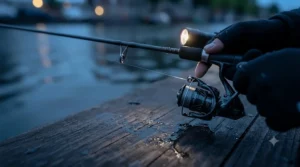
Getting the retrieve right matters more after dark than lure choice alone. Start with the basics: a light jig head in the 5-10g range for soft shads keeps the lure close to the bottom, where the vast majority of night-time zander activity happens, without needing constant recasting to stay in the zone. For suspending jerkbaits like the Rapala X-Rap or Husky Jerk range, a slow figure-of-eight retrieve with regular pauses of three to five seconds consistently outproduces a steady, faster wind, since it mimics the erratic, injured-baitfish movement zander are wired to key in on.
A common first-30-nights mistake is fishing too fast simply because it’s harder to judge speed in darkness without visual feedback from the lure. Counting your retrieve rhythm out loud, or fishing to a metronome app initially, helps calibrate a genuinely slow pace until it becomes instinctive. Similarly, casting slightly upstream or across structure and letting the lure settle before the first movement gives a far higher hit rate than an immediate retrieve straight off the splash.
Maintenance-wise, check hook points after every snag contact — night fishing makes it much harder to notice a blunted or bent hook has cost you a take, and a five-second check between casts costs nothing.
Real-World Scenarios: Matching Lures to Your Zander Water
If you’re fishing a clear, pressured reservoir where the zander have seen every bright shad in the tackle shop, the Savage Gear 3D Roach Shad worked slowly on a light jig head is the sensible starting point, backed up by the Fox Rage Slick Shad if the fish are being especially cagey.
If you’re targeting a coloured, urban canal after dark with genuinely poor visibility even by night-fishing standards, lean on the Rapala X-Rap 10 for its rattle and the Fox Rage Zander Pro Shad UV for its light-reflecting properties — the combination covers both sound-based and light-based location cues.
If you’re a winter angler fishing deep reservoir margins once the water has properly cooled, the Rapala Down Deep Husky Jerk 14cm earns its keep specifically because standard-depth lures simply aren’t reaching where the fish are holding.
And if you’re fishing a genuinely pitch-black, moonless stretch under tree cover where even UV finishes have nothing to reflect, the Berkley URBN T-Tail Glow is worth having in reserve specifically for those conditions.
Problem → Solution: Common Night Zander Lure Fishing Mistakes
Retrieving too fast because you can’t see the lure’s action: slow down deliberately and count your retrieve rhythm until a painfully slow pace feels normal — this is consistently the single biggest fix reported by experienced night anglers.
Missing subtle night bites entirely: switch to braided line for better bite transmission through your rod tip, since zander takes at night are frequently a gentle tap-tap rather than a violent take, and mono simply absorbs too much of that signal.
Losing fish on the strike: zander have genuinely bony mouths, and a delayed, controlled sweep rather than an immediate hard strike converts noticeably more takes into landed fish, particularly on jerkbaits.
Fishing the same depth all night regardless of results: if a shallow-running shad isn’t producing after the first hour, dropping to a deeper-diving option like the Rapala Down Deep Husky Jerk 14cm often reveals fish have simply moved deeper as the night progresses.
Struggling to find fish on unfamiliar venues: fish structure first — bridge pillars, moored boats, and depth changes consistently hold more zander after dark than open, featureless water.
How to Choose Zander Lures for Night Fishing
- Match lure type to water clarity first. Coloured water favours vibration and UV; clear water rewards realistic, natural profiles.
- Prioritise suspending action over floating or sinking. A lure that holds depth on the pause gives cautious night-feeding zander longer to commit.
- Size to your target, not habit. Smaller shads in the 6-10cm range suit schoolie-heavy canals; 12cm-plus shads filter toward bigger, more selective fish.
- Consider seasonal depth. Summer zander often sit shallow near structure; winter fish typically demand deeper-diving lures.
- Carry both sound-based and light-based options. Rattling jerkbaits and UV or glow shads solve different visibility problems and shouldn’t be treated as interchangeable.
- Check hook quality before you buy. Night bites are already hard to detect; weak trebles compound the problem with lost fish.
- Budget for losses. Snags happen more often in darkness, so a mixed box of premium and budget lures is more sustainable than an all-premium approach.
Best Zander Lure Colours for Clear Water
In genuinely clear water, subtlety consistently outperforms flash. Natural roach, perch and bleak imitations — the kind of finish found on the Savage Gear 3D Roach Shad — tend to draw more confident takes than high-contrast fire tiger or bright chartreuse patterns, simply because a wary zander gets a longer, clearer look at the lure before committing and an obviously artificial colour is more likely to be refused.
That said, clear water doesn’t always mean zero light enhancement helps. During the low-light transition windows at dusk and dawn, even clear-water specialists often switch to a UV-enhanced natural pattern rather than a fully natural one, since the UV boost adds a subtle edge without pushing into the unnatural brightness that spooks fish in full daylight visibility. The general rule most experienced clear-water zander anglers follow is: natural colours after dark in clear water, with UV reserved specifically for the transitional light periods rather than full darkness.
Best Zander Lures for Winter Fishing
Winter zander behave differently enough that a summer lure box often underperforms once water temperatures drop. Fish hold deeper, feed less frequently, and respond far better to a genuinely slow presentation than to anything resembling an aggressive retrieve. This is exactly where deep-diving suspending jerkbaits like the Rapala Down Deep Husky Jerk 14cm earn their place, since their extended diving lip reaches winter holding depths that summer-focused shallow shads simply can’t access.
Slowing the retrieve down further than feels natural is the second half of the winter equation — long pauses of five seconds or more, allowing a suspending lure to hang motionless, consistently outproduce anything resembling a steady wind-in. Soft shads still have a role in winter, but fished on a heavier jig head to get them down quickly and worked with an exaggerated lift-and-drop rather than a straight retrieve.
UV and Glow Lures: Do They Actually Work?
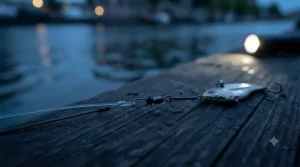
UV and glow lures solve two genuinely different problems, and conflating them is a common mistake. UV-reactive finishes, like those on the Fox Rage Zander Pro Shad UV, reflect ambient ultraviolet light that’s present even after visible sunset light has faded, effectively making the lure stand out more in low but non-zero light conditions. They rely on some ambient light being present to work at all.
True glow lures, like the Berkley URBN T-Tail Glow, work differently: a phosphorescent coating absorbs light energy when exposed to a direct source (torch, phone light, or daylight) and then re-emits it as a visible glow that fades gradually over subsequent casts. This means they function even in near-total darkness where UV finishes have nothing to reflect. On paper this means UV lures suit dusk, dawn and moonlit conditions best, while true glow lures are the better tool for genuinely pitch-black, overcast or heavily shaded night sessions. Neither is universally “better” — matching the tool to the specific darkness level of your session is what actually improves catch rates.
Low-Light Predator Behaviour: How Zander Hunt After Dark
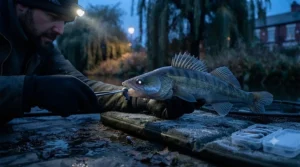
Zander (Sander lucioperca) possess a tapetum lucidum, a reflective layer behind the retina that significantly enhances vision in low-light conditions, the same adaptation that makes cats’ eyes shine under torchlight. This is the biological reason zander feeding activity so often intensifies as light fades — their visual advantage over many prey species genuinely peaks in twilight and darkness rather than in bright daylight.
What that means practically for lure choice: zander don’t need bright, high-contrast presentations to locate prey after dark the way a purely sight-dependent angler might assume. Their lateral line system, which detects water displacement and vibration, works in tandem with their enhanced night vision, which is precisely why rattling, vibration-heavy lures perform so consistently well after sunset — they’re triggering two separate sensory systems rather than relying on visual detection alone. Reviewers and experienced anglers consistently describe the most productive night windows as the first two hours after dark and the hour either side of dawn, periods when zander transition between resting and active hunting behaviour.
Night Fishing Safety
Night fishing carries real risks that daylight sessions simply don’t, and it’s worth treating safety planning as seriously as lure selection. Water Safety Scotland’s angling safety code recommends checking forecast conditions before heading out, telling someone your location and expected return time, and carrying a fully charged phone with signal checked in advance — advice that applies equally well south of the border.
Beyond the basics, a head torch with a red-light setting is worth carrying specifically for tackle changes and unhooking, since a full white beam swept across the water can spook fish that were about to feed. Wading, where practised at all, becomes considerably riskier once visibility drops, and a wading staff or simply avoiding wading entirely after dark removes a genuine and easily overlooked hazard. Fire and rescue guidance for anglers specifically recommends wearing a flotation aid when near deep or fast-flowing water, setting up on stable, level ground, and knowing your exact location well enough to direct emergency services if needed. None of this is overly cautious for the sake of it — riverbanks and towpaths that are perfectly manageable by day become genuinely disorientating once the light goes.
Common Mistakes When Buying Zander Lures
The most frequent mistake is building a lure box entirely around bright, high-contrast colours because they look most obviously “fishy” in a tackle shop under fluorescent lighting, when natural and UV finishes frequently outperform them once actually fished after dark. A close second is under-investing in suspending jerkbaits specifically, despite their suspending action being one of the single biggest advantages for cautious night takes, simply because soft shads are cheaper and more visually appealing on the shelf.
Buyers also commonly overlook hook and split-ring quality when comparing lures on price alone — a cheap lure with weak hardware loses more fish than it’s worth saving a couple of pounds on. And a frequently repeated error is assuming one lure style suits every venue and season, rather than building a small, deliberately varied box covering vibration, UV, glow and natural presentations for different conditions.
Long-Term Cost & Lure Maintenance
Lure fishing for zander is genuinely inexpensive compared to bait fishing once you account for a rod licence and the occasional replacement lure, though losses to snags are the main ongoing cost to budget for realistically. A mixed box combining a handful of premium suspending jerkbaits with a larger stock of budget soft shads like the Fox Rage Slick Shad keeps overall spend manageable while still covering the situations where a premium bait’s specific action genuinely matters.
Maintenance extends lure life meaningfully: rinsing soft plastics after each session prevents them reacting with tackle box plastics (a genuine issue where certain soft baits can melt or degrade nearby lures over time), and drying hard baits like the Rapala range before storage prevents hook rust. Replacing trebles on a well-performing hard lure is almost always better value than replacing the whole lure once the original hooks dull.
Regulations & Responsible Zander Fishing
Zander are not native to Great Britain and are subject to specific management rules in parts of their UK range. Non-native fish introductions and movements are regulated under UK legislation including the Import of Live Fish Act and related regulations, and in certain catchments specific byelaws require zander caught by rod and line to be dispatched rather than returned live, precisely because of their impact on native fish populations. These rules vary by region and water, so checking current Environment Agency byelaws for your specific venue before you go is essential rather than optional.
Beyond legality, a valid rod licence remains a basic requirement for anyone aged 13 or over fishing English rivers, canals or stillwaters, and enforcement checks do happen on popular zander venues. Responsible zander angling also means handling fish carefully given their genuinely sharp dentition — a pair of long-nosed forceps and a wire trace protect both angler and fish during unhooking, particularly in the dark when careful handling is already harder to manage.
FAQ
❓ What is the best time of night to catch zander?
❓ Do zander really respond better to lures than bait at night?
❓ What colour lures work best for zander in clear water?
❓ Is night fishing for zander legal everywhere in the UK?
❓ Do UV lures actually make a difference for zander?
Conclusion
Night fishing for zander rewards anglers who match their lure choice to the specific darkness, water clarity and season in front of them, rather than reaching for whatever produced last time regardless of conditions. The seven lures covered here aren’t interchangeable — they solve different problems, from the rattle-driven location cues of the Rapala X-Rap 10 to the genuine self-emitting glow of the Berkley URBN T-Tail Glow on the darkest nights of the year.
If you’re building a first night-fishing lure box from scratch, start with the Rapala X-Rap 10 and Fox Rage Zander Pro Shad UV as versatile core options, then add the Rapala Down Deep Husky Jerk 14cm once winter arrives and fish drop deeper. Whatever’s in the box, remember that a slow, deliberate retrieve consistently out-fishes a fast one once the light has gone.
Recommended for You
- Best Zander Lures UK 2026: 7 Proven Picks Anglers Trust
- Top Zander Lures Under £20: 7 Proven UK Picks for 2026
- Best Zander Rod 2026: 7 Rods That Actually Handle That Bite
Disclaimer: This article contains affiliate links. As an Amazon Associate, I earn from qualifying purchases. If you purchase products through these links, we may earn a small commission at no additional cost to you.
✨ Found this helpful? Share it with your friends! 💬🤗
