
In This Article
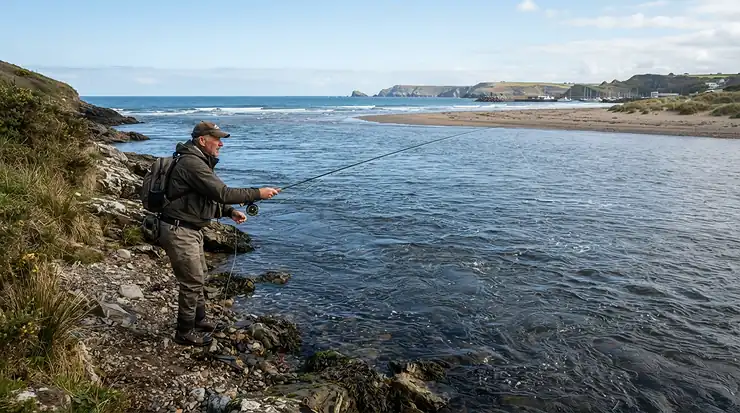
Stand on any British beach as the tide starts to run and the debate over grip leads vs plain leads for beach fishing plays out in silence. One angler’s rod tip bows, settles and stays put because the lead has dug in. Two rods along, someone is winding in a rig that has slid fifty yards down the shingle, bait stripped, patience gone. Same sea. Different lead.
It sounds like a beginner’s squabble. It isn’t. The choice decides whether your bait sits where the fish are, how far you can cast, how many leads you donate to the sea bed each season, and how often you reel in for no reason. Grip leads carry wire legs that anchor against the tide. Plain leads are bare metal that roll, trundle and cover ground.
Neither is simply “better”. The winner depends on tide strength, sea bed type and your casting weight. Most buying guides give those three variables one lazy sentence. Here, each gets its own section. You’ll also get seven real leads you can find on amazon.co.uk, with an explanation of who each one suits.
I haven’t field-tested any of them, and I won’t pretend otherwise. Instead you’ll get an honest read of the specs, the review signals that genuinely exist, and what experienced UK anglers say on forums and in the angling press.
The short version: grip when the sea pushes, plain when it doesn’t. Now for the detail.
Quick Comparison: Grip Leads vs Plain Leads for Beach Fishing
| Factor | Grip leads | Plain leads | Best for |
|---|---|---|---|
| Holding in a running tide | Wires dig in and hold the bait in place | Tend to roll or drift with the flow | Breakaway Impact Leads for holding; FFT PRO Beach Bomb for a moving bait |
| Casting distance | A touch more drag, though streamlined designs close the gap | Cleanest flight | FFT PRO Beach Bomb in slack water |
| Rough ground | Wires help stop the lead wedging, then fold on retrieve | Rolls into gaps; needs a rotten bottom | FFT PRO Break Out Grip Weights |
| Bite detection | Taut line and a still rod tip | Slack line as the lead rolls | Sea Fishing Dumpy Gripper Weights |
| Cost per lead | Higher | Lower | fishwithfinn 4oz Plain Sea Fishing Weights for bulk |
Read the table top to bottom and a pattern appears. Grip leads win every category where the sea pushes back, while plain leads win the categories that involve your wallet and your speed. The Breakaway Impact Leads are a neat compromise: the built-in clip tucks the bait in for the cast and the wires hold on arrival. The FFT PRO Beach Bomb is what you reach for when the water barely moves and you want a bait that wanders.
If you buy only one style for general UK beach work, buy grip. Then keep a few plain leads for slack water and neap-tide days.
💬 Just one click — help others make better buying decisions too!😊
What Are Grip Leads vs Plain Leads for Beach Fishing?
Grip leads are beach-casting weights fitted with wire legs that dig into the sea bed to hold your bait against the tide, then fold back so you can retrieve them. Plain leads have no wires; their bomb, torpedo or pyramid shape lets them roll, hold lightly or trundle. Choose grip for running tide, plain for slack water.
A sinker, at heart, is a weight that sinks your bait, anchors it and helps you cast. Wikipedia’s overview of fishing sinkers notes that some designs exist specifically for surf fishing on sandy bottoms with strong currents, mainly to stop the weight being swept away. That is the grip lead’s whole reason for being.
“Plain” doesn’t always mean “no hold at all”, though. Angling-press guides describe pyramid, watch and star shapes as giving partial grip in sand and mud without any wires. Bomb, pear and torpedo shapes are the opposite: built for flight, and happy to let a bait trundle down the tide.
Grip designs split further:
- Breakout leads: the wires fold forward under steady line pressure, so the lead comes home like a plain one.
- Fixed-wire leads: these suit deep, fast water such as piers and narrow estuaries.
- Long, open wires: these give extra grip and spring out more easily.
Top 7 Grip Leads and Plain Leads for Beach Fishing: Expert Analysis
Seven real listings follow: four grip, three plain, spread across budget, mid-range and premium. Review comments are aggregated signals, not quotes from my own sessions. Where a listing has no verifiable review pool, I say so. Prices are ranges at the time of research and may vary.
1. Breakaway Impact Leads — built-in bait clip for distance
The clever bit is the integrated clip. The Breakaway Impact Leads park your baited hook tight against the lead for the cast, then release it when an “impact cone” hits the water.
The range comes in 125g, 150g, 170g and 200g, roughly 4oz to 7oz, and the wire formation is designed to keep the lead where it lands. With the bait locked behind the lead there is less to flutter in flight. In principle that matters when you’re squeezing extra yards from a 4–5oz weight.
Based on the design, this suits anglers who already fish clip-down rigs or are ready to switch. If you like long, trailing snoods with big baits, a clip-down lead will feel restrictive. The maker’s pitch aims squarely at match anglers, which makes sense because distance is the currency of a beach match.
On review sentiment, one UK retailer shows a 94% rating from verified buyers for the range. The amazon.co.uk listing for the blue 125g six-pack showed a 4.5-star average from fewer than 20 ratings. That is encouraging but a small sample.
Pros:
- ✅ Clip and impact cone streamline the rig for casting
- ✅ Four weights from roughly 4oz to 7oz
- ✅ Wires hold position once the lead lands
Cons:
- ❌ Best suited to clip-down rigs only
- ❌ Costs more per lead than basic breakouts
Around £10–£15 for a six-pack of the 125g size, so check current price. Verdict: you pay slightly more per lead for clip convenience, which is fair value for distance fans.
2. FFT PRO Break Out Grip Weights — ten-pack breakouts for snag-prone marks
Lead is a consumable. Anyone who has lost three in one tide on a rocky mark knows it, and that is why the ten-pack format of the FFT PRO Break Out Grip Weights matters more than the logo.
The listing offers 3oz to 7oz options. In practice, 3–4oz suits lighter rods and summer scratching, while 5–7oz covers winter beaches and bigger seas. The breakout pattern folds the wires forward under steady line pressure, so retrieval feels like winding in a plain lead.
My analytical take: this is for the angler who values cost per lead over bait-clip gadgets, and for anyone fishing ground that eats tackle. The listing doesn’t state wire gauge, tension or finish, so the only real test is bending a pair before the session.
I couldn’t verify a meaningful review pool for this listing, so I won’t claim a star rating. The breakout pattern itself is widely trusted. One UK forum poster says breakout leads cover 99% of their fishing, switching to a plain bomb only for proper kelp and rough ground fished with rotten bottoms.
Pros:
- ✅ Ten leads per pack suits snag-prone venues
- ✅ 3–7oz range matches light to heavy rods
- ✅ Wires fold back for easier retrieval
Cons:
- ❌ No integrated bait clip
- ❌ Wire quality and tension can’t be judged from the listing
Roughly £20–£35 for a ten-pack depending on weight; check current price. Verdict: potentially the best cost per lead among the grip options, if the wires hold their shape.
3. Sea Fishing Dumpy Gripper Weights — compact heavy grip up to 9oz
The headline here is the top end of the range. The Sea Fishing Dumpy Gripper Weights with Short Tail come as a five-pack from 4oz to 9oz, and most beach leads stop around 7oz or 8oz.
The “dumpy” shape packs weight into a compact body. Sea Angler magazine warns that the classic beginner mistake in strong tide is clipping on two small grip leads. Its suggested fix is a more compact, heavy wired lead, which is exactly what this design is.
The short tail keeps the bait tucked close to the lead. Retailer descriptions of similar flat-backed leads explain that this reduces drag in flight and protects the hook bait on impact. The same logic should apply here, though it is reasoning rather than a tested claim.
Weigh it honestly, though. Nine ounces is beyond the casting weight rating of many beach rods, so check yours first. The chunkier profile probably costs you a little distance against a sleek torpedo.
I found no verifiable review pool for this listing.
Pros:
- ✅ Heavy 8–9oz options for spring-tide holding power
- ✅ Compact body concentrates weight where it grips
- ✅ Short tail keeps the bait close for casting
Cons:
- ❌ Heavier sizes demand a rod rated for them
- ❌ Chunky shape likely gives up a few yards
Around £15–£25 range for five. Verdict: a specialist’s tool, excellent for hard-running tides and poor value if you never fish them.
4. Luminous Glow Breakaway Sea Fishing Sinkers — glow coating for night sessions
The Luminous Glow Breakaway Sea Fishing Sinkers with Beads are the night-shift option. Ten leads from 3oz to 8oz, all with a glow-in-the-dark coating, in the breakaway style with retaining beads on the wires.
Angling-press coverage describes luminous leads as powder-coated and a smart idea for beach anglers after dark. The practical benefit is mundane but real: you can find, check and handle the lead by torchlight without fumbling in the black. Some retailers go further and claim the glow attracts fish. I couldn’t find solid evidence for that, so treat it as a bonus, not a reason to buy.
Who is it for? Anglers who fish winter cod sessions, night-time bass or any after-dark mark where tackle handling is half the battle. For daytime summer flatfish, you’re paying for something you can’t see.
No verifiable review pool turned up for this listing.
Pros:
- ✅ Widest weight range here, 3–8oz, in a pack of ten
- ✅ Glow helps with night handling
- ✅ Breakaway-style wires fold on retrieve
Cons:
- ❌ Dearer than plain-finish equivalents
- ❌ Fish-attracting claims remain unproven
Roughly £15–£25 range for ten. Verdict: sensible for regular night anglers and surplus to requirements for fair-weather daytime sessions.
5. FFT PRO Beach Bomb — classic roll-and-trundle plain bomb
The FFT PRO Beach Bomb is plain lead at its simplest: a streamlined bomb, 1oz to 6oz, in tens. Angling-press guides rate bomb, pear and torpedo shapes among the most efficient for casting because they let a bait trundle down the tide.
That trundle is the point. UK forum anglers note that a plain lead cast at an angle on a clean beach lets the bait roll and cover fresh ground. That suits flatfish in the surf. In slack water or at low tide, many say a small plain weight is all you need.
The trade-off is snagging and holding. A round bomb rolls into gaps on rough ground, and one forum voice warns that it is more likely to roll into snags than flat-sided designs. In a proper tide it simply won’t stay put.
Check the listing for the material, especially at 1oz. England restricts the supply of lead weights between 0.06g and 28.35g (see the safety section below).
No verifiable review pool turned up for this listing.
Pros:
- ✅ Cleanest flight of any lead here
- ✅ Cheap enough to lose without wincing
- ✅ 1–6oz spans scratching to proper beach work
Cons:
- ❌ Rolls out of position in running tide
- ❌ Wedges easily on rough, gappy ground
Roughly £10–£20 for ten, depending on weight; check current price. Verdict: superb value for calm-water roving, and a false economy on a strong tide.

6. fishwithfinn 4oz Plain Sea Fishing Weights — a season’s supply of one proven weight
A fifteen-pack of a single weight sounds dull, and that is its charm. The fishwithfinn 4oz Plain Sea Fishing Weights give you a whole season’s stock of one of the most popular sizes in British shore fishing.
Four ounces is about 113g. UK forum anglers describe it as a standard working weight, with one using pyramid leads up to 4oz on light rods and another sticking to 4oz and 5oz and never going heavier. That tracks with typical beach-rod ratings, so 4oz is a safe bet if you aren’t sure what your rod can throw.
Think about what you’d use it for: close-range scratching, estuary flounders, calm-water bass sessions, and anywhere you want a bait to move. The listing title says “plain” but doesn’t state the shape, so check the product page for bomb, pyramid or torpedo before buying.
No verifiable review pool turned up.
Pros:
- ✅ Fifteen leads lowers cost per cast
- ✅ 4oz suits a wide range of rods
- ✅ Plain design means no wires to bend or snag
Cons:
- ❌ One weight only, so no flexibility
- ❌ Shape isn’t stated in the listing title
Likely £15–£30 range depending on seller; check current price. Verdict: strong value for regular close-range anglers who know they want 4oz.
7. 3oz, 4oz and 5oz Plain Sea Fishing Weights — small pack for finding your casting weight
The 3oz, 4oz and 5oz Plain Sea Fishing Weights offer low-commitment testing. Instead of buying forty leads of the wrong weight, you can trial three sizes in a pack of five and find your sweet spot.
That experimentation matters because the right casting weight depends on your rod, line and the day’s conditions (more on that below). Plain leads are also the cheapest raw material for a classic UK tweak. Sea-angling forum members suggest hammering teardrop or cannonball leads flat to create a hold-the-bottom lead for calm beaches at about half the cost of a shop-bought flattie lead.
It’s a modest product with a clear job. It suits beginners, anyone buying a first set of leads, and anyone building a small kit for scratching.
Again, I couldn’t verify a meaningful review pool.
Pros:
- ✅ Three weights let you trial your casting weight
- ✅ Five-pack keeps outlay low
- ✅ Easy to modify, for example by flattening
Cons:
- ❌ Small pack means topping up often
- ❌ Shape and material need checking on the listing
Under the £20 range at the time of research for small packs; check current price. Verdict: a smart first purchase, and a fair stopgap before committing to bulk packs.
| Product | Type | Weights listed | Price range | Review signal | Best for |
|---|---|---|---|---|---|
| Breakaway Impact Leads | Grip, clip-down | 125–200g (≈4–7oz) | £10–£15 (6-pack) | 94% retailer rating; 4.5★ on Amazon from under 20 ratings | Distance and match-style casting |
| FFT PRO Break Out Grip Weights | Grip, breakout | 3–7oz | £20–£35 (10-pack) | No verifiable pool | Rough ground and bulk buyers |
| Sea Fishing Dumpy Gripper Weights | Grip, short tail | 4–9oz | £15–£25 (5-pack) | No verifiable pool | Spring tides and big seas |
| Luminous Glow Breakaway Sea Fishing Sinkers | Grip, glow | 3–8oz | £15–£25 (10-pack) | No verifiable pool | Night sessions |
| FFT PRO Beach Bomb | Plain bomb | 1–6oz | £10–£20 (10-pack) | No verifiable pool | Slack water and roving baits |
| fishwithfinn 4oz Plain Sea Fishing Weights | Plain | 4oz | £15–£30 (15-pack) | No verifiable pool | Close-range bulk stock |
| 3oz, 4oz and 5oz Plain Sea Fishing Weights | Plain | 3–5oz | Under £20 (5-pack) | No verifiable pool | Beginners and testing |
What stands out is how thin the verifiable review data is. Only the Breakaway Impact Leads have a clear signal, so for the rest you’re buying a proven design pattern rather than a proven listing. If you want maximum confidence, the clip-down option is the safest bet. If you want maximum quantity per pound, the FFT PRO Break Out Grip Weights and fishwithfinn 4oz Plain Sea Fishing Weights lead on volume, with the usual caveat to check the product pages.
How to Choose Grip Leads vs Plain Leads for Beach Fishing
Choosing between grip leads vs plain leads for beach fishing comes down to six checks. Sea Angler magazine’s guide to leads and sinkers makes the same underlying point: tide and wind pressure on the line is what shifts your lead, and the further you cast, the more pressure builds.
- Check the tide first. Running water means grip; slack or neap means plain can work, because there’s little force to shift the bait.
- Read the sea bed type. Sand and mud reward grip or pyramid shapes, while rough ground suits wires that fold rather than a rolling bomb.
- Know your rod’s rating. A lead heavier than your rod’s casting weight puts the blank at risk.
- Pick a weight that holds, not the heaviest you can throw. Grip design matters more than a few extra ounces.
- Decide whether the bait should move. Roving flatfish tactics want plain; static bait for cod or bass wants grip.
- Budget for losses. On rough ground, buy bulk packs and accept attrition.

Tide Strength: When Grip Wins and When Plain Wins
Tide strength is the single biggest factor in the grip-or-plain decision, and it changes through the month. The National Oceanography Centre’s tide explainer describes how spring tides come around full and new moon, when solar and lunar forces combine for bigger ranges. At the quarter phases the two partly cancel, giving smaller neap tides.
For you, that means bigger water movement on springs. UK forum anglers report that holding bottom on springs can be a struggle even with 5oz grip leads. Their fixes are fixed-wire leads, or slipping rig tubing over the wires to thicken them and boost hold.
On neaps and at low tide the picture flips. One forum poster says that where tidal flow is weak, a plain sinker is the better pick. Another adds that a smaller plain weight covers more ground, because you can let the rig swing around in an arc.
So treat tide strength as a dial, not a switch. Springs and distance mean grip, and a heavy compact option like the Sea Fishing Dumpy Gripper Weights earns its place. Neaps and close range invite a plain FFT PRO Beach Bomb, and the clip on the Breakaway Impact Leads keeps things tidy in between.
Sea Bed Type: Sand, Mud, Shingle and Rough Ground
Sea bed type decides how much a lead can bite and how likely it is to get stuck. On sand and mud, wires and pyramid-style shapes dig in. On rough ground the logic reverses: you want a lead that doesn’t wedge.
Forum anglers describe grip wires on rough ground as helpful because the lead doesn’t drop into a crack and jam, and soft wires bend on retrieve rather than snagging. Another recommends rotten-bottom devices in your trace on very rough ground. Round plain bombs, by contrast, tend to roll into snags.
On shingle, I’d reason that heavier grip is worth the trouble because the stones shift, but that is analysis, not tested fact.
| Conditions | Lead choice | Why | Best for |
|---|---|---|---|
| Slack tide, clean sand | Plain bomb | Bait can roll and cover ground | FFT PRO Beach Bomb |
| Strong tide, sand | Heavy grip | Wires dig in against the flow | Sea Fishing Dumpy Gripper Weights |
| Strong tide, rough ground | Breakout grip + rotten bottom | Wires fold; spares cover losses | FFT PRO Break Out Grip Weights |
| Neap tide, mud | Light plain or pyramid | Little force; light hold is enough | 3oz, 4oz and 5oz Plain Sea Fishing Weights |
| Night session, any ground | Grip with glow | Easier to handle in the dark | Luminous Glow Breakaway Sea Fishing Sinkers |
The cheat sheet shows how rarely the answer is “plain everywhere” or “grip everywhere”. Rough ground is the one place where tackle costs bite, and that is where bulk breakouts earn their keep. For clean ground and calm water, spending more per lead rarely buys more fish.
Casting Weight: Matching Lead Size to Your Rod and the Tide
Casting weight is where good intentions go to die. Sea Angler advises checking your rod’s casting rating for the weight it handles best, and that is the first rule.
Experienced UK anglers cluster around a few figures. Some use pyramid leads up to 4oz on light rods and breakaway grips up to 6oz on heavier ones. Others stick to 4oz and 5oz and never go higher, and some beaches see 6–7oz grips as standard. A common rule of thumb on forums is roughly 10lb of shock leader for every 1oz of lead.
Resist the urge to fix a holding problem with more lead. Often a better grip design is the answer, which is why a compact Sea Fishing Dumpy Gripper Weights beats stacking two small leads. If your rod tops out at 4–5oz, choose leads like the Breakaway Impact Leads in 125g or 150g and let the wires do the work.
Lastly, remember that a heavier casting weight stresses the whole outfit: line, leader, reel and rod. A 7oz lead on a blank rated for 5oz is a recipe for a broken rod.
Top Rated Sea Fishing Terminal Tackle Review: What to Pair With Your Leads
If you’ve been hunting for a top rated sea fishing terminal tackle review, here is the honest version: your lead is one link in a chain, and the weakest link decides the outcome. The sentiment below comes from UK angling forums, not my own testing.
- Bait clips and releases: one forum poster likes the all-in-one clip on the Gemini Splashdown but says the clip can slide off its crimp if you don’t check it. Another says escape links from one maker were hard to shake free, while a third uses similar ones on rough marks and says sand can wedge the plastic button.
- Swivels: a forum angler rates one continental-style lead but warns that its swivels can fail. That is a reminder to inspect swivels after every session.
- Rotten bottoms: UK anglers recommend building one into your trace on rough ground so you lose a short length of line, not a whole rig.
For this guide’s seven picks, the sensible pairings are simple. Use the Breakaway Impact Leads with a clip-down rig. Use the FFT PRO Break Out Grip Weights with a standard flapper or pulley rig and a rotten bottom. Use the plain options, such as FFT PRO Beach Bomb, on light, simple rigs where the bait should roam.
Features That Actually Matter (And Those That Don’t)
Matters:
- Wire strength and tension. Wires that bend too easily won’t hold, and ones that never bend won’t release.
- Weight and shape. Compact, aerodynamic bodies cast better and, in a heavy tide, hold better.
- A bait clip, if you cast far. It tucks the bait in and cuts drag.
- Pack size on rough ground. More leads per pound means fewer tears.
Doesn’t matter much:
- Colour. Coloured leads mostly help match anglers identify weights. One angling writer admits to being unconvinced the colour attracts fish.
- Glow, for daytime anglers. Useful in the dark, irrelevant in daylight.
- Brand mystique. Forum anglers disagree even about popular patterns, with one saying a pattern rolls around on sand and another using the same style all the time. Test before committing.
✨ Don’t Miss These Exclusive Deals!
🔍 Take your beach fishing to the next level with these carefully selected leads. Click on any highlighted product name to check current pricing and availability. The right lead for your tide, sea bed type and casting weight will help you put more bait where fish actually feed!

Safety, Regulations and Compliance: Lead Weight Law in England
Lead has rules. Government guidance on lead weights says you can only use lead weights of 0.06g or less, or more than 28.35g, which means lead above 1oz. Lead is toxic to birds. The wider Environmental Protection (Anglers’ Lead Weights) (England) Regulations 2015 prohibit the supply of lead weights in the banned range, covering 0.06g up to 28.35g.
For beach anglers the practical upshot is simple. Casting leads of 3oz and above sit well over the threshold. Anything around 1oz or under needs checking, so confirm the material on any small-weight listing, such as the 1oz end of the FFT PRO Beach Bomb range. Rules differ across the UK, so check local guidance.
A few other sensible habits:
- Check tide times before you set up, and keep an eye on the water behind you.
- Look before you cast and check for people behind you; heavy leads are dangerous at speed.
- Keep spare leads out of children’s reach and wash your hands after handling lead.
- Recover lost tackle where it’s safe, and never leave line on the beach.
Practical Usage Guide: Setting Up and Maintaining Your Leads
Here’s how to get more out of any lead, whether grip or plain.
- Bend and test the wires. Before fishing, bend each wire a little and check it springs back. Sea Angler suggests U-shaped wires for extra grip and easier freeing.
- Thicken wires if needed. If the lead won’t hold on springs, slip rig tubing over the grips to increase their diameter, as forum anglers suggest.
- Match leader to lead. A rough guide from forum anglers is about 10lb of shock leader per ounce.
- Test the hold in the shallows. Place the rig and feel for a firm tug before you cast out.
- Rinse after every session. Salt and sand wear wires and seize beads.
- Replace tired wires. A bent or fatigued wire is worse than none.
Common mistakes in your first 30 days:
- Clipping on two small grip leads in strong tide.
- Using plain leads where the tide is running.
- Overloading a rod beyond its rating.
- Not carrying spares on rough ground.
Real-World Scenarios: Three Beaches, Three Leads
These are hypothetical profiles, but they reflect typical UK shore-fishing situations.
The weekend student on a sandy beach. Budget under £30, fishing for flatfish once a week on clean, gently shelving sand. A plain approach works: a 3oz, 4oz and 5oz Plain Sea Fishing Weights pack to find the right size, plus a few spare FFT PRO Beach Bomb leads. The tide is usually mild, so letting the bait roam is a plus.
The winter cod angler on an exposed beach. Fishing night sessions, strong springs, long casts. This angler needs hold and visibility: Sea Fishing Dumpy Gripper Weights for the biggest tides, and Luminous Glow Breakaway Sea Fishing Sinkers for handling in the dark. The casting weight needs to match a robust rod.
The match-minded distance caster. Concerned with every yard, comfortable with clip-down rigs. Breakaway Impact Leads in 125g or 150g keep the rig streamlined, and the wires hold at range. For practice casting, a bulk bag of fishwithfinn 4oz Plain Sea Fishing Weights saves the good leads for the real thing.
Budget, environment and frequency of use shape the answer, and the answer isn’t always grip.
Problem → Solution Guide
The lead won’t hold in the tide. Move to a compact, heavier grip like the Sea Fishing Dumpy Gripper Weights, or thicken your wires with tubing. Don’t just stack small leads.
You keep snagging on rough ground. Switch to wire-based leads that fold, such as the FFT PRO Break Out Grip Weights, and use a rotten bottom. Buy bulk so losses don’t sting.
Bites are missed with a plain lead. One forum angler notes a plain lead that is too light may fail to set the hook. Go heavier or add grip.
The bait strips on the cast. Move to a clip-down arrangement such as the Breakaway Impact Leads, which tucks the bait in behind the lead for the flight.
The line keeps going slack. One angler found slack line made bite detection harder with watch leads on a flooding tide. A flattened plain lead or a light grip may help keep contact.
Frequently Asked Questions
❓ Do grip leads reduce casting distance?
❓ What weight of lead do I need for UK beach fishing?
❓ Can I use plain leads on rough ground?
❓ Are lead weights legal for sea fishing in England?
❓ How do I stop my lead dragging on spring tides?
Conclusion: Which Lead Wins?
So, grip leads vs plain leads for beach fishing: who wins? Neither, and both. Grip leads own running tide, big seas and rough ground. Plain leads own slack water, roving baits and tight budgets. The smart angler carries both and lets tide strength, sea bed type and casting weight decide.
If you want one lead to start with, the Breakaway Impact Leads offer the best-evidenced all-rounder here: clip, cone, grip and a verifiable review signal. Budget-minded rough-ground anglers should look hard at the FFT PRO Break Out Grip Weights, and spring-tide specialists at the Sea Fishing Dumpy Gripper Weights. For calm water, the FFT PRO Beach Bomb, fishwithfinn 4oz Plain Sea Fishing Weights and 3oz, 4oz and 5oz Plain Sea Fishing Weights cover the cheap end well. Night owls may like the Luminous Glow Breakaway Sea Fishing Sinkers.
Remember the honest limits too. Most of these listings have thin review data, so inspect your leads before fishing, and check product pages for shape and material.
✨ Ready to put the right lead on the sand?
🎣 Click any highlighted product name above to check current pricing and availability, then match the lead to your tide, your sea bed type and your casting weight. Tight lines!
Recommended for You
- Sea Fishing Reel For Rough Weather: 7 Tough Picks For UK (2026)
- Fixed Spool Reel For Long Distance Casting: 7 Proven Picks (2026)
- Multiplier Reel For Beginners: 7 Best Picks For UK Anglers (2026)
Disclaimer: This article contains affiliate links. As an Amazon Associate, I earn from qualifying purchases. If you purchase products through these links, we may earn a small commission at no additional cost to you.
✨ Found this helpful? Share it with your friends! 💬🤗
