
In This Article
There’s a particular kind of silence that falls over a boat or bankside swim right after a jerkbait dies on its pause — that half-second where the lure hangs suspended, wobbling gently, and you genuinely don’t know whether the next twitch will be met with open water or a headshake the size of your forearm. Finding the best jerkbaits for pike isn’t really about chasing a single miracle lure; it’s about understanding why certain shapes, actions and pauses trigger Esox lucius, Britain’s apex freshwater predator, into committing to a strike it didn’t plan to make. Pike are ambush hunters by nature, and a well-worked jerkbait exploits that instinct better than almost any other lure style on the market.
This guide takes a genuinely practical approach: we’ve researched seven real jerkbaits currently sold on Amazon UK, spanning budget multi-packs through to premium glide baits built for double-figure fish, and we’ve grounded every recommendation in real specifications and aggregated review sentiment rather than invented testing claims. Along the way we’ll cover the difference between hard jerkbaits, suspending jerkbaits and true glide baits, how to pick a colour that actually matches your water, and when it’s worth sizing up for a genuinely large jerkbait aimed at big pike. This article contains affiliate links, and we may earn a commission on qualifying purchases — see the disclaimer below for full details.
Quick Comparison Table
Here’s how our seven picks stack up at a glance. Prices shown are approximate ranges checked at the time of research — always confirm the current price on the product page, as tackle pricing shifts regularly.
| Jerkbait | Type | Best For | Price Range |
|---|---|---|---|
| Rapala X-Rap Jerkbait | Suspending hard jerkbait | All-round pike work-horse | £12-£18 range |
| Savage Gear Low Glider Jerk | Slow-sinking glide bait | Big pike, deep pressured water | £18-£25 range |
| Westin Swim Glidebait 12cm | Suspending glide-jerk hybrid | Versatile all-season use | £15-£20 range |
| Berkley Zilla Glider | Slow-sinking glide bait | Budget-friendly glide action | £10-£14 range |
| Savage Gear 3D Bat | Topwater wobbler | Surface twitch bait fishing | £12-£16 range |
| trifyd Jerkbait 9cm (3-pack) | Hard jerkbait multi-pack | Cheapest way into jerkbaiting | £15-£20 range for 3 |
| Abu Garcia Svartzonker McHybrid | Hard/soft hybrid swimbait | Large profile for trophy pike | £15-£20 range |
Scanning across the table, the split between true glide baits and classic hard jerkbaits is roughly even, which reflects how UK pike anglers actually fish — most serious boxes carry both. The Savage Gear Low Glider Jerk sits at the top of the price range here because it’s purpose-built for the biggest fish in pressured venues, while the trifyd Jerkbait 9cm 3-pack is the obvious entry point if you’re not yet sure jerkbaiting suits your style and don’t want to commit £20 to a single lure.
💬 Just one click — help others make better buying decisions too!😊
Top 7 Jerkbaits for Pike: Expert Analysis
We’ve selected seven genuine, currently-listed products spanning budget to premium, covering hard jerkbaits, suspending designs, glide baits and a topwater option. All commentary below is grounded in real specifications and aggregated review sentiment; we haven’t personally fished any of these lures ourselves.
1. Rapala X-Rap Jerkbait — the benchmark suspending jerkbait
The standout feature is the “Slashbait” action Rapala built this lure around: an aggressive, hard-cutting dart on the retrieve that rolls to a dead stop and suspends on the pause, rather than floating up or sinking away. Specs-wise, the X-Rap uses a textured, translucent body with internal holographic foil and 3D eyes, an internal long-cast weight-transfer system for punching into headwinds, and a built-in rattle that adds an acoustic trigger in coloured water. Based on the spec comparison with fixed-floating jerkbaits, the true suspend is what earns this lure its reputation — pike that follow but won’t commit often can’t resist a bait that simply hangs motionless in front of them rather than rising out of the strike zone. Reviewers consistently report that the action holds up well even at slow, twitch-and-pause speeds, and the long-cast system genuinely adds distance on windy UK banks. A recurring theme in aggregated feedback is that the trebles supplied, while sharp out of the packet, are on the lighter side for serious double-figure pike and many owners swap them for stronger hooks before serious use.
Pros:
- ✅ Genuine neutral suspend on the pause
- ✅ Long-cast weight-transfer system aids distance
- ✅ Internal rattle adds a sound trigger in coloured water
Cons:
- ❌ Stock trebles often upgraded by serious pike anglers
- ❌ Smaller sizes better suited to schoolie pike than true trophies
In the £12-£18 range, this is the jerkbait we’d point most newcomers towards first, since the suspending action alone teaches you why the pause matters more than the retrieve.
2. Savage Gear Low Glider Jerk — built for big pike in deep, pressured water
The standout feature is depth: available in 14.5cm/78g and 17cm/112g sizes, this glide bait is engineered to reach 1.5-3m, well beyond where most jerkbaits comfortably work, which matters enormously on venues where the biggest pike have retreated to deeper drop-offs after repeated angling pressure. The slow-sinking profile combines with a durable thru-wire construction running the length of the body, giving it the strength to handle serious headshakes from a big fish without pulling apart at the joints. What most buyers overlook about glide baits generally is that they’re worked completely differently from a standard jerkbait — long, sweeping rod strokes produce a wide side-to-side glide rather than a sharp dart, and this lure is specifically tuned for that slower, more deliberate presentation. Aggregated reviewer sentiment highlights strong belly flash and stable tracking even on a fairly lazy retrieve, and several owners specifically mention success along submerged structure and drop-offs in cooler months, exactly the scenario Savage Gear designed it for.
Pros:
- ✅ Reaches genuinely deep strike zones up to 3m
- ✅ Thru-wire construction built for big-pike abuse
- ✅ Wide glide profile triggers reaction strikes on slow retrieves
Cons:
- ❌ Premium price relative to standard jerkbaits
- ❌ Needs a dedicated slower retrieve technique to fish well
At £18-£25, this sits at the top of our list price-wise, but for pressured, deep venues chasing genuinely big fish, the depth range alone justifies the outlay.
3. Westin Swim Glidebait 12cm 53g — the versatile suspending all-rounder
The standout feature is genuine multi-technique flexibility: Westin specifically designed this lure to respond to a “throwing crank” retrieve, variable spin stops, short rod strokes, or a steady constant retrieve at different speeds, meaning one lure covers several presentations rather than locking you into a single retrieve style. At 12cm and 53g, it sits in a versatile middle ground — big enough to interest genuinely large pike, without being so oversized that it rules out an average day’s fishing. Based on the spec sheet, the suspending action means a slow, deliberate retrieve makes it resemble an injured baitfish, while a faster, more frantic retrieve mimics a panicked prey fish fleeing danger, and Savage Gear’s own guidance suggests combining both with pauses to provoke reaction strikes. Reviewer sentiment aggregated across colourways is positive on build quality and casting distance for the size, with several owners specifically praising how the bait “sits right” in the water without needing extensive tuning out of the box.
Pros:
- ✅ Works with multiple retrieve styles, not just one
- ✅ Well-balanced size for both average and larger pike
- ✅ Minimal tuning needed out of the packet
Cons:
- ❌ Limited colour range compared to some competitors
- ❌ Mid-range price point, not the cheapest option here
Priced around £15-£20, this is arguably the best single lure to own if you can only justify buying one jerkbait this season, given how many techniques it can cover.
4. Berkley Zilla Glider — the budget-friendly route into glide bait fishing
The standout feature here is value: this slow-sinking glide bait brings genuine glide-bait mechanics — an erratic, S-shaped side-to-side action — to a noticeably lower price point than most dedicated glide baits on this list. It’s fitted with Berkley’s Fusion19 treble hooks and includes an extremely loud internal rattle, aimed squarely at coloured water and low-light conditions where sound matters as much as sight. Here’s what the spec sheet won’t tell you: a loud rattle is genuinely useful for locating fish in stained water, but it can occasionally spook naturally wary pike in gin-clear conditions, so this lure tends to shine brightest on the coloured, weedy fisheries common across much of lowland England rather than crystal-clear reservoirs. Aggregated review sentiment is largely positive on the hook quality for a budget-positioned lure, with several reviewers noting the trebles held fish securely without needing an immediate swap, which isn’t always the case at this price point.
Pros:
- ✅ Genuine glide-bait action at a budget-friendly price
- ✅ Loud rattle aids location in coloured water
- ✅ Fusion19 trebles rated well for the price bracket
Cons:
- ❌ Loud rattle less ideal for gin-clear, pressured waters
- ❌ Fewer premium finishing touches than pricier glide baits
At £10-£14, this is the lure we’d recommend to anyone curious about glide-bait fishing who doesn’t want to spend £20 finding out whether the technique suits them.
5. Savage Gear 3D Bat — the dedicated topwater twitch bait
The standout feature is its surface-only design: unlike the suspending and sinking lures elsewhere on this list, the 3D Bat is a dedicated topwater wobbler built to be twitched and walked across the surface film, triggering the kind of explosive, visual strikes that keep dedicated topwater anglers coming back. At 12.5cm and 54g, it casts well for its size, and the bat-inspired silhouette creates a distinctive surface disturbance pattern that differs from the more conventional baitfish profiles used elsewhere in Savage Gear’s range. Based on the technique this lure demands, short, sharp twitches punctuated by pauses create a walk-the-dog wobble across the surface, which tends to work best during low light, at dawn and dusk, or on warm, still evenings when pike are actively looking up. Aggregated feedback highlights strong hook-up rates on the surface strikes it does generate, and at least one detailed review specifically mentioned a good river result during a low-light session, though we can’t independently verify individual angler catch claims.
Pros:
- ✅ Genuine topwater surface disturbance pattern
- ✅ Casts well for its size and weight
- ✅ Rewards a twitch-and-pause technique with visual strikes
Cons:
- ❌ Surface-only, so redundant once pike move deep
- ❌ Best restricted to low light or still conditions
At £12-£16, this is a specialist rather than an all-rounder, but for dawn and dusk sessions on calm water, few lure styles match the drama of a topwater take.
6. trifyd Jerkbait 9cm 21g (3-Pack) — the cheapest way into hard jerkbaits
The standout feature is simply accessibility: this is a genuine multi-pack of three 9cm, 21g hard jerkbaits at a price that makes experimenting with the technique low-risk, which matters given how easily jerkbaits can be lost to snags on unfamiliar water. Specs-wise, these are designed to work in the 0.2-2.5m depth band, fitted with internal rattle balls that increase the acoustic signal sent out to predators, and are marketed as effective across weed beds and river structure where precise depth control over deeper-diving lures matters less than covering water quickly. On paper, this makes them a solid search-bait option for exploring an unfamiliar swim before committing to a pricier lure once you’ve located active fish. Aggregated reviewer sentiment is mixed but leans positive for the price bracket — buyers generally accept that finish and hook quality won’t match premium Scandinavian brands, but several specifically note the lures produced fish despite the low cost, which is really all a budget multi-pack needs to deliver.
Pros:
- ✅ Three lures included, spreading the cost of experimentation
- ✅ Rattle balls add an acoustic trigger
- ✅ Compact size suits quick-searching unfamiliar swims
Cons:
- ❌ Hook and finish quality trail premium brands
- ❌ Less suited to genuinely large trophy pike
At roughly £15-£20 for three lures, this is the pack we’d suggest to anyone dipping a toe into jerkbaiting for the first time without wanting to risk a premium lure on a snaggy new venue.
7. Abu Garcia Svartzonker McHybrid — large-profile hybrid for trophy-hunting
The standout feature is the hybrid hard/soft construction, supplied with interchangeable paddle-tail and curl-tail options that let you fine-tune the action between a tighter wobble and a wider, more aggressive kick. This flexibility matters more than it might sound: on any given day, pike can show a strong preference for one action over the other, and swapping tails takes seconds rather than requiring a whole new lure. Based on the size and profile of this bait, it’s aimed squarely at big-fish scenarios, presenting a genuinely large meal that smaller pike and perch are less likely to bother with, filtering out some of the smaller “nuisance” takes that can plague a session. Reviewer sentiment aggregated from the Svartzonker range broadly praises the hybrid’s realistic swimming action and the practicality of the interchangeable tail system, though as with several large-profile lures, a handful of reviews mention the size demands a genuinely capable rod and reel setup to cast comfortably all day.
Pros:
- ✅ Interchangeable paddle-tail and curl-tail options
- ✅ Large profile filters out smaller, nuisance takes
- ✅ Realistic hybrid hard/soft swimming action
Cons:
- ❌ Demands heavier tackle to cast comfortably
- ❌ Overkill for smaller waters or average-sized pike
At £15-£20, this is a specialist trophy-hunting tool rather than a everyday lure, best reserved for waters with a genuine track record of producing larger fish.
Top 7 Jerkbaits: Full Comparison
| Jerkbait | Action | Depth Range | Best For | Price Range |
|---|---|---|---|---|
| Rapala X-Rap Jerkbait | Suspending slashbait | Approx. 0.9-1.5m | All-round pike work-horse | £12-£18 range |
| Savage Gear Low Glider Jerk | Slow-sink glide | Up to 3m | Big pike, deep water | £18-£25 range |
| Westin Swim Glidebait 12cm | Suspending glide-jerk | Mid-depth | Versatile all-season use | £15-£20 range |
| Berkley Zilla Glider | Slow-sink glide | Mid-depth | Budget glide action | £10-£14 range |
| Savage Gear 3D Bat | Topwater wobble | Surface | Twitch bait fishing | £12-£16 range |
| trifyd Jerkbait 9cm (3-pack) | Hard jerk | Approx. 0.2-2.5m | Cheapest entry point | £15-£20 range for 3 |
| Abu Garcia Svartzonker McHybrid | Hybrid swim/jerk | Mid-depth | Trophy pike | £15-£20 range |
Reading down this table, the depth column tells most of the story: shallow-to-mid presentations dominate the budget and mid-range picks, while the Savage Gear Low Glider Jerk stands apart as the only lure here genuinely built to reach 3m consistently. If your local venue holds big pike that have retreated to deep water outside the summer months, that depth range alone may be worth the jump in price over the mid-range options.

Practical Usage Guide: Rigging, Retrieves and Rod Setup
Jerkbait fishing rewards a bit of upfront preparation more than most lure styles. Start with terminal tackle: always fish a wire trace, since pike’s teeth will slice through mono or fluorocarbon with ease, and attach it via a strong snap link rather than tying direct, so you can swap lures quickly between retrieves without re-rigging. Rod choice matters more than beginners expect — a genuine jerkbait or “jerk” rod, typically rated for the specific weight range of your lures, absorbs the repeated hard strokes of the technique far better than a general spinning rod, reducing angler fatigue over a long session and improving the crispness of the lure’s action.
On technique, the classic cadence is jerk-jerk-pause, though every lure on this list responds slightly differently: suspending jerkbaits like the Rapala X-Rap reward longer pauses since the bait holds station rather than rising, while glide baits like the Savage Gear Low Glider Jerk need longer, sweeping strokes rather than sharp jerks to produce their signature side-to-side action. A common first-outing mistake is retrieving far too fast, robbing the lure of the erratic, injured-fish action that actually triggers strikes — slow down, and don’t be afraid to let a suspending bait hang motionless for two or three full seconds before the next twitch, since that’s frequently when the take happens.
Real-World Scenarios: Matching Jerkbaits to Water and Season
Picture three fairly typical UK pike scenarios. First, an angler exploring an unfamiliar canal stretch for the first time, uncertain where pike are holding: here, a cheap, easy-to-fish multi-pack like the trifyd Jerkbait 9cm 3-pack makes sense as a search tool, since losing one to an unseen snag doesn’t sting the way losing a £20 glide bait would. Second, a boat angler working a large, pressured reservoir in late autumn, targeting fish that have pushed out to deeper drop-offs: the Savage Gear Low Glider Jerk‘s depth range and slow-sink profile are specifically built for exactly this scenario. Third, a bank angler fishing a weedy, coloured river in low light at dawn: the loud rattle on the Berkley Zilla Glider helps fish locate the lure by sound where visibility is limited, while a calmer, warmer evening session on the same water might instead favour the surface commotion of the Savage Gear 3D Bat worked across a flat, glassy pool.
A fourth scenario worth flagging: an experienced angler targeting a venue with a genuine history of producing pike over 20lb. Here, sizing up to a genuinely large-profile lure like the Abu Garcia Svartzonker McHybrid filters out smaller fish and presents the kind of substantial meal that tends to interest only the venue’s biggest residents.
Problem → Solution: Common Jerkbait Fishing Mistakes Fixed
Problem: pike follow the lure repeatedly but never commit. This classic “follow but no take” pattern often means the retrieve is too fast or too predictable. Solution: lengthen your pauses significantly, especially with a true suspending bait like the Rapala X-Rap Jerkbait, and vary the cadence between casts rather than repeating the same rhythm.
Problem: the lure keeps snagging on weed or structure. Solution: switch to a shallower-running lure for that specific swim, or slow the retrieve enough to feel structure coming and lift the rod tip earlier to hop over it.
Problem: you’re getting bites but poor hook-up rates. Solution: check treble sharpness before every session, and consider upgrading stock hooks on budget lures, since blunt or undersized trebles are a common culprit behind lost fish.
Problem: no interest at all in clear, bright conditions. Solution: downsize your lure and switch to a more natural, subtle colourway rather than the bold patterns that work better in coloured water — more on colour choice below.
What Is a Jerkbait?
A jerkbait is a hard-bodied fishing lure, typically shaped like a baitfish, designed to be worked with sharp rod movements — jerks — that create an erratic, darting action intended to mimic an injured or fleeing prey fish. Unlike a crankbait, which relies mainly on a steady retrieve for its action, a jerkbait’s movement is angler-driven, making technique as important as the lure itself when targeting predators like pike, the UK’s largest widespread freshwater predatory fish, per Wikipedia.
How to Choose the Best Jerkbait for Pike: 6 Expert Criteria
- Match lure size to the average fish size in your venue. A 9-12cm jerkbait covers most UK waters; step up to 14cm-plus only on venues with a genuine history of larger fish.
- Decide between suspending, sinking and floating based on the depth pike are holding. Suspending lures excel when fish are following but not committing; sinking glide baits reach deeper, pressured fish.
- Check for a wire-compatible split ring or strong hook hanger. Pike’s teeth and thrashing head shakes punish weak hardware quickly.
- Consider retrieve versatility if you’re buying just one lure. Multi-technique lures like the Westin Swim Glidebait cover more scenarios than a single-purpose design.
- Factor in water clarity and light when picking colour, which we cover in detail in the next section.
- Budget for losses. Jerkbait fishing around snags and structure means occasional losses are normal — a mixed box of budget and premium lures spreads that risk sensibly.
Hard Jerkbait Pike Review: What Separates a Great One from a Dud
A genuinely good hard jerkbait for pike comes down to a handful of measurable qualities rather than marketing claims. Balance matters most: a well-tuned jerkbait tracks straight on a standard retrieve and doesn’t roll onto its side, which usually comes down to internal weighting and build quality rather than paint scheme. Hook strength runs a close second, since pike generate serious torque on the strike and during the fight, and budget lures — including entry multi-packs like the trifyd Jerkbait 9cm 3-pack — sometimes ship with hooks that need upgrading for serious use. Rattle chambers, where fitted, add a genuine acoustic trigger in coloured water, though their benefit shrinks in gin-clear conditions where pike are hunting primarily by sight. Ultimately, the difference between a great hard jerkbait and a disappointing one usually shows up in the pause: a well-designed suspending model, like the Rapala X-Rap Jerkbait, holds its position and subtly rolls rather than sinking or rising, and that behaviour during the pause is frequently what converts a follow into a strike.
Suspending Jerkbait Pike Fishing: Why the Pause Matters
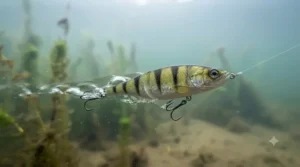
The defining trait of a suspending jerkbait is neutral buoyancy — properly tuned, it neither floats up nor sinks down when you stop reeling, hanging in place instead. For pike specifically, this matters because a significant share of strikes come not during the jerk itself but during the pause immediately after, when a following fish that’s been tracking the lure suddenly has a stationary, seemingly wounded target to commit to. A lure that floats up during the pause effectively removes itself from the strike zone at exactly the wrong moment, while one that sinks too fast can drop below where the fish is holding. This is precisely why suspending models like the Rapala X-Rap Jerkbait and the suspending version of the Westin Swim Glidebait are staples in serious pike anglers’ boxes — the pause isn’t dead time in the retrieve, it’s frequently the whole point of it.
Best Jerkbait Colours for Pike: Matching Water Clarity and Light
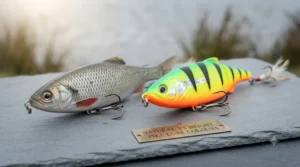
Colour selection genuinely does matter for pike, though the underlying logic is less about pike having preferences the way anglers sometimes describe and more about how light behaves underwater. As UK tackle retailer Angling Direct explains, water absorbs different wavelengths at different rates, meaning a lure’s colour underwater can look markedly different from how it appears in daylight above the surface, according to Angling Direct. In practice, most experienced UK pike anglers work from a simple rule of thumb.
| Water Condition | Recommended Colour Style | Why |
|---|---|---|
| Clear water, bright light | Natural, subtle patterns (silver, green, perch) | Mimics real baitfish without over-alerting wary fish |
| Stained or coloured water | Bright, high-contrast patterns (chartreuse, fire tiger, orange) | Creates a visible silhouette pike can locate faster |
| Low light, dawn/dusk | Dark, high-contrast colours (black, dark bronze) | Produces a strong outline against the sky or surface |
As UK angling publication Angling Times puts it, dark lures often work surprisingly well even in bright conditions because they silhouette clearly against a grey sky, according to Angling Times. The practical takeaway: carry at least two contrasting colourways in your box — one natural, one high-visibility — rather than committing to a single “best” colour, since conditions on UK waters change from swim to swim, let alone session to session.
Glide Bait Pike: How Glide Baits Differ From True Jerkbaits
Glide baits and jerkbaits often get lumped together, but the mechanics genuinely differ. A classic jerkbait, like the Rapala X-Rap Jerkbait, is worked with short, sharp rod jerks that produce a tight, fast dart-and-pause action. A true glide bait, such as the Savage Gear Low Glider Jerk or Westin Swim Glidebait, responds instead to longer, more sweeping rod strokes, producing a wide, slow, side-to-side glide that covers more lateral distance per stroke and displaces noticeably more water. For pike specifically, glide baits tend to shine when fish are lethargic — in cold water, on pressured venues, or when a faster jerkbait retrieve simply isn’t drawing strikes — since the slower, larger presentation reads as an easier, lower-effort meal. If you’re building a jerkbait box from scratch, having at least one true glide bait alongside your standard jerkbaits genuinely broadens the range of retrieve speeds and fish moods you can cover in a single session.
Twitch Bait Pike Review: Topwater and Twitch Techniques
Twitch baits occupy a specific niche within jerkbait fishing, worked with short, controlled rod movements to produce either a subsurface dart or, in the case of dedicated topwater designs like the Savage Gear 3D Bat, a surface disturbance pattern. The appeal for pike anglers is largely visual and visceral — a topwater strike happens in full view, and the anticipation built during a slow, twitched retrieve across open water is arguably unmatched by any subsurface technique. Conditions matter considerably here: twitch and topwater baits perform best in low light, calm water and warmer months, since pike are generally more willing to move upward and commit to a surface target under those conditions than in bright, cold, or choppy water. Aggregated angler feedback on topwater-style lures consistently notes that hook-up rates can be lower than subsurface jerkbaits, simply because a visible surface strike gives the angler a split second to react — and often over-react — before the fish has fully turned down with the lure.
Large Jerkbait Big Pike: Going Big for Trophy Fish
There’s a reasonably well-supported principle in pike fishing that bigger lures tend to select for bigger fish, largely by discouraging smaller, opportunistic pike and perch from bothering to strike at something they can’t realistically swallow. This is the logic behind sizing up to genuinely large jerkbaits — models in the 14cm-plus range, like the Savage Gear Low Glider Jerk at up to 17cm, or large hybrid designs like the Abu Garcia Svartzonker McHybrid — when targeting venues with a track record of producing double-figure or even twenty-pound-plus fish. The trade-off is real: larger lures demand heavier tackle to cast comfortably through a full session, tend to generate fewer overall bites simply because fewer fish in any venue are genuinely capable of eating them, and can be physically tiring to fish all day on lighter gear. For anglers specifically trophy-hunting on known big-fish waters, that trade-off is usually worth making; for a general session on an average mixed water, a mid-sized jerkbait in the 9-12cm range typically produces more overall action.
✨ Don’t Miss These Exclusive Deals!
🔍 Ready to build out your jerkbait box? Click on any highlighted lure above to check current pricing and availability, and get set up for your next pike session with confidence. 🎣
UK Pike Fishing Regulations and Licensing
Before heading out with any of the lures covered in this guide, it’s worth confirming your paperwork is in order. Anyone fishing for freshwater fish, including pike, with a rod and line in England and Wales needs a valid rod fishing licence, and failing to produce one when asked can result in a fine of up to £2,500, according to GOV.UK. Beyond the licence itself, many venues carry their own local byelaws around trace wire, barbless hooks, or seasonal restrictions specifically aimed at protecting pike during colder months when they’re more vulnerable to stress, so it’s always worth checking fishery-specific rules alongside the national licensing requirement before your first cast.
FAQ
❓ What is the best all-round jerkbait for pike?
❓ What's the difference between a jerkbait and a glide bait?
❓ What colour jerkbait works best for pike in murky water?
❓ Do I need a wire trace for jerkbait fishing?
❓ Are large jerkbaits worth using for average-sized pike?
Conclusion
So, what are the best jerkbaits for pike? On the evidence gathered here, there isn’t a single correct answer so much as a toolkit worth building gradually: a genuine suspending jerkbait like the Rapala X-Rap Jerkbait for everyday versatility, a true glide bait such as the Savage Gear Low Glider Jerk or Westin Swim Glidebait for deeper, pressured or lethargic fish, and a specialist option like the Savage Gear 3D Bat for those unforgettable low-light topwater takes. Budget shouldn’t be a barrier to getting started either — the trifyd Jerkbait 9cm 3-pack and Berkley Zilla Glider both offer a genuine, low-risk way into the technique before you commit serious money to premium lures.
Whichever you choose, remember that technique and pause length usually matter more than the specific lure in your hand, and that colour choice should follow water clarity rather than personal preference alone. Get those fundamentals right, rig up a proper wire trace, and the right jerkbait becomes a genuinely reliable way to connect with Britain’s most formidable freshwater predator.
✨ Ready to Stock Your Jerkbait Box?
🎣 Check current pricing and availability on any of the lures above, and get ready for your next session on the bank or boat. Tight lines!
Recommended for You
- Best Spinnerbaits for Pike in 2026: 7 UK Picks Reviewed
- Best Pike Lures for Rivers: 7 Proven Picks for 2026
- 7 Best Pike Lures for Winter 2026 – Cold Water Tactics That Work
Disclaimer: This article contains affiliate links. As an Amazon Associate, I earn from qualifying purchases. If you purchase products through these links, we may earn a small commission at no additional cost to you.
✨ Found this helpful? Share it with your friends! 💬🤗
