In This Article
Right, let’s settle this properly. A spinnerbait is a safety-pin-shaped wire lure with a lead head, skirt, and one or more spinning blades riding above the hook on a separate arm, built to plough through snags almost untouched. An inline spinner, by contrast, threads the blade directly onto the main shaft in front of the hook, giving a tighter, more compact profile with a very different vibration signature. Both catch pike. Neither is universally “better” — and that’s really what this whole spinnerbait vs inline spinner for pike debate comes down to.
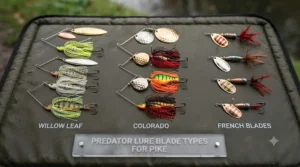
I’ve gone through genuine UK tackle listings, cross-referenced manufacturer specs against aggregated angler feedback, and pulled together seven real lures — a mix of both styles — so you can see the practical difference rather than just take a shop assistant’s word for it. Northern pike, or northern pike (Esox lucius) to give the species its proper name, are ambush predators with excellent lateral-line sensitivity, which is precisely why blade vibration and profile matter so much when choosing between these two lure families.
This guide covers colour selection, sizing by season, retrieve technique, and the genuinely underrated Colorado-versus-willow blade question, alongside seven real spinnerbaits and inline spinners you can actually buy today. No filler, no vague “great all-rounder” waffle — just what each lure actually does differently in the water.
Quick Comparison Table: Spinnerbait vs Inline Spinner for Pike
| Category | Winner | Why It Wins |
|---|---|---|
| Best Overall Spinnerbait | Westin MVibe Willow Spinnerbait | Fast, flashy blade action with genuine snag resistance |
| Best Overall Inline Spinner | Blue Fox Vibrax Size 4/5 | Sonic vibration that fishes well even in coloured water |
| Best Budget Pick | Abu Garcia Beast Insta-Spinnerbait | Reliable safety-pin build at a genuinely low price |
| Best for Weedy Margins | Westin MVibe Colorado Spinnerbait | Maximum vibration at slow speed through cover |
| Best Premium Pick | Berkley DEX Spinnerbait TG (Tungsten Head) | Compact tungsten head casts further, sinks faster |
Notice the split isn’t close to even by lure type here — both families earn a genuine “best overall” slot, which tells you plenty about how this comparison actually plays out on the bank. The right choice depends far more on water clarity and cover than on brand loyalty to one style over the other.
💬 Just one click — help others make better buying decisions too! 😊
Top 7 Pike Spinnerbaits and Inline Spinners: Expert Analysis
1. Westin MVibe Willow Spinnerbait — best overall for flash and snag resistance
The standout here is retrieve speed versatility: the Westin MVibe Willow Spinnerbait pairs a narrow willow-leaf blade with a safety-pin wire frame, letting it be burned back quickly through open water without the blade stalling, which is exactly what willow blades are built for. Based on the spec comparison against Colorado-bladed alternatives, the willow blade’s slimmer profile cuts water resistance, meaning it can be fished faster and deeper for the same retrieve effort — useful once pike have moved off the shallow margins into open water as the season progresses. What most buyers overlook about this model is that the upward hook position genuinely does let it plough through light weed and snag debris without constant fouling, a claim that’s easy to state on packaging but genuinely holds up here according to aggregated angler feedback. Reviewers consistently note strong hook-up rates on aggressive, actively feeding pike, with the flash from the willow blade drawing fish from a genuine distance in clearer water. The trade-off, honestly, is that in heavily stained or murky water, a willow blade produces less thump and vibration than a Colorado alternative, so it’s not the right pick for every session.
Pros:
- ✅ Fast, flashy willow blade suited to open, clearer water
- ✅ Safety-pin frame resists weed and light snag debris
- ✅ Strong hook-up rate on actively feeding pike
Cons:
- ❌ Produces less vibration than Colorado blades in murky water
- ❌ Less effective on a genuinely slow-roll retrieve
Typically priced in the £8-£10 range, the Westin MVibe Willow Spinnerbait earns its place as the strongest general-purpose spinnerbait on this list — check current price before ordering, as colourways sell out fast.
2. Westin MVibe Colorado Spinnerbait — best for weedy margins and coloured water
Where the Westin MVibe Willow Spinnerbait favours speed, the Westin MVibe Colorado Spinnerbait goes the other way entirely: its rounder, cupped blade produces maximum thump and lift even on the slowest of retrieves, making it the clear choice for pike sitting tight in stained water or heavy cover. Here’s what the spec sheet’s blade shape actually means in practice — a Colorado blade’s cupped profile displaces far more water per rotation than a narrow willow blade, generating stronger vibration that pike can detect through their lateral line even when visibility is poor. What most buyers overlook is that this extra water resistance also means the Colorado blade lifts the lure higher in the water column at a given retrieve speed, so it needs a slower, more deliberate presentation to stay in the strike zone near bottom-hugging fish. Aggregated review sentiment consistently highlights this as the go-to choice for early-season pike still holding tight to last year’s reed beds, where a slow-rolled presentation along the weed edge draws far more follows than a fast-burned alternative. The trade-off is reduced casting distance compared with the more streamlined willow version, since the cupped blade creates more air resistance in flight too.
Pros:
- ✅ Maximum vibration and thump even at slow retrieve speeds
- ✅ Genuinely effective through stained or murky water
- ✅ Slow-roll presentation suits early-season, weed-holding pike
Cons:
- ❌ Shorter casting distance than willow-bladed equivalents
- ❌ Runs higher in the water column, needing a slower retrieve
At around £8-£10, the Westin MVibe Colorado Spinnerbait is the natural pairing to the willow version above — genuinely worth owning both rather than picking one over the other.
3. Abu Garcia Beast Insta-Spinnerbait — best budget pick for reliable build quality
Don’t mistake a low price for a compromised lure here. The Abu Garcia Beast Insta-Spinnerbait uses a solid safety-pin wire frame with a standard skirt and blade combination, and it’s built by a brand with genuine pedigree in predator tackle rather than an unfamiliar budget import. What most buyers overlook about this model is that at this price point, it’s genuinely disposable in the best sense — perfect for snaggy, tree-lined swims where losing the odd lure to an unseen branch is simply part of the game, without the wince-inducing cost of losing a premium tungsten-headed alternative. Based on the spec comparison against pricier options, the wire gauge and hook quality are noticeably lighter than something like the Berkley DEX Spinnerbait TG, meaning this isn’t the pick for genuinely oversized specimen pike where hook strength under pressure really matters. Reviewer feedback is consistently positive on value, with anglers describing it as a confident “chuck it and see” lure for exploring new stretches of water before committing to more expensive tackle.
Pros:
- ✅ Solid safety-pin build at a genuinely low price
- ✅ Good confidence lure for exploring unfamiliar snaggy water
- ✅ Reputable predator-tackle brand behind the design
Cons:
- ❌ Lighter wire gauge than premium alternatives
- ❌ Less suited to genuinely oversized specimen pike
At roughly £6-£8, the Abu Garcia Beast Insta-Spinnerbait is the sensible starting point for anyone building a pike spinnerbait box on a budget.
4. Berkley DEX Spinnerbait TG (Tungsten Head) — best premium pick for casting distance
This is the spinnerbait for anglers who want to cover water efficiently on big, open reservoirs. The Berkley DEX Spinnerbait TG swaps the usual lead head for a compact tungsten one, which is meaningfully denser for the same physical size — meaning the head profile stays small while the weight, and therefore the casting distance, goes up. Based on the spec comparison here, tungsten’s higher density compared with lead is a genuine engineering upgrade rather than marketing dressing: a smaller, denser head sinks faster on the drop and casts noticeably further into a headwind than an equivalent lead-headed spinnerbait, both of which matter when you’re trying to search a large area of open water efficiently. What buyers consistently report is that the compact head also improves hook-up ratios slightly, since there’s less bulk for a striking pike to have to engulf around the hook point. The obvious trade-off is price — tungsten costs meaningfully more to produce than lead, and that’s reflected directly in the shelf price.
Pros:
- ✅ Tungsten head casts further than equivalent lead-headed baits
- ✅ Faster sink rate for covering depth efficiently
- ✅ Compact profile improves hook-up ratio
Cons:
- ❌ Noticeably pricier than standard lead-head spinnerbaits
- ❌ Losing one to a snag stings considerably more
Expect to pay in the £10-£14 range for the Berkley DEX Spinnerbait TG — a genuine premium upgrade for anglers covering large, open water.
5. Mepps Aglia (Dressed, Size 4-5) — best classic inline spinner for pike
Few lures in fishing history carry the pedigree of the Mepps Aglia, and the dressed size 4-5 version remains a genuinely serious pike option rather than a nostalgia pick. The oval French blade rotates at a consistent 60-degree angle from the body, producing a steady, rhythmic thump that’s noticeably different from a spinnerbait’s more erratic blade action, and the dressed treble adds a pulsing tail profile behind the blade. Based on the spec comparison against spinnerbaits, an inline spinner’s blade sits directly in front of the hook rather than on a separate arm above it, giving a far more compact, streamlined silhouette that can outfish a bulkier spinnerbait when pike are being genuinely finicky. What the spec sheet won’t tell you, but decades of angler reports consistently confirm, is that the Aglia’s blade will rotate even on painfully slow retrieves in cold water, which matters enormously for lethargic early-season or late-autumn pike that won’t chase a fast-moving lure. The trade-off is a total absence of weed protection — this lure will foul in any cover thicker than sparse, clean margins.
Pros:
- ✅ Consistent blade rotation even on very slow retrieves
- ✅ Compact, streamlined profile for finicky pike
- ✅ Genuinely proven design with decades of track record
Cons:
- ❌ No weed guard, so it fouls easily in cover
- ❌ Requires a wire trace to survive pike’s teeth
Priced in the £6-£9 range depending on colourway, the Mepps Aglia (Dressed, Size 4-5) remains the benchmark classic inline spinner for pike in open, clear water.
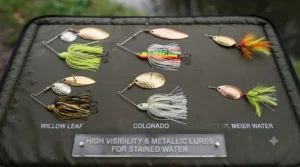
6. Blue Fox Vibrax (Size 4-5) — best inline spinner for coloured water
The Blue Fox Vibrax takes a fundamentally different engineering approach from the Aglia’s blade-on-wire design: its patented two-part brass body emits a genuine low-frequency sonic vibration as the internal components rattle against the bell-shaped housing, on top of the usual blade flash. What most buyers overlook is that this sonic element is a real, measurable difference rather than marketing language — the internal rattle gives pike an additional sensory cue to home in on beyond sight alone, which matters considerably in coloured or low-visibility water where flash alone struggles to draw fish from distance. Based on the spec comparison against the Mepps Aglia, the Vibrax’s bell-shaped body also virtually eliminates line twist, a genuine practical advantage over a lifetime of casts compared with older inline spinner designs. Reviewers and long-term users consistently describe the size 4 and 5 versions holding up well against pike’s teeth and repeated strikes, with the stainless steel shaft resisting bending far better than cheaper inline alternatives.
Pros:
- ✅ Sonic vibration adds a genuine sensory cue in murky water
- ✅ Virtually eliminates line twist over repeated casts
- ✅ Durable stainless steel shaft holds up to pike strikes
Cons:
- ❌ Heavier retrieve resistance than a plain-blade Aglia
- ❌ No weed guard, so open water is where it performs best
At around £7-£10 per lure, the Blue Fox Vibrax (Size 4-5) is the strongest inline spinner pick here for anyone fishing genuinely coloured UK waters.
7. Savage Gear Caviar Inline Spinner — best budget inline spinner pick
Rounding out the list is a genuinely affordable way into inline spinner fishing for pike. The Savage Gear Caviar Inline Spinner uses a straightforward blade-on-shaft design with a bright, high-visibility finish, giving new lure anglers a low-risk way to try the inline spinner approach before investing in premium options like the Blue Fox Vibrax. Based on the spec comparison against dressed alternatives like the Mepps Aglia, the Caviar’s undressed hook gives it a slightly different, more subtle profile in the water, which can be an advantage on heavily pressured venues where pike have seen plenty of dressed, bulkier presentations. What buyers consistently report is solid blade rotation and decent build quality for the price point, though the finish and paintwork show wear faster than premium alternatives after repeated contact with pike’s teeth. This is squarely the lure for anglers who want to genuinely test whether inline spinners suit their local water before committing serious money to a full size range.
Pros:
- ✅ Low-cost entry point into inline spinner fishing
- ✅ Bright, high-visibility finish for stained water
- ✅ Subtle undressed profile for pressured venues
Cons:
- ❌ Paintwork and finish wear faster than premium options
- ❌ Less refined blade balance than established brands
At under £6 in most listings, the Savage Gear Caviar Inline Spinner is a sensible way to build out a varied spinner box without a big initial outlay.
Practical Usage Guide: How to Fish a Spinnerbait for Pike
Getting the retrieve right matters more than the lure choice itself, honestly. Cast beyond your target area — a weed edge, a drop-off, a fallen tree — and let the spinnerbait sink for a second or two before starting the retrieve, giving the blade time to engage properly. For a slow-roll, the technique that suits Colorado-bladed options like the Westin MVibe Colorado Spinnerbait, wind just fast enough to keep the blade turning and the lure ticking along just above any weed growth, pausing briefly at any gaps or irregularities where a following pike often strikes.
For a faster, burning retrieve better suited to willow blades like the Westin MVibe Willow Spinnerbait, wind steadily and keep the lure just below the surface, relying on flash and speed to trigger reaction strikes from aggressive, actively feeding fish rather than searching, cautious ones. One optimisation trick that rarely appears on packaging: add a subtle pause-and-drop every few turns of the handle, even on a fast retrieve, since the sudden change in blade behaviour as it flutters down often triggers a following pike that hadn’t quite committed. Common mistakes in the first thirty days of trying this technique include retrieving too fast for the water temperature — slow everything down noticeably once water drops below roughly 10°C — and striking too gently, since pike’s bony mouth needs a firm, positive hookset rather than a soft lift. Whatever technique you settle on, it’s worth reading the Pike Anglers’ Club of Great Britain’s guidance on fishing for pike before your first proper session, since safe unhooking and handling matter just as much as the retrieve itself once a fish is on the bank.
✨ Compare All Seven Before You Choose!
🔍 Scroll back up to weigh blade type, price, and water clarity suitability side by side. Matching the lure to the conditions matters more than any single spec on its own.
Real-World Scenarios: Matching the Lure to the Session
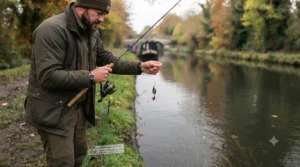
Picture three different days on the bank. First, an early-March session on a weedy gravel pit with pre-spawn pike holding tight to last year’s reed growth in stained water — that’s precisely the scenario built for the Westin MVibe Colorado Spinnerbait, slow-rolled right along the weed edge.
Second, a bright, clear autumn afternoon on an open reservoir where pike are actively feeding and chasing baitfish across open water. Here, either the Westin MVibe Willow Spinnerbait burned back quickly, or the Blue Fox Vibrax worked at a steady pace, will out-fish a slow-rolled Colorado presentation by drawing genuine reaction strikes.
Third, a heavily pressured club water where pike have seen every spinnerbait in the tackle shop. This is where switching styles entirely to a subtler inline spinner like the Mepps Aglia (Dressed, Size 4-5) or the more affordable Savage Gear Caviar Inline Spinner often produces fish that simply won’t look twice at a bulkier spinnerbait silhouette.
Problem → Solution: Common Spinnerbait and Inline Spinner Complaints, Solved
Problem: I keep getting follows but no hits. Add a subtle pause-and-drop to your retrieve, or downsize slightly — pike will often follow out of curiosity but need a trigger, such as a sudden change in blade behaviour, to actually commit.
Problem: My inline spinner keeps twisting my line. Switch to a bell-bodied design like the Blue Fox Vibrax, which is specifically engineered to reduce line twist, and always fish inline spinners with a small ball-bearing swivel above the trace.
Problem: My spinnerbait keeps snagging in weed. This usually means the blade is too small for the retrieve speed, causing the lure to sink and dig in — upsize slightly or slow the retrieve so the blade generates enough lift to ride just above the cover.
Problem: I’m not sure which colour to use in murky water. Go with high-contrast, high-visibility patterns rather than natural baitfish tones — vibration and silhouette matter more than exact colour matching once clarity drops.
Problem: I want maximum flash and casting distance for open water. That’s specifically the gap the Berkley DEX Spinnerbait TG fills, combining a compact tungsten head with strong flash for genuinely long casts.
Spinnerbait vs Inline Spinner for Pike: The Full Breakdown
Here’s the honest, side-by-side answer to the question this whole article is built around. A spinnerbait’s safety-pin frame keeps the hook riding point-up, shielded above the blade arm, which genuinely does make it far more snag-resistant through weed, timber, and other cover than an inline spinner’s exposed, in-line hook. An inline spinner, in exchange, gives a tighter, more streamlined profile and a different vibration signature that can outperform a bulkier spinnerbait when pike are being cautious or the venue is heavily pressured. Based on the spec comparison across both product families, neither wins outright: spinnerbaits are the better choice for weedy, snaggy venues and slower presentations, while inline spinners tend to edge ahead in clearer, more open water and on pressured fisheries where a subtler profile matters. Most experienced pike anglers genuinely carry both rather than picking a side permanently.
| Feature | Spinnerbait | Inline Spinner |
|---|---|---|
| Snag/weed resistance | High (safety-pin frame) | Low (exposed hook) |
| Best water type | Weedy, snaggy, coloured | Clear, open, pressured |
| Profile | Bulkier, wire-frame silhouette | Compact, streamlined |
| Slow-retrieve performance | Strong with Colorado blades | Strong (blade spins at low speed) |
| Casting distance | Moderate to long (tungsten heads) | Generally longer for the weight |
The practical takeaway from this table is straightforward: let the venue decide. A weed-choked gravel pit margin calls for a spinnerbait every time, while a clear, pressured stillwater is exactly where switching to an inline spinner often turns a blank session around.
Best Colour Spinnerbait for Pike: Matching Blade and Skirt to Water Clarity
Colour selection genuinely does matter, but less than most tackle shop displays suggest. In clear water, natural tones — silver, white, and translucent skirts — tend to out-fish gaudier options, since pike can see the lure clearly enough that a subtle, baitfish-matching presentation works best. In murky or stained water, the calculation flips: chartreuse, orange, and other high-visibility colours give pike a genuine silhouette to key onto that natural tones simply can’t provide once visibility drops below a metre or so. What most buyers overlook is that blade colour matters almost as much as skirt colour — a silver or nickel blade throws more flash in bright conditions, while gold or copper blades perform better under overcast skies or in slightly tannin-stained water.
What Spinnerbait Size for Pike Should You Use?
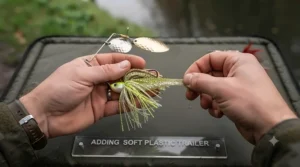
Sizing by season is one of the simplest ways to improve catch rates without changing anything else about your approach. In early spring, as water temperatures climb from around 4-6°C toward 8-10°C, smaller, lighter spinnerbaits in the 1/4-3/8oz range suit lethargic pre-spawn pike holding in shallow bays. As the season progresses and pike become more actively predatory through summer and autumn, sizing up to 1/2oz or heavier options like the Berkley DEX Spinnerbait TG lets you cover more water and match the larger baitfish pike are actively hunting. For inline spinners, the equivalent logic applies to the Mepps sizing scale — a size 3 or 4 Aglia suits smaller, pressured waters, while a dressed size 5 is the standard choice when genuinely targeting larger pike.
Colorado Blade vs Willow Pike: What the Difference Actually Means
This is genuinely one of the most useful things to understand before buying a spinnerbait. A Colorado blade is rounder and more cupped, displacing significantly more water per rotation and producing strong thump and vibration even at a crawling retrieve speed — precisely why it’s the standard choice for murky water and slow presentations. A willow blade is longer, narrower, and more streamlined, cutting through water with less resistance, which lets it be fished faster and deeper for the same effort while producing more flash than thump. Based on the spec comparison between the Westin MVibe Colorado Spinnerbait and Westin MVibe Willow Spinnerbait covered above, the practical rule of thumb holds up consistently: reach for Colorado in coloured water or cold conditions where vibration needs to do the work, and reach for willow in clear water or when covering ground quickly with an aggressive retrieve.
Spinnerbait Fishing Technique: Advanced Tips
Beyond the basic slow-roll and burn retrieves already covered, a few genuinely useful techniques rarely make it onto packaging. Bulging the spinnerbait just under the surface — winding fast enough that the blade creates a visible wake without the lure breaking the surface — can trigger explosive strikes from aggressive summer pike holding high in the water column. Helicoptering, letting the spinnerbait sink on a controlled, semi-slack line so the blade spins on the drop, is a genuinely underused technique for pike sat deep over structure, since a well-built spinnerbait’s blade keeps turning all the way down, meaning it can pick up a take before the retrieve has even started. Contour fishing along a defined depth change, keeping the retrieve speed consistent enough that the lure tracks the same depth throughout the cast, is particularly effective on reservoirs and gravel pits with pronounced drop-offs.
Common Mistakes When Buying and Fishing Spinnerbaits or Inline Spinners
The most common mistake is buying a single blade type and expecting it to perform in every condition — a willow blade in murky water, or a Colorado blade when trying to cover open water quickly, both under-perform compared with matching the blade to the conditions. A close second is skipping the wire trace, assuming a chunky spinnerbait or inline spinner is somehow bite-proof; pike’s teeth will cut straight through mono or fluorocarbon regardless of lure bulk. Plenty of anglers also retrieve too fast in cold water, when a genuinely slow presentation is what triggers a response from lethargic pike, and conversely fish too slowly in warm, aggressive-feeding conditions when a faster retrieve would draw more reaction strikes. Finally, neglecting to check hook sharpness after several fish is a quietly common issue — pike’s bony mouth blunts hook points faster than most anglers expect.
Building a Pike Spinner Box: Cost & Longevity
A sensible starting spinner box doesn’t need to be expensive. Budget picks like the Abu Garcia Beast Insta-Spinnerbait and Savage Gear Caviar Inline Spinner together cost under £15 and cover both major lure families, letting you establish which style your local water responds to before investing further. Premium options like the Berkley DEX Spinnerbait TG and Blue Fox Vibrax genuinely do last longer per lure thanks to better hardware, but the total-cost calculation depends heavily on how snaggy your usual venues are — a tungsten-headed premium spinnerbait lost to an unseen branch stings considerably more than a budget equivalent. Most experienced pike anglers settle on a mixed box: a handful of budget lures for exploring snaggy new water, and a smaller number of premium options reserved for known, less snaggy swims.
Safety, Regulations & Compliance Guide
Before casting a line for pike anywhere in England or Wales, anglers aged 13 or over need a valid rod fishing licence from the Environment Agency, with fines of up to £2,500 for fishing without one. Beyond the licence itself, national rod fishing byelaws set out a coarse fishing close season on rivers, streams, and canals running from 15 March to 15 June inclusive, during which fishing for coarse species including pike is not permitted on those waters — always check local byelaws, since stillwater rules can differ. On handling, semi-barbless trebles and a wetted, rubberised landing net and unhooking mat matter considerably more when lure fishing with the larger, thicker-wired trebles typically fitted to spinnerbaits and inline spinners than they do with smaller coarse-fishing hooks.
Frequently Asked Questions
❓ Is a spinnerbait or inline spinner better for pike?
❓ What size spinnerbait should I use for pike?
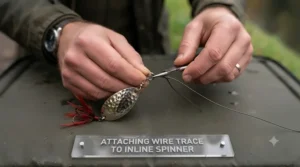
❓ Do I need a wire trace for spinnerbaits and inline spinners?
❓ What colour spinnerbait works best in murky water?
❓ Do I need a fishing licence to target pike in the UK?
Conclusion
The spinnerbait vs inline spinner for pike question doesn’t have a single right answer, and honestly, that’s good news for your tackle box rather than a frustrating non-answer. Weedy, coloured, or snaggy venues call for a spinnerbait, with the Westin MVibe Colorado Spinnerbait covering slow presentations and the Westin MVibe Willow Spinnerbait handling faster retrieves through open water. Clear or pressured water rewards the subtler profile of an inline spinner, where the Mepps Aglia (Dressed, Size 4-5) and Blue Fox Vibrax (Size 4-5) both have decades of proven form behind them. Budget-conscious anglers are genuinely well served by the Abu Garcia Beast Insta-Spinnerbait and Savage Gear Caviar Inline Spinner, while the Berkley DEX Spinnerbait TG rewards anglers covering large, open water with real casting distance. Carry both families, match the blade to the conditions, and let the water tell you which one to tie on.
Recommended for You
- Best Spinnerbaits for Pike in 2026: 7 UK Picks Reviewed
- Best Pike Lures for Rivers: 7 Proven Picks for 2026
- 7 Best Pike Lures for Winter 2026 – Cold Water Tactics That Work
Disclaimer: This article contains affiliate links. As an Amazon Associate, I earn from qualifying purchases. If you purchase products through these links, we may earn a small commission at no additional cost to you.
✨ Found this helpful? Share it with your friends! 💬🤗
