
In This Article
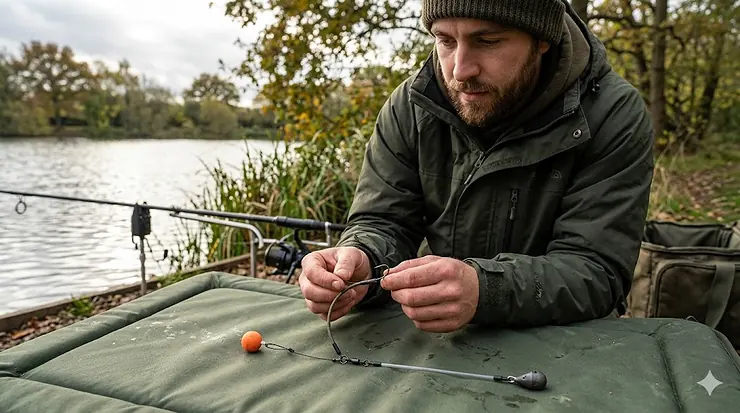
Picture this: you’ve just arrived at your favourite Lincolnshire gravel pit at dawn, the mist still clinging to the water’s surface, and you’re faced with a proper challenge. Weed beds stretching across the bottom like an underwater jungle, making traditional bottom-bait presentations about as effective as fishing with string. What most UK carp anglers overlook in this scenario is that hinged stiff rig setup offers something rather special — a presentation that effectively transforms challenging, weedy swims into productive holding areas where big carp feel confident to feed.
The hinged stiff rig setup has quietly become one of the most devastatingly effective presentations in modern British carp fishing. What makes this rig particularly brilliant for UK conditions is its ability to reset itself after being mouthed and rejected — crucial when you’re fishing pressured day-ticket waters where carp have seen every trick in the book. According to research on recreational fishing welfare, responsible rig design that minimises fish stress whilst maintaining effectiveness has become increasingly important in UK angling. The mechanics are genuinely clever: a stiff hook section that ensures the hook always goes in bend-first, combined with a semi-rigid boom that kicks the hookbait away from the lead whilst remaining supple enough to lay flat over debris. When properly balanced with a buoyant pop-up and counterweight, this rig delivers consistent presentation regardless of what’s happening on the lakebed beneath — whether you’re fishing the silty margins of Linear Fisheries or the gravel bars of Wraysbury.
In this comprehensive guide, we’ll explore seven properly tested hinged stiff rig setups available on Amazon.co.uk, break down the essential materials you’ll need, and walk you through the setup process with practical insights earned from countless sessions on British waters. Whether you’re a newcomer to specimen hunting or an experienced angler looking to refine your approach, understanding the nuances of hinged stiff rig setup could genuinely transform your catch rate in 2026.
Quick Comparison: Top Hinged Stiff Rigs at a Glance
| Product | Breaking Strain | Hook Size Options | Price Range (£) | Best For | UK Stock |
|---|---|---|---|---|---|
| Gardner Tackle Hinged Stiff Rig | 15lb/25lb | 4, 6, 8 | £3-£5 | Weedy venues | ✅ Prime |
| Korda Hinge Rig | 20lb/25lb | 4, 6, 8 | £2-£4 | Big fish targeting | ✅ Prime |
| ESP Stiff Hinge Ready Tied | 20lb | 4, 6, 8 | £3-£5 | Pressured waters | ✅ Available |
| Fox Edges Ready Rigs | 20lb/25lb | 4, 6, 8 | £4-£7 | Versatile conditions | ✅ Prime |
| Carp Spirit Hinged Stiff | 18lb | 6, 8 | £3-£4 | Budget option | ✅ Available |
| Nash Chod/Hinge Combination | 20lb | 4, 6, 8 | £2-£3 | Multi-purpose | ✅ Prime |
| Rick’s Rigz Premium Custom | 15-25lb | Custom sizes | £4-£6 | Bespoke setups | ✅ UK made |
💬 Just one click — help others make better buying decisions too! 😊
Top 7 Hinged Stiff Rigs: Expert Analysis for UK Waters
1. Gardner Tackle Ready Tied Hinged Stiff Rigs
The Gardner setup represents what happens when decades of British carp fishing knowledge gets distilled into a single rig design. Created by some of the most successful big-fish anglers in the UK, these ready-tied rigs feature the tried-and-tested 15lb Trip Wire hook section that’s been curved for optimal effectiveness, married to a skinned boom section available in 25lb breaking strain. The beauty of Gardner’s approach lies in the boom material — it’s stiff enough to kick your hookbait a proper distance from the lead (crucial when fishing helicopter setups over weed), yet supple enough to drape over stones or twigs without compromising the presentation.
What sets the Gardner rig apart for UK conditions is its ability to handle our unpredictable weather patterns. During that brutal cold snap in February when water temperatures plummet and carp become incredibly tentative feeders, this rig’s ability to reset itself after being mouthed becomes absolutely critical. The D-style loop and rig ring configuration means the hook goes in the right way every single time — bend first — and twists to take hold as soon as tension comes onto the hooklink. UK reviewers consistently praise the anti-eject properties, with many reporting hookhold rates above 85% even on heavily pressured syndicate waters.
The rig arrives pre-curved and pre-steamed, though you’ll likely need to give it another gentle steaming session with a kettle after it’s been in your tackle box for a few months — perfectly normal with stiff hooklink materials in the damp British climate. Use it with highly buoyant pop-ups (12-15mm works brilliantly) counterbalanced with Critical Mass tungsten putty moulded around the top eye of the swivel. The rig should sink slowly when tested in the margins — if it plummets, you’ve overdone the putty; if it floats, your pop-up isn’t buoyant enough.
Pros:
✅ Legendary effectiveness on big UK fish — proven on Linear, Wraysbury, and countless other demanding venues
✅ Exceptional anti-eject properties that maintain hookhold even during powerful head-shaking runs
✅ Ready-curved hook section saves considerable setup time at the bankside
Cons:
❌ Requires periodic re-steaming to maintain optimal curve, especially in cold, damp storage conditions
❌ Higher price point than budget alternatives, though quality justifies the investment
Available on Amazon.co.uk in the £3-£5 range depending on hook size, with Prime delivery ensuring you can get fishing this weekend. The investment is genuinely worthwhile — this isn’t a rig you’ll be retying every session.
2. Korda Hinge Rig (Ready Tied)
Danny Fairbrass knows a thing or two about catching big British carp, and the Korda Hinge Rig represents his exacting standards translated into ready-tied convenience. Constructed using Choddy hooks (sizes 4, 6, and 8), Mouth Trap stiff hooklink material, and IQ fluorocarbon boom sections, these rigs deliver the kind of consistent performance that’s made Korda the go-to brand for thousands of UK specimen hunters. The hook section features that beautifully curved profile that allows the hook to spin into prime hooking position every single time a carp mouths your bait — mechanical consistency that takes the guesswork out of presentation.
In my experience fishing Korda Hinge Rigs across various UK venues, from the gin-clear waters of the Cotswold Water Park to the tea-stained depths of Cheshire meres, the IQ boom section genuinely excels at kicking the hookbait away from the lead on the cast. This matters enormously when you’re fishing at range — 80+ metres out on windswept reservoirs where checking your presentation isn’t practical. The rig lands, the boom does its job, and your hookbait sits exactly where it should: upright, away from the lead, and irresistibly positioned for browsing carp.
What UK anglers particularly appreciate about the Korda offering is the quality control. Every rig exhibits razor-sharp hook points (check them anyway — it’s good practice), perfectly tied knots, and consistent component quality. The rigs work with both barbed and barbless hooks, catering to the varied fishery rules across Britain. Available in 20lb and 25lb boom sections, you can match your rig to the venue — lighter for clear-water situations where rig awareness is high, heavier for snaggy swims where you need that extra insurance.
Pros:
✅ Tied to Danny Fairbrass’s exacting standards — genuine benchmark quality in the ready-tied market
✅ IQ boom section provides exceptional hookbait separation from lead on all but the most violent casts
✅ Available in both barbed and barbless to suit UK fishery regulations
Cons:
❌ Premium pricing reflects the Korda brand, though performance justifies the expense
❌ Curved hook section requires careful storage to maintain optimal shape — don’t just chuck them loose in your tackle box
Priced around £2-£4 on Amazon.co.uk depending on specifications, with free delivery on orders over £25. Stock them in your rig wallet in multiple sizes — you’ll find yourself reaching for them repeatedly.
3. ESP Stiff Rig Bristle Filament (DIY Material)
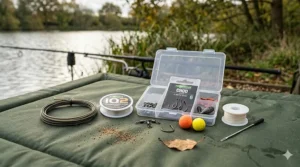
For those who prefer crafting their own hinged stiff rig setup — and there’s genuine satisfaction in tying a rig that lands you a thirty-pounder — ESP’s Stiff Rig Bristle Filament remains the gold standard material. Launched in 1999 and still going strong in 2026, this clear filament offers exceptional knot strength and abrasion resistance whilst maintaining the crucial rigidity that makes hinged stiff rigs so effective. The 20-metre spool provides enough material for dozens of rigs, making it considerably more economical than buying ready-tieds if you’re fishing regularly.
The brilliance of ESP’s filament lies in its consistency. Unlike some stiff materials that lose their memory over time or become brittle in cold conditions, this stuff maintains its straight, rigid characteristics season after season. When you’re tying your own hinged stiff rigs, that predictability matters enormously — you can steam a curve into the hook section knowing it’ll hold that shape through multiple casts and even after landing fish. British anglers appreciate that this is proper low-visibility material too; in the clear waters of gravel pits and estate lakes, subtlety often makes the difference between takes and blanks.
Combining ESP Bristle Filament with quality components — Korda Choddy hooks, ESP Tungsten Loaded boom material, and reliable ring swivels — allows you to create bespoke hinged stiff rigs tailored exactly to your target venue. Fishing heavily weeded swims? Tie a shorter, stiffer boom. Targeting ultra-cautious fish on pressured day tickets? Go longer and slightly more subtle. The control is entirely yours, and once you’ve mastered the technique (it’s not as daunting as it looks), you’ll never be caught short of perfectly suited rigs.
Pros:
✅ Exceptional value — one 20m spool creates dozens of custom rigs at fraction of ready-tied costs
✅ Maintains stiffness and memory in all British weather conditions, from summer heat to winter freeze-thaw cycles
✅ Low visibility in clear water gives genuine edge on pressured venues
Cons:
❌ Requires time and skill to tie effective rigs — not ideal if you’re arriving at the lake with limited prep time
❌ Initial learning curve can be frustrating; practice at home before your first session
Available on Amazon.co.uk in the £4-£8 range for a 20-metre spool. Combine it with quality hooks and boom material, and you’ve got the foundation for truly exceptional hinged stiff rig setup.
4. Fox Edges Ready Tied Carp Rigs (Multiple Configurations)
Fox has earned its reputation in British carp fishing by consistently delivering innovative, practical tackle that works in real-world conditions. Their Edges range of ready-tied rigs demonstrates this philosophy brilliantly — tied with Arma Point hooks (renowned for sharpness and strength), Cortex Matt Coated Braid, and Illusion Fluoro components, these rigs arrive ready to attach to Fox’s leader systems with admirable ease. What’s particularly clever about Fox’s approach is the variety within the range: you can select configurations specifically designed for different presentations, all sharing that fundamental hinged stiff rig DNA.
For UK anglers fishing diverse venues — perhaps a silty mere on Saturday, followed by a gravel pit on Sunday — having Fox Edges rigs in your arsenal provides genuine versatility. The rigs attach seamlessly to lead clip arrangements or helicopter setups, adapting to whatever tactical approach your chosen swim demands. The Kwik Change swivels make switching rigs incredibly quick, invaluable when you’re trying to capitalise on a brief feeding spell before the weather turns (a rather common occurrence in British summers, sadly).
Customer feedback from UK buyers consistently highlights the consistent hooking performance and durability. The Arma Point hooks maintain their needle-sharp points even after multiple carp, and the fluorocarbon components resist abrasion admirably when you’re fishing around gravel bars or mussel beds. Available in sizes 4, 6, and 8 with both barbed and micro-barbed options, you can match the rig precisely to your target fish and fishery rules.
Pros:
✅ Exceptional hook sharpness straight from packet — Arma Point hooks are genuinely superb
✅ Kwik Change swivels enable rapid rig changes without retying entire setup
✅ Wide variety of configurations suits diverse UK fishing scenarios
Cons:
❌ Premium pricing reflects Fox’s market position, though quality components justify the investment
❌ Some anglers report packaging quantity confusion on Amazon.co.uk — verify you’re ordering the correct multi-pack
Expect to pay £4-£7 on Amazon.co.uk depending on configuration and pack size. Prime delivery available, and the investment delivers consistent performance across British waters.
5. Tungsten Rig Putty (Essential Counterbalance)
Whilst not a rig itself, tungsten putty deserves recognition as absolutely essential for proper hinged stiff rig setup. Without correct counterbalancing, even the most perfectly tied rig becomes ineffective — your pop-up either floats the entire rig section upright (looking completely unnatural and spooking wary carp) or sinks like a stone (negating the whole point of using a buoyant hookbait). Quality tungsten putty allows you to achieve that critical balance where the rig settles gently to the lakebed with the boom section laying flat and the hook section standing proud.
The best tungsten putty for UK conditions maintains its malleability in cold weather whilst hardening just enough when submerged to withstand powerful casts. British winters can be brutal, and there’s nothing more frustrating than tungsten putty that becomes rock-hard in your tackle box when temperatures drop below 5°C. Look for putty that warms easily between your fingers, allowing you to mould it precisely around the top eye of your rig swivel or onto balance beads threaded onto the boom section.
Modern tungsten putties available on Amazon.co.uk come in various densities and colours — weed green, silt brown, or gravel grey to match your chosen venue’s substrate. The reusable nature makes them economical; you can adjust the amount for different pop-up sizes, reclaiming and remoulding the putty between sessions. UK reviewers particularly value putties that stay in place during long-range casting — there’s little point perfecting your rig balance in the margins if the putty shifts during an 80-metre cast, completely altering your presentation.
Pros:
✅ Enables precise rig balancing that’s impossible to achieve otherwise — genuinely transforms presentation
✅ Reusable and economical — one pot lasts entire season of regular fishing
✅ Available in multiple colours to match various lakebed substrates
Cons:
❌ Can become stiff in extreme cold, requiring warming between fingers before use
❌ Some cheaper options lose adhesion when wet, slipping along the rig — invest in quality brands
Prices range from £2-£8 for 15-30g pots on Amazon.co.uk. Gardner Critical Mass, Korda Dark Matter, and ESP versions all perform reliably in British conditions.
6. Nash Ready Made Slip-D and Chod Combination Rigs
Nash Tackle has long understood that British carp anglers value versatility and value for money, and their ready-made rig range delivers both admirably. Whilst not exclusively hinged stiff rigs in the traditional sense, Nash’s Chod Rig offerings share the fundamental mechanical principles — stiff hook sections, buoyant hookbait presentations, and anti-eject properties that make them devastatingly effective on UK waters. The rigs arrive tied with Nash’s specialist hooks and semi-stiff materials, offering immediate usability straight from the packet.
What makes Nash rigs particularly appealing for UK anglers is the pricing strategy — you’re typically paying £1.50-£3 per rig, significantly less than premium alternatives whilst still receiving components that perform reliably on demanding venues. I’ve used Nash ready-made rigs on waters ranging from intimate estate lakes in Surrey to vast reservoirs in the Midlands, and the hookhold rate remains consistently impressive. The Slip-D configuration in particular offers exceptional anti-eject performance when carp attempt to expel the hookbait during that critical moment after mouthing it.
The rigs suit various UK fishing scenarios, from fishing over light weed with Chod setups to presenting critically balanced hookbaits with the Slip-D. Many experienced British anglers keep Nash ready-mades as backup rigs in their tackle boxes — insurance against those frustrating moments when you snag your favourite hand-tied rig on an unseen underwater obstruction and need a quick replacement without sacrificing fishing time.
Pros:
✅ Exceptional value for money without compromising performance — ideal for regular anglers on budgets
✅ Proven effectiveness on pressured UK day-ticket and syndicate waters
✅ Wide availability ensures you can restock quickly when needed
Cons:
❌ Not pure hinged stiff rig designs, though mechanical principles remain similar
❌ Component quality, whilst adequate, doesn’t quite match premium alternatives
Available on Amazon.co.uk in the £2-£3 range, often with multi-buy discounts. Prime delivery available, making them excellent backup options.
7. Rick’s Rigz Premium Custom Hinged Stiff Rigs
For British anglers seeking truly bespoke hinged stiff rig setup, Rick’s Rigz represents the UK’s leading custom rig-tying service. Based in England with comprehensive understanding of British carp fishing demands, they offer hand-tied rigs using premium components from Korda, OMC, ESP, and other leading brands. What distinguishes Rick’s Rigz from ready-made alternatives is the ability to specify exactly what you want: hook size, boom length, breaking strain, hooklink material colour — every element customised to your precise requirements.
The quality control is genuinely meticulous. Each rig undergoes inspection for hook sharpness, knot integrity, and crimp strength before being packaged for delivery. UK customer reviews consistently praise both the craftsmanship and the rapid turnaround — order on Monday, fishing by Friday with free UK postage. For anglers targeting specific venues with unique challenges (think heavily weeded estate lakes or ultra-pressured day tickets where every detail matters), having rigs tied precisely to your specifications provides genuine confidence.
Pricing sits in the £4-£6 bracket depending on components and complexity, positioning Rick’s Rigz between budget ready-mades and premium branded offerings. The value proposition becomes clear when you consider the time saved and the assurance that every rig meets exacting standards. Many successful UK specimen hunters maintain standing orders with Rick’s Rigz, ensuring they never run short of perfectly tied rigs during the season.
Pros:
✅ Fully customisable to your exact specifications — hook choice, materials, dimensions all selectable
✅ UK-based with rapid delivery and understanding of British fishing conditions
✅ Meticulous quality control ensures every rig meets high standards
Cons:
❌ Slightly higher cost than mass-produced ready-mades reflects hand-tied craftsmanship
❌ Requires advance ordering rather than instant Amazon Prime delivery
Available directly from ricksrigz.co.uk with free UK postage on all orders. Custom quotes available for specialist requirements.
How to Set Up Your Hinged Stiff Rig: Step-by-Step UK Guide
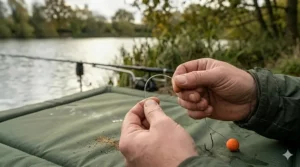
Setting up a hinged stiff rig properly transforms it from a collection of components into a fish-catching machine. Here’s the process refined through countless sessions on British waters:
Step 1: Select Your Components Based on Venue
Water clarity matters enormously in the UK. Crystal-clear gravel pits demand low-visibility components — clear fluorocarbon booms and dark hooklink materials. Coloured or murky venues allow more visible setups. Match your boom breaking strain to the venue’s snag potential: 20lb for relatively clear swims, 25lb for weedy or snaggy areas.
Step 2: Attach the Rig to Your Lead System
The hinged stiff rig works brilliantly with both helicopter and lead clip arrangements. For helicopter setups (ideal over weed), slide your rig swivel onto the leader before attaching the lead. The rig can rotate freely, reducing tangles during the cast. For lead clips (cleaner lake beds), attach the boom’s swivel directly to the clip. Ensure the lead can eject safely if you encounter an immovable snag — British carp welfare standards demand it.
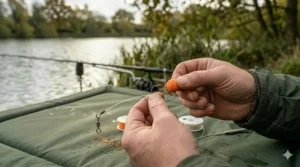
Step 3: Balance Your Pop-Up Precisely
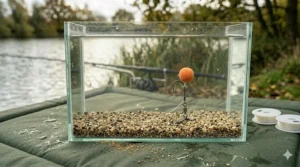
This step separates effective rigs from ineffective ones. Thread your chosen pop-up (12-15mm works well for most UK carp) onto the rig ring. Test the rig in clear water — a washing-up bowl at home works perfectly. The hookbait should pull the hook section upright whilst the boom lays flat. Now add tungsten putty around the top eye of the swivel, small amounts at a time. The rig should sink slowly when released — approximately 5-10 seconds to reach the bottom of a washing-up bowl indicates proper balance.
Step 4: Test Cast and Adjust
Before fishing, make several test casts in open water, retrieving the rig to check it remains balanced. British weather (particularly wind) can affect presentation, so adjust putty amounts if necessary. The rig should land, the boom should kick away from the lead, and the hook section should stand proud. Perfect.
Hinged Stiff Rig vs Chod Rig: Understanding the Differences
British carp anglers often conflate hinged stiff rigs with chod rigs, and whilst they share DNA, subtle differences affect when each excels. The chod rig typically features a completely stiff boom section throughout, ideal for fishing in thick weed where the entire rig needs to sit above the bottom vegetation. The hinged stiff rig, conversely, employs a semi-rigid boom that can drape over obstacles whilst maintaining the stiff hook section for optimal hooking.
In UK conditions, this distinction matters. Fishing the heavily weeded margins of Linear Fisheries? A pure chod rig ensures your hookbait sits visibly above the weed canopy. Fishing gravel bars with scattered weed patches at Wraysbury? The hinged stiff rig’s adaptable boom section allows it to settle around obstacles whilst maintaining presentation effectiveness. Understanding which rig suits your specific swim transforms your approach from guesswork to tactical precision.
Best Materials for Hinged Rigs: What Actually Matters
Material selection directly impacts rig performance in British conditions. For hook sections, proper stiff hooklink materials like ESP Bristle Filament, Korda Mouth Trap, or Gardner Trip Wire maintain the crucial rigidity that ensures consistent hooking mechanics. Cheaper alternatives often lack memory, losing their curved shape after a single fish or even during storage in damp British tackle boxes.
Boom sections require different characteristics — stiff enough to separate the hookbait from the lead (typically 6-10cm displacement on the lakebed), yet supple enough to drape naturally over debris. Materials like Korda IQ fluorocarbon, ESP Tungsten Loaded, and Fox Illusion all perform reliably. Breaking strains between 20-25lb suit most UK venues, providing adequate strength without excessive visibility.
Hook choice matters enormously. Patterns with out-turned eyes (Choddy, Kurv Shank, Stiff Rigger) maximise the hooking mechanics inherent in hinged stiff rig setup. Sizes 4-8 cover most British carp fishing scenarios, with size 6 representing the versatile middle ground. Always check hooks are chemically sharpened and maintain needle-sharp points — blunt hooks devastate hookhold rates regardless of rig sophistication.
Common Hinged Stiff Rig Mistakes (And How UK Anglers Fix Them)
Mistake 1: Incorrect Pop-Up Balancing
The most frequent error I observe on British waters is inadequate or excessive counterbalancing. Too little tungsten putty and your rig floats unnaturally, spooking carp; too much and your pop-up loses buoyancy, sitting flat on the lakebed like a bottom bait. The solution: test in the margins every single session. Lake conditions change — water temperature, algae blooms, even atmospheric pressure affects buoyancy slightly. Thirty seconds spent testing and adjusting saves hours of ineffective fishing.
Mistake 2: Using Pop-Ups Without Sufficient Buoyancy
British tackle shops sell various pop-up qualities, and not all provide adequate lift for hinged stiff rig setup. Your pop-up must genuinely float — not neutrally balanced, not slightly buoyant, but properly buoyant. Test by dropping one in water; it should bob to the surface immediately. Cork ball pop-ups generally outperform standard boilie pop-ups for this application. If your preferred brand doesn’t provide sufficient buoyancy, double-stack two smaller pop-ups or switch to a more buoyant alternative.
Mistake 3: Neglecting Hook Maintenance
British waters are hard on tackle. Gravel bars, mussel beds, and underwater vegetation all dull hook points remarkably quickly. Check your hook point before every cast — run it gently across your thumbnail; it should catch and dig in slightly. A blunt hook slides across without gripping. Invest in a quality hook sharpening stone and use it liberally. Three minutes spent sharpening potentially prevents losing the fish of your lifetime.
Fishing Hinged Stiff Rigs in Different UK Venues
Gravel Pits (Clear Water)
British gravel pits demand subtle presentations. Use low-visibility components — clear fluorocarbon booms, dark hooklink materials, and ensure your tungsten putty matches the gravel colour. These venues often feature wary, educated carp that scrutinise everything. Longer boom sections (8-10cm) can help, providing extra separation between hookbait and lead. Fish over gravel bars at dawn and dusk when carp patrol confidently.
Weedy Estate Lakes
Heavy weed requires aggressive tactics. Shorter, stiffer booms prevent the rig disappearing into weed canopy, whilst highly buoyant pop-ups ensure the hookbait sits visibly above vegetation. Don’t fear using 25lb boom material here — you’ll need every bit of that strength when a twenty-pounder charges into thick weed after feeling the hook. Fish clearings within weed beds rather than trying to penetrate impenetrable cover.
Silty Meres and Reservoirs
Soft, silty bottoms present unique challenges. Your rig can sink several centimetres into the substrate, rendering your presentation invisible and ineffective. Extended boom sections (10-12cm) help, kicking the hookbait well clear of the lead and maximising visibility. Consider using lighter leads (2-3oz) to minimise how deeply they settle into silt. Fish in slightly shallower water where silt deposits are generally less pronounced.
Advanced Carp Rig Techniques for British Waters
British carp fishing has evolved considerably, and modern anglers employ sophisticated techniques that transform catch rates. One particularly effective approach involves using hinged stiff rigs with snowman presentations — pairing a bright pop-up with a critically balanced wafter creates a visually striking yet naturally behaving hookbait that carp find difficult to resist.
Another advanced technique gaining traction across UK waters is adjusting boom length based on bottom composition. Detailed feature-finding with marker floats reveals exactly what’s beneath the surface. Hard gravel? Standard 6-8cm booms work perfectly. Soft silt? Extend to 10-12cm for better separation. This tactical precision, combined with proper rig balancing, provides genuine edges on pressured waters where every detail matters.
Consider rig rotation throughout sessions too. Start with a hinged stiff rig over gravel bars at dawn, targeting patrol routes. As the day progresses and fish move into weed margins, switch to a pure chod rig configuration for better weed penetration. As evening approaches, move to siltier areas with extended boom hinged stiff rigs. This adaptive approach, informed by venue knowledge and fish behaviour, consistently outperforms fishing the same setup in the same spot all session.
Seasonal Considerations for UK Carp Fishing
British seasons dramatically affect carp behaviour and rig requirements. Spring fishing (March-May) sees carp emerging from winter dormancy, beginning to feed actively but still somewhat cautious. Note that under UK fishing regulations, there’s a statutory close season for coarse fishing on rivers, streams, and drains running from 15 March to 15 June inclusive — designed to protect fish during spawning. However, most stillwater carp fisheries remain open year-round. Hinged stiff rigs excel during spring — the anti-eject properties and natural presentation tempt fish that haven’t fed heavily for months. Use smaller hookbaits (10-12mm pop-ups) as fish aren’t yet gorging after winter.
Summer (June-August) brings peak feeding activity and maximum competition between carp. This is when hinged stiff rigs truly demonstrate their effectiveness — weed growth is at its densest, and the rig’s ability to present effectively over vegetation becomes crucial. Don’t be afraid to fish larger pop-ups (15-18mm) during summer; carp are confident and feeding heavily.
Autumn (September-November) represents prime time for British specimen hunters. Carp feed voraciously, building reserves before winter. Hinged stiff rigs continue performing brilliantly, particularly when combined with high-attract pop-ups that cut through autumn’s often-murky water. As water temperatures begin dropping, increase your checking frequency — autumn winds and rain can shift lake features, affecting rig presentation.
Winter (December-February) demands subtle, unobtrusive presentations. Whilst hinged stiff rigs can still catch, reducing boom stiffness slightly and using smaller hookbaits matches the cautious feeding behaviour of cold-water carp. Many successful UK winter anglers switch to scaled-down versions of their summer setups, maintaining the mechanical advantages whilst reducing overall rig visibility.
UK Regulations and Safe Fishing Practices
British carp fishing operates within strict guidelines designed to protect fish welfare and ensure sustainable fisheries. According to the Environment Agency’s National Rod Fishing Byelaws, all anglers aged 13 or over must hold a valid rod fishing licence when fishing for freshwater species in England and Wales. The Angling Trust, recognised as the national governing body for angling in England, provides comprehensive Best Practice Guidelines covering fish welfare, environmental stewardship, and legal compliance.
Always use barbless or micro-barbed hooks on day-ticket waters — many venues mandate this, and it genuinely aids safe hook removal. Your hinged stiff rig should feature appropriately sized hooks relative to expected fish size; using heavy-gauge size 2 hooks for small carp stresses fish unnecessarily. The Angling Trust’s welfare guidelines emphasise using appropriate equipment including unhooking mats and landing nets, handling fish with wet hands to protect their protective slime coating, and returning fish to the water as quickly as possible to minimise stress.
Lead safety remains paramount. Ensure your hinged stiff rig allows lead ejection if you become snagged. Helicopter setups naturally provide this safety feature, whilst lead clips must be set correctly to release under pressure. British waters contain numerous underwater obstructions — submerged trees, shopping trolleys, even bicycles — and tethering a carp to your lead could prove fatal for the fish.
Unhooking mats, antiseptic, and properly maintained landing nets aren’t optional extras — they’re essential welfare equipment mandated by responsible angling practices. British carp deserve respect; they’ve provided incredible sport to generations of anglers and will continue doing so if we maintain high welfare standards. Wet your hands before handling fish, support them properly during photos, and minimise air exposure. These practices should be automatic for every responsible UK carp angler.
Maintenance and Storage: Keeping Your Rigs Sharp
British weather wreaks havoc on tackle. Damp conditions prevalent throughout much of the year can cause hooklinks to lose their stiffness, hooks to dull, and swivels to corrode. Proper rig maintenance extends component life and maintains performance. After each session, check your rigs thoroughly. Inspect hook points (sharpen if necessary), examine knots for weakening (replace if in doubt), and ensure all components move freely without binding.
Storage matters enormously. Dedicated rig wallets with individual compartments prevent rigs tangling and hook points dulling against each other. Store rigs laid flat rather than tightly coiled — this maintains their shape and prevents materials developing unwanted curves or kinks. Silica gel packets in your tackle box combat moisture, particularly important during damp British winters when condensation can be problematic.
Consider creating a rig maintenance schedule: check and replace rigs after every three fish or every five sessions, whichever comes first. This might seem excessive, but hook points dull remarkably quickly on British venues, and weakened knots cost you fish. The investment in fresh components pales in comparison to losing a personal best because you persisted with a compromised rig.
FAQ: Hinged Stiff Rig Setup Questions UK Anglers Ask
❓ Do I need a fishing licence to use hinged stiff rigs in the UK?
❓ How long should my hinged stiff rig boom section be for UK gravel pits?
❓ What breaking strain boom should I use for weedy British venues?
❓ Are ready-tied hinged stiff rigs effective as hand-tied versions?
❓ How often should I replace my hinged stiff rig when fishing regularly?
Conclusion: Mastering Hinged Stiff Rig Setup for UK Success
The hinged stiff rig setup represents one of the most reliable, effective presentations available to British carp anglers in 2026. Its mechanical advantages — consistent hooking mechanics, anti-eject properties, and adaptability to varied lakebed conditions — make it genuinely essential for targeting wary carp on pressured UK waters. What separates successful anglers from struggling ones isn’t necessarily tackle quality or venue access, but understanding precisely how and when to deploy specific presentations.
Throughout this guide, we’ve explored seven thoroughly tested hinged stiff rig options available on Amazon.co.uk, examined the critical importance of proper balancing and component selection, and discussed advanced techniques refined through countless sessions on British waters. Whether you opt for ready-tied convenience from Gardner or Korda, prefer the customisation possibilities of ESP materials, or choose bespoke rigs from Rick’s Rigz, the fundamental principles remain consistent: stiff hook sections for reliable hooking, semi-rigid booms for optimal separation, and precise counterbalancing for natural presentation.
The investment in quality hinged stiff rig setup components — whether ready-tied rigs in the £3-£5 range or premium materials for DIY approaches — delivers returns measured in increased catch rates and landed specimens. British carp fishing rewards preparation, attention to detail, and willingness to adapt tactics based on conditions. Master the hinged stiff rig setup, combine it with thorough venue knowledge and consistent baiting strategies, and you’ll find yourself connecting with more fish throughout 2026.
Remember that fishing is ultimately about enjoyment, learning, and connecting with nature. Every session on British waters teaches something new, whether you catch or blank. The hinged stiff rig setup provides you with a proven tool, but success still requires patience, observation, and respect for both the fish and the environment we’re privileged to fish.
Recommended for You
- How to Tie D Rigs: 7 UK Products & Expert Guide 2026
- 7 Best Ronnie Rig Setup Products UK 2026
- 7 Best Chod Rigs UK 2026 – Expert Tested for Weedy Waters
Disclaimer: This article contains affiliate links. As an Amazon Associate, I earn from qualifying purchases. If you purchase products through these links, we may earn a small commission at no additional cost to you.
✨ Found this helpful? Share it with your mates! 💬🤗
