
In This Article
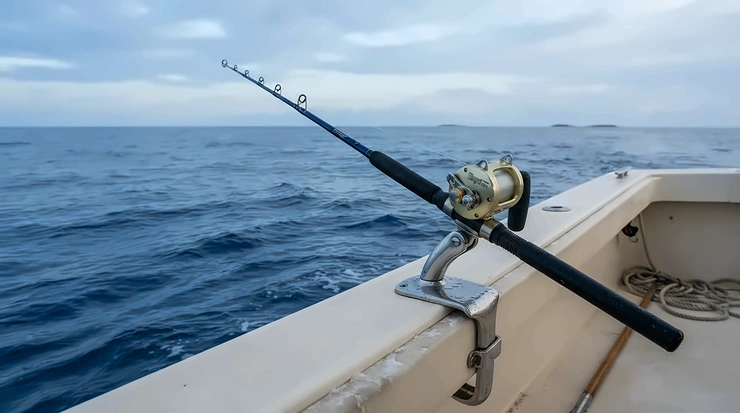
Multiplier reels for boat fishing over deep wrecks are geared, revolving-spool reels built to lower heavy leads to the seabed, hold plenty of line and winch strong fish away from structure. As this UK sea-angling glossary explains, the name comes from the gearing. One turn of the handle spins the spool several times.
Picture it. Sixty metres of cold UK water under the keel, a heavy lead dragging down through the tide, and somewhere in the wreckage a ling the size of a fence post sulking in a girder. The rod hoops over. Your reel now has exactly one job, and it had better not be a diva about it.
Choosing the right reel for that moment isn’t about brand loyalty. It comes down to drag, gearing, spool capacity and how much punishment the frame can take before it flexes. This guide covers seven real models, from budget level winds to premium two-speed lever drags. It explains what each number on the spec sheet means once a fish is actually pulling, and it separates reels suited to deep, heavy wreck work from lighter drift-fishing tools.
A note on method. This is a research-driven guide, not a hands-on test report. Specifications come from manufacturer and UK retailer listings, review comments are aggregated sentiment from published sources, and every price is a range that moves daily. Always check current price before you buy.
Quick Comparison Table: Multiplier Reels for Boat Fishing Over Deep Wrecks
Here are all seven contenders side by side before we dig into the detail.
| Reel | Drag type | Price range | Best for |
|---|---|---|---|
| Penn Squall II Level Wind 30 | Star drag | Under £200 | Budget level wind, lighter wrecks |
| Shimano TLD 15 | Lever drag | Around £125 | Drifting and light offshore work |
| Shimano TLD 25 | Lever drag | Around £140-£175 | Reliable all-day wreck workhorse |
| Penn Fathom II | Star or lever (model-dependent) | Around £150-£230 | All-round deep dropping |
| Shimano Speedmaster 25LD II | Lever drag, two-speed | Around £250-£350 | Heavy fish plus fast retrieves |
| Shimano Tyrnos 20 | Lever drag | From around £150 (varies widely) | Big conger, skate and sharks |
| Shimano Talica 25II | Lever drag, two-speed | Around £500 | Premium compact power |
Looking at the table, the Shimano TLD 25 and Penn Squall II Level Wind 30 are the value anchors. The Shimano Tyrnos 20 and Shimano Talica 25II are for anglers who already know the wreck will fight back. The middle of the pack, the Penn Fathom II and Shimano Speedmaster 25LD II, is where most serious wreck anglers will end up. Price bands matter more than badges here, because drag power and capacity scale with money fairly predictably.
💬 Just one click — help others make better buying decisions too!😊
Top 7 Multiplier Reels for Boat Fishing Over Deep Wrecks: Expert Analysis
Each reel below gets the same treatment: what the specs mean in practice, who it suits, and what published review sentiment says. UK review hub eTackle’s sea reel ratings were one of the sources used to cross-check how these models are regarded.
1. Penn Squall II Level Wind 30 — budget level wind for lighter wrecks
Level winding is the headline here. The line lays itself neatly, so your thumb can watch the rod tip instead of babysitting the spool.
The reel pairs a 4.9:1 gear ratio with four bearings, a forged and machined aluminium spool and HT-100 carbon drag washers rated to 33lb. Penn’s braid figures matter most for deep marks: 685yd of 50lb, 570yd of 65lb or 495yd of 80lb. The ratio works out at roughly 89cm of line per handle turn, so it feels like a steady winch rather than a sprint.
Based on the spec comparison, this is a sensible way into boat multipliers when funds are tight. The clear line-capacity rings and fast-access side plate keep servicing simple. What most buyers overlook is that 33lb is a ceiling, not a working setting. The graphite frame and four-bearing layout mark this as an inshore and light-offshore tool, so treat very deep, tide-ripped marks as its limit.
I couldn’t verify a meaningful pool of UK owner reviews for this exact size, so there’s no aggregated rating to quote. A UK retailer’s round-up did praise the wider Squall II family as a value all-rounder for drifting and light wreck work.
Pros:
- ✅ Level wind keeps line lay tidy on deep drops
- ✅ Big braid capacity for the money
- ✅ Fast-access side plate simplifies servicing
Cons:
- ❌ Graphite frame is less rigid than all-metal rivals
- ❌ Not aimed at heavy skate or shark work
Check current price, but it should sit under £200 at most UK shops. That is good value for lighter wrecks and a stretch for the deepest ones.
2. Shimano TLD 15 — lightweight lever drag for drift work
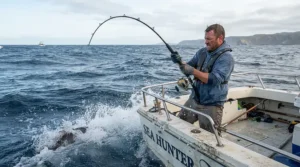
A lever drag in a small, light package is this reel’s party piece, and it’s rarer than you’d think at this price.
Shimano lists a one-piece graphite body, aluminium spool, stainless gearing, four A-RB bearings and a 4.0:1 ratio at 18.6oz (roughly 527g). Translated, it won’t tire your arm through a long drift, the graphite shrugs off salt, and the slow ratio trades speed for cranking power. A loud click alarm makes a bite on a slack line hard to miss.
Here’s what to weigh. The lever lets you slide back to a known strike setting after every fish, which suits the repeated drop-and-retrieve rhythm of wreck drifting. Shimano pitches the 15 at bass, pollack, mackerel and lighter offshore work. For truly deep marks, the small spool is the limiting factor, so check the capacity chart against your depth before committing.
Verifiable review data for this specific size is thin, so I won’t invent a score. The wider TLD family does have a long reputation among UK wreck and skate anglers, and one UK retailer describes the range as close to indestructible.
Pros:
- ✅ Lever drag makes strike settings repeatable
- ✅ Light graphite body, corrosion resistant
- ✅ Loud clicker flags bites clearly
Cons:
- ❌ Slow 4.0:1 retrieve
- ❌ Smaller spool limits very deep marks
Around £125 at the time of research. It’s a smart dedicated drift reel, but poor value if you want one reel for everything.
3. Shimano TLD 25 — the proven lever-drag workhorse
If wreck fishing had a Land Rover Defender, it would be a TLD. It isn’t elegant or fast, but it keeps going.
A UK retailer lists a 3.6:1 ratio, four bearings, a 22lb maximum drag and mono capacities of 600yd of 30lb, 450yd of 40lb or 350yd of 50lb. At 3.6:1 each turn moves line slowly. In exchange you get leverage, which is what you want when a conger has wedged itself into steelwork. The shielded A-RB bearings and waterproof drag suit repeated saltwater use.
On the analysis side, UK retailer commentary links the TLD range to heavy wrecking, skate and shark work, paired with 30lb or 50lb rods. A 22lb maximum looks modest beside the Penn’s 33lb, but many anglers set working drag at around a third of line breaking strain, so the headline figure is rarely the limiting factor. Smoothness matters more.
The retailer page carries only two Trustpilot-collected comments, averaging 4.5 stars and praising quality for the money. That’s anecdote, not consensus.
Pros:
- ✅ Long-proven design used worldwide
- ✅ Lever drag with waterproof washer
- ✅ Generous mono capacity for the price
Cons:
- ❌ Slow 3.6:1 retrieve
- ❌ Modest 22lb maximum drag
Around £140-£175 range. Arguably the best-value heavy wreck reel on this list.
4. Penn Fathom II — charter-skipper favourite all-rounder
Full-metal construction and a reinforced level wind explain why eTackle describes this as a charter-skipper favourite.
The spec sheet shows a metal body and side plates, stainless main and pinion gears, a forged aluminium spool and HT-100 carbon drag washers good for up to 30lb. Add a 5.5:1 ratio, 4+1 shielded bearings and a 740g weight. Capacity is 475yd of 15lb mono or 645yd of 30lb braid. A metal frame keeps gears aligned under load, and 5.5:1 sits between slow winch and quick retrieve.
Here’s the honest take. This reel suits anglers who want one multiplier for deep dropping, uptiding and general wreck work. The fast gear access side plate makes servicing painless. One caution: the Fathom II range includes both star-drag and lever-drag versions, so confirm the exact model code before buying.
eTackle scores it 8.4/10, and its aggregation shows 4.6/5 from 281 verified buyer reviews on Amazon UK and eBay. eTackle’s own review flags build and drag as strengths, and weight and price as drawbacks.
Pros:
- ✅ Full-metal body keeps gears aligned
- ✅ Smooth HT-100 drag up to 30lb
- ✅ Quick-access side plate for servicing
Cons:
- ❌ Heavier than graphite rivals
- ❌ Costs more than similar-capacity reels
Around £150-£230 depending on retailer. Strong value if you only buy one wreck reel.
5. Shimano Speedmaster 25LD II — two-speed power without Talica money
Two gears is the trick here. You get a fast one for hauling empty rigs up from depth and a low one for when something heavy refuses to leave home.
Listings show 5.2:1 high and 3.1:1 low ratios, a compact aluminium Hagane body, Cross Carbon Drag and a maximum drag listed at 44lb. Mono capacity is 550yd of 30lb, 420yd of 40lb or 340yd of 50lb, and braid reaches 1,010yd of 65lb. It weighs around 1,025g. A spare drag lever gives a gentler drag curve for mono.
Analytically, the high gear saves real time and effort on deep marks, because every rig recovered after a snag or tangle is a long crank. Shimano positions it between the TLD range and Talica line.
The UK listing for this size has no reviews yet. An overseas retailer review praised its power and value but noted the spool can overrun without disciplined thumb control, and that the plastic drag lever feels less premium.
Pros:
- ✅ Two-speed gearing for fast retrieves and heavy lifts
- ✅ Up to 44lb drag with huge braid capacity
- ✅ Compact, rigid Hagane body
Cons:
- ❌ Spool can overrun if thumbing is sloppy
- ❌ Plastic-feeling drag lever
UK listings show around £250, with an RRP nearer £350. Good value for serious deep-water use.
6. Shimano Tyrnos 20 — heavyweight for big fish over deep wrecks
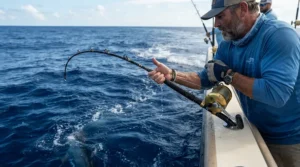
Think of it as the reel you buy once you stop being surprised by what’s down there.
eTackle lists a one-piece die-cast frame, HEG gearing, a 5.0:1 ratio, four A-RB bearings and 1,021g. The lever drag offers a preset strike position (7kg) and a full position (15kg), and eTackle quotes a capacity of 820yd of 50lb mono. The smaller Shimano Tyrnos 16 holds 475yd of 20lb at 819g. Presets mean you can jump from strike to full pressure without guesswork.
A UK retailer positions the Tyrnos range for the biggest, fastest fish, including deep-water skate over 100lb and large sharks. So for most wreck anglers this is more reel than needed. If you’re chasing that kind of fish, though, frame rigidity and oversized gearing are exactly what you’re paying for.
eTackle scores it 8.8/10, with 4.3/5 from 49 external reviews on Amazon UK and eBay. Its own cons are weight and price.
Pros:
- ✅ Cold-forged one-piece frame stays rigid
- ✅ Preset strike and full drag positions
- ✅ Huge capacity for the biggest fish
Cons:
- ❌ Heavy for long sessions
- ❌ Overkill and pricey for typical wrecks
Tracked prices have run from around £150 to the low £300s depending on retailer and date. Check current price, because the spread is enormous.
7. Shimano Talica 25II — premium compact two-speed power
Narrow-body design is the selling point. A UK retailer says it gives less weight, smaller dimensions and easier handling than equivalent lever-drag multipliers.
The listing shows a die-cast aluminium frame, waterproof drag, shielded A-RB bearings, brass gears and an aluminium spool, with 6+1 bearings, 5.2:1 and 3.1:1 ratios and a 44lb maximum drag. CAM versions add replaceable drag cams so you can tune performance for braid or mono. In practice a slimmer body sits more comfortably in the hand through a long fight.
Here’s the honest take. This is where money buys refinement rather than raw capability. The fish don’t care about ergonomics, but your forearm does after the fifth deep drop of the day. For anglers who fish often and push big tackle hard, it’s a justifiable luxury. For occasional use, it isn’t.
Review data is thin. One UK listing shows two short, glowing Trustpilot-collected comments, far too few to call a consensus, and the same retailer showed it out of stock at the time of research.
Pros:
- ✅ Narrow body easier to handle
- ✅ Replaceable drag cams suit braid or mono
- ✅ Two-speed gearing
Cons:
- ❌ Premium price
- ❌ Availability patchy at time of research
Around £500. It pays off only for frequent, serious wreck anglers.
Top 7 Specs and Price Comparison
| Reel | Gear ratio | Max drag | Headline capacity | Price range | Best for |
|---|---|---|---|---|---|
| Penn Squall II Level Wind 30 | 4.9:1 | 33lb | 685yd of 50lb braid | Under £200 | Budget, light wrecks |
| Shimano TLD 15 | 4.0:1 | Check Shimano spec | Lighter mono and braid loads | Around £125 | Drifting |
| Shimano TLD 25 | 3.6:1 | 22lb | 600yd of 30lb mono | Around £140-£175 | Heavy-duty value |
| Penn Fathom II | 5.5:1 | 30lb | 645yd of 30lb braid | Around £150-£230 | All-round deep dropping |
| Shimano Speedmaster 25LD II | 5.2:1 / 3.1:1 | 44lb | 1,010yd of 65lb braid | Around £250-£350 | Fast retrieves plus power |
| Shimano Tyrnos 20 | 5.0:1 | 15kg (full) | 820yd of 50lb mono | From around £150 | Big fish, deepest marks |
| Shimano Talica 25II | 5.2:1 / 3.1:1 | 44lb | Check capacity chart | Around £500 | Frequent, serious use |
The Penn Fathom II is the best-evidenced option, with 4.6/5 across 281 aggregated reviews, while the Shimano Tyrnos 20 carries a 4.3/5 average across a smaller pool of 49. Spec for spec, the Shimano Speedmaster 25LD II offers the most capacity per pound if you’re comfortable with lever drag. Buyers watching the budget should note the Shimano TLD 25 trades retrieve speed for price.
First 30 Days: Setting Up and Looking After Your Wreck Multiplier
A reel that’s set up well feels like a different machine. These are the habits that pay back quickest.
Spool it properly. Load line under firm tension, and use the line-capacity rings on Penn reels as a visual guide to how much is left. Underfilling costs reach on deep drops, and overfilling invites spills over the flange.
Set your drag before you fish, not during a fight. On a lever drag like the Shimano TLD 25, mark your strike position. On a star-drag reel such as the Penn Squall II Level Wind 30, set pressure with a scale if you can. A common rule of thumb is roughly a third of line breaking strain.
Practise your thumb. Braid is unforgiving, and overruns are a documented complaint on fast-spooling reels. Practise dropping the lead with a light thumb on the spool in the garden before you find out on a wreck.
Rinse and lubricate. Penn advises rinsing after saltwater use and periodically lubricating through the access side plate. Make it a post-trip habit.
Common first-month mistakes:
- Leaving drag fully tightened between trips
- Skipping rinses because the trip was short
- Fishing mono-rated drag settings with braid
Real-World Scenarios: Which Reel for Which Wreck Angler?
Specs only matter in context. Here are three typical profiles matched to reels, with reasoning.
The weekend charter regular. Budget around £150-£250, 6-10 trips a year on party boats over mixed 30-60 metre wrecks, targeting pollack, ling and conger. The Penn Fathom II is the logical pick: metal construction, a level wind for tidy line, and enough braid capacity for most UK marks. The Shimano TLD 25 is the budget alternative.
The small-boat drift specialist. Own boat, lighter tackle, drifting wrecks for pollack and bass with frequent repeat drops. Weight matters across a full day, and here multiplier reels for drifting over wrecks make the most sense in light lever-drag or level-wind formats. The Shimano TLD 15 or Penn Squall II Level Wind 30 fit, at roughly £125-£200.
The deep-water big-fish chaser. Eight or more trips a year, heavy 30-50lb rods, targeting big conger and skate, with money to spend. The Shimano Speedmaster 25LD II offers two-speed flexibility at around £250-£350, while the Shimano Tyrnos 20 is for those chasing the largest fish. Only the very committed need the Shimano Talica 25II.
✨ Ready to Upgrade Your Wreck Setup?
🔍 Take your deep-water fishing to the next level with these carefully selected reels. Click on any highlighted item to check current pricing and availability. The right multiplier will help you land the catches you’ve been chasing!
Problem → Solution: Fixing Common Deep-Wreck Reel Headaches
Problem 1: Overruns and bird’s nests on the drop. Braid spools fast and punishes loose thumbing. The solution is a snug clicker or free-spool setting, a light thumb and a slower drop. Fast-spooling reels like the Shimano Speedmaster 25LD II reward discipline.
Problem 2: A fish that won’t leave the wreck. High-speed gearing can struggle when a heavy conger is wedged in steelwork. Choose low gearing: the 3.6:1 Shimano TLD 25 or the 3.1:1 low gear on the Shimano Speedmaster 25LD II.
Problem 3: Messy line lay on long retrieves. If the line digs in or piles up, a level wind such as the Penn Fathom II or Penn Squall II Level Wind 30 helps. Alternatively, guide the line manually with your thumb.
Problem 4: A gritty, notchy feel after a few trips. Salt and neglected lubrication are the usual culprits. Rinse, dry and lubricate through the access plate, and favour models with shielded or A-RB bearings.
How to Choose Multiplier Reels for Boat Fishing Over Deep Wrecks
Follow these steps and you’ll avoid most expensive mistakes.
- Match the reel to your rod class. One UK retailer suggests a 20-30lb class reel covers most UK boat fishing, while heavier wrecking calls for 30-50lb gear. A reel and rod mismatch is the quickest way to waste money.
- Decide on drag type. Lever drag offers repeatable strike settings, while star drag is cheaper and familiar. The next section explains the trade-off.
- Check spool capacity against depth. Calculate how much line you’ll realistically need, including drift angle and tide, then add reserve.
- Pick the gearing. Low ratios (3.1-4.0:1) give winching power, mid ratios (4.9-5.5:1) suit all-round use, and two-speed reels give both.
- Compare construction. Graphite is lighter and corrosion-resistant, while all-metal frames stay stiffer under heavy load.
- Decide whether you want a level wind. It simplifies line lay but adds mechanical parts.
- Budget for the whole setup. Line, leaders and servicing add up, so don’t spend everything on the reel.
Star Drag vs Lever Drag: Which Suits Deep Wrecks?
Every wreck angler eventually has this argument at the stern. A star drag is adjusted by a wheel beside the handle, while a lever drag slides through a range. As this UK sea-angling guide notes, the star drag is the more common type partly because it’s cheaper to produce, and quality varies widely. The same author prefers a good star drag most of the time, except for sharking and big conger fishing, but was pleasantly surprised by lever drag for drifting pollack and bass.
Lever drag’s biggest advantage is repeatability. You can return to a known strike setting and go to free-spool easily. A star drag can match that performance but requires feel or marking. For deep wrecks, where you may be fishing heavy leads and large fish, lever drag adds convenience. For budget and drift work, star drag remains perfectly capable.
| Feature | Star drag | Lever drag |
|---|---|---|
| Adjustment | Star wheel, incremental | Lever through a set range |
| Return to strike setting | Needs marking or feel | Easy and repeatable |
| Typical cost | Usually cheaper | Usually pricier |
| Example here | Penn Squall II Level Wind 30 | Shimano TLD 25, Shimano Tyrnos 20 |
| Best for | Budget, light wrecks, drifting | Heavy wrecks, big conger, repeatable settings |
In short, a quality star drag is a sound choice for lighter wrecks, while lever drag earns its premium when fish are big and mistakes are costly. Choose based on target species rather than reputation.
Spool Capacity: How Much Line Do Deep Wrecks Really Demand?
Spool capacity is the quiet decider. A reel with a gorgeous drag is useless if the lead never reaches the bottom.
Capacity depends heavily on line type. The Penn Fathom II holds 475yd of 15lb mono but 645yd of 30lb braid. The Penn Squall II Level Wind 30 lists 440yd of 25lb mono against 685yd of 50lb braid. The Shimano Speedmaster 25LD II goes further, with 550yd of 30lb mono versus 1,010yd of 65lb braid. Braid’s thin diameter is the reason, and it also slices through tide with less drag than mono.
For context, 685yd is roughly 626 metres, and 1,010yd is roughly 924 metres. As a planning heuristic, the line you need is rarely just the depth. Tide, drift angle and the need for reserve mean you want considerably more than the water depth on the spool. Heavy capacity matters most when you fish deep marks in strong tide or want a safety margin for runs.
The practical lesson is to read capacity charts by line breaking strain, not by headline yardage. A reel that holds 800yd of thin braid may hold far less of the thicker line you actually plan to use.
Multiplier Reels for Drifting Over Wrecks
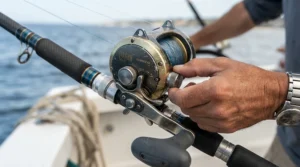
Drifting asks different questions from anchoring. You’re moving, you’re making repeated drops, and your arm does the work for hours.
That puts weight and handling ahead of raw capacity. The Shimano TLD 15 (roughly 527g) and Penn Fathom II (740g) suit long sessions, and the level wind on the Penn Squall II Level Wind 30 keeps line tidy across repeated drops. One UK retailer rates the Squall II family as a strong all-rounder for drifting inshore and light wreck fishing.
Lever drag also has a case here. The UK author mentioned earlier found it worked well when drifting for pollack and bass. If you value a fast retrieve, the Daiwa Sealine SL30SH (6.1:1, roughly 476g, centrifugal brake) is a popular lighter option, though its 7kg maximum drag and four bearings make it better suited to shallower work, and some UK listings mark it as discontinued.
Choose multiplier reels for drifting over wrecks with light weight and easy line handling in mind. Save the heavy hardware for anchored deep marks.
Conventional Reels for Deep Water Boat Fishing: Why Multipliers Dominate
Search for conventional reels for deep water boat fishing and you’ll find American results. In the US, multipliers are called conventional or boat reels, while in Europe they’re named for their geared retrieve.
Why do they beat fixed-spool (spinning) reels for deep wreck work? A UK reel guide lists superior cranking power for heavy weights and excellent line capacity as core multiplier advantages, along with greater control once mastered. The learning curve is real, but boat use is easier than casting, because you’re lowering rather than hurling.
Fixed-spool reels remain easier for beginners, and light lure work suits them better. But lifting a heavy lead and a big fish from 60 metres is cranking work, and gearing wins.
If you’re moving from fixed spool, start with a level wind like the Penn Squall II Level Wind 30. It’s forgiving, affordable and a good way to learn thumb control before graduating to a lever-drag reel.
Long-Term Cost and Maintenance
A £150 reel used on ten trips a year for ten seasons costs a modest amount per trip. A £500 reel used twice a year is a very different calculation. Cost per use matters more than ticket price.
Maintenance protects that value. Penn advises rinsing after saltwater use and lubricating through the access plate, a routine that takes minutes. Features such as the Penn fast-access side plate and Shimano A-RB bearings are really maintenance features in disguise.
Total cost of ownership is also about the whole setup. Braid, leaders, leads and rods often cost as much as the reel. A mid-priced reel like the Penn Fathom II paired with good line usually beats a premium reel paired with a poor setup.
Finally, consider resale. Well-known lever-drag reels like the Shimano TLD 25 tend to hold their appeal on the second-hand market, which softens the upfront outlay.
Safety, Wrecks and the Law
Fishing over wrecks isn’t just a tackle question. As GOV.UK’s wreck and salvage law guidance explains, three main laws apply to shipwrecks in the UK: the Merchant Shipping Act 1995, the Protection of Wrecks Act 1973 and the Protection of Military Remains Act 1986.
Some wrecks are protected as historic sites or military graves, and the Royal Navy describes protected places as sites where people may look but not touch. Dangerous wrecks may also carry a prohibited area with a no-entry policy. Those rules are written with divers and salvors in mind, but they’re a reminder to check before fishing a marked wreck. Ask your skipper and the relevant authority, whether Historic England, Historic Environment Scotland, Cadw or the MOD.
On the practical side, wear a lifejacket, listen to skipper briefings, and don’t take unnecessary risks with heavy gear in rough water. If a wreck is protected or restricted, pick another mark. The fish won’t mind.

FAQ
❓ What size multiplier do I need for 30lb class wreck fishing?
❓ Can I use braid on a multiplier reel for deep wrecks?
❓ How much should I spend on a multiplier for deep wreck fishing?
❓ Is a level wind multiplier better for deep dropping?
❓ How often should I service a boat multiplier reel?
Conclusion
Choosing among multiplier reels for boat fishing over deep wrecks comes down to honest questions about your marks, your target species and your budget.
If money is tight, the Shimano TLD 25 and Penn Squall II Level Wind 30 deliver the most capability per pound, with the Shimano TLD 15 a smart dedicated drift reel. The Penn Fathom II is the best-evidenced all-rounder, backed by 4.6/5 across 281 aggregated reviews. If you regularly fish deep marks, the Shimano Speedmaster 25LD II offers two-speed flexibility and enormous braid capacity at a fair price. The Shimano Tyrnos 20 and Shimano Talica 25II belong to anglers chasing the biggest fish or fishing hard all season.
Remember the fundamentals. Match the reel to the rod, read spool capacity by line type, weigh star drag against lever drag honestly, and look after the reel once you own it. Spend on the right features rather than the right badge, and respect the wreck, both legally and practically.
🎣 Ready to drop down to the wrecks?
Click any highlighted reel above to check current pricing and availability. Tight lines!
Recommended for You
- Light Boat Rods For Mackerel And Pollock: 7 Best UK Picks (2026)
- Downtide Rods For Fishing Fast Tide Over Wrecks: 7 Proven Picks 2026
- Uptide Rods For Shore-Style Distance Casting From A Boat: 7 Best 2026
Disclaimer: This article contains affiliate links. As an Amazon Associate, I earn from qualifying purchases. If you purchase products through these links, we may earn a small commission at no additional cost to you.
✨ Found this helpful? Share it with your friends! 💬🤗
