
In This Article
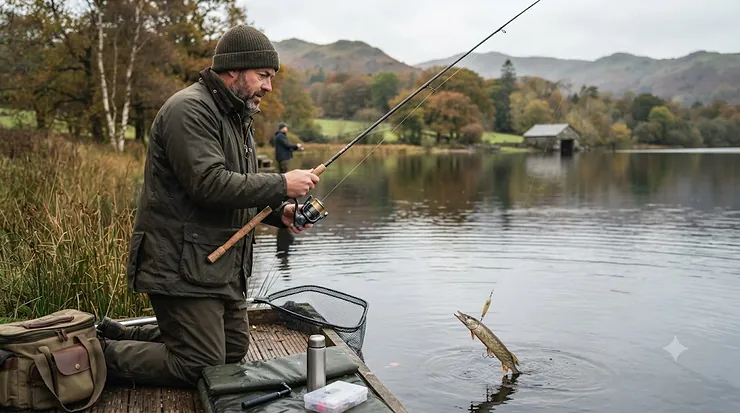
Stand on any pike-fishing forum for more than five minutes and someone will be mid-argument about jerkbait vs swimbait for pike, usually with the quiet certainty of someone who’s never actually lost a fifteen-pound fish to a badly chosen lure. The truth is less dramatic and more useful: both catch pike, brilliantly, in different conditions, and the anglers who do best simply know which one to tie on and when.
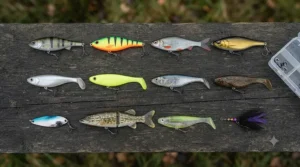
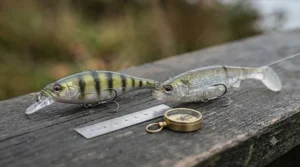
A jerkbait is a rigid, hard-bodied lure worked in sharp, deliberate strokes — jerk, pause, jerk — designed to imitate an injured baitfish darting and faltering through the water. A swimbait (often called a glidebait when it’s built for that wide, sweeping side-to-side motion) tends to have a softer or jointed body and a more continuous, fish-like swimming action, frequently fished on a slower, steadier retrieve. Neither is objectively “better” — they’re different tools for different water clarity, temperature and pike mood, and this guide breaks down exactly when to reach for each.
Below, we’ve researched seven genuinely available lures spanning both camps, plus the rod and reel setup that actually makes casting 100g-plus lures all day bearable, and honest tactical guidance drawn from how pike are actually documented to hunt — not just marketing copy.
What Is the Difference Between a Jerkbait and a Swimbait for Pike?
A jerkbait is a hard-bodied lure fished with sharp rod strokes to create a darting, erratic action mimicking a dying baitfish, while a swimbait (or glidebait) uses a softer or segmented body to produce a smoother, more continuous swimming motion, typically on a slower retrieve. Jerkbaits tend to trigger reaction strikes from aggressive fish; swimbaits often draw more considered takes from cautious or pressured pike.
Quick Comparison Table
| Lure Type | Best For | Typical Retrieve | Weight Range |
|---|---|---|---|
| Jerkbait (e.g. Salmo Slider) | Aggressive, actively feeding pike | Jerk-pause-jerk | 20g-150g+ |
| Swimbait / Glidebait (e.g. Westin Swim Glidebait) | Cautious, pressured or cold-water pike | Slow, steady wind | 60g-700g+ |
| Jointed swimbait (e.g. Fox Rage Jointed Replicant) | Deep water, suspended fish | Slow roll with pauses | 80g-250g |
| Hybrid hard/soft (e.g. Rapala X-Rap Peto) | Cold water, horizontal fall | Slow roll or jerk-pause | 39g-83g |
The pattern that jumps out immediately is retrieve speed rather than hardware: jerkbaits reward an aggressive, twitchy hand and suit fish willing to chase, while swimbaits and glidebaits are built around a slower, more hypnotic action that works when pike are watching rather than chasing. On paper, that maps neatly onto water temperature — jerkbaits into warmer, more active conditions, swimbaits into cold or heavily-pressured waters — though as any experienced angler will tell you, pike don’t always read the manual.
💬 Just one click — help others make better buying decisions too!😊
Top 7 Jerkbaits and Swimbaits for Pike: Expert Analysis
We’ve mixed hard jerkbaits, soft and jointed swimbaits, a genuine glidebait, and the rod-and-reel combination that actually makes casting these things bearable — because “big lure big pike” tactics live or die on the tackle behind them, not just the lure itself.
1. Westin Swim Glidebait — best true glidebait action for pressured pike
The standout feature is a wide, sweeping side-to-side glide that’s become something of a benchmark in the glidebait category, built around a segmented body that flexes through the water rather than just wobbling. Specs-wise, the original Swim Glidebait runs in sizes from around 8cm/16g right up to a 12cm/62g suspending or sinking version, with a construction that’s earned it a reputation among guides as a lure clients can fish confidently without overworking it.
Based on the spec comparison with hard-jerkbait alternatives, the appeal here is subtlety: a glidebait like this one covers water on a slow, steady retrieve without the constant rod-hand effort a jerkbait demands, which matters on a long session. What most buyers overlook is that glidebaits genuinely shine on waters that see heavy angling pressure — pike that have seen a hundred jerkbaits a season often respond better to a lure that swims rather than darts. Westin also produces a silent version specifically aimed at “heavily fished waters and finicky pike,” a detail that signals the brand’s own research points toward pressured fish being warier of noise and vibration than open-water pike.
Pros:
- ✅ Wide glide action stands out from typical hard jerkbaits
- ✅ Silent version available for pressured waters
- ✅ Multiple sizes cover small to large pike
Cons:
- ❌ Slower retrieve means covering less water per hour
- ❌ Premium pricing compared with budget hard jerkbaits
Expect prices in the £10-£16 range for standard sizes, rising toward £20 for the larger suspending versions — check current price and size availability before ordering, as colours and configurations rotate seasonally.
2. Savage Gear 3D Line Thru Trout — best big lure for genuine trophy pike
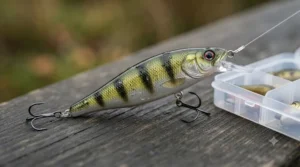
The standout feature is sheer scale: this is a proper big-pike lure, running up to 40cm and 712g in its largest configuration, built on Savage Gear’s line-through construction, which threads the main line directly through the lure body rather than relying solely on external hook hangers. On paper, that line-through design matters enormously for big-lure tactics, because it distributes the shock of a big pike’s headshake through the leader rather than concentrating stress on a single hook eye — a genuine safety feature for the angler as much as a durability one.
Here’s what to weigh: a lure this size demands genuinely heavy tackle and isn’t a sensible choice for a casual afternoon session — this is purpose-built big lure, big pike territory, aimed at anglers specifically targeting trophy specimens rather than covering water for numbers. What the spec sheet won’t tell you, but the sheer bulk implies, is that a lure like this filters out smaller fish almost entirely; pike under a certain size simply can’t inhale a 40cm bait, which some specialist anglers deliberately use as a size-selective tactic on waters holding big but pressured pike.
Pros:
- ✅ Line-through construction reduces hook-pull risk on big fish
- ✅ Realistic profile from 3D scanning process
- ✅ Genuinely size-selective for trophy-only targeting
Cons:
- ❌ Requires heavy-duty rod and reel to cast safely
- ❌ Overkill for smaller waters or younger pike populations
Pricing for the largest configurations tends to sit in the £45-£65 range given the scale of materials and construction involved, with smaller Line Thru Trout sizes available for considerably less.
3. Fox Rage Jointed Replicant — best jointed swimbait for deep, suspended pike
The standout feature is a genuinely sinuous, multi-segment swimming action — the standard version uses a 13-segment jointed body connected by a textile mesh, producing an S-shaped motion that Fox Rage themselves describe as unmatched by other jointed soft lures on the market, and it’s not an idle claim given how long this shape has dominated European soft-lure fishing. Sizes run from 18cm/80g through to a genuine giant at 27cm/248g, with rigging via a dorsal single hook plus a rotating belly treble designed specifically to reduce hook-pull on aggressive strikes.
Based on the construction alone, this is precisely what “jointed lure pike fishing” tactics are built around: the segmented body keeps producing a lifelike undulation throughout the retrieve, at any speed, which a rigid hard jerkbait simply can’t replicate. What most buyers overlook is how effective the jointed action is on a painfully slow retrieve — because each segment reacts semi-independently to water resistance, the lure keeps moving convincingly even when you’re barely reeling, which is precisely the presentation cold, lethargic pike respond to. Aggregated reviewer sentiment across the wider Replicant range consistently praises the belly hook rotation system for reducing lost fish, while some owners note the softer body material shows bite damage faster than harder alternatives.
Pros:
- ✅ 13-segment body gives genuinely lifelike slow-retrieve action
- ✅ Rotating belly hook reduces hook-pull on strikes
- ✅ Available up to genuine trophy-lure sizes
Cons:
- ❌ Soft body shows tooth damage faster than hard lures
- ❌ Larger sizes need a heavier rod to cast comfortably
Prices for the standard 18cm size sit around £13-£18, with the largest 27cm giant sizes commanding a premium in the £25-£35 range depending on retailer and colour.
4. Salmo Slider — best all-round hard jerkbait for everyday pike tactics
The standout feature is genuine forgiveness: Salmo themselves market this lure on the basis that “it cannot be fished wrong,” and independent reviewers broadly agree — a straight retrieve produces a pleasing flanking action, while rod-tip taps make it dart sharply left and right. The Slider runs across a wide size range from a modest 7cm/17-21g up to a genuinely substantial 16cm/152g sinking version, available in both floating and sinking configurations depending on the depth and retrieve style needed.
On paper, this versatility is exactly why the Slider has become, by most tackle-shop accounts, one of the most widely owned jerkbaits in Europe — it works as a beginner’s introduction to hard-lure pike tactics and remains in experienced anglers’ boxes for exactly the same reasons. What the spec sheet won’t tell you, but decades of angler use strongly suggest, is that the lipless design reacts directly and predictably to rod movement in a way lipped jerkbaits sometimes don’t, giving more precise control over depth and action without requiring an advanced retrieve technique.
Pros:
- ✅ Forgiving action suits beginners and experts alike
- ✅ Wide size range from small to genuinely large
- ✅ Floating and sinking versions cover multiple depths
Cons:
- ❌ Lipless design offers less depth control than diving jerkbaits
- ❌ Limited edition colourways sell out and command a premium
Pricing runs from around £9-£13 for the smaller sizes up to roughly £18-£22 for the large 16cm sinking version, making this one of the more accessible entries on this list.
5. Daiwa Prorex Lazy Jerk — best slow-sinking hard jerkbait for cold, shallow water
The standout feature is exactly what the name suggests: a slow-sinking action with pronounced lateral flanking that doesn’t need aggressive rod strokes to look alive, making it a genuinely different tool from faster-moving jerkbaits. Available in sizes from 9cm/18g up through a 15.5cm/85-110g variant, the Lazy Jerk is specifically built, according to Daiwa, for shallow presentations around 80cm depth and for working over weedy areas without constantly snagging.
Based on the spec comparison with more aggressive jerkbaits, this lure is a specialist tool for a specific scenario: cold water, shallow depths, and pike that want a slow, subtle presentation rather than a fast-moving target. What most buyers overlook is that the flanking action continues even during the sinking phase between rod strokes, which extends the lure’s effective “hunting time” per cast — a detail that matters enormously when pike are inactive and unwilling to chase. Reviewer sentiment from specialist pike anglers consistently rates this among the stronger cold-water jerkbaits currently available, citing both casting distance and the subtlety of its action as standout strengths.
Pros:
- ✅ Strong flanking action even during the sink phase
- ✅ Excellent casting distance for a slow-sink jerkbait
- ✅ Well suited to shallow, weedy presentations
Cons:
- ❌ Less effective in deep water where a diving lure works better
- ❌ Slow-sink profile isn’t ideal for covering water quickly
Expect prices around £14-£20 for the mid-size versions, rising slightly for the largest 17.5cm configuration.
6. Rapala X-Rap Peto — best hybrid hard/soft glide-jerk for challenging conditions
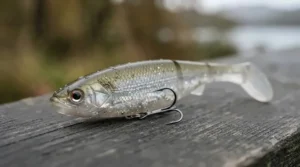
The standout feature is a genuinely clever hybrid construction — an ABS hard body paired with a colour-matched soft PVC tail, secured via a 6-point stainless steel locking plate, producing a wide tail-kick on a steady retrieve or a gliding, horizontal fall on the jerk-and-pause. Sizes range from a compact 14cm/39g up to a substantial 20cm/83g, marketed by Rapala specifically for cold water, early spring, late autumn and pressured fish — precisely the conditions where a straightforward hard jerkbait sometimes struggles to draw a take.
Here’s what to weigh: the slow sink rate and perfectly horizontal fall Rapala engineered into this lure directly addresses one of the most common jerkbait complaints — that a lure nose-diving unnaturally on the pause looks nothing like a genuinely injured baitfish. What the spec sheet won’t tell you, but the hybrid construction implies, is that this lure effectively splits the difference between a jerkbait’s reaction-triggering darts and a swimbait’s continuous, believable swim, making it a sensible single choice for anglers who don’t want to carry both lure types on a session where conditions might shift.
Pros:
- ✅ Horizontal fall looks genuinely natural on the pause
- ✅ Works equally well on steady retrieve or jerk-and-pause
- ✅ Replaceable soft tail extends usable lifespan
Cons:
- ❌ Premium price point compared with all-hard-body jerkbaits
- ❌ Soft tail is a wear item that eventually needs replacing
Pricing typically sits in the £16-£24 range depending on size, which is competitive given the hybrid construction and replacement tail included.
7. Daiwa Prorex Baitcaster Rod & Prorex 400TW Reel — best rod and reel setup for jerkbait and swimbait pike fishing
The standout feature is a genuinely purpose-built pairing for exactly this style of fishing: the Prorex Baitcaster Rod uses Daiwa’s HVF nanoplus carbon blank with X45 technology and titanium oxide guides rated for braided line, available in configurations up to the PX862XXHFB-AS, an 8ft 6in model built specifically for casting the largest shads and glidebaits in this list. Paired with the Prorex 400TW reel’s DigiGear digitally cut brass gearing and T-Wing System levelwind, available in 5.3:1, 7.1:1 and 8.5:1 gear ratios, this is a setup explicitly designed around heavy pike lures rather than adapted from bass tackle.
On paper, the case for buying a matched jerkbait rod and reel setup rather than repurposing general spinning gear is straightforward: casting a 700g glidebait on the wrong rod is both exhausting and genuinely risky for the blank, while a rod rated specifically for shads up to 150g-plus, like the PX862XXHFB-AS, handles that weight without strain. What most first-time jerkbait anglers overlook is gear ratio selection on the reel — a slower 5.3:1 ratio suits the deliberate, powerful cranking a big glidebait demands, while a faster 7.1:1 or 8.5:1 ratio suits quicker jerkbait work where you’re taking up slack rapidly between strokes.
Pros:
- ✅ Purpose-built for casting heavy shads and glidebaits
- ✅ Multiple gear ratio options to match retrieve style
- ✅ Titanium oxide guides handle braided line well
Cons:
- ❌ Significant investment compared with general-purpose spinning gear
- ❌ Overkill for anglers only fishing small, light jerkbaits
Expect a combined price in the £250-£350 range for a matched rod and reel, which is a genuine investment but one that pays off directly in casting comfort and control once lure weights climb past 60-80g.
✨ Don’t Miss These Exclusive Deals!
🔍 Take your pike season to the next level with these seven carefully researched jerkbaits, swimbaits and the tackle that casts them properly. Click through to check current pricing and availability on Amazon before your next session.
Jerkbait Rod and Reel Setup for Pike: Practical Usage Guide
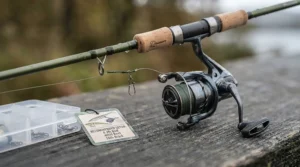
Getting a jerkbait rod and reel setup dialled in properly makes an enormous difference to both casting distance and hook-up rate, yet it’s one of the most commonly rushed decisions new pike anglers make. Start with rod power matched to your typical lure weight range — a rod rated 20-60g suits smaller jerkbaits and swimbaits, while anything approaching the big-lure-big-pike category (100g-plus) genuinely needs a rod built for that load, such as the heavier Prorex baitcaster configurations. Braided mainline is close to universal in serious jerkbait fishing because it has minimal stretch, which translates directly into better feel for the lure’s action and a faster, more positive hookset on a take.
In your first sessions with a new setup, spend time getting the reel’s spool tension and brake settings correct before you start casting heavier lures — an under-set brake on a baitcaster with a 150g glidebait attached is a fast route to an expensive backlash, sometimes called a “bird’s nest,” that can take genuine patience to untangle streamside. A wire or heavy fluorocarbon leader is non-negotiable for pike fishing regardless of lure choice, since their teeth will cut straight through standard mono or braid on a solid take. Before any of this matters, make sure you’re actually covered to fish — anyone aged 13 or over pike fishing in England needs a valid rod licence, and it’s worth reading the official national rod fishing byelaws to check close-season dates and local rules before heading out with a new setup. Finally, don’t underestimate rod length’s effect on casting big lures a genuine distance — an 8ft-plus rod, like the longer Prorex baitcaster models, generates noticeably more leverage for launching a heavy glidebait than a shorter 7ft blank.
Real-World Scenarios: Matching Lure to Water and Season
The cold-water specialist. Fishing a gravel pit in December with water temperatures hovering near 4°C, a slow-sinking hard jerkbait like the Daiwa Prorex Lazy Jerk or a hybrid glide-jerk like the Rapala X-Rap Peto suits lethargic pike far better than an aggressive, fast-moving jerkbait they simply won’t chase.
The pressured-water regular. Someone fishing a heavily-angled club water most weekends, where pike have seen every standard lure in the tackle shop, is precisely who Westin built the silent version of the Swim Glidebait for — a subtler presentation that hasn’t been hammered into every fish’s memory.
The trophy hunter. An angler specifically targeting a water’s known big females in late autumn, when pike feed hard before winter, is the intended user of a genuinely oversized lure like the Savage Gear 3D Line Thru Trout, fished on a matched heavy setup like the Prorex Baitcaster Rod and 400TW Reel combination, deliberately filtering out smaller fish to focus effort on specimens.
Problem → Solution: Common Jerkbait and Swimbait Mistakes
Problem: Pike are following the lure but not committing. This classic scenario often means the retrieve is too fast or too erratic for the fish’s current mood — dropping to a slower, more continuous swimbait presentation, or building longer pauses into a jerkbait retrieve, frequently converts followers into takers.
Problem: The lure feels lifeless on the retrieve. Check first whether the hooks or a damaged tail are throwing the action off balance, since even a well-designed jointed swimbait like the Fox Rage Jointed Replicant can swim poorly with a bent hook point catching water asymmetrically.
Problem: Constant backlashes when casting heavier lures. This is almost always a baitcasting reel brake and spool tension issue rather than a technique failure — spend ten minutes on dry land dialling in the brake settings for each specific lure weight before a session, since a 40g jerkbait and a 700g glidebait need very different settings.
Problem: Losing fish on the strike with big lures. Big lure, big pike fishing demands hooks and hardware rated for the fight — a lure like the Savage Gear 3D Line Thru Trout uses line-through construction specifically to spread that stress, so check any big lure’s hook-hanger design before committing to it for trophy targeting.
How to Choose Between a Jerkbait and Swimbait for Pike
- Read the water temperature first. Cold water generally favours a slower swimbait or slow-sinking jerkbait presentation; warmer, more active conditions suit a faster, more erratic hard jerkbait retrieve.
- Consider fishing pressure. On heavily-fished waters, a subtler swimbait or glidebait often outperforms a jerkbait every angler in the county already owns.
- Match lure size to your target. Big lure, big pike tactics genuinely filter out smaller fish — decide whether you want volume or trophy specimens before choosing size.
- Check your rod and reel can actually cast it. A 700g glidebait on an unsuitable rod isn’t just uncomfortable, it risks damaging the blank and ruining your cast accuracy.
- Think about retrieve depth. Jointed and soft swimbaits often maintain action better on a painfully slow retrieve, which matters for suspended, inactive fish holding deep.
- Weigh durability against action. Soft-bodied lures generally deliver a more lifelike swim but show bite damage faster than hard-bodied jerkbaits.
- Build both into your box rather than picking one camp permanently. Most experienced pike anglers carry a spread of both types precisely because conditions shift through a single session.
Common Mistakes When Buying Jerkbaits and Swimbaits
The most common mistake is buying based purely on how a lure looks in a shop display rather than considering the specific water and season it’ll actually be fished in — a stunning, ultra-realistic swimbait is wasted if your local water is coloured and pike are hunting by vibration rather than sight. A second frequent error is under-gearing: buying an impressive big-lure-big-pike glidebait without upgrading the rod and reel to match, which leads to poor casting, fatigue, and in some cases genuine equipment damage. A third mistake is treating jerkbait vs swimbait as a permanent, binary choice rather than a situational one — the anglers who catch consistently tend to carry both and read the water and pike mood on the day, rather than backing one lure type as a personal identity.
Jerkbait vs Swimbait for Pike: Which Wins in Which Conditions
Framed head-to-head, the honest answer is that neither wins outright — they’re specialised for different scenarios. Jerkbaits generally outperform in warmer water with actively feeding, aggressive pike, because their erratic, darting action triggers instinctive reaction strikes even from fish that aren’t necessarily hungry. Swimbaits and glidebaits, by contrast, tend to outperform in cold water, on heavily-pressured venues, or with wary, cautious fish, because their smoother, more continuous action reads as more genuinely alive on a slow presentation, and gives a suspicious pike longer to commit without the lure suddenly darting away unnaturally. Jointed swimbaits sit somewhere between the two, offering a lifelike continuous action while still permitting a faster, more jerkbait-style retrieve when conditions call for it — which is precisely why lures like the Fox Rage Jointed Replicant have earned a reputation as a genuinely versatile middle ground rather than sitting purely in either camp.
What to Expect: Real-World Action on the Retrieve
Spec sheets describe “wide flanking action” or “S-curve swimming motion,” but here’s what that translates to streamside: a well-tuned hard jerkbait like the Salmo Slider should produce a visible, sharp side-to-side dart on each rod stroke, with the lure briefly pausing and flashing its flank on the fall — that flash is frequently the trigger point for a following pike to commit. A glidebait like the Westin Swim Glidebait, by contrast, should track in a smooth, wide arc across the retrieve rather than a series of sharp darts, which on a slow wind can look uncannily like a real fish patrolling rather than fleeing.
A recent study on pike hunting behaviour, published via PubMed Central, used acoustic telemetry tracking to show that pike — a classic ambush “sit-and-wait” predator — adjust their activity levels and space use depending on habitat structure and prey availability, spending more time in open water and increasing activity where structural complexity was lower. The practical takeaway for lure anglers is that pike behaviour genuinely varies by venue and habitat type, which is a reasonable evidence-based argument for why the same lure and retrieve that performs brilliantly on one water can underperform on another with different structure — it isn’t just angler inconsistency, the fish’s actual hunting strategy differs.
Big Lure, Big Pike: Sizing Up for Trophy Fish
The logic behind big-lure-big-pike tactics is straightforward once you think about it from the fish’s perspective: a genuinely large predator with the jaw structure to swallow prey a third of its own body length isn’t going to expend serious energy chasing down a tiny lure when a much larger, calorie-dense meal is a realistic option. Lures like the Savage Gear 3D Line Thru Trout at up to 40cm and 712g, or the largest Fox Rage Jointed Replicant sizes at 27cm and beyond, are built specifically around this size-selective logic — smaller pike physically struggle to inhale them, which concentrates your catch rate toward genuinely larger specimens.
What most anglers overlook when moving into big-lure tactics for the first time is the equipment chain this decision demands: heavier rods and reels, as covered in the rod-and-reel section above, but also stronger leaders, larger and sharper trebles, and a proper unhooking kit sized for a genuinely large pike’s mouth. Big lure fishing also tends to produce fewer takes overall — you’re deliberately trading volume for size — so anglers new to the approach should go in expecting a quieter session count-wise, with the payoff being a genuine shot at a specimen fish rather than a string of jacks. It’s also worth handling any big pike properly once landed: peer-reviewed research on catch-and-release best practice consistently finds that reduced air exposure and careful handling meaningfully improve post-release survival, which matters even more with a genuinely large, hard-fighting specimen than with an average-sized fish.
Jointed Lures for Pike: Why the Segmented Action Works
Jointed lure pike fishing has become one of the dominant categories in modern predator angling, and the mechanical reason is fairly intuitive once explained: a segmented body, like the 13-part construction in the Fox Rage Jointed Replicant, allows each section to react semi-independently to water resistance as it moves, producing a continuous S-curve undulation that a single rigid hard-bodied jerkbait physically cannot replicate. Based on the spec comparison between jointed and rigid lures, the practical advantage shows up most clearly on a slow retrieve — a rigid jerkbait needs active rod-hand input to look alive, while a well-designed jointed lure keeps undulating convincingly even when barely being wound in.
Here’s what to weigh against that advantage: jointed lures, particularly soft-bodied versions, generally show wear and bite damage faster than a solid hard-bodied jerkbait, and the additional moving parts represent more potential failure points over a season’s hard use. For anglers specifically targeting cold, deep water where fish won’t chase, or fishing over structure where a lure needs to look alive on a painfully slow presentation, the trade-off consistently favours jointed construction despite the durability compromise.
Benefits vs Traditional Deadbaiting
| Factor | Jerkbait / Swimbait Lures | Traditional Deadbaiting |
|---|---|---|
| Mobility | High — actively search and cover water | Low — mostly static presentation |
| Bite indication | Instant visual/felt take | Often delayed, requires alarm or float watch |
| Best For | Active anglers covering multiple swims in a session | Cold, slow days where fish won’t chase |
| Selectivity | Size and action can filter for target fish | Less size-selective, attracts smaller and larger fish alike |
Lure fishing and deadbaiting solve genuinely different problems rather than directly competing — deadbaiting excels on very cold, slow days when pike won’t expend energy chasing anything, while active lure work, whether jerkbait or swimbait, suits anglers who want to cover multiple swims and stay mobile through a session. The size-selectivity argument covered earlier under big-lure tactics doesn’t really exist in traditional deadbaiting, where a huge dead fish can just as easily be picked up by a modest jack as a specimen.
Price Range & Value Analysis
| Lure / Setup | Approximate Price Range | Value Verdict |
|---|---|---|
| Salmo Slider | Around £9-£22 depending on size | Excellent all-round value across the size range |
| Westin Swim Glidebait | Around £10-£20 | Strong value for genuine glidebait action |
| Fox Rage Jointed Replicant | Around £13-£35 depending on size | Fair for the jointed construction and hook system |
| Daiwa Prorex Rod & Reel Combo | Around £250-£350 | Genuine investment, justified for serious jerkbait anglers |
Looking at the spread, individual lures across this list cluster comfortably in the £9-£35 bracket depending on size and construction complexity, making it realistic to build a varied box covering both jerkbait and swimbait styles without an enormous outlay. The rod-and-reel combination represents the biggest single investment on this list by some distance, but for anglers regularly casting lures above 60-80g, that spend directly translates into better casting comfort, distance and reduced fatigue across a long session — arguably a better first upgrade than adding yet another lure to an already crowded box.
FAQ
❓ Is jerkbait or swimbait better for pike?
❓ What size lure is best for big pike?
❓ Do jointed lures catch more pike than rigid jerkbaits?
❓ What rod is best for jerkbait pike fishing?
❓ Can you use a spinning reel instead of a baitcaster for jerkbaits?
Conclusion
The jerkbait vs swimbait debate ultimately isn’t a debate worth having in absolute terms — it’s a question of reading your water, the season, and the mood of the pike in front of you on any given day. Across the seven products here, the pattern holds: hard jerkbaits like the Salmo Slider and Daiwa Prorex Lazy Jerk reward an active, aggressive retrieve and suit fish willing to chase, while the Westin Swim Glidebait, Savage Gear 3D Line Thru Trout and Fox Rage Jointed Replicant lean on subtler, slower presentations that convert cautious or cold-water pike the hard lures sometimes can’t.
If there’s one genuine takeaway, it’s that the tackle behind the lure matters as much as the lure choice itself — a Daiwa Prorex Baitcaster Rod and 400TW Reel setup properly matched to your typical lure weight will improve your casting, hook-up rate and overall enjoyment of a session more than any single lure swap. Build a box that covers both camps, read the conditions honestly rather than fishing your favourite lure out of habit, and check current pricing before you buy, since availability and colourways shift through the season.
✨ Ready to Build Your Pike Lure Box?
🔍 Browse the full range of jerkbaits, swimbaits and matched rod-and-reel setups for pike, and find the combination built for your water and your target fish. Click through to check today’s availability and pricing before your next session!
Recommended for You
- Best Jerkbaits for Pike: 7 Proven Lures Ranked for 2026
- Spinnerbait vs Inline Spinner for Pike: 7 Picks UK Anglers Rate (2026)
- Best Spinnerbaits for Pike in 2026: 7 UK Picks Reviewed
Disclaimer: This article contains affiliate links. As an Amazon Associate, I earn from qualifying purchases. If you purchase products through these links, we may earn a small commission at no additional cost to you.
✨ Found this helpful? Share it with your friends! 💬🤗
