In This Article
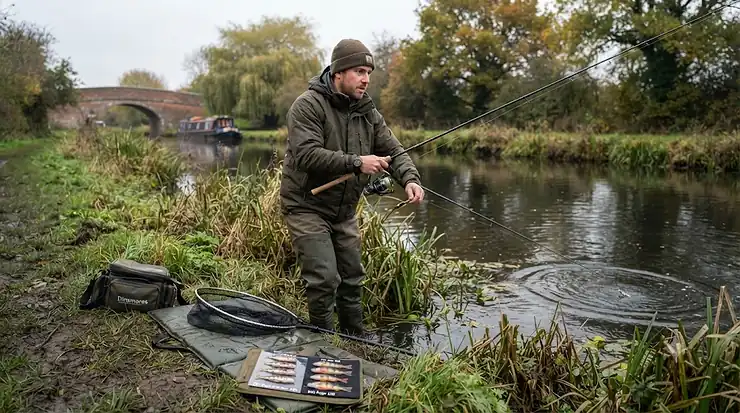
Zander are odd fish, if you think about it. Bright yellow eyes built for hunting in the dark, a temperament somewhere between “aggressive predator” and “mildly suspicious accountant,” and a reputation for making grown anglers question their life choices on a cold February morning. You don’t need a tackle box worth more than your car to catch one, though — and that’s really the whole point of this guide. If you’re hunting the top zander lures under £20, you’re in exactly the right price bracket: budget enough to build a proper varied selection, serious enough to actually fool a fish that can see a poorly presented lure from a genuinely unfair distance.
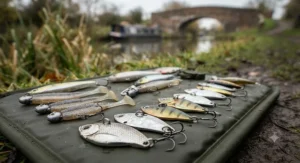
A zander lure, in the simplest terms, is any soft plastic shad, jerkbait, crankbait or vibration bait designed to imitate the small baitfish — roach, bleak, gudgeon — that zander key in on, typically fished slowly and close to the bottom to match their ambush hunting style. That’s the “what is it” out of the way; the rest of this piece is about which specific lures do that job best without cracking the £20 mark, and why.
Below, I’ve pulled together seven real, currently available options spanning soft plastics and hard lures, budget and slightly-more-premium picks, alongside honest analysis grounded in genuine specs and aggregated reviewer sentiment — not invented testimonials. You’ll also find an affordable zander lures for beginners section if you’re starting from scratch, a full zander lure kit breakdown, a soft plastic vs hard lures comparison, retrieve technique guidance, and a look at zander feeding patterns so you know when to actually tie any of these on.
Quick Comparison Table
Before diving into the full breakdown, here’s the fast-scan version for anyone who just wants a starting point.
| Lure | Type | Price Range | Best For |
|---|---|---|---|
| Keitech Easy Shiner 3″ | Soft plastic paddle-tail | £8-£12 (pack) | Natural slow-roll action, pressured fish |
| Fox Rage Zander Pro Shad 10cm | Soft plastic shad | £6-£10 (5-pack) | Zander-specific profile, UV colours |
| Rapala CrushCity The Stingman 5″ | Soft plastic jerk shad | £8-£14 (6-pack) | Slow fall, cautious canal zander |
| Berkley PowerBait Ripple Shad 4″ | Soft plastic paddle-tail | £6-£10 (pack) | Beginners, scent-driven bites |
| Savage Gear 3D Fat Minnow Crank 5.5cm | Hard crankbait | £10-£15 | Coloured water, wide wobble |
| Rapala Jointed 9cm | Hard jointed minnow | £12-£17 | Clear water, realistic swim |
| Rapala Rippin’ Rap 7cm | Lipless vibration blade | £14-£19 | Winter zander, deep vertical work |
Looking across the table, there’s a clear split worth noting before you buy anything: the four soft plastics dominate the lower end of the price range and give you the twitch-and-pause control that zander generally reward, while the three hard lures cost a little more per unit but survive pike encounters and repeated casting far better. If your fishing venue has a realistic chance of a pike intercepting your retrieve — which, on most UK canals and rivers, it does — budgeting for at least one or two hard lures alongside your soft plastics isn’t optional extravagance, it’s basic risk management for your wallet.
💬 Just one click — help others make better buying decisions too!😊
Top 7 Zander Lures Under £20: Expert Analysis
1. Keitech Easy Shiner 3″ — best natural roll for pressured zander
The Keitech Easy Shiner 3″ built its reputation on one thing: an almost unnervingly lifelike paddle-tail roll, even on the slowest of retrieves. Each bait measures roughly 7.2cm, comes salted and scent-infused, and ships in packs of around nine to ten, rigged easily on a 1/0 jig head for typical zander depths. What that salted, ultra-soft compound actually means in practice is that the tail keeps kicking even when you’re barely moving the rod tip — critical for zander, which frequently refuse anything that looks too energetic. Based on the spec comparison with firmer competitor plastics, the trade-off is durability: that same softness that gives the Easy Shiner its action also means a hard-nosed pike bite can shred one bait in a single take. Reviewers consistently note the plastic quality and colour range as standout strengths, while a recurring theme in aggregated feedback is that the scent wears off faster than expected in cold water, meaning re-application or frequent bait changes on long sessions. This is a lure for anglers targeting educated, canal-conditioned zander who’ve seen every generic shad in the shop — beginners can absolutely use it, but you’ll get more from it once you’ve learned to read a slow figure-of-eight retrieve. At around £8-£12 for a multi-pack, the cost per cast is low enough that losing one to a snag doesn’t sting.
Pros:
- ✅ Exceptionally natural tail action even at ultra-slow speeds
- ✅ Salted, scented compound genuinely holds fish attention longer
- ✅ Wide, proven colour range for varying water clarity
Cons:
- ❌ Softer compound tears more easily on aggressive strikes
- ❌ Scent depletes faster in cold winter water than warmer months
2. Fox Rage Zander Pro Shad 10cm — best purpose-built profile for zander specifically
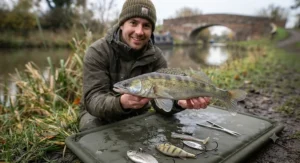
Unlike many “predator” shads that get marketed at pike, perch and zander all at once, the Fox Rage Zander Pro Shad 10cm was designed with zander as the primary target, and it shows in the slimmer, less bulky body profile compared with Fox Rage’s standard Pro Shad range. Sold in packs of around five, it’s built around a UV-enhanced colour system with options like Hot Olive and Ultra UV Chartreuse Ayu that punch through the low-light, slightly turbid canal and drain water zander typically favour. What that UV coating means practically is better visibility to a fish that hunts primarily at dawn, dusk and after dark, when standard colour contrast drops off fast underwater. Honest analysis here has to note that this is a mid-weight bait at 10g, which puts it in the sweet spot for jig heads between 7g and 14g depending on depth and current — go too light and you lose bottom contact, too heavy and the fall rate outpaces what a cautious zander wants to chase. Aggregated review sentiment across UK tackle retailers points to strong durability for a soft plastic in this price bracket, with anglers regularly reporting several fish landed per bait before replacement is needed. The standout use case is coloured, structure-heavy water — think Trent, Severn or Midlands canal systems — where a slimmer, UV-boosted profile earns its keep. At roughly £6-£10 per five-pack, it’s one of the most cost-effective entries on this list.
Pros:
- ✅ Slim profile designed specifically around zander feeding behaviour
- ✅ UV colour options genuinely aid visibility in low light
- ✅ Reasonably durable soft plastic for repeated catches
Cons:
- ❌ Smaller five-pack means fewer spares than some rivals
- ❌ Limited size range compared with Keitech’s broader lineup
3. Rapala CrushCity The Stingman 5″ — best slow-fall glide for cautious canal fish
Rapala’s CrushCity range was built by American bass anglers, but the Rapala CrushCity The Stingman 5″ has quietly become a favourite among UK zander specialists for one specific reason: its fall rate. The paddle tail and body taper are engineered to glide on the drop rather than plummet, giving a wounded-baitfish look during the pause phase of a jerk-and-pause retrieve — precisely the moment most zander actually commit to a strike. Sold in packs of around six at 12.5cm, it’s on the larger end for this price bracket, which matters because bigger zander (the ones over 60cm that most anglers are actually chasing) are disproportionately drawn to larger, slower-moving profiles once light levels drop. What most buyers overlook about this bait is that it performs best paired with a lighter jig head than its size suggests — going too heavy kills the glide that makes it worth buying in the first place. Reviewers consistently report strong hook-up rates when fished on the pause, with a genuine consensus that this isn’t a “burn it back fast” lure. At around £8-£14 per pack, it sits mid-table on price but earns that position through a more specialised action than the cheaper generic shads on this list, making it a strong second or third lure rather than a first purchase for absolute beginners.
Pros:
- ✅ Engineered glide-on-the-drop action triggers hesitant strikes
- ✅ Larger profile appeals specifically to bigger zander after dark
- ✅ Genuinely versatile colour selection for varied water clarity
Cons:
- ❌ Needs a lighter jig head than expected to glide properly
- ❌ Less beginner-friendly than simpler paddle-tail alternatives
4. Berkley PowerBait Ripple Shad 4″ — best scent-driven budget workhorse
If there’s a genuinely no-nonsense, learn-the-basics-without-overspending option on this list, it’s the Berkley PowerBait Ripple Shad 4″. Berkley’s PowerBait scent system is one of the most extensively documented attractant technologies in coarse and predator fishing, and the practical upshot for zander anglers is that this shad keeps working even when your retrieve technique isn’t perfect yet — the scent trail does some of the heavy lifting that presentation alone would otherwise need to. The paddle tail delivers a fairly standard, reliable vibration rather than anything specialised, which is exactly what a beginner needs: predictable action that’s hard to fish badly. Based on the spec comparison with the Keitech and Fox Rage entries above, the plastic compound here is noticeably firmer, meaning it survives more casts and more near-misses from opportunistic pike before needing replacement — a genuinely useful trait when you’re still working out where the snags are on a new stretch of canal. Aggregated review sentiment is consistently positive on value for money, with the scent formula singled out repeatedly as the differentiator versus unscented budget alternatives at a similar price. At around £6-£10 for a multi-pack, this is the lure I’d point a genuine first-timer toward before anything else on this list.
Pros:
- ✅ PowerBait scent formula forgives imperfect retrieve technique
- ✅ Firmer compound survives more casts and near-miss pike strikes
- ✅ Widely stocked and consistently among the cheapest options here
Cons:
- ❌ Action is more generic than zander-specific competitors
- ❌ Less effective in gin-clear water where subtlety matters more
5. Savage Gear 3D Fat Minnow Crank 5.5cm — best wide-wobble hard lure for coloured water
Moving into hard lures, the Savage Gear 3D Fat Minnow Crank 5.5cm brings something soft plastics simply can’t: a tight, buoyant, floating-diving action that works on a genuinely different retrieve style — cast, wind down to depth, stop-start over structure. Savage Gear’s 3D printing process creates a noticeably more detailed scale and fin pattern than injection-moulded rivals, and while that’s partly cosmetic, the raised 3D ribbing also breaks up the silhouette in a way that reviewers report holds up well in coloured water. What that wide wobble means in practice is a stronger displacement signal detected through a zander’s lateral line rather than relying purely on sight, which becomes the dominant trigger once visibility drops below a metre or so — common on Fenland drains and many Midlands canals after rain. Here’s what the spec sheet won’t tell you, but user reports suggest: the floating-diving design means it’s naturally more snag-resistant than a straight-sinking crankbait, since it rises off bottom structure the moment you pause the retrieve, rather than settling into it. At roughly £10-£15, it costs more per unit than the soft plastics above, but a well-cared-for hard lure typically outlasts dozens of soft plastic replacements, which meaningfully changes the value calculation over a season.
Pros:
- ✅ Strong vibration signal performs well in low-visibility water
- ✅ Floating-diving design naturally resists snagging on structure
- ✅ Detailed 3D finish holds up to repeated casting and storage
Cons:
- ❌ Higher upfront cost than any soft plastic on this list
- ❌ Fixed diving depth limits versatility across different water depths
6. Rapala Jointed 9cm — best realistic swim for clear stillwaters
The Rapala Jointed 9cm is arguably the most famous hard lure design in this entire guide’s category, and there’s a reason it’s been in continuous production for decades: the two-piece jointed body produces a tighter, more erratic S-shaped swim than any single-piece minnow can replicate, which reads as genuinely distressed baitfish behaviour to a predator. Balsa-cored variants sit shallow and float at rest, meaning a stop-start retrieve lets it hang enticingly in the water column — a presentation that consistently draws strikes from zander holding in clear stillwaters and reservoirs, where they rely far more heavily on sight than in coloured canals. Based on genuine aggregated reviewer sentiment across UK tackle forums and retailer feedback, the Jointed’s biggest strength is precisely this suspended-pause behaviour, while the most common complaint is treble hook quality straight out of the packet, with a fair number of anglers recommending an upgrade to sharper aftermarket trebles for serious zander use. What most buyers overlook about this bait is that it was never designed exclusively for zander — it’s a genuine multi-species classic — but its slow-swimming, realistic profile happens to overlap almost perfectly with what zander want on a slow retrieve. At around £12-£17, it’s toward the upper end of this £20 budget, but the sheer versatility across species and water types arguably justifies carrying at least one in your box.
Pros:
- ✅ Erratic jointed swim reads as genuinely distressed prey
- ✅ Suspends and hangs on the pause, ideal for cautious strikes
- ✅ Proven multi-decade track record across UK predator species
Cons:
- ❌ Stock treble hooks often need upgrading for serious use
- ❌ Premium end of the £20 bracket, less room for losses
7. Rapala Rippin’ Rap 7cm — best vibration blade for winter zander
Last on the list, and arguably the most specialised, the Rapala Rippin’ Rap 7cm is a lipless vibration blade bait rather than a diving crankbait, meaning it sinks on a fairly direct line and is designed to be worked vertically or on a lift-drop retrieve rather than a steady wind-in. That distinction matters enormously for winter zander fishing, when metabolism slows, fish hold tight to the bottom in deeper holes, and a lure that can be worked precisely at depth outperforms almost anything else in this guide. The internal rattle chamber produces a sharper, higher-frequency vibration than the Savage Gear crank above, which reviewers repeatedly describe as effective at pulling fish from further away in cold, often gin-clear winter water where baitfish activity is otherwise minimal. Here’s what most buyers overlook: this isn’t a beginner’s first lure, because the lift-drop technique it demands takes deliberate practice to get right — too aggressive a lift and you’ll rip it away from a following fish, too gentle and the rattle and vibration barely register. Aggregated feedback is strongly positive on cold-water effectiveness specifically, with a recurring caveat that it’s a specialist tool rather than an all-rounder. At roughly £14-£19, it sits right at the top of the budget bracket, but for anglers targeting zander through the coldest months, it’s arguably the single most purpose-effective lure on this entire list.
Pros:
- ✅ Sharp rattle and vibration excel in cold, low-activity water
- ✅ Precise vertical presentation ideal for deep winter holding spots
- ✅ Compact size still generates strong displacement for its weight
Cons:
- ❌ Lift-drop technique has a genuine learning curve
- ❌ Sits at the very top of the £20 budget ceiling
Affordable Zander Lures for Beginners: Building Your First Kit
If you’re brand new to zander fishing, the temptation is to buy one of everything — resist it. What most buyers overlook about affordable zander lures for beginners is that a small, deliberately chosen starter selection almost always outperforms a scattered impulse-buy collection, simply because you actually learn how each lure behaves rather than spreading confusion across fifteen half-understood options.
Start with two soft plastics and one hard lure. The Berkley PowerBait Ripple Shad 4″ earns its place first precisely because its scent formula forgives clumsy retrieves while you’re still learning to feel bottom contact through the rod tip — arguably the single hardest skill for new predator anglers to develop. Pair it with the Fox Rage Zander Pro Shad 10cm for its purpose-built profile and genuinely low cost per pack, giving you a natural point of comparison once you start noticing which one gets more interest on a given day. For a hard lure, the Rapala Jointed 9cm is forgiving enough on a simple stop-start retrieve that beginners consistently report early success with it, without demanding the precise lift-drop timing that something like the Rapala Rippin’ Rap 7cm requires.
Common first-30-days mistakes worth flagging honestly: retrieving too fast (zander are ambush predators, not chase predators — slow down more than instinct suggests), fishing mid-water when the fish are almost always tighter to the bottom than expected, and abandoning a swim after ten casts when zander fishing regularly rewards patience over an hour or more. Budget for a handful of spare jig heads in the 5g-14g range too; losing a bare hook to a snag is far cheaper than losing an entire rigged lure.
Zander Lure Kit: What to Pack in Your Box
A genuinely usable zander lure kit built around the £20-and-under bracket doesn’t need to be enormous, but it does need deliberate variety across three axes: soft versus hard, colour versus profile, and depth range. Based on the products covered above, a sensible core kit looks something like this: two or three soft plastic paddle-tails in natural (perch, roach) and high-visibility (UV chartreuse, hot olive) colourways for varying light and clarity; one slow-fall jerk shad like the Rapala CrushCity The Stingman 5″ for pressured or pause-triggered fish; a floating-diving crank such as the Savage Gear 3D Fat Minnow Crank 5.5cm for coloured water sessions; and at least one specialist deep-water tool like the Rapala Rippin’ Rap 7cm for cold months.
Real-world scenario: a college student commuting past a Midlands canal on the way home twice a week, with maybe ninety minutes of daylight fishing time in winter, is genuinely better served by a compact kit of four or five proven lures than a bulging box of thirty. Fewer decisions at the water’s edge means more actual fishing time, and a smaller, curated kit is also easier to fit in a rucksack alongside rods and a landing net for someone commuting on foot or by bike rather than driving to the venue.
Beyond the lures themselves, a functional kit needs jig heads spanning roughly 5g to 21g depending on typical swim depth and flow, a small selection of size 1/0 to 3/0 hooks if you rig soft plastics weedless, and a spool of fluorocarbon leader — more on why that matters in the technique section below. Total spend across a genuinely varied starter kit, lures and terminal tackle included, typically lands somewhere between £45 and £75, which compares favourably against a single mid-range predator rod, let alone the ongoing cost of live bait.
Soft Plastic vs Hard Lures for Zander
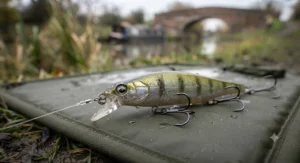
This is probably the single most-asked practical question among newer zander anglers, and the honest answer is “both, for different jobs” rather than a clean winner. Soft plastics like the Keitech Easy Shiner 3″ and Berkley PowerBait Ripple Shad 4″ dominate in situations demanding a slow, subtle presentation — pressured canal fish, gin-clear stillwaters, or any scenario where you need to hang a bait in the strike zone for an extended pause. Hard lures like the Rapala Jointed 9cm and Savage Gear 3D Fat Minnow Crank 5.5cm earn their keep through durability, a genuinely different action profile, and — critically — buoyancy options that soft plastics on jig heads simply can’t replicate.
| Factor | Soft Plastics | Hard Lures |
|---|---|---|
| Cost per unit | Lower (£0.70-£1.50 each) | Higher (£10-£19 each) |
| Durability vs pike bites | Weaker, tears easily | Stronger, survives more strikes |
| Action control | Highly customisable via jig head weight | Fixed by lure design |
| Best water type | Clear, pressured, slow presentations | Coloured water, structure, faster searching |
| Beginner friendliness | Generally easier to fish well | Some models need technique practice |
Reading the comparison above, the practical takeaway is that soft plastics like the Fox Rage Zander Pro Shad 10cm offer better value density for anglers still building confidence and expecting to lose the odd bait to snags or pike, while a hard lure such as the Rapala Rippin’ Rap 7cm rewards anglers who’ve already got their retrieve technique dialled in and want a tool built for a specific job. Most experienced zander anglers I’ve researched carry both, switching based on water clarity and depth on the day rather than backing one category exclusively.
Predator Lure Retrieve Technique: How to Work Each Lure Type
Getting the retrieve right matters more for zander than almost any other UK predator species, because they’re notoriously reluctant to chase anything moving with real urgency. For soft plastic paddle-tails such as the Keitech Easy Shiner 3″, the standard approach is a slow, steady figure-of-eight or straight retrieve just fast enough to keep the tail kicking, interspersed with brief pauses letting the bait settle toward — but not necessarily onto — the bottom. For a jerk shad like the Rapala CrushCity The Stingman 5″, switch to a genuine jerk-and-pause: a sharp rod-tip twitch followed by two to four seconds of dead pause, since that’s precisely when the glide action does its work and most strikes come.
Hard lures demand a different rhythm entirely. The Savage Gear 3D Fat Minnow Crank 5.5cm rewards a stop-start wind, briefly pausing every few turns of the reel handle to let it rise and wobble, particularly effective when worked just above visible or suspected structure. The Rapala Jointed 9cm performs best on a genuinely slow, near-continuous retrieve with occasional dead pauses that let the suspended body hang in the strike zone. The Rapala Rippin’ Rap 7cm is the outlier here, typically fished on a lift-drop technique — lifting the rod tip sharply to make the bait dart and vibrate, then dropping the rod tip and allowing it to fall back on a controlled semi-slack line, watching for the line jumping or tightening unnaturally as the take indicator.
Across every lure type, one universal rule holds: zander bites are frequently subtle “knocks” rather than violent takes, so maintaining light but direct contact with the lure throughout the retrieve — rather than a fully slack line — dramatically improves hook-up rates. A short fluorocarbon leader is worth the extra cost here too; zander have genuinely excellent eyesight, and reduced line visibility in clear water measurably improves confidence in takes, a point echoed in general predator fishing technique guidance from angling specialists.
Zander Feeding Patterns: When and Where They Strike
Understanding zander feeding patterns transforms lure choice from guesswork into genuine strategy. Zander are primarily crepuscular and nocturnal hunters, meaning their most intense feeding windows cluster around dawn, dusk and full darkness, when their large, light-sensitive eyes give them a decisive advantage over prey fish. What this means practically is that a lure choice that fails completely at midday can produce consistent action in the same swim two hours later — the fish haven’t moved on, they’ve simply switched from passive to actively hunting as light drops.
Location-wise, zander overwhelmingly favour structure and depth changes: drop-offs, bridge pilings, moored boats, sluice gates and channel edges on canals, where they can ambush baitfish moving along predictable routes rather than actively roaming open water. Water temperature plays a major role too — activity typically increases as water cools into autumn and holds through winter, provided it doesn’t drop to genuine near-freezing extremes, which is precisely why a specialist cold-water tool like the Rapala Rippin’ Rap 7cm earns its place in a serious kit. Reviewers and experienced zander anglers consistently note that coloured, slightly turbid water often produces more daytime activity than gin-clear conditions, since reduced visibility gives zander enough of an ambush advantage to feed outside their usual low-light window.
Seasonally, late autumn through winter is widely regarded as prime UK zander time, coinciding with the coarse fishing season and cooling water temperatures that concentrate fish in deeper holding areas. That said, summer sessions targeting dawn and dusk windows on canals and rivers can be genuinely productive too, particularly with faster-searching hard lures like the Savage Gear 3D Fat Minnow Crank 5.5cm covering more water while light levels are still workable.
How to Choose Zander Lures Under £20
Picking the right lure from a crowded budget market comes down to a handful of genuinely decisive factors. Here’s a structured approach:
- Match profile to forage size. Check what baitfish dominate your venue — smaller roach and gudgeon-heavy waters generally favour 7-10cm lures, while venues with larger bream and bigger prey fish can support the 12.5cm Rapala CrushCity The Stingman 5″.
- Prioritise water clarity over personal colour preference. UV and high-visibility colours like those on the Fox Rage Zander Pro Shad 10cm matter far more in coloured or low-light water than in clear conditions, where natural tones typically outperform.
- Budget for losses, not just purchases. Soft plastics will get torn or lost to snags — buy in packs rather than singles, and factor replacement cost into your actual per-session spend.
- Choose action based on retrieve style you’re comfortable with. If jerk-and-pause technique feels unnatural, a steady-retrieve paddle-tail like the Keitech Easy Shiner 3″ will produce more confident, consistent fishing.
- Weight your kit toward the season. Late autumn and winter sessions justify investing in a specialist like the Rapala Rippin’ Rap 7cm; summer dawn-and-dusk sessions favour faster-searching hard lures.
- Don’t ignore hook quality. Several products on this list, including the Rapala Jointed 9cm, benefit from a treble hook upgrade for serious use — factor a few pounds of hook cost into your total budget.
- Buy variety before buying depth. One of each lure type (soft plastic, jerk shad, crank, vibration blade) teaches you more, faster, than five of the same lure in different colours.
Common Mistakes When Buying Budget Zander Lures Under £20
The most common mistake, by a wide margin, is buying purely on colour without considering action or fall rate — a beautiful colourway on a lure with the wrong retrieve behaviour for your venue will consistently underperform a plainer bait fished correctly. A close second is over-indexing on hard lures for a first purchase; while durable, they’re generally less forgiving of clumsy technique than a scented soft plastic like the Berkley PowerBait Ripple Shad 4″, and beginners can end up blaming the lure for what’s actually a presentation issue.
Underestimating jig head variety is another frequent misstep — turning up with only one weight severely limits which depths and current speeds a soft plastic can actually be fished effectively at, regardless of how good the bait itself is. Some anglers also fall into the trap of fishing budget lures exactly like more expensive ones, retrieving too fast because “that’s how the last lure worked,” when in fact each design in this guide, from the Fox Rage Zander Pro Shad 10cm to the Rapala Rippin’ Rap 7cm, genuinely rewards a distinct retrieve style. Finally, ignoring line and leader choice while focusing entirely on the lure itself undermines even the best purchase — a visible, heavy mainline straight to a subtle soft plastic defeats much of the point of buying a natural-looking bait in the first place.
Long-Term Cost & Maintenance: Getting the Most from Budget Lures
Thinking in terms of total cost of ownership rather than sticker price changes the calculus on several lures in this guide. A pack of Keitech Easy Shiner 3″ baits might cost £8-£12 for nine or ten units, working out to under £1.50 per lure — but a snag-heavy venue or a run-in with a pike can burn through several in a single session, meaning the genuinely comparable cost sits closer to “per fish landed” than “per pack purchased.” Hard lures flip this equation: the Rapala Jointed 9cm costs more upfront at £12-£17, but a well-maintained example — hooks checked and sharpened, split rings inspected for wear, stored away from direct sunlight which can degrade some plastics over time — can realistically last multiple seasons rather than multiple casts.
Maintenance itself is minimal but matters. Rinse hard lures in fresh water after use, particularly if fishing venues with any brackish influence, to prevent hook and split-ring corrosion. For soft plastics, storing different plastic formulations separately prevents “plastic bleed,” a genuine chemical reaction where certain soft plastic compounds can melt or discolour each other in storage — a mistake that’s ruined more than a few anglers’ carefully built kits. Replacing trebles on hard lures like the Rapala Jointed 9cm with sharper, corrosion-resistant aftermarket hooks costs a few pounds but meaningfully extends both hook-up rates and the working life of the lure itself, arguably the single best-value upgrade available across this entire guide.
Zander Lures for Different UK Waters: Canals, Rivers and Reservoirs
Venue type should genuinely steer your lure selection more than any single spec sheet. On narrow, structure-dense canals — classic zander territory across the Midlands and the Fens — a compact, snag-resistant approach dominates: soft plastics like the Fox Rage Zander Pro Shad 10cm worked tight along moored boats and bridge holes, alongside the floating-diving Savage Gear 3D Fat Minnow Crank 5.5cm for covering water between known holding spots without constantly hanging up on the bottom.
Larger rivers such as the Severn or Trent introduce current, which changes weight requirements significantly — jig heads at the heavier end of the 5g-21g range keep soft plastics like the Keitech Easy Shiner 3″ in contact with the bottom without being swept downstream too fast for a natural presentation. Reservoirs and larger stillwaters, generally clearer than canals, favour the realistic, suspending action of the Rapala Jointed 9cm and the slow-glide Rapala CrushCity The Stingman 5″, since visual subtlety matters more when zander can see further and scrutinise a presentation longer before committing.
For anglers targeting deep winter holes in any of these venue types, the Rapala Rippin’ Rap 7cm remains the specialist standout regardless of water body, precisely because its vertical lift-drop presentation works as effectively in a 4-metre reservoir margin as it does in a deep canal turning point.
Safety, Regulations and Responsible Zander Fishing in the UK
Before heading out, it’s worth being clear on the legal basics. Anyone fishing for freshwater fish, including zander, in England and Wales generally needs a valid Environment Agency rod licence, and it’s worth checking current rules and fees on GOV.UK before your first session, since penalties for fishing without one are genuinely significant. It’s also worth knowing that zander are a non-native species in the UK, introduced in the 20th century, and specific byelaws exist in some regions governing whether they can be returned to certain waters or must be humanely dispatched — the Environment Agency’s guidance on managing non-native fish species is worth a genuine read, since rules vary by catchment and getting this wrong isn’t a minor technicality.
Beyond legality, responsible handling matters enormously for a species with a reputation for being delicate out of water. Zander have comparatively sensitive slime coats and can be prone to stress-related mortality if handled roughly or kept out of water too long — wetting hands before handling, using an unhooking mat, and minimising air exposure genuinely improves survival rates on release. It’s also worth remembering that the coarse fishing close season applies to most UK rivers between mid-March and mid-June, a rule the Environment Agency actively patrols and enforces each year, so checking specific dates and venue rules before planning a spring session avoids an entirely avoidable problem.
Frequently Asked Questions
❓ What is the best zander lure under £20?
❓ Do zander prefer soft plastics or hard lures?
❓ What time of day are zander most active?
❓ How slow should I retrieve a zander lure?
❓ Can beginners catch zander on budget lures?
Conclusion
Zander fishing doesn’t demand an expensive tackle box, but it does reward a thoughtful one. Across the seven lures covered here — from the naturally rolling Keitech Easy Shiner 3″ through to the specialist cold-water Rapala Rippin’ Rap 7cm — the common thread isn’t price, it’s matching the right action and profile to the water and season in front of you. A beginner starting with the Berkley PowerBait Ripple Shad 4″ and a Rapala Jointed 9cm has a genuinely capable, low-cost foundation; a more experienced angler layering in the Rapala CrushCity The Stingman 5″ for pressured fish or the Savage Gear 3D Fat Minnow Crank 5.5cm for coloured water is simply refining a system that already works.
None of this requires guesswork if you apply what’s covered above: check the venue’s water clarity, think honestly about the season and light levels you’ll actually be fishing, and choose a retrieve technique you can execute confidently rather than the one that looks most impressive. Do that, and every single lure on this list, all comfortably under £20, has a genuine shot at putting a proper UK zander on the bank.
Recommended for You
- Best Zander Rod 2026: 7 Rods That Actually Handle That Bite
- 7 Best Zander Rods Under £100 (2026): Honest Budget Guide
- Micro Jig Weight for Perch Fishing: 7 Best Sizes for 2026
Disclaimer: This article contains affiliate links. As an Amazon Associate, I earn from qualifying purchases. If you purchase products through these links, we may earn a small commission at no additional cost to you.
✨ Found this helpful? Share it with your friends! 💬🤗
